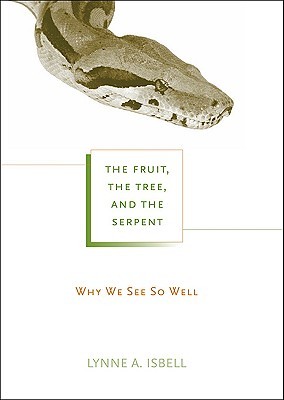
From the temptation of Eve to the venomous murder of the mighty Thor, the serpent appears throughout time and cultures as a figure of mischief and misery. The worldwide prominence of snakes in religion, myth, and folklore underscores our deep connection to the serpent but why, when so few of us have firsthand experience? The surprising answer, this book suggests, lies in the singular impact of snakes on primate evolution. Predation pressure from snakes, Lynne Isbell tells us, is ultimately responsible for the superior vision and large brains of primates and for a critical aspect of human evolution.
Drawing on extensive research, Isbell further speculates how snakes could have influenced the development of a distinctively human behavior: our ability to point for the purpose of directing attention. A social activity (no one points when alone) dependent on fast and accurate localization, pointing would have reduced deadly snake bites among our hominin ancestors. It might have also figured in later human behavior: snakes, this book eloquently argues, may well have given bipedal hominins, already equipped with a non-human primate communication system, the evolutionary nudge to point to communicate for social good, a critical step toward the evolution of language, and all that followed.”
“Everybody acts out a myth, but very few people know what their myth is. And you should know what your myth is because it might be a tragedy and maybe you dont want it to be.”
My journey to becoming a YA (young adult) writer started with my colleague and friend Kathe Koja, an incredibly talented and versatile writer who went from being one of the most celebrated authors of extremely graphic horror novels (the “splatterpunk” subgenre) to equal success as an author of spare, stripped-down, understated and devastating YA novels. Kathe came to speak to a Clarion SF Workshop class that I was teaching near her Michigan home and she talked about school visits: about meeting kids who wanted to discuss her work with her in light of their lived experience, to resolve the conflicts between the world as it seemed to them and the world as it appeared in her novels. Kathe explained that while adults tend to read to amuse and entertain themselves, kids read to figure out how the world works. I felt like I’d just had an anvil dropped on my head. In a good way.
The fantasy writer Steven Brust once told me, “Telling someone you think they wrote a bad book is like telling them they’ve got an ugly kid. Even if it’s true, it’s too late for them to do anything about it, and chances are they did everything they could to prevent that outcome anyway.”
While I think Brust has a point, I always make an exception for adolescents, on the basis of Kathe’s philosophy: kids don’t disagree with your books because they lack social skills—they disagree with them because they take them seriously.
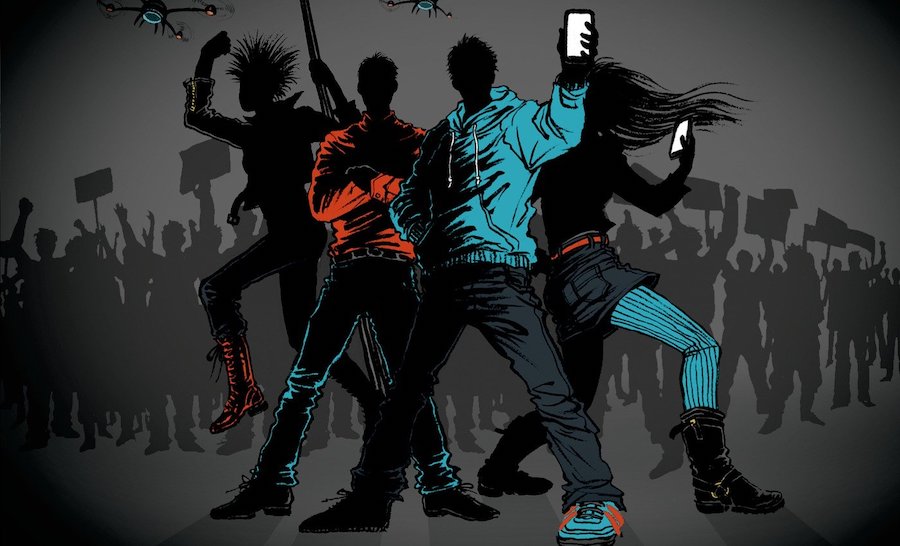
My Little Brother books (Little Brother, 2008; and Homeland, 2013) tell stories that kids have grappled with seriously. They’ve been in print long enough that there are grown adults with real jobs who have approached me to tell me that they chose their current careers—human rights workers, cyber-lawyers, security researchers, programmers—because they read my novels that warned of the nightmare of technological oppression and dangled the possibility of technological liberation and they resolved to fight back the former and deliver the latter.
This is an awesome responsibility to bear, and a humbling honor.While adults tend to read to amuse and entertain themselves, kids read to figure out how the world works. I felt like I’d just had an anvil dropped on my head—in a good way.
Adolescents, after all, are capable of being first-class reasoners, but they can never have the context that comes with life experience. That’s why you get child prodigy mathematicians and chess-players—disciplines where you can start from a small, easily taught group of precepts and use your reason to build up towering edifices upon their foundations—but not child prodigy lawyers or historians or doctors (Doogie Howser is science fiction: fight me!). No matter how smart you are at 11 or 14 or 17, you just haven’t had enough time to do the reading to practice law.
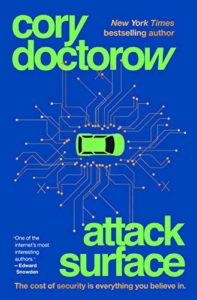
This month, I published Attack Surface, the third Little Brother book, a standalone novel intended for adults. It’s funny: when I tell people this is an “adult novel” they assume that it’s full of sex—but this is actually the only Little Brother book that doesn’t have a sex-scene (teens spend a lot more time thinking about and having sex than most adults). Rather, Attack Surface is a novel about moral reckonings: it tells the tale of a lifelong surveillance contractor who has to confront her complicity in the human rights abuses and immiseration her code enabled on behalf of dictators and brutal corporations.
Becoming an adult doesn’t merely mean acquiring the context for your reason to work upon, after all. It also means perfecting your ability to rationalize your way into one small compromise after another, accumulating a kind of ethical debt, one whose balance steadily mounts, making it harder to confront head on. If you have a debt that you don’t service, you will eventually default, and that’s what Masha, the (anti)hero of Attack Surface is going through.
We adults don’t merely read for entertainment, either. Today, the debt generated by stories we’ve told ourselves for a generation—stories about our helplessness before the climate emergency, mounting totalitarianism, out-of-control inequality—are headed for bankruptcy.
What kind of stories? The unitary hero story. The personal responsibility story. The ethical consumption story. The story that says that you can’t claim to care about climate change if you use plastic or fly in an airplane. The story that says you can’t claim to care about monopolies if you order from Amazon. The story that says you can’t claim to care about inequality if you have a 401(k). The story that says you can’t claim to care about human rights if you own things made in China.Becoming an adult means perfecting your ability to rationalize your way into one small compromise after another, accumulating a kind of ethical debt.
In other words: the story that says that change comes from the heroic sacrifices and feats of individuals. The story that says that Naziism was defeated by Superman, an immortal golem created by a pair of Jewish kids horrified by the unfolding horror across the Atlantic—when they were really defeated by the largest collective action in human history.
The climate emergency demands a moonshot, but the moonshot wasn’t undertaken by science heroes working in their solitary labs: Neil Armstrong walked on the moon because of the collective, state-sponsored efforts of millions of people. If we hadn’t gotten to the Moon, the fault would have been with the system, not with Armstrong’s failure to build a rocket ship.
Today, we’re done with those stories and we’re in search of new ones: tales of moral reckoning, of new beginnings, of redemption.
For more than a decade, the Little Brother books have radicalized a cohort of ethical technologists, fighting for a free, fair and open digital world that we can use to defend and reform our offline world, too. Now, with Attack Surface, I hope to reach a different audience: the people who never read those books (or who read them and rationalized their way out of their messages) and who are wondering what to do about the flawed stranger they see in their mirrors.
__________________________________
Attack Surface by Cory Doctorow is available now via Tor Books.
Cory Doctorow is a science fiction author, activist, journalist and blogger—the co-editor of Boing Boing (boingboing.net) and the author of many books, most recently In Real Life, a graphic novel; Information Doesn’t Want to Be Free, a book about earning a living in the Internet age, and Homeland, the award-winning, best-selling sequel to the 2008 YA novel Little Brother.
SAN FRANCISCO, Oct. 14, 2020 /PRNewswire/ — Coa, an online emotional fitness studio for live classes and one-on-one therapy, announced a $3 million seed round today. Coa’s funding round was led by Crosslink Ventures with RedSea Ventures and Alpaca VC participating alongside Neil Parikh, Founder of Casper, several angel investors, and professional basketball player and mental health advocate Kevin Love. Coa was co-founded by Alexa Meyer and Dr. Emily Anhalt.
“On average, people wait 11 years between the onset of mental health symptoms and seeking treatment,” said NBA All-Star and Coa investor Kevin Love. “Coa is rethinking how we approach mental health to make it easier for people to take that first step and get ongoing support. In turn, this will change the way people approach emotional fitness and hopefully seek support earlier.”
Coa’s online Emotional Fitness Studio will feature live, therapist-led classes designed to create an “emotional fitness workout” to bolster mental health. The digital studio’s interactive group classes will start at $25 and foster community while building emotional wellbeing. Each class follows a proprietary “learn, exercise, breakout, discuss” framework built on Dr. Anhalt’s research into the 7 Traits of Emotional Fitness.
Just like a gym, Coa will also offer one-on-one support through therapist matchmaking and private sessions with licensed therapists.
“We know the number of people experiencing mental health challenges is growing exponentially in 2020, yet mental health services remain unapproachable, unaffordable, and hard to fit into the weekly routine,” said Coa co-founder and CEO Alexa Meyer. “We’re beyond excited to reimagine mental health as something you can work on just like physical fitness. By offering classes that people do together, we’re creating a space for connection, support, and accountability.”
Before the launch of the online studio, Coa hosted mental health pop-up gyms around the country and offered its emotional fitness curriculum privately to employees at Asana, Spotify, Silicon Valley Bank, and other leading companies. Employer demand for Coa’s emotionally fit leadership and workplace curriculum has grown 900% since March 2020 and the beginning of the pandemic. To date, more than 3,500 people have joined Coa’s waitlist for the studio launch.
“Mental health is not one-size-fits-all,” said Coa co-founder and Chief Clinical Officer, Dr. Emily Anhalt. “That’s why we’ve created a curriculum that enables people to go deep, explore their patterns, and leave with actionable insights and tools. Our approach to mental health is not a bandaid, it’s a workout, honed by years of research and work with leaders. We see the launch of our studio as the first step toward making emotional fitness accessible to people from all walks of life, at an affordable price.”
The studio’s programming, overseen by Coa’s Head of Emotional Fitness Vaneeta Sandhu, PsyD, is designed to apply to a wide variety of challenges with both drop-in classes and weekly, ongoing series. The studio curriculum will cater to common challenges like managing mental health in leadership roles, anxiety, imposter syndrome, parenting, and more. Additionally, Coa will continue to offer free community classes to address timely and culturally relevant needs such as improving BIPOC allyship and addressing political anxiety. Studio programming will kick off with an eight-week Emotionally Fit Leadership series later this year.
Coa’s classes are designed to be an approachable on-ramp to mental healthcare, as well as a support system for maintaining an ongoing routine. Individuals who are ready to invest in deeper one-on-one support can take advantage of Coa’s network of therapists and personalized therapist matchmaking process, overseen by Dr. Jamie Goldstein, PsyD, which assists in finding a therapist based on a detailed questionnaire and a one-on-one conversation with Coa’s Therapy Experience team. The matchmaking service is currently available in California with plans to expand to New York and nationally over the year ahead.
The funding round will be used to launch Coa’s online studio, hire a robust team of therapist emotional fitness instructors, expand program offerings, support ongoing emotional fitness tracking, digital exercises, and community features, and to open up brick-and-mortar studios as soon as safety protocols allow.
About Coa
Coa is the world’s first gym for mental health. Offering therapist-led emotional fitness classes and therapist matchmaking, Coa was co-founded by Alexa Meyer and Dr. Emily Anhalt with the mission to make mental health a proactive and daily practice, just like physical fitness. Coa’s live, therapist-led classes are built on Dr. Anhalt’s research-driven method on the 7 Traits of Emotional Fitness. For more information and to join the waitlist for the digital studio’s opening, visit joincoa.com. To join a free online community class visit www.joincoa.com/classes.
Amy Coney Barrett will not openly base her decisions on the Affordable Care Act, or Roe v. Wade, or the right to gay marriage on whether she herself agrees with the policies behind these cases. Instead, she will purport to base her decisions on her “originalism,” the view that the actual words of Constitution must be interpreted according to the original intent of the so-called Founding Fathers in 1789.
Why? Because according to her and her mentor Antonin Scalia, the only proper democratic interpretation of that document requires “finding the intent” of those who agreed upon it when it was signed (or when the Amendments to it were signed into law). Every broadening of the document beyond this narrow construal of the written words themselves is characterized, according to Scalia and affirmed by Barrett, as undemocratic judicial activism imposed on the document by unelected judges.
I myself heard Scalia say in a videotaped speech to the Federalist Society that there is no way we can know what each other thinks and agrees to besides attributing an objective meaning to words that people state when they write them down: he believed there was no binding moral claim that we have upon each other that can shape constitutional interpretation beyond the special words written mainly in the 18th century.
This worldview means that we human beings today must determine our relations with each other according to what a group of mainly 20 and 30 year-old white men, mostly wealthy slaveholders, thought were good and acceptable social relations about 250 years ago. The worldview has both a psychoanalytic meaning, and a day-to-day bureaucratic meaning within legal reasoning.
The psychoanalytic meaning is that the worldview reflects a fetish for our “Founding Fathers,” whose thoughts had a mystical value and prescience that we lesser beings must follow today.
The bureaucratic meaning reflected in the work of Barrett and others is that the judge must engage in the quite prosaic task of discerning the so-called “objective public meaning” of a group of words penned in and around 1789 and applying that ancient meaning to interpreting the validity of laws and statutes today, as well as to the text of the Constitution itself.
This latter bureaucratic aspect is what will enable Judge Barrett both to strike down progressive legislation like the Affordable Care Act, and refuse to extend constitutional protection to rights and activities not explicitly named in the original document or its amendments (such as the right to abortion and gay marriage). As a kind of legal philologist who simply interprets words from long ago according to their original public meaning, Barrett can say, “this activity is not liberal or conservative and does not reflect my opinions about these matters—it is rather just a matter of interpreting a text the only way it can be interpreted in accordance with democracy.”
Note that there is an irony about this justification of originalism in terms of democracy: Barrett is willingly participating in the grabbing of a Supreme Court seat while a democratic election is actually taking place, in part to determine who has the right to select a Justice for that very seat. If the true meaning of democracy were really of primary concern to her, she would refuse to accept this seat under these anti-democratic circumstances and instead insist upon waiting for the democratic election result.
But in any case, why should we care AT ALL about what a group of mainly 20 and 30-year old white male property-owning, in some cases slaveholders would think—as if we could know that—about what we are doing in the present-day world? Huge upheavals in society and consciousness have occurred in the last 250 years, with magnificent social movements rising up to advance the political and moral understanding of man-and-womankind. The idea that we should discard the wisdom that we have gained across all of that historical time when we today determine the meaning of the Constitution and the validity of democratically-passed legislation is just absurd on its face…or ought to be. Why then does “originalism” seem to have staying power as if it were a “legitimate position” to be solemnly agreed with or disagreed with?
The answer to that question has to do with the psychoanalytic meaning of originalism, the attachment that we are trained to feel toward the Founding Fathers and their Original Intent. I wrote a longer piece about this subject when the Original Intent theory was first being strongly advocated in the early years of the Reagan Revolution. In my article in the Buffalo Law Review called “Founding Father Knows Best,” I showed the relationship between fetishism of the Founding Fathers Original Intent and the growing authoritarianism that began in the early 1980s and is still with us in newer forms today (https://digitalcommons.law.buffalo.edu/buffalolawreview/vol36/iss2/4/).
Please here read a briefer statement of the ideas in that article published in the Tikkun magazine piece I wrote under the same title on the selection of Brett Kavanaugh in 2018 (https://www.tikkun.org/the-trouble-with-brett-kavanaugh-founding-father-knows-best). The same points I made there apply, of course, to Amy Coney Barrett’s judicial philosophy, an ideology of unconscious deference to Authority that seeks to impose that deference on the whole of American society. It is that philosophy and its socio-psychological underpinnings that must be engaged with and firmly rejected by progressives trying to build a new and socially just world that thoroughly transcends the moral limitations of the 18th century.
While the 18th century world view reflected in the “original public meaning” of the Constitution did help to advance human consciousness by putting forward a vision of human community that affirmed and protected the liberty of the individual from overt group coercion through government action (with the horrific exception of slavery itself), that world view utterly lacked a commitment to fostering a world based upon empathy and compassion, based upon our deep connection and care for one another and for the Earth as well.
The great social movements of the last 250 years beginning with abolitionism and continuing through the labor movement, the women’s movement, the LGBTQ movement, and the environmental movements have all carried within them an elevation of collective consciousness calling upon one another to truly see one another and fundamentally embrace each other’s common humanity as well as the sacredness of the natural world.
Contrary to the original meaning of the Constitution, these movements have not been fundamentally about extending individual liberty in an individualistic, monadic world, but rather about recognizing, affirming, and embracing each other’s humanity and our interrelatedness as social beings. It is the deeper social and spiritual awareness illuminated by these social movements that have elevated our collective moral consciousness since the Constitution was written, and it is this very elevated awareness that has been at the heart of the transformation of judicial interpretation of the Constitution, with judges responding to the demands of rising social justice movements to extend the meaning of existing Constitutional provisions like the First and Fourteenth Amendments far beyond long-surpassed original and outdated meanings. The constitutional validity of the pro-labor legislation of the New Deal, the legislation inspired by the demands for human equality emerging from the civil rights, women’s movements and LGBTQ movements, and the validity of social welfare legislation like Social Security, Medicare, and now the Affordable Care Act have all been manifestations of our sharing a greater collective wisdom about the moral bonds that unite us as social beings that were not in our collective awareness yet in 1789 and that has decisively influenced our subsequent interpretation of our culture’s foundational legal document.
In truth, this moral development of our collective consciousness is leading us toward the point where we must write a new Constitution or fundamentally transform the current one to place at its center not mere individual liberty in a world of the separated, but rather a new synthesis of individual liberty with caring for each other as moral partners in a sacred and socially-connected world.
The new emphasis on integrating spirituality, law, and social justice appearing in emerging new legal paradigms like Restorative Justice across the legal profession is a harbinger of this future rewriting of our Constitution, an expression of the growing awareness progressively dawning within us that “we the people” are “constituted” not as a mere collection of isolated individuals, but as a moral community founded upon love and mutual recognition and concern.
Until that future time comes when we can reconceive the Constitution altogether, we must embrace the liberal reinterpretations of the Constitution that judges like Ruth Bader Ginsburg, influenced by the transcendental aspect of the movements that have transformed the essence of our national community, have articulated in expanding the meaning of the existing Bill of Rights and the Civil War amendments among other legal doctrines. And we must decisively reject an “originalism” that denies the leaps forward in our common moral awareness that the great social movements of the last 250 years have bequeathed to us, movements of and within our common humanity that have been pointing us toward the Beloved Community that “we the people” must eventually become. We need your support to bring the kind of analyses and information Tikkun provides.
RedFrost Motivation Read by Shane Morris – Rudyard Kipling was a prolific poet, novelist and journalist and one of the most well-known Victorian writers of his time. in 1907, he was awarded the Nobel Prize for Literature for his great body of work which included ‘The Jungle Book’ and his infamous stoic poem ‘If’. In perhaps one of the most inspirational poems ever written, Kipling outlines for his son the behaviours and attitudes it takes to become a man, advising his son about how to perceive the world and life’s challenges so that he can both learn from his experiences and resolutely overcome barriers.
How Moken People In Asia Saved Themselves From Deadly Tsunami
Mar 18, 2005
CORRESPONDENTRebecca Leung (cbsnews.com)
This segment of “60 Minutes” originally aired March 20, 2005. It was updated on June 8, 2007.
The tsunami may have lasted only a couple of hours, but it will not go away. New casualties are still being discovered: Thais, Swedes, Sri Lankans, and Indonesians. The death toll has topped 175,000. And there’s more than 125,000 still missing and presumed dead.
But there’s one group who live precisely where the tsunami hit hardest who suffered no casualties at all. They are the sea gypsies of the Andaman Sea, or as they call themselves, the Moken.
They’ve lived for hundreds of years on the islands off the coast of Thailand and Burma. They are, of all the peoples of the world, among the least touched by modern civilization.
And, as correspondent Bob Simon reports, they miraculously survived the tsunami because they knew it was coming.
It’s their intimacy with the sea that saved the Moken. They’re born on the sea, live on the sea, die on the sea. They know its moods and motions better than any marine biologist. They’re nomads, constantly moving from island to island, living more than six months a year on their boats.
At low tide, they collect sea cucumbers, and catch eels. At high tide, they dive for shellfish. They’ve been living this way for so many generations that they’ve become virtually amphibious.
Kids learn to swim before they can walk. Underwater, they can see twice as clearly as the rest of us, and by lowering their heart rate, can stay underwater twice as long. They are truly sea urchins.
60 Minutes discovered a Moken village on an island two hours by speedboat from the coast of Thailand. It had become something of an exotic tourist Mecca before the tsunami.
A Bangkok movie star and amateur photographer named Aun was here on Dec. 26, 2004, taking pictures of Moken village life, when someone noticed the sea receding into the distance.
Aun’s pictures showed the Moken on the beach crying. Did she have any idea why they were crying? “I feel like they know what bad will happen,” says Aun.
Her pictures also show the Moken fleeing towards higher ground long before the first wave struck. Aun pointed out how high the water first came. And that was just the first wave. The worst was yet to come, and the Moken knew because of signs from the sea.
It wasn’t only the sea that was acting strangely. It was the animals, too. On the mainland, elephants started stampeding toward higher ground. Off Thailand’s coast, divers noticed dozens of dolphins swimming for deeper water. And on these islands, the cicadas, which are usually so loud, suddenly went silent.
Saleh Kalathalay, a skilled spear-fisherman who was on a different part of the island, also noticed the silence. He ran around warning everyone.
Kalathalay brought the skeptics to the water’s edge, where they, too, saw the signs. Eventually, everyone, the Moken and the tourists, climbed to higher ground and were saved. But there’s nothing left in the village.
Why does Kalathalay think the tsunami happened? “The wave is created by the spirit of the sea,” says Kalathalay. “The Big Wave had not eaten anyone for a long time, and it wanted to taste them again.”
“Do you need a prod? / Do you need a little darkness to get you going?” Mary Oliver asked in her stunning love poem to life, composed in the wake of a terrifying diagnosis. “Let me be as urgent as a knife, then, / and remind you of Keats, / so single of purpose and thinking, for a while, / he had a lifetime.”
Think of Keats when you need that prod for living — Keats, who died at the peak of his poetic powers, already having given humanity more truth and beauty in his short life than most would give if they had eternity. Or think of Bruce Lee (November 27, 1940–July 20, 1973) — another rare poet of life, who too pursued truth and beauty, if in a radically different medium; who too was slain by chance, that supreme puppeteer of the universe, at the peak of his powers; who too left a legacy that shaped the sensibility, worldview, and wakefulness to life of generations.
Bruce Lee (Photograph courtesy of the Bruce Lee Foundation archive)
On the bench across from Bruce Lee’s tombstone in Seattle’s Lake View Cemetery, where he is buried alongside his son, also chance-slain in youth, these words of tribute appear: “The key to immortality is first living a life worth remembering.” They are often misattributed to Lee himself — perhaps because of the proximity, perhaps because they radiate an elemental truth about his life. The animating ethos of that uncommon life comes newly alive in Be Water, My Friend: The Teachings of Bruce Lee (public library) by his daughter, Shannon Lee, titled after his famous metaphor for resilience — a slender, potent book twining her father’s timeless philosophies of living with her own reflections, drawn from her own courageous life of turning unfathomable loss into a path of light and quiet strength.
In the final year of his life, Lee was in the last stages of a long negotiation with the Hollywood machine over what had long been his dream — a film that would introduce Eastern philosophy into Western culture through the thrilling Trojan horse of martial arts action. It was a dream he attained by his sheer force of vision and will, for the Hollywood studios had such a contrived initial template and such resistance to his deeper conceptual ideas that Lee, at the risk of losing his one great opportunity for reaching millions, refused to be a mere actor in a mindless, unimaginative, and stereotype-reinforcing action movie; he insisted that it be altered and elevated, then ended up radically rewriting the script — adding, among many other poetic-philosophical cornerstones, the now-iconic “finger pointing at the Moon” scene — and giving the film its now-iconic title: Enter the Dragon.
Bruce Lee (Photograph courtesy of the Bruce Lee Foundation archive)
Throughout the entire experience, which pushed Lee to step beyond the limits of his prior creative and existential imagination, he began drafting and redrafting a piece he titled “In My Own Process.” In it, a century after the young Leo Tolstoy wrote in his diary of self-discovery and moral development that “this is the entire essence of life: Who are you? What are you?,” the young philosopher-king of martial arts aimed at a “sincere and honest revelation of a man called Bruce Lee.” He resolved:
I know I am not called upon to write any true confession, but I do want to be honest — that is the least a human being can do… I have always been a martial artist by choice and an actor by profession. But, above all, I am hoping to actualize myself to be an artist of life along the way.
He didn’t know that the way was soon to be cut short; he didn’t know that he was already an artist of life. “The most regretful people on earth,” Mary Oliver would write decades later in an essay of staggering insight, “are those… who felt their own creative power restive and uprising, and gave to it neither power nor time.” Bruce Lee felt his restive potential, and though chance interceded before he could give it due time, he gave it more than due power. His daughter quotes another passage from the notebooks he relentlessly filled with ideas, insights, and open questions to be answered in the act of living — a passage that bespeaks the wellspring of his existential and creative power beyond time:
Recognize and use the spiritual power of the infinite. The intangible represents the real power of the universe. It is the seed of the tangible. It is living void because all forms come out of it, and whosoever realizes the void is filled with life and power and the love of all beings.
It was this diffuse and integrated understanding of existence that conferred a rich sense of meaning upon Lee’s life and allowed him to face death, not knowing he was facing it, without regret, without fear, as a fully actualized artist of life. In another notebook entry, he writes:
I don’t know what is the meaning of death, but I am not afraid to die. And I go on, non-stop, going forward, even though I, Bruce Lee, may die some day without fulfilling all of my ambitions, I will have no regrets. I did what I wanted to do and what I’ve done, I’ve done with sincerity and to the best of my ability. You can’t expect much more from life.
His Holiness Pope Francis|Countdown (October 2020)
The global climate crisis will require us to transform the way we act, says His Holiness Pope Francis. Delivering a visionary TED Talk from Vatican City, the spiritual leader proposes three courses of action to address the world’s growing environmental problems and economic inequalities, illustrating how all of us can work together, across faiths and societies, to protect the Earth and promote the dignity of everyone. “The future is built today,” he says. “And it is not built in isolation, but rather in community and in harmony.”
This talk was presented at an official TED conference, and was featured by our editors on the home page.
A classic work that has revolutionized thinking throughout the Western world about the nature of the psychiatric profession and the moral implications of its practices. “Bold and often brilliant.”—Science “It is no exaggeration to state that Szasz’s work raises major social issues which deserve the attention of policy makers and indeed of all informed and socially conscious Americans…Quite probably he has done more than any other man to alert the American public to the potential dangers of an excessively psychiatrized society.”—Edwin M. Schur, Atlantic
(Goodreads.com)
Consciousness, spirituality, biography, sexuality, androgyny, futurism, space, the arts, science, astrology, democracy, humor, books, movies and more



 By
By 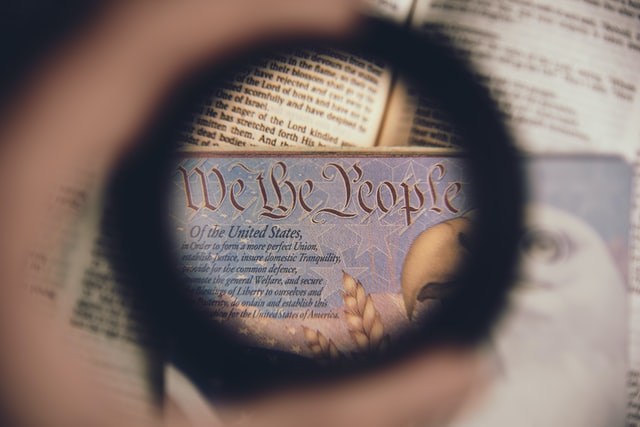


 I know I am not called upon to write any true confession, but I do want to be honest — that is the least a human being can do… I have always been a martial artist by choice and an actor by profession. But, above all, I am hoping to actualize myself to be an artist of life along the way.