Written by Rimbaud at age 18 in the wake of a tempestuous affair with fellow poet, Paul Verlaine, A Season in Hell has been a touchstone for anguished poets, artists and lovers for over a century. This volume presents the text in French and English with photographs by Robert Mapplethorpe.
The Prosperos is a distilled teaching of both Eastern and Western spiritual disciplines. Eastern Teachings such as Buddhism have been reengineered and absorbed in the Prosperos teachings for the Western Mindset. Eastern teachings were designed for an Eastern cultural mindset and as such for the Western mindset can create distortions along the way.
When I first started Translating, I encountered the concept of “letting go of your ego” almost immediately. I found it appealing. I gave in to envisioning “being one with all life” and “finding infinity in the present moment.”
Getting rid of my ego quickly became the main theme in my spiritual growth. Yet there was that nagging feeling that if there was a me of me in the I Am then my individuation must exist someplace somehow in there.
Letting go of the Ego, I learned was a Theme central to many in Eastern tradition practices. It was enlightening when I came across a quote by the Tibetan Buddhist monk, scholar, and meditation master Chögyam Trungpa, who had resided in Tibet and made his permanent home in Canada. Thus, he was versed in both Eastern and Western culture. From that perspective of both east and west he was able to say: “It is important to see that the main point of any spiritual practice is to step out of the bureaucracy of ego.” His quote can be found in his book Cutting Through Spiritual Materialism where he goes on to say “This means stepping out of ego’s constant desire for a higher, more spiritual, more transcendental version of knowledge, religion, virtue, judgment, comfort or whatever it is the particular ego is seeking.”
I know I’m not the only student in Western culture involved in spirituality studies and practices, who at one time or another have become obsessed with the necessity of ego abandonment rather than what my teacher Thane or Trungpa was advocating. That of piercing the veil between the spiritual and material Universe. For me, instead, I made the mistake of perceiving Ego as Spiritual Materialism ( the bad guy) and then pursuing a goal of proof that I could overcome ego (the bad guy) using my willpower of spiritual virtue, and a transcendent knowledge which of course was misguided, a lot of work, and it backfires.
________________________________________
As a new Translator, I began attempts to toss away all desires, judgments, prohibitions, and constraints stemming from my alleged ego. I wanted to go with the flow, to embrace all the challenges that life brings without resisting.
It took about a year for me to realize something was wrong with this approach. I was not more spiritual or enlightened, my living, sexual and work environments were far from perfect. I wasn’t just overworked; I was also “fending”- you know providing for and at the same time warding off friends, family, clients, and co-workers who like myself had little respect for my work-life boundaries.
During a business downturn year, at a company I was employed, there came a staffing crisis, I was given a larger workload and expected to take a shorter lunch period — though, by then, I could barely manage my existing workload. Constructive Criticism from the supervisor then became fault finding and scapegoating. Morale was low, the pressure was so intense, that I felt If only I had worked harder at my spiritual practice of “letting go of my ego” and “allow things to just be” it would all change. It never occurred to me at the time that I couldn’t say no or stick up for myself.
I was so invested in Transcending the situation by misuse of the Prosperos technique Translation, ( a form of writing meditation or sometimes called active prayer). encouraging me to simply “let go of my ego.”
By not using the practice fully, I was blind to the harm I was doing to myself. It did not occur to me or to remember the second part of our translation studies which says that after you do the written Translation, you listen for and do the practical thing. The practical thing, in that case, would have been to talk to my supervisor, voice my needs and frustrations and seek a resolution and if need be, find a new job. That I did not do, because I was so deeply focused on will power of get my ego out of the way.
Obviously, I was being self-righteous (self-deluded) . I wanted to have it my way — According to my spiritual convictions, just letting it be, going with the flow meant that everything would be instantly changed, a more relaxed, kinder working environment, proper lunchtime off. However, this conviction was The problem. I was totally incapable of letting go of the situation, or with my obsession to “let go” and do something different.
________________________________________
As I spiraled into burnout and ended up sick with the flu for two weeks, I reluctantly decided to use the Prosperos technique Releasing the Hidden Splendor (RHS). That is when I realized something: It was my lack of a strong ego, an individuation of Consciousness that created these problems to begin with.
My inability to realize that under and back of the term “ego” was an identity known as Individuation of Consciousness which was part and parcel of all, there is, which is Consciousness. In other words, Consciousness knowing itself as Consciousness. Getting sick was my body/emotion intelligence (somatic being} way of forcing me to stand down as my last resort. My somatic being forcing me to wind down at last, from unimaginable levels of stress and exhaustion, physically and emotionally.
As I spent my days in RHS, I connected the dots — and realized I have been doing this all my life. My relationships were failing because I’d waited too long to express what was bothering me and getting clarity in my communication with myself and thus had trouble communicating with others, for I was not coming from that place of clarity and truth..
All that time I didn’t realize that in order to “let go of my ego,” I had to get clarity of my identification about ego.
As I grew up, the “spiritual path” I chose seemed to reinforce my belief that this was the right way to deal with things (and perhaps this was why I was drawn to the path of least resistance initially). This was what “letting go of ego” meant to me at the time: not intervening with unpleasant events, but rather accepting them and growing in the discomfort.
I hadn’t yet realized that in order to truly “let go of my ego,” I had to make it known for what if truly was. My true identity is consciousness, learning to express itself in its individuation of consciousness.
The Two Sunday Meeting presentations done for the Prosperos School of Ontology called Conversations With Calvin are now posted as podcasts on the Prosperos Website for those of you who missed the live presentations or want to hear them again. [Sue Beck interview dated Aug.30, 2020, and Ugur Yilmaz interview date Sept. 27, 2020.]
In this continuing series, you are invited to listen to in-depth conversations with interesting and piquant guests. Conversations that distills ways of finding meaning; overcoming challenges; and keeping focused while traveling life’s path, and how in the process love [Agape] and clarity arrives unannounced and sometimes unexpectedly.
These conversation introduced by Rick Thomas; as well as other podcasts are available now, for free listening at:
Bathtub Bulletin Bathtub Bulletin Episode #4: Bathtub Bulletin editor Mike Zonta comments on the state of the election on October 3, 2020. Go to: http://bathtubbulletin.com/ Go to: http://occupysf.net/ Go to: https://zontaphotos.com/ Music: “Overture to Candide” by Leonard Bernstein Mike Zonta is an ordained Mentor in The Prosperos and is editor of www.bathtubbulletin.com and www.zontaphotos.com and co-editor of www.occupysf.net.
People of Praise was formed in 1971 by Kevin Ranaghan and Paul DeCelles. Both men were involved in the Catholic Charismatic Renewal, in which Pentecostal religious experiences such as baptism in the Holy Spirit, speaking in tongues and prophecy are practiced by Catholics. In its early history, it influenced the institutional development of the Catholic Charismatic movement in the United States and played important roles in national charismatic conferences.
People of Praise practice a form of spiritual direction that involves the supervision, also termed within the group as “heading,” of a member, either by that member’s husband, in the case of women, or by an individual the organization regards as more spiritually mature, in the case of men. Women are directed exclusively by their husbands, whilst men are directed by other members of the organization as deemed appropriate.
People of Praise maintains that members retain their freedom of conscience under such direction. The community, unlikely the mainline Catholic Church, excludes women from leadership positions. It nevertheless encourages women to pursue higher education and employment.[4]
The founding of People of Praise by Kevin Ranaghan and Paul DeCelles in 1971 in South Bend, Indiana, while the two were graduate students,[5] was an early and important event within the history of the overall covenant community movement. Various individuals who participated in its founding had attended Cursillo movement retreats,[6] including another graduate student, Stephen B. Clark (who came to author Building Christian Communities in 1972).[7] In 1963, after having attended the Archdiocesan Cursillo Center in Chicago, Clark organized a Cursillo retreat in South Bend.[8] Influenced both by Cursillo, local prayer meetings were formed. After Bill Storey visited from Dequesne University in 1967, elements from out of as well the burgeoning Catholic charismatic renewal of the times, were incorporated into these meetings.
Eventually several Catholic covenant communities were formed. After Word of God community formed in Ann Arbor, Michigan, in 1967, and the True House (1971–1974) and People of Praise communities (1971–present) were formed in South Bend.[9] (Others formed since then include Sword of the Spirit, the Mother of God Community[10] as well as constituent members of the North American Network of Charismatic Covenant Communities.[11][12]) Such communities initially may have been influenced by the communitarianism of the 1960s counterculture.[13]
Historical theologian Paul Thigpen writes that in general these communities “typically involved a commitment to at least some degree of sharing financial resources, regular participation in community gatherings, and submission to the direction of the group’s designated authorities.”[14] Larger communities were often divided into “households”, which did not always mean members were living in the same house. However, members of the same household needed to live close enough to each other to share meals, prayer times and other forms of fellowship. Most households were made up of one or two families, but others might be for single men or women.[10]
People of Praise experienced early growth recruiting from major universities and was especially closely connected to the University of Notre Dame.[15] The group helped develop important institutions for the larger Catholic Charismatic movement. Until 1990, the South Bend community was the headquarters for the National Service Committee (a coordinating body for the various Catholic charismatic groups). It was also the headquarters of the Charismatic Renewal Services (a national distribution center for religious books and tapes) and published a magazine called New Heaven, New Earth. It also played a major role in the renewal’s annual national conferences.[16] By 1987, People of Praise had around 3,000 members, including children.[17] By the end of the 1980s, Catholics were 92 percent of the membership.[15]
The charismatic catholic community typically focuses primarily on evangelical and not charitable works. However, People of Praise has been noted to engage in and compassionate or charitable efforts, while other charismatic catholic organizations do not make these activities their primary focus. For People of Praise, charitable activities comprise a fraction of their activities, with yearly tithes close to 3.8 million in 2017, salaries and other administrative expenditures comprised approximately 3.3 million for the Indiana parent organization, whilst various charitable works were allocated approximately $500,000, making those charitable efforts .Cite error: A <ref> tag is missing the closing </ref> (see the help page). They have also worked ecumenically through participation in the International Charismatic Consultation,[18] the Charismatic Concerns Committee, the Charismatic Leaders Fellowship[19] and, more recently, in the Rome-based Gathering in the Holy Spirit.[20] Members also served with Cardinal Josef Suenens in drafting of Malines Documents I and II,[21] and with Father Kilian McDonnell, in the writing of Fanning the Flame.[22] These documents have contributed to the articulation and understanding of charismatic renewal and its place in the Catholic Church. They have also contributed to an understanding of how this movement can be understood by members of Protestant denominations of Christianity.
The group has drawn media interest due to Judge Amy Coney Barrett‘s association with the group. Numerous media outlets have reported that Barrett is a member. In the wake of heightened interest in the group and its members following her nomination, People of Praise made the decision to remove some materials from its website: “Recent changes to our website were made in consultation with members and nonmembers from around the country who raised concerns about their and their families’ privacy due to heightened media attention.”[23][24][25]
Description
People of Praise defines itself as an ecumenical, charismatic covenant community “of families and single people who seek to participate in the mission of the church in our time and to live our lives communally”.[26] Members live in their own homes, and sometimes single people will live with an unrelated family.[27] There are some households in which only single men or single women live together.[13]
People of Praise is not a church. All members of the community simultaneously remain members of their local parishes.[28] The majority of its members are Catholics, with Lutherans, Anglicans, Methodists, Pentecostals and nondenominational Christians also represented.[29]The Spirit and Purpose of the People of Praise state that “we will live our lives together as fully as our churches permit, with the hope that we may soon attain a unity of faith in the fullness of Christ our Lord.”[30]
Members of the People of Praise engage in weekly meetings that include religious teaching, Scripture readings, witnessing, and prayer for those with needs. Local groups may also hold charismatic prayer meetings and meet for dinner, fellowship and praise and worship. Members also meet in small groups.[31]
Anthropologist Thomas Csordas has written that People of Praise is theologically conservative with a hierarchical leadership structure, but it is also influenced by the communitarianism of the 1960s counterculture.[13]
The People of Praise considers itself to be a “covenant community.” The community considers the covenant, when entered into among members, to be one of mutual care and service in spiritual, material, and financial matters.[32] The covenant is not an oath or vow; a member is released from it if they believe God is calling them to another way of life.[29] The covenant states:
Therefore, we covenant ourselves to live our lives together in Christ, our Lord, by the power of his spirit. We agree to be a basic Christian community, to find within our fellowship the essential core of our life in the spirit, in worship and the sacraments, spiritual and moral guidance, service, and apostolic activity. We accept the order of this community, which the Lord is establishing with all the ministry gifts of the Holy Spirit, especially with the foundational ministry gifts of apostles, pastors, prophets, teachers, and evangelists. We agree to obey the direction of the Holy Spirit manifested in and through these ministries in full harmony with the Church. We recognize in the covenant a unique relationship one to another and between the individual and the community. We accept the responsibility for mutual care, concern, and ministry among ourselves. We will serve one another and the community as a whole in all needs: spiritual, material, financial. We agree that the weekly meeting of the community is primary among our commitments and that we will not be absent except for a serious reason.[33]
Membership is open to all baptized Christians who believe in the Nicene Creed.[13] There are two stages of membership in the community: underway and covenanted. People who are new to the community join as underway members. This stage of membership is meant as a time for people new to the community to freely explore (in consultation with the leadership) whether they belong in the community. While a member is underway, he or she actively participates in all aspects of community life. Full membership occurs when one makes a public commitment to the covenant. Members make this pledge freely after a formation and instruction period that normally lasts three to six years.[32]
People of Praise is led by an eleven-member all-male board of governors, the chairman of which is the overall coordinator. The board’s responsibilities include electing the overall coordinator, establishing new branches, determining official teachings, approving the budget, and approving appointments made by the overall coordinator. Board members serve for six-year terms and cannot serve more than two consecutive terms.[34]
Each location of the community is called a branch. The larger branches are led by a group of branch coordinators. These branches are divided into areas, which are each led by an area coordinator. The principal branch coordinator serves as the main leader of the branch. Smaller or newer branches are led by a team of branch leaders. All these coordinators or branch leaders are selected from among the covenanted men in a branch.[citation needed] On matters of great importance, consultations involving all full or “covenanted” members of the community guide the direction of the community, including (within a branch) the selection of coordinators. Branch members nominate three people, and one is selected to be a coordinator by the overall coordinator.[35]
Headships and laypastor–penitant relationships
One highly controversial aspect of the covenant required by People of Praise is the practice of headships or lay-pastoral counselling in which individual members are supervised in their daily lives by a person regarded within the organization as more spiritually mature. [36]Pastoral care is considered an important service within the community; it is believed to foster relationships of love, service and charismatic ministry.[32]:15. Each member’s supervisor is referred to as a head. Influenced by Ignatian spirituality (the Spiritual Exercises of Ignatius of Loyola),[37][38][39] heads, in general give correction, become involved in decision-making, and give encouragement. This process is referred to as heading.
Married women are headed by their husbands. Single women and widows usually have other women as their heads. Men and women with the appropriate skills are assigned as heads by the coordinators.[citation needed] Men have other men as their heads.
According to Sean Connolly, communications director for People of Praise, functions of lay-pastoral counsellors and prayer meeting leaders within the community are not authoritarian in nature: “Freedom of conscience is a key to our diversity. People of Praise members are always free to follow their consciences, as formed by the light of reason, experience, and the teachings of their churches.”[29]
As a charismatic community, People of Praise recognizes prophecy as one of the spiritual gifts or charisms. Leaders of the community will consider the meaning of messages deemed prophetic when making decisions concerning group life, and sometimes will publish prophecy in community newsletters. There is no formal office of prophet, but the community does have a “word gifts” group made up of members that are considered to be gifted in prophecy on a regular basis.[40] The list of those members is not publicly disclosed to those outside the group.
The highest office a woman can hold in the community is “woman leader” (formerly “handmaid”). Women leaders “teach women on womanly affairs, give advice, help in troubled situations” and lead specialized women’s activities.[4] The term handmaiden was chosen in 1971 as a reference to Mary, the mother of Jesus, who, in most English translations of the Bible, described herself as “the handmaid of the Lord” or a woman who is close to God.[13] The community teaches that husbands are the head of the household as well as the spiritual head of their wives. While it emphasizes traditional gender roles, the organization encourages women to pursue higher education and employment.[4]
In much of community life, men and women work together without distinction. Both men and women prophesy and exhort at community meetings, teach together in the community sponsored schools, serve together as counselors at community camps, or as members or heads of music ministries, and evangelize together in inner cities. Still, there are some significant distinctions in the roles of men and women. As noted above, women are not able to be coordinators. The community, which refers to itself as a “family of families,” sees this patriarchal tradition as following the biblical model of the family. Men and women meet separately each week in small groups called ‘men’s groups’ or ‘women’s groups.’ The purpose is to build deeper relationships as brothers and sisters in Christ by discussing their lives and other issues with the goal of gaining wisdom, deepening friendships, and encouraging one another to be faithful to God. Traditional roles are reinforced by encouraging men to do most of the heavier physical work involved when a family is moving to a new home or re-roofing a house, and when setting up for meetings and similar tasks. Women are encouraged to provide food and childcare and run an effective household. However, these distinctions are not absolute. For example, women have also labored side by side with men in the construction work involved in the community’s Allendale outreach.[26][41]
More at: https://en.wikipedia.org/wiki/People_of_Praise
CAIRO (AP) — A prominent human rights group Thursday accused Egyptian police of arbitrarily arresting and torturing lesbian, gay, bisexual and transgender people, and urged authorities to end prosecutions for adult, consensual sexual relations.
Security forces routinely make random arrests of people based on their gender expression, unlawfully search their phones and entrap them through social media sites and dating applications, said a statement released by New York-based Human Rights Watch.
Detainees face torture and sexual violence, including repeated beatings, water-hosing and forced anal and vaginal examinations, the rights group said. It also accused security forces of extracting forced confessions from LGBT detainees, denying them access to legal counsel and medical care, and inciting fellow inmates to abuse them.
“Egyptian authorities seem to be competing for the worst record on rights violations against LGBT people in the region, while the international silence is appalling,” said Rasha Younes, LGBT rights researcher at Human Rights Watch.
Attempts to reach a government spokesman for comment were not immediately successful.
Homosexuality is highly taboo in Egypt among both majority Muslims and the Christian minority, but is not explicitly prohibited by law. In practice, however, the state regularly seeks to prosecute individuals under alternative charges including “immorality” and “debauchery,” which are normally reserved for prostitution.
Since 2017, Egyptian authorities launched a crackdown on the LGBT community following a concert in Cairo by a pro-LGBT Lebanese band. At the event, some of the audience raised the rainbow flag, a gesture that authorities saw as an attempt to promote homosexuality.
HRW said it interviewed 15 people, including LGBT people who were prosecuted between 2017 and 2020, two lawyers and two local LGBT activists.
The rights group statement quoted one of the victims as saying that he was picked up by police in downtown Cairo in 2019 and after a “senseless” beating by police was forced to stand for three days in a dark and unventilated room with tied hands and feet.
Another woman quoted in the HRW statement said she underwent three forced vaginal and anal examinations during her detention, a procedure that authorities call “virginity tests.”
“Morality and public order are hijacked, not preserved, when security forces arbitrarily arrest people and subject them to life-altering abuse in detention,” Younes said. “Egypt’s partners should halt support to its abusive security forces until the country takes effective steps to end this cycle of abuse, so that LGBT people can live freely in their country.”
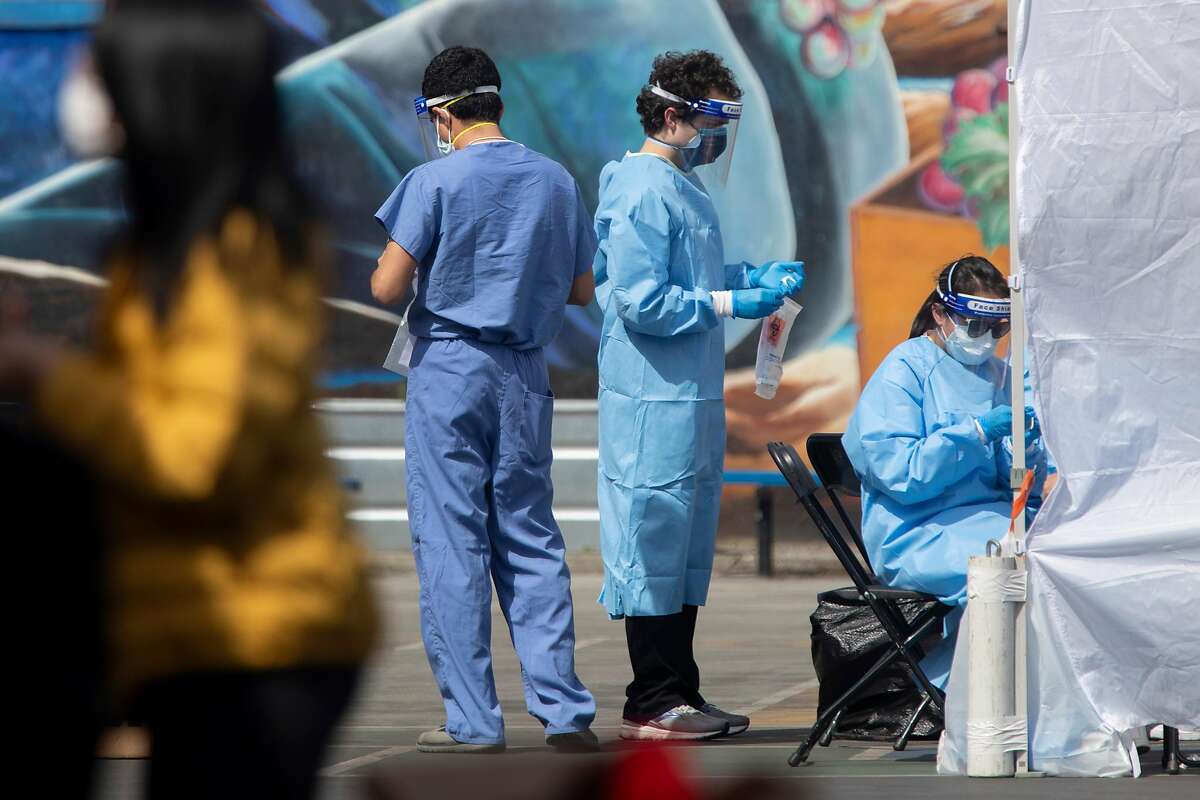
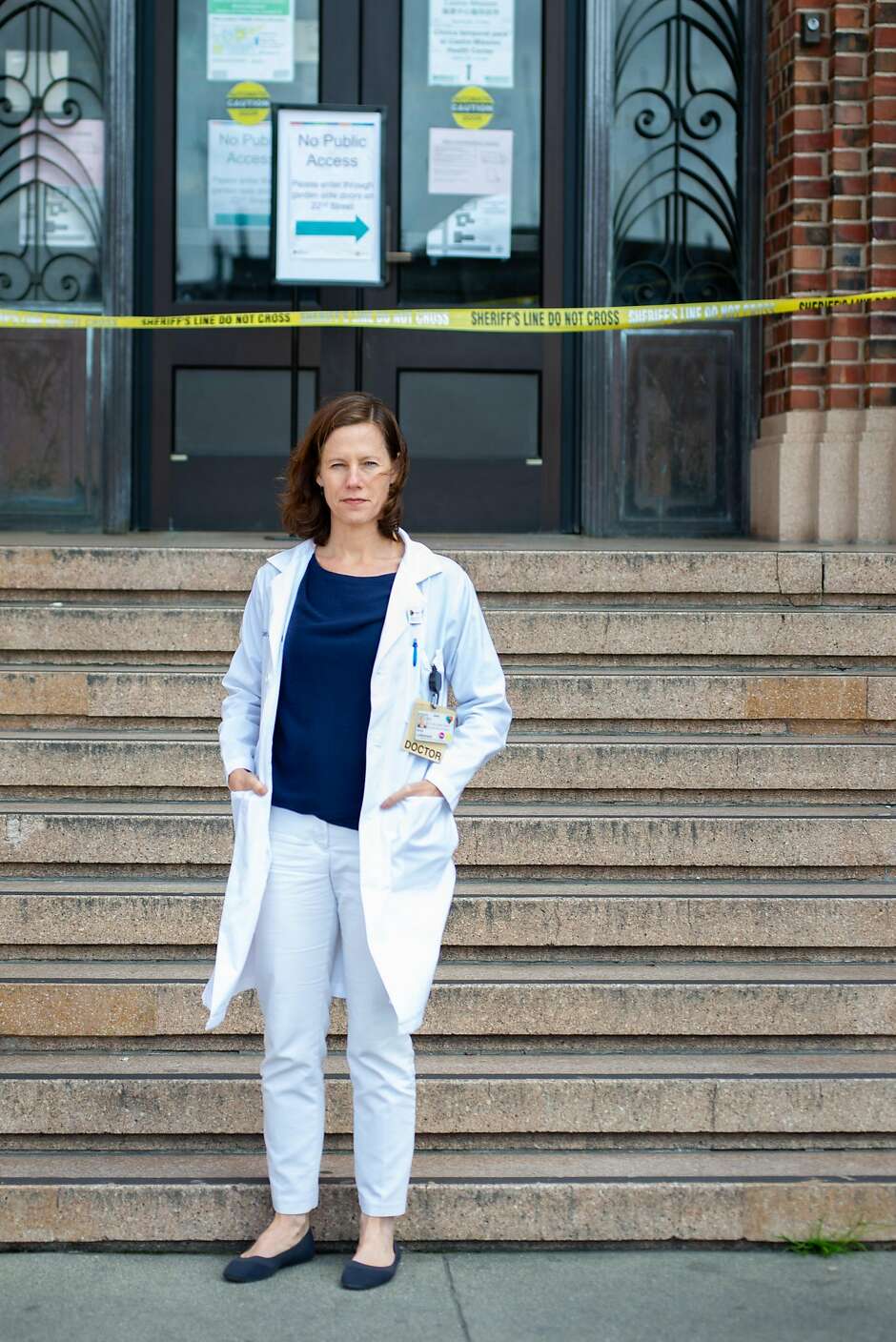
1of5Dr. Annie Luetkemeyer, director of the local trial for remdesivir , the ebola drug being tested on coronavirus, poses for a portrait at San Francisco General Hospital on March 24, 2020 in San Francisco, Calif.Photo: Kate Munsch / Special to The Chronicle2of5Volunteers and staff with UCSF move people through a coronavirus testing site in the Mission District.Photo: Jessica Christian / The Chronicle3of5Dr. Annie Luetkemeyer is leading a study of a drug that may work like Tamiflu for COVID-19.Photo: Kate Munsch / Special to The Chronicle
UCSF researchers are testing a promising COVID-19 drug that could lessen symptoms and keep people out of the hospital.
The drug, which could eventually work on coronavirus much the way Tamiflu reduces flu symptoms, is being rolled out in a clinical trial at Zuckerberg San Francisco General Hospital, one of many U.S. sites that are enrolling volunteers for the study.
The medicine, made by the drug company Eli Lilly, is a type of drug called a monoclonal antibody that in preliminary studies appears to help people in early or mild stages of the disease. If proved effective, this class of drugs could help people with less severe symptoms — the majority of people who fall ill with the coronavirus — recover. It could also help people who are sick stay out of the hospital, thus preserving precious hospital capacity, and make people with the virus less infectious. Like Tamiflu, it would be an antiviral that helps shorten the duration of symptoms.
The trial comes at a time when doctors and health officials are looking for treatments that could lessen the impact of COVID-19 and bridge the gap until viable vaccines are available. Effective drugs could bolster reopening efforts by giving the public some confidence that if they get sick, they can be treated. Experts, including Dr. Anthony Fauci, director of the National Institute of Allergy and Infectious Diseases, predict that the first vaccine is likely to get FDA authorization in November or December. But it will take months for vaccines to be available for the hundreds of millions of people who’d need to get vaccinated to return to normalcy. In a virtual discussion with the Journal of the American Medical Association last week, Fauci said he believes monoclonal antibody treatments are “the one we have most hope in” to serve as a bridge to a vaccine.
“When people get diagnosed with COVID, most of them aren’t admitted to the hospital because they don’t need to be, but they still feel lousy and can transmit to other people, and we have nothing to offer them,” said Dr. Annie Luetkemeyer, an infectious disease specialist at UCSF and principal investigator of the study in San Francisco. “We tell them to take care of themselves and monitor their symptoms, but don’t have treatments that have been shown to work in outpatients. It’s really important for us to have something to offer that keeps them out of the hospital, makes you feel better and reduces your transmission to others.”
It is unclear when such a drug, if effective in large studies, might be available to the public. In general, studies on some drugs can be completed faster and with fewer participants than studies on vaccines. With therapeutics, the drugs are given to people who are already sick, and researchers often know within weeks whether the drug helped. In vaccine trials, vaccines must be given to many more people, and only a small number of them will be exposed to the virus by chance; researchers must wait and see whether they are exposed before they can determine if the vaccine helped prevent infection.
A separate trial for the same drug is also under way at UCSF for COVID-19 patients who are hospitalized. Luetkemeyer’s study focuses on patients who are not hospitalized.
Drugs that have thus far garnered the most attention since the pandemic began have largely been for critically ill patients. The antiviral remdesivir and the steroid dexamethasone, for instance, have been shown to improve recovery or reduce deaths among patients hospitalized for COVID-19. While remdesivir is also being studied for outpatients, for the most part it has been given to very sick hospitalized patients because supplies are limited and because it must be given by IV infusion.
The Eli Lilly drug, LY3819253, which does not yet have a marketing name, is administered as a one-time infusion. It contains the LY-CoV555 antibody that has been manufactured to be the same antibody produced naturally by people who have recovered from the virus. In this way, it is different from convalescent plasma, which comes directly from patients who have recovered and is injected into very ill hospitalized patients. Monoclonal antibodies work to reduce the amount of virus in one’s body, allowing the immune system to then take over and fight the rest.
Monoclonal antibody drugs have successfully treated other diseases, including cancer, HIV, the respiratory virus RSV and Ebola.
A number of other drug companies are also studying monoclonal antibody drugs to treat COVID-19, including Merck and Regeneron.
“I think that the monoclonal antibody approach has a lot of promise, but like everything, we really need to do careful testing to see whether it works or not,” said Dr. Robert Siegel, a professor of microbiology and immunology at Stanford University. “It can be used to prevent serious disease. It can be used to prevent infection. And if you’ve been exposed, it also may be helpful in decreasing viral load so a person who’s infected won’t transmit it to anyone else. It could make you less infectious.”
Zuckerberg San Francisco General Hospital is the local enrollment site for the study, which is coordinated by the AIDS Clinical Trials Group and sponsored by the National Institutes of Health. It is part of Operation Warp Speed, the federal government’s push to develop coronavirus vaccines and therapeutics. The study is also enrolling volunteers at UCLA, UC San Diego and a number of other sites in the United States.
Volunteers do not have to be San Francisco General Hospital patients to participate, as long as they have been diagnosed with the coronavirus within the last 10 days and have symptoms. More information is available at riseabovecovid.com or by emailing covidresearchsfgh@ucsf.edu.
The study aims to enroll about 200 people in Phase 2, and, if the drug is shown to be effective, will advance to Phase 3 and enroll 2,000 people, Luetkemeyer said.
Eli Lilly on Sept. 16 announced data for its monoclonal antibodies drug, indicating it is safe and well tolerated. In the drug company’s early-stage studies, which have not been peer reviewed, the drug reduced virus levels and reduced hospitalizations. Regeneron on Tuesday posted similar data for its drug, showing it reduced viral load and shortened the amount of time patients had symptoms.
Catherine Ho covers health care and medical technology for the business desk at the San Francisco Chronicle. Before joining the paper in 2017, she worked at The Washington Post, the Los Angeles Times and the legal trade paper the Daily Journal.
KinoCheck International Official When They See Us Series Trailer 2019 | Subscribe ➤ http://abo.yt/ki | Chris Chalk Series Trailer | Release: 31 May 2019 | More https://KinoCheck.com/serie/ovi/when-… Based on a true story that gripped the country, When They See Us will chronicle the notorious case of five teenagers of color, labeled the Central Park Five, who were convicted of a rape they did not commit. The four part limited series will focus on the five teenagers from Harlem — Antron McCray, Kevin Richardson, Yusef Salaam, Raymond Santana and Korey Wise. Beginning in the spring of 1989, when the teenagers were first questioned about the incident, the series will span 25 years, highlighting their exoneration in 2002 and the settlement reached with the city of New York in 2014. When They See Us (2019) is the new drama starring Chris Chalk, Famke Janssen and Vera Farmiga. Note | #WhenTheySeeUs#Trailer courtesy of Netflix International B.V.. | All Rights Reserved. | #KinoCheck®



 ©2020 Hearst