Book: “White Fragility: Why It’s So Hard for White People to Talk About Racism”

White Fragility: Why It’s So Hard for White People to Talk About Racism

White Fragility: Why It’s So Hard for White People to Talk About Racism

by Robin DiAngeloMichael Eric Dyson (Foreword), Amy Landon (Narrator) 

The New York Times best-selling book exploring the counterproductive reactions white people have when their assumptions about race are challenged, and how these reactions maintain racial inequality.

Referring to the defensive moves that white people make when challenged racially, white fragility is characterized by emotions such as anger, fear, and guilt and by behaviors including argumentation and silence. These behaviors, in turn, function to reinstate white racial equilibrium and prevent any meaningful cross-racial dialogue. In this in-depth exploration, anti-racist educator Robin DiAngelo examines how white fragility develops, how it protects racial inequality, and what can be done to engage more constructively.

(Goodreads.com)

BRIAN GREENE – UNTIL THE END OF TIME: How To See The Beauty Of Science In Everything

London Real BROADCAST YOURSELF – 8 Week Course: https://londonreal.tv/by/ 2021 SUMMIT TICKETS: https://londonreal.tv/summit/ NEW MASTERCLASS EACH WEEK: http://londonreal.tv/masterclass-yt LATEST EPISODE: https://londonreal.link/latest Watch our full episode with Brian Greene for FREE on our website here: https://londonreal.tv/brian-greene-un… Brian Greene, professor of physics and mathematics, is renowned for his groundbreaking discoveries in superstring theory, including the co-discovery of mirror symmetry and of spatial topology change. He is known to the public through his books, The Elegant Universe, The Fabric of the Cosmos, and The Hidden Reality, which have collectively spent 65 weeks on the New York Times bestseller list and sold more than 2 million copies worldwide. The Washington Post called him “the single best explainer of abstruse concepts in the world today.” Professor Greene hosted two Peabody and Emmy Award winning NOVA miniseries based on his books and is a frequent television guest, joining Stephen Colbert seven times and playing himself in an episode of The Big Bang Theory. He has also had cameo roles in a number of Hollywood films including Frequency, Maze and The Last Mimzy. With producer Tracy Day, Greene co-founded the World Science Festival and he is the Director of Columbia University’s Center for Theoretical Physics. FREE FULL EPISODES: https://londonreal.tv/episodes SUBSCRIBE ON YOUTUBE: http://bit.ly/SubscribeToLondonReal London Real Academy: BUSINESS ACCELERATOR: https://londonreal.tv/biz LIFE ACCELERATOR: https://londonreal.tv/life BROADCAST YOURSELF: https://londonreal.tv/by SPEAK TO INSPIRE: https://londonreal.tv/inspire TRIBE: Join a community of high-achievers on a mission to transform themselves and the world! https://londonreal.tv/tribe#LondonReal#Motivation#TransformYourself

Astrobutterfly update

June 19, 2020 (astrobutterfly.com)

On June 21st, 2020 we have a powerful Solar Eclipse at 0° Cancer which coincides with the Southern Solstice.

Solar Eclipses are powerful by themselves.

Solstices (and Equinoxes) are powerful by themselves.

But when these two events occur at the same time, they build on each other and their influence is amplified by an order of magnitude.

Undoubtedly, the Solar Eclipse on June 21st is one of the most powerful Eclipses of the decade.

This Solar Eclipse is an Annular eclipse.

Annular Eclipses are Total Solar Eclipses, so the Moon completely overshadows the Sun; however since the Moon is farther from the Earth than usual, it appears to be slightly smaller than the Sun, thus creating a beautiful ring of fire.

The Annular Eclipse is visible in Central Africa, the Middle East and Asia.

What is an Eclipse?

Eclipses put us back on track of our destiny, when we go off track. They do this in two ways: either through creating new opportunities (North Node eclipses) or by “digesting” past experiences (South Node eclipses).

The Solar Eclipse in Cancer is a North Node eclipse – so it comes with opportunities.

Anything is possible when we have a North Node Eclipse. A North Node Eclipse is when the Universe gives you a green light to do whatever you want.

But be mindful of your choices. Because there will always be a payout – usually at a future South Node eclipse, 6 months from now.

Now we know that the Solar Eclipse in Cancer is a North Node Eclipse that comes with opportunities.

What about the Solstice?

Solstices and equinoxes have been used as astrological prediction tools for centuries. We have a solstice or an equinox every 3 months, when the Sun changes direction in the sky. That’s why the chart of the Solstice of the Equinox pretty much sets the scene for the upcoming 3 months of the year.

Not convinced? Let’s look at the previous Solstice and Equinox and see how they played out:

The previous Solstice in December 2019 was connected to a South Node Solar Eclipse and the Capricorn stellium – and it brought us the Coronavirus, and top-down enforcement of rules (Capricorn).

The March equinox was conjunct Chiron in Aries – and it brought to us the anti-racist movement, or the theme of healing (Chiron) our identity (Aries).

Similarly, the Cancer Solstice on June 21st will set the scene for the upcoming 3 months (June 21st – September 21st). The Solstice Cancer point is square Mars, so it will bring action, anger(Mars) and repressed emotions (Cancer) to the surface.

Mars is still in Pisces so we have a double dose of water (Cancer and Pisces). Double water means we can expect some powerful displays of emotions.

The Eclipse occurs at 0° Cancer. The 0° Cancer is the “Victim” or the “Vulnerable” degree. Cancer is the sign of safety and nurturing; at 0° Cancer is where we become aware of our vulnerabilities. We understand that it is OK to be needy, that it is OK to ask for support.

These Cancer themes are reinforced by the opening Mars square to the Sun.

Mars square the Sun is the point in the hero’s journey where the hero crosses the thresholdfrom the “familiar world” to the “unknown world”.

This is when the hero is the most vulnerable and needs help the most. In novels or movies, this is when the hero/heroine (the main character) screws up and realizes that they are not yet ready to achieve their mission. This is when a mentor/friend comes along and helps them out.

Sun-Mars squares, especially when they occur in Water signs, bring anger to the surface.

All our resentments, grievances, hostilities and guilts are being discharged. This emotional catharsis is a necessary step in the healing process.

Before we become aware of these feelings, we are in a state of numbness or depression. When we don’t know what’s wrong, we’re totally blind.

But when we finally become aware of these suppressed feelings, we tell them “yes, you exist”. We honor them. We allow them to become part of us. And it’s only when we become aware of them, that we can take meaningful action.

At the Solar Eclipse in Cancer, take your time to honor your emotions – with all the grief, sadness, and anger that may come out.

This is not a time to be vengeful (that’s 0° Libra, and more about this later). 0° Cancer is about making friends with the “Victim” side of your psyche. It is ok to cry, it is ok to ask for help.

Because when we do that from a genuine place of need and humbleness, help always comes along.

–Astro Butterfly

Cancer Solar Eclipse Full Moon June 20, 2020

Wendy Cicchetti

The eclipse of the Sun in Cancer presents the second eclipse, occurring at the solstice and officially welcoming summer — the warm center between the two lunar eclipses on either side. Eclipses have tended to be regarded as impacting nations rather than individuals. Yet, individual people often cannot help but be affected by what occurs at a national level. Besides, it is possible to also appreciate the psychological implications of eclipse-related events.

For instance, maybe we are busy trying to fulfil personal goals and missions, only to find that something external stands in the way — and perhaps that external element is not something we could have known about before, simply because some factors have changed. It is in the cycles of life and astrology that we find the greatest mystery — no set of circumstances is ever completely the same. There can, however, be similarities. It might be that the echoes are emphasized and useful during this solar eclipse, with the spotlight on the sign of Cancer, which tends to drum up the influence of the past — arguably more than any other zodiac sign.

During the solar eclipse, it is the Moon that obscures a part of the Sun. This puts an even stronger focus on family roots and other historic influences that continue to color our outlook and choices. These may have been perspectives and decisions that were obvious and automatic before; we never questioned them, we just acted on them. But things could change under this eclipse, when there is an opportunity to understand more about where a point of view or urge has come from. There is usually a certain subtlety around how we are motivated to move through life, which we don’t get to notice, often because of limits of time and circumstance — or simply because we don’t need to stop and think about it. But something about our changing times, under this eclipse trio, suggests that we do benefit from such pausing and reflecting.

We may even find that life encourages us towards more pondering and questioning. A new phase of unusual dreams can be the trigger, or something more external, such as an unexpected request from a family member or a new turn of events affecting them. Our perspective on what we thought we understood so well, before, might change. Ultimately, with an eclipsed Sun, we could question our own motives and moves. Did we understand a situation correctly? Did we make the best choice? It is possible that we will choose differently about a new step in the future. Or maybe we will be thrilled that we did, indeed, make the right choice! Either way, the eclipse prompts a moment of pause and a different view.

The Moon is both in her own sign of Cancer and at the earliest degree of that sign, which makes this a super special eclipse of the Sun. To be clear, it’s not a total eclipse, but an annular eclipse, with its characteristic “ring of fire” visible around the outside. There is a desire, within some of us, to ensure that something “too hot to handle” does not come too close. It may be a time to huddle within our inner circle and ensure that we don’t tiptoe into territory that makes us feel threatened.

The early degree of the Moon also imparts a sense of wanting to make a new start somewhere. This comes on the heels of the recent Sagittarius lunar eclipse, having already felt that something is dying out and needs to be let go. Not unlike the pattern of that previous eclipse, this time we do still have a square to Mars, but not a t-square. There could be less pressure to finish something and, instead, just a willingness to let it go and move on to something new.

Mars happens to be conjunct Neptune, so there may well be a dream for our future that is grappling for territory now and that should not be ignored. Mars often gives us the added thrust to make something happen and bring dreams into being. We might have been treading water for some time, given the Pisces focus, but perhaps we’re getting gradually closer to dry land!

This article is from the Mountain Astrologer, written by Diana Collis.

Anything While Black: Experiencing America’s Quiet Genocide

Michaella Henry · Jun 3 · Medium.com

Photo by jurien huggins on Unsplash

Atmy local off-price department store a few months back, I rummaged through a small clearance rack for a new cell phone case. The options here, brand-name items at a discount, are often disorganized. There were full-priced cases mixed with sale ones with little regard to what type of phone or model they belonged to. Some cases hung haphazardly on their respective hooks, some no longer hung at all. I picked up a clear, hard plastic case with a delicate rose print that did not have the necessary label, just a “$5.99” sticker hanging by a thin clear t-shaped tag.

Since no store associate was a qualified cell phone case connoisseur, the easiest solution was to try it out on my bare cell-phone. I began to nudge the edges of my phone into the case’s upper left and right corners when I thought of the store cameras above me. I pictured the color of my skin on a pixelated TV screen, how a blurred angle could tell the wrong story. I stopped and kept my cell phone out of my pocket in case that looked like an item as well. I piled my phone, the unlabeled phone case, and three other cases in my arms in full view as I headed to the front registers. When my turn came, I asked my cashier, a woman whose tag read ‘Pamela’, if I could try out the cases in front of her.

“Sorry to hold things up, I would have done it earlier, but…” I trailed off as Pamela smiled and nodded knowingly. Pamela was black, meaning without divulging any personal history, we shared the possibility of an unnecessary negative experience. Pamela understood without my saying, why even as a paying customer who has never shoplifted so much as a candy bar, I would feel the need to request her surveillance while figuring out if I could make use of a product in the store. Though the line of soccer moms was growing behind me, Pamela chatted excitedly comparing the phone case options, complimenting me on my taste, so that, for a moment, I was a little more at ease.

To be black in America is more trying than walking on eggshells. It is more dangerous than skating on thin ice. Those two challenges entail skillful precision in the former case and a known sense of precarity in the latter. Being black in America is walking down the same sidewalk where other people move along peacefully, but knowing that the cracks in between might open up when you alone are passing and swallow you whole. It is your country willing you to believe your situation is normal when the possibilities of you falling are endless.

It does not seem to matter that I follow the speed limits while driving to a fault. I still flinch when I see a police car, my heart races, and I start questioning anything I could be doing wrong. When I ride my bike down the quiet, scenic roads near the picturesque lake in the suburb where I live, I tense as I approach any and every white pedestrian. I mind my speed, make eye contact, and force myself to smile, coaching them to believe: “I’m friendly. I am like you. I might stand out in your neighborhood, but I promise I am not a threat.” To be black in America is to be born into the trauma of the constant threat of police violence, conforming, and self-censoring to navigate that unfair sidewalk and avoid the traps.

Someone might say I was overly cautious that day in the discount department store, but that someone is most likely not black. Maybe I could have tried on the case within ten seconds, realized it did not fit and moved on with my day. Maybe. But perhaps the store’s security personnel would have come over to check that I was not stealing, took my anxious silence as an admission of guilt, and called the cops. Perhaps a store associate would not ask me anything at all but would have called the police immediately if they perceived me as a “threat.” Maybe the police officers who arrived would see me as “insubordinate,” “argumentative,” or “aggressive,” and I would not be home writing this today.

Over one hundred fifty years after the abolition of slavery in America, white people still wield the power to end black lives for no reason at all and have no repercussions. Amy Cooper understood that power when she called the police on a harmless Central Park bird-watcher who politely asked her to follow the park rules and leash her dog in the bird-watching area. When the bird-watcher, Christian Cooper (no relation), began recording their interaction, Amy Cooper threatened to call the police and tell them, “There is an African-American man threatening my life.” She followed through on that evil threat, capitalizing on the fact that police interactions with innocent black people often result in black deaths. Amy Cooper went so far as to feign fear and breathlessness in her voice during this police call as though Christian Cooper, who remained calm and still, was actively pursuing her, all while strangling the dog she claimed the “African-American” was also threatening.

Just a few months before, a twenty-five-year-old in South Georgia, Ahmaud Arbery, who happened to be jogging while black, was shot to death by two white neighbors, one a former police officer. The murderers thought as Arbery jogged by their front yard, that he “looked like a man suspected of several break-ins in the area.” Ahmaud Arbery was visibly black. That is why two white men chose to end his life that day.

On March 13th, Louisville, Kentucky police killed Breonna Taylor for sleeping while black. Shortly after midnight, police entered her home on a “no-knock” warrant as part of an investigation into drugs that they never found on her property. The award-winning EMT who aspired to become a nurse died after being shot at least eight times.

When black people’s safety is not at risk for bird-watching or jogging, or sleeping, America denies us the right to breathe. On May 25th, George Floyd, a well-loved black man, was arrested for allegedly trying to use a $20 counterfeit bill while shopping at a grocery store. During that arrest by an entire gang of police officers, a white officer, Derek Chauvin, kneeled on Floyd’s neck for eight minutes and forty-six seconds, pressing him onto the pavement. Onlookers begged the officers to release Floyd. Floyd himself begged to breathe until he became unresponsive and limp.

Trayvon Martin

Michael Brown

Tamir Rice

Rekia Boyd

Sandra Bland

Sean Reed

Giovonn Joseph-McDade

There are too many more. I am ashamed to say I cannot remember all of the names of innocent black people who have lost their lives at the hands of white hate in recent years. And if I stare at the page long enough, I might start to imagine my own name printed there like a premonition. Throughout my time being born and raised in America, there has rarely been a moment when I am not aware or wary of my race. I am not black because thick lips and golden brown skin appear to be trendy at the moment or because I decided to be. I am black because I am. My blackness is evident and loud. It is one of the first things you see when you look at me. And it could one day lead to my death.

When I heard that black Americans are dying of COVID-19 at three times the rate of white Americans, the first word that came to mind was “genocide.” Of course, that word defines a deliberate killing of a particular group. But, we are suffering more in this pandemic due to a lack of access to diagnostic testing and medical treatment. Still, when I combine the coronavirus death rates with the caution necessary to make a store purchase or bird-watch or jog, it all feels very deliberate. If in 2020 we still cannot breathe, aren’t we already dying? It seems no matter where we turn or how we try to thrive, the ghost of some overseer lurks in the corner, watching, waiting.Age of Awareness

WRITTEN BY

Michaella Henry

Storyteller, scholar, feminist, writer of prose and code.

Age of Awareness

Age of Awareness

Stories providing creative, innovative, and sustainable changes to the education system

THE UNLIKELY CATHOLIC ACTIVIST WHO BELIEVED IN CIVIL DISOBEDIENCE ‘ANIMATED BY LOVE’

Dorothy Day’s Legacy Continues to This Day Through Followers Like Martin Gugino, the 75-Year-Old Protestor Shoved by Buffalo Police
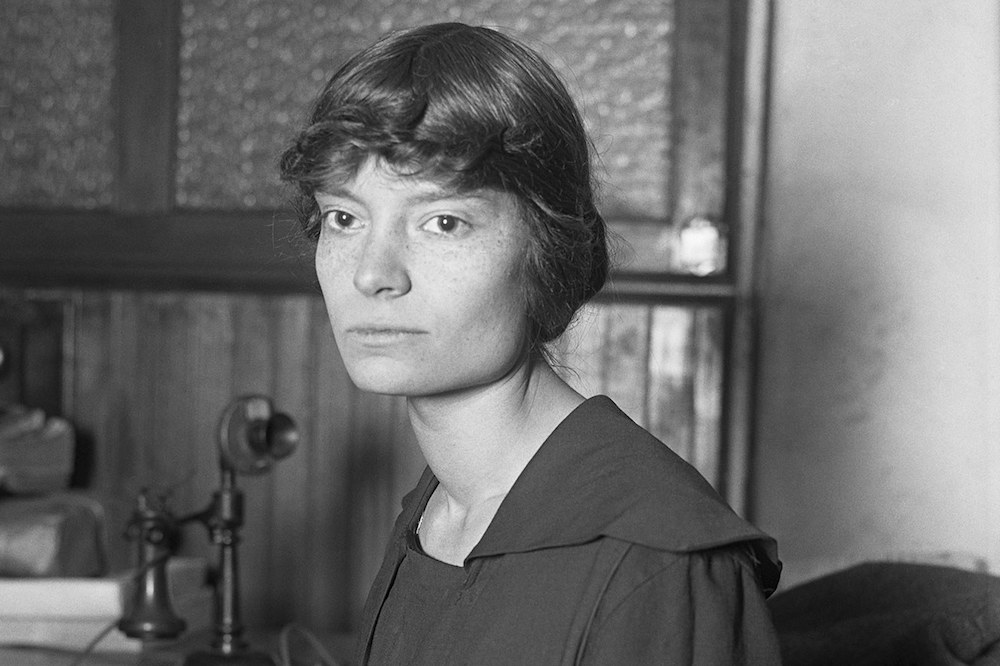
The Unlikely Catholic Activist Who Believed in Civil Disobedience ‘Animated by Love’ | Zocalo Public Square • Arizona State University • Smithsonian

Dorothy Day, pictured in 1916, was a founder of the Catholic Worker movement, worked to help disadvantaged people and promoted non-violence to protest Americans wars during the 20th century. Courtesy of Wikimedia Commons.

by JOHN LOUGHERY | JUNE 17, 2020 (zocalopublicsquare.org)

On June 5, 2020, in the midst of a nonviolent Black Lives Matter protest in Buffalo, New York, 75-year-old Martin Gugino, a longtime peace activist, approached a line of riot police to hand over an officer’s helmet that had dropped to the ground. He was pushed to the sidewalk by the riot police, who then proceeded to walk around him as he lay unconscious, bleeding profusely from his ear, on the concrete. When an officer attempted to bend down to see how badly Gugino was hurt, another officer pushed him away.

As video of Gugino’s assault was viewed around the world, it was reported that his activism grew out of his experiences with groups such as Witness Against Torture and the Catholic Worker—the latter formed in the first half of the 20th century by Dorothy Day. Though she is an obscure figure today, Dorothy Day was once very well known in the social-justice movement and in Catholic circles, having founded a newspaper, a network of “houses of hospitality” to serve the urban poor, and having given thousands of lectures. On her death in 1980, her obituary appeared on front pages around the country. While her name is no longer familiar, Day’s commitment to civil disobedience in response to America’s racism, militarism, and capitalist excess resonates today.

Day was an unlikely activist. Born in 1897 into a conservative Republican family with a disdain for religion, immigrants, racial minorities, and the indigent, she came to be America’s most ardent advocate for just those people, a deeply religious person, and—the ultimate paradox, to some—a political progressive and an orthodox Catholic. Day embodied contradictions—or seeming contradictions—leaving a legacy of thought and action that transcended her own times.

As a teenager, Day’s budding activism was a reaction to her parents’ way of life, which seemed to her to lack everything that would make one feel life had enduring meaning. As a girl, her reading—the social protest of Upton Sinclair and Jack London, the novels of Fyodor Dostoevsky and Leo Tolstoy—set her on a path that forever separated her from her family.

By the time she left college after two years, she was a committed progressive. She moved to Greenwich Village, then in its heyday, and worked as a journalist for left-wing publications like The Masses, entering into a milieu that took it for granted that Teddy Roosevelt’s and Woodrow Wilson’s America was far from the best of all possible worlds. She forged close relationships with people like the Communist activist Mike Gold and the playwright Eugene O’Neill. She took lovers. The late 1910s and early 1920s were a time when sexual experimentation and political activism went hand in hand, especially for a rebellious woman in her late teens and 20s.

While Dorothy Day was drifting further and further from the values and expectations of her family, she was never the typical bohemian that her Greenwich Village residence might imply. She was profoundly spiritual. After a night on the town with O’Neill and their hard-drinking friends, Day would find herself, almost inexplicably, drawn to a neighborhood Catholic church to watch devout men and women lost in prayer, to listen to the music, and to read the unnerving words of the New Testament.As Day defined it, civil disobedience needed to be animated by love, determination, and moral idealism—not by nihilistic fury.

Day’s decision to convert to Catholicism in 1927 amazed her secular friends, creatures of a society that was relentlessly rationalistic and disdainful of mystical things. Her need to believe in something larger than herself, something that gave the deepest possible meaning to life, was confusing to peers for whom the here-and-now was sufficient. Many Americans in the 1920s viewed Catholicism as a reactionary institution with an anti-modern outlook. For Day, the Church signified a total embrace of Christ’s teachings, a complete rethinking of the meaning of one’s life, a forsaking of one’s own comfort, while raising the possibility of transcendence.

Day’s combined passion for social justice and her deep religious faith led her to found, in the mid-1930s, what became the Catholic Worker movement. It encompassed the newspaper and the houses of hospitality, the thousands of young people who joined her, the thousands of lectures she delivered around the country for the next 40 years. Day’s organization was committed to seeing the human beings who came for succor—many of them suffering from hunger and mental illness—as embodiments of Christ. During the Depression and thereafter, Catholic Worker houses accepted “street people” whom city shelters or Salvation Army hostels would have turned away. They took literally Christ’s injunction that one does for God what one does “for the least of these.”

For Dorothy Day, this meant not only fighting against poverty and racism but also making an unbending commitment to pacifism. This was hard for many around her to accept—even some of her fellow Catholic Workers. Day had opposed America’s entry into World War I, as she would the U.S. involvement in Korea and Vietnam—but she also opposed the U.S. entry into World War II. It was a conflict that could have been avoided, she insisted, and the Fifth Commandment (“You shall not kill”) should be seen as absolute by anyone who claimed to be a Christian.

By the 1950s an America concerned principally with security, stability, and consumer growth had little interest in Day’s ethos. The Depression seemed like ancient history to many people, and the Pentagon’s massive budget during the Eisenhower years was an accepted fact of life. Not so in the eyes of the Catholic Worker. Day and her fellow activists went to jail several times for refusing to participate in nuclear drills, which required citizens to scurry into bomb shelters. They publicized their protests by refusing bail and accepting their sentences. To “normalize” a massive arms build-up, to imply that a nuclear war might be winnable, was the height of madness, they argued. The Cuban Missile Crisis, bringing the human race to the edge of extinction, was as much the fault of the United States, Day told astonished lecture audiences, as of the USSR and Cuba.

The mid and late 1960s presented profound challenges for Day. For years she had warned in the Catholic Worker about the possibility that the U.S. would instigate war in Vietnam. When the conflict escalated, Day welcomed the protests against President Lyndon Johnson and his policies. In December 1966, Cardinal Spellman of the New York archdiocese traveled to South Vietnam to bless American troops and urge them on to total victory against the North—and Day was dismayed. “Words are as strong and powerful as bombs, as napalm,” she wrote in her monthly column in the paper, chiding Spellman for his advocacy of continued violence rather than a negotiated peace. Day participated in the anti-war movement by harboring conscientious objectors, and she supported draft-card burners, including her friends the Berrigan brothers, priests whose occupation of Selective Service offices and burning of draft records earned them jail time.

Day called the Berrigans’ defiance “a kind of prayer.” Yet she also worried about the tone of the fiery protests of that decade. As an admirer of Mahatma Gandhi and Martin Luther King. Jr., she was uneasy about the destruction of property and aggression that the anti-war movement sometimes displayed. As Day defined it, civil disobedience needed to be animated by love, determination, and moral idealism—not by nihilistic fury. There was much about the counterculture she could not accept. Shortly after she criticized Spellman, Day attended an anti-war rally in Central Park and left dispirited; she could not support the shouted obscenities, expressions of rage, and personal attacks on the Cardinal. The kind of protest Day believed in asked its participants to accept jail time if necessary, to uphold the Sermon on the Mount as a statement of the highest good human beings can aspire to, and to rise above anger that objectifies one’s opponents, failing to see them as—like us—erring children of God.

There are ways in which Day would be sadly at home in this time of widespread advocacy for racial justice and police reform, and ways in which she would not. If she is remembered today it is through Pope Francis’s praise for her in his 2015 speech to the U.S. Congress and the Church’s investigation of her suitability for canonization, which have raised her profile somewhat.

But Day’s direct legacy is still active in American society. The socially conscious newspaper Day founded in the midst of the Depression, the Catholic Worker, is still in print, still a penny a copy, and still mailed out to 20,000 subscribers. (It had a readership of well over 100,000 at its peak.) The “houses of hospitality” Day opened in the 1930s for the urban homeless still feeds and offer shelter to the neediest of citizens.

And, of course, Day’s spirit animates the work of protesters like Martin Gugino. The officers who pushed Gugino have been charged with assault and indignation over the incident is widespread. How will all this play out? One thing we can expect: as a follower in Day’s footsteps, Gugino will probably not be silenced by the aggression shown him, and he will likely forgive his attackers. The example of Dorothy Day—in protesting injustice, in fearlessness in the face of aggressive authority, in infinite compassion—has not died out entirely.

JOHN LOUGHERY is the coauthor, with Blythe Randolph, of Dorothy Day: Dissenting Voice of the American Century.

Tulsa Still Faces Historical Trauma from 1921 Riot That Left 300 Dead on Black Wall Street

TOPICS
GUESTS
  • Hannibal B. Johnsonattorney and author of Black Wall Street: From Riot to Renaissance in Tulsa’s Historic Greenwood District.

(Democracy.org) As protests continue over the police killing of Terence Crutcher, we look at how Tulsa, Oklahoma, is no stranger to racial strife. On May 31, 1921, a white mob killed as many as 300 people, most of them black, after a black man was accused of assaulting a white elevator operator. Over two days, white mobs set fire to homes, businesses and churches in Greenwood, a thriving African-American business district known at the time as the Black Wall Street of America. When the smoke cleared, the area lay in ruins. Many blacks left and never returned. The National Guard rounded up thousands of others and held them at various locations around the city. We speak with author and attorney Hannibal Johnson, who examines this history in his book, “Black Wall Street: From Riot to Renaissance in Tulsa’s Historic Greenwood District.”