
Matthew Stelzner Moon Mars Jupiter Saturn Pluto Conjunction This morning I recorded this video on the very rare 5 planet in Capricorn conjunction now in our sky. It’s the first day of the Bay Area “Shelter in Place” rules, and fortunately we’re still allowed to go outside and spend time in nature. We do not need to stay six feet away from trees, and so I went up the hill to pray and draw cards with the incredibly rare 5-planets-in-Capricorn conjunction (Moon-Mars-Jupiter-Saturn-Pluto). This kind of alignment only happens once in a thousand years, and I’m calling it the “Council of Elders Super Portal.” If you can get out in the two hours before dawn the next two mornings and pray for guidance, these planets will hold council with you. They wish to guide us through these times of crisis. Me and Lola send blessings and love from San Francisco. Stay safe everybody, and vote for candidates who fight for equality and health care for all. Love! ♥️✨????♂️?♥️ To explore more of my work and get information about my intuitive readings: Visit my website at stelz.biz If you sign up for my mailing list you will receive two free videos on tarot practice. Check out my series of forecast videos for 2020 at https://www.youtube.com/playlist?list…
Monthly Archives: March 2020
The Ecology of Disease

By Jim Robbins
- July 14, 2012 (NYTimes.com)
THERE’S a term biologists and economists use these days — ecosystem services — which refers to the many ways nature supports the human endeavor. Forests filter the water we drink, for example, and birds and bees pollinate crops, both of which have substantial economic as well as biological value.
If we fail to understand and take care of the natural world, it can cause a breakdown of these systems and come back to haunt us in ways we know little about. A critical example is a developing model of infectious disease that shows that most epidemics — AIDS, Ebola, West Nile, SARS, Lyme disease and hundreds more that have occurred over the last several decades — don’t just happen. They are a result of things people do to nature.
Disease, it turns out, is largely an environmental issue. Sixty percent of emerging infectious diseases that affect humans are zoonotic — they originate in animals. And more than two-thirds of those originate in wildlife.
Teams of veterinarians and conservation biologists are in the midst of a global effort with medical doctors and epidemiologists to understand the “ecology of disease.” It is part of a project called Predict, which is financed by the United States Agency for International Development. Experts are trying to figure out, based on how people alter the landscape — with a new farm or road, for example — where the next diseases are likely to spill over into humans and how to spot them when they do emerge, before they can spread. They are gathering blood, saliva and other samples from high-risk wildlife species to create a library of viruses so that if one does infect humans, it can be more quickly identified. And they are studying ways of managing forests, wildlife and livestock to prevent diseases from leaving the woods and becoming the next pandemic.
It isn’t only a public health issue, but an economic one. The World Bank has estimated that a severe influenza pandemic, for example, could cost the world economy $3 trillion.
The problem is exacerbated by how livestock are kept in poor countries, which can magnify diseases borne by wild animals. A study released earlier this month by the International Livestock Research Institute found that more than two million people a year are killed by diseases that spread to humans from wild and domestic animals.
The Nipah virus in South Asia, and the closely related Hendra virus in Australia, both in the genus of henipah viruses, are the most urgent examples of how disrupting an ecosystem can cause disease. The viruses originated with flying foxes, Pteropus vampyrus, also known as fruit bats. They are messy eaters, no small matter in this scenario. They often hang upside down, looking like Dracula wrapped tightly in their membranous wings, and eat fruit by masticating the pulp and then spitting out the juices and seeds.
The bats have evolved with henipah over millions of years, and because of this co-evolution, they experience little more from it than the fruit bat equivalent of a cold. But once the virus breaks out of the bats and into species that haven’t evolved with it, a horror show can occur, as one did in 1999 in rural Malaysia. It is likely that a bat dropped a piece of chewed fruit into a piggery in a forest. The pigs became infected with the virus, and amplified it, and it jumped to humans. It was startling in its lethality. Out of 276 people infected in Malaysia, 106 died, and many others suffered permanent and crippling neurological disorders. There is no cure or vaccine. Since then there have been 12 smaller outbreaks in South Asia.
In Australia, where four people and dozens of horses have died of Hendra, the scenario was different: suburbanization lured infected bats that were once forest-dwellers into backyards and pastures. If a henipah virus evolves to be transmitted readily through casual contact, the concern is that it could leave the jungle and spread throughout Asia or the world. “Nipah is spilling over, and we are observing these small clusters of cases — and it’s a matter of time that the right strain will come along and efficiently spread among people,” says Jonathan Epstein, a veterinarian with EcoHealth Alliance, a New York-based organization that studies the ecological causes of disease.
That’s why experts say it’s critical to understand underlying causes. “Any emerging disease in the last 30 or 40 years has come about as a result of encroachment into wild lands and changes in demography,” says Peter Daszak, a disease ecologist and the president of EcoHealth.
Emerging infectious diseases are either new types of pathogens or old ones that have mutated to become novel, as the flu does every year. AIDS, for example, crossed into humans from chimpanzees in the 1920s when bush-meat hunters in Africa killed and butchered them.
Diseases have always come out of the woods and wildlife and found their way into human populations — the plague and malaria are two examples. But emerging diseases have quadrupled in the last half-century, experts say, largely because of increasing human encroachment into habitat, especially in disease “hot spots” around the globe, mostly in tropical regions. And with modern air travel and a robust market in wildlife trafficking, the potential for a serious outbreak in large population centers is enormous.
The key to forecasting and preventing the next pandemic, experts say, is understanding what they call the “protective effects” of nature intact. In the Amazon, for example, one study showed an increase in deforestation by some 4 percent increased the incidence of malaria by nearly 50 percent, because mosquitoes, which transmit the disease, thrive in the right mix of sunlight and water in recently deforested areas. Developing the forest in the wrong way can be like opening Pandora’s box. These are the kinds of connections the new teams are unraveling.
Public health experts have begun to factor ecology into their models. Australia, for example, has just announced a multimillion-dollar effort to understand the ecology of the Hendra virus and bats.
IT’S not just the invasion of intact tropical landscapes that can cause disease. The West Nile virus came to the United States from Africa but spread here because one of its favored hosts is the American robin, which thrives in a world of lawns and agricultural fields. And mosquitoes, which spread the disease, find robins especially appealing. “The virus has had an important impact on human health in the United States because it took advantage of species that do well around people,” says Marm Kilpatrick, a biologist at the University of California, Santa Cruz. The pivotal role of the robin in West Nile has earned it the title “super spreader.”
And Lyme disease, the East Coast scourge, is very much a product of human changes to the environment: the reduction and fragmentation of large contiguous forests. Development chased off predators — wolves, foxes, owls and hawks. That has resulted in a fivefold increase in white-footed mice, which are great “reservoirs” for the Lyme bacteria, probably because they have poor immune systems. And they are terrible groomers. When possums or gray squirrels groom, they remove 90 percent of the larval ticks that spread the disease, while mice kill just half. “So mice are producing huge numbers of infected nymphs,” says the Lyme disease researcher Richard Ostfeld.
“When we do things in an ecosystem that erode biodiversity — we chop forests into bits or replace habitat with agricultural fields — we tend to get rid of species that serve a protective role,” Dr. Ostfeld told me. “There are a few species that are reservoirs and a lot of species that are not. The ones we encourage are the ones that play reservoir roles.”
Dr. Ostfeld has seen two emerging diseases — babesiosis and anaplasmosis — that affect humans in the ticks he studies, and he has raised the alarm about the possibility of their spread.
The best way to prevent the next outbreak in humans, specialists say, is with what they call the One Health Initiative — a worldwide program, involving more than 600 scientists and other professionals, that advances the idea that human, animal and ecological health are inextricably linked and need to be studied and managed holistically.
“It’s not about keeping pristine forest pristine and free of people,” says Simon Anthony, a molecular virologist at the Center for Infection and Immunity at Columbia University’s Mailman School of Public Health. “It’s learning how to do things sustainably. If you can get a handle on what it is that drives the emergence of a disease, then you can learn to modify environments sustainably.”
The scope of the problem is huge and complex. Just an estimated 1 percent of wildlife viruses are known. Another major factor is the immunology of wildlife, a science in its infancy. Raina K. Plowright, a biologist at Pennsylvania State University who studies the ecology of disease, found that outbreaks of the Hendra virus in flying foxes in rural areas were rare but were much higher in urban and suburban animals. She hypothesizes that urbanized bats are sedentary and miss the frequent exposure to the virus they used to get in the wild, which kept the infection at low levels. That means more bats — whether from poor nutrition, loss of habitat or other factors — become infected and shed more of the virus into backyards.
THE fate of the next pandemic may be riding on the work of Predict. EcoHealth and its partners — the University of California at Davis, the Wildlife Conservation Society, the Smithsonian Institution and Global Viral Forecasting — are looking at wildlife-borne viruses across the tropics, building a virus library. Most of the work focuses on primates, rats and bats, which are most likely to carry diseases that affect people.
Most critically, Predict researchers are watching the interface where deadly viruses are known to exist and where people are breaking open the forest, as they are along the new highway from the Atlantic to the Pacific across the Andes in Brazil and Peru. “By mapping encroachment into the forest you can predict where the next disease could emerge,” Dr. Daszak, EcoHealth’s president, says. “So we’re going to the edge of villages, we’re going to places where mines have just opened up, areas where new roads are being built. We are going to talk to people who live within these zones and saying, ‘what you are doing is potentially a risk.’ ”
It might mean talking to people about how they butcher and eat bush meat or to those who are building a feed lot in bat habitat. In Bangladesh, where Nipah broke out several times, the disease was traced to bats that were raiding containers that collected date palm sap, which people drank. The disease source was eliminated by placing bamboo screens (which cost 8 cents each) over the collectors.
EcoHealth also scans luggage and packages at airports, looking for imported wildlife likely to be carrying deadly viruses. And they have a program called PetWatch to warn consumers about exotic pets that are pulled out of the forest in disease hot spots and shipped to market.
All in all, the knowledge gained in the last couple of years about emerging diseases should allow us to sleep a little easier, says Dr. Epstein, the EcoHealth veterinarian. “For the first time,” he said, “there is a coordinated effort in 20 countries to develop an early warning system for emerging zoonotic outbreaks.”Correction: July 22, 2012
An earlier version of this article described imprecisely the affiliation of Simon Anthony, a molecular virologist. While he works with EcoHealth, an organization of scientists devoted to wildlife conservation, his primary affiliation is as a postdoctoral research fellow at the Center for Infection and Immunity at Columbia University’s Mailman School of Public Health.
Jim Robbins is a frequent contributor to the Science section of The New York Times.A version of this article appears in print on July 15, 2012, Section SR, Page 1 of the New York edition with the headline: Man-Made Epidemics. Order Reprints | Today’s Paper | Subscribe
(Contributed by Richard Burns, H.W., M.)
Wuhan, China, confirms only 1 new coronavirus case for 2nd straight day; Every European country confirms cases
Americans are waking up to a country on virtual lockdown — empty streets, closed businesses — as confirmed cases of the new coronavirus are on the rise.
Wednesday, March 18, 2020 5:10AM (6abc.com)
Nearly four months after the first cases of COVID-19 were discovered in Wuhan, the Chinese city has reported just one new case for the second day straight.
Wuhan and the surrounding Hubai providence confirmed only one new case of the new coronavirus Monday and Tuesday, China’s National Health Commission reported.
Overall, the Chinese mainland has reported 80,894 confirmed COVID-19 cases and 3,237 deaths, but since, the number of new cases has dwindled, and more than 65,000 people recovered from the virus.
RELATED: More than 70% of COVID-19 patients in China have recovered, been discharged
Meanwhile, every single European country has confirmed at least one case of the new coronavirus disease. Before confirming its first two cases Tuesday night, Montenegro was the only European country without a single confirmed case of COVID-19.
The patients are both women — one is in her late 40s and the other is in her early 70s — and one had recently returned from Spain, ABC News reported.
The World Health Organization called Europe the epicenter of the pandemic. Italy now has 31,500 confirmed cases and more than 2,500 deaths.
Dr. Mike Ryan, the World Health Organization’s emergencies chief, said it can take up to six weeks for people to fully recover from COVID-19 infections, which could include pneumonia and other respiratory problems in serious cases. He said the numbers of reported patients have not always been systematically provided to World Health Organization although the U.N. health agency is asking every country with cases for further information.
The Associated Press and ABC News contributed to this report.
COVID-19 (A Manifestation of Narcissism?)
Teal Swan The COVID-19 (Corona Virus) Outbreak is spreading throughout the world, but what is spreading faster is the fear and panic surrounding it. You have fear within yourself and you have the power to take care of your fear so that it does not ruin your life. Teal Swan speaks on the Corona Virus, Covid-19. Full Article here ⟶ https://tealswan.com/teals-blog/covid…
Alan Watts – Just Trust the Universe
True Meaning Get Alan’s incredible books here! https://geni.us/PsvViO Alan Watts speaks about trusting the universe.
‘This can happen to anyone’: How this cell therapy pioneer, diagnosed with the coronavirus, wants to destigmatize COVID-19
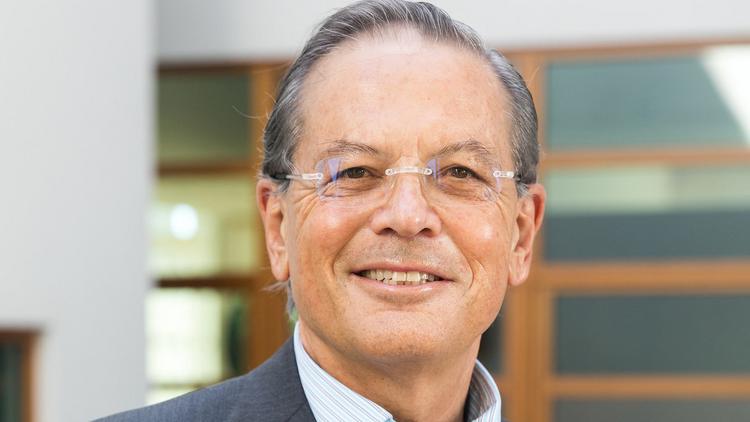
By Ron Leuty – Staff Reporter, San Francisco Business Times – March 15, 2020
Dr. Arie Belldegrun, a pioneer in the burgeoning area of cell therapy, has the coronavirus and a simple message: Get tested.
Belldegrun, the cofounder and executive chairman of cell therapy company Allogene Therapeutics Inc. (NASDAQ: ALLO) of South San Francisco, in a company statement Friday was described as having a dry cough and a “transient low-grade fever,” had chosen to self-quarantine and was tested for COVID-19. He was told Friday that the test was positive.
Continuing his quarantine at home, Belldegrun said he has experienced no additional symptoms and doesn’t know where he came in contact with the virus.
“As a physician, Dr,. Belldegrun felt it was important to issue this statement to recognize that this can happen to anyone and to help destigmatize exposure,” the company said. “He wants to encourage people to monitor updates from public health officials and seek testing should they begin to develop symptoms.
Belldegrun, the company said, also is “putting his support behind the health care system to make testing available to those in need.”
Belldegrun is the third known COVID-19 case connected to the Bay Area biotech industry, which also is working to find treatments, vaccines and ways to test for the coronavirus that causes COVID-19.
Last week, Genentech Inc. said two people who were on its campus in early March later tested positive for the virus. Meanwhile, Biogen Inc. (NASDAQ: BIIB) of Cambridge, Mass., has said at least 70 COVID-19 cases have been tied to people who attended or were in close contact with attendees of a company strategy meeting in Boston late last month.
Allogene said Belldegrun had been in direct contact with only three Allogene executives — and no other company employees — over the past two weeks. None of those individuals have reported flu-like symptoms associated with infection of the upper respiratory virus but have remained in self-quarantine after being involved in a recent banking conference.
Belldegrun founded cancer cell therapy company Kite Pharma before selling it in fall 2017 to Gilead Sciences Inc. (NASDAQ: GILD) for $12 billion. He launched Allogene with Dr. David Chang and investor Joshua Kazam the next year and quickly took it public to develop so-called allogeneic cell therapies that can be offered broadly and off-the-shelf to treat cancer and potentially a range of diseases. (/Kite and other cell therapy companies have concentrated on autologous cell therapies, where an individual patient’s own cells are extracted, re-engineered, grown and placed back into that specific patient.)
“While there is currently no impact to the work being done at Allogene, we will continue to take proactive measures to put the safety and well-being of employees, and the community at large, first,” the company said.
Bay Area organizations such as Gilead of Foster City, Vir Biotechnology Inc. (NASDAQ: VIR) of San Francisco and the University of California, San Francisco-affiliated Gladstone Institutes are working on potential treatments and diagnostics for COVID-19. Meanwhile, Roche Molecular Solutions of Pleasanton last week won the Food and Drug Administration’s first emergency use authorization for a commercially available test for COVID-19. That was followed by an emergency use OK Friday by the FDA for a test developed by Thermo Fisher Scientific Inc. (NYSE: TMO), which has operations in South San Francisco.
Porn Industry Leaders Announce Immediate Closure Of All Orifices

March 16, 2020 (theonion.com)
LAS VEGAS—Emphasizing that the high-traffic, high-impact areas could have far-reaching ramifications for the spread of coronavirus, porn industry leaders held a press conference Monday to announce the immediate closure of all orifices. “Although this was a difficult decision, as of this morning, we have ordered a nationwide closure of all slits, gashes, holes, and cracks until this global pandemic passes,” said Vivid Entertainment spokesperson Anthony Ufford, adding that while the shutdown could unfortunately leave many workers with no place to bust a nut or totally unable to get deep-dicked for weeks, it was ultimately the right thing to do. “We understand this is frustrating for many of our customers, but the fact of the matter is, the more holes that we can keep empty and unfilled, the more fingers, fists, and rock-hard cocks we can keep healthy during this difficult time. Once this is over, we assure you, faces will go back to being fucked, and pinkies will be back in the stink as soon as possible.” At press time, Ufford added that during the closure, he had also ordered every orifice to undergo a thorough deep-clean before reopening.
Balcony singing in solidarity spreads across Italy during lockdown
More apartment building residents sing or play instruments to boost morale
Sat 14 Mar 2020 (theguardian.com)
Balcony singing in solidarity has been a growing reaction to the coronavirus lockdown in Italy this weekend.
From the southern cities of Salerno and Naples, and the Sicilian capital Palermo to Turin in the north, residents of apartment buildings and tower blocks are continuing to sing or play instruments, or to offer DJ sets, from their balconies in a trend that is spreading from Italy across Europe to Spain and even to Sweden.
In one district of Rome neighbours entertained each other with a rendition of the folk song Volare, while in Florence the opera singer, Maurizio Marchini, sang the popular Puccini aria Nessun Dorma from Turandot.
Matteo Colombi, who works for the Florence’s water company, spoke about the response to a social media invitation for everyone who can play an instrument to go to their window to perform.
“In the flat in front of me, a couple with a small child appeared,” he said. “The mother carried him in her arms while the father played a children’s musical toy. They waved over at us and we waved back. We’ve never met.
“A little later I heard the sound of people using pans to beat out a rhythm. It turned out to be two elderly women, both small and physically frail, who were testifying in this way to their love of life and of the city. I took two pans myself and followed their beat. Then we said goodbye to each other and closed our windows as it was getting too cold to carry on.”
Claudia Bucchini and Andrea Zucco, who both teach music at the Fiesole music school also performed on their balcony.
The Scottish singer Lewis Capaldi posted his appreciation of a quarantined singer performing one of his songs from their balcony. A video, posted on Twitter by Alasdair Mackenzie, shows an unseen person singing Capaldi’s Brit-award winning song Someone You Loved. The star retweeted the video, commenting: “Amazing stuff! Stay safe.”
Videos of Italian citizens in lockdown arecirculating widely on social media as people sing and dance at their windows or on their balconies to keep up morale.
A recording made in the city of Siena in Tuscany has been viewed more than 600,000 times on Twitter. It shows residents singing the traditional Canto della Verbena about the city from their windows. One verse includes the phrase “long live our Siena!”.
The Italian singer Andrea Sannino has made a compilation on his Instagram feed that shows people singing his own song Abbracciame (Embrace Me) at their windows in Naples, his hometown.
The Italian tune from the 1990s, Grazie Roma, with the lyric, “Tell me what it is which makes us feel like we’re together, even when we’re apart” is also popular online.
Quieter neighbours have been using social media to encourage Italians to put up placards on their homes that read “andra tutto bene”, or “everything will be OK”, accompanied by a picture of a rainbow.