
The Michael Brooks Show Michael and Joshua Kahn Russell talk about spirituality and activism. This is free content from the weekly edition of TMBS. To support the Michael Brooks Show on Patreon and receive hours of weekly members-only content, subscribe at https://www.patreon.com/TMBS Follow The Michael Brooks Show and crew on twitter: @TMBSfm @_michaelbrooks @mattlech @davidslavick @davidgriscom
Monthly Archives: December 2019
Freedom is learning to like what it’s rational to like: Spinoza’s ‘abominable heresies’
Today, the philosophical treatise known as the Ethics (1677) by Baruch Spinoza is widely considered a masterwork of philosophy. But at the time of its publication, Spinoza’s radical vision of God as synonymous with nature was enough for the Portuguese-Jewish congregation of Amsterdam to excommunicate him for ‘abominable heresies’. In this short video from the London Review of Books, the British philosopher and historian Jonathan Rée dissects the radical rationalism of the Ethics, elucidating Spinoza’s once-unconventional views on God, freedom and the necessity of approaching the world with an ‘intellectual love’ above all else.
The Age of A.I. | How Far is Too Far?
Flash Mob: The United States Air Force Band at the National Air and Space Museum
Starting with a single cellist on the floor of the National Air and Space Museum’s Milestones of Flight gallery and swelling to 120 musicians, The United States Air Force Band exhilarated museum visitors yesterday with its first-ever flash mob. The four-minute performance featured an original arrangement of “Jesu, Joy of Man’s Desiring/Joy to the World,” led by the Band’s commander and conductor, Col. Larry H. Lang. Unsuspecting museum visitors including tourists and school groups were astonished as instrumentalists streamed into the gallery from behind airplanes and space capsules, and vocalists burst into song from the Museum’s second-floor balcony.
The Power of Myth 3
Joseph Campbell on marriage

“And so marriage, I would say, is not a love affair. It’s an ordeal. The ordeal is sacrifice of ego to the relationship, to the “twoness” which now becomes the one. By finding the right person we reconstruct the image of the incarnate God. And that’s what marriage is.”
–Joseph Campbell
Samatha
From Wikipedia, the free encyclopedia
| Part of a series on |
| Buddhism |
|---|
| History[show] |
| DharmaConcepts[show] |
| Buddhist texts[show] |
| Practices[show] |
| Nirvāṇa[show] |
| Traditions[show] |
| Buddhism by country[show] |
| Outline Religion portal |
| vte |

Samatha (Pāli) or śamatha[note 1] (Sanskrit: शमथ; Chinese: 止 zhǐ) is one of two qualities of mind[1] which is developed (bhāvanā) in Buddhist meditation, the other being vipassana (insight). Samatha is the quality of tranquility of the mind, or mind-calmness. Tranquility of the mind is achieved by practicing single-pointed meditation. This includes a variety of mind-calming techniques, the most commonly used method being mindfulness of breathing. Samatha is common to many Buddhist traditions.
Etymology
The semantic field of Tibetan shi and Sanskrit shama is “pacification”, “the slowing or cooling down”, “rest”.[2] The semantic field of Tibetan né is “to abide or remain” and this is cognate or equivalent with the final syllable of the Sanskrit, thā.[3]
The Tibetan term for samatha is shyiné (Wylie: zhi-gnas). According to Jamgon Kongtrul, the terms refer to “peace” and “pacification” of the mind and the thoughts.[4]
Book: “The Basis of Morality”

The Basis of Morality
by Arthur Schopenhauer, Arthur Brodrick Bullock (Translator)
Persuasive and humane towards mankind, if neither towards womankind, this classic of philosophy represents one of the nineteenth century’s most significant treatises on ethics. The Basis of Morality offers Schopenhauer’s fullest examination of traditional ethical themes, and it articulates a descriptive form of ethics that contradicts the rationally based prescriptive theories.
Starting with his polemic against Kant’s ethics of duty, Schopenhauer anticipates the latter-day critics of moral philosophy. Arguing that compassion forms the basis of morality, he outlines a perspective on ethics in which passion and desire correspond to different moral characters, behaviors, and worldviews. In conclusion, Schopenhauer defines his metaphysics of morals, employing Kant’s transcendental idealism to illustrate both the interconnectiveness of being and the affinity of his ethics to Eastern thought.
(Goodreads.com)
Lowell on truth and wrong
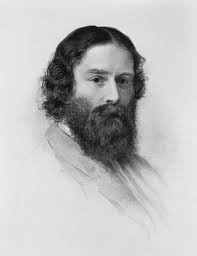
Truth forever on the scaffold, Wrong forever on the throne, Yet that scaffold sways the future, and, behind the dim unknown, Standeth God within the shadow, keeping watch above his own.
–James Russell Lowell
James Russell Lowell (February 22, 1819 – August 12, 1891) was an American Romantic poet, critic, editor, and diplomat. He is associated with the Fireside Poets, a group of New England writers who were among the first American poets that rivaled the popularity of British poets. Wikipedia
Heraclitus on justice

“To God all things are fair and good and right, but men hold some things wrong and some right.”
― Heraclitus
Heraclitus of Ephesus was a pre-Socratic Ionian Greek philosopher, and a native of the city of Ephesus, in modern-day Turkey and then part of the Persian Empire. Due to the oracular and paradoxical nature of his philosophy, and his fondness for word play, he was called “The Obscure” even in antiquity. Wikipedia