Researchers at the Chinese Academy of Sciences have spotted a mindbogglingly colossal black hole, according to Live Science, that’s roughly 70 times the mass of the Sun.
That’s more than three times the presumed upper limit of 20 solar masses that astrophysicists believed a black hole in our galaxy could be, setting up a scientific race to explain the existence of the cosmic monster.
“Black holes of such mass should not even exist in our Galaxy, according to most of the current models of stellar evolution,” lead researcher LIU Jifeng of the National Astronomical Observatory of China of the Chinese Academy of Sciences said in a statement.
LB-Fun
The black hole, dubbed LB-1, is some 15,000 light years from Earth and is one of an estimated 100 million stellar black holes in our galaxy — though only about two dozen have been spotted so far. A paper of their research was published in the journal Nature last week.
Towards the end of a typical Milky Way star’s life cycle, most of its gas is shed due to powerful stellar winds, leaving almost nothing behind. Yet “LB-1 is twice as massive as what we thought possible,” Jifeng said. “Now theorists will have to take up the challenge of explaining its formation.”
The researchers used China’s Large Sky Area Multi-Object Fiber Spectroscopic Telescope to spot signs of the black hole using a technique that’s only been around for about four years.
W. H. Auden was admired for his unsurpassed technical virtuosity and ability to write poems in nearly every imaginable verse form; his incorporation of popular culture, current events, and vernacular speech in his work; and also for the vast range of his intellect, which drew easily from an extraordinary variety of literatures, art forms, social and political theories, and scientific and technical information.
I sit in one of the dives On Fifty-second Street Uncertain and afraid As the clever hopes expire Of a low dishonest decade: Waves of anger and fear Circulate over the bright And darkened lands of the earth, Obsessing our private lives; The unmentionable odour of death Offends the September night.
Accurate scholarship can Unearth the whole offence From Luther until now That has driven a culture mad, Find what occurred at Linz, What huge imago made A psychopathic god: I and the public know What all schoolchildren learn, Those to whom evil is done Do evil in return.
Exiled Thucydides knew All that a speech can say About Democracy, And what dictators do, The elderly rubbish they talk To an apathetic grave; Analysed all in his book, The enlightenment driven away, The habit-forming pain, Mismanagement and grief: We must suffer them all again.
Into this neutral air Where blind skyscrapers use Their full height to proclaim The strength of Collective Man, Each language pours its vain Competitive excuse: But who can live for long In an euphoric dream; Out of the mirror they stare, Imperialism’s face And the international wrong.
Faces along the bar Cling to their average day: The lights must never go out, The music must always play, All the conventions conspire To make this fort assume The furniture of home; Lest we should see where we are, Lost in a haunted wood, Children afraid of the night Who have never been happy or good.
The windiest militant trash Important Persons shout Is not so crude as our wish: What mad Nijinsky wrote About Diaghilev Is true of the normal heart; For the error bred in the bone Of each woman and each man Craves what it cannot have, Not universal love But to be loved alone.
From the conservative dark Into the ethical life The dense commuters come, Repeating their morning vow; “I will be true to the wife, I’ll concentrate more on my work,” And helpless governors wake To resume their compulsory game: Who can release them now, Who can reach the deaf, Who can speak for the dumb?
All I have is a voice To undo the folded lie, The romantic lie in the brain Of the sensual man-in-the-street And the lie of Authority Whose buildings grope the sky: There is no such thing as the State And no one exists alone; Hunger allows no choice To the citizen or the police; We must love one another or die.
Defenceless under the night Our world in stupor lies; Yet, dotted everywhere, Ironic points of light Flash out wherever the Just Exchange their messages: May I, composed like them Of Eros and of dust, Beleaguered by the same Negation and despair, Show an affirming flame.
By Tim O’Rourke Nov. 27, 2016 Updated: Nov. 26, 2018 5:12 p.m. Comments (SFChronicle.com)
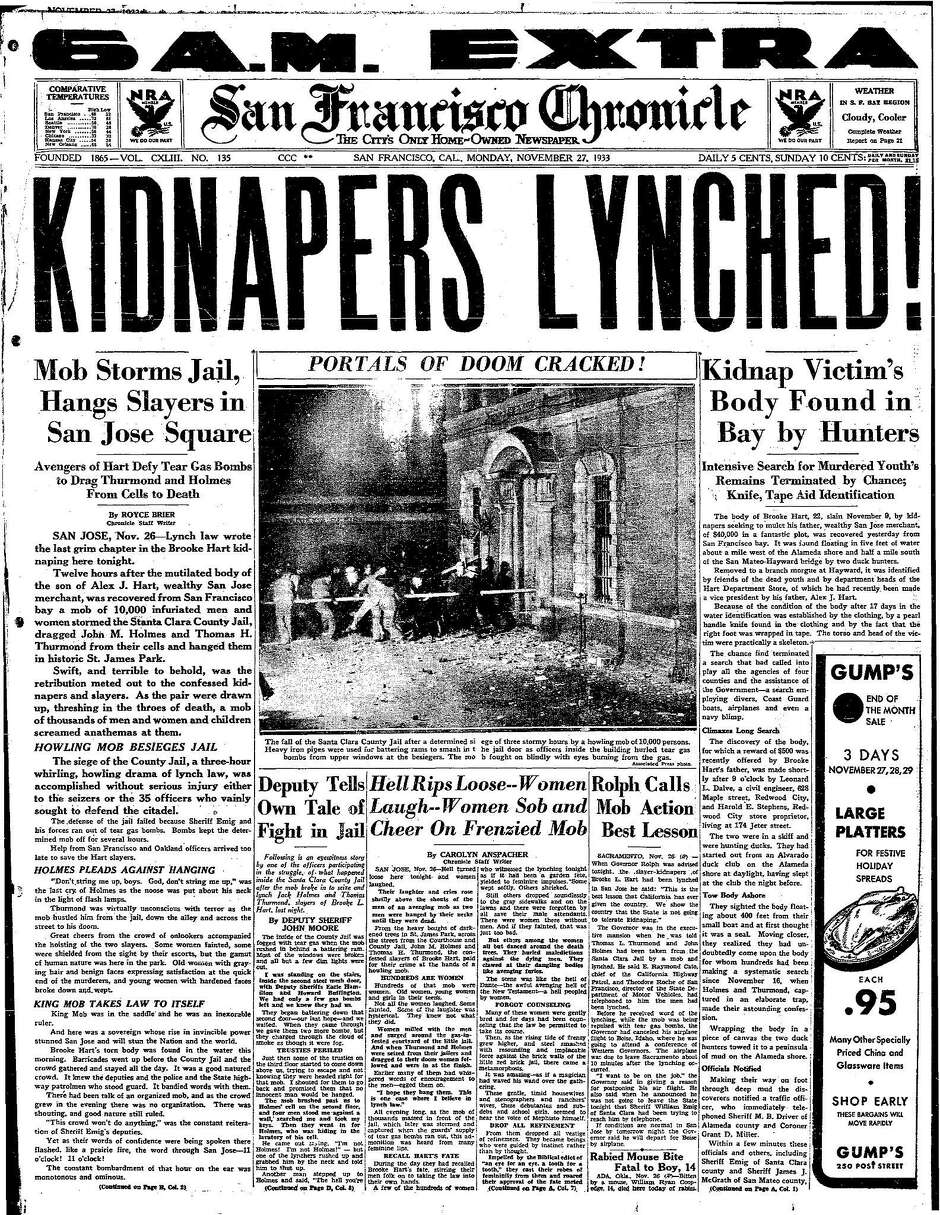
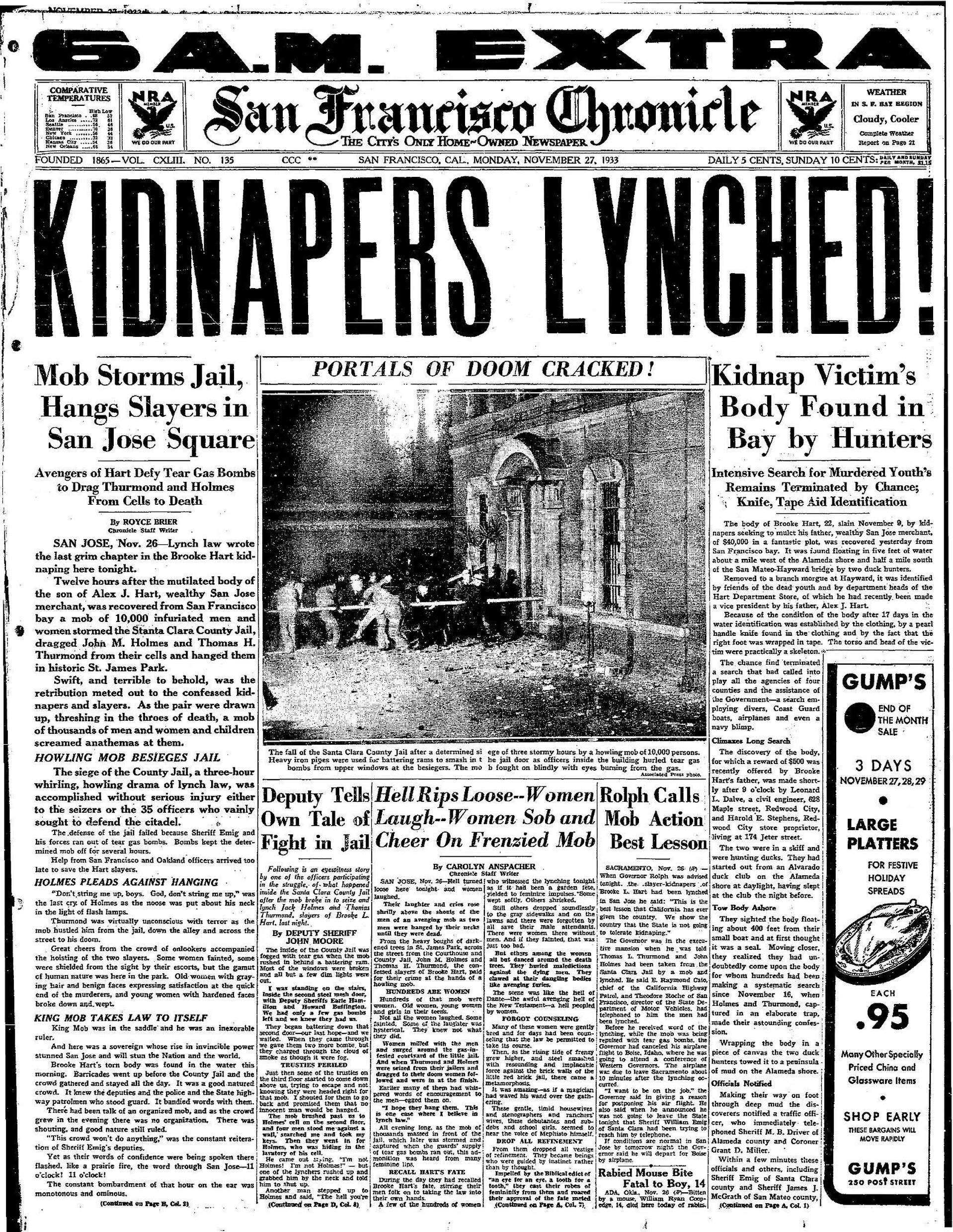
The Chronicle’s front page from Nov. 27, 1933, covers the lynching of two kidnap suspects in San Jose.Photo: The Chronicle 1933
Mob rule and blood thirst took control in the Valley of Heart’s Delight that night.
The Chronicle’s front page from Nov. 27, 1933, covers the lynching of two kidnapping and murder suspects in San Jose.
“Lynch law wrote the last grim chapter in the Brooke Hart kidnapping here tonight,” the story read. “Twelve hours after the mutilated body of the son of Alex J. Hart, wealthy San Jose merchant, was recovered from San Francisco Bay a mob of 10,000 infuriated men and women stormed the Santa Clara County Jail, dragged John M. Holmes and Thomas H. Thurmond from their cells and hanged them in historic St. James Park.”
It was a shocking scene, even 83 years ago. The Chronicle’s Royce Brier was there, and he would win the Pulitzer Prize for his reporting that night. The headline read “Kidnapers lynched!” using the accepted spelling of the time, and the size of the headline reflected the hangings’ impact in the Bay Area and beyond.
“Swift, and terrible to behold, was the retribution meted out to the confessed kidnappers and slayers,” Brier wrote. “As the pair were drawn up, thrashing in the throes of death, a mob of thousands of men and women and children screamed anathemas at them.
“The siege of the County Jail, a three-hour whirling, howling drama of lynch law, was accomplished without serious injury either to the seizers of the 35 officers who vainly sought to defend the citadel.
“The defense of the jail failed because Sheriff Emig and his forces ran out of tear gas bombs,” Brier continued. “Bombs kept the determined mob off for several hours.
“Help from San Francisco and Oakland officers arrived too late to save the Hart slayers.”
See more front pages: Go to SFChronicle.com/covers to search a database of hundreds of Chronicle Covers articles that showcase the newspaper’s history.
Chronicle Covers highlights one classic Chronicle newspaper page from our archive every day for 366 days. Library director Bill Van Niekerken and producers Kimberly Chua, Michelle Devera and Jillian Sullivan contributed to the project. Tim O’Rourke is the executive producer and editor of SFChronicle.com. Email: torourke@sfchronicle.com Twitter: @TimothyORourke
If you’ve ever felt the buzz of your phone against your thigh only to realize the sensation was entirely in your head, you’ve had a sensory perception of something that isn’t real. And that, according to the psychologist Philip Corlett, is what makes a hallucination.
To many, this definition may seem shockingly broad. Hallucinations were long considered the stuff of psychoses or drug trips, not a regular and inconsequential part of life. But Corlett operates on the idea that hallucinations exist within a hierarchy. At the highest level, according to Corlett’s collaborator Albert Powers, they would be something like hearing “whole sentences of clearly spoken speech of a being who seems quite real.” But, moving further down the line, hallucinations can be far more banal: an imagined text message, a phantom raindrop, a new parent’s mistaken sense of her child by her bedside.
This hierarchy perspective represents an ongoing revelation in how widespread and varied hallucinations can be. A survey in the early 1990s found that 10 to 15 percent of the population of the United States experienced vivid sensory hallucinations at some point in their lives. And scientists have begun to take seriously the idea that voice hearing and other forms of auditory hallucination can be benign or “nonclinical.” This newfound ubiquity has come with a host of questions. Why is it so common for people to perceive what isn’t there, and how does the brain allow this to happen in the first place? To find answers, researchers have turned to the mechanics of how we perceive reality itself.
For Corlett and Powers, both from the Yale School of Medicine, hallucinations have everything to do with expectations. In a paper in Science, they explore how the mysterious experiences fit into a larger, speculative idea about how the brain works—and, in a sense, what the brain is. The pair recounts a 2017 study they conducted, in which their group tried to induce hallucinations both in people who commonly report hallucinations across the psychotic spectrum and in people who don’t normally hallucinate. The participants were taught to expect to hear a tone after being shown a flashing light, and then were made to press a button when they thought they heard a tone. They were told to hold down the button longer to rate their confidence in what they heard. People who regularly hallucinate held the button—that is, they hallucinated—significantly longer than those who don’t.
Corlett and Powers see this experiment as evidence for their perspective on how people understand the world around them. By their way of thinking, the brain works by “predictive coding”: integrating new information based on the beliefs built on old information. “When we go about the world, we’re not just passively perceiving sensory inputs through our eyes and ears,” Corlett says. “We actually build a model in our minds of what we expect to be present.”
This mental setup works great for allowing us to move smoothly through the world, taking in each detail without a second thought. But sometimes, Corlett and Powers say, the brain has the capacity to overpredict: It can expect something that isn’t there, and this expectation can be so strong that we actually perceive the nonexistent thing. Thus, a hallucination.
The idea of predictive coding is part of a way out of a knotted, overlapping, and sometimes competing lineage of trying to explain hallucinations. Another model, inner-speech theory, was popularized in part by the writings of the 20th-century psychologist Julian Jaynes. It holds that people who hear voices are really hearing their own thoughts that feel like someone else’s. This explanation has been propped up more recently by corollary-discharge theory, which states that the body’s tracking of its boundaries and actions (the neural machinery that makes your arm feel like your arm and your foot feel like your foot) fails for the thoughts and voices of people with psychotic disorders who experience auditory hallucinations.
“We’re still working to see how our model fits in with those models,” Corlett says.
This quest for a leg to stand on in researching hallucinations has yielded some theatrical—and sometimes even poetic—experiments. In his book on the science and history of auditory hallucinations, Charles Fernyhough, a psychologist at Durham University, tells how a psychiatrist in the ’40s found that as a group of people with schizophrenia hallucinated voices, muscles in their throats responsible for speech would twitch along with the words they heard. The voices seemed to be their own words hidden elsewhere.
Decades later, researchers recorded the voices of hallucinators with psychotic disorders and presented these subjects with electronically distorted copies. They wanted to see if the hallucinators could identify their own distorted voices. In the same vein, researchers have explored using computerized avatars à la Second Life in the past decade to try and help hallucinating psychotics assign their “presumed persecutors” a face to talk to, with the goal of softening the things these voices said to them.
Corlett also pointed me toward sine-wave speech, a particularly stunning example of the way expectation can seem to shape our reality when it comes to language. You can try it yourself: Listen to this sound (don’t turn your volume too loud). Most people will hear an R2-D2-like swell of vocoder-tinged whistling. Next, listen to this recording of a woman saying, “It was a sunny day, and the children were going to the park,” in a soothing, southern English accent. Now try R2-D2 again. Listening to the whistling sine-wave speech, you’ll likely hear a distorted version of the same “sunny day” sentence. And in all likelihood, you won’t be able to un-hear the words in the first recording now.
Hallucinators may have an easier time parsing the R2-D2-like sounds, even before listening to the other recording. In a 2017 study, nonclinical voice hearers were far better at recognizing the presence of a voice in sine-wave speech than their non-voice-hearing counterparts. And as a group, their brains fired along a pattern distinct from those who couldn’t tell that the sine-wave speech was a voice. This example, Corlett says, builds the case that auditory hallucinations are linked to the processes of expectation and prediction.
Still, Fernyhough points out, there are some potential holes in the idea of predictive coding. “Compared to the conventional view of the brain as a device that processes information coming from the environment, predictive coding starts with a different set of assumptions about how the brain makes predictions about what is in the environment and then learns from them,” he said. And that can make it hard to reconcile with other, more established ways of looking at the brain.
Corlett, meanwhile, argues that there’s a gap in inner-speech theory. Citing a study in which people rendered mute from birth reported hearing voices in their heads, he says that the phenomenon can’t be completely explained as the brain misreading itself.
Whatever explanations stand the test of time, the stakes of this science are much higher than understanding why many of us imagine text messages. For some people, hallucinations can be more persistent and disturbing. The science of how these hallucinated touches, sounds, and sights manifest in the mind is still unclear. It’s too early to say how much the causes of auditory hallucinations and other kinds might overlap, Fernyhough says. So far, the research has focused on auditory hallucinations. And to many, the need for that work is quite clear. Eleanor Longden, a mental-health researcher and advocate, has publicly recounted how her own auditory hallucinations have shifted between neutral and distressing at different points in her life. She’s made the case that the social stigma and judgment she received from her doctor at the time made them more negative.
“Hallucinations can be very distressing and debilitating. They can also be neutral or positive,” Fernyhough says. “A better understanding of how they occur and how they can be managed could alleviate a great deal of mental distress.”Joseph Frankel is a former editorial fellow at The Atlantic.
This article was originally published on October 2, 2018, by The Atlantic, and is republished here with permission.
The greatest epic poem in the English language, John Milton’s Paradise Lost, has divided critics – but its influence on English literature is second only to Shakespeare’s, writes Benjamin Ramm.
Milton’s Paradise Lost is rarely read today. But this epic poem, at over 350 years old, remains a work of unparalleled imaginative genius that shapes English literature even now.
In more than 10,000 lines of blank verse, it tells the story of the war for heaven and of man’s expulsion from Eden. Its dozen sections are an ambitious attempt to comprehend the loss of paradise – from the perspectives of the fallen angel Satan and of man, fallen from grace. Even to readers in a secular age, the poem is a powerful meditation on rebellion, longing and the desire for redemption.
Despite being born into prosperity, Milton’s worldview was forged by personal and political struggle. A committed republican, he rose to public prominence in the ferment of England’s bloody civil war: two months after the execution of King Charles I in 1649, Milton became a diplomat for the new republic, with the title of Secretary for Foreign Tongues. (He wrote poetry in English, Greek, Latin and Italian, prose in Dutch, German, French and Spanish, and read Hebrew, Aramaic and Syriac).
Milton gained a reputation in Europe for his erudition and rhetorical prowess in defence of England’s radical new regime; at home he came to be regarded as a prolific advocate for the Commonwealth cause. But his deteriorating eyesight limited his diplomatic travels. By 1654, Milton was completely blind. For the final 20 years of his life, he would dictate his poetry, letters and polemical tracts to a series of amanuenses – his daughters, friends and fellow poets.
Milton is shown dictating Paradise Lost to his daughters in this engraving after a painting by Michael Munkacsy. Credit: Alamy.
In Paradise Lost, Milton draws on the classical Greek tradition to conjure the spirits of blind prophets. He invokes Homer, author of the first great epics in Western literature, and Tiresias, the oracle of Thebes who sees in his mind’s eye what the physical eye cannot. As the philosopher Descartes wrote during Milton’s lifetime, “it is the soul which sees, and not the eye”. William Blake, the most brilliant interpreter of Milton, later wrote of how “the Eye of Imagination” saw beyond the narrow confines of “Single vision”, creating works that outlasted “mortal vegetated Eyes”.
Clever Devil
When Milton began Paradise Lost in 1658, he was in mourning. It was a year of public and private grief, marked by the deaths of his second wife, memorialised in his beautiful Sonnet 23, and of England’s Lord Protector, Oliver Cromwell, which precipitated the gradual disintegration of the republic. Paradise Lost is an attempt to make sense of a fallen world: to “justify the ways of God to men”, and no doubt to Milton himself.
Milton’s religious lexicon – which sought to explain a ‘fallen’ world – itself has fallen from use
But these biographical aspects should not downplay the centrality of theology to the poem. As the critic Christopher Ricks wrote of Paradise Lost, “Art for art’s sake? Art for God’s sake”. One reason why Milton is read less now is that his religious lexicon – which sought to explain a ‘fallen’ world – itself has fallen from use. Milton the Puritan spent his life engaged in theological disputation on subjects as diverse as toleration, divorce and salvation.
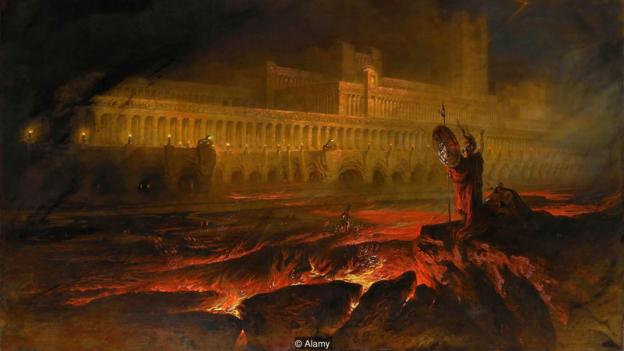
John Martin’s 1825 painting depicts Pandemonium, the capital of Hell in Paradise Lost. Credit: Alamy.
The poem begins with Satan, the “Traitor Angel”, cast into hell after rebelling against his creator, God. Refusing to submit to what he calls “the Tyranny of Heaven”, Satan seeks revenge by tempting into sin God’s precious creation: man. Milton gives a vivid account of “Man’s First Disobedience” before offering a guide to salvation.
Better to reign in Hell, than serve in Heaven – Milton
Ricks notes that Paradise Lost is “a fierce argument about God’s justice” and that Milton’s God has been deemed inflexible and cruel. By contrast, Satan has a dark charisma (“he pleased the ear”) and a revolutionary demand for self-determination. His speech is peppered with the language of democratic governance (“free choice”, “full consent”, “the popular vote”) – and he famously declares, “Better to reign in Hell, than serve in Heaven”. Satan rejects God’s “splendid vassalage”, seeking to live:
Free, and to none accountable, preferring Hard liberty before the easy yoke Of servile Pomp.
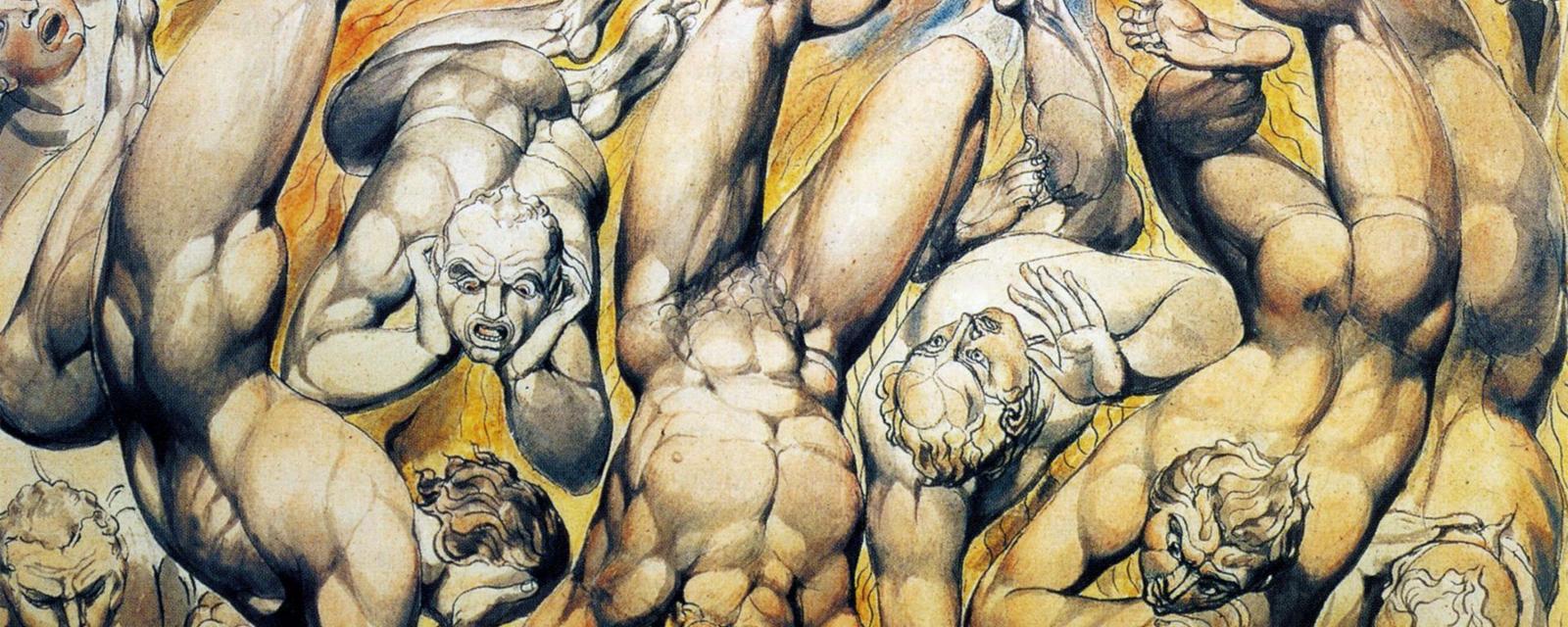
Nonconformist, anti-establishment writers such as Percy Shelley found a kindred spirit in this depiction of Satan (“Milton’s Devil as a moral being is… far superior to his God”, he wrote). Famously, William Blake, who contested the very idea of the Fall, remarked that “The reason Milton wrote in fetters when he wrote of Angels & God, and at liberty when of Devils & Hell, is because he was a true Poet and of the Devil’s party without knowing it”.
Milton was a true Poet and of the Devil’s party without knowing it – William Blake
Like Cromwell, Milton believed his mission was to usher in the kingdom of God on earth. While he loathed the concept of the ‘divine right of kings’, Milton was willing to submit himself to God in the belief, in Benjamin Franklin’s words, that “Rebellion to Tyrants Is Obedience to God”.
William Blake, who called Milton ‘a true Poet’, produced several sets of illustrations for Paradise Lost in the early 19th Century. Credit: Alamy.
Although discussion of Paradise Lost often is dominated by political and theological arguments, the poem also contains a tender celebration of love. In Milton’s version, Eve surrenders to temptation in part to be closer to Adam, “the more to draw his love”. She wishes for the freedom to err (“What is faith, love, virtue unassayed?”). When she does succumb, Adam chooses to join her: “to lose thee were to lose myself”, he says:
How can I live without you, how forgo Thy sweet converse and love so dearly joined, To live again in these wild woods forlorn? Should God create another Eve, and I Another rib afford, yet loss of thee Would never from my heart.
Canon Fodder
When Paradise Lost was published in London in 1667, Milton had fallen out of favour. Just months before the restoration of the Stuart monarchy in May 1660, he had published a pamphlet denouncing kingship. Now Milton was scorned, his writings were burned, and he was imprisoned in the Tower of London – only narrowly escaping execution after the intercession of a fellow poet, Andrew Marvell.
Yet Paradise Lost gained immediate acclaim even among royalists. The poet laureate John Dryden reworked Milton’s epic, casting Cromwell – a regicide with dictatorial tendencies – in the role of Satan. Samuel Johnson ranked Paradise Lost among the highest “productions of the human mind”.
Milton’s style was suggestive and free from what he called ‘the troublesome and modern bondage of rhyming’
Romantic writers celebrated Milton both for his stance against censorship (“Give me the liberty to know, to utter, and to argue freely according to conscience”, Milton wrote in the pamphlet Areopagitica), and for his innovative poetic form, which was suggestive, allusive and free from what he called “the troublesome and modern bondage of rhyming”. Paradise Lost inspired Mary Shelley’s Frankenstein, while Wordsworth began his famous sonnet London, 1802 with a plea: “Milton! thou shouldst be living at this hour: England hath need of thee”.
But not all critics were so favourable. The 20th Century brought us the ‘Milton Controversy’, during which his legacy was fiercely contested. His detractors included poets TS Eliot and Ezra Pound (who wrote that “Milton is the worst sort of poison”), while support came from both devout Christians (like CS Lewis) and atheists (including William Empson, for whom “The reason why the poem is so good is that it makes God so bad”). Malcolm X read Paradise Lost in prison, sympathising with Satan, while AE Housman quipped that “malt does more than Milton can / To reconcile God’s ways to man”.
No one, not even Shakespeare, surpasses Milton in his command of the sound, the music, the weight and taste and texture of English words – Philip Pullman
In recent years, Paradise Lost has found new admirers. Milton is “our greatest public poet”, says author Philip Pullman, whose acclaimed trilogy His Dark Materials was inspired by the poem (and takes its title from Book II, line 916). Pullman loves Milton’s audacity – his declaration that he will create “Things unattempted yet in Prose or Rhyme” – and his musicality: “No one, not even Shakespeare, surpasses Milton in his command of the sound, the music, the weight and taste and texture of English words”. Pullman has declared: “I am of the Devil’s party and know it”.
Philip Pullman’s His Dark Materials takes its name from Paradise Lost; the first book in the trilogy, The Golden Compass, was turned into a movie in 2007. Credit: Alamy.
Milton’s enemies regarded his blindness as divine retribution, but his condition enhanced his acute musical sensibility. Pullman is enchanted by the poem’s “incantatory quality”, and implores readers to experience it aurally: “Rolling swells and peels of sound, powerful rhythms and rich harmonies… that very form casts a spell”. Paradise Lost makes an excellent audio book.
It is said that Milton had fevered dreams during the writing of Paradise Lost and would wake with whole passages formulated in his mind. The first time I read the poem, I did so in a single sitting, overnight – like Jacob wrestling with the Angel until morning. Each re-reading brings intoxication, exhilaration and exhaustion, and vindicates Milton’s observation: “The mind is its own place, and in itself / Can make a Heaven of Hell, a Hell of Heaven.”
This article was originally published on April 19, 2017, by BBC Culture, and is republished here with permission.
Putumayo World Music is a New York City-based record label that specializes in compilations of world music.
History
In 1991, on his way home from Bali, Dan Storper stopped in San Francisco, California. In Golden Gate Park, he heard the Nigerian band Kotoja. He was impressed by the music and the way it gathered many different people.[1] He made a compilation of music he had gathered on his journeys and gathered a positive response. This led him to give out his first release in 1993. Storper took the name of his record label, Putumayo, from Colombia‘s Putumayo Department where he travelled in 1974, which subsequently came from the name of Putumayo River.[2] The word is said to be the name of a bird (heron).[3]
Artwork
Every release features the art of Nicola Heindl. Her art is both folky and modern, and, according to the Putumayo website, “represents one of Putumayo’s goals: to connect the traditional to the contemporary.”[4]
Putumayo Presents
Typically a Putumayo World Music compilation is presented as a theme under the title “Putumayo Presents:” The themes can be regional (South Africa, Caribbean, Asia), music types (reggae, folk, Latin, jazz) and other themes (lounge, groove, party).
The Putumayo Kids division was created in 2002. Since the release of the World Playground CD in 1999, Putumayo Kids has achieved honors from Parents’ Choice Awards.[5]
Putumayo launched the Putumayo World Music Hour in 2000, a commercially-syndicated world music radio show. Rosalie Howarth of KFOG hosted the Music Hour. The weekly show was heard internationally on over 150 commercial and non-commercial stations.[citation needed]
Putumayo has ten offices worldwide.[citation needed] Their products are sold at a network of more than 3,000 book, gift, clothing, coffee and other specialty retailers in the US. The label claims to distribute their CDs in more than 80 countries around the world.[citation needed]
Putumayo’s compilations have been available digitally since August 2011.[6]
Translators: Mike Zonta, Melissa Goodnight, Richard Branam, Hanz Bolen
SENSE TESTIMONY: Homelessness may be the outcome of growing up in an unwelcoming home.
5th Step Conclusions:
1) Truth is habit-forming, all-inhabiting, cohabiting, infinite Habitation/Habituation, always welcome and welcoming, the only environment, the only familiar, the only outcome, the only family.
2) Infinite Consciousness is knowing Itself in infinite manifestation, perfectly at home in every individuation, as the very ground of Being Indwelling, which effortlessly receives, and openly welcomes, All that arises.
3) The Truth, I We Thou, is safe sound generous welcoming home of all there is, clearly, ably expressing and harmoniously valuing all.
4) Truth is Fully Developed Maturity, this Thriving Consciousness Aware Advancement, Being the Full Stature of Progressive Legal Tender, this Intentional Intonation is the Dance of Life; Mighty Thoughtful Self Commanding the Ultimate Good in All Consequences.
All Translators are welcome to join this group. See Weekly Groups page/tab.
As the legendary actor returns to Star Wars, he talks about his masculine and feminine sides, the legacy of Lando, and how after 82 years he’s never lost his style.
Billy Dee Williams’s guide to being cool involves one simple step: “Be yourself.” He tells me this while sipping a Tito’s vodka neat with a little bit of Emergen-C sprinkled into it (a perhaps healthier choice than the Colt 45 with which he will be eternally associated after a string of ads for the drink in the ’80s). “I never tried to be anything except myself. I think of myself as a relatively colorful character who doesn’t take himself or herself too seriously.”
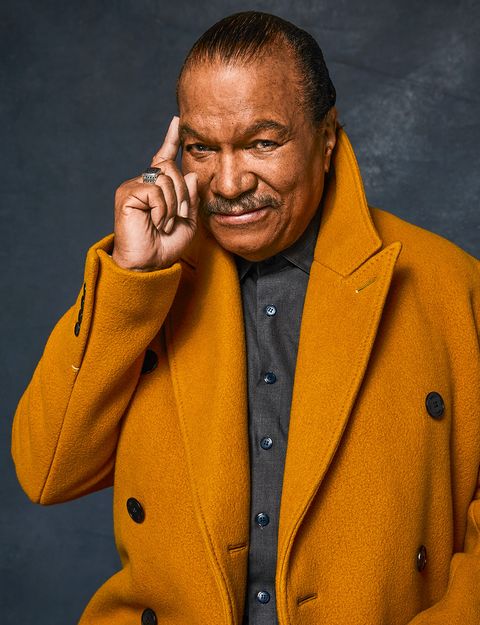
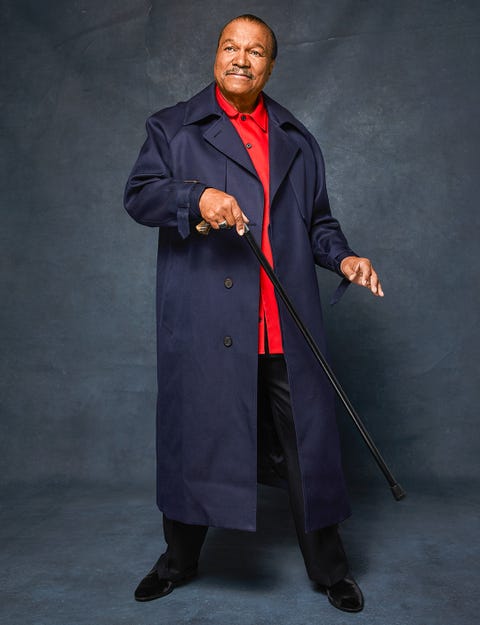
That’s a humble way of putting it. For nearly half a century, he’s been one of the coolest actors ever to appear onscreen. As Lando Calrissian, the suave, cape-wearing hero of the Star Wars universe, he’s immortalized as the quintessential figure of intergalactic chic. But beyond the sci-fi saga that has captivated generations, he’s a prolific actor and artist—he even designs his own clothes, showing up to our early-October photo shoot in a beautiful brown belted overcoat he made himself. When he starts telling me about what it takes to be cool, we’re at the beginning of our interview at the Russian Tea Room in midtown Manhattan. He’s already had a long day of graciously appeasing legions of fans at New York Comic Con. Williams hasn’t been to the restaurant in “a hundred years,” he says, but it was a regular haunt of his as a 20-something Broadway actor. (He lived a few blocks away before moving to California in 1971.)
The place hasn’t changed much since then; his favorite dish, the chicken Kiev, is still on the menu. In fact, he was so excited about this dish that we called the restaurant beforehand to make sure they could still make it. And, of course, I order it, too, because if Williams says you try the chicken Kiev, only a fool wouldn’t order the chicken Kiev. Over the course of our nearly-four hours of drinking and eating, we have more vodka, a bottle of red picked by Williams, caviar, a cheese plate, and a boozy dessert. Williams knows how to entertain. He knows how to eat. And he certainly knows how to drink. Sitting to my left in a plush, red booth, he seems like he runs the place, like it’s one of Lando’s regular joints in a far off galaxy. He’s kind to the fawning restaurant staff. And, when a group comes in, wearing what appears to be attire from a wedding or a formal party, Williams notes—always with an eye for style—that they look chic. Some of the paintings that’ve inspired his own artwork cover almost every inch of the green walls—like the Tamara de Lempicka portrait of a woman reclining opposite us. Williams grew up about 50 blocks north of here, on the edge of Harlem, where he learned what it meant to be cool from the guys on the streets who had “a little more smoothness about them.” After first appearing on Broadway as a boy, he went to school for painting, something he’s done regularly and to much acclaim throughout his acting career. Though, he admits, he doesn’t paint as much as he should these days.
What haven’t diminished at age 82 are his style, his confidence, and his effortless charm. In a simple tan button-up, with his hair slicked back, Williams continues his analysis of cool: “And you see I say ‘himself’ and ‘herself,’ because I also see myself as feminine as well as masculine. I’m a very soft person. I’m not afraid to show that side of myself.”
When I point out that Donald Glover talked about that type of gender fluidity when playing a young Lando in 2018’s Solo, Williams lights up. “Really? That kid is brilliant—just look at those videos,” he says, referencing Glover’s “This Is America” (as Childish Gambino).
Aaron Richter
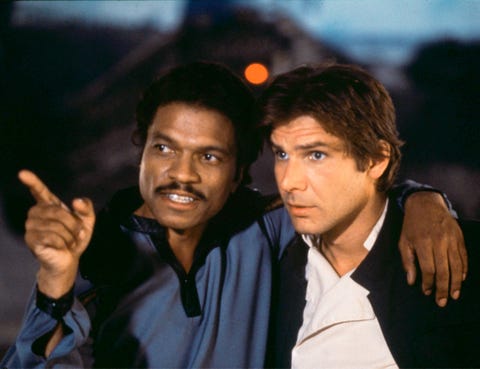
Although he will forever be known as Lando, Williams is proudest of his Emmy-nominated performance as Gale Sayers in the 1971 TV movie Brian’s Song. “It was a love story, really. Between two guys. Without sex. It ended up being a kind of breakthrough in terms of racial division,” he tells me. The same could be said about his portrayal of Lando in 1980’s The Empire Strikes Back, which marked the inclusion of a complex black character in a genre that was—and remains—notoriously white. In fact, over the summer, when he was at Disney’s D23 Expo in support of the upcoming Star Wars: The Rise of Skywalker (for which he is reprising his iconic role), he hung out with the Rock and Jamie Foxx, both of whom said their careers are indebted to Lando. “The Rock calls me the OG,” Williams says. “What I presented on that screen people didn’t expect to see. And I deliberately presented something that nobody had experienced before: a romantic brown-skinned boy.”
J. J. Abrams, who is directing the conclusion to the Skywalker saga, told me via email that Williams’s charisma and charm are unmatched. While Abrams says he can’t begin to imagine what it must have been like for people of color to see a character like Lando onscreen in 1980, he recognizes Williams’s place in film history. “Lando was always written as a complex, contradictory, nuanced character. And Billy Dee played him to suave perfection,” Abrams says. “It wasn’t just that people of color were seeing themselves represented; they were seeing themselves represented in a rich, wonderful, intriguing way. Also, he has the best smile in Hollywood.”
Lucasfilm
Before he was even cast, Williams was a fan of George Lucas, beginning with 1971’s THX 1138. And director Irvin Kershner thought the actor had the right style for Lando, so Williams didn’t even have to audition for Empire. “He knew I could pull off someone who was likable and charming. The most interesting characters are those who are dubious . . . but you want the audience to really fall in love with them,” Williams tells me. (For the record, he understands why Lando had to double-cross Han and Leia. “He was up against Darth Vader. I don’t blame him for what he did.”) Kershner went to Williams’s house to persuade him to be in the film; it didn’t take much, the actor says, to get him to appear in one of the most anticipated sequels of all time. On set, he befriended costars Carrie Fisher (who he says had a brilliant mind) and Harrison Ford (whom he still considers a dear friend), and he avoided workplace gossip. “As far as I’m concerned, I mean, I don’t care what people are—if they’re fucking each other and they’re sucking each other, whatever they’re doing, that’s fine with me. I don’t care,” he says of Fisher and Ford’s romance, as described in her memoir.
If they’re fucking each other and they’re sucking each other …that’s fine with me.
Now, for the first time since 1983’s Return of the Jedi, he’ll play Lando once again. Between Jedi and the events of the new trilogy, Williams says, “I always imagined Lando being like Steve Wynn, running Las Vegas. Because he’s a gambler. But he was a bit of a showman, a bit of an entrepreneur. That’s how I see Lando. I never necessarily saw him as a general running around shooting things.”
We don’t know exactly what’s behind Lando’s return to the franchise, but trailers show the hero back in the cockpit of the Millennium Falcon. Stepping onto that set again, Williams says, was cool—but also work. “You’re bringing something that helps move the vision that the director or producer or writer is looking for. I’m there not only for myself, but I’m there to help them bring their project to life in a way that they’re looking for.”
He admired the atmosphere Abrams (or the young mogul, as Williams calls him) created on set. “At the end of the day, there’s music that’s turned on. Everybody’s dancing and singing,” Williams says, reminding me that he once played himself in an episode of Lost. His only worry in returning to the iconic character was that he still had the fire to bring a powerful performance to the conclusion of the saga, “Do I have that same hunger, excitement, that I had years earlier?,” Williams asked himself. “This is a very difficult time for me, as far as age is concerned. When you get to be a certain age, whether you want to think about mortality or not, you think about it.”
When our food finally comes, Williams takes a bite of the chicken Kiev he remembered so fondly from his younger days, and makes a comment that could work as a good thesis statement for our entire conversation, or the nature of nostalgia like Star Wars taking hold of this moment in popular culture: “An original moment is tricky. Because you’re really trying to recall or remember your palate, your sensibility, trying to recapture something that happened a long time ago,” he tells me. “And when you anticipate it, you think you’re going to be in that moment. I’m right at that moment. So what I’m tasting is not that moment. I’m tasting this moment. And I’m happy about this moment but it’s not what I remember.”
In preparation for his return to Star Wars, Williams went on a strict healthy diet, and shared videos of himself training in a boxing gym. “When I have to go to work, my ego tells me I want to look pretty good. I don’t want to look bad. I don’t want to look like a slob,” he says, even though none of these have been adjectives ever associated with Billy Dee Williams. But, he hopes the videos of himself training serve as a reminder that people his age are capable of taking care of themselves, that there’s a way to go through later years of life happy and healthy.
Having built his career playing pivotal examples of TV and film diversity, Williams is well aware of what the new trilogy’s young leads went through—namely, racism and sexism from online trolls—when they were launched into the spotlight. “You’re always going to have people making stupid comments,” he says. “One deals with indignities all the time. Do you sit around with vengeance in your soul? You can’t do that. I’m not forcing people to listen to my point of view, but if I can present it in some creative fashion—I’m the painter, tweaking, adding, contributing, putting in something that you haven’t thought about, maybe.”
Thinking about struggles in the world around him, Williams mentions his encounter with Donald Trump at an event in the ’80s: “He was very charming. And very good at being charming. You know the story of Narcissus? Who looked at himself in the water, fell in love with himself, and then fell in and drowned? I mean, this might be one of those kinds of things.”
As for what’s next, Williams is writing a memoir. And he also has a collection of 300 paintings that he says is his legacy.
Getty Images
So is this the end of Lando? Williams says he doesn’t know exactly how the story ends for his hero. He loved the scripts he read, he’s proud of the work he did, but, “another thing about movies, there’s a lot of editing and cutting,” he says, laughing as he eats a cup of passion-fruit sorbet with a shot of vodka poured on top. For me: a double espresso with Grand Marnier that he insisted I try (I didn’t sleep that night).
By this time, we’re both warm from the hours of drinking—I’m astonished I was able to keep up with Billy Dee Williams, even if he’s 82 years old. And before he says goodbye, he wants to sign one more autograph in a long day of doing just that. He realizes that during the shoot and convention, where everyone was clamoring for his name, written by his own hand on a piece of paper, I never asked for one. That’s not my style, I tell him, this dinner and story is memento enough. He grabs my notebook that I haven’t opened once during dinner, signs his name with the note, “Nothing but the truth.” And he gives me a hug.
Back to the question at hand though: Is this the end for Lando Calrissian? Williams has an answer in his own wry way.
“It’s a conclusion—certainly it depends on how much money is generated. That’s when they determine where’s the conclusion,” he says with a wink. “The one thing about show business, you can resurrect anything.”MATT MILLER Culture EditorMatt is the Culture Editor at Esquire where he covers music, movies, books, and TV—with an emphasis on all things Star Wars, Marvel, and Game of Thrones.
As a longtime civil engineer by day and a poet by night, Cuban American writer Richard Blanco has straddled the many ways a sense of place merges with human emotion to form the meaning of home and belonging. In 2013, he became the fifth poet to read at a presidential inauguration (he was also the youngest and the first immigrant). The thoughtfulness, elegance, and humor of Blanco’s poetry and his person captivated the crowd for this live conversation at the Chautauqua Institution.
Richard Blanco practiced civil engineering for more than 20 years. He is now an associate professor of creative writing at his alma mater, Florida International University. His books of non-fiction and poetry include Looking for the Gulf Motel and, most recently, How to Love a Country.
Transcript
Krista Tippett, host:As a longtime civil engineer by day and poet by night, the Cuban-American writer Richard Blanco has straddled the many ways a sense of place merges with human emotion to form the meaning of home and belonging. In 2013, he became the fifth poet to read at a presidential inauguration — also the youngest and the first immigrant. At Chautauqua, I invited him to speak and read from his books, especially How to Love a Country. The thoughtfulness, elegance, and humor of Richard Blanco’s poetry and his person captivated the crowd, and we offer all of this up to you for Thanksgiving.
[music: “Seven League Boots” by Zoë Keating]
Richard Blanco:“A week before Thanksgiving I explained to my abuelita about the Indians and the Mayflower, how Lincoln set the slaves free; I explained to my parents about the purple mountain’s majesty, ‘one if by land, two if by sea’ the cherry tree, the tea party, the amber waves of grain, the ‘masses yearning to be free’ liberty and justice for all, until finally they agreed: this Thanksgiving we would have turkey …
[laughter]
as well as pork.
[laughter]
Ms. Tippett:I’m Krista Tippett, and this is On Being. I spoke with Richard Blanco as part of Chautauqua’s 2019 summer season in the historic outdoor amphitheater.
[applause]
Ms. Tippett:Richard, you have written, “Every story begins inside a story that’s already begun by others. Long before we take our first breath, there’s a plot underway, with characters and a setting we did not choose, but which were chosen for us.” What I want to do for the next hour here is explore the story of our time, a bit, through the story of your life and the way you’ve captured both of those things in the language and form of poetry. You were 45 days old when you landed in America. That’s the definition of something that was chosen for you.
Mr. Blanco:[laughs] Exactly.
Ms. Tippett:Just if I asked you that large question, just to get going — “How would you start to tell the story of our time through the story of your life?” — where would you begin?
Mr. Blanco:Well, I think, as I like to say, I was made in Cuba, assembled in Spain, and imported to the United States.
[laughter]
It gets even a little crazier: so my mom left seven months pregnant from Cuba; I was born in Madrid —
Ms. Tippett:And they went into exile …
Mr. Blanco:Exile —
Ms. Tippett:… first, to Madrid.
Mr. Blanco:First to Madrid — so, where I was born, and then, 45 days later, I emigrated once again. So by the time I was 45 days old, I belonged to three countries and had lived in two world-class cities. And I think writers — I think artists, in general — or, I think, all of us, when something like that really — some kind of origin story like that really imprints us. And of course, I don’t know it’s imprinting at the time, but when I start writing and thinking about that big question — where am I from? Where do I belong in this world? — I think the idea of home was always a big question. It’s still a question that I’m still — a story that I’m still trying to unpack. And it’s gone through many arcs and periods of love and hate, periods of confusion and delight.
So all of that is still what I’m really working on, even in this latest book; I think, in a way, a question that Whitman was also working on — what is an American, and what does it mean to be an American, and what does it mean to belong to a country, really, in that sense, in this day and age, where that idea is just becoming a little blurry?
Ms. Tippett:Shifting.
Mr. Blanco:Shifting.
Ms. Tippett:You could say that that question of home — what home is and how it feels and how we claim it — is part of the human drama for everyone, but when it is an immigrant story, it just gets — it’s in technicolor from the very beginning. And we’re gonna talk some more about that.
I wonder, was there a religious or spiritual aspect to your childhood, to your formative years?
Mr. Blanco:I guess I grew up Roman Catholic, Cuban, Latino Roman Catholic. I went to Catholic parochial school all my life, since kindergarten. And I think there was an interesting base set up there for me, but nothing that I really connected at the moment, at that age. But I think it came back. It came back, somehow. Writing opened that door, that connection to the divine, to some connection to the universe, to the things that be. And I consider writing my spiritual practice.
But again, I think there was a base to that and, also, a little more complicated than just Roman Catholic — the Afro-Cuban idea of Santería and ancestral worship. So that also made it into the writing, in a way, because so much of my motivation to write some of these poems was to document the lives of my ancestors in some ways, their story, their journey, the story I came from, as you said.
Ms. Tippett:I feel like, as I’ve delved into your work, the full body of your work, you are reflecting on and articulating aspects of, again, the immigration story of humanity, with a complexity and with all kinds of layers that — although this is a moment in American life, not for the first time, but again — where we speak about immigration, often, in terms of issues and news stories. And I feel like you bring to life a fullness of that experience, which is a human experience. And so I want to draw that out, because I feel like it is very present, very relevant to how we are all inhabiting this moment.
I did read in your — I think your memoir that you said you grew up learning about America and internalizing America through reruns of Brady Bunch, Leave It to Beaver, and My Three Sons. And when I read that, I thought, “Oh, that’s terrible.” And then I realized, I watched all those shows, also. That’s what I grew up on. So we’ve all come a long way. [laughs]
Mr. Blanco:I’m bingeing Donna Reed right now. [laughs]
[laughter]
It’s interesting, because — I think, when I first began writing — and again, I say that as a starting point, where I started to ask these deep questions. That’s why I always say, writing makes me think, and thinking makes me write, and there’s a circularity to that as you dive deeper into questions and into yourself, into your soul, into your mind and heart …
Ms. Tippett:Yeah, when you write, you also learn what you think, that you didn’t know you were thinking.
Mr. Blanco:[laughs] Exactly, and that’s part of what keeps me addicted to it. The story of writing — at first, I shied away from this idea — who wants to hear about such a particular story about a little chubby gay kid from a working-class family in Miami; who wants to hear that story? And I think it’s always been a question that I’ve tried to negotiate. And then thinking about audience and readers, and thinking about whether or not — how am I a catalyst? How am I a bridge to not only understanding my life, but so that others can understand this idea of the immigrant experience or exile experience?
And through the years, to zero in on what you were saying, I finally embraced the idea that in some ways, especially in our contemporary society, we’re all in exile. We all have immigrant experiences of some kind that weren’t happening, exactly, 100 years ago. You move from Miami to Seattle, you’re gonna have an immigrant experience.
[laughter]
You move from Chicago to San Antonio — you get the picture. And I think what Latino writers and immigrant writers or ethnic writers have been doing — and I count myself — not singlehandedly, but in a pantheon of a body of work — is set a template for what is, I think, a very contemporary trauma that we’re going through in some ways, of dislocation, location. Families didn’t disperse the way — just even 50 years ago, families didn’t disperse as much. We can be exiled in social media too, sometimes; we can be isolated. And I always try to think, what does this particular story have to offer universally, and try to write it from that perspective. We’ve all asked that big question, What is home?
Ms. Tippett:What is home, yeah.
Mr. Blanco:It’s like asking, What is love? And it changes, and it’s complex.
Ms. Tippett:And it changes, right. I think something that just is — feels like a large context for a lot of your reflection is, on the one hand — and especially from childhood on — there’s at one and the same time that idealized idea of America that came through The Brady Bunch and comes through many other ways, but also a yearning for the lost home, a deep curiosity. You sometimes describe it as — just in passing, as “my parents’ island paradise,” Cuba.
I wanted to read, there’s this — in City of 100 Fires, this is how you start a poem called “Havanasis.”
“In the beginning before God created Cuba, the Earth was chaos, empty of form, and without music.”
[laughter]
“The spirit of God stirred over the dark tropical waters, and God said, ‘Let there be music.’ And a soft conga began a one-two beat in background of the chaos.”
Mr. Blanco:There you go. [laughs]
[applause]
You read that wonderfully, by the way.
Ms. Tippett:Oh, thank you. Well, thank you.
Mr. Blanco:It’s always a little weird when people read; that was perfect timing. I loved it.
Ms. Tippett:Oh, well, wonderful. That makes me happy.
But then I wonder, also, if you would read, as a counterpart to that, in this book, page three, “América.” Do you have this one? I have it for you. I told you, you’re not going to have to do any work if you don’t want to. No, it’s on page four — I did say to Richard that because this is radio, short poems are better. And he doesn’t really do short poems.
Mr. Blanco:No. Cubans don’t write short poems. [laughs]
Ms. Tippett:But your poems are very narrative.
Mr. Blanco:Exactly.
Ms. Tippett:So we’re gonna hear some great poetry today. So maybe start — because this is just so wonderful — start here, at number four, and then, you can …
Mr. Blanco:So the context here, just so everyone knows, Thanksgiving is, of course, for an immigrant — almost any immigrant group — it’s just one of those things we don’t get. [laughs] And we try really hard, and Latinos or, at least in my Cuban community, we call it “San Giving,” like San Pedro or San Ignacio. It’s a whole other kind of feast day.
[laughter]
And the same is true — there’s still sort of a yearning between this mythic homeland that is Cuba, that I don’t really know and this mythic homeland that is the Brady Bunch house, which I want to buy someday. [laughs] And so you’ll see this — this is all in the context of Thanksgiving, and Ricky trying to negotiate those two yearnings.
“A week before Thanksgiving I explained to my abuelita about the Indians and the Mayflower, how Lincoln set the slaves free; I explained to my parents about the purple mountain’s majesty, ‘one if by land, two if by sea’ the cherry tree, the tea party, the amber waves of grain, the ‘masses yearning to be free’ liberty and justice for all, until finally they agreed: this Thanksgiving we would have turkey…
[laughter]
as well as pork.
[laughter]
Abuelita prepared the poor fowl as if committing an act of treason, faking her enthusiasm for my sake. Mamà set a frozen pumpkin pie in the oven and prepared candied yams following instructions I had to translate from the marshmallow bag. The table was arrayed with gladiolus, the plattered turkey loomed at the center on plastic silver from Woolworths. Everyone sat in green velvet chairs we had upholstered with clear vinyl, except Tío Carlos and Toti, seated in the folding chairs from the Salvation Army. I uttered a bilingual blessing and the turkey was passed around like a game of Russian Roulette. ‘DRY’, Tío Berto complained, and proceeded to drown the lean slices with pork fat drippings and cranberry jelly–‘esa mierda roja,’ he called it. Faces fell when Mamá presented her ochre pie— pumpkin—calabasa—was a home remedy for ulcers, not a dessert.
[laughter]
Tía María made three rounds of Cuban coffee then abuelo and Pepe cleared the living room furniture, put on a Celia Cruz LP and the entire family began to merengue over the linoleum of our apartment, sweating rum and coffee
sweating rum and coffee until they remembered— it was 1970 and 46 degrees— in América. After repositioning the furniture, an appropriate darkness filled the room. Tío Berto was the last to leave.”
Ms. Tippett:Thank you.
[applause]
Ms. Tippett:I’m Krista Tippett, and this is On Being. Today with civil engineer and poet. Richard Blanco at the Chautauqua Institution.
Ms. Tippett:So before we move on and keep going with more poetry, I do want to note that although most Americans first came to know about you as the poet of a presidential inauguration, you were a civil engineer before you began to write, and were you still a full-time civil engineer when you delivered the inaugural poem?
Mr. Blanco:Yes. Yes, I’ve been a practicing civil engineer all my life.
Ms. Tippett:So this has been — this has essentially been your career, which I find fascinating. And I think, at first, it might sound like a surprising juxtaposition, but the more I thought about it, it makes a lot of sense, because it’s about design and structure and patterns.
Mr. Blanco:Yes. You got that. You hit that right on the nose. As careers, they’re obviously different career paths; you’re not in a cubicle all day. But I learned a lot about writing poetry from my math classes, in terms of structure, logic, patterns, as they say, musicians say, music is very mathematical. So that lent itself to writing. And vice versa, being a civil engineer, I had to engage with a lot of public, a lot of communities and towns. And being a writer, being a poet, which is, in some ways, partly a study of human nature, it really built my skills in terms of trying to understand people, their nuances in what they’re saying, what they’re not saying, and tease out of them their emotional relationship to place and home and projects that were civil projects for everyone to enjoy, which, ironically, is what my poetry is about — trying to find a psychological home; but also, in my engineering, I was, in a way, creating brick-and-mortar home, a sense of home with brick and mortar.
And it’s really interesting, because I think it speaks, also — you hit it right on the nose. It’s not that different. But I think it speaks to our general attitude — well, and still, how we silo education and “oh, you’re an engineer” — it’s getting worse and worse, I think, these days — “you’re an engineer; you don’t need to learn how to write.” My job was 50 percent writing. And I didn’t start writing until I stepped into my consulting office and had to write, and that actually led to my love of language, in a way, too, was, I started exploring language, and then I got deeper and deeper into it and became the go-to person and the senior partner, because of my writing. An engineering proposal that gets in a $40 million job is nothing but a narrative, an argument, a persuasion of how our firm is the best firm, our vision for the project.
But it is funny, sometimes, because interviewers get it wrong. [laughs] The romantic story is that “I was forced to study engineering because of my working-class family, and then I discovered poetry, and the clouds parted, and the cherubs came down, and…”
[laughter]
And my response is, “I really, really wanted to go full-time into poetry, because there was so much money …
[laughter]
… but I really felt an ethical obligation to stay in engineering.”
And so there’s kind of a practical matter, but I loved the balance, too. And it created — for me, at least, I’m a left-brain person — and I loved the balance. And I guess I just want to say, for writers out there, too, and especially young writers that are thinking about becoming writers as professional writers, that just because you have another career doesn’t make you a sellout. In fact, as long as you keep a focus and your vision and you find something that works for you — and every journey and how you come to do something is unique, and I’m proud of having those seemingly contradictory careers and vocations.
Ms. Tippett:I love the way you describe what is actually true, that the emotional — practical and emotional needs that you need in a good design — that poetry is another way of delving into those things. And we do try to separate — we pretend like these are separate disciplines, when it’s about being whole.
Mr. Blanco:It’s all one thing, I think.
Ms. Tippett:All one thing.
Mr. Blanco:If we think upon any innovation of any sort of breakthrough, it’s really about synthesis of seemingly disparate or nonrelated knowledge or pieces of knowledge. My sense of place — I have — it’s not quite a theory, but the way I’ve been thinking about it lately as an engineer — that everything has a physical landscape, an emotional landscape, and a natural landscape. And I think the way those three things combine form our sense of place and belonging and connection.
Ms. Tippett:So all of that is another way to speak to the true complexity of these themes that for you are so important, for all of us are so important, of place and belonging and the fullness of that, and our wrestling with that. I have to say, one thing that really stuck out with me as I have gotten to know you is that also, as part of this story of what it means to be an American, is that Richard Blanco is not really — it’s a part of your name.
Mr. Blanco:Yes. [laughs]
Ms. Tippett:I interviewed Martin Sheen, who is Ramón Estevez, and our executive producer, whom I’ve always known to have two names, it turned out, after I’d known her for many years, that she’s reclaimed — she’s Colombian American — all of her names. So tell us your full name that you were born with.
Mr. Blanco:My full name is, technically, Ricardo de Jesús Blanco Sánchez Valdez Molina, because I was born in Spain, and they tack them all on. [laughs]
[laughter]
But it’s funny, because naming is one of those things that — also sort of origin stories. Naming is such an interesting thing, how we rename ourselves or not. I love how rock stars rename, like Freddie Mercury. [laughs] There’s the name you’re given and then there’s the name you take on or you feel describes you or captures you in a different way.
The problem — not the problem, but the backstory beyond that, and I don’t think I’ve ever quite written about it, but — so I was named after Richard Nixon.
[laughter]
It had nothing to do politically, because my parents are in Spain. I am born; they just wanted to come to the United States, so I was named Ricardo, after Richard Nixon. Jesus, because — [laughs] my middle name is Jesus, because my mom, on that transatlantic flight, said, “If we make it alive, her middle name will be Jesus.”
[laughter]
And then — as I look back, the way I would’ve liked to rename myself, which would’ve been — I put Richard because I like the contrast of the Anglo and then the white, Blanco.
Ms. Tippett:Is it true — did you ever think about calling yourself Richard White?
Mr. Blanco:Well, my standing joke now is “Dick Jesus White.” [laughs]
[laughter]
And I think it’s comical, because in Protestants’ world, nobody names their kids Jesus. But it’s so common in Roman Catholic Latino society to — but it just doesn’t translate. So: Richard Nixon and Jesus, and they wonder why I became a poet and an engineer. Hello? [laughs]
[laughter]
Ms. Tippett:I feel like we could keep going on that for the next 45 minutes. It’d be really fun, but we’re gonna change — we’re gonna turn a corner.
At On Being, we have put poets on the air the last two election weekends, and I think we’ll probably keep going with that practice. I lived in divided Berlin in the 1980s. I’ve experienced in my lifetime how poetry rises up, in culture after culture — especially in moments of crisis, especially when official discourse and words are failing us or inadequate for what we have to grapple with and when we really have to reach for new language and new ways with language, among other things, to give voice to what we need and want to give voice to. In a way, it’s a corollary to what you describe about the synergy between engineering and poetry — that we have to meet the practical needs with our emotional needs, the psychological with the political. You’ve quoted Elizabeth Bishop, somewhere, saying, it’s not about what’s said but about what’s not said, [Editor’s note: Mr. Blanco references Elizabeth Bishop in this interview. While there’s no record of Bishop speaking to this idea directly, Kathleen Spivack describes Bishop’s poetry in this way in her book.] and I also feel like poetry leaves room for silence. And poetry makes room for questions that are unanswerable and for them to sit there.
Mr. Blanco:Yeah, I’m starting to see it more connected to the idea of how music happens in us, happens in the writing of the poem and, also, how it imprints in us, in the same ways that sometimes we can hear a song, and we’re not exactly sure — the words are saying something, but there’s an imprint that’s something we can’t always place a finger on. “my father moved through dooms of love / through sames of am through haves of give” — I have no idea what that means …
[laughter]
… but there’s a pleasure — and I actually don’t want to break it down that much, but there’s a beautiful pleasure. I know what it means, on another level. And those empty spaces, like in music — I think poetry affects us that way, and it’s not usually taught that way. It’s taught like, “Let’s pin down the frog in anatomy class, and let’s pull it apart” — and that’s important, too, to a certain degree, but it’s not usually taught to just let it be in us and let it breathe in us. I don’t know where the Hotel California is, [laughs] or how to get there, but I love that song. And how we can read poems over and over — everybody has a favorite poem. We can read that poem over and over again. We rarely go back and reread novels or memoir …
Ms. Tippett:Well, so I think what I’d really like to do is get into your newest volume, How to Love a Country. Right at the beginning of this book you have this line: “Tell me with whom you walk, and I’ll tell you who you are.” You have that in Spanish and English. You don’t attribute that to anybody. What is that?
Mr. Blanco:It’s never been attributed to any — even an anecdote of a story, or any one person. But it’s a really popular idiom or saying in Spanish, “Dimé con quién andas, y te dire quién eres.”
I took a lot of chances in this book, because I broke out of just talking about my sense of home or my Americanness and started, like I say — I think I moved from the poetry of “I” to the poetry of “we.” And so I started thinking, who am I walking with? Who has come before me, and who has walked before me? And this idea of ancestry, again, of stories — you’re born into someone else’s story, and you walk, and then you give that story to someone else. But I was thinking, who are we? Who are we, as a country? And how are we walking together? And there’s a beautiful, also — maybe it was inspired, also. One of the department heads at my alma mater, she has a saying from the Caribbean that says, “Walk good,” [laughs] which is what your mom tells you: “Walk good.” And I was thinking about, what is the company, past and present? Who are we walking with? And how, together, what are we doing?
[music: “Drume Negrita” by Ry Cooder and Manuel Galbán]
Ms. Tippett:After a short break, more with Richard Blanco. And you can find this show again in our rich and deep archive of Poets & Poetry at onbeing.org.
[music: “Drume Negrita” by Ry Cooder and Manuel Galbán]
I’m Krista Tippett, and this is On Being. Today, with Richard Blanco, the Cuban-American civil engineer-turned-poet who read at the 2013 presidential inauguration. We’re speaking as part of the 2019 summer season of the Chautauqua Institution, and we’re exploring themes of home and belonging — physical and emotional, personal and communal, as Richard Blanco takes them up in his latest book, How to Love a Country.
Ms. Tippett:I said to you before we came out here, if you feel called to read anything from any of those books, you may do that. But I’m going to propose — I pulled some out that — it’s interesting. You use the word “immigrant.” That’s the way you describe your family story, I think, most often, or “exile,” a bit. I had a conversation last year about Hannah Arendt, [Editor’s note: Ms. Tippett is referring to her interview with Lyndsey Stonebridge, which took place in 2017.] who wrote a lot about exile. And the conversation I was having with this scholar of Hannah Arendt, who works with refugees now, is what happens to our imagination about these humans when we use the word “immigrant” or “refugee” or, what I’m so aware of now, is what the word “migrant” has done. I think that language makes an abstraction of people and creates an ability for us to separate. Anyway, this is just on my mind. And then you wrote this poem called “Complaint of El Río Grande,” which is, again, looking at this entire drama from a whole different angle, which is this piece of the natural world that is crossed and that, in that moment, makes of people … whatever that thing is.
Mr. Blanco:Something transforms.
Ms. Tippett:Want to read that one?
Mr. Blanco:Sure, I’d love to.
Ms. Tippett:Page nine.
Mr. Blanco:Given me a lot to think about there, but… [laughs] but we’ll read it first, like you said. So I’ve been hearing about the Mexican-U.S. border since I was a kid. And I think we all, in some ways, are — just sort of had it with this issue, in the context of, you mean to tell me that we can’t, not just as countries, as the Western hemisphere, come to some kind of fair, amicable, humane — to this problem that is not — we’re making it a problem.
And it gets abstracted, and it gets politicized, overly politicized, and I thought, how can I do this, is, let the river speak. And let the river — so this is a persona poem in the voice of the river — to let all humanity have it; [laughs] have the river pointing a finger at us, so to speak.
“I was meant for all things to meet: to make the clouds pause in the mirror of my waters, to be home to fallen rain that finds its way to me, to turn eons of loveless rock into lovesick pebbles and carry them as humble gifts back to the sea which brings life back to me.
I felt the sun flare, praised each star flocked about the moon long before you did. I’ve breathed air you’ll never breathe, listened to songbirds before you could speak their names, before you dug your oars in me, before you created the gods that created you.
Then countries—your invention—maps jigsawing the world into colored shapes caged in bold lines to say: you’re here, not there, you’re this, not that, to say: yellow isn’t red, red isn’t black, black is not white, to say: mine, not ours, to say war, and believe that life’s worth is relative.
You named me big river, drew me—blue, thick to divide, to say: spic and Yankee, to say: wetback and gringo. You split me in two—half of me us, the rest them. But I wasn’t meant to drown children, hear mothers’ cries, never meant to be your geography: a line, a border, a murderer.
I was meant for all things to meet: the mirrored clouds and sun’s tingle, birdsongs and the quiet moon, the wind and its dust, the rush of mountain rain— and us. Blood that runs in you is water flowing in me, both life, both truth we know we know: be one in one another.”
Thank you.
[applause]
Thank you. Gracias.
That poem still does things to me. I’m still learning, myself — it’s interesting, the creative process and how that connects. I always say, my poems are smarter than me. I’m not that smart — I go through this whole physiological experience when I read that poem again, and thinking about that river, being that river.
Mr. Blanco:Six-six. Part of this poem was, the title of this book, How to Love a Country, is a statement; it’s also a question. It’s also a self-help book [laughs] for today, a how-to book, maybe. One thing, again, like you were saying about language, why write a book that — I didn’t want it to be a one-beat kind of book, and I also wanted to explore different things, and I didn’t want to throw the baby out with the bathwater and be poems just of protest. And I just went back to this poem of patriotism, but the kind of innocent patriotism that you feel as a kid, that pure kind of love for ideals and, at least for me, what this country stands for — I think, still stands for; and so this is going back to that space. And I’ll sing a little bit, which is — you can leave, if you want.
“How I sang O, beautiful like a psalm at church with my mother, her Cuban accent scaling-up every vowel: O, bee-yoo-tee-ful, yet in perfect pitch, delicate and tuned to the radiant beams of stained glass light. How she taught me to fix my eyes on the crucifix as we sang our thanks to our savior for this country that saved us— our voices hymns as passionate as the organ piping towards the very heavens. How I sang for spacious skies closer to those skies while perched on my father’s sun-beat shoulders, towering above our first Fourth of July parade. How the timbre through our bodies mingled, breathing, singing as one with the brass notes of the marching band playing the only song he ever learned in English. How I dared to sing it at assembly with my teenage voice cracking for amber waves of grain that I’d never seen, nor the purple mountain majesties—but could imagine them in each verse rising from my gut, every exclamation of praise I belted out until my throat hurt: America! and again America! How I began to read Nietzsche and doubt god, yet still wished for god to shed His grace on thee, and crown thy good with brotherhood. How I still want to sing despite all the truth of our wars and our gunshots ringing louder than our school bells, our politicians smiling lies at the mic, the deadlock of our divided voices shouting over each other instead of singing together. How I want to sing again— beautiful or not, just to be in harmony—from sea to shining sea—with the only country I know enough to know how to sing for.”
Thank you.
[applause]
Ms. Tippett:I’m Krista Tippett, and this is On Being. Today at Chautauqua with Richard Blanco, the Cuban-American civil engineer and poet.
[applause]
Mr. Blanco:Thank you.
Ms. Tippett:I sometimes ask, at the end of a conversation, this question: What’s making you despair right now, and where are you finding hope? And I feel like we’re so articulate about our despair. And I feel like what is making your heart ache, we’ve heard. I would like to ask you where you’re finding joy, where you’re finding hope right now.
Mr. Blanco:Sure. I think it’s interesting, because I was just at that point — I do a small radio segment; it’s called “The Village Voice.” We share poems, sometimes mine. And this — it’ll air next week, but I called it National Oblivion Day, [laughs] and the poems were like, “I can’t take it anymore.” And it was also like, one of the great things that poetry does is allows us to just go to that space so deeply — that somehow we let go of it in some ways. So I’m looking for poetry that does that, that lets me acknowledge and be OK with where we are right now. And that helps a little bit. But I’m trying to think — I guess what keeps me hopeful — and this is something that I — it’s sort of in between all this despair and fear and apprehension — I think one of the most beautiful things that I see, and it happened first with the ban on Muslims and whatnot, that people, at least in my lifetime, for the first time, were standing up for something that didn’t affect them directly, directly. That is a democracy.
[applause]
And so I just love — I just love that we’re stepping up, and we’re realizing, no. OK, this is — I don’t have to go to that protest; it’s not about me. But that poem from the — you know, “First they came for the so-and-so”? Remember that poem? And I think we’re finally — we’re not doing that. We’re not waiting for them to come for us. We are stepping up and realizing that the quality of life, the virtue of this country, depends on every human being’s story, to a certain degree; that our happiness depends on other people’s happiness, and we’re moving from a space of dependence to realizing our interdependence.
And I just think that’s beautiful. Even with the questions — this book was scary in some ways, because I’m broaching subjects that, somehow, I also felt I didn’t have permission to write about, like about Mexican immigration. Well, no, there’s a common ground there. Race, gender, all these kinds of issues. And I think that’s what I’m trying to do, is I’m also trying to embrace everyone else’s experiences and, perhaps, coming up with language together, or saying, “Me too.” So I just love that that’s happening. And it’s hard to see, between the 24-hour newsreel and the clips, so…
Ms. Tippett:It becomes a discipline, almost like a spiritual discipline, to take that seriously, too. It’s a way of us, some of us, enough of us, collectively, living this phrase that you have at the beginning of the book, How to Love a Country: “Tell me with whom you walk, and I’ll tell you who you are.” So it’s us, expanding that sense of who we are.
Mr. Blanco:And realizing that we’re walking together — or we always have, but actually acknowledging that now.
Ms. Tippett:So the book begins with “The Declaration of Interdependence.” Is there a story behind this poem?
Mr. Blanco:Again, finding language, finding another angle, finding another dialogue, and how easily stereotyped and typecast people can become in the news; and, also, how we do it to ourselves — “Oh, you drive a red pickup truck; therefore, you must be this person. You shop at Whole Foods; therefore, you must be this kind of person. You drive a Subaru; therefore, you must be this kind of person,” and realizing that that’s really something that’s been slowly chipping away at our brains, this sort of immediate — I won’t say “judgment,” but a typecasting that sometimes, we’re not even aware. So I just wanted to break down some of those stereotypes and create empathy across those stereotypes.
But it also, ultimately, comes from a saying, a greeting from the Zulu people, that was the real inspiration here. The greeting — they don’t say “Good morning” like we do, like we did, this morning. “Good morning; I need coffee.” [laughs] They look at one another, right in the eyes, and say, “I see you.” And there’s an incredible power in seeing and being acknowledged. And if I’m not mistaken, the reply is, “I’m here to be seen. And I see you.” And so we just — we’re not seeing each other as clearly, and I think this poem was trying to let us see each other clearly.
And it’s got — “Declaration of” — I think I mentioned, the next evolvement in our consciousness is from dependence to independence is, really, interdependence. That’s really where, as a country, as a people, as a family, as a world… [laughs]
Ms. Tippett:As a species…
Mr. Blanco:As a species. If we don’t do that in the face of — well, we [won’t] touch climate, but — [laughs]
“Declaration of Interdependence” — and these are excerpts from the Declaration of Independence.
“Such has been the patient sufferance…
We’re a mother’s bread, instant potatoes, milk at a checkout line. We’re her three children pleading for bubble gum and their father. We’re the three minutes she steals to page through a tabloid, needing to believe even stars’ lives are as joyful and as bruised. Our repeated petitions have been answered only by repeated injury…
We’re her second job serving an executive absorbed in his Wall Street Journal at a sidewalk café shadowed by skyscrapers. We’re the shadows of the fortune he won and the family he lost. We’re his loss and the lost. We’re a father in a coal town who can’t mine a life anymore because too much and too little has happened, for too long.
A history of repeated injuries and usurpations…
We’re the grit of his main street’s blacked-out windows and graffitied truths. We’re a street in another town lined with royal palms, at home with a Peace Corps couple who collect African art. We’re their dinner-party talk of wines, wielded picket signs, and burned draft cards. We’re what they know: it’s time to do more than read the New York Times, buy fair-trade coffee and organic corn.
In every stage of these oppressions we have petitioned for redress…
We’re the farmer who grew the corn, who plows into his couch as worn as his back by the end of the day. We’re his TV set blaring news having everything and nothing to do with the field dust in his eyes or his son nested in the ache of his arms. We’re his son. We’re a black teenager who drove too fast or too slow, talked too much or too little, moved too quickly, but not quick enough. We’re the blast of the bullet leaving the gun. We’re the guilt and the grief of the cop who wished he hadn’t shot.
We mutually pledge to each other our lives, our fortunes and our sacred honor…
We mutually pledge to each other our lives, our fortunes and our sacred honor…
We’re the dead, we’re the living amid the flicker of vigil candlelight. We’re in a dim cell with an inmate reading Dostoevsky. We’re his crime, his sentence, his amends, we’re the mending of ourselves and others. We’re a Buddhist serving soup at a shelter alongside a stockbroker. We’re each other’s shelter and hope: a widow’s fifty cents in a collection plate and a golfer’s ten-thousand-dollar pledge for the cure.
We hold these truths to be self-evident…
We’re the cure for hatred caused by despair. We’re the good morning of a bus driver who remembers our name, the tattooed man who gives up his seat on the subway. We’re every door held open with a smile when we look into each other’s eyes the way we behold the moon. We’re the moon. We’re the promise of one people, one breath declaring to one another: I see you. I need you. I am you.”
[applause]
Ms. Tippett:Thank you, Richard Blanco.
[applause]
Ms. Tippett:Richard Blanco practiced civil engineering for more than 20 years. He is now an associate professor of creative writing at his alma mater, Florida International University. His books of non-fiction and poetry include Looking for the Gulf Motel and, most recently, How to Love a Country.
Special thanks this week to the Chautauqua Institution.
And in these days around Thanksgiving, we also have a tradition of thanking people who make On Being possible behind the scenes. They include:
Heather Wang, our transcriber; Tom Fletcher, Jim Hessian, and the team at Eli’s Cleaning, partners in our Loring Park space;
Alfonso Wenker and Trina Olson and their colleagues at Team Dynamics for leading our internal placemaking work.
Also, special friends Jim Bear Jacobs and Bob Klanderud, Rachel Levin, Pádraig O Tuama, Miriam Feurle, Brian Carmody. Also Jerry Colonna and the wonderful people at Reboot. Kristin Jones Pierre and her team at Faegre Baker Daniels. Heidi Grinde, Mary Warner, Hannah Ericksen, Michele Wagman, and our partners at Clifton Larson Allen.
We’re also so grateful for Aaron Dowd, Jeanine Wright, Dane Cardiel, and the team at Simplecast; Kristi Ceccarossi, Thomas Urell, Jess Hendricks, Barbara Hebert, and all of the team at Common Media; Lea Endres, Jusleen Kaur Sodiwal, Cameron Mussar, Brian Palmer, and all of the team at NationBuilder; and PRX — the Public Radio Exchange — including Kerri Hoffman, John Barth, Kathleen Unwin, Sean Nesbitt and Paloma Orozco.
Our funding partners named at the end of this show make everything possible.
And lastly a bow to our small but mighty board of directors who we call our Wisdom Council: Jay Cowles, Konda Mason, and Srinija Srinivasan. Thank you.
[music: “The Zeppelin” by Blue Dot Sessions]
Staff:The On Being Project is Chris Heagle, Lily Percy, Marie Sambilay, Erinn Farrell, Laurén Dørdal, Tony Liu, Erin Colasacco, Kristin Lin, Profit Idowu, Eddie Gonzalez, Lilian Vo, Lucas Johnson, Damon Lee, Suzette Burley, Zack Rose, Serri Graslie, Nicole Finn, Colleen Scheck, and Christianne Wartell.
Ms. Tippett:The On Being Project is located on Dakota Land. Our lovely theme music is provided and composed by Zoë Keating. And the last voice that you hear singing at the end of our show is Cameron Kinghorn.
On Being is an independent production of The On Being Project. It is distributed to public radio stations by PRX. I created this show at American Public Media.
Our funding partners include:
The Fetzer Institute, helping to build the spiritual foundation for a loving world. Find them at fetzer.org.
Kalliopeia Foundation. Dedicated to reconnecting ecology, culture, and spirituality. Supporting organizations and initiatives that uphold a sacred relationship with life on Earth. Learn more at kalliopeia.org.
Humanity United, advancing human dignity at home and around the world. Find out more at humanityunited.org, part of the Omidyar Group.
The George Family Foundation, in support of the Civil Conversations Project.
The Osprey Foundation — a catalyst for empowered, healthy, and fulfilled lives.
And the Lilly Endowment, an Indianapolis-based, private family foundation dedicated to its founders’ interests in religion, community development, and education.
Consciousness, spirituality, biography, sexuality, androgyny, futurism, space, the arts, science, astrology, democracy, humor, books, movies and more