
“Would you lose your soul over this or that?” — Your answer is probably no, and yet you lose your soul over so many things every day. Watch this video to be reminded to remember your Soul and don’t lose it over anything in the phenomenal world.
Posted by Bentinho Massaro on Tuesday, December 17, 2019
Monthly Archives: December 2019
The Power of Myth – The Heros Adventure
The Mysterious Journey of Waking Up and Creating Solutions

By kuhlgroup7, December 15, 2019 (consciouscommunitynewsletter.com)
By Heather C. Williams, H.W., M.
I do not know how you handle your daily email. I have a desktop computer, a portable computer and a cell phone. For some time, I managed my email messages on all three machines several times a day. Checking, deleting, writing and responding on three machines! It took lots of time and energy. It was TOO MUCH! Finally, I woke up to the unnecessary habitual stress of this. I removed the email function from the phone and the desktop. It is now much better dealing with emails on only one computer. This, to me, could be an example of WAKING UP.
What does it mean to “WAKE UP”? Well, every morning you wake up, right? The truth is that whether you think of this or not, every morning you enter a brand new day with unknown possibilities. Few people are prepared (mentally and emotionally) to be open to the new day with its unknown something. Most people enter the new day thinking of the same old habits, problems, tasks, routines…unless we consciously remember, “Hey, this is a brand new day!” and we take charge and BE open to something new.
The teacher, Gurdjieff, tells the WAKING UP story like this: Most individual humans live their whole lives completely unaware of their true potential. They are asleep to their true identity as Consciousness or Awareness and believe themselves to be limited, physical, material beings in a physical, material world that is separate from them. It is as if most humans live in the basement of a four story home completely unaware of the three stories that exist above. The basement can be viewed as “sleep”. Each of us, to some degree, is asleep to our True Identity. We stumble around in the basement of our consciousness, playing the victim, “poor me”; blaming others for our situation; unaware of our true potential that is just upstairs in our higher consciousness…available to us as we begin to practice THE WORK.
THE WORK begins with curiosity. Good questions include: Why is this happening? What is causing this problem? Do I have to have another drink? And the best and deepest question to ask yourself is: WHO AM I? Answer: I am not my mother; I am not my father. I am not anyone but me. But WHO AM I? What is my purpose for BEING here in this life?
Are you ready to begin the WORK of stepping out of the basement of your life? Are you ready to let go of old conditioning, habits, patterns? Are you ready to create solutions? Are you ready to explore the foundational spiritual teachings of all humanity – all of which begin with the simple phrase: KNOW THYSELF? You will need tools and thankfully there are tools.
I learned valuable tools in The Prosperos School of Ontology. (Ontology stands for the science of BEING.) I am a High Watch Mentor in this school, and one cool thing I learned is how to use my personal problems and stories as signals to wake up, explore the patterns of my unconscious mind and to solve the problems. I think you’ll agree we live in a “word-built world” where pretty much everything we see or sense is defined verbally. Word-tracking is a great tool to begin “Straight Thinking in the Abstract”. Let’s explore a few words.
SELF OBSERVATION = The essential tool to Know Thyself is simple self-observation. “Buddha calls it watching. Krishna calls it meditation. Jesus calls it witnessing. Mister Gurdjieff calls it self-observation. Unless I come to know myself, I am driven by habits which I do not see and over which I have no control; I am a machine, a robot moving in circles. I imagine I am conscious because my eyes are open, but habit is unconscious. Inside I am asleep.” ~ Red Hawk, in his book Self Observation. The word ‘observe’ comes from the Latin word observare and means to ‘attend to, or, to look towards’.
ATTENTION = The dictionary defines the word attention as “the mental faculty of considering or taking notice of something”. The original Latin word “attend” means to “BE PRESENT”. To be present and paying attention is to BE AWARE. When you pay attention you are present as AWARENESS. In other words your identity is awareness.
IDENTITY = The word identity comes from the Latin word ‘idem’ which means “same”. My Teacher, Thane, taught me to “learn to live back and forth between matter space and mind space.” Matter space identity refers to the local, physical, ego self. But there is more to me and more to you than our ego self. Mind space identity refers to our True Identity as MIND or CONSCIOUSNESS or AWARENESS. THE WORK helps you begin to free yourself from old unconscious patterns, false beliefs, habitual interpretations of the ego and to BE PRESENT as MIND or CONSCIOUSNESS or AWARENESS.
PROBLEM = The word problem comes from the Greek word ‘problema’ which is made up of two words; ‘ballein’ = to throw, plus ‘pro’ = before. So a problem is something that is thrown before you for you to deal with. Well, let’s play ball and create solutions!
Every single person, myself included, has unique individual problems. Some people stay in the basement and complain or blame others for their problems. Some are getting curious, searching, wondering, “Is this all there is?” Your questions are like keys that will open the door to your higher potential. Today all of us together, as ONE HUMANITY, face huge global problems. To solve these problems we must WAKE UP to our True Identity as Consciousness. Consciousness is how we are all connected and able to work together to solve these huge problems which include: climate change, poverty, migration and refugees, toxic chemicals in our food and water, gun violence, gender equality, wars and more. We have within us the ability to solve our problems but to create solutions to these problems – we must WAKE UP!
If you are interested to learn more about The Mysterious Journey of Waking Up, Heather offers free monthly online ZOOM TALKS, free personal meet-ups at the Common Ground Cafe in Middleton as well as many classes (drawing, painting and Prosperos tools). Heather is the author of Drawing as a Sacred Activity. Her website has free drawing lessons, links to her talks, registration for classes and more: www.drawingtogether.com
George Orwell on autobiography

The New Testament Doesn’t Say What Most People Think It Does About Heaven

N.T. Wright,Time•December 16, 2019 (yahoo.com)
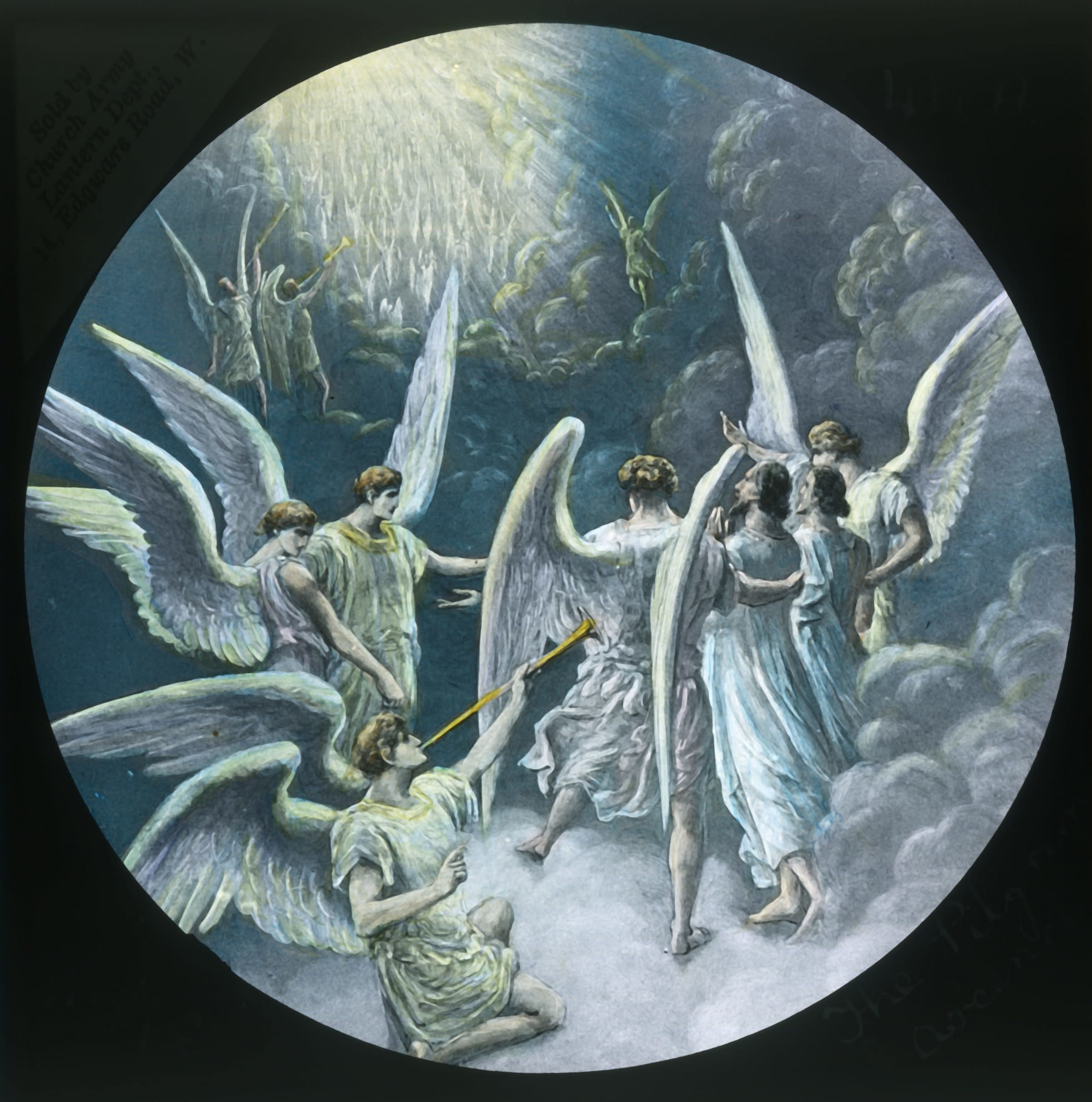
One of the central stories of the Bible, many people believe, is that there is a heaven and an earth and that human souls have been exiled from heaven and are serving out time here on earth until they can return. Indeed, for most modern Christians, the idea of “going to heaven when you die” is not simply one belief among others, but the one that seems to give a point to it all.
But the people who believed in that kind of “heaven” when the New Testament was written were not the early Christians. They were the “Middle Platonists” — people like Plutarch (a younger contemporary of St Paul who was a philosopher, biographer, essayist and pagan priest in Delphi). To understand what the first followers of Jesus believed about what happens after death, we need to read the New Testament in its own world — the world of Jewish hope, of Roman imperialism and of Greek thought.
The followers of the Jesus-movement that grew up in that complex environment saw “heaven” and “earth” — God’s space and ours, if you like — as the twin halves of God’s good creation. Rather than rescuing people from the latter in order to reach the former, the creator God would finally bring heaven and earth together in a great act of new creation, completing the original creative purpose by healing the entire cosmos of its ancient ills. They believed that God would then raise his people from the dead, to share in — and, indeed, to share his stewardship over — this rescued and renewed creation. And they believed all this because of Jesus.
They believed that with the resurrection of Jesus this new creation had already been launched. Jesus embodied in himself the perfect fusion of “heaven” and “earth.” In Jesus, therefore, the ancient Jewish hope had come true at last. The point was not for us to “go to heaven,” but for the life of heaven to arrive on earth. Jesus taught his followers to pray: “Thy kingdom come on earth as in heaven.” From as early as the third century, some Christian teachers tried to blend this with types of the Platonic belief, generating the idea of “leaving earth and going to heaven,” which became mainstream by the Middle Ages. But Jesus’ first followers never went that route.
Israel’s scriptures had long promised that God would come back in person to dwell with his people for ever. The early Christians picked this up: “The Word became flesh,” declares John [1:14], “and dwelt in our midst.” The word for “dwelt” means, literally, “tabernacled,” “pitched his tent” — alluding to the wilderness “tabernacle” in the time of Moses and the Temple built by Solomon. Studying the New Testament historically, in its own world (as opposed to squashing and chopping it to fit with our own expectations), shows that the first Christians believed not that they would “go to heaven when they died,” but that, in Jesus, God had come to live with them.
That was the lens through which they saw the hope of the world. The book of Revelation ends, not with souls going up to heaven, but with the New Jerusalem coming down to earth, so that “the dwelling of God is with humans.” The whole creation, declares St. Paul, will be set free from its slavery to corruption, to enjoy God’s intended freedom. God will then be “all in all.” It’s hard for us moderns to grasp this: so many hymns, prayers and sermons still speak of us “going to heaven.” But it makes historical sense, and sheds light on everything else.
What then was the personal hope for Jesus’ followers? Ultimately, resurrection — a new and immortal physical body in God’s new creation. But, after death and before that final reality, a period of blissful rest. “Today,” says Jesus to the brigand alongside him, “you will be with me in Paradise.” “My desire,” says St. Paul, facing possible execution, “is to depart and be with the Messiah, which is far better.” “In my father’s house,” Jesus assured his followers, “are many waiting-rooms.” These are not the final destination. They are the temporary resting-place, ahead of the ultimate new creation.
Historical study — reading the New Testament in its own world — thus brings surprises that can have an impact on modern Christianity, too. Perhaps the most important is a new, or rather very old, way of seeing the Christian mission. If the only point is to save souls from the wreck of the world, so they can leave and go to heaven, why bother to make this world a better place? But if God is going to do for the whole creation what he did for Jesus in his resurrection — to bring them back, here on earth — then those who have been rescued by the gospel are called to play a part, right now, in the advance renewal of the world.
God will put the whole world right, this worldview says, and in “justification” he puts people right, by the gospel, to be part of his putting-right project for the world. Christian mission includes bringing real advance signs of new creation into the present world: in healing, in justice, in beauty, in celebrating the new creation and lamenting the continuing pain of the old.
The scriptures always promised that when the life of heaven came to earth through the work of Israel’s Messiah, the weak and the vulnerable would receive special care and protection, and the desert would blossom like the rose. Care for the poor and the planet then becomes central, not peripheral, for those who intend to live in faith and hope, by the Spirit, between the resurrection of Jesus and the coming renewal of all things.
(Contributed by Janet Cornwell, H.W., m.)
Hallmark Caves: Love, Noise and the Profit Motive Win
December 16, 2019
by Abby Zimet, Further columnist (commondreams.org)

How dare these women be happy?
In another tiresome skirmish in the culture wars still being valiantly fought by creaky white people longing for the good old racist, sexist, other-hating days, the Hallmark Channel pulled an ad celebrating a same-sex marriage – with, gasp, a kiss! – after the rabid right-wing One Million Moms squawked it ran counter to “family-friendly” values. The playful ad from the Zola wedding planners featured a lovely lesbian couple’s marriage ceremony; after friends arrived late, both women wryly noted things would have gone more smoothly with Zola before taking their vows and sharing a fleeting, oh-so-brief kiss. Cue outrage from One Million Moms, in truth 4,000 bigots led by two men, and a subsidiary of the Southern Poverty Law Center-designated hate group American Family Association. The so-called Moms said 27,000 people had signed their petition demanding that Hallmark, Fox-News-like home of shlocky holiday movies, pull the offending ad. Some furious members wrote to complain Hallmark had “ruined” what had been their fave “family-friendly” offerings by showing “two women lip locking!” “Please Hallmark,” they went on, “We are fed up with having the gay agenda crammed down our throats! You are one of the few channels we thought we would not have to deal with this issue!”
Alas, “this issue” is the right of people to live their lives, and it’s 2019 so get over it, and duh gay people kiss just like other people do, and since when did these “family-friendly” families get to dismiss all the other families different from them, and oh yeah same-sex marriage is the law of the land. So saith a gazillion pissed people: The hashtag #BoycottHallmark started trending, SNL mocked the move, Netflix offered “Titles Featuring Lesbians Joyfully Existing And Also It’s Christmas Can We Just Let People Love Who They Love,” Pete Buttigieg noted “being ‘family-friendly’ means honoring love, not censoring difference,” many called out the bunk of Hallmark’s claim that “public displays of affection” violate its policies when it shows guy/gal kisses, and more decried the gross hypocrisy of pious right-wingers objecting to two women kissing but slavishly supporting a president who boasted about grabbing women by the pussy and slept with a porn star he later paid off while his third wife was home with their baby. Oh right, said Hallmark. Perhaps noticing the uproar came amidst its lucrative Christmas season, Hallmark suddenly reversed itself, acknowledged the ban had caused “hurt and disappointment” and said the company “will continue to look for ways to be more inclusive and celebrate our differences.” In other words, money talks and outrage works.

The dreaded kiss
“Home”
Romanoff2020 The climate crisis poses a threat unlike any in human history. It’s a catastrophe of our own creation—but it doesn’t have to end this way. We can change course. Watch & share our new video, then help us spread this urgent message by donating here: https://bit.ly/34ngfwc
There Is No Other

“It Is What It Is”
By Linda Sapadin, Ph.D 8 Jul 2018 (psychcentral.com)

When I told my dad how upset I was that I had not been accepted into the college of my choice, he looked up at me and replied, “It is what it is, honey.”
I looked at him in disbelief. “Are you serious? Is that the best response you can offer me?” It drives me nuts when he uses that phrase. I told him so but he didn’t get what was so bad about it. He was just stating a fact. “It is what it is, so why go on about it and make yourself feel worse?” was his take on the matter. My take: he’s missing an empathy gene.
“It is what it is” is popping up in increasing frequency in everyday conversation. Sometimes it appears nonsensical; other times, it seems to be on target and still other times, it feels dismissive. Sometimes the phrase suggests that there’s no action to be taken when action is both possible and preferable. Let’s take a look at each one of these scenarios.
Looked at literally, “it is what it is” is a tautology. It’s a statement in which you say the same thing twice, yet appear to state two different things. Of course, things are what they are. But, it’s nonsensical unless you’re implying an underlying message. And therein lies the rub. Like the tautologies “boys will be boys” or “a man’s gotta do what a man’s gotta do,” we need to be aware of the deeper meaning behind these words.
There are times when it feels helpful to be reminded that you’re driving yourself crazy over how things should have been. It’s time to put what happened behind you and figure out how to focus on the future. Two examples: “Yes, we never should have bought that stock, but it is what it is, so let’s see what we can do with our portfolio now.” “Yes, we might have had more options if you were diagnosed earlier but it is what it is, so let’s start exploring our options now.”
“It is what it is” is helpful in two cases: when it’s not an emotional issue for the person, or when she has had sufficient time to process her emotions and is ready to move on.
There are times when “it is what it is” is hurtful and dismissive of one’s feelings. The message received is “it’s not going to change, so get over it already. Stop whining. Stop complaining. Shut up and deal with it.” Even if there is truth in that statement, your timing is off (unless, of course, someone has been repeating their tale of woe forever). People need time to accept a rejection. They need to know you care that they are hurting.
We all need to complain from time to time, about major disasters as well as minor disappointments. Someone seeking an empathetic ear might say, “I can’t believe that the price of Broadway shows is so high.” You might be perceived as uncaring and uninvolved if you respond with, “It is what it is.”
There are times when “it is what it is” leads you to believe that there’s nothing you can do about a situation, when, indeed, action might be both possible and preferable. The message suggests that things are what they are. Accept it. Don’t expect things to be any different. That’s life.
Sure, there will always be senseless and tragic errors in police shootings. Does that mean that we shouldn’t take action to reduce their numbers, particularly when black men are so often the target? Sure, six million Jews were murdered during World War II. It is what it is. There’s nothing you can do about it. Besides, that was 70 years ago. Tell that to the many organizations who work tirelessly to prevent any genocide from happening today. Tell that to the U.S. Holocaust Museum, the mission of which is to have people reflect on their moral responsibilities.
Communication is about what others hear, not about what you say. Hence, if you think you’ve conveyed something good but the other person hears something quite different, it’s time to recognize that “it is what it is” may not be what you think it is.
©2015
