Pisces New Moon, March 6, 2019 (16 degrees) 8:03 am PST

Wendy Cicchetti

The Pisces New Moon is conjunct Neptune, at home in its native sign. This New Moon presents an opportunity to truly reconnect at that inner, heart level and, through the Pisces filter, to feel at one with much more around us — including both the seen and the unseen.

Since Pisces and Neptune link strongly to the dream realm, we might have significant dreams, perhaps with spiritual themes, which connect to invisible but deeply felt worlds. Just prior to writing about this lunation, I dreamed about being given a Tarot reading, during which I told the reader about the strong spiritual connection I have with my mother “in spirit.” As I said this, we both saw a light flash on the ring I was wearing — my mother’s ring — in almost a cartoon, “bling” style. The reader had turned the 10 of Wands (linked with Saturn and Sagittarius) and the 10 of Swords (linked with the Sun and Gemini) — cards that I associate with overwork, depletion, and despair. The dream was a reminder that I was not trusting the flow, and my thoughts were too fragmented, which are further Piscean themes. Considering Vesta in this New Moon chart, I now realize that I need to reconnect with my inner fire, to lighten my spirit and surf the joy that is available in the work realm. Pisces and Neptune have the ability to elevate us in this way, so that we need not be tiptoeing forward in fear, nor paralyzed with worry about what we may perceive to be beyond our reach.

The SunMoon, Neptune, and Vesta in Pisces are sextile Saturn, which also urges us to keep our feet firmly on the ground. How can these forces work together? They can do so easily enough if we learn how to translate the content of our dreams into insights that we can use in practical ways. The same applies with any deeply held wishes: Rather than merely escaping into fantasies — like grasping hold of pretty balloons that captivate us now, but will eventually deflate — Saturn stresses that we take concrete steps to make something of our visions; that we build something solid from our thoughts, through actions that we become accountable for.

The frequently trying Pluto is also sextile the Pisces “collective,” emphasizing how non-negotiable Saturn’s terms are. So, while we may enjoy the wonder of dreams and greater spiritual contact, this feeling of a stronger connection is not enough. We have a duty, according to Saturn and Pluto, to do something significant and to transform whatever is not working in our lives. This is no small task — yet how much richer our lives may be if we rise to the challenge!

Nobody ever said that change would be easy, however. A challenging square from Jupiter to the Pisces New Moon takes in all of the Pisces stellium, including Mercury, and suggests that the way forward is not crystal clear. Mercury in Pisces, sometimes linked with clouding the truth, is now at a critical 29° of the sign. We are encouraged to unravel any untruths that we have told others or ourselves, deriving special insight from realizing where we have drawn a conclusion in error. The finger of blame can be redirected as we see matters more clearly, and we can then start to make important adjustments. We may promise to handle things differently in the future, or offer apologies for errors and find a way to make amends. Sometimes, making obvious amends is not possible — for example, when the person in question has passed away. But we can do so through the proxy of our own living experience by acting in a more beneficent way to self and to others.

It is significant that Jupiter and Neptune are the planets that rule Pisces, because this emphasizes how tight knit are the themes that surround this New Moon. A little like having parents or guardians watching over us, we can be sure that someone out there, in the visible or invisible realms, wants to protect us and see us thrive.

This article is from the Mountain Astrologer, written by Diana Collis.

PLAN YOUR OWN NEW MOON CEREMONY. Give yourself some quiet time in meditation to see where you need to seed new ways of becoming. List these areas within your life you want to change. What areas do you want to break free from the norm and become more productive and discerning? The NEW MOON is the time to manifest the personal attributes you want to cultivate as well as the tangible things you want to bring to you. Possible phrasing: I now manifest ____ into my life. I am now _______ . Remember, think, envision and feel with as much emotion as possible, as though you already have what you want. Thoughts are things and the brain manifests exactly what you show it in the form of thoughts, visuals and emotions. The Buddha said, and I am paraphrasing, “We are the sum total of our thoughts up to today. ” If we want to be different then we must change our thoughts. “If you always do what you’ve always done then you’ll always get what you’ve always got.” CONSCIOUS CHANGE is the key.

The Journey Home, with Heather Williams, H.W.,M.

Heather as teacher

My longtime good friend Heather Williams H.W.M is inviting you to a free Zoom meeting.

Topic: The Journey Home!
Time: Mar 10, 2019 11:00 AM Pacific Time (US and Canada)

Join Zoom Meeting
https://zoom.us/j/797106322

One tap mobile
+19292056099,,797106322# US (New York)
+16699006833,,797106322# US (San Jose)

Dial by your location
+1 929 205 6099 US (New York)
+1 669 900 6833 US (San Jose)
Meeting ID: 797 106 322
Find your local number: https://zoom.us/u/aoRqiholN

Physicists Used Supercomputers to Map the Bone-Crushing Pressures Hiding Inside Protons

Physicists Used Supercomputers to Map the Bone-Crushing Pressures Hiding Inside Protons

Physicists Used Supercomputers to Map the Bone-Crushing Pressures Hiding Inside Protons

Credit: adison pangchai/Shutterstock

If you got aboard the Magic School Bus and started shrinking — smaller than an ant or an amoeba or a single cell, and then kept shrinking until single atoms were as big as whole worlds, and even their constituent particles towered over you — you’d enter a world bubbling with enormous, conflicting pressures.

At the center of a proton, a pressure greater than that found inside a neutron star would fling you out toward the particle’s edge. But at the outer limits of the proton, an equal and opposite force would push you toward the proton’s center. Along the way, you’d be buffeted by sideways-moving shear forces that far exceed anything any person will ever experience in their lifetime.

A new paper, published Feb. 22 in the journal Physical Review Letters, offers the most complete description yet of the competing pressures inside a proton, not just in terms of its quarks — the particles that give a proton its mass — but its gluons, the massless particles that bind those quarks together. [The 18 Biggest Unsolved Mysteries in Physics]

Simple descriptions of protons involve just three quarks held together by a bunch of gluons. But those descriptions are incomplete, said study co-author Phiala Shanahan, a physicist at the Massachusetts Institute of Technology (MIT).

“The proton is made up of a bunch of gluons and then actually a bunch of quarks,” Shanahan told Live Science. “Not just three. There’s three main quarks, and then any number of quark-antiquark pairs that appear and disappear…and it’s all the complicated interactions of this bubbling, boiling quantum state that generate the pressure.”

Shanahan and co-author William Detmold, who is also a physicist at MIT, found that gluons produce about twice as much pressure as the quarks inside a proton, and that this pressure is distributed across a wider area than previously known. They found that a proton’s total pressure peaks at 100 decillion (or 1 with 35 zeros after it) pascals — or about 260 sextillion (or 26 with 22 zeros after it) times the pressure at the center of Earth. [How Long Would It Take to Fall Through the Earth?]

“There’s a region of positive [outward] pressure so there also has to be a region of negative [inward] pressure,” she said. “If there were only a region of positive pressure the proton would continue to expand and it would not be stable.”

But as huge as those pressures are, there’s no way for scientists to directly measure them under most circumstances. To probe the interiors of protons, scientists bombard them with even-tinier electrons at very high energies. In the process, they change the protons. No known experiment can reveal what it’s like inside a proton at the low energies they usually experience.

So scientists rely on the theory of Quantum Chromodynamics (QCD) — which describes quarks and the strong force-carrying gluons that bind them together. Scientists know QCD works because high-energy experiments bear out its predictions, Detmold said. But at low energies, they have to trust in math and calculations. [Strange Quarks and Muons, Oh My! Nature’s Tiniest Particles Dissected (Infographic)]

“Unfortunately [QCD] is very hard to study analytically, writing down equations with pen and paper,” Shanahan said.

Instead, researchers turn to supercomputers that network thousands of processor-cores together to solve complicated equations.

Even with two supercomputers working together, the calculations took about a year, she said.

Shanahan and Detmold broke the proton into its different dimensions (three for space, and one for time) to simplify the problem the supercomputers had to solve.

Instead of a single number, the resulting pressure map would look like a field of arrows, all different sizes and pointing in different directions.

So the answer to the question, “What is the pressure inside a proton?” depends a lot on what part of the proton you’re asking about.

It also depends on the radius of the proton. If protons are bags of gluons and quarks, those bags grow and shrink depending on the other particles acting on them. So Shanahan and Detmold’s results don’t boil down to a single number.

But now our maps of the extremes of all these tiny, boiling worlds inside us are a lot more vivid.

Oprah Winfrey aired a powerful interview after ‘Leaving Neverland’ and is ready for the backlash

Not having HBO I didn’t know this documentary was being aired until I started seeing reviews.

Then I learned from this Washington Post article that Oprah did a one hour follow-up with the two men who were in the doc and the director.

This article brings out some significant points about how sexual abuse of children is conducted psychologically, which is also an important reason why it has such devastating consequences. (More in the Comments.)

If anyone saw the documentary please share your impressions.

–Michael Kelly

Link:  https://www.washingtonpost.com/arts-entertainment/2019/03/05/oprah-winfrey-aired-powerful-interview-after-leaving-neverland-is-ready-backlash/

In a March 4 special, Oprah Winfrey interviewed the two men that detailed allegations of childhood sexual abuse by Michael Jackson in an HBO documentary. 

March 5, 2019 (Washingtonpost.com)

On Monday night, as soon as HBO finished airing “Leaving Neverland”— the two-part documentary in which two men detailed allegations of childhood sexual abuse by Michael Jackson — the network continued its Jackson coverage. This time, it was anchored by Oprah Winfrey.

Winfrey, in conjunction with her network OWN, hosted the hour-long special “Oprah Winfrey Presents: After Neverland,” in which she interviewed the two men — Wade Robson and James Safechuck — and director Dan Reed.

The studio audience was made up of sexual abuse survivors, as well as their supporters and family members. Winfrey, who revealed on her talk show decades ago that she was sexually abused when she was young, said Reed’s documentary did an excellent job of illustrating what she had always tried to explain — child sexual abuse is also about seduction.

“I know people all over the world are going to be in an uproar and debating whether or not Michael Jackson did these things and whether these two men are lying or not lying. But for me, this moment transcends Michael Jackson,” Winfrey said. “It is much bigger than any one person. This is a moment in time that allows us to see this societal corruption. It’s like a scourge on humanity. . . . If it gets you, our audience, to see how it happens, then some good would have come of it.”

Winfrey said Jackson’s estate has vehemently denied the accusations and called both Robson and Safechuck liars. Jackson fans have been vicious, as Winfrey received backlash before the interview. But she didn’t really seem to care — the topic was too important. Here were three of the main takeaways from the hour:

A child’s understanding of ‘abuse’

Winfrey started by discussing how the word “abuse” lacks accuracy, and children often can’t articulate abuse to their parents because they literally don’t have the language to explain what happened, as they have been “seduced and entrapped.”

“As young boys, these two men did not feel abuse until much later on in life,” Winfrey explained, and turned to Robson, who denied experiencing abuse during testimony in a 1993 child sexual abuse case against Jackson that was later settled. “Were you thinking about it as abuse then? Did you know you were being abused, and you were just defending Michael?”

Robson responded that both times he testified (he made the same claims in Jackson’s 2005 molestation trial), he had “no understanding that what Michael did to me sexually was abuse. I had no concept of it being that.”

“From night one of the abuse, of the sexual stuff that Michael did to me, he told me it was love,” Robson said. “He told me that he loved me and God brought us together. … Anything Michael would say to me was gospel.”

This documentary focuses on two men, Wade Robson and Jimmy Safechuck, who allege they were sexually abused by Michael Jackson as children. 

Safechuck echoed a similar experience and said there was “a lot of panic” in talking about Jackson: “Michael drilled in you, ‘If you’re caught, we’re caught, your life is over, my life is over.’ It’s repeated over and over again, it’s drilled into your nervous system,” he said. “It takes a lot of work to sort through that.”

When Winfrey asked Robson about his testimony, he reiterated: “I didn’t think about it, as far as that concept. . . . I couldn’t even go there, I couldn’t even question Michael. If I was to question Michael and my story with Michael, my life with Michael, it would mean I would have to question everything in my life. It wasn’t even an option to think about it.”

Robson said he first started to think about the behavior being abuse when he had a son of his own and began to learn about how children think. Safechuck said his process started when Robson first spoke out, and he realized he wasn’t alone.

The Jackson estate response

Winfrey read the scathing statement that Jackson’s family released when the documentary premiered at Sundance this year. It called the film “a public lynching” and read in part, “We are furious that the media, who without a shred of proof or single piece of physical evidence, chose to believe the word of two admitted liars over the word of hundreds of families and friends around the world who spent time with Michael, many at Neverland, and experienced his legendary kindness and global generosity.”

“You know the Jackson family disagrees with everything that is being said here today,” Winfrey said, and asked Reed about a criticism from the estate: Why didn’t he interview anyone in the Jackson family?

“This is a film that’s not about Jackson. It’s about what happened to Wade and James,” Reed said, adding that no one in the Jackson family “disputes” that Jackson spent many nights with young boys. “What’s the journalistic value of interviewing someone who says, ‘Well, Michael’s a really nice guy, he would never do anything to a child’? Especially when they have a financial, vested interest in smearing and discrediting these men.”

When Winfrey pointed out the family believes that Jackson (whose brand is worth around $2 billion) is the one being smeared, Reed emphasized that neither Robson nor Safechuck has any financial interest in the “Leaving Neverland” documentary. Winfrey asked why Robson sued the Jackson estate five years ago if he wasn’t looking for compensation. (Both Robson and Safechuck have lawsuits against the estate that were dismissed but are under appeal.)

Robson said about nine months into his healing process, he started wondering, “With this horrible thing that happened to me, what could I do that could maybe turn it into something good?” He thought a lawsuit would be the best way to get the attention of the estate. Plus, he wanted to go back to court.

“Michael trained me and forced me to tell the lie for so many years, particularly on the stand, really traumatizing experiences for me that had a huge impact on the rest of my life,” he said, adding he wanted the opportunity to “reprocess” those memories. “I wanted to get on the stand again, because now I’m able to tell the truth.”

The aftermath

Winfrey was well-aware of all the hate that she would get from Jackson fans for the interview, not to mention the response that Robson and Safechuck would receive.

“So when all the fans and the estate, and all the anger — you guys gonna get it, you know that, right? Y’all gonna get it, I’m gonna get it, we’re all gonna get it,” she said, smiling, as the audience applauded. “We’re gonna get it. So are you prepared for that?”

While Winfrey appeared not to mind potential backlash, both men shook their heads. “I mean, it’s been happening for a while. I just received another death threat last night, you know. There’s been many of those over the years,” Robson said. “It’s hard to normalize to that, but there’s some level of familiarity with that.”

Winfrey asked whether they have forgiven Jackson, their families and even themselves. Safechuck confessed that he still feels guilt, even now, as if he somehow let Jackson down. “That shadow is still there. It’s still there. It just creeps out,” he said.

They’re both working on forgiving their families. Safechuck said he struggles with forgiving himself. After thinking about it, Robson said he has forgiven himself, which set out another round of applause from the audience.

In the end, Winfrey brought the conversation full circle to the broader topic of child sexual abuse. “The story is bigger than, as I said in the beginning, it’s bigger than any one person. And don’t let any person in your world make it just about what Michael Jackson did or did not do,” she said. “It’s about this thing, this insidious pattern that’s happening in our culture that we refuse to look at.”

(Submitted by Prosperos student Michael Kelly)

For second time ever a patient has been cured of HIV, scientists report

The promising news comes 12 years after the “Berlin patient” became the world’s first person to be cured of the deadly virus.

  • The New York Times reports that a team of scientists plan to announce tomorrow that a patient in London has been effectively cured of HIV.
  • The cure reportedly was the result of a bone-marrow transplant that came with a genetic mutation that naturally blocks HIV from spreading throughout the body.
  • This approach isn’t quite practical to implement on a large scale, but the knowledge gained from it will likely help scientists develop more scalable approaches.

In 2007, Timothy Ray Brown became the first person to be cured of HIV after receiving a bone marrow stem cell transplant, to treat leukemia, from someone who was naturally immune to the virus. Known as “the Berlin patient,” researchers have since tried — and failed — to replicate that incredible success in hopes of finding a permanent cure for the virus, which currently affects some 37 million people globally.

However, a team of scientists plan to announce tomorrow that a second person — known now only as the “London patient” — appears to also have been cured of the virus that causes AIDS, according to a New York Timesreport. The London patient is reported to have had Hodgkin’s lymphoma, which doctors treated in 2016 with a bone-marrow transplant, which, like the Berlin patient, came from a donor who had a mutation in the gene for CCR5, which rendered them naturally immune to HIV (About 1 percent of people who descend from Northern Europeans carry this mutation and are immune to HIV).

“[It] shows the cure of Timothy Brown was not a fluke and can be recreated,” Keith Jerome of Fred Hutchinson Cancer Research Center in Seattle, a doctor who wasn’t involved in the transplant, told The Associated Press.

But the new case is different in an important way. The Berlin patient had been subjected to harsh immunosuppressive drugs and, at one point, was put into a medically induced coma. He nearly died, the Times report states. That’s why some scientists have long suggested that replicating the success of the Berlin patient would be anything but simple: A patient must reach the verge of death to be cured of HIV.

However, because the London patient had a milder, more routine medical experience, it’s a promising sign that suggests future patients might not need to be put in excess danger to be cured.

“I think this does change the game a little bit,” Dr. Ravindra Gupta, a virologist at University College London who spoke at the Seattle meeting where the results were discussed, told the Times. “Everybody believed after the Berlin patient that you needed to nearly die basically to cure HIV, but now maybe you don’t.”

Still, the Times report states that most doctors interviewed seem hesitant to refer to the new case as “cured.” What’s more, the types of transplants in both the London and Berlin cases are risky and come with potentially long-term side effects, so it’s not clear that such transplants could ever become realistic treatment options.

“I’m not sure what this tells us,” Dr. Anthony Fauci, director of the National Institute of Allergy and Infectious Diseases, told the Times. “It was done with Timothy Ray Brown, and now here’s another case — ok, so now what? Now where do we go with it?”

The answer seems unclear, though some suggest other methods that target the CCR5 gene — and aren’t as costly or risky as transplants — are likely routes forward. One of the most notable examples of possibles uses is CRISPR, which is the tool Chinese scientist He Jiankui used to genetically edit the embryos — which included alterations to the CCR5 genes — of two girls born last year in China. They were born naturally immune to the disease as a result.

Whatever the way forward, the London patient represents hope that scientists might one day find a safe, scalable cure for HIV. “This will inspire people that cure is not a dream,” Dr. Annemarie Wensing, a virologist at the University Medical Center Utrecht in the Netherlands, told the Times. “It’s reachable.”

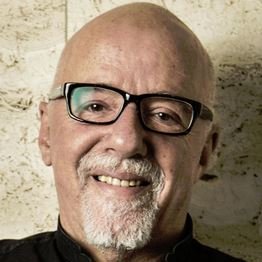
Paulo Coelho: ‘I’ve presided over a few black masses in my time…’

Paulo Coelho. Portrait by Ana Belen Jarrin

Paulo Coelho: ‘Can I picture 100 million books? I cannot’ 

By Stuart Husband

19 Oct 2008 (telegraph.co.uk)

Paulo Coelho believes if we all follow our dreams we can achieve love, money, success – anything we want. It’s worked for him: he’s sold 100 million books, rubs shoulders with the stars and is worshipped by his fans. Stuart Husband discovers his secret

Walking down the street with Paulo Coelho is a disarming experience. People’s mouths fall open in a comic double-take as they spot him; many rush over to have their photographs taken with him; some merely clamp their hands to their mouths, shaken and overcome. Wherever Coelho goes, he tends, Pied Piper-like, to attract a train of attendants. Many call him ‘maestro’. Far from being irked by this, he seems to thrive on it. ‘Come on, come closer,’ he entreats, beckoning to a pair of middle-aged women and their camcorder. ‘Come get your pictures.’

‘You changed our lives,’ one of them manages to blurt, as Coelho wraps a thick arm round her waist.

He lavishes a beneficent smile on her. ‘It was a pleasure,’ he says with relish.

Coelho (pronounced Co-el-you) looks a little like a rock star, albeit, at 60, a slightly superannuated one. He has the terse physique of a farm labourer, and invariably dresses in black T-shirts and jeans: ‘There is less chance of them being destroyed in hotel laundries,’ he says, when pressed on the significance of his attire. His white hair is shaved short, and he’s dispensed with the short ponytail he once sported, though that hasn’t lessened his fans’ regard for him as a kind of Kahlil Gibran-like sage. Coelho is in fact one of the most successful authors in the world, with about 100 million books sold (‘Over 100 million,’ he clarifies, when I mention the figure; Coelho is definitely abreast of the numbers). One fifth of that figure has come from one title, The Alchemist, which Coelho wrote in two weeks, in 1987.

The Alchemist, like many of Coelho’s offerings, is less novel than fable. The original story can be found in A Thousand and one Nights and was later adapted by the Argentine author Jorge Luis Borges (Coelho, who is Brazilian, counts Borges among his favourite authors, alongside Henry Miller, William Blake and Oscar Wilde). It tells of a man (in Coelho’s version, an Andalusian shepherd boy; Coelho has said, many times, that he is that shepherd boy), who dreams that he must leave home to seek a treasure, only to find, on arriving at his destination, that the treasure is actually buried where his journey began. Coelho sends his shepherd to the Sahara desert, where an alchemist tells him, ‘Wherever your heart is, that is where you’ll find your treasure’. Sure enough, on returning home, he unearths a set of gold coins. The Alchemist, which has been translated into 64 languages, distils the message found in Coelho’s other eight novels, two memoirs, and various volumes of anecdotes and platitudes, including his online newsletter, Warrior of the Light: that if we pay attention to signs and portents, and follow our destiny, which Coelho calls our ‘personal legend’, then whatever is sought – love, money, inspiration, success – can be attained.

‘When you want something,’ he has written, ‘all the universe conspires in helping you to achieve it.’ This no-sweat combination of ‘Desiderata’ and the best-selling Christian self-help book The Purpose-Driven Life has won Coelho an army of eager adherents. Both delivery boys and princesses recognise his face. Even as the Monica Lewinsky scandal ran its sordid course, Bill Clinton was photographed carrying a copy of The Alchemist. Madonna has written, of the same book: ‘A beautiful work about magic, dreams, and the treasures we find on our own doorstep.’ Supermodels invariably sport a selection of the Coelho back catalogue in their totes. ‘It’s like music, really, the way that Paulo writes, it’s so beautiful,’ opined Julia Roberts, in a 2001 documentary about Coelho.

‘Can I picture 100 million books?’ ponders Coelho, in a warm, throaty rasp that’s enhanced by a prodigious cigarette habit. ‘I cannot. I remember going to the Maracana football stadium in Rio, which is the world’s biggest; it holds 100,000 people. This was after my sales had reached that number. I looked at all these people and that in itself, to me, was miraculous. Anything beyond that?’ He shakes his head. ‘It’s pure abstraction.’

He also demurs when asked to account for the success of his books. ‘I don’t know the reason,’ he says, shaking his head, ‘and if I find out, I’m going to lose the magic. I’m going to try to write to a formula. But I know that they have touched hearts, of course.’ His face breaks into a toothy gleam. ‘Last night, I was walking the street and I met an Englishman who said to me, I never saw a writer surrounded by so many people unless he has debts to be collected.’ He chuckles vigorously.

Many people have put Coelho’s success down to the benign, forgiving, pantheistic brand of spirituality enshrined in his writing. Open any of his books at random and you’ll almost certainly alight on one of its tenets – ‘all things are one,’ say, or ‘it is not a sin to be happy’. In Coelho’s cosmology, the quotidian – weather patterns, coincidence, the most mundane of events – is always miraculous, and his plots tend to be sweepingly allegorical, which may be why so many of his readers claim to see their own lives in them (this is literally true, in some cases: in The Zahir, a novel about a man who goes on a journey of self-discovery after his war-correspondent wife leaves him, the female character was based on the reporter Christina Lamb, who interviewed Coelho after returning from Iraq in 2003; perhaps this is one reason that Coelho says a daily prayer asking that, over the course of the next 24 hours, he will meet interesting people). Last winter, Starbucks printed a quote of Coelho’s on five million of its Venti cups: ‘Remember your dreams and fight for them. You must know what you want from life. There is just one thing that makes your dream become impossible: the fear of failure. Never forget your Personal Legend. Never forget your dreams…’

It therefore sounds a little disingenuous when Coelho announces that he doesn’t consider his books to be spiritual. This will come as news not only to most of his readers, but also to Waterstone’s (where his titles prop up the Spiritual Fiction section), and to his own characters that he cites in his defence, namely the Romanian prostitute in Eleven Minutes (who sanctifies those around her via the gift of transcendent sex), and the suicidal Slovene in a mental hospital in Veronika Decides to Die (who repents and sanctifies those around her via her new-found zest for life). But Coelho is adamant. ‘I don’t set out to write about spirituality, I am free to do something different every time. Right now, I am just finishing a novel set in the world of fashion, about why we are so fascinated to spend so much money on dresses, suits, even knickers. Like all my books, I am looking at something in an effort to understand it better.’ He shrugs. ‘When you say spirituality, maybe it’s because I try to see something from a different perspective.’

The talk of spirituality is given added piquancy, given our surroundings: we’re sitting in a sepulchral meeting-room in the luxurious Parador – a former monastery, now a five-star hotel – in the northern Spanish city of Santiago de Compostela, whose huge cathedral, on the Unesco-protected square, is the culmination of the 560-mile Christian pilgrimage from Saint-Jean-Pied-de-Port in France, made since medieval times to the remains of St James, allegedly buried in the cathedral’s vaults. Coelho undertook the walk himself in 1986, and subsequently wrote about it in his first book, The Pilgrimage (original title: Diary of a Magus). ‘It was the turning point of my life,’ he says emphatically. ‘I had this dream to become a writer since I was a teenager. I was nearly 40 at the time, a late starter, and I felt OK, it’s now or never.’

Coelho was born in Rio in August 1947; ‘I am 100 per cent Virgo,’ he says, ‘stubborn, over-organised, slightly abstracted from the rest of the world.’ His father was an engineer, and expected his son to follow in his footsteps. His mother was a devout Catholic, and sent her son to a Jesuit school. They took a dim view of his desire to write, and an even dimmer one when he took to declaiming his poetry on the beaches amid Rio’s proto-Beats. They sent him to a mental institution where he received electroshock therapy. In the late 1960s, he became a fully-fledged member of the Brazilian underground, growing hippy hair, doing drugs, and devouring the writings of the occultist Aleister Crowley. He met a singer called Raul Seixas and began writing lyrics for him. Seixas became a huge star, and one of his and Coelho’s biggest hits was called Sociedade Alternativa; soon, kids all over Brazil were singing its catchy refrain – ‘Do what you want/Because it’s the whole of the law/Long live the Alternative Society/The number 666 is Aleister Crowley.’

‘I’ve presided over a few black masses in my time, sure,’ grins Coelho. ‘I wouldn’t recommend it necessarily, but every young person should allow the flame of rebellion to manifest in some way, because if you don’t see the other side of the coin, you are just a sheep. You’ll have some risky experiences, but everyone knows his or her limits, I believe.’ (This train of thought naturally brings him to Amy Winehouse: ‘I love her,’ he declares. ‘She doesn’t seem like the happiest person on earth, and I guess she will either die or she will survive, but I believe it will be the latter; she has a talent to nurture.’)

In 1974, Brazil’s military dictatorship decided that Coelho’s work was subversive and arrested him; he was then kidnapped by paramilitaries, who held him for a week, accused him of being a guerilla fighter, and tortured him by applying electric shocks to his genitals. He gave up religion for several years after that, writing television bio-pics and soap operas, returning to the Catholic fold after marrying his fourth wife, Christina (Coelho, deeply superstitious, refuses to countenance the use of the word ‘last’, except in reference to her). He then vowed to undertake the pilgrimage after meeting a man whom he refers to in his writing as ‘my Master’, who inducts him into something called the Order of Ram (Regnus Agnus Mundi, or Rigour, Adoration, Mercy), a Catholic sect for the study of symbols – think a hippy version of Opus Dei (though efforts to verify its existence outside of Coelho’s oeuvre have proved frustratingly futile).

The Pilgrimage is concerned mainly with Coelho’s efforts to locate a sword left by his Master somewhere on the road to Santiago; a Lord of the Rings-esque quest underlined by the appearance of a guide called Petrus who teaches Coelho various yogic-style Ram exercises. Along the way Coelho wrestles with his personal devil, who turns out to be a black dog named Legion, achieves a state of agape – or ‘the love that consumes’ – and foresees his own death. Quite how literally we’re supposed to take all this is a moot point (though it’s reported that several pilgrims now take a substantial detour in order not to pass by the spot where the fearsome Legion first attacks), and one that the Santiago city authorities are happy to overlook in favour of the fact that the number of pilgrims has increased tenfold since his book came out.

The previous night, Coelho was honoured by having a street named after him in the city; there’s also a Paulo Coelho Suite at the Hotel Ambasciatori in Rome, and a Paulo Coelho hot chocolate drink at the Bristol hotel in Paris. ‘Do I get royalties?’ he smiles. ‘No, I get none, but I need none. Writing The Pilgrimage enabled me to fulfil my own personal destiny.’ He shows me a crude tattoo of a butterfly on his left forearm. ‘This is a symbol of alchemy and transformation,’ he announces. ‘It’s a painful process, but you can be resurrected as a totally different entity, though with the same essence.’

I ask if he now finds writing easy. ‘Well, it’s not difficult for me to put my feelings into written form. I try to be concise and to go direct to the subject. This is what people like about my work, and what the critics hate. They want more complicated books.’ (Indeed, Brazilian critics say that translation from the original Portuguese must improve Coelho’s prose; a Sao Paulo newspaper columnist’s comment that Coelho writes in a ‘non-literary style’ is one of the more magnanimous verdicts).

Coelho’s name is about to be lent to another product; a fountain pen from the venerable Italian manufacturer Montegrappa in a limited edition of 1947, commemorating his birthdate (1,000 of them in silver, 900 in silver and emeralds and 47 in yellow gold, emeralds and diamonds; the latter will retail at around £10,000). The nib is adorned with a butterfly and the shaft with a relief map of the Pilgrim’s Route to Santiago. It’s not the first time that Coelho has been associated with a luxury brand; last year, the International Watch Company commissioned him to write seven short stories, one about each model the company produces (his fee went to benefit the Paulo Coelho Insititute, a foundation that helps children who live in the Rio favelas). Coelho’s brand awareness and new-found interest in fashion may have been fomented by his personal assistant Alessandro, a dapper, Hermès-belted German, half Coelho’s age, who confides that he also works in brand consultancy for the likes of Hugo Boss and Formula 1; and, while he may be in awe of Coelho (‘Did you know that Nelly Furtado only decided to have a child after reading one of his books?’ he asks me, wide-eyed), seems to regard him as another trademark to be turned to account. Coelho himself, while waxing lyrical over the pen, seems to be genuinely unconcerned with Mammon.

While his books have brought him great wealth – he has an apartment in Paris’ sixth arrondissement containing an improvised archery course, as well as a converted mill in the French Pyrenees and an apartment on Copacabana beach – he’s artlessly open and approachable; and, as his almost daily blogging attests, he prides himself on his close relationship with his readers (one that is more than reciprocated – ‘You have been like the mother bird that helps her little ones fly,’ runs a typical response to a recent post). ‘I am an internet junkie,’ he declares with glee. ‘I have a public inbox which receives over 1,000 emails a day and which I employ four people to answer, plus my forums, my blog, and an inbox just for work. This is what I do. I don’t socialise or go for cocktails and dinners. I hate to be smart. People know they can always reach me.’ But doesn’t he leave himself a little too open to people who think he can heal the world, or at least their world? ‘Not really. I actually ask them a lot of the questions. I expect them to have some answers.’ What about the Irish woman who marched onto his terrace and announced that a satellite had told her she should come and commit suicide in front of him? ‘Oh, unscheduled visits happen sometimes,’ he says, dismissively. ‘I’d say one in every 100 readers may have this kind of extreme reaction. But you know, I sent her off on the road to Santiago and she eventually called to say she’d changed her mind about killing herself.’ He shrugs. ‘I’m not going to wall myself off. But I have put in a gate.’

Coelho’s literary superstar status is unlikely to recede soon, particularly with the release next year of a film version of Veronika Decides to Die, starring Sarah Michelle Gellar and David Thewlis (the much-mooted big-screen adaptation of The Alchemist is apparently mired in development hell). Coelho will doubtless react to future vicissitudes with his customary – indeed, almost preternatural – equanimity. ‘I look for the mystery in everything,’ he says happily. ‘I don’t try to control my days. The problem for most people is that they think every single day is the same. Or they are held back by fear. Fear of death, fear of whatever. Now, death holds no dread for me. I foresaw my own burial, and I broke free and flew away. I know we’ll carry on. There is an afterlife. I am convinced of this.’

He claps his hands. ‘Now, a cigarette. That will surely kill me eventually, no?’ He jumps up, and we walk down the hotel corridor, Coelho adopting the thumbs-hooked-out-of-jeans-pockets stance favoured by Jeremy Clarkson and his ilk. Out on the square, many pilgrims, awestruck equally at the sight of Coelho and the cathedral, gawp from one to the other. I ask him to sign my copy of The Alchemist. Not for Coelho the likes of ‘Best regards’ or ‘Good wishes’. He takes his pen, and, with a rolling flourish, writes ‘Follow your dreams’.

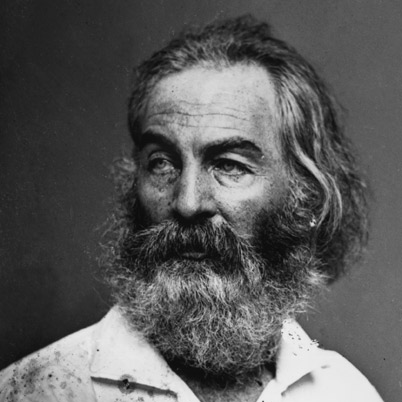
I Sing the Body Electric

Walt Whitman1819 – 1892

1

I sing the body electric,
The armies of those I love engirth me and I engirth them,
They will not let me off till I go with them, respond to them,
And discorrupt them, and charge them full with the charge of the soul.

Was it doubted that those who corrupt their own bodies conceal themselves?
And if those who defile the living are as bad as they who defile the dead?
And if the body does not do fully as much as the soul? 
And if the body were not the soul, what is the soul?


2

The love of the body of man or woman balks account, the body itself balks account, 
That of the male is perfect, and that of the female is perfect.

The expression of the face balks account,
But the expression of a well-made man appears not only in his face,
It is in his limbs and joints also, it is curiously in the joints of his hips and wrists,
It is in his walk, the carriage of his neck, the flex of his waist and knees, dress does not hide him,
The strong sweet quality he has strikes through the cotton and broadcloth,
To see him pass conveys as much as the best poem, perhaps more,
You linger to see his back, and the back of his neck and shoulder-side.

The sprawl and fulness of babes, the bosoms and heads of women, the folds of their dress, their style as we pass in the street, the contour of their shape downwards,
The swimmer naked in the swimming-bath, seen as he swims through the transparent green-shine, or lies with his face up and rolls silently to and from the heave of the water,
The bending forward and backward of rowers in row-boats, the horse-man in his saddle,
Girls, mothers, house-keepers, in all their performances,
The group of laborers seated at noon-time with their open dinner-kettles, and their wives waiting,
The female soothing a child, the farmer’s daughter in the garden or cow-yard,
The young fellow hoeing corn, the sleigh-driver driving his six horses through the crowd,
The wrestle of wrestlers, two apprentice-boys, quite grown, lusty, good-natured, native-born, out on the vacant lot at sundown after work,
The coats and caps thrown down, the embrace of love and resistance,
The upper-hold and under-hold, the hair rumpled over and blinding the eyes;
The march of firemen in their own costumes, the play of masculine muscle through clean-setting trowsers and waist-straps,
The slow return from the fire, the pause when the bell strikes suddenly again, and the listening on the alert,
The natural, perfect, varied attitudes, the bent head, the curv’d neck and the counting;
Such-like I love—I loosen myself, pass freely, am at the mother’s breast with the little child,
Swim with the swimmers, wrestle with wrestlers, march in line with the firemen, and pause, listen, count.


3

I knew a man, a common farmer, the father of five sons,
And in them the fathers of sons, and in them the fathers of sons.
This man was a wonderful vigor, calmness, beauty of person,
The shape of his head, the pale yellow and white of his hair and beard, the immeasurable meaning of his black eyes, the richness and breadth of his manners,
These I used to go and visit him to see, he was wise also,
He was six feet tall, he was over eighty years old, his sons were massive, clean, bearded, tan-faced, handsome,
They and his daughters loved him, all who saw him loved him,
They did not love him by allowance, they loved him with personal love,
He drank water only, the blood show’d like scarlet through the clear-brown skin of his face,
He was a frequent gunner and fisher, he sail’d his boat himself, he had a fine one presented to him by a ship-joiner, he had fowling-pieces presented to him by men that loved him,
When he went with his five sons and many grand-sons to hunt or fish, you would pick him out as the most beautiful and vigorous of the gang,
You would wish long and long to be with him, you would wish to sit by him in the boat that you and he might touch each other.


4

I have perceiv’d that to be with those I like is enough,
To stop in company with the rest at evening is enough,
To be surrounded by beautiful, curious, breathing, laughing flesh is enough,
To pass among them or touch any one, or rest my arm ever so lightly round his or her neck for a moment, what is this then? 
I do not ask any more delight, I swim in it as in a sea. 
There is something in staying close to men and women and looking on them, and in the contact and odor of them, that pleases the soul well,
All things please the soul, but these please the soul well.


5

This is the female form,
A divine nimbus exhales from it from head to foot,
It attracts with fierce undeniable attraction, 
I am drawn by its breath as if I were no more than a helpless vapor, all falls aside but myself and it, 
Books, art, religion, time, the visible and solid earth, and what was expected of heaven or fear’d of hell, are now consumed,
Mad filaments, ungovernable shoots play out of it, the response likewise ungovernable,
Hair, bosom, hips, bend of legs, negligent falling hands all diffused, mine too diffused,
Ebb stung by the flow and flow stung by the ebb, love-flesh swelling and deliciously aching,
Limitless limpid jets of love hot and enormous, quivering jelly of love, white-blow and delirious nice,
Bridegroom night of love working surely and softly into the prostrate dawn,
Undulating into the willing and yielding day,
Lost in the cleave of the clasping and sweet-flesh’d day.

This the nucleus—after the child is born of woman, man is born of woman,
This the bath of birth, this the merge of small and large, and the outlet again.

Be not ashamed women, your privilege encloses the rest, and is the exit of the rest,
You are the gates of the body, and you are the gates of the soul.

The female contains all qualities and tempers them,
She is in her place and moves with perfect balance,
She is all things duly veil’d, she is both passive and active,
She is to conceive daughters as well as sons, and sons as well as daughters.

As I see my soul reflected in Nature,
As I see through a mist, One with inexpressible completeness, sanity, beauty,
See the bent head and arms folded over the breast, the Female I see.


6

The male is not less the soul nor more, he too is in his place,
He too is all qualities, he is action and power,
The flush of the known universe is in him,
Scorn becomes him well, and appetite and defiance become him well,
The wildest largest passions, bliss that is utmost, sorrow that is utmost become him well, pride is for him,
The full-spread pride of man is calming and excellent to the soul,
Knowledge becomes him, he likes it always, he brings every thing to the test of himself,
Whatever the survey, whatever the sea and the sail he strikes soundings at last only here,
(Where else does he strike soundings except here?)

The man’s body is sacred and the woman’s body is sacred,
No matter who it is, it is sacred—is it the meanest one in the laborers’ gang?
Is it one of the dull-faced immigrants just landed on the wharf?
Each belongs here or anywhere just as much as the well-off, just as much as you,
Each has his or her place in the procession.

(All is a procession,
The universe is a procession with measured and perfect motion.)

Do you know so much yourself that you call the meanest ignorant?
Do you suppose you have a right to a good sight, and he or she has no right to a sight?
Do you think matter has cohered together from its diffuse float, and the soil is on the surface, and water runs and vegetation sprouts,
For you only, and not for him and her?


7

A man’s body at auction,
(For before the war I often go to the slave-mart and watch the sale,)
I help the auctioneer, the sloven does not half know his business.

Gentlemen look on this wonder,
Whatever the bids of the bidders they cannot be high enough for it,
For it the globe lay preparing quintillions of years without one animal or plant,
For it the revolving cycles truly and steadily roll’d.

In this head the all-baffling brain,
In it and below it the makings of heroes.

Examine these limbs, red, black, or white, they are cunning in tendon and nerve,
They shall be stript that you may see them.
Exquisite senses, life-lit eyes, pluck, volition,
Flakes of breast-muscle, pliant backbone and neck, flesh not flabby, good-sized arms and legs,
And wonders within there yet.

Within there runs blood,
The same old blood! the same red-running blood!
There swells and jets a heart, there all passions, desires, reachings, aspirations,
(Do you think they are not there because they are not express’d in parlors and lecture-rooms?)

This is not only one man, this the father of those who shall be fathers in their turns,
In him the start of populous states and rich republics,
Of him countless immortal lives with countless embodiments and enjoyments.

How do you know who shall come from the offspring of his offspring through the centuries?
(Who might you find you have come from yourself, if you could trace back through the centuries?)


8

A woman’s body at auction,
She too is not only herself, she is the teeming mother of mothers,
She is the bearer of them that shall grow and be mates to the mothers.

Have you ever loved the body of a woman?
Have you ever loved the body of a man?
Do you not see that these are exactly the same to all in all nations and times all over the earth?

If any thing is sacred the human body is sacred,
And the glory and sweet of a man is the token of manhood untainted,
And in man or woman a clean, strong, firm-fibred body, is more beautiful than the most beautiful face.
Have you seen the fool that corrupted his own live body? or the fool that corrupted her own live body?
For they do not conceal themselves, and cannot conceal themselves. 


9

O my body! I dare not desert the likes of you in other men and women, nor the likes of the parts of you,
I believe the likes of you are to stand or fall with the likes of the soul, (and that they are the soul,)
I believe the likes of you shall stand or fall with my poems, and that they are my poems,
Man’s, woman’s, child, youth’s, wife’s, husband’s, mother’s, father’s, young man’s, young woman’s poems,
Head, neck, hair, ears, drop and tympan of the ears,
Eyes, eye-fringes, iris of the eye, eyebrows, and the waking or sleeping of the lids,
Mouth, tongue, lips, teeth, roof of the mouth, jaws, and the jaw-hinges,
Nose, nostrils of the nose, and the partition,
Cheeks, temples, forehead, chin, throat, back of the neck, neck-slue,
Strong shoulders, manly beard, scapula, hind-shoulders, and the ample side-round of the chest,
Upper-arm, armpit, elbow-socket, lower-arm, arm-sinews, arm-bones,
Wrist and wrist-joints, hand, palm, knuckles, thumb, forefinger, finger-joints, finger-nails,
Broad breast-front, curling hair of the breast, breast-bone, breast-side,
Ribs, belly, backbone, joints of the backbone,
Hips, hip-sockets, hip-strength, inward and outward round, man-balls, man-root,
Strong set of thighs, well carrying the trunk above,
Leg-fibres, knee, knee-pan, upper-leg, under-leg,
Ankles, instep, foot-ball, toes, toe-joints, the heel;
All attitudes, all the shapeliness, all the belongings of my or your body or of any one’s body, male or female,
The lung-sponges, the stomach-sac, the bowels sweet and clean,
The brain in its folds inside the skull-frame,
Sympathies, heart-valves, palate-valves, sexuality, maternity,
Womanhood, and all that is a woman, and the man that comes from woman,
The womb, the teats, nipples, breast-milk, tears, laughter, weeping, love-looks, love-perturbations and risings,
The voice, articulation, language, whispering, shouting aloud,
Food, drink, pulse, digestion, sweat, sleep, walking, swimming,
Poise on the hips, leaping, reclining, embracing, arm-curving and tightening,
The continual changes of the flex of the mouth, and around the eyes,
The skin, the sunburnt shade, freckles, hair,
The curious sympathy one feels when feeling with the hand the naked meat of the body,
The circling rivers the breath, and breathing it in and out,
The beauty of the waist, and thence of the hips, and thence downward toward the knees,
The thin red jellies within you or within me, the bones and the marrow in the bones,
The exquisite realization of health;
O I say these are not the parts and poems of the body only, but of the soul,
O I say now these are the soul!

Paulo Coelho recap

“Everything is one thing only.”

“The language of signs is always ready to reveal what the eyes can’t see.  God has written in this world the path each person must take.  you only have to read what He has written for you.”

Paulo Coelho de Souza (born August 24, 1947) is a Brazilian lyricist and novelist. He is best known for his novel The Alchemist. In 2014, he uploaded his personal papers online to create a virtual Paulo Coelho Foundation. Wikipedia

Consciousness, spirituality, biography, sexuality, androgyny, futurism, space, the arts, science, astrology, democracy, humor, books, movies and more