British TV series: “Humans”

This sci-fi drama series written by Sam Vincent and Jonathan Brackley is based on the Swedish award-winning drama `Real Humans’. The story is set in a parallel universe where technology is highly advanced and lifelike humanoids called Synths are the must-have machines for any household. Joe Hawkins decides to buy a Synth to help out at home, but his wife, Laura, feels uncomfortable around the humanoid. Elsewhere a widower tries to fix his malfunctioning Synth, Odi, who holds some precious memories of his late wife. The all-star cast includes William Hurt, Katherine Parkinson, Colin Morgan, Rebecca Front and Gemma Chan.

First episode date: June 14, 2015

Swedish series:  “Real Humans”

Science has created a robot that looks like a human being and is considered a perfect substitute.

First aired January 12, 2012

God Flees Universe With $250 In Cash

May 25, 2018 (theonion.com)

‘So Long, You Chumps!’ Says Divine Creator

THE COSMOS—Jumping into His primer-gray Chevy and booking it away from the sum totality of all existence, the Lord God Almighty, the Alpha and Omega, He Who Commanded the Light to Shine Out of Darkness, fled the Universe with $250 in cash, heavenly sources reported. “See you later, assholes!” said the Supreme Being, who was spotted peeling out of the Universe in his 1986 Chevrolet Camaro while fanning the sum of small bills and shaking his head at how simple the whole con job was. “Best part of all this? None of you stupid motherfuckers even saw it coming. Spend a few billion years crafting the Universe and tending to all of creation, earn your trust with a sunset here and a rainbow there, and by and by I make off like a goddamn bandit with that sweet, sweet green. Easy money, baby. Easy money.” At press time, God had been spotted in the outer regions of the cosmos after creating a second universe and spending much of his cash on gas, lap dances, and Jim Beam.

Is the world getting better or worse? A look at the numbers | Steven Pinker


TED
Published on May 21, 2018

Was 2017 really the “worst year ever,” as some would have us believe? In his analysis of recent data on homicide, war, poverty, pollution and more, psychologist Steven Pinker finds that we’re doing better now in every one of them when compared with 30 years ago. But progress isn’t inevitable, and it doesn’t mean everything gets better for everyone all the time, Pinker says. Instead, progress is problem-solving, and we should look at things like climate change and nuclear war as problems to be solved, not apocalypses in waiting. “We will never have a perfect world, and it would be dangerous to seek one,” he says. “But there’s no limit to the betterments we can attain if we continue to apply knowledge to enhance human flourishing.”

(Submitted by Hanz Bolen, H.W., M.)

Kirchner Quartet No. 1


Telegraph Quartet
Published on Dec 24, 2015
Telegraph Quartet concert at San Francisco Conservatory of Music


Leon Kirchner (January 24, 1919 – September 17, 2009) was an American composer of contemporary classical music. He was a member of the American Academy of Arts and Letters and the American Academy of Arts and Sciences, and he won a Pulitzer Prize for his String Quartet No. 3.

Book: “Games People Play”

Games People Play

Games People Play

We think we’re relating to other people. Actually we’re all playing games. Forty years ago, Games People Play revolutionized our understanding of what really goes on during basic social interactions. More than five million copies later, Dr. Eric Berne’s classic is as astonishing & revealing as it was on the day it was first published. 

We play games all the time: sexual games, marital games, power games with our bosses, & competitive games with friends. Detailing status contests like “Martini”; (I know a better way), to lethal couples combat like “If It Weren’t For You”; & “Uproar,”; to flirtation favorites like “The Stocking Game”; & “Let’s You & Him Fight,”; Berne exposes the secret ploys & unconscious maneuvers that rule our intimate lives. Explosive when it first appeared, Games People Play is now widely recognized as the most original & influential popular psychology book of our time. It’s as powerful & eye-opening as ever.
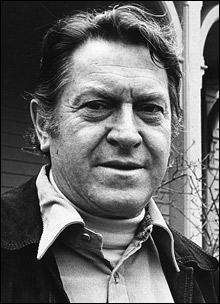
Eric Berne 

Eric Berne

Born in Montreal, Canada
May 10, 1910


Died July 15, 1970

Eric Berne was a Canadian-born psychiatrist best known as the creator of transactional analysis. Eric was born on May 10, 1910 as Eric Lennard Bernstein in Montreal, Canada.He and his sister Grace, who was five years younger than Eric, were the children of a physician and a writer, David and Sara Gordon Bernstein.David Bernstein died in 1921, and the children were raised by their mother.

Bernstein attended Montreal’s McGill University, graduating in 1931 and earning his M.D., C.M. in 1935.While at McGill he wrote for several student newspapers using pseudonyms. He followed graduation with a residency in psychiatry at Yale University, where he studied psychoanalysis under Paul Federn.

In 1943 he changed his legal name to Eric Berne.He continued to use pseudonyms, such as Cyprian St. Cyr (“Cyprian Sincere”), for whimsical articles in the Transactional Analysis Bulletin.

Berne’s training was interrupted by World War II and his service in the Army Medical Corps, where he was promoted to the rank of Major. After working at Bushnell Army Hospital in Ogden, Utah, he was discharged in 1945.

‘God Made You This Way,’ Pope Is Said to Have Told Gay Man

Image
CreditRemo Casilli/Reuters

By Jason Horowitz

Vatican officials, however, cautioned against interpreting the pontiff’s pastoral outreach as a definitive ruling on the nature-versus-nurture question or as a change in church teaching.

The Catechism of the Catholic Church states that people with “homosexual tendencies” “must be accepted with respect, compassion, and sensitivity,” but it also calls a “deep-seated” homosexual inclination and its acts “intrinsically disordered” and “contrary to the natural law.”

The pope’s remarks, if accurate, would reinforce his vision of inclusion, accompaniment and mercy. It is an emphasis that is increasingly evident throughout a church hierarchy that he is reshaping.

Archbishop Matteo Maria Zuppi of Bologna, sometimes called the “Bergoglio of Italy” for his similarity to Francis, the former Jorge Mario Bergoglio, published on Monday a preface to the Italian version of “Building a Bridge,” a book by the American Jesuit priest James Martin about reaching out to gay Catholics.

“The intent of the book is to help pastors develop an attitude of understanding, as well as a capacity for accompaniment, towards their homosexual brothers and sisters,” the archbishop writes.

He announced on Saturday that Óscar Romero, a Salvadoran bishop shot and killed by right-wing forces for preaching against military oppression and American meddling, would be canonized in October.

The next day, he reshaped the College of Cardinals, which will choose his successor. He surprisingly named 14 new cardinals, 11 of whom are under 80 and thus able to vote in the next conclave.

After the appointment in June of the new cardinals, who come from across the world, Francis will have named 59, or nearly half of the 125 voting cardinals. Pope Benedict XVI, a conservative who retired in 2013, named 47 of the remaining electors. And Pope John Paul II, also a conservative, elevated 19.

And the Vatican issued a major document last week on economic ethics that insisted that profit for profits’ sake was “illegitimate” and an “amoral culture of waste,” reflecting Francis’ fierce criticism of the inequality caused by capitalism.

Image
Juan Carlos Cruz, a Chilean victim of sexual abuse, told the pope in their nearly three-hour private meeting that he had maintained his Catholic faith even though Chilean bishops had apparently told the pope that he had left the church “for a life of perversion.”CreditEduardo Munoz/Reuters


But it was the pope’s muscular response to the Chilean sexual abuse scandal, which seemed months ago to hold the potential of tarnishing his entire pontificate, that has been most remarkable.

The resulting backlash forced him to send the Vatican’s top sex-crimes investigator to Chile. He returned with a scathing, 2,300-page report that suggested that bishops there had misled the pope and destroyed records to prevent the public from learning that abusive priests had been moved from diocese to diocese. Francis said the systemic failures had left him “perplexed and ashamed.”

The pope convoked all Chilean bishops to Rome for days of intense meetings, at the conclusion of which all 34 offered their resignation, a first. They begged forgiveness for the “pain they caused the victims, the pope, the people of God, and our country for the grave errors and omissions we committed.”

The pope is yet to accept their resignations, but he is expected to start with Bishop Juan Barros Madrid, whom he had repeatedly defended.

In a letter to the bishops, Francis said that merely removing the bishops would be insufficient. “It would be a serious omission on our part not to delve into the roots,” he wrote.

Francis’ meeting with the bishops followed his personal meetings two weeks ago with the survivors of abuse whom he had previously accused of slander. According to Mr. Cruz, Francis was decidedly on the side of the victims and entirely welcoming of the Chilean’s sexual orientation.

Mr. Cruz said that his lawyer warned him in 2009 that the church would focus on his homosexuality, leaving him vulnerable and threatening to make life extremely difficult for him.

He said that his lawyer later told him that Cardinal Francisco Javier Errázuriz, a confidant of Francis, had raised the question of whether Mr. Cruz could even be considered a victim because, Mr. Cruz said, “I was gay and I might have liked it.”

“It was horrible,” he added. “This has always weighed on me.”

In his meeting with Francis on a Sunday at his Santa Marta residence, Mr. Cruz said he had told the pope that he was worried he would think less of him. Mr. Cruz acknowledged that he was gay and, jokingly, not the reincarnation of Saint Aloysius Gonzaga, a model of the virtue of purity, but someone who tried to be “a good person.”

It was then that the pope reassured him, he said. The two went on to chat about Mr. Cruz’s personal life, his not having a partner, and his relationship with his family.

Mr. Cruz also told the pope of his “most wonderful friends, who are also Catholic and who struggle with this.”

In the interview, Mr. Cruz said that since the article in El País was published over the weekend, some of those gay Catholic friends had written to him saying of the pope, “Did he really tell you that? I feel so relieved.” Another wrote, “I’m in the gym and I feel like crying.”

Mr. Cruz said he wanted to reveal the pope’s remarks because “people have to know this man like he really is.”

“He is a loving man who really embraces everybody,” he said.

A version of this article appears in print on , on Page A7 of the New York edition with the headline: ‘God Made You This Way,’ Pope Is Said to Have Told Gay Man. Order Reprints | Today’s Paper | Subscribe

Madame Pele, Hawaii’s Goddess of Volcanoes, Awes Those Living in Lava’s Path

PAHOA, Hawaii — When the rivers of lava forced thousands to flee this month, many people on Hawaii’s Big Island pointed with awe toward the drizzle-shrouded volcanic crater where Pele — known as “the woman who devours the earth” — usually dwells.

“Our deity is coming down to play,” said Lokelani Puha, 52, a hula dancer and poet who evacuated as the lava encroached, referring to Hawaii’s goddess of volcanoes and fire. “There’s nothing to do when Pele makes up her mind but accept her will.”

Hawaiians have endured the overthrow of their kingdom, annexation by the United States and policies aimed at obliterating the Hawaiian language. But in a striking display of the resilience and adaptability of Native Hawaiian culture, the exaltation of Pele has not only persisted through the centuries, but seems to be strengthening with every bone-rattling eruption of Hawaii’s volcanoes.

The Kilauea volcano has already laid waste to dozens of homes this month, triggering earthquakes, releasing lethal gases and setting forests ablaze, and on Monday it showed few signs of subsiding.

A lava stream over the weekend blocked a highway that people have been using as an escape route. It reached the ocean to produce a caustic plume of acid fumes laced with fine volcanic glass specks. On Monday, a new flow began moving toward a geothermal plant, raising fears over the potential release of volcanic gases from wells on the site. Flying lava shattered a man’s leg while he was on the third-floor balcony of his home on rural Noni Farms Road.

And yet many living in Kilauea’s shadow welcome the eruption, express reverence for Pele and thank her — even when the lava destroys their home.

“My house was an offering for Pele,” said Monica Devlin, 71, a retired schoolteacher whose home was destroyed by a lava flow. “I’ve been in her backyard for 30 years,” she reflected, doing the math on when she moved here from Northern California. “In that time I learned that Pele created this island in all its stunning beauty. It’s an awe-inspiring process of destruction and creation and I was lucky to glimpse it.”

In a state where ethnic tension sometimes simmers beneath a veneer of tranquillity, proclaiming veneration for Pele is something uniting many Native Hawaiians and outsiders, though their methods for doing so often vary.

Scholars of Hawaiian culture point out that the honorific name for Pele (pronounced PEH-leh) is Pelehonuamea, incorporating the deity’s sacred connection to the earth, the oceans and the red color of lava. Many Hawaiians call the goddess Madame Pele or Tutu Pele, using an affectionate term for grandmother while making it implicitly clear they are Pele’s descendants.

Legends vary as to her origins, but chants suggest Pele followed her star to Hawaii from elsewhere in Polynesia, similar to the seafarers who reached the Hawaiian Islands in an epic feat of navigation and migration around the time Europe was mired in the Dark Ages.

Some say Pele was born in Tahiti to the fertility goddess Haumea, but was forced to flee to Hawaii in a great canoe after seducing the husband of her older sister, the goddess of the sea. At different islands in Hawaii, Pele used her stick to dig out fire pits, forging the archipelago’s magnificent volcanic craters.

After the United States formally took control of Hawaii in 1898, appeasing Pele and accepting her force didn’t seem to be much of an official priority. Before rising to prominence as a general during World War II, George S. Patton, then the Army’s chief intelligence officer in Hawaii, tried bombingthe lava flow from the eruption of the Mauna Loa volcano in 1935 in an attempt to divert it.

While that tactic had mixed results, some on the Big Island put their faith in making offerings to Pele of items including crystals, money and incense, or foods such as whole cooked piglet and poi, a staple made from the taro plant. Many venture near fissures to place the leaves of the ti plant, also called the palm lily, in the cracks in the earth.

“We believe in 40,000 gods, but Pele is in the highest echelon for obvious reasons,” said Kimo Awai, 67, a hula teacher and lecturer on Hawaiian culture. “Pele created Hawaii; she is that primordial force that exists within all land masses. And she can be vengeful, so watch out.”

Image
Proclaiming veneration for Pele is something uniting many Native Hawaiians and outsiders. 

A popular bumper sticker on the four-wheel-drive trucks that ply the bumpy back roads around Pahoa proclaims, “Pele is my homegirl.”

Some newcomers express an almost erotic fascination with Pele, comparing the experience of getting so close to steaming lava flows to sensual experiences.

Richard Schott, 34, a bearded Pennsylvanian who moved here after teaching English in South Korea, trekked barefoot to a remote location in the Malama-Ki Forest Reserve over the weekend where he giddily performed yoga positions within feet of the lava flow.

Mr. Schott, who goes by the moniker Son of Pele on social media, grinned as the police called on him to retreat. “The energy I’m feeling after seeing Pele up close is beyond anything I’ve ever experienced,” said Mr. Schott, racing over the jungle floor without shoes.

There are some kanaka maoli, as Native Hawaiians call themselves in their resurgent language, who express irritation over such interpretations of Pele, contending that the deity is growing angry with outsiders settling in the forest without thoroughly learning about her ways.

“It’s not the outsiders’ fault,” said Mr. Awai, the hula teacher, who has recited chants in recent weeks in an effort to appease the goddess. He emphasized that Puna, the region of the Big Island that is home to Kilauea, holds a position of religious significance in Hawaii that is unfamiliar to some newcomers.

Image

Kimo Awai made an offering to Madame Pele at Kahakai Park in Pahoa. 

“Puna is to believers of Pele what the Vatican City is to Roman Catholics,” Mr. Awai said. “The outsiders, some of them, they don’t know any better.”

Written tales in Hawaiian of Pele flourished in the 19th century, but after Americans outlawed the teaching of the Hawaiian language in schools in 1896 — a restriction enduring until the 1970s — the newspapers in which writers published versions of Pele’s ways went under.

In their place, white writers like the mythologist Nathaniel Emerson published their own simplified descriptions of the deity, producing caricatures of her as an excitable goddess or irritable old woman. A new generation of Hawaiian scholars is now seeking to describe Pele in her full complexity.

Doing so, however, involves dealing head-on with a deity who remains sacred for many Native Hawaiians. Some feel at ease describing how stoic they can be in accepting the destruction unleashed by Pele, while others express hesitance about divulging too much information about a figure of extreme importance to many people here.

Some in the lava’s path are embracing the uncertainty involved in their deity’s dance around the island.

“Pele is a shape-shifter who can easily appear in human form,” said Ms. Puha, the hula dancer and evacuee who is waiting to see if Pele destroys her home. “If you see her hitchhiking, pick her up. If you have a bottle of gin, even better. Pele, like her descendants, likes a little mischief.”

Simon Romero is a national correspondent based in Albuquerque, covering immigration and other issues. He was previously the bureau chief in Brazil and in Caracas, Venezuela, and reported on the global energy industry from Houston. @viaSimonRomero
A version of this article appears in print on , on Page A11 of the New York edition with the headline: Goddess of Volcanoes Awes All in Lava’s Path. Order Reprints | Today’s Paper | Subscribe

Full Moon May 2018 ~ Rough Diamond

The Full Moon May 29 at 8º Sagittarius is yet another dramatic lunation. The full moon May astrology features the fixed star Antares. The red-giant found in the heart of the Scorpio is conjunct this full moon. If this was a mere new moon that would be enough. However, since this is a full moon, the sun will fall on Antares’ nemesis Aldebaran which as always falls directly opposite Antares at roughly 10º Gemini. These stars are both powerful royal stars according to the Persians.

They form part of the seasonal cross of the solstices and equinoxes. At one time all four stars fell on these points, but they have ‘slipped’ due to precession. Fomalhaut and Regulus are the other two royal stars. Together the four stars make up the fixed cross that you often see on the Rider-Waite tarot deck. Fomalhaut the angel (Aquarius), Regulus the lion (Leo), Aldebaran the bull (Taurus) and Antares the Eagle (Scorpio). These important stars are also the four archangels, four directions and four seasons of course.

FULL MOON IN SAGITTARIUS DECAN 1

Austin Coppock calls this decan. ‘Poison Arrow’ because Sagittarius 1 is represented by the 8 of Wands tarot card known as “Swiftness” in the Thoth deck. At this Full Moon, we burst out of the Scorpionic hostage where they may have been captive. This is a fresh and urgent place for the Moon, but at the same time, it is not blindly impulsive. Those touched by this full moon will not strike until it is utterly sure of its target and then it will hit the bull’s eye straight off.

Yes, with the Moon here we are swift, graceful and to the point. It is also more likely to be competitive in a less physical manner than you would expect from a sign with hooves. With the shadowy lone wolf prowling through this zone Scorpio’s influence is still fresh. There are also poisonous snakes in the grass, Hermes’ slinky Caduceus and voodoos dollies nailed onto trees…

Full Moon May 2018 Aspects

The aspect pattern is interesting in that it contains a boomerang Yod encased in an open mystic rectangle which all sounds very fancy. Yet the moon itself is not really aspected by any planets apart from a weak quincunx from Venus which I don’t think we will even bother to count. There is enough going on with the intense fixed stars to be worried about small fry. What we can see brewing is the gorgeous water grand trine which will perfect the very next day when Venus hits 15 degrees of Cancer. A few days before this full Moon we have the 2nd exact Jupiter trine Neptune (The 2nd and last is on Aug 19 this year)

I’m calling this a fairytale aspect because this trine in water is just so darn dreamy. This version has Jupiter on religious star Achernar“Well-placed, it promises happiness and success by giving good morals, faithful adherence to one’s religious beliefs or philosophical inclinations. According to tradition, Achernar is credited with bestowing high offices in the church, especially if conjunct with Jupiter.” I think conjunct Neptune would work in much the same way.

Since this full moon is ruled by Jupiter then I would imagine that Jupiter trine Neptune will also colour the interpretation of this moon. From my Jupiter trine Neptune post ~ “ Traditionally Jupiter trine Neptune is extremely idealistic and esoteric. It is the archetypical guru, mystic, healer or spiritual teacher. It can herald someone coming into your life who serves as a great teacher or mentor, but there can be a tendency to idolise that person too. This is a supremely glamourous connection, almost fairytale. The temptation to go full-on fantasy mode with this as a transit is easy and it will prove hard to keep your feet on the ground.

However, there is also great compassion and empathy here too. This aspect can cause an outpouring of charity to the unfortunate, but as always we must be careful that honest and perhaps naive people’s good natures are not taken advantage of. There will always be opportunists who seek the gullible and profit from this sympathetic and idealistic atmosphere.”

FULL MOON MAY 2018 ASTROLOGY

Full Moon May 2018

FULL MOON MAY 2018 ~ ANTARES

Antares 9º  “Popular, broad-minded, interested in philosophy, science and metaphysics, liable to change religious opinions, influential friends, favorable for business and domestic matters, active in local affairs, great power, honor and wealth but benefits may not prove lasting, danger of violence, sickness, drowning or assassination.” [6a] “ Emotional turmoil, and a willingness to face drama. Becoming obsessed with family matters or health issues. Crimes of passions are in the news” [1]

Antares is found right in the heart of the Scorpion and is a beautiful flame red and emerald green binary star. I have already written exclusively about Antares and found him to be quite the anti-hero. (Of Aldebaran, his opposite.) Some Antares keywords: Intense, fiery, compulsive, primal, survivors, trailblazers, combative, driven, maniacal, pushy, human, bestial, ravenous, rampant, wicked, devils-advocate, teasing, taunting, provoking, the phoenix from the flames, mover & shaker.

Because Antares is a royal star, it will give great worldly success. However, Antares ambition can be quite ruthless as he finds it hard to modulate itself. Brady suggests “it also indicates that one can be the cause of their own undoing. The natural theme of this star is to generate success by going through a cleansing life-and-death experience. It can suggest one seeks intensity even when not required. By its mythological symbolism, it indicates extremes, whether by choice or not.” [1]


FULL MOON MAY HEALING MEDITATION

To help exorcise those full moon demons and see in the dark, make the gods work for you by immersing yourself in Sagittarius decan 1 energy. If your angles, Sun or Moon are in the mutable signs decan 1 you might find that you attract so-called ‘bad boy/girls’ or anti-heroes into your life around this time. To ward them off and slow down any tailgaters, try focused meditation or yoga with a Sagittarius decan 1 theme.

Useful healing materials and props are: The 8 of wands to gaze at, turnips to eat, red roses to adorn your table, amethyst crystal to hold, music in the key of F# to listen, frankincense, ginger and star anise essential oils in a bath.*

FULL MOON MEANING

Full moons tend to make us purge and release things from our lives, so we need to make sure that we are in control of this and no one is forcing our hand! Sometimes we can let go of things that we regret later, due to heightened emotions and the full moon’s perchance for saying ‘F*** You!’

The bright light of the sun throws a spotlight on our subconscious and our shadow. This can feel uncomfortable as the Sun literally blasts out the demons who have nowhere to hide. Often the full moon is a time when we reap what we sowed at the new moon,.. for good or for ill.

The veils between the worlds are thinnest around a full Moon, so be very careful what you invite in. Instead, the Full Moon is best used to purge things out, and banish entities/bad habits back to the underworld from whence they came. Make sure you close the door firmly afterward!

This is a good time for exorcism, but make sure you are completely grounded and fully in control of the process. If in doubt, lie low and protect yourself. A Lunar Eclipse is a turbocharged Full Moon where the blood-red moon makes a graphic statement of any symbolic ‘deaths’ or aborted projects that might occur at this time in our lives.

Full Moon May 2018 Summary

All things considered, there are certainly contradictory influences at work ay the full Moon May 2018. We have the effect of the romantic and fairytale-like Jupiter trine Neptune which appears to slice off the capstone of the Yod pyramid. Pointing at Saturn on ruthless Facies no less. It is quite a garish Full Moon too actually, like glow-in-the-dark make up. Imagine spooky shamanic face-paint and gothy Mexican ‘Day Of The Dead’ type imagery. At this full Moon, the behavior could be unexpectedly covert. Even in the guise of a scary clown, they could actually get away with murder, because they look too obvious. Like a double bluff. Believe your eyes! If it screams villain, it is actually villain.

Antares is the anti-hero, but at least it is honest about it! What you see is definitely what you get. If you do happen to get involved with a bad boy or bad girl, then you have only yourself to blame if despite your best attempts at slaying their demons for them they still remain ‘bad’. On the other hand, there are cases where a rough diamond is made good and this is also very possible with this full moon.

Sometimes healing grand water trines can perform miracles, but you have to steer them gently in the right direction. Full moons are great for bringing matters to a head so that you can heal them. This full Moon then will be perfect for shining a torch on your own or others demons.

Those glow-in-the-dark tattoos will forever shine as a reminder of what your pet project was before it became ‘illuminated’. This is not to say that your beloved or old self will remain ‘branded’ forever by its previous baddie behaviour. The luminous scar is just there to remind us that we cannot expect miracles to happen overnight. However, as long as the intention for good is there then the diamond is worth waiting for.


I look at the March 4 Freedom in London, spiritual immunity, the atheism of the west, being ‘pro’ rather than ‘anti’ and my taking a break from geopolitics.

British Royals Rebrand with Royal Wedding, but Critics Say White, Neoliberal Monarchy Needs to Go


GUESTS
Priya Gopal, university lecturer in the faculty of English at the University of Cambridge.

Prince Harry and Meghan Markle were married Saturday at Windsor Castle in a ceremony that many heralded for celebrating black culture and history. Markle is biracial, divorced and a self-proclaimed feminist. The wedding featured a sermon about slavery, poverty and the enduring power of love by Bishop Michael Curry, the first African American to preside over the Episcopal Church. The British royal family is a “celebration of wealth, of elitism, of privilege in the hands of the few, of all the resources concentrated in the hands of a very small percentage of the country. In that sense it very much represents the current economic order in which we all live,” says Priya Gopal, a university lecturer in the faculty of English at the University of Cambridge.

Transcript
This is a rush transcript. Copy may not be in its final form.
AMY GOODMAN: That’s “Ave Maria,” performed by 19-year-old cellist Sheku Kanneh-Mason at Saturday’s royal wedding. He was the first black British musician to win the BBC’s Young Musician of the Year award in its almost 40-year history. This is Democracy Now!. I’m Amy Goodman with Juan González.

JUAN GONZÁLEZ: We now turn to Britain, where Prince Harry and Meghan Markle were married Saturday at Windsor Castle in a ceremony that many heralded for celebrating black culture and history.

KINGDOM CHOIR: [singing]
The night has come
And the land is dark
And the moon is the only light we see
No I won’t be afraid
Just as long as you stand
Stand by me

JUAN GONZÁLEZ: That’s the Kingdom Choir, a British Christian gospel group, singing civil rights anthem “Stand By Me” by Ben E. King. The rousing sound was one of a series of performances by Black artists at the wedding, which welcomed Meghan Markle to the royal family. Markle is biracial, divorced and a self-proclaimed feminist. She walked herself down the aisle on Saturday during the tradition-busting ceremony that led many to claim the wedding ushered in a new era for the royal family.

AMY GOODMAN: Bishop Michael Curry, the first African American to preside over the Episcopal Church, also delivered a sermon about slavery, poverty and the enduring power of love.

BISHOP MICHAEL CURRY: The late Dr. Martin Luther King once said—and I quote—“We must discover the power of love, the redemptive power of love. And when we do that, we will make of this old world a new world, for love, love is the only way.” There’s power in love. Don’t underestimate it. Don’t even over-sentimentalize it. There’s power, power in love. If you don’t believe me, think about a time when you first fell in love. The whole world seemed to center around you and your beloved.”

AMY GOODMAN: That’s Bishop Michael Curry, the first African American bishop to preside over the Episcopal Church in the United States. For more, we’re joined in Cambridge, England, by Priya Gopal, a university lecturer and faculty of English at the University of Cambridge. Here in New York City, we welcome Gabrielle Bruney, an editor for Esquire, her recent article headlined The Royal Wedding Celebrated the Contributions of Black Britons, but it comes amid a scandal rooted in the British government’s mistreatment of Caribbean people. We welcome you both to Democracy Now!

We’re going to begin in England where the royal wedding was, Priya Gopal. It was described as a tradition-busting ceremony, but many say the traditions weren’t busted enough, that the monarchy should be abolished. You live tweeted the whole thing. Can you talk about your feelings about what happened this Saturday? What, a quarter of Britain watched?

PRIYA GOPAL: Tradition-busting is probably a bit of a stretch. I think that there were important symbolic iconographic changes. The royal family is a deeply white institution, rooted in Britain’s history of imperialism and empire. It’s a deeply patriarchal institution. And given that history, to have a strong black presence in the church, to hear a gospel choir, to hear a black bishop give an address—these were all changes that are, I think, symbolic, and they make some difference.

I think it is a stretch to call them tradition-busting. It is still an extremely white institution. The ceremony remains patriarchal. Ms. Markle walked down the aisle by herself because her father was unable to make it, and then she was taken to the alter by Prince Charles. So I think we need to acknowledge that there were certain important changes, but to call them tradition-busting I think is a stretch. The monarchy remains a deeply reactionary, patriarchal and frankly white institution.

JUAN GONZÁLEZ: Priya, why do you think that so many Britons still cling to this total anachronism of a monarchy nowadays? Why do they feel so invested in the royal family?

PRIYA GOPAL: I think there are two things to say there. One is that the royal family is deeply entrenched in Britain’s mythology about itself. There is a huge investment in pomp and circumstance. Throughout the wedding, the commentary on the media spoke about how no other country does tradition, does pomp, does circumstance as well as Britain does, and of course the monarchy is the epitome of pomp and circumstance. And I think that that’s very deeply rooted in the mainstream Britain sense of itself as more traditional and more elegant than everybody else.

But I also think it’s slightly a mistake to call the monarchy an anachronism. I think that it seems like an anachronism, but in fact, its name for itself is “the firm,” which really tells us how much the monarchy is actually very rooted in corporate capitalist culture, how will it has kept up with that. The monarchy in Britain is a celebration of wealth, of elitism, of privilege in the hands of the few, of all the resources concentrated in the hands of a very small percentage of the country. And in that sense, it very much represents the current economic order in which we all live. And there’s nothing anachronistic about the fact that the one percent have much more than the rest of us do.

AMY GOODMAN: The wedding itself cost something like $45 million dollars. Can you talk about the finances of the royal family, how they are supported?

PRIYA GOPAL: Right. So in British terms, the wedding cost an overall £32 million. That’s about the sum that you just mentioned in dollars. Only £2 million of that £32 million was actually spent by the royal family’s so-called private finances. This is money that they have accrued over decades, over centuries, and that has gone into private hands.
But actually £30 million of that £32 million was borne by the taxpayer, and that is a shocking figure at a time when there have been swingeing cuts to public services, when the number of homeless on Britain streets has been increasing. These were homeless people who were cleared off the streets of Windsor for the royal wedding.

And I think again, this is a shocking example of how much money, how much public money, how much rare public money goes into funding this family. And it is done on the basis that this family brings in a lot of money to the country because of tourist dollars and so on and so forth. But I think that really what it is an example of is how much the public purse subsidizes private privilege. Thirty million pounds went into policing and into security—at least that is what we’re told—and it seems to me an unconscionable figure at a time when so many people are suffering from cuts to public services.

JUAN GONZÁLEZ: Could you comment also about this merger of celebrity with the class A elite? Obviously, the promotional value that having an Oprah or a George Clooney or a David Beckham at this private wedding has in terms of marketing this whole affair?

PRIYA GOPAL: Yes. It’s very much part of a constant rebranding that the royal family does. And it goes back to what I was saying about not merely looking at the institution as an anachronism. It is a firm. It is a corporate firm. It relies on corporate strategies. PR is very central to its survival and to its flourishing.

In fact, someone connected to the court said at some point that Meghan Markle is a PR department stream, and she absolutely is. Like any company, it has to be seen to be keeping up with society. It has to be seen to be being more multicultural than it has been, to be bringing women in, to be giving women more of a role. So in that sense, we need to look at the kind of merger between the royal family and Hollywood, between the feudal institution of monarchy and the corporate institutions of public relations, as precisely what you would expect any functioning corporate firm to do: to be keeping an eye on PR, to be making sure that it satisfies its customer base and that it is seen to be quote unquote “modern.”

And in that sense, Meghan Markle and the kind of racial dimension that she brings, the multicultural dimension she brings to the royal family, is very much part of a PR exercise. And I would say that in a sense, Meghan Markle brings more to the royal family than the royal family brings to British people of color.

AMY GOODMAN: Is it true, Priya Gopal, that the Queen and Prince Charles have had the power of veto, vetoing legislation? The Queen delivering a pro-austerity speech with her £1,000,000 hat? I think one comic headline from UK HuffPost said Woman In £1,000,000 Hat Tells Britain To ‘Live Within Its Means’, referring to her crown.

PRIYA GOPAL: I think that constitutionally the Queen does have that power, but it is not ever really exercised. And so what we have here is a constitutional figurehead who does what the government of the day tells her to. Now, the mythology around the royal family also holds that they’re not allowed to be political, by which is meant they are not actually allowed to intervene in political decisions made by the government of the day.

I also understand that the Queen does have the power to veto legislation. I have never known of it being used. Perhaps it has been; I’m not enough of a constitutional scholar to know. But again, here is a bit of a mythology. We have a monarchy, which actually shores up the political and economic order of the day. It is a deeply political institution, but the nation and the world is invited to buy into the mythology that there is nothing political about people who wear, as you just said, £1,000,000 hats and represent the bidding of the government of the day. They are a very political institution, but everything here relies on the mythology that they are not political.

The original content of this program is licensed under a Creative Commons Attribution-Noncommercial-No Derivative Works 3.0 United States License. Please attribute legal copies of this work to democracynow.org. Some of the work(s) that this program incorporates, however, may be separately licensed. For further information or additional permissions, contact us.

God-Link Book I: “The Gathering” the Prophetic Autobiography of a Marine Combat Survivor, Books 1-2

Front Cover

Wm ” ChilesPila of Hawaii

Independent Publisher, 2011 – Kahuna – 554 pages

God-Link is a magnificently written autobiographical work about the life, times and transformation of William Chiles into Pila, seer and teacher. The author shares his story with remarkable intelligence, imagination, wit, humor, candor, boldness and insight. The prose is powerful and opens doors to all of our senses and spiritual longings. It takes a very gifted writer to reveal the beauty and the fascination of Hawaii without resorting to empty cliches and worn-out metaphors.

(Google Books)

Consciousness, spirituality, biography, sexuality, androgyny, futurism, space, the arts, science, astrology, democracy, humor, books, movies and more