“What’s Your Plan Here, God?”

By Isaiah Pead

FORMER NFL RB
MAY 23, 2018
When I woke up in the hospital, I couldn’t feel anything. I was still drugged up. I could hear people in the room talking, and I remember hearing my mom’s voice. I tried to listen to what they were saying — just … ear hustling, you know? Trying to pick up whatever I could and piece together what had happened.

I heard somebody say “accident.” I figured it must have been pretty bad for me to end up in the hospital.

Then my heart rate went up and the monitors started beeping real fast, so the doctor sedated me. Put me back under. My mom told me that he did that the next couple of times I woke up before she finally told him, “Don’t do that. Let him know what’s going on. He wants to know.”

I had a tube in my mouth so I couldn’t speak. But I could move my hands. I signaled for somebody to bring me a pen and paper.

I wrote: “What’s going on?”

“You were in a car accident,” my mom said. “You lost your leg.”

I tried to look down and see for myself, but I was lying down and I didn’t have the energy to sit up or even lift my head. So all I could really see was my toes sticking up.

Only one set.

I went back to the paper.

“I don’t have toes?” I wrote. “Where does it stop?”

I don’t really remember what my mom said next. It’s all kind of hazy. People in the room started talking again — trying to talk to me, I think — but I just closed my eyes, took a breath, and had a one-on-one with God.

I was alive. I thanked Him for that. Then I asked Him what this all meant. Like, Show me the meaning of thisHelp me understand what I don’t understand. Why did this happen? What’s your plan here, God? What’s your story?

I had so many questions.

I didn’t even remember the accident. I had blacked out. Even now, I don’t remember it … luckily.

That would be a memory that I wouldn’t want to remember.

One of the last things I do remember from the night of the accident is being at home asleep with my son, Deuce. He was six days old at the time.

He was born on Saturday, November 5. I was supposed to have a workout with the Chiefs that Monday, so I had to fly out on Sunday, the day after Deuce was born. I basically went straight to the airport from the hospital, but I got there a little late and missed the flight. I scheduled another flight that day from Cincinnati, but I wasn’t able to make that, either.

It had been about a month since the Dolphins had released me. My football future was uncertain, and now, I hadn’t just missed a flight … I had missed an opportunity. My agent was pretty upset with me.

But I wasn’t trying to hear it. For the first time in my life, football wasn’t my biggest priority. I wasn’t even thinking about my employment status.

I spent that whole week just being a new dad.

Just … learning how to be a father.

Then, that Friday night, I was at home in Columbus, Ohio, asleep with Deuce. It was late. A friend of mine was in town — we had played football together in college — and he came over. I got out of bed and we went out for a little bit.

We stopped at a bar. Not to drink, just to see a couple of friends. It was already like 1:30 a.m. anyway. Last call was over with. So we just popped in, said hi to a few people, then we rode out to go to Waffle House.

I wasn’t driving crazy or being reckless or anything — my friend will tell you that. And he remembers everything from that night. He didn’t black out like I did, and he says I wasn’t driving crazy.

But I was driving fast.

I was speeding.

Then we hit a bump and started to swerve.

I remember catching the wheel. I got the car straightened out, but the freeway curved to the left, and we just kept going straight, right through the guardrail

911 call after Isaiah Pead’s car crash

A piece of the guardrail came through the car right over top of my legs and trapped them against my seat. The car got stuck on the guardrail for a second before the guardrail snapped and the car went airborne. I wasn’t wearing my seat belt, and I got ejected out the side of the car, like a slingshot. When I flew out, my legs were still trapped. My right leg bent back underneath the guardrail and I tore all the ligaments in my knee and part of my hamstring before it slipped free.

My left leg bent back, too … but it didn’t slip free.

It snapped off and stayed in the car.

After the car settled, my friend — like I said, he never blacked out — was looking for me. He had had his seat belt on, so he was still in the car. He saw my leg next to him — it was left in the armrest. But he didn’t see the rest of me.

From what I’m told, I landed about 30 feet from the car. The bottom half of my leg was just gone. It was severed, and the blood was rushing out of my body while I was lying in the grass. I’ve been told by doctors that from the time of the impact, I had three — maybe five minutes at most — to live before I bled out.

That’s how close I was to dying that night.

To my son having to grow up without a father.

There were some people in a car behind us, and they stopped to call 911. There was also a fire station right at the next exit, so the emergency vehicles were able to get to me really quick. The paramedics were able to control the bleeding enough to get me to the hospital and eventually stabilize me.

That 911 call — and those paramedics — saved my life.

I also suffered a concussion in the accident, but besides that and the injuries to my two legs, I was straight. I had some scratches on my upper body from flying through the tree branches, but luckily I didn’t have any serious head trauma or anything like that. No swelling. No brain damage.

I just … didn’t have a leg.

When I woke up in the hospital and was writing notes to my mom, I had an x-fix — that’s short for external fixation — bar stabilizing my right leg. It was drilled into my leg bone on each side of my knee to keep my leg from moving while the doctors worked on trying to save however much of my left leg as they could.

My leg had snapped off right below the knee. (My mom actually had to go to the morgue at the hospital and identify it.) The trauma was so severe that the surgeons definitely couldn’t reattach it, and they actually had to cut even more of my leg off, until I only had about 10 inches of my femur left, if you measure from the hip. When I was finally able to look at it, the nub was all swollen and stitched up. It was like the dude from that cartoon Hey Arnold! — it looked like his head, all swollen and shaped like a football.

When I first woke up, I think the biggest fear for my mom, my girlfriend and everybody else in the room was how I was going to react. I was a football player. A running back. When I found out that I lost my leg, what was I gonna say? How would I feel?

And trust me, it was a lot to process. I mean, it’s been 18 months and I’m still trying to process it.

But after I sat in my hospital bed and had that one-on-one with God, I decided to let everything go. It was all in His hands, and I just … accepted it.

The way I saw it was, if He’ll lead me to it, He’ll lead me through it.

Emily Johnson/The Players’ Tribune

Then, I opened my eyes, picked up the pen and wrote another note to my mom.

I wrote: “My whip game still proper!”

Meaning, Don’t think this means I’m not a good driver!

I don’t think anybody expected that. When my mom read that out loud, everybody in the room kind of smiled — just a liiiiittle bit, you know? The whole vibe changed because I think that let everybody know that no matter what had happened, or what was going to happen next, I was still me. Two legs, one leg, no legs … I was still Isaiah Pead.

I think that was when everybody knew that we were gonna be all right.

And I didn’t know it at the time, but hindsight being what it is, I’ve come to understand why all this happened. I have the answers to all the questions I asked God that day.

That accident — this whole situation — was God’s way of telling me that it was time for me and football to part ways.

You’re probably thinking the same thing I thought: A broken leg would have done it! Maybe a torn-up knee or something. But c’mon, God … did you really have to take the whole leg?

Well, for His purpose, I truly believe He did.

Because if I had just broken my leg, or torn something, I would have just kept trying to come back. I had been playing ball since I was eight years old. It was my routine. It was my entire identity. I would have kept chasing that dream. That’s just what I had always done.

But the truth is — and I didn’t even know it at the time, but … I was miserable.

I didn’t have a job. I had basically been on three teams in four years. I had been waived three times and cut four times. And the phone wasn’t ringing, man. If I was being honest with myself — which I wasn’t — I was chasing a dead end. This was supposed to be the dream? Nah. The only reason I couldn’t let go was because … to that point, there had been no life for me other than football. It was everything I knew.

But now, I had a son. I had a new purpose. And I honestly think God had more of a plan for me.

So he wasn’t just letting me know that my football dream was over.

He wanted to create new dreams in my life.

Emily Johnson/The Players’ Tribune

It was tough at the beginning. Every now and then I would see myself in the mirror, or catch my shadow on the pavement, and I’d be like, Damn, you really got one leg, bro….

My friends and my family have been extremely supportive. Ain’t nobody babying me or treating me like I’m broken. And I’m telling you, there are things that come up every day that I would have never expected.

If I go in the house and leave my bag in the car, I hop back out there, grab it and pull it inside myself. If the laundry basket needs to be taken downstairs, I’ll figure it out.

Or sometimes I’ll be staying in an Airbnb, and they won’t have a shower chair. So I’ll have to shower standing up. And that’s hard, you know?

I’m serious. Try taking a shower, standing on one leg. No cheating, cause I sure as hell can’t cheat it.

It’s more tiring than you’d think.

The worst was probably when I first got my prosthetic walking leg, and I was just learning how to use it. I’d be out in public, and — you know, I was somewhat of a public figure for a little bit, so I was kind of used to people noticing me or looking at me. But this was different. I’d be out at the mall or something, and I’d be … struggling. Stumbling. Walking funny. And, you know, people would be looking at me, staring and what not, and I’d be like, Damn, I’m just trying to walk here, people….

That sucked, because nobody wants to be pitied.

That’s the f***ing worst.

So yeah, there have been a lot of little struggles. Every day is game day when you only got one leg. You gotta wake up with that fire. With that chip. Because you’re at a disadvantage.

I’ve embraced the challenge. I feel like I’ve been reborn. I still celebrate the day of the accident because it’s the day my life changed forever — and for the better, I think. I mean, I’ve spent almost every day for the last 18 months with my son. If I was still playing football — still chasing that dream — there no way I would have been able to do that.

And that right there has been worth every little struggle.

I have a new life now. I’m a family man. I started a trucking business, so I’m a businessman now, too. And I still have new ambitions.

A little over a month after I went home from the hospital, my dad and I went down to Orlando for the Pro Bowl. My boy Janoris Jenkins was down there, and we were hanging out in his hotel room.

This was the first time he’d seen me since the accident. I didn’t have my prosthetic leg yet, so I was in a wheelchair, and I caught Janoris kind of staring at me. I looked at him like, “What, bro?”

And he said, “Man, you could go to the Paralympics.”

I laughed it off like, “Paralympics? Shoot, I need to get outta this wheelchair first.”

“Nah, I’m serious,” he said. “We goin’ to the Paralympics, baby!”

He pretty much yelled it.

“WE GOIN’ TO THE PARALYMPICS, BABY!!!”

It was something I had already thought about, but at that point it was a long way off. But for Janoris to call it out like that — to really put it out there? That kind of motivated me. It gave me that chip on my shoulder that I always had on the football field, you know? When you got your boys rooting for you, you can’t let them down.

So as soon as I got my first prosthetic walking leg — which was in August of 2017, about nine months after the accident — I started asking about a running leg, and I got referred to a clinic in Oklahoma City that specializes not only in running prosthetics, but also above-the-knee amputees like me.

Emily Johnson/The Players’ Tribune

The first time I put that running leg on and hit the track — standing up, firing off the line and just … moving — it was indescribable, man. I’m still learning how to run again and how to balance myself and what muscles to use and when. It’s definitely different. But it’s all technique, and I’m used to that. I feel like I’m back at two-a-days, trying to perfect my craft.

It’s going to be a long process, getting comfortable with my new running leg. But there have definitely been a couple of times where … man, I don’t know … like, moments where I was striking it right. It fit right. And I felt normal. Moments where I just felt powerful again, and I remembered what it felt like to burst through a hole and hit the second level.

I miss doing that. I miss football — even though I can admit now that I was miserable, I still miss it. It was my first love, you know? Those were the best times of my life. Just competing. Dominating. I’ve watched some of my old football highlights over the last 18 months — at home, with Deuce. I’m happy that I still get to share those memories with my son and let him know that Daddy could ball back in the day.

But like I said, God has new dreams for me now.

And I think one of those is to compete in the Paralympic Games.

When I played football, I played for me. It was what I wanted to do. It was my dream. And yeah, I want to compete in the Paralympics so that I can get back to being an athlete, because that’s something I really want for myself. But I also feel like I have an obligation to compete so that I can inspire others to chase their dreams, and let them know that nothing can hold them back — whether that’s for my own son, for people who used to follow me when I was playing ball, or for a kid out there who’s in a situation like mine and struggling to make sense of it. I believe I can be an example.

I asked God that day from my hospital bed to show me the meaning of this. I asked Him why this happened to me. Now, I believe He’s showing me. I’m developing new dreams, new ambitions. I’m seeing that there’s life other than football, and I’ve found it. I’ve found a happy life.

I feel like I’ve been reborn. I’m still able, I just got a short limb. I feel like I can still compete at the highest level, and still be a champion. It’s like, yeah, I lost my leg, but I haven’t lost my heart, you know? And no matter what kind of struggles I face, I’ll always have that.

I’ll always have my heart.

Can’t nobody take that from me.

Isaiah Pead

FORMER NFL RB

How to be happy: Aristotle’s 11 guidelines for a good life

  • May 21, 2018 (BigThink.com)

by SCOTTY HENDRICKS

Plato, left, and Aristotle, right, as depicted by Raphael.

While most of us ask “What should I do?” when we think about ethics, many philosophers have approached it by asking, “What kind of person should I be?” These thinkers often turn to virtue ethics for answers. Aristotle, one of the most influential philosophers of all time, developed a comprehensive system of virtue ethics that we can learn from even today.

Why be virtuous?

In the Nicomachean Ethics, Aristotle proposed that humans are social, rational animals that seek to “live well.” To that end, he proposed a system of ethics designed to help us reach eudaimonia, a world that means living well or flourishing.

Eudaimonia is reached by living virtuously and building up your character traits until you don’t even have to think about your choices before making the right one.

Such a person will be happy, but not in the same way as a hedonistic person. They will strive for self-improvement and will live their lives to the fullest. They will be the kind of person that others want to be like. Above all else, they will flourish.

What are virtues?

Aristotle sees virtues as character traits and tendencies to act in a particular way. We gain them through practice and by copying ‘moral exemplars’ until we manage to internalize the virtue. We become temperate by practicing temperance, courageous by practicing courage, and so on. Eventually, the virtue becomes a habit.

He further explains that each virtue is the “golden mean” between a vice of excess and deficiency. Taking the example of temperance, if we have the vice of deficiency we will be intemperate but if we the vice of excess we will never drink at all. Aristotle sees both traits as vicious. The virtuous person will know how much they can drink without having too much or teetotaling.

What are Aristotle’s virtues?

The virtues he lists in his Nicomachean Ethics are:

Courage: The midpoint between cowardice and recklessness. The courageous person is aware of the danger but goes in any way.

Temperance: The virtue between overindulgence and insensitivity. Aristotle would view the person who never drinks just as harshly as the one who drinks too much.

Liberality: The virtue of charity, this is the golden mean between miserliness and giving more than you can afford.

Magnificence: The virtue of living extravagantly. It rests between stinginess and vulgarity. Aristotle sees no reason to be ascetic but also warns against being flashy.

Magnanimity: The virtue relating to pride, it is the midpoint between not giving yourself enough credit and having delusions of grandeur. It is a given that you also have to act on this sense of self-worth and strive for greatness.

Patience: This is the virtue that controls your temper. The patient person must neither get too angry nor fail to get angry when they should.

Truthfulness: The virtue of honesty. Aristotle places it between the vices of habitual lying and being tactless or boastful.

Wittiness: At the midpoint between buffoonery and boorishness, this is the virtue of a good sense of humor.

Friendliness: While being friendly might not seem like a moral virtue, Aristotle claims friendship is a vital part of a life well lived.  This virtue lies between not being friendly at all and being too friendly towards too many people.

Shame: The midpoint between being too shy and being shameless. The person who has the right amount of shame will understand when they have committed a social or moral error but won’t be too fearful not to risk them.

Justice: The virtue of dealing fairly with others. It lies between selfishness and selflessness. This virtue can also be applied in different situations and has a whole chapter dedicated to the various forms it can take.

Each virtue is the midpoint between a vice of deficiency (red) and excess (blue). The virtuous person will tend to the center.

Aristotle sees ethics as more of an art than a science, and his explanations purposely lack specifics. We have to learn what the right approach to a situation is as part of our moral development.

He also doesn’t mean to say that we can’t break the rules. Just because a person is honest, for example, doesn’t mean they can’t lie when they need to. This makes virtue ethics more flexible than deontological systems of ethics but also harder to use since we have to determine when we can lie, get angry, or be prideful on our own.

This list seems a little strange

Keep in mind that this list was designed for upper class, Greek men who had a decent education and a fair amount of luck. The virtue of magnificence, for example, would be impossible for a person of limited means to practice.

Most of the virtues on the list always have relevance to us though. As philosopher Martha Nusbaum explains, “What [Aristotle] does, in each case, is to isolate a sphere of human experience that figures in more or less any human life, and in which more or less any human being will have to make some choices rather than others.”

We must all face danger at some point, so we must ask how to be courageous. We must all deal with other people, so we must ask how to be friendly. We all get angry, so we must ask how to be patient. The virtues Aristotle lists remain relevant even if the world they were created for has long vanished.

While the exact nature of what the good life is and how to reach it is subject to never-ending debate, the ideas of great minds are always relevant. While some of Aristotle’s views may not be as relevant now as they were 2,000 years ago, they can still inform our efforts to live better lives. While not every person that tries to live up to the virtues will succeed in every case, wouldn’t we be better for trying?

Your Horoscopes — Week Of May 22, 2018 (theonion.com)

Taurus

You’ll suffer from a continuing inability to enjoy anything but the company of friends and family, the satisfaction of a job well done, and the knowledge that you have lived a life of dignity.

Gemini

You’ll finally find a man who loves you for who you are, but unfortunately he’s every bit as miserable as you might expect.

Cancer

If you had just one piece of wisdom to impart to future generations, it would probably be unspeakably filthy.

Leo

This is a time of great uncertainty for you, but that doesn’t mean the odds of drawing to an inside straight will improve at all.

Virgo

You’re not the kind of person who lets your physical handicaps stop you, but that’s because you prey on people with even fewer limbs than yourself, you sick bastard.

Libra

Artistic expression has never been your strength, so it’s frankly mystifying when the National Gallery puts your margin doodles on display just to trash them.

Scorpio

Sometimes it’s good to just sit back and watch the universe unfolding. But other times, such as next Tuesday, it’s good to stop baby carriages from rolling in front of buses.

Sagittarius

Due to your optimism, your death next week with come as a big surprise; however, due to your devout Christianity, what comes after will be a terrible shock.

Capricorn

A hot bowl of soup and a good night’s sleep can cure many ills, it’s true, but you might want to consider the possibility that you have the world’s worst oncologist.

Aquarius

Unfortunately for your dream of having multiple gorgeous sex partners, attitudes toward sex will become much more open-minded just as attitudes toward nutrition and personal hygiene go right down the tubes.

Pisces

This is a great time for romance in the workplace, if you’re the sort of idiot who thinks that’s even close to a good idea.

Mythic News from Caroline Casey (coyotenetworknews.com)

Coyote Network News
Image
Uranus

Uranus has entered Taurus

Now tis true, last time, August 19, 1934 – Hitler elected; fascism in Europe; New Deal in America; Hitler Youth in Europe; Boy Scouts in America (not founded but way popular…) …Now kinda the reverse….
“Fascism arises in the absence of Magic.” 
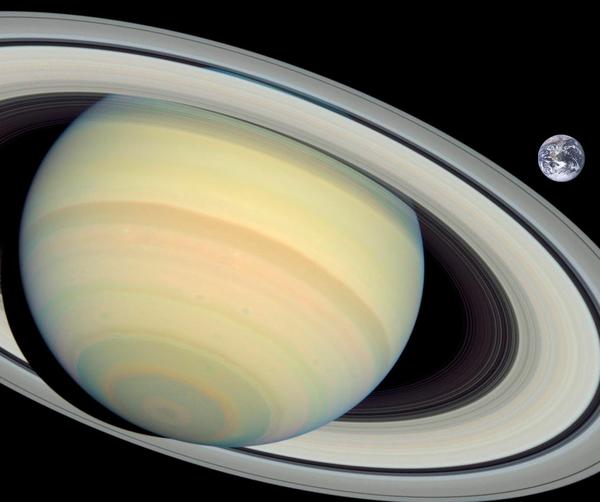
Saturn
* … and is trining Saturn, in own sign of Capricorn, Earth trine, time of incarnating a culture of sane reverence, a Renaissance of Democratic Animism, also a great time to dance our prayers, embody our dedication…

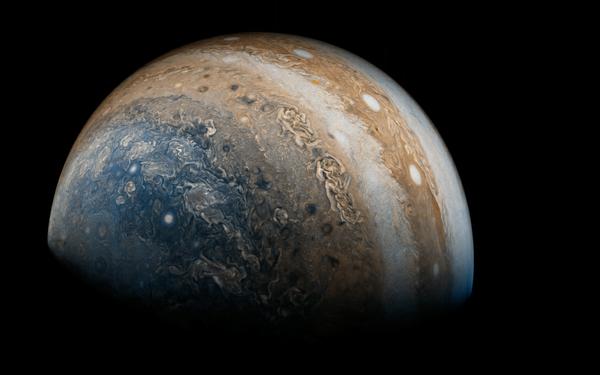
* Jupiter is trining Neptune – all that has ever moved humans to conscious kinship is available for fresh vernacular expression…

Jupiter

“Discovering Eris, An Archetype of and for Our Time of Evolutionary Challenges”

This is the title of Zoē Robinson’s Sunday Meeting talk on June 17, 2018:  “Discovering Eris, An Archetype of and for Our Time of Evolutionary Challenges”

Zoë’s talk is an exploration of the archetypal characteristics, themes and patterns in human experience of the mythological Goddess of Strife, Eris.  And will include how these themes are symbolic and significant in our current times and the necessity of their integration for working with the challenges confronting us today.

Her talk is based on Keiron Le Grice’s book, “Discovering ERIS. The Symbolism and significance of a new planetary archetype,” published in 2012, written following the discovery in 2005 of Eris–a dwarf planet beyond Pluto.

Hugh John Malanaphy, H.W., m., is introducing her.

Link here:  https://global.gotomeeting.com/join/560979613 

You can also dial in using your phone. 
United States: +1 (312) 757-3121 
Access Code: 560-979-613

First GoToMeeting? Let’s do a quick system check: https://link.gotomeeting.com/system-check

FORBIDDEN PLANET (1956) IS REALLY THE TEMPEST BY SHAKESPEARE

 (falconmovies.wordpress.com)

forbid2My friend recently told me that the movie Forbidden Planet (1956), the science fiction monster movie, ripped off Shakespeare’s play The Tempest.  All I could say is: huh? what?  I couldn’t believe this comparison, not just because they are two different genres, but one is a classical stage play and the other is…well, it’s science fiction with a big robot.  Then I thought about it.  I can’t deny the similarities.  Forbidden Planet is The Tempest!

What is The Tempest?

The Tempest is one of the last plays Shakespeare wrote in his life and contains elements like magic, revenge, and classical romance.  The main character is Prospero, who has been stranded on an island with his daughter, Miranda.  He is also a powerful sorcerer and sends a massive storm against his brother Antonio, hoping to sink his ship and get revenge for being exiled.

forbid1He strands the crew, consisting of Alonso, Ferdinand, and Antonio on the island, then summons his servant Ariel to help him watch them.  His other servant is named Caliban, who tries to betray Prospero, attacking him.  Meanwhile, Ferdinand and Miranda fall in love and decide to get married, but Prospero wants his daughter to have nothing to do with Ferdinand.  Caliban joins up with two other men from the shipwreck to plot against Prospero, but Prospero stops him.  Ultimately, Prospero forgives his enemies, even Caliban for being stupid.  He lets his daughter marry Ferdinand and helps everyone off the island.

Excuse this superficial summary for one of the greatest classical plays ever, but if you know Forbidden Planet, I think you’ll agree that there are similarities.

What’s similar?

To begin with, I would have to say that the planet Altair IV is like Prospero’s island, and it is a place where Dr. Edward Morbius lives in isolation with his daughter.  Whether by choice or not is probably debatable, but Morbius is alone with Altaira, just like Prospero and Miranda.  It’s exactly the same setup.

forbid3  Prospero controls magic and summons a storm to attack a ship at sea.  Morbius doesn’t exactly “summon” the monster, but his unconscious self does, and it attacks the spacecraft and the visiting men.  Just like Prospero has mastered magic, Morbius seems to have mastered technology.  Or at least he says he has.  The use of technology in Forbidden Planet represents the magic Prospero uses in The Tempest, albeit with less success.

One of the visitors is John Adams, played by a young Leslie Nielsen.  I enjoy Nielsen in this movie, but it is not the most emotional performance.  Of course, he is Ferdinand and he falls in love with Miranda, represented by Altaira, played by Anne Francis.  She later falls in love with Adams and the two end up together at the end of the movie.

This movie is the first appearance of Robby the Robot, who inspired other science fiction robots in movies and television, most notably The Robot in Lost in Space.  He is Ariel, a spirit of air summoned by Prospero to be his servant.  Robby is helpful like Ariel and tries to obey his master’s commands.  Ariel is a spirit of the air, merely a cloud wavering in the wind.  The first appearance of Robby is as he drives up to the spaceshift in a cloud of dust, an obvious parallel.

Being native to the wild island, Caliban represents The Monster, and both are untamed forces.  Prospero tries to control him, but he cannot.  At the end, Caliban refuses to serve Prospero and plots his death, attacking him for his cruelty, just like The Monster of the Id.  Both the Monster and Caliban are natural forces, bent on destruction, but both encounter resistance.    Prospero succeeds in using magic against Caliban, but Morbius doesn’t succeed in using technology against The Monster.

What’s different?

forbd4The movie and the play teach two different lessons, which is where the main difference lies.  Morbius may say that he has total control over technology, but he does not.  In fact, he cannot do much to help the spaceship crew when his daughter asks for him to intervene, because he sees that his technology has gotten way out of control.  The movie teaches that if humans want to control technology, they better control themselves first.  The ending of The Tempest gives us the opposite lesson, building a harmony between nature and magic, and between all the characters.  The Tempest has a happy ending, but Forbidden Planet ends with the destruction of Altair IV and Morbius.

forbid6I hope that wasn’t too boring, because I can see now that Forbidden Planet is The Tempest.  I’m not sure if this was done on purpose or not, but I’ll just assume it was for the purposes of my piece of mind. In any case, Forbidden Planet is a great movie.  It has good effects for an early movie like this one, especially the animations done by Joshua Meador, who worked for Disney.  The matte paintings are just perfect and the world looks beautiful.  The saucer coming down to land at the beginning just looks awesome, come on, you have to admit that.  Check out the picture at the top of the page to see for yourself.

There aren’t many flaws or things lacking in the effects department, cause they went all-out to make it look as good as possible.  This movie cost around 1 million dollars to make.  Even the monster looks like you might imagine a realistic electric demon to be.  I like this movie even more now that it has been stamped with some Shakespeare pedigree, but even if that doesn’t interest you, it is still a good science fiction adventure, filled with great visuals.

Are these the same thing?

The Tempest

Forbidden Planet

Prospero

Morbius

Miranda

Altaira

An island

The planet Altair IV

Caliban

The Monster

Ariel

Robby the Robot

Ferdinand

Leslie Nielsen as John Adams

Nature and Magic

Technology


(Recommended by Melissa Goodnight, H.W., M.)

SUNDAY NIGHT TRANSLATION GROUP — MAY 20, 2018

Translation is a 5-step system of syllogistic reasoning using words and their meanings and histories to transform the testimony of the senses and uncover the underlying timeless reality of Being/Consciousness.

Translators:  Hanz Bolen, Melissa Goodnight, Richard Branam, Mike Zonta.

Sense testimony:  Individuals that unconsciously block communications in order to stay in control can cause harm.

Conclusions:

1) Truth is indivisible/individual consciousness knowing together; unblockable consciousness in common; always the control, never the copy; always the Chief, never the indian.
2)  Truth is always perfectly reflecting upon its own effulgent radiant SELF, individuating as free-flowing Stream of Consciousness [THAT I AM], which incorruptibly maintains the sovereignty of oneness and wholeness.
3)  Truth is inviolate abundant powerful knowing presence, self evident Communicating and Being Universal Integrity whole and complete sound and agreeable Now Always Everywhere.
4)  To come.

The Sunday Night Translation Group meets at 7pm Pacific time via Skype. There is also a Sunday morning Translation group which meets at 7am Pacific time via GoToMeeting.com.  See Upcoming Events on the BB to join, or start a group of your own.

Consciousness, spirituality, biography, sexuality, androgyny, futurism, space, the arts, science, astrology, democracy, humor, books, movies and more