
“F.E.A.R. is False Evidence Appearing Real.”
–Jake Gyllenhaal as Louis Bloom in the movie Nightcrawlers

(brainpickings.org)
To be a thinking, feeling, creative individual in a mass society too often unthinking and unfeeling in its conformity is to find oneself again and again at odds with the system yet impelled to make out of those odds alternative ends — to envision other landscapes of possibility, other answers, other questions yet unasked. Because that is what artists do, a certain political undertone inheres in all art. Chinua Achebe knew this when he observed in his fantastic forgotten conversation with James Baldwin: “Those who tell you ‘Do not put too much politics in your art’ are not being honest. If you look very carefully you will see that they are the same people who are quite happy with the situation as it is… What they are saying is don’t upset the system.”
What it means to be an artist inside but not trapped by the system and to labor at improving it from within is what beloved poet W.H. Auden (February 21, 1907–September 29, 1973) examines in one of the thirty-four splendid essays in his indispensable 1962 collection The Dyer’s Hand (public library), which also gave us Auden on writing, originality, and how to be a good reader and what it really means to be a scholar.

Auden begins with a taxonomy of social formations:
A man has his distinctive personal scent which his wife, his children and his dog can recognize. A crowd has a generalized stink. The public is odorless.
A mob is active; it smashes, kills and sacrifices itself. The public is passive or, at most, curious. It neither murders nor sacrifices itself; it looks on, or looks away, while the mob beats up a Negro or the police round up Jews for the gas ovens.
The public is the least exclusive of clubs; anybody, rich or poor, educated or unlettered, nice or nasty, can join it: it even tolerates a pseudo revolt against itself, that is, the formation within itself of clique publics.
Today, these clique-based pseudo revolts have reached a pinnacle in identity politics. Echoing Nobel laureate Elias Canetti’s foundational insight into the power of crowds and the paradox of why we join them, Auden adds:
Occasionally, the Public embodies itself in a crowd and so becomes visible — in the crowd, for example, which collects to watch the wrecking gang demolish the old family mansion, fascinated by yet another proof that physical force is the Prince of this world against whom no love of the heart shall prevail.

Art by Ben Shahn from On Nonconformity
Nearly a century after Oscar Wilde proclaimed that “a true artist takes no notice whatever of the public” and more than a century and half after Germaine de Staël’s bold assertion that “contemporary glory is submitted to [the public’s] decision, for it is characterised by the enthusiasm of the multitude, [whereas] real merit is independent of everything,” Auden considers how the emergence of the capital-P Public and its modern ventriloquist, the mass media, has abraded the essence of true art:
In consonance with Achebe, Auden suggests that because all genuine art arises from a rebellion against the tyranny of conformity, all art is inescapably political. In an incisive dichotomy, he examines what “political” really means:
In a passage of astonishing prescience, he contrasts party issues with other — and far more consequential — kind of political issues:
Writing three decades after W.E.B. Du Bois and Albert Einstein’s little-known correspondence about “the evil of race prejudice in the world” and just after Dr. King’s timeless insistence that “injustice anywhere is a threat to justice everywhere,”Auden adds:

One of W.E.B. Du Bois’s pioneering modernist data visualizations of African American life.
Echoing Simone de Beauvoir’s conviction that it is the artist’s task to liberate the present from the past and James Baldwin’s immortal assertion that “a society must assume that it is stable, but the artist must know, and he must let us know, that there is nothing stable under heaven,” Auden returns to the artist’s task as a force of wakefulness for regime-tranquilized society:
In our age, the mere making of a work of art is itself a political act. So long as artists exist, making what they please and think they ought to make, even if it is not terribly good, even if it appeals to only a handful of people, they remind the Management of something managers need to be reminded of, namely, that the managed are people with faces, not anonymous numbers, that Homo Laborans is also Homo Ludens.
The Dyer’s Hand is an abidingly rewarding read in its totality. Complement this particular portion with Denise Levertov on the artist’s task to awaken society’s sleepers, Adrienne Rich on the political power of poetry, Robert Penn Warren on art and democracy, and John F. Kennedy on the artist’s role as an antidote to corruption, then revisit Auden on belief, doubt, and the most important principle in making art.
To quote Mike Zonta, H.W., M., “Translation is ‘magical thinking’ based on self-evident axioms and syllogistic reasoning (which is to say that Translation is not magical thinking at all).” And to quote Heather Williams, H.W., M., “Translation is the creative process of re-engineering the outdated software of your mind.” Translation is a 5-step process using words and their meanings and histories to transform the testimony of the senses and uncover the underlying timeless reality of the Universe.
Sense testimony:
Communication is necessary for life but makes us vulnerable to harm.
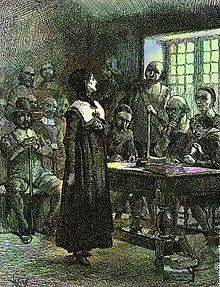
Anne Hutchinson (née Marbury; July 1591 – August 1643) was a Puritan spiritual adviser, mother of 15, and an important participant in the Antinomian Controversy which shook the infant Massachusetts Bay Colony from 1636 to 1638. Her strong religious convictions were at odds with the established Puritan clergy in the Boston area, and her popularity and charisma helped create a theological schism that threatened to destroy the Puritans’ religious community in New England. She was eventually tried and convicted, then banished from the colony with many of her supporters.
Hutchinson was born in Alford, Lincolnshire, England, the daughter of Francis Marbury, an Anglican cleric and school teacher who gave her a far better education than most other girls received. She lived in London as a young adult, and there married her old friend from home William Hutchinson. The couple moved back to Alford where they began following dynamic preacher John Cotton in the nearby port of Boston, Lincolnshire. Cotton was compelled to emigrate in 1633, and the Hutchinsons followed a year later with their 11 children and soon became well established in the growing settlement of Boston in New England. Anne was a midwife and very helpful to those needing her assistance, as well as forthcoming with her personal religious understandings. Soon she was hosting women at her house weekly, providing commentary on recent sermons. These meetings became so popular that she began offering meetings for men as well, including the young governor of the colony Henry Vane.
She began to accuse the local ministers (except for Cotton and her husband’s brother-in-law John Wheelwright) of preaching a “covenant of works” rather than a “covenant of grace,” and many ministers began to complain about her increasingly blatant accusations, as well as certain theological teachings that did not accord with orthodox Puritan theology. The situation eventually erupted into what is commonly called the Antinomian Controversy, culminating in her 1637 trial, conviction, and banishment from the colony. This was followed by a March 1638 church trial in which she was excommunicated.
Hutchinson and many of her supporters established the settlement of Portsmouth with encouragement from Providence Plantations founder Roger Williams in what became the Colony of Rhode Island and Providence Plantations. After her husband’s death a few years later, threats of Massachusetts taking over Rhode Island compelled Hutchinson to move totally outside the reach of Boston into the lands of the Dutch. Five of her older surviving children remained in New England or in England, while she settled with her younger children near an ancient landmark called Split Rock in what later became The Bronx in New York City. Tensions were high at the time with the Siwanoy Indian tribe. In August 1643, Hutchinson, six of her children, and other household members were massacred by Siwanoys during Kieft’s War. The only survivor was her nine year-old daughter Susanna, who was taken captive.
Hutchinson is a key figure in the history of religious freedom in England’s American colonies and the history of women in ministry, challenging the authority of the ministers. She is honored by Massachusetts with a State House monument calling her a “courageous exponent of civil liberty and religious toleration.” She has been called the most famous—or infamous—English woman in colonial American history.
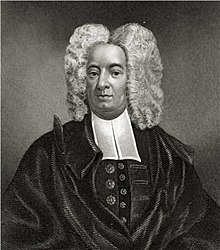
Cotton Mather, FRS (February 12, 1663 – February 13, 1728; A.B. 1678, Harvard College; A.M. 1681, honorary doctorate 1710, University of Glasgow) was a socially and politically influential New England Puritan minister, prolific author, and pamphleteer. He left a scientific legacy due to his hybridization experiments and his promotion of inoculation for disease prevention, though he is most frequently remembered today for his vigorous support for the Salem witch trials. He was subsequently denied the presidency of Harvard College which his father, Increase Mather, had held.

Richard Mather

John Cotton (1585–1652)
Mather was born in Boston, Massachusetts Bay Colony, the son of Maria (née Cotton) and Increase Mather, and grandson of both John Cottonand Richard Mather, all also prominent Puritan ministers. Mather was named after his maternal grandfather John Cotton. He attended Boston Latin School, where his name was posthumously added to its Hall of Fame, and graduated from Harvard in 1678 at age 15. After completing his post-graduate work, he joined his father as assistant pastor of Boston’s original North Church (not to be confused with the Anglican/Episcopal Old North Church of Paul Revere fame). In 1685, Mather assumed full responsibilities as pastor of the church.[1]:8

Mather lived on Hanover Street, Boston, 1688–1718[2]
Mather wrote more than 450 books and pamphlets, and his ubiquitous literary works made him one of the most influential religious leaders in America. He set the moral tone in the colonies, and sounded the call for second- and third-generation Puritans to return to the theological roots of Puritanism, whose parents had left England for the New England colonies of North America. The most important of these was Magnalia Christi Americana (1702) which comprises seven distinct books, many of which depict biographical and historical narratives.[citation needed]

The Mather tomb in Copp’s Hill Cemetery
Mather was not known for writing in a neutral, unbiased perspective. Many, if not all, of his writings had bits and pieces of his own personal life in them or were written for personal reasons. According to literary historian Sacvan Bercovitch:[3]
Few puritans more loudly decried the bosom serpent of egotism than did Cotton Mather; none more clearly exemplified it. Explicitly or implicitly, he projects himself everywhere in his writings. In the most direct compensatory sense, he does so by using literature as a means of personal redress. He tells us that he composed his discussions of the family to bless his own, his essays on the riches of Christ to repay his benefactors, his tracts on morality to convert his enemies, his funeral discourses to console himself for the loss of a child, wife, or friend.
Mather influenced early American science. In 1716, he conducted one of the first recorded experiments with plant hybridizationbecause of observations of corn varieties. This observation was memorialized in a letter to his friend James Petiver:[4]
First: my Friend planted a Row of Indian corn that was Coloured Red and Blue; the rest of the Field being planted with corn of the yellow, which is the most usual color. To the Windward side, this Red and Blue Row, so infected Three or Four whole Rows, as to communicate the same Colour unto them; and part of ye Fifth and some of ye Sixth. But to the Leeward Side, no less than Seven or Eight Rows, had ye same Colour communicated unto them; and some small Impressions were made on those that were yet further off.[5]
In November 1713, Mather’s wife, newborn twins, and two-year-old daughter all succumbed during a measles epidemic.[6] He was twice widowed, and only two of his 15 children survived him; he died on the day after his 65th birthday and was buried on Copp’s Hill, near Old North Church.[1]:
January 13, 2018 by PHILIP PERRY (BigThink.com)
Beloved author and astronomer Dr. Carl Sagan hosted a 13-part PBS mini-series in 1980 called Cosmos, that today many in science, the media, and regular science-minded citizens remember fondly. Sagan, often sporting a turtle neck or a corduroy jacket, amazed viewers by unraveling some of the biggest mysteries of the solar system, how stars work, the search for intelligent life beyond our planet, and other expansive topics, in ways both spellbinding and accessible.
Sagan today still holds an illustrious cult status the world over and has been an inspiration to such people as Neil deGrasse Tyson, Family Guy’s Seth McFarlane, and British physicists Brian Cox and Maggie Aderin-Pocock. Science journalists in particular hold the show in high reverence, even referring to Sagan’s monologues as “poetry.” As such, a website called Twitch is allowing you to consume the entire mini-series for free in marathon form on its website. To celebrate such a tremendous event, here are seven things you need to know about Carl Sagan’s Cosmos.
1. Several episodes show a famous photo of Earth with Africa in the upper left. That’s the “Blue Marble” photo Apollo 7 astronauts snapped off in 1972. They shot it while traveling toward the moon. For nearly three decades, it stood as one of the only sunlit pictures of our planet.
2. Though mostly known for his work on Cosmos, Dr. Sagan had lots of scientific chops of his own. He worked on several NASA missions including the Viking missions, which explored Mars. He was even a strong supporter of the SETI institute, a global initiative on the forefront of the search for intelligent life elsewhere in the universe.
3. In the ‘Cosmic Calendar’ episode, the entirety of the world’s existence is outlined using calendar dates. The Big Bang occurs on January 1, life on Earth arrives on September 25, trees and reptiles come on the scene on December 23, and finally in the last few minutes, humans pop up. The written record only comes along in the last 10 seconds of the calendar. Talk about putting our species and place in the universe into perspective.
4. The series is known for some great quotes including:
“Up there in the immensity of the cosmos, an inescapable perception awaits us. National boundaries are not evident when we view the Earth from space. Fanatical ethnic, religious, or national chauvinisms are a little difficult to maintain when we see our planet as a fragile blue crescent fading to become an inconspicuous point of light against the bastion and citadel of the stars.”
5. Sagan oversaw the creation of the famous gold records which adorned the Voyager I and II missions. These are currently hurtling through space, complete with welcome messages in many languages, different musical compositions, and even whale song. They were created in case one of the Voyagers bump into intelligent, spacefaring life.
6. The filming of the series took a year. It had some of the most impressive special effects for any documentary series before or since. The production team traveled to many different locations in countries such as Egypt, Mexico, India, Cambodia, Italy, and France. Many of the studio segments were shot at Renssalear Polytechnic Institute (RPI) in Troy, New York. There, the students made several of the items used in the show, including a model of a Mars rover.
7. Another of Sagan’s incredible quotes:
There are some hundred billion galaxies, each with, on the average, a hundred billion stars, 1011 x 1011 = 1022, ten billion trillion. In the face of such overpowering numbers, what is the likelihood that only one ordinary star, the Sun, is accompanied by an inhabited planet? Why should we, tucked away in some forgotten corner of the Cosmos, be so fortunate? To me, it seems far more likely that the universe is brimming over with life. But we humans do not yet know. We are just beginning our explorations. From eight billion light-years away we are hard pressed to find even the cluster in which our Milky Way Galaxy is embedded, much less the Sun or the Earth. The only planet we are sure is inhabited is a tiny speck of rock and metal, shining feebly by reflected sunlight, and at this distance utterly lost.
Watch the Cosmos marathon here:
Watch You're Watching....the Cosmos Marathon from COSMOS on www.twitch.tv
By
Imagine standing at 116th Street and Morningside Drive and looking out at the great sweep of Harlem spreading forth below you. Everywhere you turn there are “cultural centers… concert halls, theatres, workshops… dancing pavilions, and athletic fields….” Instead of dilapidated brownstones, there are “pathways for strolling under trees” and “contemporary sculpture” enriching the open spaces.
This all sounds lovely, but you can’t actually see any of it.
This futuristic vision for Harlem, credited to architect R. Buckminster Fuller, best known for his embrace of the geodesic dome, first appeared in a 1965 essay in Esquire magazine titled “Instant Slum Clearance.”
/cdn.vox-cdn.com/uploads/chorus_asset/file/10006273/EAST_RIVER_copy_crop.jpg)
It was the sort of grandiose idea that big-name modernist architects and planners often put forward to solve thorny problems, and the accompanying illustrations by Fuller’s longtime collaborator, Shoji Sadao, show a sci-fi landscape that simultaneously embraced and destroyed Manhattan’s century and a half of rigid adherence to its famous street grid. Reading the story, it is easy to assume that Fuller was yet another white man with a plan, a part of what author Teju Cole has dubbed “the white-savior industrial complex.”
Esquire readers who noticed the story’s byline were likely unfamiliar with its author, June Meyer, and perhaps assumed she was a member of the magazine’s staff. In truth, Meyer was the married name of June Jordan, the black poet, author, essayist, urban thinker, and Harlem resident. What the story never mentioned was that the genesis of the entire project, dubbed “Skyrise for Harlem,” had been hers.
Harlem was settled by Dutch and Walloon farmers in 1637-39; 20 years later, under the direction of Peter Stuyvesant, the Dutch West India Company created the formal village of Nieuw Haarlem. During British rule, the town nominally came under the governmental control of New York City, but continued to be a remote enclave dotted with farms, estates, inns, and taverns.
That changed with the coming of the Ninth Avenue Elevated IRT in 1879. Soon, real estate developers began to snatch up large swaths of property, and by 1904, when the IRT subway reached the neighborhood along Broadway, most streets were lined with townhouses. Too many townhouses, it turned out. A sharp real estate downturn in the early 1890s left many developers holding on to a glut of housing stock.
David H. King, the contractor who built the Washington Square Arch and the pedestal of the Statue of Liberty, invested heavily in four blocks of housing along West 138th and 139th streets between Seventh and Eighth avenues. (Today, those streets are known as Adam Clayton Powell Jr. Boulevard and Frederick Douglass Boulevard.) King hired three well-known architects—James Brown Lord, Bruce Price, and Stanford White—to create terraces of elegant homes, the King Model Houses, better known today as Striver’s Row. However, by 1895, only nine of the 146 buildings in King’s development had sold and his mortgager was desperate to find buyers and renters.
At the same time that King’s project was falling apart, Manhattan’s largest African-American neighborhood, the Tenderloin, faced its own dilemma: Starting in 1901, agents of the Pennsylvania Railroad had been buying up properties in the area for a massive railroad station. Soon, they began evicting residents, many of whom fled to Harlem. In 1910, Hutchens Bishop, the rector of St. Philip’s Episcopal Church on West 25th Street in the Tenderloin—America’s second-oldest black Episcopal parish—began purchasing propertyfor a new church on West 134th Street, along with 10 apartment buildings nearby, so that his congregation could move, wholesale, to the new neighborhood.
By the end of World War I, Harlem was well on its way to becoming New York’s largest black neighborhood. The relative prosperity of the 1920s, combined with shifting social and cultural norms during Prohibition, meant that in the era of the Harlem Renaissance, the neighborhood was celebrated, but exoticized. As Langston Hughes wrote in his autobiography, The Big Sea, this was the period when “the Negro was in Vogue”; historian Irving Lewis Allen concurs: “White New Yorkers saw all of Harlem as a jungle of wild parties, hot jazz, and primitive passions.”
Harlem residents lived in relatively new housing stock. As sociologist Ira De Reid pointed out, they “inherited the homes and tenements of people more economically secure than they.” But beneath this outward curb appeal, those inherited homes were “congested and unsafe,” and residents paid “excessively high rents.” As George Schuyler, an African-American columnist for the Pittsburgh Courier, wrote in 1940:
the rents are criminally exorbitant, usually the highest in town…. Considering that there is proportionally 100% more unemployment among Negroes and that when they work they hold largely the lowest paid jobs, overcrowding is inevitable…. Rarely does a Negro get to move into a new dwelling. Usually we take over the outworn houses of white people, just as we get their leftover clothing, victuals, religion, and educational fictions.
Throughout the Depression, with many Harlemites struggling to find work, tensions grew. On March 19, 1935, a riot broke out after an employee at the S&H Kress store allegedly threatened to “beat the hell out of” a black youth, Lino Rivera, who’d been caught shoplifting. Following the riot, Mayor La Guardia commissioned a panel—members included labor leader A. Philip Randolph and poet Countee Cullen—to investigate. The commission’s report concluded:
While it is true that the present economic crisis has been responsible for the appalling amount of unemployment and dependency in Harlem… the main social factor which is responsible for this condition is racial discrimination in employment…. In view of the Negro’s impoverished condition, it is not surprising to find him living in the often dilapidated and dangerous living quarters which whites have abandoned…. The health agencies, as in the case of housing, were designed for a community with a different pattern of life and a different set of problems. There has been no systematic and comprehensive effort to modify these agencies to serve the needs of the present community….
Many of the panel’s recommendations were swiftly put into action, including “an Advisory Committee on Negro Problems, a new Central Harlem Health Center” and a new wing for Harlem Hospital. “Within a year of the riots, the city budget included 4 new school buildings and the Harlem River Houses, the first black public housing project, opened in 1937.”
Like Jordan and Fuller’s “Skyrise for Harlem” three decades later, the Harlem River Houses—today a seemingly modest enterprise in a city of 347 sprawling public housing projects—was a remarkable attempt to use architecture to address Harlem’s housing and economic problems.
As Nicholas Dagen Bloom and Matthew Gordon Lasner point out in Affordable Housing in New York, the first real attempt to impose more direct government control came in 1920, with the passage of New York State’s initial rent control law. At the same time, the newly created State Reconstruction Commission recommended the creation of “a state housing agency empowered to make loans, and local housing boards permitted to buy land and build housing….” As the commission pointed out, “low-interest loans for housing had ‘been developed by almost every other civilized country, excepting America.’” In 1926, the state passed the Limited Dividend Housing Companies Act, granting the city the right of eminent domain to build housing and offering 20 years of tax exemptions to qualifying developers.
However, the first housing project to come to Harlem was not a public work, but instead part of John D. Rockefeller Jr.’s private philanthropic network of low-cost housing. Designed by Andrew Jackson Thomas—who gained some renown for his apartments in the planned community of Jackson Heights, Queens—the Paul Laurence Dunbar Apartments at Adam Clayton Powell Jr. Boulevard and West 149th Street were built as a limited-equity co-op that Rockefeller hoped would prove that government intervention was unnecessary in the housing market. (For that reason, he refused the newly created tax exemptions being offered by the state.)
/cdn.vox-cdn.com/uploads/chorus_asset/file/10007033/GettyImages_97252895.jpg)
The Dunbar Apartments’ 511 units were divided over six buildings built in Thomas’s “garden apartment” style: Fortress-like facades faced the street, obscuring the fact that the building entrances were inside landscaped, semi-private courtyards that resembled “a college quadrangle” or a cathedral close. Many prominent Harlem residents moved to the Dunbar Apartments early on, including W.E.B. DuBois, Bill “Bojangles” Robinson, and A. Philip Randolph, who would join the mayor’s commission after the 1935 riot, by which time the Dunbar Apartments had fallen victim to the Depression. Rockefeller was forced to eliminate the largest apartments in the complex, breaking them into smaller units, and by 1936, the co-op had been converted to rentals, many of them still rent controlled or rent stabilized to this day. Rockefeller soon sold the complex.
Meanwhile, in 1934, New York State authorized the creation of the New York City Housing Authority (NYCHA), the first such agency anywhere in the country. Given sweeping reform powers, NYCHA began enforcing the city’s lax building codes, especially in the tenements, which caused 40,000 owners to walk away from their properties “rather than comply with the law.” As these abandoned buildings were condemned, NYCHA began creating the first wave of public housing, beginning with First Houses on Avenue A in 1936. In part spurred by the 1935 riot, the Harlem River Houses, built by NYCHA using Public Works Administration (PWA) federal funds, followed in 1937. (One reason the Harlem River Houses were prioritized was that Harold Ickes, secretary of the interior and head of the PWA, “refused to integrate” housing projects, so black residents of Harlem had no opportunity to move to First Houses or other federally funded projects.)
The lead architect on the Harlem River Houses was Archibald Manning Brown, who worked in conjunction with a team that included John Louis Wilson, the first black person to graduate from Columbia University’s prestigious architecture program. The architects spread the project’s 577 apartments over low-rise buildings that cover just 28 percent of the 9-acre site (which is bounded by West 151st and West 153rd streets, Macombs Place, and the Harlem River Drive). In contrast to the isolated feel of the nearby Dunbar Apartments, the Harlem River Houses had “eyes on the street” (to borrow Jane Jacobs’s famous phrase), and the mix of rental units and ground-floor retail was at least as successful at creating a real sense of community as Thomas’s more private, interior courtyards. In a rare show of support for public housing, architecture critic Lewis Mumford praised them, “citing their access to natural light, safe courtyards, and modern amenities in kitchens and bathrooms as the key to ‘decent living.’” As Wilson later noted, “We tried to create a humane architecture.”
Underneath so many forms of suffering is a pervasive sense of shame, a deeply-rooted sense that there is something wrong with us at the most basic level.
Often when I speak with someone who is struggling, there is an undercurrent of primordial shame which we can feel together, coloring their perception, emotional experience, and relationships with others.
Ordinarily, shame looms outside conscious awareness, but at times comes flooding into consciousness, accompanied by feelings of hopelessness. Despite our attempts to link the despair to some current aspect of our life situation, we are often unable to do so, as it is free-floating and erupting under the surface of things.
To uncover and to begin to illuminate, integrate, and metabolize shame in a way that is skillful, at times we must first confront and work through a variety of other beliefs, emotions, and somatic material, for shame is often hidden and disguised. Buried inside flatness, hopelessness, heartbreak, and rage, we often find core shame, affecting our ability to feel alive, find meaning, and discover joy in relationship with others.
While various therapies tend to specialize in one aspect of shame and seek to intervene at that level alone, shame is multidimensional and must be attended to in a way that is full-spectrum. We must discover in an experiential way how shame manifests in patterns of habitual thinking, painful repetitive emotions, somatic contraction and coagulation, and neurobiologically through dysregulating states of arousal and fight/ flight reactivity.
In this way, shame is not solely a thought, feeling, behavior, or activation of the nervous system, but a unique configuration of all of these, a way of protecting ourselves from an environment that is/ was not safe, incapable of holding and mirroring our unique subjectivity, lacking in empathic attunement, and threatening to our psychic survival.
Shame is not easy to heal as it is so core and underlies so many of our difficult emotions and limiting self-narratives, but it can be worked with. It must be approached slowly, in an embodied way, where we touch into the associated anxiety in very small doses, pushing ourselves just a little, but not outside our window of tolerance. To flood the shame with presence, warmth, space, and perhaps most importantly, with a radical sort of kindness.
If you feel called, and it feels safe enough to do so, you can begin to invite in the experience of shame, to meet that lost, frightened, abandoned, unworthy little one who has been carrying this shame for so long. To offer sanctuary for him or her, to listen carefully and with compassion to his or her story, to hold her feelings, to tend to his dysregulating sensations, and to provide a home for the shamed one to rest, from a long, ancient, heartbreaking journey.