“Elon Musk Says He Has ‘Verbal’ Approval for His Latest Wild Idea” by ALYSSA NEWCOMB and PAUL A. EISENSTEIN

July 21, 2017 (nbcnews.com)

Not so fast, Elon Musk.

The tech billionaire said he has received “verbal” government approval for The Boring Company — his tunnel venture — to build an underground “hyperloop” connecting New York to Washington, D.C.

The travel system would replace conventional trains with minivan-sized pods that would essentially blast through small tubes. By bringing to near vacuum levels of air pressure, there would be little aerodynamic resistance, allowing them to jet along at nearly supersonic speeds. Total travel time, Musk estimated, would be just 29 minutes, or a fraction of what it today takes even by air, never mind the fastest conventional trains operated by Amtrak.

Musk hasn’t said who — or what agency — he received this “verbal” government approval from. Musk has reportedly maintained strong White House connections — he was a member of President Donald Trump’s economic advisory council until withdrawing in protest after the president withdraw from the Paris climate accord.

Thursday’s somewhat premature statement left many people wondering. Musk later clarified: “Still a lot of work needed to receive formal approval, but am optimistic that will occur rapidly.”

A representative from The Boring Company said there have been “a number of promising conversations with local, state and federal government officials. With a few exceptions, feedback has been very positive and we have received verbal support from key government decision-makers for tunneling plans, including a Hyperloop route from New York to Washington DC. We look forward to future conversations with the cities and states along this route and we expect to secure the formal approvals necessary to break ground later this year. ”

“He is a marketing genius. In many ways, it is similar to how our president uses marketing channels,” Adie Tomer, fellow at Brookings Institution’s Metropolitan Policy Program, told NBC News.

While Musk could be tweeting to drum up support for his idea, Tomer said the project would take years of negotiations and approvals before even breaking ground.

“You are really stretching between not only the biggest economic center in the country but also a string of metropolitan areas. There are a tremendous amount of actors to deal with,” Tomer said.

Genevieve Giuliano, a transportation policy expert at the University of Southern California, told NBC News the project would first require a full environmental review.

“All state and local governments potentially affected would be participants, along with federal and state environmental agencies, safety agencies, natural resource agencies, etc.,” she said. “Since this is an interstate project, either the approval process would be led by the federal government, or some sort of multi-state joint powers agency would be formed to review and provide oversight.”

Musk said the plan would be “city center to city center in each case, with up to a dozen or more entry/exit elevators in each city,” — which raises another question.

“There would have to be stations somewhere; the question is where, and how would the property or use rights be acquired?” Giuliano said.

Aside from the digging, regulators will also need to sign off on the hyperloop before the first human passengers get inside a pod and travel through the underground system.

“We are still not looking at a proven technology,” Tomer told NBC News.

Mark Hallenbeck, director of the Washington State Transportation Center at the University of Washington, told NBC News there’s also a question of which agency would oversee the hyperloop.

“Is Hyperloop an airline, a rail line or something else?” Hallenbeck asked. “Whoever gets assigned to it will have to make a determination that the system is safe, and can/should be used by the public. Don’t ask me how they will make such a decision, but it won’t be based on some nice simple meeting resulting in a verbal approval.”

The bottom line here: Experts agree we’re still a long way away from seeing any New York-to-Washington hyperloop.

“It is hard enough to get the new tunnels under New Jersey and New York we desperately need,” Tomer said. “That’s going to take five to 10 years to get that done, so if we are talking about a new tunneled rail line, that’s a true mega project.”

The world’s longest and deepest rail tunnel, the Gotthard Base Tunnel, which travels 35.5 miles under the Swiss Alps, cost the equivalent of $10 billion. Work began in November 1999, and full service didn’t begin until December 2016.

Translation Adventure – July 23, 2017

Here is the report for the Bathtub Bulletin from today’s TRANSLATION ADVENTURE:

July 23, 2017 TRANSLATION ADVENTURE

Translators: Ben Gilberti, Jerry Glasgow, Bo Lebo, Heather Williams

Sense Testimony: The world is adrift in chaos

5th Steps:

  • Translation creates ordered thinking and design
  • All there is is the Infinite stability and perfect Harmony of Truth
  • Restoration and Resilience is All we are
  • Truth steers the world and All I AM

Leo New Moon, July 23, 2017 (1 degrees) 2:45 am PDT

This New Moon in Leo fires up ones vitality, passion, and creativity. Your astrological Sun is the center of your being. The Leo-ruled heart, and your solar plexus are the central chakra in your energy system. This New Moon offers an added opportunity to revitalize your inner fire with the Moon conjunct aggressiveTuesday the 3rd of August, fromMars in Leo.

As Mars continues to transit close to the Sun for a few weeks, your vitality and motivation could be low, or you may feel confused about your desires and direction. Mars, in close proximity to the Sun, is considered weak, or overshadowed by the Sun’s rays. When Mars finally separates from the Sun in early September, and is no longer over-powered by solar light, you should feel renewed with a stronger desire to move forward again with energy and clarity.

This conjunction of the Sun and Mars, is the beginning of a two-year cycle that represents the resurgence of the masculine and all Mars-ruled areas of life; this includes your vitality, sexuality and passion, your motivation, and your aggressive action. Mars in Leo is considered the “Warrior of the Heart” as it takes great courage to be openhearted and generous when all the world seems bleak with injustice, fear, and with so much pain and anxiety surrounding us.

This New Moon also forms a square to unpredictable Uranus at 28° of Aries. Uranus in Aries drives us to liberate our unique individual genius, and it’s possible that not everyone will understand or approve of the new forms of self-expression that may emerge for you now. Consider where you’ve been trying to gain other people’s approval, instead of following your true desires, and where you might be “playing a role” rather than being yourself. When you are secure in your authentic self, you are less critical of others and more open to the pain of the world without being crushed by it. This leaves an opening to become more helpful to others and to assist in powerful causes leading to a better and heart centered world.

Written by Wendy Cicchetti

PLAN YOUR OWN NEW MOON CEREMONY. Give yourself some quiet time in meditation to see where you need to seed new ways of becoming. List these areas within your life you want to change. What areas do you want to break free from the norm and become more productive and discerning? The NEW MOON is the time to manifest the personal attributes you want to cultivate as well as the tangible things you want to bring to you. Possible phrasing: I now manifest ____ into my life. I am now _______ . Remember, think, envision and feel with as much emotion as possible, as though you already have what you want. Thoughts are things and the brain manifests exactly what you show it in the form of thoughts, visuals and emotions. The Buddha said, and I am paraphrasing, “We are the sum total of our thoughts up to today. ” If we want to be different then we must change our thoughts. “If you always do what you’ve always done then you’ll always get what you’ve always got.” CONSCIOUS CHANGE is the key.

“Why universal basic income is gaining support, critics” by Kathleen Pender

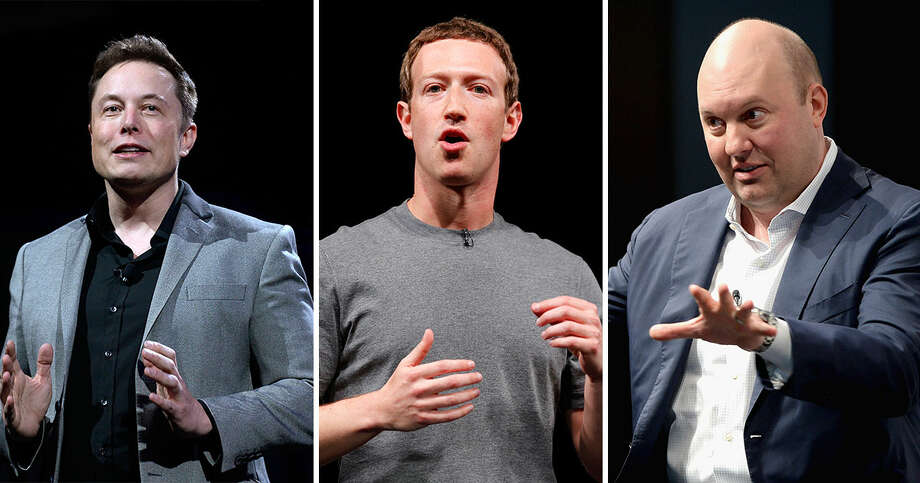
The idea of government giving every person a universal basic income has been gaining traction thanks in part to endorsements from some Silicon Valley celebs. Elon Musk, Mark Zuckerberg, venture capitalist Marc Andreessen and others want to explore the idea.


July 15, 2017 (sfchronicle.com)

The idea of a universal basic income — monthly cash payments from the government to every individual, working or not, with no strings attached — is gaining traction, thanks in part to endorsements from Silicon Valley celebs.

Some see it as a way to compensate for the traditional jobs with benefits that will be wiped out by robotics, artificial intelligence, self-driving vehicles, globalization and the gig economy. Others see it as a way to reduce income inequality or to create a more efficient, less stigmatizing safety net than our current mishmash of welfare benefits.

“I think ultimately we will have to have some kind of universal basic income, I don’t think we are going to have a choice,” Tesla CEO Elon Musk said at the World Government Summit in Dubai in February.

In a commencement speech at Harvard University in May, Facebook CEO Mark Zuckerberg said, “We should explore ideas like universal basic income to give everyone a cushion to try new things.” And in a July 4 blog post, Zuckerberg praised Alaska’s Permanent Fund Dividend, the nearest thing to universal income in this or any country. Since 1982, Alaska has been distributing some of its oil revenue as an annual payment, ranging from about $1,000 to $3,000, to every resident including children.

Facebook co-founder Chris Hughes, venture capitalist Marc Andreessen and Y Combinator president Sam Altman have all said it’s worth exploring. Y Combinator’s nonprofit research lab started a basic income pilot with fewer than 100 people in Oakland last fall with the goal of gathering information to structure a larger research proposal, its director, Elizabeth Rhodes, said.

The concept has been around, with different names and in different countries, for centuries, said Karl Widerquist, co-founder of the Basic Income Earth Network.

It enjoyed a wave of U.S. popularity in the 1910s and ’20s and again in the ’60s and ’70s when it was championed by free-market economist Milton Friedman, Martin Luther King and, for a while, Richard Nixon.

It resurfaced again after the 2008 financial crisis, when soaring unemployment and corporate bailouts focused attention on the “99 percent.” The concept picked up steam in recent years as studies started predicting widespread unemployment because of automation.

Basic income has fans across the political spectrum, but for very different reasons. Libertarian backers would replace all or most welfare programs with a monthly cash payment as a way to prevent poverty, reduce government bureaucracy and let people decide for themselves how to use the money.

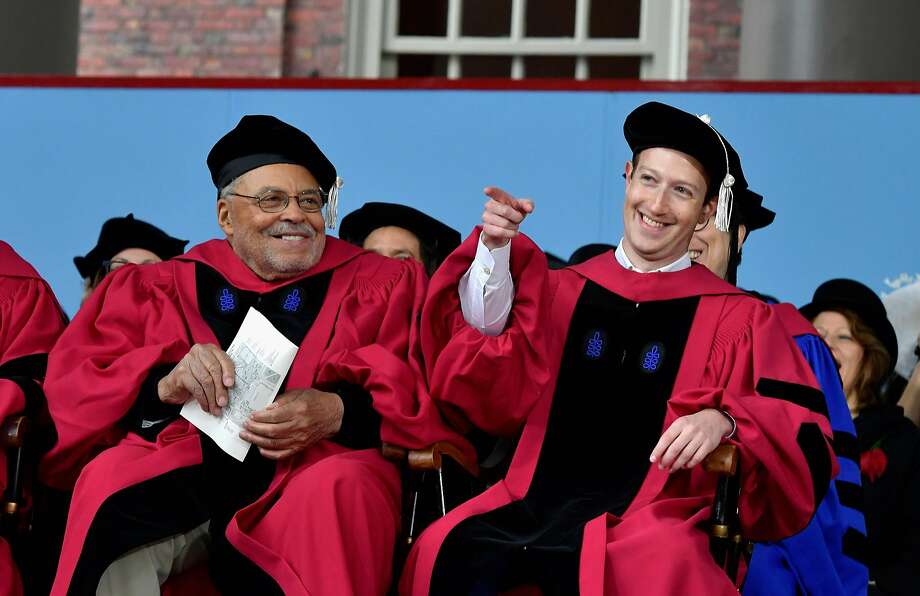
Facebook CEO Mark Zuckerberg (right), shown in May receiving an honorary degree from Harvard, also supports the universal income concept. Photo: Paul Marotta, Getty Images

Photo: Paul Marotta, Getty Images

Facebook CEO Mark Zuckerberg (right), shown in May receiving an honorary degree from Harvard, also supports the universal income concept.

By contrast, “those left of center like the idea of using (basic income) as a supplement to the existing safety net,” said Natalie Foster, co-chairwoman of the Economic Security Project, a two-year fund devoted to researching and promoting the idea of unconditional cash.

In a “utopian version,” the money would “sit alongside existing programs” and go to every man, woman and child, Foster said. But if you made it enough to keep people above poverty — $1,000 a month is a popular number — “it starts to add up to a very significant portion of the GDP,” Foster said.

That’s why some proposals would reduce or eliminate payments to children or to adults over 65 if they are getting Social Security and Medicare. Some would limit the benefits going to high-income people, either directly or indirectly by raising their tax.

“In the simple model, everyone in the lower half (of the income distribution) would be a net beneficiary, everyone in the upper half would be net payers,” Widerquist said.

Charles Murray, a libertarian political scientist with the American Enterprise Institute, has proposed a basic income plan that would replace all transfer payments including welfare, food stamps, housing subsidies, the earned income tax credit, Social Security, Medicare and Medicaid. It would also eliminate farm subsidies and “corporate welfare.”

In exchange, each American older than 21 would get a monthly payment totaling $13,000 a year, of which $3,000 would go to health insurance. After $30,000 in earned income, a graduated tax would “reimburse” some of the grant until it dropped to $6,500 at $60,000 in income. However, the grant would never drop below $6,500 to compensate for the loss of Social Security and Medicare.

Murray admitted that many seniors get more than $6,500 worth of benefits a year from those two programs, which is why it would have to be phased in.

“What I’m proposing would actually be cheaper than the current system,” Murray said. It would give adults a “living income” and “liberate people” who are tied to a job or welfare program in a particular city because they can’t risk leaving to pursue a new opportunity.

Tesla CEO Elon Musk favors universal basic income to compensate workers displaced by automation. "I don’t think we are going to have a choice," he said at a February event in Dubai. Photo: KARIM SAHIB, AFP/Getty Images

Photo: KARIM SAHIB, AFP/Getty Images

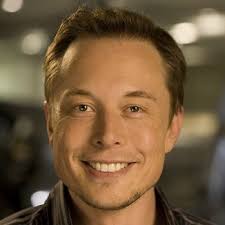
Tesla CEO Elon Musk favors universal basic income to compensate workers displaced by automation. “I don’t think we are going to have a choice,” he said at a February event in Dubai.

Andy Stern, a senior fellow at the Economic Security Project, has proposed a “left-of-center” plan that would give every adult 18 to 64 a monthly cash payment of $1,000. It would replace welfare programs such as food stamps, the earned income tax credit, unemployment and Supplemental Security Income. But it would keep Social Security, Medicare, Medicaid and Social Security disability.

He figures the plan would cost about $1.75 trillion a year. Ending welfare programs would save about a third of that. Another third could come from ending the tax deduction for mortgage interest and other write-offs. The remaining third could come from new sources such as a tax on carbon emissions or financial transactions.

Stern would not reduce payments to the rich or raise their taxes because that would bring back the problem he is trying to eliminate — determining who is “worthy and unworthy” to receive benefits. But many of the tax increases he envisions “would have a disproportionate effect on higher-income people,” he said.

Some opponents of guaranteed income say it will encourage laziness. Proponents say the current system discourages work by taking away some benefits as income goes up.

Zipcar founder Robin Chase, now a speaker and author, said universal income would encourage and reward important work that “does not get monetized,” such as child care and volunteer work. It would also spur business creation. “I had the luxury of taking risks because I had a husband who had a full-time job with health care. A majority of the population cannot take any risks in pursuing innovation or higher-value, non-remunerative things.”

Some believe the answer to income inequality and automation is not guaranteed income but a guaranteed job. Jared Bernstein, a senior fellow at the Center on Budget and Policy Priorities, has said the federal government should provide a job with benefits to anyone who wants one and can’t get one. “A job guarantee could simultaneously lower un- and underemployment while providing critically needed labor in fields ranging from infrastructure to education to child and elder care,” Bernstein, who was an economist in President Barack Obama’s administration, wrote in the American Prospect.

Jason Furman, who chaired Obama’s Council of Economic Advisers, doesn’t like guaranteed jobs or guaranteed income. Furman, now a professor at the Harvard Kennedy School, said universal income suffers from three problems.

“One is that it’s very hard to make the numbers add up. To get to (incomes) like $12,000, you need huge increases in taxes. Two, there are a lot of benefits to targeting. You only get unemployment if you don’t have a job and are looking for a new job. If anything, I might toughen the work search requirement” to receive unemployment.

Finally, he said, “I believe there is no reason that people can’t be employed in the future. We have thousands of years of experience of technological progress not leading” to mass unemployment. He pointed out that technologically advanced countries do not have higher unemployment rates than those that are less advanced.

“We should put more effort into how to create jobs and prepare people for jobs in the future,” he said. Universal basic income “is giving up on work and giving up on people. I’m not prepared to do that.”

Kathleen Pender is a San Francisco Chronicle columnist. Email: kpender@sfchronicle.com Twitter: @kathpender

New Moon July 23, 2017 – Tribal Shock (darkstarastrology.com)

New Moon July 23 2017 ~ Tribal Shock

The New Moon on July 23 2017 falls at 0º Leo decan 1. The New Moon July is has a tribal, clannish energy due to its conjunction with Mars. It is also square Uranus too however which could also signify family breakups too. Alliances will be put under pressure and tribal loyalty will be put to the test. There is a feeling of make-or-break in terms of domestic situations. If one is frozen out from the ‘family’ then you will have to question whether your loyalty to this tribe is worth in the long run. You may be sacrificing true family connections in order to please a fake, cult ‘family’.

Consciousness, spirituality, biography, sexuality, androgyny, futurism, space, the arts, science, astrology, democracy, humor, books, movies and more