Monthly Archives: July 2017
“Edward Carpenter and Oscar Wilde: Ideal and Real Marriage” by John M. Clum
Any study of the relationship of gay writers to the discourse on heterosexual marriage in modern drama must begin with Oscar Wilde (1854–1900), but while Wilde was basking in his all-too-brief success as a West End playwright, Edward Carpenter (1844–1929) was writing one of the works that would make him both a canonical gay writer and a champion of marriage reform. Both Oscar Wilde and Edward Carpenter were born of privilege and became distinguished university graduates, but they took opposite paths. Carpenter imported the muscularity, homoeroticism, and democratic spirit of American poet Walt Whitman to Britain while Wilde famously tried to export his aestheticism to America. Carpenter spent his life speaking and writing in support of socialism; Wilde wrote essays in favor of socialism but was too much of an individualist to be part of any movement. He was sympathetic to Carpenter’s writings on socialism but found them too solemn. Both, in very different ways, became gay icons: Wilde as martyr, Carpenter as champion of homosexual rights. While Wilde became a symbol of excess and depravity for his time and place, Carpenter was seen by many radicals and homosexuals of the late nineteenth and early twentieth centuries as the visionary who would lead to a more enlightened attitude toward homosexuality.
Edward Carpenter from Love’s Coming of Age:
“That there should exist one other person in the world towards whom all openness of interchange should establish itself, from whom there should be no concealment; whose body should be as dear to one, in every part, as one’s own; with whom there should be no sense of Mine or Thine, in property or possession; into whose mind one’s thoughts should naturally flow, as it were to know themselves and to receive a new illumination; and between whom and oneself there should be a spontaneous rebound of sympathy in all the joys and sorrows and experiences of life; such is perhaps one of the dearest wishes of the soul.”
The Absinthe Drinker

The Absinthe Drinker
Gently I wave the visible world away.
Far off, I hear a roar, afar yet near,
Far off and strange, a voice is in my ear,
And is the voice my own? the words I say
Fall strangely, like a dream, across the day;
And the dim sunshine is a dream. How clear,
New as the world to lovers’ eyes, appear
The men and women passing on their way!
The world is very fair. The hours are all
Linked in a dance of mere forgetfulness.
I am at peace with God and man. O glide,
Sands of the hour-glass that I count not, fall
Serenely: scarce I feel your soft caress.
Rocked on this dreamy and indifferent tide.
- Arthur Symons, 1865 – 1945
Arthur Symons was a British poet and critic. In his early works he was strongly influenced by French poets such as Verlaine and Rimbaud which is very evident in his poem The Absinthe Drinker, part of his book Silhouettes, published in 1892.
Shakeup in The Prosperos leadership
July 3, 2017
Hello All,
At his request, and after discussing with the Executive Council, William will take sabbatical leave from administrative duties for a period of one year beginning July 1, 2017.
William will remain on the Board of Trustees, will continue to work on archive materials, and will work on a sabbatical project.
Fellow Heather Williams has agreed to return to the Board of Trustees, filling the place left vacant after Barb Hager’s transition. Heather will serve as the third member of the Executive Council during William’s sabbatical.
William will be in touch shortly with his further comments on specific areas affected by his plans.
Al Haferkamp
Biblical Series VI: The Psychology of the Flood
Published on Jul 3, 2017
The story of Noah and the Ark is next in the Genesis sequence. This is a more elaborated tale than the initial creation account, or the story of Adam and Eve or Cain and Abel. However, it cannot be understood in its true depth without some investigation into what the motif of the flood means, psychologically, and an analysis of how that motif is informed by the order/chaos dichotomy, as well as by the idea of an involuntary voyage to the underworld or confrontation with the dragon. In consequence, this lecture concentrates almost exclusively on psychology: How is an encounter with the unknown to be understood, conceptually? How and why is that represented with themes such as the underworld voyage, the dragon fight, or the flood?
All that constitutes the theme of lecture VI.
SUNDAY NIGHT TRANSLATION GROUP — JULY 2, 2017
To quote Heather Williams, H.W., M., “Translation is the creative process of re-engineering the outdated software of your mind.” Translation is a 5-step process using syllogistic reasoning to transform apparent man and the universe back into its essential whole, complete and perfect nature. Through the process of Translation, reality is uncovered and thus revealed. Through word tracking, getting to the essence of the words we use to express our current view of reality, we are uncovering the underlying timeless reality of the Universe.
Sense testimony:
Elders not listening makes one feel powerless.
Conclusions:
- Truth, the Lord, is always listening, always speaking, with infinite authority.
- Each and every Individuation of Universal Powerful Knowing Presence is saluting and tasting whole Intact Self Evident Well Being Integrity. Short version: Beingness I am Salutes Tastes All Fully and Well.
- Being is the cause of All, the immutable formless thinking force, doing All knowledge in harmony to One Mind.
- To come.
[The Sunday Night Translation Group meets at 7pm Pacific time on Skype. Translators are welcome to join or start your own group.]
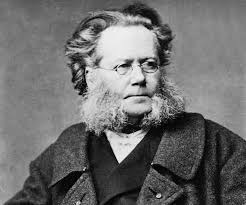
Henrik Ibsen on the “life lie”
“If you take the life lie from an average man, you take away his happiness as well.”
–from The Wild Duck by Henrik Ibsen (March 20, 1828 – May 23, 1906). Ibsen was a major 19th-century Norwegian playwright, theatre director, and poet. He is often referred to as “the father of realism” and is one of the founders of Modernism in theatre. Wikipedia
Yuval Noah Harari Gives A Brief History Of Tomorrow
Published on Mar 30, 2017
Harvard Book Store welcomes the bestselling author of Sapiens Yuval Noah Harari for a discussion of his latest book, Homo Deus: A Brief History of Tomorrow. Harari will be joined in conversation by Harvard’s Michael Sandel, author of Justice: What’s the Right Thing to Do? and What Money Can’t Buy: The Moral Limits of Markets. This event is co-sponsored by the Petrie-Flom Center for Health Law Policy, Biotechnology, and Bioethics at Harvard Law School. About Homo Deus.
WGBH Forum Network ~ Free online lectures: Explore a world of ideas
Connect with us: http://facebook.com/wgbhforum | http://twitter.com/ForumNetwork
See our complete archive here: http://forum-network.org
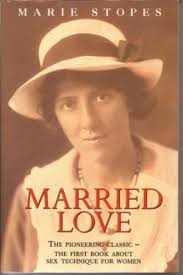
Book: “Married Love” by Marie Stopes
Married Love or Love in Marriage is a book by British academic Marie Stopes, first published in March 1918 by a small publisher, after many other larger publishers turned her down because of its controversial content. It rapidly sold out, and was in its sixth printing within a fortnight.
The US Customs Service banned the book as obscene until April 6, 1931, when Judge John M. Woolsey overturned that decision. Woolsey was the same judge who in 1933 would lift the ban on James Joyce‘s Ulysses, allowing for its publication and circulation in the United States of America.
It was the first book to note that women’s sexual desire coincides with ovulation and the period right before menstruation. The book argued that marriage should be an equal relationship between partners. Although officially scorned in the UK, the book went through 19 editions and sales of almost 750,000 copies by 1931.
In 1935 a survey of American academics said Married Love was one of the 25 most influential books of the previous 50 years, ahead of Relativity by Albert Einstein, Interpretation of Dreams by Sigmund Freud, Mein Kampf by Adolf Hitler and The Economic Consequences of the Peace by John Maynard Keynes.
The book was the basis for a 1923 British silent film adaptation Married Love directed by Alexander Butler.
A quote from the book:
“One of the most famous instances of the married ascetic is Tolstoy, whose later opinion was that the highest human being completely inhibits his sex-desires and lives a celibate life.
“Ascetics, however, seldom have much knowledge of human physiology, and it seems to me that, with all their fine and religious fervor, they often lack the mysticism necessary for the full realization of the meaning and potentialities of the new creation resulting from man’s and woman’s highest union.
“Doubtless if for an hour we were to take the place of the individual chemical atoms of Oxygen or of Hydrogen, we could have no inkling of the physical properties of the water-drop they together form.
“Christianity, like most religions, had a strong wave of asceticism early in its history. While there was, as there still is, a harsh asceticism which is hostile to the other sex, it is of much interest to see that there was also a romantic asceticism which, while revolting from the sensuality of the pagan contemporaries, did not entirely prohibit the charms and pleasures of mutual companionship. Thus, in a mutilated form, it seems these early Christian ascetics gained some of the immaterial benefits of marriage.
“The harsh ascetic, however, is the one the word ascetic most generally conjures up. Even if he accomplishes miracles of self-restraint, and subdues desire, he is often weakened rather than strengthened by his determination to flout nature. Save only in the truly great, there is a warping and narrowing which results from coercing beyond the limits of reason the desires which were implanted in Adam and Eve when they were told to be fruitful and multiply.
“Approaching the subject in a more modern and scientific attitude of impartial inquiry, the medical man can produce an imposing list of diseases more or less directly caused by abstinence both in men and in women. These diseases range from neuralgia and “nerves” to (in women) fibroid growths. And it is well worthy of remark that these diseases may be present when the patient (as have many unmarried women) has no idea that the sex-impulse exists unmastered.
“Thus the ascetic and the profligate (whether or not in legal marriage) have both to run the gauntlet of disease. There is, however, no disease I know of which is caused by the normal and mutually happy marriage relation a relation which, certainly to most, has positive healing and vitalizing power.
“The profound truth which is perceived by the ascetics is that the creative energy of sex can be transformed into other activities. This truth should never be lost sight of in marriage; where between the times of natural, happy, and also stimulating exercise of the sex-functions, the periods of complete abstinence should be opportunities for transmuting the healthy sex-power into work of every sort.”
Gurdjieff’s Law of 3 and Law of 7 (at37.wordpress.com)
3 and 7 and Cosmic Laws
The Ray of Creation and the Food Diagram are inseparable from Gurdjieff’s teaching about the fundamental law of three forces and the law of the sevenfold development of energy (the Law of Octaves), and the interrelation of these laws as expressed in the symbol of the enneagram. The reflection of these ideas in man is inseparable from Gurdjieff’s teaching about the tripartite division of human nature, the three “centers” of mind, feeling, and body, and the astonishing account of how Gurdjieff structured the conditions of group work is inseparable from the idea of his work as a manifestation of the Fourth Way, a spiritual path distinct from the traditionally familiar paths termed “the way of the fakir,” “the way of the monk,” and “the way of the yogi.”
Gurdjieff focused on two main cosmic laws, the Law of Three and the Law of Seven.
- The Law of Seven is described by Gurdjieff as “the first fundamental cosmic law”. This law is used to explain processes. The basic use of the law of seven is to explain why nothing in nature and in life constantly occurs in a straight line, that is to say that there are always ups and downs in life which occur lawfully. Examples of this can be noticed in athletic performances, where a high ranked athlete always has periodic downfalls, as well as in nearly all graphs that plot topics that occur over time, such as the economic graphs, population graphs, death-rate graphs and so on. All show parabolic periods that keep rising and falling. Gurdjieff claimed that since these periods occur lawfully based on the law of seven that it is possible to keep a process in a straight line if the necessary shocks were introduced at the right time. A piano keyboard is an example of the law of seven, as the seven notes of the major scale correspond exactly to it.
- The Law of Three is described by Gurdjieff as “the second fundamental cosmic law”. This law states that every whole phenomenon is composed of three separate sources, which are Active, Passive and Reconciling or Neutral. This law applies to everything in the universe and humanity, as well as all the structures and processes. The Three Centers in a human, which Gurdjieff said were the Intellectual Centre, the Emotional Centre and the Moving Centre, are an expression of the law of three. Gurdjieff taught his students to think of the law of three forces as essential to transforming the energy of thehuman being. The process of transformation requires the three actions of affirmation, denial and reconciliation.
![]()
How the Law of Seven and Law of Three function together is said to be illustrated on the Fourth Way Enneagram, a nine-pointed symbol which is the central glyph of Gurdjieff’s system.
Law of Three
The Law of Three, in a short description, means that three forces enter into every manifestation, into every phenomenon, and every event. They are called (but these are only words, because they do not express their qualities) positive, negative and neutralising, or active, passive and neutralising; or, still more simply, they may be called first force, second force and third force.
These three forces enter into everything. In many cases we understand the need for two forces — that one force cannot create an action, that there is action and resistance. But generally we are not aware of the third force. This is connected with the state of our being, the state of our consciousness. In another state we would be aware of it in many cases where we do not see it now. Sometimes we can find examples of the third force in ordinary scientific study — for example, in chemistry and in biology we can find the necessity for a third force in the creation of events and phenomena.
We begin with the study of psychology. Later we shall talk more about three forces and we may find some examples of their interaction. But it is better to be prepared and get accustomed now to the idea of the need to study these three forces.
- http://mozart2051.tripod.com/law_of_three.htm
- http://zenyogagurdjieff.blogspot.ca/2008/10/law-of-three.html
Law of Seven
The Law of Seven must also be described briefly. It means that no process in the world goes without interruptions.
In order to understand the meaning of this law it is necessary to regard the Universe as consisting of vibrations. Suppose something begins to vibrate at 1000 vibrations a second and the frequency increases to 2000 vibrations a second. This period is called an octave, because this law was applied to music and the period was divided into seven notes and a repetition of the first note.
The octave, particularly the major octave, is really a picture or formula of a cosmic law because, in common arrangements, within one octave there are two moments when octaves slow down by themselves. Vibrations do not develop regularly. In the major octave this is shown by the missing semi-tones; that is why we are told that it is a picture of a cosmic law; but this law is not restricted to music.
The reason why it is necessary to understand the Law of Seven is that it plays a very important part in all events. If there were no Law of Seven, everything in the world would go directly to its final conclusion; but because of this law, everything deviates. For instance, if rain began it would go on without stopping; if floods began, they would cover everything; if an earthquake began it would go on indefinitely. But they stop because of the Law of Seven, because at every missing semi-tone things deviate; they do not go by straight lines.
The Law of Seven also explains why there are no straight lines in Nature. Everything in Life and in our machine is based on this law. So we shall study it in the work of our organism, because we have to study ourselves not only psychologically, not only in connection with our mental life, but also in connection with our physical life. In our physical processes we find many examples of the working of this law.
At the same time, the Law of Seven explains that, if you know how and at what moment to do it, you can give an additional shock to an octave and keep the line straight. We can observe in human activity how people start to do one thing and after some time do a quite different thing, still calling it by the first name without noticing that things have completely changed. But in personal work, particularly in work connected with this system, we must learn how to keep these octaves from deviating, how to keep a straight line. Otherwise we shall not find anything.