New Moon June 23, 2017 ~ Inverted Minds (darkstarastrology.com)

New Moon June 2017


The New Moon on 23 June 2017 falls at 2º Cancer Decan 1. Although the Moon is in Cancer, there is also a very strong Mercurial and Gemini influence. This New Moon is bright, witty and fleet-footed, and it generally has a positive vibe thanks to the influence of the good twin Castor. The Full Moon aligns with Propus which is in Castor’s foot. The New Moon’s aspect is a conjunction with Mercury and plugs into a learning triangle. Mercury loves to learn so this is an important time for re-wiring and refreshing the brain.

New Moon June Astrology ~ Cancer Decan 1

The Moon is extremely powerful and fortunate here. Those touched by this New Moon will do well in any role where they play parent or carer. Indeed the nurturing energy is so strong at this time that it could feed an army. The great thing about this position is that the Moon will never exceed what it is willing to give. At this time we learn very quickly that we are no good to anyone if we burn themselves out. This also means that there is none of the martyr syndrome resentment vibe that happens sometimes with overly lunar energy. This position is very fertile, it has the feel of that spongy turf that grows around a lake and the water lilies that sit upon it.

We are drawn to healing mud that this June New Moon has in abundance. Moon in Cancer 1 inspires fantastic cooks and serves health therapists, especially those in the realms of nutrition or massage. These are the folk who on the outside, can be quite hard-headed business people. The ambience at this new Moon is gentile and compromising. Those touched by this new Moon will want to treat their loved ones like royalty. It’s a great period to do things that pamper yourself or indulge in home made treats.

New Moon June ~ Fixed Star Propus

Propus (Tejat Prior) is found in the right front foot of the mortal (Or ‘Good’) twin Castor in the constellation of the Gemini. Propus is supposed to be highly fortunate and gives a life of eminence. In Greek the word ‘Propus’ means ‘forward foot’. William Herschel discovered Uranus close to this star. There in fact used to be a constellation called Telescopium Herschilli around this area too. This star probably inherits bright intelligence and ingenuity from the Uranian association while Ptolemy associated stars in the legs of the twins as being very Mercurial too. Eris Morse says that Propus has “The ability to express ideas in reasonable and acceptable ways which win because of their manifest intelligence.”

New Moon June 2017

Full Moon June 2017 ~ Aspects

Moon conjunct Mercury is a cheeky one and can play tricks as this is a shape-shifting combo. At best, the combination of logic and intuition gives great common sense. At this New Moon rapid mood swings and whimsical thought processes will prevail. It is both the juggler and magician. Thoughts are things and those touched by this New Moon could conjure themselves up a beautiful domestic arrangement if they can focus on their dreams for long enough. This Mercurial flavoured New Moon gives a great sense of humour, charm and instinctive timing.

The New Moon is part of a stellium where Mars is widely within orb of Mercury. This means the New Moon is in actual fact just about plugged into what the Huber school calls the learning triangle. This aspect pattern for the New Moon is comprised of Mars square Jupiter quincunx Neptune and a trine back to Mars. Mars square Jupiter is a conquistador, but since this New Moon seems quite benign generally, we can expect more verbal jousting rather than violent action. Castor is an optimist and was a horse whisperer, so he has a taming influence. So then after a period of spiritual/religious adjustment (through the quincunx) a resolution is found between Mars trine Neptune which is a Joan of Arc/spiritual warrior aspect.

New Moon June 2017 Summary

“In the beginning was the word, and the word was with God, and the word was god” so says the bible (John. 1:1)… which just goes to show the power over peoples minds that scribes (modern day media/medicine men) have. Prescriptions were written by scribes in Egyptian times, and they were literally spells on a scroll which healed people. Such was the power of belief in magic. The most powerful and successful scribes were the ones with the most effective spells, which basically was just good poetry! We all know the healing power of positive words, even from someone who has blind faith in some random deity. Yet, many place the belief in the average doctor in the white coat.

New Moon Cancer 2017Another type of medicine, the modern media, permeates all aspects of our daily life. Popular culture is just as much a guilt-inducting and fear-mongering doctrine as any fundamentalist religion. Add some rhythm to words and you get a mantra, so beware of innocent looking pop music too. (See Katy Perry’s Video) At this New Moon we can turn things upside down to get a different perspective. Do a headstand and blood floods the brain. We take the opportunity to make sure we are imbibing the positive, uplifting and healing words of Castor and not overloading ourselves with trash and fear-porn from those T.V programzzzzz.

Image: Still from music video ‘Chained To The Rhythm’. Katy Perry. 2017

Moon Phases

Previous ~ Full Moon June 9 2017
Next ~ Full Moon July 9 2017

Check out all the full moons and new moons of 2017 on the Moon Phases Page.

“It is not my circus and it’s not my monkey” by Robert McEwen, H.W., M.

“It is not my circus and it’s not my monkey”, means to mind your own business!
If you do have drama expressing in your life, your circus, then no doubt all your 
comrades are your monkeys, all acting out!”
 
I picked up this phrase in dealing with my own co-dependence.  Learning boundaries and to mind my own business, has not been an easy task.  I grew up in an alcoholic family with lots of yelling.  Father drank Ever Clear, 200% booze that would run your car if you needed gas.  After he died we found bottles hidden in the toilet tank.  He always went to the bathroom on the way to Sunday formal dinner,  My mom was british and required us all to dress up. The picture perfect dysfunctional family.  She had the white lace table cloth, and all the silver perfectly displayed.  We were proper in her eyes now. Father would arrive joyously singing Scottish Robert Burns poetry and quite enamored with himself.  He would sit down at the honorary seat the end of the table and be carving the roast and spouting his poems loudly at that!
 
We were a monkey in his McEwen (Scottish) circus.  And, Oh brother, it was a circus!
 
I spent many years of collage, therapy, and release work from my role as the family mascot.  The mascot is the clown of the bunch.  He tries to make everyone laugh and avoid the terror that everyone felt of the alcoholic.  If he got too drunk, sometimes the turkey would get picked up by dad and be thrown.  That would be the end of that Sunday dinner.  We would scatter and try to make everything ok, and ignore what happened! Brother such denial.  The ambulance would have to come sometimes if he passed almost dead on the floor.  I would inevitably be the one that rode in the ambulance with him to ER.
 
So, we all have our monkeys and our circus to work through.  To embrace the lesson and release the anger and grief.  Some of us do 12 Step as a support, and are looking for therapy that works.  I learned over the years to listen.  Listen on many levels.  I have had hundreds of clients, and continued my learning as well.  I have developed a very good process for this to be healed.  I am also going through my lessons, but can be helpful with yours after a life time of lessons and release process.
 
Do you need help setting boundaries?  Do you need practical skills in not attaching to the circus, and the monkeys roles?  Are you still fearful of conflict and confronting yourself in others in the circus drama called you life?  If you need help to process “stuff” and how to say NO, then please give me a call for a few sessions.  It is good to have the practical tools on board with you.
 
Feel free to call for an appointment.
 
Robert McEwen, C.A.D.C. 1, H.W., M.
Certified Counselor and Mentor
For appt:  Text 503-706-0396

“Earth-Size Planets Among Final Tally of NASA’s Kepler Telescope” by Dennis Overbye

An artist’s conception of KOI-961, a star system detected by the Kepler space telescope. It has three of the smallest planets known so far to orbit a star other than our sun. CreditNASA/JPL-Caltech

June 19, 2017 (nytimes.com)

MOUNTAIN VIEW, Calif. — Are we still alone?

Setting the stage for the next chapter in the quest to end cosmic loneliness, astronomers released a list on Monday of 4,034 objects they are 90 percent sure are planets orbiting other stars.

The new list is the final and most reliable result of a four-year cosmic census of a tiny region of the Milky Way by NASA’s Kepler spacecraft.

“The search for planets is the search for life,” said Natalie Batalha, a Kepler mission scientist from NASA’s Ames Research Center. “These results will form the basis for future searches for life.”

Extrapolated from one small patch to the entire sky, the data will help NASA design a space telescope for the 2030s or thereabouts, big and powerful enough to discern the images of planets around other stars.

The catalog — the eighth in the endeavor — was released at a meeting of exoplanet astronomers here at the Ames Research Center that represents a last hurrah for the survey mission, which will end on Sept. 30. The space telescope itself is doing fine, and it has embarked on a new program of short-term searches called K2.

Among other things, Dr. Batalha said, for the first time there is at least one planet, known as KOI 7711 (for Kepler Object of Interest), that almost matches the Earth, at only 30 percent wider and with an orbit of almost exactly one year.

In all, there are 219 new planet candidates in the catalog. Ten of them, moreover, are in the habitable zones of their stars, the so-called Goldilocks realm, where the heat from their stars is neither too cold nor too hot for liquid water.

Photo

Researchers have discovered a gap in the distribution of planet sizes, indicating that most planets discovered by Kepler so far fall into two distinct size classes: the rocky Earths and super-Earths (similar to Kepler-452b), and the mini-Neptunes (similar to Kepler-22b). CreditNASA/Ames, via Caltech, via University of Hawaii (B. J. Fulton

They are fascinating, but Kepler’s mission is not to pinpoint the next tourist destination — it is to find out on average how far away such places are. Or, as Dr. Batalha said, “We’re not stamp collecting, we’re doing statistics.”

Another result reported on Monday deepened a mystery about how nature goes about making planets. Over the years, Kepler has discovered that nature likes to make small planets, but it makes them in two ways: rocky, like Earth, and gaseous, like Neptune.

A new study, led by Benjamin Fulton of the California Institute of Technology, of 1,305 stars and 2,025 planets that orbit them has found a curious gap in the planet population that seems to mark the boundary between rocky planets, which can be up to one and a half times the size of the Earth, (sometimes called super-Earths) and gaseous planets, so-called mini-Neptunes, which are more than about twice the size of Earth. (Neptune itself is four times the diameter and 17 times the mass of Earth.)

Andrew Howard, a Caltech professor who worked with Mr. Fulton, compared this splitting of small planets into two populations to discovering a major branch point in the tree of life.

All planets seem to start out with about the same amount of rock in their cores, he said. How much gas — mostly hydrogen and helium from the primordial cloud that birthed us — adheres to them makes all the difference. While the Earth, which has hardly any atmosphere at all by weight, is a pleasant place, the pressure on a world with just a little more gas would be toxic.

“It doesn’t take much gas to puff up a planet,” Mr. Fulton said. “This has significance in the search for life.”

Presumably, Mr. Fulton said, the planets that are rocky now, like Earth, had their gassy envelopes stripped away or evaporated by radiation from their stars. But nobody really knows how it works. Adding to the mystery is that our own solar system has no example of a mini-Neptune, and yet they are prevalent in alien planet systems.

Photo

Technicians inspecting the back of the Kepler telescope’s primary mirror. CreditBall Aerospace

In 1984, William Borucki, a NASA physicist and expert on photometry, or measuring light intensity, and a colleague, the late David Koch, had a pretty simple idea: If a distant star blinked or dimmed periodically, it might mean there was a planet going around it. All you had to do was watch, very precisely and steadily.

At the time, nobody knew if any other stars besides the sun harbored planets. NASA turned down Mr. Borucki and Dr. Koch five times before the experiment was finally approved in 2001.

Kepler was launched into an orbit around the sun on March 6, 2009, with a simple mission: to stare at some 160,000 stars in a patch of sky in the constellation Cygnus. If any of those stars dimmed periodically, the size of the dip in light could tell you how big the planet passing in front of it was. The length of time between blinks would tell you how many days long its year was.

In the case of the Earth as seen from space, the amount of dimmed light would be about 0.008 percent of the sun’s light — about as much as a few fleas crossing a car headlight — once a year. Kepler can detect the equivalent of one flea in the headlight. Since the rules of engagement required three transits to verify a planet, that meant it would take that many years on average to discover an exact analog of our own home: Earth 2.0, it was sometimes called.

At the time Kepler was launched, more than 300 exoplanets, planets outside our solar system, had been found, mostly by examining stars one by one to see if they showed signs of being perturbed — “wobbled” — by the gravitational pull of a planet or planets.

Those on the Kepler team did not know what they were going to find. Dr. Batalha recalled that they had argued about how to construct their catalog of interesting objects — whether it would only be able to go to 1,000 or 10,000. In the end, they almost ran out of room on the list, Dr. Batalha recalled, which wound up running to 9,000.

In its first few months of observations, Kepler almost immediately doubled the number of known or suspected exoplanets. The tally kept climbing, to 1,200 by February 2011 and to more than 4,700 a year ago.

Interactive Feature: Kepler’s Tally of Planets

Unfortunately, Kepler also discovered that stars are more jittery than astronomers had expected, complicating the problem of discerning planet transits from random fluctuations in the stars. This volatility, or noise, made it especially hard for Kepler’s crew members to see what they most wanted to see — small rocky planets with years as long as the Earth’s.

Citing this interference, Dr. Batalha and her team a received an extension of Kepler’s original mission in 2013, but shortly thereafter one of the reaction wheels that kept the spacecraft pointed failed, ending its ability to keep staring at the same 160,000 stars.

“We had to live with what we got,” Dr. Batalha said.

The final catalog, compiled by Susan Thompson of the SETI Institute, is slightly smaller than the list from a year ago, thanks to a new algorithm known as Robovetter that automatically corrects the Kepler data for the effects of the extra noise. The result is guaranteed to be 90 percent accurate.

“With this catalog, we are turning from individual planets to trying to understand the demographics of these worlds, which are similar to Earth,” Dr. Thompson said.

About four years ago, Erik Petigura, now at Caltech, extrapolated boldly from the Kepler data and estimated that about a fifth of the sunlike stars in the galaxy had habitable planets. About one in four of the smaller stars, known as red dwarfs, also harbor rocky habitable-zone planets, said Courtney Dressing, an astronomer at Caltech.

The data suggested that there could be billions of Earth-size planets in the Milky Way basking in lukewarm conditions suitable for liquid water, and so perhaps life as we think we know it.

The Kepler team will refine those estimates with their new data.

In the meantime the baton is being passed to a new satellite, TESS, for Transiting Exoplanet Survey Satellite, led by George Ricker of M.I.T., to be launched next year. It will use the same technique as Kepler to look at broad areas of the sky, searching for planets around the brightest and nearest stars.

The James Webb Space Telescope, which can be used to investigate the atmospheres of some of these planets, will also be launched next year.

“These missions will help us answer questions mankind has asked since the dawn of civilization,” Mr. Borucki said. “Where did we come from? Are we alone?”

“Mercury in Cancer Transit” by Robert McEwen, H.W., M.

Mercury is the planet of communication, both writing and oral. Sun just moved in to Cancer yesterday.  Mercury’s Cancer coincides with Summer Solstice. Although this transit will be brief, it will be more significant than usual due to the powerful Solstice kickoff.  Where your Cancer sits in your chart, house, and if it is aspected makes huge differences, so remember knowing where Mercury in your chart is important.   In the water sign of Cancer, feelings will be strong and deeper. Thoughts about money, investments, and saving, are strong now.

Communication and ideas will be highly subjective. Conversations will feel personal, even if they’re not (Cancer’s sensitive filter makes it very difficult to step back). You may not be able to separate thoughts from gut responses, and maybe you don’t have to. Today’s Sun/Mercury superior conjunction (a culmination aspect) suggests a peak moment – a buildup of feelings, released through words. It has to come out.  Feelings about your mother or being a mother are usual during this transit.  Say your feelings in a loving way if possible.

Obviously, this is excellent for having that discussion about feelings. Empathetic communication is favoured. Issues from the past may demand a voice, and Cancer can be quite demanding. This “shy” sign is Cardinal, which means initial withdrawal and self-protectiveness is easily overcome when something stirs the emotions (or threatens security). As you’ll see from the list below, Mercury receives some volatile aspects. So this won’t be a quiet transit. 

Words that come from the gut can be powerful, soothing or hurtful. Consider if you’re really prepared to get personal – do you want that inner script out in public? If the answer is yes, and it needs to be said, just say it. Nurture others with words and knowing what not to say.

Text me your birth info at 503 706-0396.  One hour chart reading Solstice Sale.  $75 thru paypal.

–Robert McEwen, H.W., M

“The Source Bank” by Robert McEwen, H.W., M.

Many of us need a simple miracle around our money consciousness. Accept Infinite support from the universe now.  The SOURCE is an infinite bank.  Ask for what you need and want.  Write it out.  Know it is present.  Mana will manifest. Give Thanks to the universe for it now! Accept and feel its presence inside you mind.  In your Being.  Salute the answer all ready arrived!
 
The MOON and VENUS the planet of expansion and abundance  in TAURUS that of BIG…I mean Huge love and beauty and stuff!  Perfect time to do abundance ritual like what I will talk about.  Prosperity and SUN moving into Cancer is LOVE and Fertility from the womb of the Goddess…The two together is expressions we can taste and eat and sensually experience… Now try this ritual every night   NOW, June 20 to 25!  Feelings of sensuality and having sex.   Put your PASSION in to your male female spark of prosperity! Spread wide open, your mind around the abundance.
  The facts are, we seem to all have fears of scarcity, not having enough.  That we are not worth enough.  We don’t deserve to be supported and loved.  We all have our tapes.  
 
We can simply and effortlessly reprogram our ideas and feelings that go back to our old memoriy bank. Write down your old tapes that you have that you are aware of the have been repetitive patterns.  We are going to reprogram.  Erase old tired tapes that don’t serve us, and accept a new download from SOURCE, that is infinite supply,  into our consciousness.  
 
Feel the self worth and prosperity.  Buy something you like to help set this in motion.  It is something that maybe you feel you shouldn’t and don’t deserve.  For me it is home made jam.  It can be anything that gives the feeling of being worthy.  This is great Solstice processing for the Sun moving into Cancer which is about money, and emotional security.  Nurture yourself.  You deserve the best.   Try it out and share it here in our Prosperity Bank Support Group!  Send me what you wrote.  What you let go of and now how you reprogramed and claimed as yours.
 
r.w. mcewen
astrologer and mentor
(503) 706-0396

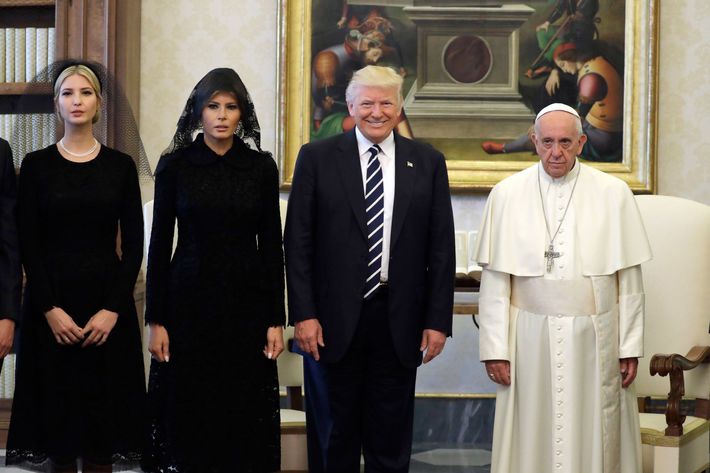
“The Pope and the Pagan” by Andrew Sullivan

Image
Their differences go way deeper than immigration policy. Photo: Evan Vucci/AFP/Getty Images

May 26, 2017 (nymag.com)

The contrast between a grim-faced pope and the grinning president at the Vatican this past week was not lost on the press or late-night TV. But they missed the mark, it seems to me. They noted merely that the two leaders profoundly disagree on, say, the dignity of immigrants, the sanctity of heterosexual marriage, or the urgency of tackling climate change. While these disagreements exist, they are, it seems to me, merely symptoms of a deeper chasm — the vast, empty, and dark space that lies between Donald Trump and anything resembling Christianity.

I don’t believe that there is a Christian politics as such — there is plenty of scope for disagreement about how to translate a Christian worldview into secular politics, or whether to translate it at all. But I do believe there is a Christian set of core human virtues and values, rooted in what we Catholics still think of as the truth, and that those virtues are rooted in the Gospels. We all fail the virtue test, of course, including yours truly, perhaps more than most. But Trump is a special case — because when you think about those virtues, it is very hard to see Donald Trump as anything but a living, breathing, shameless refutation of every single one.

Trump is not an atheist, confident yet humble in the search for a God-free morality. He is not an agnostic, genuinely doubtful as to the meaning of existence but always open to revelation should it arrive. He is not even a wayward Christian, as he sometimes claims to be, beset by doubt and failing to live up to ideals he nonetheless holds. The ideals he holds are, in fact, the antithesis of Christianity — and his life proves it. He is neither religious nor irreligious. He is pre-religious. He is a pagan. He makes much more sense as a character in Game of Thrones, a medieval world bereft of the legacy of Jesus of Nazareth, than as a president of a modern, Western country.

Blessed are the winners: for theirs is the kingdom of Earth.

Blessed are the healthy: for they will pay lower premiums.

Blessed are the rich: for they will inherit what’s left of the earth, tax-free.

Blessed are those who hunger and thirst for oil and coal: for they will be filled.

Blessed are the merciless: for they are so, so strong.

Blessed are the liars: for they will get away with it.

Blessed are the war-makers: for they will be called very, very smart.

Blessed are those who support you regardless: for theirs is the Electoral College.

Blessed are you when others revile you and investigate you and utter all kinds of fake news about you. Rejoice and be glad, for the failing press is dying.

The week Trump visited the Vatican, a transcript of his April 29 phone call with the president of the Philippines, Rodrigo Duterte, leaked. In it, Trump tells Duterte that his extrajudicial murders of hundreds suspected of being in the drug trade was “an amazing job.” Trump’s proposed budget, released this week, would eviscerate basic support for the poor in order to reward the already stupendously superrich, and would lay waste to the natural world so that our collective wealth, already greater than any country’s in human history, could be goosed some more. His party’s health-care plan would throw 23 million people off their insurance, even as he pretends it will cover everyone. Every pillar of Trump’s essential character is a cardinal sin for Christians: lust, gluttony, greed, envy, anger, and pride. We are all guilty of these, of course, but there is in Trump a centrality to them, a shame-free celebration of them, that is close to unique in the history of the American presidency. I will never understand how more than half of white Catholics could vote for such a man, or how the leadership of the church could be so terribly silent when such a monster stalks the earth.

Then there was his choice to visit Saudi Arabia as his first foreign trip. Of all the countries! Most presidents have begun their foreign excursions with Mexico and Canada, democratic neighbors and trading partners. Not Trump. He picked a gruesome, militarized, misogynist dictatorship, that makes Margaret Atwood’s Gilead look like a feminist playground. It is a country that imports millions of foreign workers in what amounts to near-slavery conditions and that refuses to cooperate in efforts to restrain human trafficking. In a week when extreme Sunni terrorism claimed yet more lives in Manchester, Trump visited the country that was central to spreading Wahhabist ideology and Salafist theology throughout the world in the first place, that funded the precursor to ISIS, that denies minimal freedom of religion, and that gave us the perpetrators of 9/11. While Obama prudently leveraged the Shia-Sunni conflict by engaging Iran as well as the Sunni states, Trump has returned to the pro-Sunni and pro-Israeli playbook.

This was particularly weird on the same weekend that Iran — the focus of Trump’s ire — actually held an election, in which both men and women voted. Yes, of course, the choices were constrained by Tehran’s theocracy —but the reelection victory of Rouhani, the architect of the nuclear deal, was striking. Seventy percent of the country turned out, and Rouhani won by a near-20-point margin against his hard-line opponent. He has a mandate for more liberalization, and picked up momentum in the final weeks of the race by emphasizing more liberal themes. This is, of course, Obama’s long game vindicated. The former president gambled that by engaging Iran and getting a nuclear deal, he could buttress the resistance movement that fueled the Green Revolution, and slowly pull Iran back into a more moderate path. While the mullahs’ grip holds, it’s remarkable how successful Obama’s strategy has turned out to be:

Despite controlling most unelected councils, the conservative clerics and Revolutionary Guard commanders have suffered a string of political defeats, starting with Mr. Rouhani’s election in 2013. That led to direct talks with their archenemy, the United States, and ultimately to the nuclear deal, which they opposed. Then moderate and reformist candidates made strong gains in last year’s parliamentary elections.

Among the more profound shifts in Iran under Rouhani has been the opening up of superfast internet access, giving ordinary Iranians instant exposure to the West. Can you imagine an election in Saudi Arabia much less one in which women were allowed to vote and the internet operated as a key pillar of an open media? And the potential for further change only opens up further as the 78-year-old Supreme Leader faces mortality.

Of course, the U.S. relationship with the Saudis is worth keeping; and the arms sales are lucrative. I’m a realist. But to throw the American lot entirely in with the Sunnis in the regional Sunni-Shiite war, to embrace the Saudis so openly in Trump’s first trip abroad, to effectively deepen the U.S. involvement in the brutal assault on Yemen that the Saudis have launched, and to punish Iran for its internal liberalization and adherence to the nuclear deal makes absolutely no sense to me. Yes, it serves Israel’s interests, which is why Netanyahu is happy. It enables him to isolate Israel’s key rival in the region, while he further entrenches Israel’s occupation of the West Bank. But it is not at all clear it serves America’s.

On May 31, 1982, this magazine published the first report on “a mysterious new disease” that was afflicting gay men in New York City. Earlier this month, 35 years later, the BBC reported on a new study in the Lancet that found that an HIV-positive 20-year-old who started anti-retroviral treatment in the past decade can now be expected to live for 78 years — indistinguishable from a normal life span. From a survival rate of a few months or even weeks after diagnosis in the early 1980s, we have finally arrived at the effective end not just of a plague but of an illness.

This is the kind of news, of course, that never gets to be news. It’s one of the greatest success stories in the history of human medicine — the first successful checking of a sophisticated retrovirus — and yet few noted this landmark moment. But a landmark it is. In the mid-1990s, I was taking up to 30 pills a day. Now I take two — with far fewer side effects. The credit for this goes to those activists who refused to give in to complacency, to the scientific and academic researchers who pioneered deep research, to the doctors who persevered through unimaginable loss, and, yes, to the evil drug companies who formulated every single one of the treatments, and saved hundreds of thousands of lives. I remember when I was privileged to write an essay marking the end of the plague experience, in 1996 — and was subjected to a tsunami of criticism, denial, and hostility for pointing out the now-established empirical truth. Good news is often first rejected, then taken for granted, and then finally forgotten. And this, of course, is the ultimate irony. Gay men in their 20s have no idea of what happened in their own communities only 25 years ago — and they care even less.

Last August’s Carnival Week theme in Provincetown — one of the enclaves utterly devastated by the virus a few decades ago — was, I kid you not, “Back to the ’80s.” It was as if a Jewish community decided to put on a parade whose theme was “Back to the ’30s.” And almost no one even noticed. Gay men do not have gay biological parents, and so the usual ways in which history is remembered — the passing down of memories through the generations within families — are weirdly absent. The AIDS epidemic is as real to today’s gay 20-somethings as, say, the American Civil War. Maybe this is a good thing — it prevents trauma being passed down as well. But it also stings to remember the faces of the dead and the trauma of the survivors and know that almost none of this matters to gay men any more.

“Always Forget.” It’s a strange moniker for a community that only a couple of decades ago was in an existential crisis. Perhaps it’s a mercy that the dead are no longer here to note the callowness of it all.

See you next Friday.

(Contributed by Bruce King.)

“Is Intersectionality a Religion?” by Andrew Sullivan

Image
Middlebury College students turn their backs to Charles Murray during his lecture on March 2, 2017. Photo: Lisa Rathke/AP

March 10, 2017 (nymag.com)

Here’s the latest in the assault on liberal democracy. It happened more than a week ago, but I cannot get it out of my consciousness. A group of conservative students at Middlebury College in Vermont invited the highly controversial author Charles Murray to speak on campus about his latest book, Coming Apart. His talk was shut down by organized chanting in its original venue, and disrupted when it was shifted to a nearby room and livestreamed. When Murray and his faculty interlocutor, Allison Stanger, then left to go to their car, they were surrounded by a mob, which tried to stop them leaving the campus. Someone in the melee grabbed Stanger by the hair and twisted her neck so badly she had to go to the emergency room (she is still suffering from a concussion). After they escaped, their dinner at a local restaurant was crashed by the same mob, and they had to go out of town to eat.

None of this is very surprising, given the current atmosphere on most American campuses. And protests against Murray are completely legitimate. The book he co-authored with Harvard professor Richard Herrnstein more than 20 years ago, The Bell Curve, included a chapter on empirical data showing variations in the largely overlapping bell curves of IQ scores between racial groups. Their provocation was to assign these differences to both the environment and genetics. The genetic aspect could be and was exploited by racists and bigots.

I don’t think that chapter was necessary for the book’s arguments, but I do believe in the right of good-faith scholars to publish data — as well as the right of others to object, critique, and debunk. If the protesters at Middlebury had protested and disrupted the event for a period of time, and then let it continue, I’d be highly sympathetic, even though race and IQ were not the subject of Murray’s talk. If they’d challenged the data or the arguments of the book, I’d be delighted. But this, alas, is not what they did. (I should add up-front that I am friends with both Murray and Stanger — having edited a symposium on The Bell Curve in The New Republic over two decades ago, and having known Allison since we were both grad students in government at Harvard.)

But what grabbed me was the deeply disturbing 40-minute video of the event, posted on YouTube. It brings the incident to life in a way words cannot. At around the 19-minute mark, the students explained why they shut down the talk, and it helped clarify for me what exactly the meaning of “intersectionality” is.

“Intersectionality” is the latest academic craze sweeping the American academy. On the surface, it’s a recent neo-Marxist theory that argues that social oppression does not simply apply to single categories of identity — such as race, gender, sexual orientation, class, etc. — but to all of them in an interlocking system of hierarchy and power. At least, that’s my best attempt to define it briefly. But watching that video helps show how an otherwise challenging social theory can often operate in practice.

It is operating, in Orwell’s words, as a “smelly little orthodoxy,” and it manifests itself, it seems to me, almost as a religion. It posits a classic orthodoxy through which all of human experience is explained — and through which all speech must be filtered. Its version of original sin is the power of some identity groups over others. To overcome this sin, you need first to confess, i.e., “check your privilege,” and subsequently live your life and order your thoughts in a way that keeps this sin at bay. The sin goes so deep into your psyche, especially if you are white or male or straight, that a profound conversion is required.

Like the Puritanism once familiar in New England, intersectionality controls language and the very terms of discourse. It enforces manners. It has an idea of virtue — and is obsessed with upholding it. The saints are the most oppressed who nonetheless resist. The sinners are categorized in various ascending categories of demographic damnation, like something out of Dante. The only thing this religion lacks, of course, is salvation. Life is simply an interlocking drama of oppression and power and resistance, ending only in death. It’s Marx without the final total liberation.

It operates as a religion in one other critical dimension: If you happen to see the world in a different way, if you’re a liberal or libertarian or even, gasp, a conservative, if you believe that a university is a place where any idea, however loathsome, can be debated and refuted, you are not just wrong, you are immoral. If you think that arguments and ideas can have a life independent of “white supremacy,” you are complicit in evil. And you are not just complicit, your heresy is a direct threat to others, and therefore needs to be extinguished. You can’t reason with heresy. You have to ban it. It will contaminate others’ souls, and wound them irreparably.

And what I saw on the video struck me most as a form of religious ritual — a secular exorcism, if you will — that reaches a frenzied, disturbing catharsis. When Murray starts to speak, the students stand and ritually turn their backs on him in silence. The heretic must not be looked at, let alone engaged. Then they recite a common liturgy in unison from sheets of paper. Here’s how they begin: “This is not respectful discourse, or a debate about free speech. These are not ideas that can be fairly debated, it is not ‘representative’ of the other side to give a platform to such dangerous ideologies. There is not a potential for an equal exchange of ideas.” They never specify which of Murray’s ideas they are referring to. Nor do they explain why a lecture on a recent book about social inequality cannot be a “respectful discourse.” The speaker is open to questions and there is a faculty member onstage to engage him afterward. She came prepared with tough questions forwarded from specialists in the field. And yet: “We … cannot engage fully with Charles Murray, while he is known for readily quoting himself. Because of that, we see this talk as hate speech.” They know this before a single word of the speech has been spoken.

Then this: “Science has always been used to legitimize racism, sexism, classism, transphobia, ableism, and homophobia, all veiled as rational and fact, and supported by the government and state. In this world today, there is little that is true ‘fact.’” This, it seems to me, gets to the heart of the question — not that the students shut down a speech, but why they did. I do not doubt their good intentions. But, in a strange echo of the Trumpian right, they are insisting on the superiority of their orthodoxy to “facts.” They are hostile, like all fundamentalists, to science, because it might counter doctrine. And they shut down the event because intersectionality rejects the entire idea of free debate, science, or truth independent of white male power. At the end of this part of the ceremony, an individual therefore shouts: “Who is the enemy?” And the congregation responds: “White supremacy!”

They then expel the heretic in a unified chant: “Hey hey, ho ho! Charles Murray has got to go.” Then: “Racist, Sexist, Anti-gay. Charles Murray, Go away!” Murray’s old work on IQ demonstrates no meaningful difference between men and women, and Murray has long supported marriage equality. He passionately opposes eugenics. He’s a libertarian. But none of that matters. Intersectionality, remember? If you’re deemed a sinner on one count, you are a sinner on them all. If you think that race may be both a social construction and related to genetics, your claim to science is just another form of oppression. It is indeed hate speech. At a later moment, the students start clapping in unison, and you can feel the hysteria rising, as the chants grow louder. “Your message is hatred. We will not tolerate it!” The final climactic chant is “Shut it down! Shut it down!” It feels like something out of The Crucible. Most of the students have never read a word of Murray’s — and many professors who supported the shutdown admitted as much. But the intersectional zeal is so great he must be banished — even to the point of physical violence.

This matters, it seems to me, because reason and empirical debate are essential to the functioning of a liberal democracy. We need a common discourse to deliberate. We need facts independent of anyone’s ideology or political side, if we are to survive as a free and democratic society. Trump has surely shown us this. And if a university cannot allow these facts and arguments to be freely engaged, then nowhere is safe. Universities are the sanctuary cities of reason. If reason must be subordinate to ideology even there, our experiment in self-government is over.

Liberal democracy is suffering from a concussion as surely as Allison is.

Meanwhile, of course, President Trump continues his assault on the very same independent truth — in this case, significantly more frightening given his position as the most powerful individual on the planet. He too has a contempt for any facts that do not fit his own ideology or self-image. That’s why the lies he repeats are not just moments of self-interested dishonesty. They are designed to erode the very notion of an empirical reality, independent of his own ideology and power. They are an attack on reason itself. A fact-driven media has to be discredited as “fake news” if it challenges Trump’s agenda. Equally, a bureaucracy designed impartially to implement legislation has to be delegitimized, if its fact-based neutrality challenges Trump’s worldview. And so the “administrative state,” in Steve Bannon’s words, has to be “deconstructed.”

Likewise, a health-care bill must be passed through committee before an independent CBO can empirically score it. The overwhelming conclusion of climate scientists — that carbon is warming the Earth irreversibly — is simply denied by the new head of the EPA. The judiciary can have no legitimate, independent stance if it too counters the president’s interests. A judge who opposes Trump is a “so-called” judge. Equally, intelligence-gathering can have no validity if it undermines Trump’s interests. It suddenly becomes “intelligence.” It can be ignored. Worse, the intelligence agencies are maligned as inherently political, rather than empirical. Last week, Trump went even further, claiming, with no evidence, that the Justice Department colluded in a criminal wiretap with the previous president to target Trump’s candidacy in the last election. Maybe this was designed merely as a distraction from the accumulating lies of his campaign surrogates about their contacts with Russian officials. Maybe it was another temper tantrum from a man with no ability to constrain his emotions by reason. But I tend to think Peter Beinart’s take is closer to the mark. Trump was delegitimizing the Justice Department so that he can reject the conclusion of any investigation of his campaign’s ties to Russia as politically rigged:

No one lives on Mount Olympus. Government lawyers, judges and journalists are all fallible. They are all vulnerable to bias and self-interest. But prior presidents have generally given them the benefit of the doubt. Prior presidents have assumed, absent contrary evidence, that they are motivated by professional standards, not rank partisanship. Trump does not. He has questioned the integrity of Judge Gonzalo Curiel and of vast swaths of the press. And now he is preparing to question the integrity of the career officials investigating his Russia ties.

They are all corrupt. They are all agents of the opposition, part of the massive conspiracy to deny Trump his rightful triumph. And thus, the independent standards by which they judge his actions are a sham. There are no independent standards. There is only the truth that comes from Trump himself.

This is the vortex we are being led into by the most reckless, feckless, and malevolent president in this country’s history. It is a vortex where reality itself must subordinate itself to one political side; where facts are always instruments of power and nothing else; where our entire Constitution, designed to balance power against power to give truth and reason a chance, is being deliberately corroded from within. It’s been seven weeks. And the damage done to our way of life is already deep, and deepening.

Biblical Series IV: Adam and Eve: Self-Consciousness, Evil, and Death


I turned my attention in this lecture to the older of the two creation accounts in Genesis: the story of Adam and Eve. In its few short paragraphs, it covers:

1. the emergence of human self-consciousness;
2. mankind’s attendant realization of vulnerability, mortality, and death;
3. the origin of the capacity for willful evil, as the ability to exploit that newly-realized vulnerability;
4. the emergence of shame as a consequence of that realization;
5. the shrinking from divine destiny that occurred when shame emerged; and
6. the beginning of true history, with the self-conscious toil that life in history entails.

Impossible. Amazing. Breathtaking.

The only story that can perhaps match it in terms of impact per sentence is that of Cain and Abel, which we discuss in the next lecture: number five in this twelve part series.

Tickets for the next lecture(s) (and as for the rest of the series, as a whole) are available at http://jordanbpeterson.com/bible-series

Patreon: https://www.patreon.com/jordanbpeterson
Self Authoring: http://selfauthoring.com/
Jordan Peterson Website: http://jordanbpeterson.com/
Podcast: http://jordanbpeterson.com/jordan-b-p…
Reading List: http://jordanbpeterson.com/2017/03/gr…
Twitter: https://twitter.com/jordanbpeterson

“Carrie Fisher and Addiction” by Ryan Hampton

Addiction is a chronic disease. That’s what the Alcoholics Anonymous book says. It’s common knowledge in the recovery community that nobody is perfect. Relapse doesn’t make someone a saint or a sinner, but rather affirms the vulnerability that is part of addiction. Treatment doesn’t magically turn someone into a better, stronger person just because they put down their substance of choice. But it does teach them how navigate deadly cravings and be vigilant. Good treatment also teaches that there is no finish line: there is no “fine.” The chronic, recurring disease is just as deadly twenty years after the first day in remission.

But there are people who we hold up as incredible examples of what recovery can be. Carrie Fisher was one of them. She fought for her sanity and her recovery. She was leader of the Rebellion in the Star Wars movies, and she was the leader of our collective metaphoric rebellion. Those of us in long term recovery saw her speak for us, speak to us, and finally serve as a terrifying and tragic reminder of the unbelievable power of addiction. Addiction is a real-life Death Star: it kills indiscriminately and without warning or mercy.

When Carrie died unexpectedly last December, following a massive heart attack, the recovery community mourned along with everyone else. Carrie was an outspoken advocate for gay rights, mental health issues, and substance use disorder. She held nothing back, and was quick to fire off brutally witty remarks at people who criticized her. However, she also knew how to laugh at herself. Her humanity, hilarity, and honesty will forever be the gold standard for how to live in a world that’s often callous and cruel.

Her hilarious, touching books Wishful Drinking and Postcards From the Edge were many people’s introduction to Carrie’s salty side. We all knew her from Star Wars, but Carrie let us know that she was so much more than a bronze bikini. Every step of the way, her courage and vulnerability helped other people find their voice. She struggled with bipolar disorder, substance use disorder, and a crazy childhood. She navigated a rough divorce. Her honesty, especially for people like me, was lifesaving.

And her courage and conviction didn’t change over the years. Daisy Ridley, in a recent Vanity Fair interview, said that Carrie told her not to pay attention to what others thought of her: “You do you,” she said. “You should fight for your outfit. Don’t be a slave like I was.” In an industry that thrives on insecurity, Carrie was a light to so many. She banished stigma, fear, and uncertainty.

So, today’s news that the autopsy of her body found cocaine, heroin, and MDMA is more than heartbreaking. It’s a reminder that even our legends, the people we look up to as our heroes, are still vulnerable. Nobody is beyond the reach of substance use disorder, and time in recovery does not translate to immunity from relapse. Carrie’s tragic relapse and death can’t negate the incredible and groundbreaking advocacy she achieved, or the years of happiness, love, and light she brought to others when she was sober and stable.

It deeply saddens me that, as the news of Carrie’s autopsy hits the mainstream, they’ll only focus on the drugs. The substances in her system at the time of death. I’m sad that we’ll be subjected to yet another tired analysis of what may have killed her. They’ll make this about her relapse. No doubt a few “close friends” will come forward, to share the scandalous details of her drug use in those last days. They’ll undermine Carrie’s dedication, and her decades of work, calling everything into question. We cannot let that happen. Our Princess is too precious. She fought too hard.

When actor Philip Seymour Hoffman died of a heroin overdose in 2014 after 20 years of good sobriety and long term recovery. His tragic death was hyped by the media, who said he’d finally “succumbed to his demons.” The ignorance of substance use, and long term recovery, blotted out over two decades of life. It wasn’t Philip’s successes that people talked about: it was his last minute failure.

I won’t let that happen to Carrie. You know why? Because relapse is not the point, and I want to make it abundantly clear that Carrie was so much more than her substance use. Saying that she “lost the battle with addiction” totally overlooks not only the amazing amount of good she brought to the world, but also perpetuates a deadly stereotype about substance use.

Relapse is part of substance use. Being drug and alcohol free for a period of time doesn’t mean that you’re cured, or that you’re not still susceptible to the problems that people face when they’re in early recovery. Time doesn’t eliminate the risk. We’re so quick to forget that, and treat people with long term recovery as though they’re “cured.” There is no cure for this illness. Even the strongest among us are vulnerable to relapse.

In a statement released two days ago, Carrie’s daughter Billie Lourd said, “She talked about the shame that torments people and their families confronted by these diseases. I know my Mom, she’d want her death to encourage people to be open about their struggles. Seek help, fight for government funding for mental health programs.” It would be truly tragic if Carrie’s advocacy and progress were eclipsed by the way she died. Instead, it should show us that long term recovery demands eternal vigilance: it doesn’t mean “I’m OK now.” That doesn’t exist for people with our condition.

Carrie taught people to hold their head high. She said that recovery and mental illness is nothing to be ashamed of: we have to move forward. We have to help each other. And we have to be fearless, and show the world who we really are.

The official cause of death on Carrie’s death certificate is sleep apnea―-not substances. It will be listed as “undetermined.” I pray that we remember Carrie’s lifetime of advocacy, love, and outspoken humor and let her rest in peace. May the Force be with you, Princess. Always.

Ryan Hampton is an outreach lead and recovery advocate at Facing Addiction, a leading nonprofit dedicated to ending the addiction crisis in the United States.

(Contributed by Robert McEwen, H.W., M.)

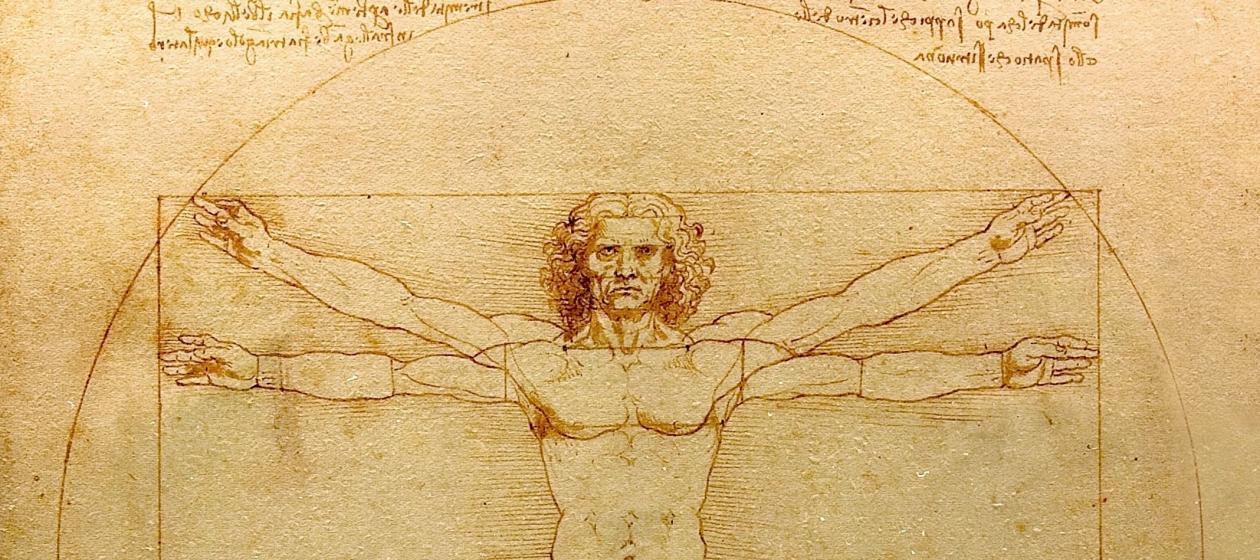
“Are geniuses born or made?” by Claudia Kalb

Consciousness, spirituality, biography, sexuality, androgyny, futurism, space, the arts, science, astrology, democracy, humor, books, movies and more