

Monthly Archives: February 2017
Anatole France on love

Scientists Find First Observed Evidence That Our Universe May Be a Hologram

By Paul Ratner (BigThink.com)
An international study claims to have found first observed evidence that our universe is a hologram.
What is the holographic universe idea? It’s not exactly that we are living in some kind of Star Trekky computer simulation. Rather the idea, first proposed in the 1990s by Leonard Susskind and Gerard ‘t Hooft, says that all the information in our 3-dimensional reality may actually be included in the 2-dimensional surface of its boundaries. It’s like watching a 3D show on a 2D television.
“Imagine that everything you see, feel and hear in three dimensions (and your perception of time) in fact emanates from a flat two-dimensional field. The idea is similar to that of ordinary holograms where a three-dimensional image is encoded in a two-dimensional surface, such as in the hologram on a credit card. However, this time, the entire universe is encoded,“ explained the study’s co-author Professor Kostas Skenderis of Mathematical Sciences at the University of Southampton.
That’s still pretty mind-bending.
The new study involved a team of theoretical physicists and astrophysicists from the U.K., Canada and Italy who studied the cosmic microwave background and discovered enough irregularities there that pointed to the holographic theory as a legitimate rival to the theory of cosmic inflation, the way these anomalies are usually explained.
The new analysis by the scientists was made possible by the advancement of telescope and sensing tech that can look for information in the “white noise” or microwaves that remain from the early universe right after the Big Bang.
By studying and mapping data from the Planck space telescope, the team found that the observational data they found was largely predictable by the math of holographic theory.
“Holography is a huge leap forward in the way we think about the structure and creation of the universe. Einstein’s theory of general relativity explains almost everything large scale in the universe very well, but starts to unravel when examining its origins and mechanisms at quantum level. Scientists have been working for decades to combine Einstein’s theory of gravity and quantum theory. Some believe the concept of a holographic universe has the potential to reconcile the two. I hope our research takes us another step towards this,” added Professor Skenderis.

A sketch of the timeline of the holographic Universe where time runs from left to right. The holographic phase (far left) is where the image is blurry because space and time haven’t been defined yet. After this phase comes to a close, the Universe goes into a geometric phase, which can be described by Einstein’s equations. Credit: Paul McFadden
The implications of this study could lead the scientists to improved understanding of how time and space were created.
“When we go into this concept of holography, it’s a new way of thinking about things. Even the scientists who worked on this for the past 20 years don’t have the right tools or the right language to describe what’s going on,” said Skenderis. “It’s a new paradigm for a physical reality.”
The study’s lead author, Niayesh Afshordi of the Perimeter Institute and the University of Waterlo, expressed a similarly positive sentiment about their finding:
“I would argue this is the simplest theory of the early universe. And so far, this is as simple as it gets. And it could help explain everything we see,” Afshordi said.
You can read the paper by the researchers, from the University of Southampton (UK), University of Waterloo (Canada), Perimeter Institute (Canada), INFN, Lecce (Italy) and the University of Salento (Italy) here in the journal Physical Review Letters.
Cover photo: Satellites, planes and comets transit across the night sky under stars that appear to rotate above Corfe Castle on August 12, 2016 in Corfe Castle, United Kingdom. The Perseids meteor shower occurs every year when the Earth passes through the cloud of debris left by Comet Swift-Tuttle, and appear to radiate from the constellation Perseus in the north eastern sky. (Photo by Dan Kitwood/Getty Images)
Superintelligence: Science or Fiction? | Elon Musk & Other Great Minds
by
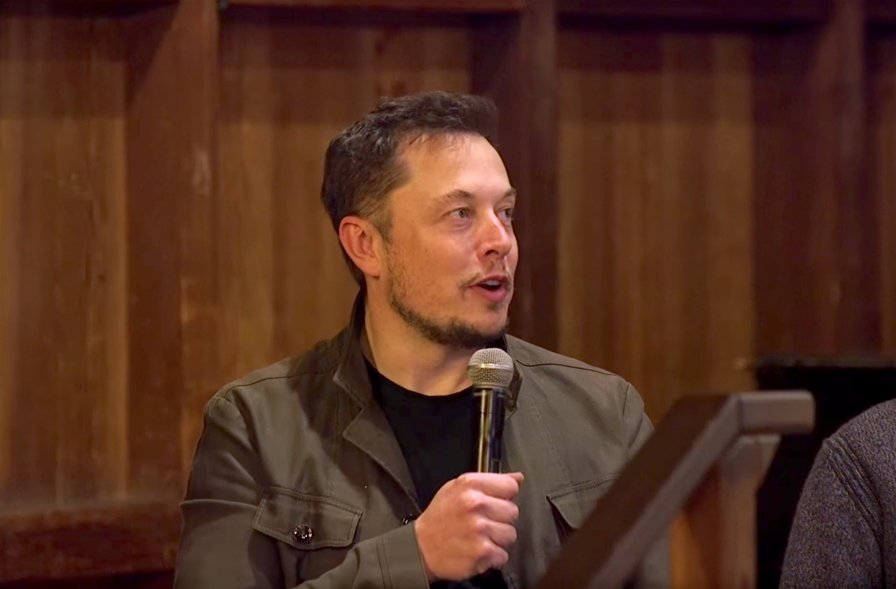
A fascinating conference on artificial intelligence was recently hosted by the Future of Life Institute, an organization aimed at promoting “optimistic visions of the future”. The conference “Superintelligence: Science or Fiction?” included such luminaries as Elon Musk of Tesla Motors and SpaceX, futurist Ray Kurzweil, Demis Hassabis of MIT’s DeepMind, neuroscientist and author Sam Harris, philosopher Nick Bostrom, philosopher and cognitive scientist David Chalmers, Skype co-founder Jaan Tallinn, as well as computer scientists Stuart Russell and Bart Selman. The discussion was led by MIT cosmologist Max Tegmark.
The group touched on a number of topics about the future benefits and risks of coming artificial superintelligence, with everyone generally agreeing that it’s only a matter of time before AI becomes ubiquitous in our lives. Eventually, AI will surpass human intelligence, with the risks and transformations that such a seismic event would entail.
Elon Musk has not always been an optimistic voice for AI, warnings of its dangers to humanity. But here he sounds more muted about the threat. He sees the AI future as inevitable, with dangers to be mitigated through government regulation, as much as he doesn’t like the idea of them being a “bit of a buzzkill”.
He also brings up an interesting perspective that our fears of the technological changes the future will bring are largely irrelevant. According to Musk, we are already cyborgs by utilizing “machine extensions” of ourselves like phones and computers.
“By far you have more power, more capability, than the President of the United States had 30 years ago. If you have an Internet link you have an article of wisdom, you can communicate to millions of people, you can communicate to the rest of Earth instantly. I mean, these are magical powers that didn’t exist, not that long ago. So everyone is already superhuman, and a cyborg,” says Musk [at 33:56].
He sees humans as information-processing machines that pale in comparison to the powers of a computer. What is necessary, according to Musk, is to create a greater integration between man and machine, specifically altering our brains with technology to make them more computer-like.
“I think the two things that are needed for a future that we would look at and conclude is good, most likely, is, we have to solve that bandwidth constraint with a direct neural interface. I think a high bandwidth interface to the cortex, so that we can have a digital tertiary layer that’s more fully symbiotic with the rest of us. We’ve got the cortex and the limbic system, which seem to work together pretty well – they’ve got good bandwidth, whereas the bandwidth to additional tertiary layer is weak,” explained Musk [at 35:05]
Once we solve that issue, AI will spread everywhere. It’s important to do so because, according to Musk, if only a smaller group would have such capabilities, they would become “dictators” with “dominion over Earth”.
What would a world filled with such cyborgs look like? Visions of Star Trek’s Borg come to mind.
Musk thinks it will be a society full of equals:
“And if we do those things, then it will be tied to our consciousness, tied to our will, tied to the sum of individual human will, and everyone would have it so it would be sort of still a relatively even playing field, in fact, it would be probably more egalitarian than today,” points out Musk [at 36:38].
The whole conference is immensely fascinating and worth watching in full. Check it out here:
Mitch Hedberg on ducks (from Zen Moments)

Thane on eros
George Bernard Shaw on life eternal
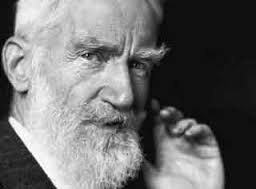
From George Bernard Shaw’s Back to Methuselah:
“The day will come when there will be no people, only thought. And that will be life eternal.”
Full text online: https://archive.org/stream/backtomethuselah13084gut/13084.txt
“The Way and Its Power: Lao Tzu’s Tao Te Ching and Its Place in Chinese Thought” by Lao Tzu (Author), Arthur Waley (Translator)
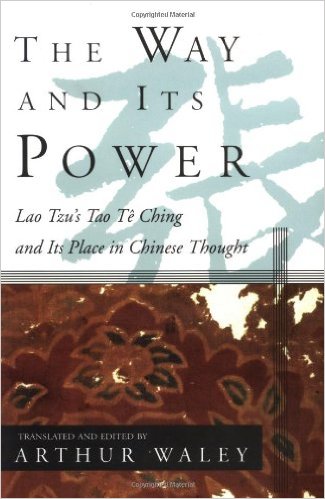
Arthur Waley’s brilliant and definitive translation of one of the foremost of all mystical books, Lao Tzu’s Tao Te Ching, has become a modern classic in its own right. Unlike previous translations, it is founded not on the medieval commentaries but on a close study of all the early Chinese literature, and it provides a singular example of authoritative scholarship skillfully blended with brilliant, precise writing. In his introduction, Dr. Waley gives an extensive scholarly account of Chinese thought down to the end of the third century B.C. Here, the author presents a full picture of Chinese prehistory, early philosophy, and literature, showing the original, lofty conception of Taoism before the gradual corruption through the course of centuries, tracing this conflict of philosophies and its background of politics.
Amazon.com
“Mind: A Journey to the Heart of Being Human” by Daniel J. Siegel M.D.
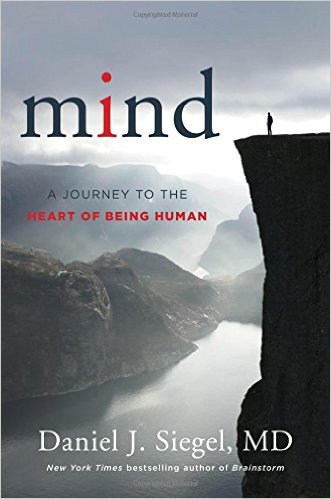
A scientist’s exploration into the mysteries of the human mind.
What is the mind? What is the experience of the self truly made of? How does the mind differ from the brain? Though the mind’s contents―its emotions, thoughts, and memories―are often described, the essence of mind is rarely, if ever, defined.
In this book, noted neuropsychiatrist and New York Times best-selling author Daniel J. Siegel, MD, uses his characteristic sensitivity and interdisciplinary background to offer a definition of the mind that illuminates the how, what, when, where, and even why of who we are, of what the mind is, and what the mind’s self has the potential to become. MIND takes the reader on a deep personal and scientific journey into consciousness, subjective experience, and information processing, uncovering the mind’s self-organizational properties that emerge from both the body and the relationships we have with one another, and with the world around us. While making a wide range of sciences accessible and exciting―from neurobiology to quantum physics, anthropology to psychology―this book offers an experience that addresses some of our most pressing personal and global questions about identity, connection, and the cultivation of well-being in our lives. 55 illustrations.
Amazon.com. Recommended by Hanz Bolen, H.W., M.
67,000 Dreams
by Jung, C. G. (Carl Gustav), 1875-1961; British Broadcasting Corporation. Television Service; Time-Life Films
Published 1972
Depicts the travels of psychologist Carl Gustav Jung and explains the development of his major theories and concepts. Discusses the collective unconscious, the psychology of types, the psyche in space and time and the importance of myth and intuition to the complete man. Part of a series that examines Jung’s life and work, presented by Laurens van der Post, a friend of Jung’s for 15 years.
Shows how a married couple deals with the birth of their first child. Examines some of the problems and anxieties which can accompany first births in a hospital environment.
Run time 31:14
Producer Jung, C. G. (Carl Gustav), 1875-1961
Production Company BBC Worldwide – British Broadcasting Corporation
Link to movie: https://archive.org/details/67000dreams