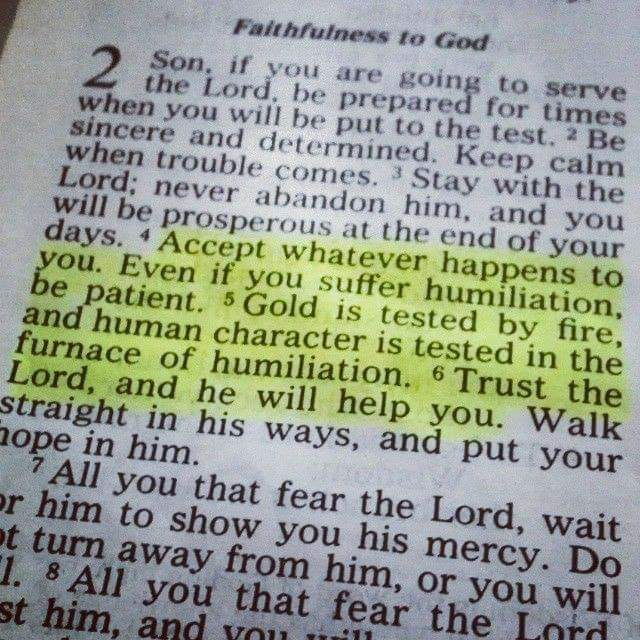
LOWELL, MA—Doing her best to follow her therapist’s advice for dealing with stressful situations, area woman Holly Debling reportedly reminded herself Tuesday not to catastrophize after she spotted four skeletal horsemen on the horizon. “Okay, Holly, remember: Just because a great trumpet has sounded at the arrival of four unearthly riders, that doesn’t necessarily mean something bad is going to happen,” said Debling, who, as a great cloud of locusts poured forth from one horseman’s mouth and darkened the skies, added that keeping a cool head would be helpful whether or not the seas and rivers turning to blood became an issue for her. “I’m always assuming the worst and freaking out over nothing, and for all I know, a gaunt horseman pulling back his cloak to reveal a void of swirling darkness could be a good thing. Like, maybe he’s a harbinger of nice weather. Yeah. And my eyes are probably just bleeding because they’re dry. Panicking doesn’t do me any good even if these horsemen do ultimately mean a great earthquake will move the mountains from their places and the stars will plummet to the earth, so I might as well just try to stay calm.” Debling reportedly made a mental note to ask her doctor about trying the medication Ativan after the sky split open and hail and fire rained down upon her.
“When your life awakens and you begin to sense the destiny that brought you here, you endeavor to live a life that is generous and worthy of the blessing and invitation that always calls you.”
John O’Donohue (1956-2008) Irish Writer
AN OPPORTUNITY FOR DAILY REFLECTION BROUGHT TO YOU BY THE SCHOOL OF PRACTICAL PHILOSOPHY
The Astrology Podcast • Apr 29, 2025 • A look at the astrology forecast for May of 2025, with astrologers Chris Brennan and Austin Coppock. May opens with the tense Mars-Pluto opposition separating but still in close alignment, and this gets reactivated when Pluto stations in Aquarius and the Moon swings in and acts as a trigger at various points. Venus returns to Aries where it retraces its steps and begins the process of fully winding down its long retrograde period, and Mars is similarly finishing up its broader retrograde cycle as it makes its way through Leo. The most important transits this month is that Saturn moves into the sign of Aries on May 24, and this marks the beginning of a three year transit through this sign, where it will meet up with Neptune this summer and early next year. The month ends with an auspicious stellium of planets all meeting up in Gemini, which provides us with one of the best electional charts of the year. We spend the first hour of the episode talking about the astrology of news and events that have occurred since our last forecast, and then in the second half we transition into talking about the astrology of May. This is episode 488 of The Astrology Podcast: https://theastrologypodcast.com/2025/…
Experts say there isn’t a single front-runner, but several names have been cited as indications of which direction the Roman Catholic Church might take.
Cardinals attended the funeral of Pope Francis on Saturday at St. Peter’s Basilica.Credit…James Hill for The New York Times
Guesses about who the next Roman Catholic pope will be often prove inaccurate. Before the selection of Pope Francis in 2013, many bookmakers had not even counted him among the front-runners.
This time, predictions are further complicated because Francis made many appointments in a relatively short amount of time during his tenure, diversifying the College of Cardinals and making it harder to identify movements and factions within the group.
Still, discussion of potential names began long ago behind the Vatican’s walls, and observers are predicting several possibilities.
Some are seen as likely to build on Francis’ progressive agenda, while others would represent a return to a more traditional style. Experts also suggest that the College might favor a prelate with experience in the complexities of international relations.
Pierbattista Pizzaballa, 60, an Italian who is the Vatican’s top official for Middle East affairs, is considered a possible front-runner. Although he became a cardinal only in 2023, his experience in one of the world’s most heated conflict zones helped him rise to prominence.
ImageCardinal Pierbattista Pizzaballa in the West Bank city of Bethlehem in December. He has spent most of his career in the Middle East.Credit…Pool photo by Alaa Badarneh
Cardinal Pizzaballa would be the first Italian pope since John Paul I in 1978, but experts say he is also considered an international figure and removed from Vatican politics, having spent much of his career in Jerusalem.
He has also generally steered clear of polemics about doctrine, which experts say could help him secure the necessary two-thirds majority in the College of Cardinals, although some think he may be considered too young for the role.
Pietro Parolin
Cardinal Pietro Parolin, 70, has been Pope Francis’ second-in-command since 2013, when Francis made him secretary of state. In that role, the cardinal is in charge of overseeing internal church affairs and guiding foreign policy.
A soft-spoken Italian and mild-mannered centrist, Cardinal Parolin is deeply familiar with the Curia, the church’s central administration, as well as the Vatican’s vast international network, having served for over 20 years as a diplomat and under secretary at the Vatican-based body that oversees its international relations.
ImageCardinal Pietro Parolin addressing the United Nations General Assembly in New York last September.Credit…Dave Sanders for The New York Times
Fluent in English, French, Italian and Spanish, he has spoken at international conferences on the Israeli-Palestinian conflict, climate change and human trafficking.
He is also an expert on Asia, and Vatican watchers consider him the mastermind of the progress the Vatican has made in recent years on building relations with China and Vietnam.
Fridolin Ambongo
Cardinal Fridolin Ambongo, 65, the archbishop of Kinshasa, the capital of the Democratic Republic of Congo, has been considered a possible contender since Francis made him a cardinal in 2019.
Pope Francis had long urged the Catholic Church to “go to the peripheries,” meaning communities in Africa and Asia, where the church also is the most vibrant. One persistent question has been when the church might reinforce that commitment by choosing a pope from Africa. Catholics make up about 18 percent of the population of the continent and generate more seminarians than any other part of the world.
ImageCardinal Fridolin Ambongo celebrating a Mass organized at the Notre Dame du Congo Cathedral in Kinshasa in February.Credit…Hardy Bope/Agence France-Presse — Getty Images
Pope Francis, an Argentine, was the first non-European to lead the church since 741. Even so, Francis was from a family with Italian roots.
Yet there is a certain paradox involved in choosing any successor from Africa. While it would be a break from tradition, the Catholic hierarchy in Africa is among the most conservative.
Cardinal Ambongo was close to Pope Francis, one of just nine members of an advisory group known as the Council of Cardinals. But the cardinal led the opposition to Francis’ 2023 ruling that the church should bless homosexual couples.
Luis Antonio Tagle
Luis Antonio Tagle, 67, a liberal-leaning cardinal from the Philippines whom commentators have dubbed the “Asian Francis,” has for years been deemed a front-runner to be pope.
He was made a cardinal by Pope Benedict XVI in 2012 and would be the first pope from Southeast Asia.
An ally of Francis, the often smiling Cardinal Tagle goes by the nickname Chito. His highly personable approach is in line with Francis’ attention to the poor and those in need in developing countries, where he has lived and worked.
Cardinal Tagle was widely considered one of the most promising candidates in the 2013 conclave but seemed too young for the job at the time.
Cardinal Tagle has dealt with some of the church’s most divisive issues, like the inclusion of gay people and whether to give communion to divorced and remarried Catholics.
He served as president of the church’s international gathering on the family in 2014, and of a general assembly on the same topic the following year, in which prelates agreed on a more inclusive approach by the church, although they remained opposed to same-sex marriage.
Matteo Zuppi
Cardinal Matteo Maria Zuppi of Italy, 69, stands out among the contenders who reflect Francis’ view that the church should be representative of and support the poor.
Francis promoted the progressive native of Rome to the rank of cardinal in 2019 and assigned him several important missions. Some experts speculate that Francis would probably have favored him as his successor, although the pope never weighed in publicly on the matter.
Cardinal Zuppi is closely tied to Sant’Egidio, a Catholic community known for its service to the poor and conflict resolution.
ImageCardinal Matteo Zuppi welcomed parishioners after celebrating Mass at the Cathedral of the Immaculate Conception in Moscow in 2023.Credit…Alexander Zemlianichenko/Associated Press
Vatican watchers say the group became an increasingly important lobby under Francis, and experts suspect that the cardinal’s closeness to the powerful community could help him obtain votes. But that link has also raised concerns that, if elected pope, he would be overly influenced by the group.
In 2015, Francis named him archbishop of Bologna, one of the most important posts in Italy. There, Don Matteo, as he is known, continued to work with poor people and migrants. “Welcoming migrants is a historic challenge for Europe,” he has said. “Christ invites us to not turn away.”
And in recent years Francis appointed Cardinal Zuppi to the key role of envoy for Ukraine matters.
He has also been welcoming to L.G.B.T. Catholics, writing the preface for the Italian edition of the Rev. James Martin’s 2017 book, “Building a Bridge,” which called for the church to find new pastoral ways of ministering to gay people.
Peter Erdo
Cardinal Peter Erdo of Hungary, 72, an expert on canon law, is expected to be a front-runner among cardinals who long for a return to the conservatism of Popes John Paul II and Benedict XVI.
John Paul II named the cleric archbishop of Esztergom-Budapest in 2002, and the following year gave him a cardinal hat, making him — at 50 — the youngest cardinal at the time.
ImageCardinal Peter Erdo celebrating midnight Christmas Mass in Budapest last year.Credit…Attila Kovacs/EPA, via Shutterstock
Cardinal Erdo is considered an astute diplomat, able to build bridges with Catholics in Latin America and Africa and good at reaching out to other religious groups. He has frequently attended Holocaust memorials, and Jewish leaders say his support has been crucial at a time of the rise of the far right and growing antisemitism in Hungary.
He is known to many of his Western counterparts, having served from 2006 to 2016 as president of the Council of the Bishops’ Conferences of Europe. He has also written several books and speaks or understands English, French, German, Italian, Russian and Spanish, giving him linguistic prowess to serve a global flock.
He has spoken out against allowing divorced Catholics to receive communion and against taking in migrants.
In a 2019 book-length interview with Robert Moynihan, the founder and editor of Inside the Vatican magazine, Cardinal Erdo spoke of a need to “guard the flame” of traditional Christian faith in an increasingly secular world.
Anders Arborelius
Archbishop Anders Arborelius of Stockholm, 75, who converted to Catholicism at age 20, is Sweden’s first Catholic cardinal.
ImageAnders Arborelius became a cardinal in 2017.Credit…Alberto Pizzoli/Agence France-Presse — Getty Images
Although Sweden was once predominantly Lutheran and is now largely secular, it is one of few European countries where the Roman Catholic Church has grown in recent years. Francis’ elevation of the cardinal in 2017 was seen as another attempt to reach out to countries where Catholics represent a minority.
In a recent interview, Cardinal Arborelius said the biggest challenges facing the church were building bridges in a polarized world, giving greater influence to women within the church, and helping families pass on the faith.
He also warned of political currents potentially dividing the church. “It can be a danger in some parts of the church that you get divided on various issues,” he said. “We should not form parties within the Catholic Church.”
Cardinal Arborelius, who belongs to the Carmelite religious order, has — like Francis — expressed support for migrants. But he voiced opposition to blessing same-sex couples. In 2006, he said that a decision by the Lutheran Swedish Church to allow such blessings would make dialogue between it and the Roman Catholic Church more difficult.
Emma Bubola is a Times reporter based in Rome.
Elisabetta Povoledo is a Times reporter based in Rome, covering Italy, the Vatican and the culture of the region. She has been a journalist for 35 years.
Gaia Pianigiani is a reporter based in Italy, covering breaking news across Italy and Europe.
Neil MacFarquhar has been a Times reporter since 1995, writing about a range of topics from war to politics to the arts, both internationally and in the United States.
A version of this article appears in print on , Section A, Page 14 of the New York edition with the headline: Reviewing the Contenders To Become the Next Pope. Order Reprints | Today’s Paper | Subscribe
You thought that the world was already at a tipping point? In May 2025, things are truly getting real – with Saturn, the planet of reality and structure, entering Aries.
Saturn is officially crossing the threshold – from the end to the beginning of the zodiac – following in Neptune’s footsteps.
Neptune in Aries has come with a storm – breaking old patterns, shaking things out, creating chaos – but also seeding new potentials, inspiring bold visions, and testing new frontiers.
With Saturn entering Aries, things are getting real, folks. Saturn’s role in astrology IS to make things real; so this is pretty much a point of no return. Whatever is seeded this month sets the foundations for many, many decades to come.
We cannot stress enough the importance of this ingress – because of its extraordinary rarity and “0 degrees/new chapter” quality.
This is a radical new beginning. This is uncharted territory – a space where we might feel lost without a map, but also a space where the brave and the visionary will chart the course ahead.
Neptune and Saturn are joining forces at the very first degree of the zodiac – 0° Aries, the cosmic ‘reset’ button. The world is about to shift in ways we can’t even imagine yet. These are interesting times to be alive, to say the least.
While Saturn in Aries is the transit highlight of the month, there are other important shifts and developments that create a clearer picture of what’s in the making.
Let’s dive into the most important transits of the month:
May 5th, 2025 – Pluto Goes Retrograde
On May 5th, 2025, Pluto goes retrograde at 3° Aquarius. The foundations of this – fairly new – Aquarian paradigm are now up for a review!
Pluto in Aquarius’ agenda is to shift the power (Pluto) away from the ‘authorities/elite’ (Capricorn) and democratize it (Aquarius). But this transition phase, this passing of the torch, is not coming without challenges.
Pluto’s retrograde at 3° is an opportunity to pause and reflect – and to make the necessary adjustments to align with what has emerged since November last year, when Pluto ingressed into the sign.
May 10th, 2025 – Mercury Enters Taurus
On May 10th, 2025, Mercury enters Taurus.
Mercury is still processing “what the heck just happened” after spending a couple of intense months in Pisces and Aries, retrograding back and forth, conjuncting Neptune, and navigating all that Pisces stellium energy.
Over the past months, Mercury has received critical information about the transition from the Neptune-in-Pisces era into the Neptune-in-Aries era.
And now, as Mercury picks up speed, it’s ready to proceed with the “implementation phase” – inviting us to ground the insights we’ve received and take the next practical steps.
Taurus is the builder of the zodiac, so Mercury in Taurus will help us build structures, stabilize ideas, and lay down the mental foundations needed to move forward with our new plans.
May 12th, 2025 – Full Moon In Scorpio
On May 12th, 2025, we have a Full Moon at 22° Scorpio. The Full Moon is opposite Uranus (at 26° Taurus) and trine Saturn (at 28° Pisces).
The Full Moon in Scorpio completes what the intense New Moon in Taurus (two weeks prior) had initiated. The change is now absorbed, and the disruption integrated.
What once felt like chaos transforms into long-lasting opportunity.
This Full Moon in Scorpio invites us to seize the intensity and realness of the moment and make a decision – now or never. There is a decisiveness about this Full Moon – whether we choose to proceed ourselves, or whether “Uranus makes us do it” – action will be taken.
May 18th, 2025 – Sun Conjunct Uranus
On May 18th, 2025, the Sun and Uranus meet at 27° Taurus. This is the last Sun-Uranus conjunction in the sign of Taurus – at least for the next 80 years or so.
In its last weeks in the sign, Uranus helps us get a clearer sense of who we are – especially when it comes to the Taurus side of us, the part that’s all about stability, security, and self-reliance. Maybe our idea of stability isn’t what we once thought it was. Maybe the very foundation we’ve been standing on has shifted. Either way, this transit is asking us to redefine what true security really means.
We are no longer the same person we were when Uranus entered Taurus, back in 2018.
By now – 7 years of Uranus in Taurus later – our sense of self-worth is no longer based on external validation, but a more authentic expression of our unique traits and gifts.
May 20th, 2025 – Sun Enters Gemini
On May 20th, 2025, the Sun enters Gemini, kicking off Gemini season.
Gemini season is when things get busy, busy, busy.
Gemini is that part of the year before a big seasonal shift (summer in the Northern Hemisphere and winter in the Southern Hemisphere) when we feel compelled to connect, exchange, and explore as many things as possible.
Our ‘antennas’ are now wide open. This is the season to get curious, get moving, and get out of our metaphorical Taurus couch and engage with the world.
Happy early birthday to all Geminis out there!
May 24th, 2025 – Mercury Conjunct Uranus
On May 24th, 2025, we have the final Mercury-Uranus conjunction in the sign of Taurus.
If the Sun-Uranus transit a few days earlier awakened your authentic DNA, Mercury will now translate what it all means. Since we are talking about the last Mercury-Uranus conjunction in Taurus, this transit acts as a ‘final breakthrough’ – a kind of ‘conclusion’ or ‘aha moment’ related to the Taurus sector of your life.
May 25th, 2025 – Saturn Enters Aries
Today is the big day – the big shift: Saturn leaves Pisces and enters Aries, joining Neptune in the sign.
Saturn will stay in Aries until April 2028 – that’s 3 years of serious “Aries business” in your chart.
Of course, we cannot separate Saturn in Aries’ influence from Neptune – since the 2 are very, very close together. Something serious – something important – is in the making!
A detailed report about this transit will follow closer to the date.
May 28th, 2025 – New Moon In Gemini
On May 28th, 2025, we have a New Moon at 6° Gemini.
This is an auspicious New Moon – it is trine Pluto, sextile Neptune, and conjunct Mercury (and loosely conjunct Uranus).
We want to pay extra attention to this one – the New Moon in Gemini initiates an important configuration that we will see unfold over the next few years: a minor triangle between the “Big 3” – Pluto, Neptune, and Uranus.
So pay attention to whatever emerges – however subtle, however insignificant it may seem – because this will plant the seeds for future developments.
May 30th, 2025 – Sun Conjunct Mercury
On May 30th, Mercury is cazimi. The Mercury-Sun conjunction – at 9° Gemini – is the culmination of the current Mercury cycle – much like a “Full Moon” or, better said, “Full Mercury.”
Whatever was initiated when the current Mercury cycle began (on March 24th, 2025) will now come into full awareness, reach clarity, or require important decisions or adjustments.
PS: Talking about a major RESET. Neptune moved into Aries last month, now in May Saturn makes the same move. Next month, Jupiter moves into Cancer, and the following month, Uranus enters Gemini.
To work with this window of change, we created a special program called RESET, which will run throughout the month of June (mark your calendars). More information will be sent closer to the date.
Marc Bamuthi Joseph and Wendy Whelan | TEDNext 2024
• October 2024
Can art pave the way for a politically divided nation to move forward? Artist, cultural strategist and TED Fellow Marc Bamuthi Joseph reflects on the role of art, forgiveness and remembrance in the pursuit of public healing — especially at a time when trust is contested and community forums fractured. Wendy Whelan, associate artistic director of the New York City Ballet, joins him on stage for a rendition of “The Carnival of the Animals,” exploring how the cuckoo bird exemplifies the cycles of inaction that lead to injustice. It’s more than a performance — it’s a reckoning.
Earlier today, I asked rhetorically: When it comes to the necessity of speaking out against this dangerous and detestable regime, where are Bill Clinton and George W. Bush, and where are their vice presidents, Al Gore and Dick Cheney? When I wrote this I had not come across a particularly powerful speech Al Gore delivered last week in San Francisco at Climate Week. My error. Here it is, in full:
***
It is abundantly clear, after only three months and one day, that the new Trump administration is attempting to do everything it possibly can to try to halt the transition to a clean energy future and a deep reduction in the burning of fossil fuels. The climate crisis is a fossil fuel crisis, basically 80% of it.
Many of you here today have likely felt the chilling effect of the policies and the rhetoric coming from Washington, D.C. and what the effect has been on businesses and investors and far beyond.
The Dow Jones, of course, today fell another thousand points and since Donald Trump’s inauguration it’s gone down six thousand points. But while the most visible impacts of what the new administration is doing may be in the market for stocks and bonds, that’s not the only thing that he has caused to crash.
The trust market has crashed.
The market for democracy has taken a major hit.
Hope is being arbitraged in the growing market for fear.
Truth has been devalued and confidence in U.S. leadership around the world has plummeted.
We are facing a national emergency for our democracy and a global emergency for our climate system.
We have to deal with the democracy crisis in order to solve the climate crisis.
The scale and scope of the ongoing attacks on liberty are literally unprecedented. With that in mind, I want to note before I use what is not a precedent, I understand very well why it is wrong to compare Adolf Hitler’s Third Reich to any other movement. It was uniquely evil, full stop. I get it.
But there are important lessons from the history of that emergent evil, and here is one that I regard as essential.
In the immediate aftermath of World War II, a small group of philosophers who had escaped Hitler’s murderous regime returned to Germany and performed a kind of moral autopsy on the Third Reich. The most famous of the so-called Frankfurt School of Philosophers was a man named Jurgen Habermas – best known, I would say. But it was Habermas’ mentor, Theodor Adorno, who wrote that the first step of that nation’s descent into Hell was, and I quote, “the conversion of all questions of truth into questions of power.” He described how the Nazis, and I quote again, “attacked the very heart of the distinction between true and false.”
The Trump administration is insisting on trying to create their own preferred version of reality. They say Ukraine attacked Russia instead of the other way around, and expect us to believe it! At home, they attack heroes who have defended our nation in war and against cyberattacks as traitors.
They say the climate crisis is a “hoax” invented by the Chinese to destroy American manufacturing.
They say coal is clean.
They say wind turbines cause cancer.
They say sea level rise just creates more beachfront property.
Their allies in the oligarchic backlash to climate action argue that those who want to stop using the sky as an open sewer, for God’s sake, need to be more “realistic” and acquiesce to the huge increases in the burning of more and more fossil fuels (which is what they’re pushing), even though that is the principal cause of the climate crisis.
You may not be surprised to learn that this propagandistic notion of “climate realism” is one that the fossil fuel industry has peddled for years.
The CEO of the largest oil company in the world, Saudi Aramco has said “We should abandon the fantasy of phasing out oil and gas.”
His colleague, Exxon CEO Darren Woods, has claimed that “the world needs to get real. … The problem is not oil and gas. It’s emissions.”
The American Petroleum Institute says that we need “a more realistic energy approach” – one that, you guessed it, includes buying and burning even more oil and gas.
So, allow me to put this question to all of you: What exactly is it that they want us to be realistic about?
Their twisted version of “realism” is colliding with the reality that humanity is now confronting.
The accumulated global warming pollution (because these molecules linger there on average about 100 years and it builds up over time), it’s trapping as much extra heat now every single day as would be released by the explosion of 750,000 first generation atomic bombs blowing up on the Earth every single day!
Is it realistic to let that continue?
Is it realistic to think that if we opt out of taking action to reduce greenhouse gas pollution, we’ll be able to just wish it away and continue with business as usual? Well, Mother Nature makes a pretty good case against that argument. Every night on the TV news is like a nature walk through the Book of Revelation.
Is it realistic, for example, to continue stoking the risk of wildfire in California, after what has already happened to so many communities in Northern California? And just look at the devastation caused by the Los Angeles wildfires in January.
Is it realistic to tell homeowners around the world that the global housing market is expected to suffer a $25 trillion loss in the next 25 years? Fifteen percent of all the residential housing stock in the world if we do not change what we’re doing? Is that realistic in their view?
Is it realistic to continue quietly accepting 8.7 million deaths every single year from breathing in the particulate co-pollution that also comes from the burning of fossil fuels? That is the number of people who are already being killed. According to health experts, it is, and I quote, “the leading contributor to the global disease burden.” When you’re burning coal, oil and gas, it puts the heat trapping pollution up there and it puts the particulate and PM 2.5 pollution into the lungs of people downwind from where the facilities are burning the fossil fuels.
Is it realistic, in their view, for governments to manage 1 billion climate migrants crossing international borders in the balance of this century? That’s how many the Lancet Commission estimates will be crossing borders in the decades to come, if we continue driving temperatures and humidity higher and making the physiologically unlivable regions of the world vastly larger by continuing to put 175 million tons of man-made heat-trapping pollution into that thin shell of the troposphere surrounding the planet. You know what that blue line looks like, that thin blue shell is blue because that’s where the oxygen is. And it’s so thin, if you could drive a car straight up in the air at highway speeds, you’d get to the top of that blue line in five to seven minutes.
That’s what we’re using as an open sewer. Is that realistic? I don’t think it is.
We’ve already seen, by the way, how populist authoritarian leaders have used migrants as scapegoats and have fanned the fires of xenophobia to fuel their own rise to power. And power-seeking is what this is all about. Our Constitution, written by our founders, is intended to protect us against a threat identical to Donald Trump: someone who seeks power at all costs to get more power. Imagine what the demagogues would do as we continued toward a billion migrants crossing international borders. We could face a grave threat to our capacity for self-governance.
Is it “realistic” to continue inflicting the financial toll that the climate crisis is taking on the global economy? According to Deloitte, climate inaction will cost the economy $178 trillion over the next half century. And is it realistic to miss out on the economic opportunity that we could seize by going toward net-zero? Over that same period, climate action would increase the size of the global economy by $43 trillion.
A question with particular relevance in nearby Silicon Valley: is it realistic for the semiconductor industry to experience losses of up to 35% of annual revenues due to supply chain disruptions caused by the stronger and more severe cyclonic storms and supercell storms?
Is it realistic to continue with a system of financing that leaves the entire continent of Africa completely out? Right now, the entire continent of Africa, fastest-growing population in the world, has fewer solar panels installed than the single state of Florida in the United States of America. That’s a disgrace to the makeup of our financial system. But Africa has three times as many oil and gas pipelines under construction and preparing for construction to begin than all of North America. It is ridiculous to allow this system to continue as it is. How is that realistic? Or fair? Or just?
Is it realistic for us, all of us here, to consign our children and grandchildren to what scientists warn us would be Hell on Earth in order to conserve the profits of the fossil fuel industry? The predictions of the scientists 50 years ago have turned out to be spot on correct. Their predictions just a few decades ago have turned out to be exactly right. Should not that cause us to listen more carefully to what they’re warning us will happen if we do not sharply and quickly reduce the emissions from burning fossil fuels?
Is that unrealistic to listen to a proven source of advice?
This newfound so-called climate realism is nothing more than climate denial in disguise. It is an attempt to pretend there is no problem and to ignore the reality that is right in front of our faces.
What’s never present in any of this so-called “realism” is any credible challenge whatsoever to the conclusions of the Intergovernmental Panel on Climate Change, the IPCC. They never address that. They just wish it away and say, “Oh it’s unrealistic to actually do anything about it.”
I wish we could wish it away, but we cannot.
The hard reality is that the fossil fuel industry has grown desperate for more capital. They’re seeing their two largest markets wither away: electricity generation, number one and transportation, number two. They’ve been losing their share of investment in the energy market to renewables and so they’re panicked.
That explains why they are so aggressively using their captive policymakers to block meaningful solutions. Of course, as you know, they’re way better at capturing politicians than they are at capturing emissions. They’ve grown very skillful at that.
They are the wealthiest and most powerful industry lobby in the history of the world. They make the East India Company look like a popcorn vendor. They are the effective global hegemon.
They have used their war chests and their legacy network of political and economic power to block any reductions of fossil fuel burning emissions – whether at the international conferences that we call the COPs, the Conference of Parties in the UN process, or at the global negotiations for a plastic treaty. They blocked anything there, too.
Why? They’re losing the first market of electricity generation because 93% of all the new electricity generation installed worldwide last year was solar and wind. They’re losing that market steadily. EVs are rising dramatically. They say they’ve slowed down. Well, we just got the new figures – an 18% increase year-on-year here in the United States. In many countries much faster than that.
And so, their third market – they’re telling Wall Street that they’re going to make up all of the expected lost revenue in their first two markets by tripling the production of plastics over the next 35 years.
Well, we might have a word to say about that. Is that realistic? Because we’ve already found – the scientists say – that some seabirds are manifesting symptoms like Alzheimer’s disease from the plastic particles in their brains and they found that it crosses the blood-brain barrier in humans, and the size of the amount has doubled just in the last decade.
Do we really want to continue that?
It’s crazy, but they are blocking action at both of these international forums and they’re blocking action in the deliberations of nation-states, even in states and provinces, and even at the local level. Anywhere in the world where there is an effort to pass legislation or regulations that reduces the burning of fossil fuels, they are there with their money, with their lobbyists, with their captive politicians, blocking it as best they can.
And the solution is what you’re doing here at Climate Week here in San Francisco. We have got to rise up and change this situation.
That’s also why they are ballyhooing ridiculously expensive and hilariously impractical technologies like building giant mechanical vacuuming machines to suck it back out of the atmosphere after they put it up there. Could that someday be a realistic part of the solution? Perhaps, perhaps. But not now! Not even close.
They use it as a bright, shiny object to distract attention and say, ‘see this, see this, this could be so miraculous, we don’t have to stop burning fossil fuels at all! We can actually continue to increase the burning of fossil fuels because look at this bright, shiny object. We’ve got this vacuuming machine.’
Well, CO2 is 0.035% of the molecules in the air. You’re gonna use an energy-intensive, ridiculous, expensive process to filter through the other 99.965% of the molecules? It’s absolutely preposterous.
In reality, the Sustainability Revolution is powering more and more of our global economy. It has the scale and impact of the Industrial Revolution and is moving at the pace of the Digital Revolution.
By the way, in Texas, which used to have a free market for energy, over 90% of all their new electricity generation last year was solar and wind. And, you know, they’ve got captured politicians there. They’re pushing legislation in Texas to legally require any developers of solar and wind to spend time and money developing more oil and gas before they’re given permission to develop renewables.
That’s not realism, that’s pathetic.
That is a sign of desperation.
They don’t trust the free market. They’re just relying more and more on the politicians who will jump when they tell them jump and ask how high when they tell them to jump again.
So, around the world, the market is transforming. Since the Paris Agreement, the cost of solar has dropped 76%. The cost of wind is down 66%. Utility-scale batteries are down 87%.
In 2004, when Generation was founded, it took a full year for the world to install one gigawatt of solar power. Now it takes one day to install one gigawatt of solar power.
And it’s not just renewables. We’re seeing the Sustainability Revolution rapidly take hold across the rest of the global economy from transportation, to regenerative agriculture, to circular manufacturing, and so much more.
So, as we gather here to kick off Climate Week and as we gather on the eve of Earth Day, we have to treat this moment as a call to action.
So, I’m here not only to respond to the invitation for which I’m grateful…. I’m here to recruit you.
Many of you are already working on this, but those of you who are not, I’m here to recruit you. We need you. This is the time and this is a break glass moment. This is an all hands on deck moment.
Now is the time to look at every aspect of your businesses, your investments, and your civic engagement to determine whether or not you can contribute even more to solving the climate crisis.
It’s easy to adopt our own versions of climate realism to say that the challenge is too great. Some people worry about that. To say that our individual role is too small to have an impact. Some use that as an excuse: that if the government won’t act, what can any of us do about it?
Well, just as the climate crisis does not recognize borders between countries, it does not either recognize delineations between the duty of government and businesses and all significant participants in the global economy.
Climate change is already impacting your life and work and will more so through disrupted supply chains, increased liability, changes in consumer demand, and more.
This is a moment when we all have to mobilize to defend our country. And remember the antidote to climate despair is climate action. It was in this city in the 1960s that Joan Baez first said that the antidote to despair is action. And we need to remember that now.
And during a time of when people were tempted to despair in the struggle for civil rights in this country, Martin Luther King said something about overcoming the forces that try to discourage you and halt progress. He said this: “If you can’t fly, run. If you can’t run, walk. If you can’t walk, crawl. But by all means, keep moving.”
And that’s where we are.
Every one of the morally based movements in the past had periods when advocates felt despair. But when the central choice was revealed as a choice between right and wrong, then the outcome at a very deep level became foreordained.
Because of the way Pope Francis reminded us we have been created as God’s children.
We love our families.
We are devoted to our communities.
We have to protect our future.
And if you doubt for one moment ever that we as human beings have the capacity to muster sufficient political will to solve this crisis, just remember that political will is itself a renewable resource.
Zeihan on Geopolitics • Apr 28, 2025 • The Trump administration has introduced a level of chaos that can only result in one thing: corruption. I’m not talking about starting a cryptocurrency or manipulating the stock market, this is deeper.
(Contributed by Hanz Bolen, H.W., M.)
Consciousness, spirituality, biography, sexuality, androgyny, futurism, space, the arts, science, astrology, democracy, humor, books, movies and more