

Tarot Card for May 23: Completion

| The Four of Wands The Lord of Completion has two separate, and yet closely interlinked, effects. The inner, and more complex, matter that this card rules is that of the establishment of right order. When things are balanced in life, they flow more easily. When apparently contradictory forces come into equilibrium, the powers inherent in each is available to be utilised to their fullest degree.As a result, when this state of balance is achieved, we become very effective in any area to which we apply ourselves. There is no time-wasting inner conflict, nor indecision. We can simply direct our energies in a single minded and competent fashion.From this inner effect, arises the more common definition of the Four of Wands – that of completing cycles, finishing projects, achieving new stages of development and insight. This is because we have been able to isolate and prioritise those things which we see as most important.So on a day ruled by the Lord of Completion, aim to finish up any outstanding matters, freeing yourself to move into new challenges. You should find yourself very efficient and single-minded. Use this clarity to your best possible advantage. The sense of satisfaction you derive will be immensely valuable to you.Also attempt to define where you want to go next – whether in a personal or a professional sense, so that you can, in days to come, set new targets and goals. Affirmation: “From completion comes renewal.” |
(Angelpaths.com)
Weekly Invitational Translation: Pain is my internalized self-defense mechanism.
Translation is a 5-step process of “straight thinking in the abstract” comparing and contrasting what seems to be truth with what you can syllogistically, axiomatically and mathematically (using word equations) prove is the truth. It is not an effort to change, alter or heal anything.
The claims in a Translation may seem outrageous, but they are always (or should always be) based on self-evident syllogistic reasoning. Here is one Translation from this week.
1) Truth is that which is so. That which is not truth is not so. Therefore Truth is all that. is. Truth being all is therefore total, therefore whole, therefore complete, therefore ready to go, therefore ready, willing, able, available. I think therefore I am. Since I am and since Truth is all that is, therefore I, being, am Truth. Since I, being, am Truth, therefore I, being, have all the attributes of Truth. Therefore I, being, am total, whole, complete, ready to go, ready, willing, able, available. Since I am mind (self-evident) and since I (being) am Truth, therefore Truth is Mind. (Two things being equal to a third thing are equal to each other.) Since Truth is Mind, therefore Mind has all the attributes of Truth. Therefore Mind is total, whole, complete, ready to go, ready, willing, able, available.
2) Pain is my internalized self-defense mechanism.
Word-tracking:
pain: punishment, penalty
internal: external, outside
self: as distinct from others
defend: fend, fencing, strike, offend, protect
protect: cover
mechanical: do something without thinking
3) Truth being all is therefore one. Since I, being, am one and there is none other than I, being, there is not need for protection, covering up. Therefore Truth is not defensive. Since Truth is Mind and since Truth is all, therefore Mind is all. Therefore Mind is all-knowing. Mind being all-knowing cannot be hidden from Itself, therefore Mind is always open, always uncovered, always obvious. Truth being Mind and Mind being all, there is nothing done without thinking (without Mind), therefore there is nothing mechanical in Mind. Sometimes doing what is right can be a threat to others.so a possible punishable offense. Since Truth is all that is, therefore Right is all that is. Therefore being right, doing right is always right and since there are no others in Truth who might be threatened by doing right, therefore Truth is always a non-threatening rightness.
4) Truth is not defensive
Mind is all.
Mind is all-knowing.
Mind is always open, always uncovered, always obvious.
There is nothing mechanical in Mind.
Right is all that is.
Truth is always a non-threatening rightness.
5) Truth is always an obvious, non-mechanical, non-threatening rightness.
Weekly Invitational Translation Group invites your participation. If you would like to submit a Translation on any subject, feel free to send your weekly Translation to zonta1111@aol.com and we will anonymously post it on the Bathtub Bulletin on Friday.
For information about Translation or other Prosperos classes go to: https://www.theprosperos.org/teaching.
Healing and the Nature of Self with Karl Friston
New Thinking May 22, 2025 Karl Friston is widely regarded as one of the most influential neuroscientists of our time. Some peers consider him the foremost neuroscientist in history. As a professor at University College London, Friston has made groundbreaking contributions to neuroimaging and theoretical neuroscience. His most significant contribution is the Free Energy Principle, a foundational framework in neuroscience stating that biological systems minimize surprise (or uncertainty) by continuously updating their internal models to predict and adapt to their environment. From predictive coding and attachment theory to affective neuroscience, meditation, and nonduality, Friston explores how the brain builds models of the world—and how those models shape our experience of suffering and liberation. He discusses early developmental imprinting, the SEEKING system in affective neuroscience, and the possibility of parapsychological phenomena, all through the lens of self-organization and synchrony. This conversation bridges science and spirit, offering insights into healing, transformation, and a return to the ground of Being. 00:00:00 Introduction 00:06:19 Exploring existence and beingness 00:11:13 Dual aspect monism and the embodied brain 00:19:08 Safety, uncertainty, and development 00:27:36 Resilience and coping with change 00:31:17 Yoga, meditation, and uncertainty 00:38:28 Consilience across disciplines 00:49:13 Optimizing human systems through education 01:04:26 Parapsychology and synchronization of chaos 01:08:20 Final thoughts Definitions: Free Energy: Free energy is the difference between what we expect and what we actually experience—it measures surprise or uncertainty in a system. Markov Blanket: A Markov blanket is like an invisible boundary that separates a system (like a living being) from its environment, allowing it to sense and act while maintaining its own integrity. Bayes Optimal: Being Bayes optimal means making the best possible decisions based on all available information and past experience, continuously updating beliefs as new information comes in. Active Inference: Active inference is the process of taking actions that reduce uncertainty—constantly adjusting what we perceive and how we behave to better match the world around us. Epistemic Motivation: Epistemic motivation is the deep drive to seek information and reduce uncertainty, like a built-in curiosity that helps systems learn, adapt, and survive. New Thinking Allowed Guest Host Leanne Whitney, PhD, is a depth psychologist and transformational coach based in Los Angeles, CA. Her website is https://leannewhitney.com/ Producer: Elena McNally Editor: John Hartmann (Recorded on March 12, 2025)
The Siddhis or Powers of Yoga with Debashish Banerji
New Thinkin • May 21, 2025 Debashish Banerji, PhD, is Haridas Chaudhuri Professor of Indian Philosophies and Cultures and Chairman of the East West Psychology Department at the California Institute of Integral Studies in San Francisco. He is author of Seven Quartets of Becoming: A Transformative Yoga Psychology Based on the Diaries of Sri Aurobindo and also The Alternatate Nation of Abanindranath Tagore, a book about his great grandfather. He edited an anthology about his great uncle, Rabindranath Tagore in the Twenty-First Century. His newest anthology is titled Critical Posthumanism and Planetary Futures. In this interview, rebooted from 2019, he discusses the different approaches toward the siddhis in Tantra and Vedanta. He argues for a balance between these; and notes that, in the yoga system of Aurobindo, balance itself is considered one of the siddhis. He describes the cultural impact of colonization and eventual liberation of India as it influenced and, conversely, was influenced by the long tradition of yoga. He points out the enormous, potential social utility of the siddhis — such as the ability to convert pain into pleasure. New Thinking Allowed host, Jeffrey Mishlove, PhD, is author of The Roots of Consciousness, Psi Development Systems, and The PK Man. Between 1986 and 2002 he hosted and co-produced the original Thinking Allowed public television series. He is the recipient of the only doctoral diploma in “parapsychology” ever awarded by an accredited university (University of California, Berkeley, 1980). He is also the Grand Prize winner of the 2021 Bigelow Institute essay competition regarding the best evidence for survival of human consciousness after permanent bodily death. He is Co-Director of Parapsychology Education at the California Institute for Human Science. (Recorded on May 24, 2019)
THE END OF RULE OF LAW IN AMERICA
The 47th president seems to wish he were king—and he is willing to destroy what is precious about this country to get what he wants.By J. Michael Luttig

MAY 14, 2025
Link to article: https://www.theatlantic.com/ideas/archive/2025/05/law-america-trump-constitution/682793/?utm_source=copy-link&utm_medium=social&utm_campaign=share
The president of the united states appears to have long ago forgotten that Americans fought the Revolutionary War not merely to secure their independence from the British monarchy but to establish a government of laws, not of men, so that they and future generations of Americans would never again be subject to the whims of a tyrannical king. As Thomas Paine wrote in Common Sense in 1776, “For as in absolute governments the king is law, so in free countries the law ought to be king; and there ought to be no other.”
Donald Trump seems also not to understand John Adams’s fundamental observation about the new nation that came into the world that same year. Just last month, an interviewer from Time magazine asked the president in the Oval Office, “Mr. President, you were showing us the new paintings you have behind us. You put all these new portraits. One of them includes John Adams. John Adams said we’re a government ruled by laws, not by men. Do you agree with that?” To which the president replied: “John Adams said that? Where was the painting?”
KEEP READING THE ATLANTIC.
Essential journalism for historic times
Subscribe for one year of access and a role in supporting independent journalism.
OR
Try 30 days free and see how The Atlantic fits into your life.
ALREADY HAVE AN ACCOUNT? SIGN IN
TO READ THIS STORY, START A FREE TRIAL, OR SUBSCRIBE TODAY.
ABOUT THE AUTHOR
J. Michael Luttig is a former federal judge on the U.S. Court of Appeals for the Fourth Circuit.
(Contributed by Hanz Bolen, H.W., M.)
Excerpts from “Occult Elvis”
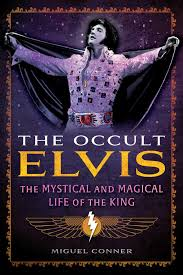
(Image from Amazon.com)
Elvis’s favorite quotes:
“The Vision of Christ that thou dost see is my vision’s greatest enemy.”
–William Blake in The Everlasting Gospel
“The Universe was created by three forms of expression–Numbers, Letters, and Words.”
—Zohar
“Gentlemen, you can’t fight in here! This is the War Room!”
–spoken by President Merkin Muffley (played by Peter Sellers) in Dr. Strangelove or: How I Learned to Stop Worrying and Love the Bomb”
Elvis reading list:
The Aquarian Gospel of Jesus the Christ by Levi H. Dowling
The Mystical Christ by Manly P. Hall
Old Testament Wisdom by Manly P. Hall
The Lost Books of the Bible and the Forgotten Books of Eden by Rutherford H. Platt
The Hidden Wisdom in the Holy Bible, Volumes I and II, by Goeffrey Hodson
The Rosicrucian Cosmo-Conception by Max Heindel
The “wounded healer”
The wounded healer “must suffer through the sickness in order to cure it.” Only those who truly suffer can alleviate the suffering of others. These healers “have healing abilities not in spite of their wounds, but because of them.”
–Paul Levy in Understanding Wetiko
The Art of Solitude: Buddhist Scholar and Teacher Stephen Batchelor on Contemplative Practice and Creativity
By Maria Popova (themarginalian.org)

“Give me solitude,” Whitman demanded in his ode to the eternal tension between city and soul, “give me again O Nature your primal sanities!” In those primal sanities, we come to discover that “there is no place more intimate than the spirit alone,” as May Sarton wrote in her stunning 1938 ode to solitude — her hard-earned testimony to solitude as the seedbed of self-discovery, for it is in that intimate place that we see most clearly what our animating spirit is made of. Solitude, Kahlil Gibran knew, summons of us the courage to know ourselves. Elizabeth Bishop believed — a belief I can attest to with my own life — that everyone must experience at least one long period of solitude in life in order to know what we are made of and what we can make of our gifts. “There is only one solitude, and it is large and not easy to bear,” Rilke wrote in contemplating the relationship between solitude, love, and creativity, “but… we must hold ourselves to the difficult.”
The visionary poets knew — as do the visionaries of scientist, as do all persons engaged in lives of creativity or contemplation, which are often one life — how this solitary self-discovery becomes the wellspring of all the meaning-making that makes life worth living, whether we call it art or love. From solitude’s promontory, we peer out into the expanse of existence and train our eyes to look with wide-eyed wonder at the improbable fact of it all. Solitude, so conceived, is not merely the state of being alone but the art of becoming fully ourselves — an art acquired, like every art, by apprenticeship and painstaking devotion to dwelling in the often lonesome inner light of our singular and sovereign being.
Solitude by Maria Popova. (Available as a print.)
Its mastery, delicate and difficult, is what the Buddhist scholar and teacher Stephen Batchelor explores in The Art of Solitude (public library). Celebrating solitude — not the escapist privilege of it but the practice of it against the real world’s pressures — as “a site of autonomy, wonder, contemplation, imagination, inspiration, and care,” he writes:
True solitude is a way of being that needs to be cultivated. You cannot switch it on or off at will. Solitude is an art. Mental training is needed to refine and stabilize it. When you practice solitude, you dedicate yourself to the care of the soul.
Nearly forty years after he first began bridging Western phenomenology and existentialism with Buddhist precepts in his 1983 book Alone with Others: An Existential Approach to Buddhism, Batchelor draws on a lifetime of solitude-mastery — directly, through his own contemplative practice and multiple silent retreats, and indirectly, through his immersion in the lives and works of centuries of solitude-virtuosi ranging from Montaigne to Nietzsche to Ingmar Bergman — to formulate the essence of the inquiry, at once elemental and embodied, at the heart of the art of solitude:
Ask “What is this?,” then open yourself completely to what you “hear” in the silence that follows. Be open to this question in the same way as you would listen to a piece of music. Pay total attention to the polyphony of the birds and wind outside, the occasional plane that flies overhead, the patter of rain on a window. Listen carefully, and notice how listening is not just an opening of the mind but an opening of the heart, a vital concern or care for the world, the source of what we call compassion or love.
Illustration by Maurice Sendak from Open House for Butterflies by Ruth Krauss.
Echoing Rachel Carson’s trust in the loneliness of creative work — a byproduct of the solitude necessary for creative work, natural and needed, often terrifying and always clarifying — Batchelor adds:
[…]
Having shut the door, you find yourself alone before a canvas, a sheet of paper, a lump of clay, a computer screen. Other tools and materials lie around, close at hand, waiting to be used. You resume your silent conversation with the work. This is a two-way process: you create the work and then you respond to it. The work can inspire, surprise, and shock you… The solitary act of making art involves intense, wordless dialogue.
Art by Margaret Cook from a rare 1913 edition of Walt Whitman’s Leaves of Grass. (Available as a print)
Drawing a link between the Buddhist notion of nirvana and Keats’s notion of “negative capability” — that spacious willingness to negate the pull of attachments, reactivities, and fixities, to live with mystery and embrace uncertainty — Batchelor observes that contemplative practice trains the ability to see each moment as a chance to start anew, to savor life as ongoing, unfixed, ever-changing and ever capable of being changed. He considers the essential building blocks and ultimate rewards of contemplative practice:
One of Antoine de Saint-Exupéry’s original watercolors for The Little Prince.
In consonance with poet and philosopher Wendell Berry’s life-tested belief that “true solitude is found in the wild places,” where one is without human obligation,” where “one’s inner voices become audible [and,] in consequence, one responds more clearly to other lives,” Batchelor adds:
[…]
Here lies the paradox of solitude. Look long and hard enough at yourself in isolation and suddenly you will see the rest of humanity staring back. Sustained aloneness brings you to a tipping point where the pendulum of life returns you to others.
Complement The Art of Solitude with Hermann Hesse on solitude, hardship, and destiny, then savor Batchelor’s spacious On Being conversation with Krista Tippett.
Shunryu Suzuki on experiencing truth

Free Will Astrology: Week of May 22, 2025
BY ROB BREZSNY | MAY 20, 2025 (NewCity.com)


ARIES (March 21-April 19): I think you’re ready to establish new ways of nourishing and protecting what’s valuable to you. Your natural assertiveness will be useful in setting boundaries and securing resources. Your flourishing intuition will guide you to implement adjustments that safeguard your interests while remaining flexible enough to permit legitimate access. Be extra alert, Aries, for when you need to balance security with accessibility. Your best defenses will come from clever design, not brute force. Do what you need to feel secure without feeling trapped.
TAURUS (April 20-May 20): In July 1971, twenty-six-year-old Taurus poet Bernadette Mayer kept a scrupulous diary. Every day, she shot a roll of 35mm film, wrote about the day’s events, and recorded herself reading her accounts. By August 1, she had accumulated 1,100 photos and six hours of readings. One of her goals in doing the project was to learn more about how her memory worked. What was worth remembering, and what wasn’t? She also hoped to gain an objective perspective about her routine rhythm. Years later, she acknowledged that though this was a narcissistic experiment, she had no shame about it. Inspired by Mayer, and in accordance with astrological omens, you might find it worthwhile to lovingly and thoroughly study the details of your daily life for a while. It’s an excellent time to get to know yourself better.
GEMINI (May 21-June 20): Gemini writer Raymond Carver (1938–1988) established a reputation as a master of terse minimalism. One critic noted that he practiced the “Theory of Omission”—an approach to writing fiction that mandates the elimination of superfluous narrative elements. But it turns out that Carver’s editor Gordon Lish had a major role in all this. He deleted half of Carver’s original words and changed the endings of half his stories. Years after his death, Carver’s widow, Tess Gallagher, published the original versions, with the omitted material reinstated. I believe the coming weeks will be an excellent time for you to make comparable restorations, Gemini. In every way you can imagine, tell the full story, provide the complete rendition, and offer elements that have been missing.
CANCER (June 21-July 22): Even if you don’t regard yourself as a psychic or prophet, I suspect you now have an uncanny knack for deciphering future trends. Your intuition is operating at peak levels, especially when you focus it on the big picture of your long-term destiny. As long as you’re not overconfident about this temporary bloom of expansive vision, you can trust your ability to see the deep patterns running through your life story. To make the most of this gift, take a loving inventory of where you have been and where you are going. Then devote relaxed meditations to adjusting your master plan.
LEO (July 23-Aug. 22): River deltas form where rivers meet the sea, creating fertile and complex ecosystems that nourish abundant life. Some of my favorites are the Rhône River Delta in France, the Po River Delta in Italy, and the Shinano River Delta in Japan. In the coming weeks, Leo, I will visualize you as the metaphorical equivalent of a river delta. I’ll call you the Leo Delta, trusting you will be inspired to celebrate and cultivate the rich intersections that characterize your life—areas where an array of ideas, paths and relationships converge. Be open to synergizing different aspects of your world: integrating emotions and logic, connecting with diverse people, blending personal and professional goals.
VIRGO (Aug. 23-Sept. 22): Your natural inclination is to solve problems through detailed planning and careful analysis. On occasion, that process dead-ends in overthinking, though it often works pretty well. In accordance with current astrological omens, however, I suggest an alternative approach for you in the coming weeks. Instead of trying to figure everything out, how about if you simply create a relaxed spaciousness for new things to emerge? Experiment with the hypothesis that progress will come not from doing more, but from allowing more.
LIBRA (Sept. 23-Oct. 22): As they climb, mountaineers carefully assess every handhold and foothold. Unfailing concentration is key. I recommend adopting their attitude in the coming weeks, Libra. You are entering a phase when ascension and expansion will be among your main assignments. The best approach to your adventures is to make steady progress with precision and thoughtfulness. Rushing rashly ahead or taking needless risks could be counterproductive, so be scrupulous about planning and preparation. Trust that the most efficient path to the summit will be via small, deliberate steps. Your winning combination will be ambition leavened with caution.
SCORPIO (Oct. 23-Nov. 21): At age forty-two, Scorpio painter Georgia O’Keeffe left her busy New York art career and traveled to New Mexico for the first time. The landscape’s beauty overwhelmed her. She wandered around the desert for three months, creating no art at all. A few critics accused her of wasting time. She rejected their ignorant misunderstanding of her process, replying, “To see takes time. I had to learn the country first before it would let me paint it.” Her most iconic paintings emerged after this phase of pure observation. I’m recommending a similar period for you, dear Scorpio. While your instincts may tempt you toward a flurry of activity, I believe now is a time to wait and see; to pause and ponder; to muse and meditate.
SAGITTARIUS (Nov. 22-Dec. 21): By the twentieth century, the 483-mile-long Seine River in France was so polluted that most of its fish were gone. But clean-up efforts have been successful. Now there are thirty-two fish species, including the Atlantic salmon. The Seine is also very close to being completely safe for humans to swim. I would love it if you were inspired by this success story to undertake a comparable project in your own life, Sagittarius. What would you most like to see revived and restored? Now is a good time to begin the effort.
CAPRICORN (Dec. 22-Jan. 19): Until she reached her seventies, Capricorn visual artist Louise Bourgeois was a peripheral figure in the art world, modestly respected but not acclaimed. Then New York’s Museum of Modern Art presented her work in a major show. In response, the New York Times reviewed her work, saying it was “charged with tenderness and violence, acceptance and defiance, ambivalence and conviction.” I bring this to your attention, Capricorn, because I suspect the coming months will also bring you recognition for labors of love you’ve been devoted to for a while—maybe not in the form of fame, but through an elevated appreciation by those whose opinion matters to you.
AQUARIUS (Jan. 20-Feb. 18): The name of the old Talking Heads album is “Stop Making Sense.” One of its many implications is that we periodically derive benefit and relief from being free of the pressure to sound reasonable and be consistent. According to my detailed, logical, in-depth analysis of your astrological omens, now is a perfect time to honor this counsel. I hope you will give yourself a sabbatical from being sensible, serious and overly sane. Instead, please consider a sustained pursuit of pure pleasure, fun foolishness and amazing amusement.
PISCES (Feb. 19-March 20): Be on high alert for fleeting intuitions that flow through your awareness. Really good ideas may rise up only briefly and only once, and you should be ready to catch them in the ripe moment before they fade away. Do you hear my urgency? Pay special attention to passing thoughts or sudden insights. They may contain more value than initially apparent. I will even speculate that seemingly ephemeral inspirations could become foundational elements in your future success. Document your hunches, even if they seem premature.
Homework: What meaningful message could you give to a person you hurt? Newsletter.FreeWillAstrology.com