Pelmanism was a system of brain training which was popular in the United Kingdom during the first half of the twentieth century.
History
Originally devised as a memory system in the 1890s by William Joseph Ennever, the system was taught via correspondence from the Pelman Institute in London (named after Christopher Louis Pelman). It was advertised as a system of scientific mental training which strengthened and developed one’s mind just as physical training strengthened your body. It was developed to expand “Mental Powers in every direction” and “remove those tendencies to indolence and inefficiency”.
The system promised to cure a range of problems such as “grasshopper mind”, forgetfulness, depression, phobia, procrastination and “Lack of System”.[1] One of the techniques taught as late as the 1950s in Britain was the Method of loci, recorded since ancient Roman rhetoric, to remember 20 or 100 items in order, keyed to a particular house or geographic route familiar to the student.
In the context of modern psychology, Pelmanism may have only limited academic interest. It remains of interest as a self-help tool, but is seen by some as quirky and eccentric.[4]
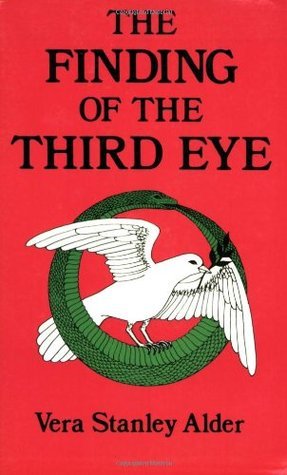
During her successful career as a portrait painter, the author began to investigate the Ancient Wisdom, and this revolutionized her life. She made it her task to simplify and summarize this knowledge in order to present it to others. She offers a guide to attainment through the path outlined by Ancient Wisdom which she summarizes in relation to man, comparing it with the discoveries of modern science. She surveys the philosophies of breathing, color, sounds, numbers, diet and exercsie. Finally she discusses the functions of the Third Eye, Astrology, Meditation, and thier ultimate aims.
The ancient Taoist text that forms the central part of this book was discovered by Wilhelm, who recognized it as essentially a practical guide to the integration of personality.
It was in no small measure [Coué’s] wholehearted devotion to a self-imposed task that enabled him, in less than a quarter of a century, to rise from obscurity to the position of the world’s most famous psychological exponent. Indeed, one might truly say that Coué sidetracked inefficient hypnotism [mistakenly based upon supposed operator dominance over a subject], and paved the way for the efficient, and truly scientific.
Coué’s method was disarmingly non-complex—needing few instructions for on-going competence, based on rational principles, easily understood, demanding no intellectual sophistication, simply explained, simply taught, performed in private, using a subject’s own resources, requiring no elaborate preparation, and no expenditure.
Most of us are so accustomed … to an elaborate medical ritual … in the treatment of our ills … [that] anything so simple as Coué’s autosuggestion is inclined to arouse misgivings, antagonism and a feeling of scepticism.
Coué’s method was based upon the view that, operating deep below our conscious awareness, a complex arrangement of ‘ideas’, especially when those ideas are dominant,[6] continuously and spontaneously suggest things to us; and, from this, significantly influence one’s overall health and wellbeing.[7]
We possess within us a force of incalculable power, which, when we handle it unconsciously is often prejudicial to us. If on the contrary we direct it in a conscious and wise manner, it gives us the mastery of ourselves and allows us not only to escape … from physical and mental ills, but also to live in relative happiness, whatever the conditions in which we may find ourselves.
As long as we look on autosuggestion as a remedy we miss its true significance. Primarily it is a means of self-culture, and one far more potent than any we have hitherto possessed. It enables us to develop the mental qualities we lack: efficiency, judgment, creative imagination, all that will help us to bring our life’s enterprise to a successful end. Most of us are aware of thwarted abilities, powers undeveloped, impulses checked in their growth. These are present in our Unconscious like trees in a forest, which, overshadowed by their neighbours, are stunted for lack of air and sunshine. By means of autosuggestion we can supply them with the power needed for growth and bring them to fruition in our conscious lives. However old, however infirm, however selfish, weak or vicious we may be, autosuggestion will do something for us. It gives us a new means of culture and discipline by which the “accents immature”, the “purposes unsure” can be nursed into strength, and the evil impulses attacked at the root. It is essentially an individual practice, an individual attitude of mind.
Coué’s family, from the Brittany region of France and with origins in French nobility, had only modest means. A brilliant pupil in school, he initially intended to become an analytical chemist; however, because his father, who worked for the Eastern Railway Company, was in a precarious financial state, he eventually abandoned these studies. Coué then decided to become a pharmacist and graduated with a degree in pharmacology in 1876.
Working as an apothecary at Troyes from 1882 to 1910, Coué quickly discovered what later came to be known as the placebo effect. He became known for reassuring his clients by praising each remedy’s efficiency and leaving a small positive notice with each given medication. In 1886 and 1887, he studied with Ambroise-Auguste Liébeault and Hippolyte Bernheim, two leading exponents of hypnotism, in Nancy.
In 1910, Coué sold his business and retired to Nancy, where he opened a clinic that continuously delivered some 40,000 treatment-units per annum (Baudouin, 1920, p. 14) to local, regional, and overseas patients over the next sixteen years.[10] In 1913, Coué and his wife founded The Lorraine Society of Applied Psychology (French: La Société Lorraine de Psychologie appliquée). His book Self-Mastery Through Conscious Autosuggestion was published in England (1920), and in the United States (1922). Although Coué’s teachings were, during his lifetime, more popular in Europe than in the United States, many Americans who adopted his ideas and methods, such as Elsie Lincoln Benedict, Maxwell Maltz, Napoleon Hill, Norman Vincent Peale, Robert H. Schuller, and W. Clement Stone, became famous in their own right by spreading his words.
Continuously, unjustly, and mistakenly trivialised as just a hand-clasp, some unwarranted optimism, and a ‘mantra’, Coué’s method evolved over several decades of meticulous observation, theoretical speculation, in-the-field testing, incremental adjustment, and step-by-step transformation. It tentatively began (c.1901) with very directive one-to-one hypnotic interventions, based upon the approaches and techniques that Coué had acquired from an American correspondence course. As his theoretical knowledge, clinical experience, understanding of suggestion and autosuggestion, and hypnotic skills expanded, it gradually developed into its final subject-centred version—an intricate complex of (group) education, (group) hypnotherapy, (group) ego-strengthening, and (group) training in self-suggested pain control; and, following instruction in performing the prescribed self-administration ritual, the twice daily intentional and deliberate (individual) application of its unique formula, “Every day, in every way, I’m getting better and better.”
— Yeates (2016c), p.55.
The application of his mantra-like conscious autosuggestion, “Every day, in every way, I’m getting better and better” (French: Tous les jours à tous points de vue je vais de mieux en mieux) is called Couéism or the Coué method.[15] Some American newspapers quoted it differently, “Day by day, in every way, I’m getting better and better.” The Coué method centered on a routine repetition of this particular expression according to a specified ritual—preferably as many as twenty times a day, and especially at the beginning and at the end of each day.[16] When asked whether or not he thought of himself as a healer, Coué often stated that “I have never cured anyone in my life. All I do is show people how they can cure themselves.”[17] Unlike a commonly held belief that a strong conscious will constitutes the best path to success, Coué maintained that curing some of our troubles requires a change in our unconscious thought, which can be achieved only by using our imagination.
Although stressing that he was not primarily a healer but one who taught others to heal themselves, Coué claimed to have effected organic changes through autosuggestion.[15]
Self-suggestion
Coué identified two types of self-suggestion: (i) the intentional, “reflective suggestion” made by deliberate and conscious effort, and (ii) the involuntary “spontaneous suggestion“, that is a “natural phenomenon of our mental life … which takes place without conscious effort [and has its effect] with an intensity proportional to the keenness of [our] attention”.[18] Baudouin identified three different sources of spontaneous suggestion:A. Instances belonging to the representative domain (sensations, mental images, dreams, visions, memories, opinions, and all intellectual phenomena);B. Instances belonging to the affective domain (joy or sorrow, emotions, sentiments, tendencies, passions);C. Instances belonging to the active or motor domain (actions, volitions, desires, gestures, movements at the periphery or in the interior of the body, functional or organic modifications).[19]
Two minds
According to Yeates, Coué shared the theoretical position that Thomson Jay Hudson had expressed in his Law of Psychic Phenomena (1893): namely, that our “mental organization” was such that it seemed as if we had “two minds, each endowed with separate and distinct attributes and powers; [with] each capable, under certain conditions, of independent action”.[20]
Further, argued Hudson, it was entirely irrelevant, for explanatory purposes, whether we actually had “two distinct minds”, whether we only seemed to be “endowed with a dual mental organization”, or whether we actually had “one mind [possessed of] certain attributes and powers under some conditions, and certain other attributes and powers under other conditions”.[21]
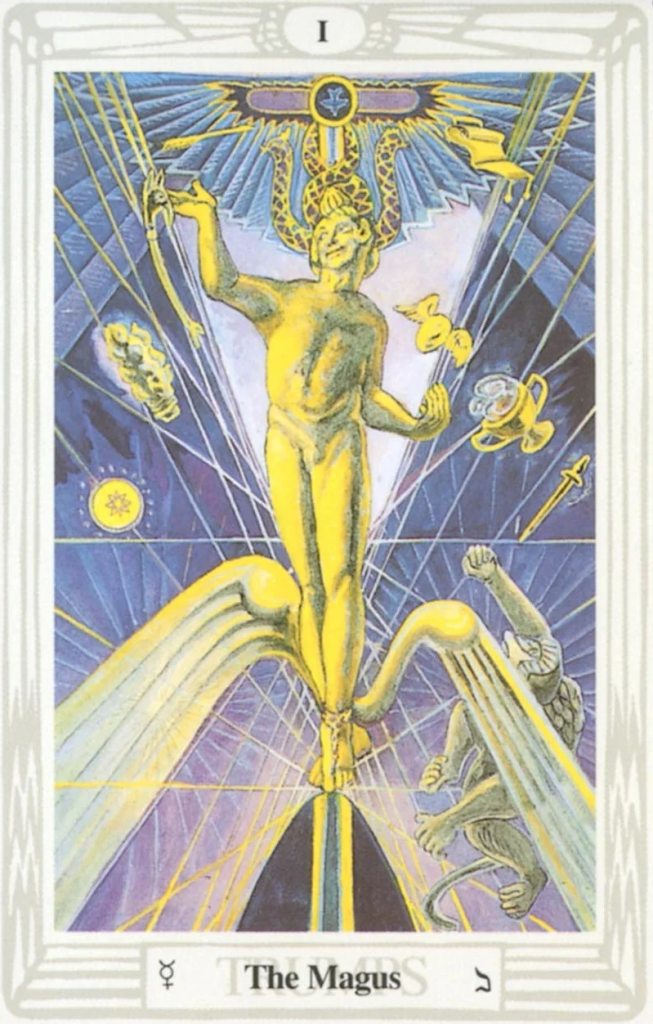
The Magus, at his highest level of interpretation, indicates the intricate and complex web of influences that binds the Universe to itself, and to all else. This is essentially a card about communication, but on the subtle levels beyond the material world.If you want to manifest your heart’s desire into the mundane world, you will have to come to terms with the actuality, the workings and the efficient manipulation of this web, understanding its laws and vagaries.This web is what causes so-called ‘coincidences’, or those freak connections that we make right when we most need them. It is this system that brings the teacher to the student at exactly the right time, puts the very book we need on the bookshelf just when we needed it, draws the right person into our lives at the opportune moment.You can see, therefore, how essential it is if you want to achieve your highest possible destiny, that you develop your understanding of the web of life. And in so doing, become a magus of sorts yourself.So on a day ruled by the Magus, we need to be experimenting with the way this web works. We need to look at the thoughts we are transmitting ourselves – because what goes around comes around, remember? What we put out eventually finds its way back to us – coloured by everything it has touched along the way. This is the single most practical reason for positive thinking!!We need to consider our overall direction and the things we are doing to fulfil our aspirations. We need to look at how every single action we take can be made into an act of magick. People miss this concept all the time. Yet holding the idea in the forefront of your mind changes the way that you approach your daily activities.So acting with intent is another thing we can practise on the day of the Magus. For instance, if you cook a meal, cook it with the intention that it will sustain the very spirit of those who eat it. If you do the washing up, do it remembering that you are washing away the stains of the world. If you are driving to see a friend, regard the journey as another step in your growth and development. Get the idea? Practise everything with intent. From personal experience, let me tell you it really gets the mundane stuff done quickly, efficiently and with a full heart.Also when working the affirmation for today, remember one thing – if you aren’t happy with your life the way you’ve made it so far, the Magus releases the power within you to make it something happier and more satisfying. All you have to do is begin……..
ARIES (March 21-April 19): The strongest, most enduring parts of China’s Great Wall were the 5,500 miles built during the Ming Dynasty, 1368-1644. One secret to their success was sticky rice, an essential ingredient in the mortar. The resulting structures have been remarkably water resistant. They hold their shape well, resist weed growth, and get stronger as time passes. I hope you will find metaphorical equivalents to sticky rice as you work on your foundations in the coming months, Aries. Proceed as if you are constructing basic supports that will last you for years.
TAURUS (April 20-May 20): The world’s most expensive spice is saffron. To gather one gram of it, workers must harvest 150 flowers by hand. Doesn’t that process resemble what you have been doing? I am awed by the stamina and delicacy you have been summoning to generate your small but potent treasure. What you’re producing may not be loud and showy, but its value will be concentrated and robust. Trust that those who appreciate quality will recognize the painstaking effort behind your creation. Like saffron’s distinctive essence that transforms ordinary dishes into extraordinary ones, your patient dedication is creating what can’t be rushed or replicated.
GEMINI (May 21-June 20): Gemini author Jean-Paul Sartre was offered the Nobel Prize for Literature in 1964. But he rejected it. Why? He said that if he accepted it, he would be turned into an institution and authority figure, which would hinder his ability to critique politics and society. He was deeply committed to the belief that a writer has an obligation to be independent and accountable only to their conscience and audience, not to external accolades or validations. I think you are in a Sartre-like phase right now, dear Gemini. You have a sacred duty to be faithful to your highest calling, your deepest values and your authentic identity. Every other consideration should be secondary.
CANCER (June 21-July 22): You are now highly attuned to subtle energies, subliminal signals and hidden agendas. No one in your sphere is even half as sensitive as you are to the intriguing mysteries that are unfolding beneath the visible surface. This may be a bit unsettling, but it’s a key asset. Your ability to sense what others are missing gives you a unique advantage. So trust your intuitive navigation system, Cancerian, even if the way forward isn’t obvious. Your ability to sense underlying currents will enable you to avoid obstacles and discern opportunities that even your allies might overlook.
LEO (July 23-Aug. 22): Underground fungal networks are essential for the health of ecosystems. They connect plant roots and facilitate transfers of nutrients, water and communication signals between various species. They enhance the fertility of the soil, helping plants thrive. In accordance with astrological indicators, I invite you to celebrate your equivalent of the underground fungal network. What is the web of relationships that enables you to thrive? Not just the obvious bonds, but the subtle ones, too: the barista who has memorized your order, the neighbor who waters your plants when you’re away, the online ally who responds to your posts. Now is an excellent time to map and nurture these vital interconnections.
VIRGO (Aug. 23-Sept. 22): Virgo author Chimamanda Ngozi Adichie warns about “the danger of a single story.” She tells us that authentic identity requires us to reject oversimplified narratives. As a Nigerian woman living in the United States, she found that both Western and African audiences sought to reduce her to convenient categories. She has not only resisted that pressure, but also outwitted and outflanked it. Her diversity is intriguing. She mixes an appreciation for pop culture with serious cultural criticism. She addresses both academic and mainstream audiences. I offer her up as your role model, Virgo. In the coming weeks, may she inspire you to energetically express all your uncategorizable selves.
LIBRA (Sept. 23-Oct. 22): Where have you not yet traveled but would like to? What frontiers would your imagination love for you to visit, but you have refrained? Now is the time to consider dropping inhibitions, outmoded habits and irrelevant rules that have prevented you from wandering farther and wider. You have full permission from life, karma and your future self to take smart risks that will lead you out of your comfort zone. What exotic sanctuary do you wish you had the courage to explore? What adventurous pilgrimage might activate aspects of your potential that are still half-dormant?
SCORPIO (Oct. 23-Nov. 21): Astrologers say that Scorpio is ruled by three creatures that correspond to three ascending levels of spiritual maturity. The regular Scorpio person is ruled by the scorpion. Scorpios who are well underway with their spiritual work are ruled by the eagle. The Scorpio who has consistently succeeded at the hard and rewarding work of metaphorical death and resurrection is ruled by the phoenix—the mythical bird that is reborn from the ashes of its own immolation. With this as our context, I am letting you know that no matter how evolved you are, the coming weeks will bring you rich opportunities to come more into your own as a brilliant phoenix.
SAGITTARIUS (Nov. 22-Dec. 21): Seas off the coast of Singapore are heavily polluted. Some of the coral reefs there are showing resilience, though. They have developed symbiotic relationships with certain algae and bacteria that were formerly hostile. Their robustness lies in their adaptability and their power to forge unlikely alliances. That’s a good teaching for you right now. The strength you need isn’t about maintaining fixed positions or rigid boundaries, but about being flexible. So I hope you will be alert and ready to connect with unfamiliar resources and unexpected help. A willingness to adjust and compromise will be a superpower.
CAPRICORN (Dec. 22-Jan. 19): Sometimes, disruptions are helpful prods that nudge us to pay closer attention. An apparent malfunction might be trying to tell us some truth that our existing frameworks can’t accommodate. I suspect this phenomenon might be occurring in your world. An area of your life that seems to be misfiring may in fact be highlighting a blind spot in your comprehension. Rather than fretting and purging the glitches, I will ask you to first consider what helpful information is being exposed. Suspend your judgment long enough to learn from apparent errors.
AQUARIUS (Jan. 20-Feb. 18): This isn’t the first time I’ve said that your ideas are ahead of their time. Now I’m telling you again, and adding that your intuitions, feelings and approaches are ahead of their time, too. As usual, your precociousness carries both potential benefits and problems. If people are flexible and smart enough to be open to your innovations, you will be rewarded. If others are rigid and oblivious, you may have to struggle to get the right things done. Here’s my advice: Focus on the joy of carrying out your innovations rather than getting caught up in fighting resistance.
PISCES (Feb. 19-March 20): Sunlight can’t penetrate deeper than 3,280 feet into the ocean’s depths. Even at 650 feet down, a murky twilight zone prevails. But nearly seventy-five percent of deep-sea creatures can create their own light, thanks to a biochemical phenomenon called bioluminescence. Jellyfish, starfish and crustaceans are a few animals that glow. I propose we make them your symbols of power in the coming weeks, Pisces. I hope they incite you to be your own source of illumination as you summon all the resilience you need. If shadowy challenges arise, resolve to emit your steady brilliance. Inspire yourself and others with your subtle yet potent clarity.
Governments can err, Presidents do make mistakes, but the immortal Dante tells us that divine justice weighs the sins of the cold-blooded and the sins of the warm-hearted in different scales. Better the occasional faults of a Government that lives in a spirit of charity than the constant omission of a Government frozen in the ice of its own indifference.
–Franklin Delano Roosevelt
Franklin Delano Roosevelt, also known as FDR (January 30, 1882 – April 12, 1945), was the 32nd president of the United States, serving from 1933 until his death in 1945. He is the longest-serving U.S. president, and the only one to have served more than two terms. Wikipedia
Phony Time magazine cover with Donald Trump wearing a crown. (The White House)
I’ve been following with a mixture of dismay and disgust Trump’s One Big Ugly Bill, soon to head to the Senate. I’ll report back to you on it.
But I want to alert you to one detail inside it that’s especially alarming. With one stroke, it would allow Trump to crown himself king.
As you know, Trump has been trying to neuter the courts by ignoring them.
The Supreme Court has told Trump to “facilitate” the return of Abrego Garcia, a legal resident of the United States whom even the Trump regime admits was erroneously sent to a brutal prison in El Salvador. Trump has essentially thumbed his nose at the Court by doing nothing.
Lower federal courts have told him to stop deporting migrants without giving them a chance to know the charges against them and have the charges and evidence reviewed by a neutral judge or magistrate (the minimum of due process). Again, nothing.
Judge James Boasberg, Chief Judge of the federal district court for the District of Columbia, issued a temporary restraining order preventing the Trump regime from flying individuals to the prison in El Salvador without due process.
What can the courts do in response to Trump’s open defiance of the judges and justices?
The courts have one power to make their orders stick: holding federal officials in contempt and enforcing such contempt citations against them.
Enforcing a contempt citation means fining or jailing the Trump lawyers who argue before them, and possibly invoking contempt all the way up the line to Trump.
Boasberg said that if Trump’s legal team does not give the dozens of Venezuelan men sent to the Salvadorian prison a chance to legally challenge their removal, he’ll begin contempt proceedings against the administration.
In a separate case, U.S. District Court Judge Paula Xinis has demanded that the Trump administration explain why it is not complying with the Supreme Court order to “facilitate” the release of Abrego Garcia.
Xinis questions whether the administration intends to comply with the order at all, citing a statement from U.S. Department of Homeland Security chief Kristi Noem that Abrego Garcia “will never be allowed to return to the United States.” According to Xinis, “That sounds to me like an admission. That’s about as clear as it can get.”
So what’s next? Will the Supreme Court and lower courts hold the administration in contempt and enforce contempt citations?
Not if the Big Ugly Bill is enacted with the following provision, now hidden in the bill:
“No court of the United States may use appropriated funds to enforce a contempt citation for failure to comply with an injunction or temporary restraining order if no security was given when the injunction or order was issued….”
Translated: No federal court may enforce a contempt citation.
Obviously, courts need appropriated funds to do anything because Congress appropriates money to enable the courts to function. To require a security or bond to be given in civil proceedings seeking to stop alleged abuses by the federal government would effectively immunize such conduct from judicial review because those seeking such court orders generally don’t have the resources to post a bond.
Hence, with a stroke, the provision removes the judiciary’s capacity to hold officials in contempt.
As U.C. Berkeley School of Law Dean and Distinguished Professor of Law Erwin Chemerinsky notes, this provision would eliminate any restraint on Trump.
‘Without the contempt power, judicial orders are meaningless and can be ignored. There is no way to understand this except as a way to keep the Trump administration from being restrained when it violates the Constitution or otherwise breaks the law. …
‘This would be a stunning restriction on the power of the federal courts. The Supreme Court has long recognized that the contempt power is integral to the authority of the federal courts. Without the ability to enforce judicial orders, they are rendered mere advisory opinions which parties are free to disregard.”
With this single provision, in other words, Trump will have crowned himself king. No congress and no court could stop him. Even if a future Congress were to try to stop him, it could not do so without the power of the courts to enforce their hearings, investigations, subpoenas, and laws.
What can you do? To begin with, call your members of Congress and tell them not to pass Trump’s One Big Ugly Bill.
Robert Reich is a professor of public policy at Berkeley and former secretary of labor. His writings can be found at https://robertreich.substack.com/
To hear some of the biggest boosters of artificial intelligence tell it, we shouldn’t dwell on how the technology’s development is producing large and growing greenhouse gas emissions, because AI itself will help us solve the climate-change crisis.
OpenAI CEO Sam Altman, Anthropic CEO Dario Amodei and former Google CEO Eric Schmidt have all articulated some version of this argument. But critics contend such assertions are misguided, noting that the kind of AI that’s largely driving the increase in emissions is not the same type that should be expected to address climate change.
Despite assertions by people like Schmidt and Altman, it’s not at all obvious that generative AI technologies like the large-language model that underlies ChatGPT are going to help solve climate change, said Alex de Vries, founder of Digiconomist, an online publication that focuses on technology’s environmental impact. Quite the opposite.
“I definitely wouldn’t count on these models to solve the problems of the world at the moment,” de Vries said.
But that’s precisely what people like Altman, Amodei and Schmidt are arguing generative AI will do. At an AI event in Washington, D.C., in October, Schmidt made the case most explicitly.
“We’re not going to hit the climate goals anyway because we’re not organized to do it,” Schmidt said at the event. “I’d rather bet on AI solving the problem, than constraining [its development] and having the problem [anyway].”
In a blog post last fall entitled “The Intelligence Age,” Altman contended that developers are only “a few thousand days away” from creating an AI “superintelligence” that will transform society for the better. Among the many benefits this advanced AI will provide will be “fixing the climate,” he said.
Similarly, in his own blog post around the same time entitled “Machines of Loving Grace: How AI Could Transform the World for the Better,” Amodei argued that the advent of what he called “powerful AI” will be a boon to humanity in a wide range of areas, including helping mitigate climate change.
Although he acknowledged that this powerful AI could come out of a different technology, Amodei argued it will likely develop out of large-language models, the generative AI technology that powers chatbots like ChatGPT and Anthropic’s own Claude.
That AI can be expected to help develop new clean energy technologies. systems for removing carbon from the atmosphere and more climate-friendly lab-grown meat, Amodei said.
“There’s good reason to think that AI-enhanced research will give us the means to make mitigating climate change far less costly and disruptive,” he said.
AI critics have raised numerous objections to these lines of argument. Advocates of it are willing to accept certain harm now — increasing temperatures, rising sea levels, drought, flooding and more factors are considered consequences of climate change, according to the scientific consensus — in favor of future benefits that are speculative at best, they note.
What’s more, reducing emissions and mitigating climate change don’t necessarily require new technological solutions, according to AI skeptics. Current and already widely available technologies such as solar panels, electric vehicles and heat pumps could dramatically reduce dependence on fossil fuels. There just needs to be the political and societal will to swap out older, more climate-harming technologies for them.
Claims of AI’s future potential for helping address climate change come as emissions related to AI are rapidly rising — and on track to continue to do so.
Large-language and other generative AI models require vast amounts of data and computing power to train. Developers such as OpenAI and Anthropic have bet that their systems will get ever better with more and more training data. But increased data leads to a rise in computing power needed to process it, which requires more energy use and is increasingly leading to more greenhouse emissions.
And that’s just in training the models. Running the models, such as when ChatGPT responds to a query, has an ongoing energy cost that also leads to more emissions.
The power needs for models from OpenAI, Anthropic, Meta, Apple and other tech giants has been reflected in the rapidly growing percentage of energy going to the data centers that run them. Data centers accounted for 3.7% of U.S. energy use in 2023, according to a report last year from McKinsey. The consulting firm expected that portion to grow to 4.3% last year, 5.2% this year and 11.7% in 2030.
Globally, data center energy use has grown by 12% a year since 2017 and accounted for 1.5% of total energy consumption last year, according to a report last month from the International Energy Agency. The agency forecast their energy consumption will more than double by 2030 and account for 3% of worldwide demand.
Altman and others in the AI sector have promoted the idea that nuclear power will help meet that growing energy demand and reduce the technology’s climate impact, but new nuclear plants are unlikely to come online anytime soon, power experts have said. Instead, to meet the rapidly growing power demands of generative AI, utilities are delaying the planned decommissioning of older coal plants and making plans to build new natural-gas plants.
Some forms of artificial intelligence are already playing a role in the fight against climate change.
Scientists have long been using machine learning to model the climate and make predictions about climate-change impacts, said Jathan Sadowski, a senior lecturer in the Emerging Technologies Research Lab at Monash University’s Department of Human Centred Computing in Melbourne, Australia. Similarly, electric grid operators use machine-learning models to optimize and manage the distribution of energy, he said.
But those forms of artificial intelligence are distinct from the large-language models that power generative AI systems such as ChatGPT, Sadowski said. And, he and other critical experts say, they tend to be much more energy efficient.
When it comes to talking about how AI could help fight climate change, “there’s a real conflation by people really invested in … the generative AI form of machine learning,” he said. “They’re conflating what they’re invested in and what their business is with these other forms of machine learning.”
Similarly, types of artificial intelligence are already being used and could be used in the future in material science to analyze and try to identify materials that might be useful in making better batteries for energy energy storage or more efficient solar cells, he said. But the kinds of models that are useful in those cases are typically ones that are specifically designed for such tasks with data particular to that area of knowledge, he and other AI experts said.
Generative AI technologies like ChatGPT and video generators like OpenAI’s Sora may have some societal value, said Gary Marcus, an emeritus professor at New York University and author of “Taming Silicon Valley: How We Can Ensure That AI Works for Us.” But they come with what’s likely a serious climate cost and they’re prone to errors, he said.
“That’s not the kind of system that’s going to help with the climate,” Marcus said. “Chatbots are not reliable enough even to follow the rules of chess, let alone make some stunning new advance in material science or something like that.”
Altman wasn’t available for comment, and OpenAI representative Jason Deutrom declined to comment beyond Altman’s blog post. But he pointed to an announcement the company made in January that it had signed an agreement with the U.S. National Laboratories to provide its so-called reasoning models, which attempt to answer complex queries by breaking them down into separate parts, to help with such things as improving cybersecurity, finding treatments for diseases and basic science.
Representatives for Anthropic and Schmidt did not respond to requests for comment.
Much of the assertion that Altman and Schmidt make about generative AI helping with climate change is built on the notion that the technology underlying ChatGPT will soon get so smart, because of all the data it’s taking in, that it will surpass human intelligence and will be able to come up with ideas that humans couldn’t.
But such advocates don’t ever really explain how a technology that’s not sentient and doesn’t have any real notion of the actual physical world will somehow evolve into what they like to call artificial general intelligence, said Emily Bender and Alex Hanna, co-authors of the new book “The AI Con: How to Fight Big Tech’s Hype and Create the Future We Want.”
ChatGPT and similar LLM-based chatbots are designed to produce text that looks like it could have been written by a human, said Bender, a linguistics professor at the University of Washington who’s also on the faculty of that institution’s engineering and information schools. Based on the data they were trained on, they essentially predict what word would come next in a sentence.
Whatever sense users might have that ChatGPT is actually intelligent comes from the users themselves ascribing meaning to its output, Bender said. If you take away users’ meaning-making, “it’s clear that it’s basically the same thing as a Magic 8 ball,” she said.
“Are we going to have a Magic 8 ball solving climate change for us?” she asked. “I don’t think so.”
Consciousness, spirituality, biography, sexuality, androgyny, futurism, space, the arts, science, astrology, democracy, humor, books, movies and more