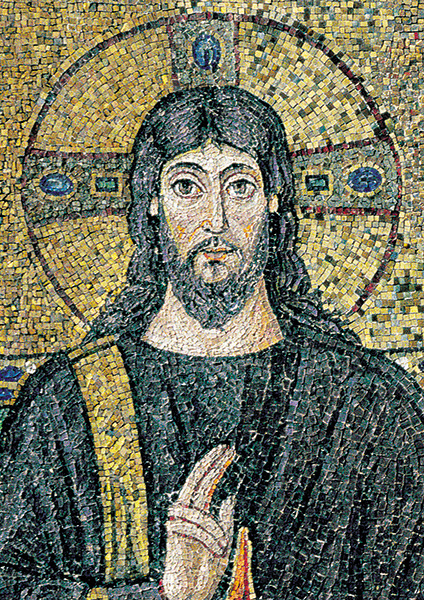
Widely considered a hallmark of Western literature and spirituality, The Cloud of Unknowing is an anonymous English monk’s sublime expression of what separates God from humanity. Originally written in the 14th century, now part of the HarperCollins Spiritual classics series, this beautiful contemplative resource, has been embraced for hundreds of years for its simple, engaging style and spiritual truths. As the unknown author assures us, “if you are to experience Him or to see Him at all, insofar as it is possible here, it must always be in this cloud.” —The Cloud of Unknowing.
Apophaticism, or negative theology, is a theological and philosophical approach that describes the Divine by emphasizing what it is not, rather than what it is, because the Divine is considered ineffable, inconceivable, and radically transcendent of human concepts and language. This method recognizes that all language and thought derive from finite experience, making them inadequate to grasp infinite reality, leading to a spiritual journey through negation to a deeper understanding of the Divine.
Key Aspects of Apophaticism
Negation over Affirmation:Instead of making positive statements about God’s nature, apophaticism uses negation to strip away limited human concepts and words.
Ineffability:It posits that the Divine essence is beyond human comprehension, thus beyond affirmative descriptions.
Transcendence:The core idea is that God radically transcends all creaturely categories and distinctions, making any conceptual understanding incomplete or distorted.
“Unknowing”:Some traditions describe this path as entering a “luminous darkness” or a state of knowing through unknowing, as exemplified by Pseudo-Dionysius the Areopagite.
Comparison with Cataphatic Theology
Cataphatic Theology:The opposite approach, which uses affirmative statements to describe God’s nature, such as “loving,” “creative,” or “all-knowing”.
Complementary Nature:In many traditions, apophaticism and cataphaticism work together. Thomas Aquinas, for example, used cataphatic points from creation to support his apophatic understanding of God.
Historical and Mystical Roots
Christian Tradition:.Opens in new tabApophatic theology is a significant tradition in both Eastern and Western Christianity, though it is more pronounced in the East.
Mystical Practices:.Opens in new tabThe apophatic path is often associated with mystical traditions, involving a stripping away of concepts and images to foster a deeper, silent communion with the Divine.
Purpose and Benefits
Avoiding Idolatry:By denying finite conceptions of God, apophaticism helps prevent people from mistaking limited words and ideas for the infinite Divine.
Deeper Relationship:The process of negating descriptions can lead to a deeper, more direct experience of God beyond intellectual constructs.
\Macklemore Aug 28, 2015 Provided to YouTube by Macklemore Same Love (feat. Mary Lambert) · Macklemore & Ryan Lewis · Macklemore · Ryan Lewis · Mary Lambert The Heist ℗ 2012 Macklemore, LLC. Violin: Andrew Joslyn Trombone: Greg Kramer Piano: Josh Rawlings Featured Vocals: Mary Lambert Cello: Natalie Hall Producer: Ryan Lewis Writer: B. Haggerty Writer: M. Lambert Composer: Macklemore Composer, Writer: Ryan Lewis Auto-generated by YouTube.
The third single from Macklemore and Ryan Lewis’s debut album The Heist, “Same Love” is a powerful song about marriage equality for same-sex couples, and has played a big part in making the issue more understandable to mainstream audiences.
The song was written in April 2012 to support Referendum 74 in Washington state and represents a notable shift in hip-hop culture. Although this wasn’t the first rap song to defend homosexuality (See “Animal Style” by Murs), this was the first to see mainstream success. The song hit number 11 on the Billboard Hot 100 and became the first song that explicitly promotes same-sex marriage to hit the Top 40 in the US.
How will AI and new technology change art? Visual effects artist Rob Bredow, known for his work on Star Wars, and curator Nora Atkinson, who brought Burning Man to the Smithsonian, dive deep into the future of creativity, trading behind-the-scenes stories that show how to blend stop‑motion, LED walls and algorithms in art — while still keeping the soul in the work. (This conversation is part of “TED Intersections,” a series featuring thought-provoking conversations between experts navigating the ideas shaping our world.)
Why do historians overwhelmingly agree that Jesus was historically a real person?
All the below is written by Talon Dearg
First, we need to address one key issue that most people don’t understand, so people on both sides of this argument like to take certain things out of context. It needs to be known that we have practically no primary sources for many secondary (non-monarchs or major political figures) characters in antiquity.
This is what the historical Jesus was (a secondary character in his day). If we simply say “we have no archeological evidence, so he doesn’t exist” then we need to say that Aristotle and Socrates did not exist because, like Jesus’ story, we are left with written accounts that have been repeatedly copied through various generations.
Now when it comes to the historical Jesus (and what we know of him), it’s simple in a few ways. The first, is that although the gospels and other New Testament books were all written decades after Jesus died (however Paul started writing between 45-49 CE), they are independently attested. Yes, from a historical perspective the miracles and resurrection are considered embellishments to help encourage early people convert to this new Jewish sect.
What does this mean?
Now although much of this information cannot be relied upon for historical purposes, some of it can pass the test of historical plausibility.
What do I mean by that? Well, every historian, when examining evidence, has a set of criteria they must use when comparing written accounts of any event.
Part of doing this, is taking these four accounts, and cross examining with each other and seeing if any of the minor details (things that lack religious implications that would be less likely for people to make up) correspond to most or all of the documents.
What you’ll find is that many of these minor details correspond consistently in ways that you wouldn’t expect– this is something you almost never see with mythical figures.
You’ll also see that the early Gospel writers likely had to create explanations for certain things about Jesus because his name was likely somewhat known around the time of his death. I’ll give a brief example:
Two of the gospels deal with the birth of Jesus. Without going into too much detail, it’s easy to make the argument that both Matthew and Luke did not get their information for this narrative from the same source.
They are constantly at odds with each other over many specific areas of this story (example: in Matthew, Mary and Joseph already lived in Bethlehem and then had to move to Egypt and then, years later, move to Nazareth. In Luke, Mary and Joseph lived in Nazareth, traveled to Bethlehem for a theoretical tax registration, waited there for 32 days after Jesus was born, and then returned immediately to Nazareth).
Most historians believe it is likely that both of them made up nearly all (if not all) of the parts to their stories because they were trying to fulfill the prophecies from the Old Testament. See, in the book of Micah, it was predicted that a savior would be born in the city of David (Bethlehem), so these writers wanted to make sure that Jesus fulfilled this prophecy.
But wait, they had a real issue to deal with. It was probably well-known that Jesus was from some small town called Nazareth, thus he didn’t fulfill that part of the prophecy. So, to deal with this, early gospel writers created these narratives to explain how this person from Nazareth could have still been from the city of David.
If Jesus was a mythological figure that sprung up out of thin air, there would be no reason to say he was from Nazareth, they would have said he was from Bethlehem and just left it at that. This is what we typically see for made up figures. Keep in mind that this is one of dozens of examples where the writers did this to meet personal agendas of their time.
What historians also find is that it is nearly impossible for a sect or cult to immediately spring up without a founding figure. After Jesus’ death, the remaining followers were probably a group of people of about 20-30 people, and it expanded rather quickly — probably hitting the hundreds within the decade after his death and by 50 CE, they had spread throughout the Roman Empire.
Most scholars believe that the book of Mark, written between 65-70 CE, was actually written in the city of Rome for a local church there.
This type of growth and expansion is, by historical standards, incredibly fast. The rapid rate of growth suggests, for historians, that a real figure of Jesus existed, had a few followers who immediately disbanded after his death. Yet, for those whom remained, they started preaching about his life and resurrection, which was likely very enticing for their day. From:
+
Non-Christian references
Pliny the Younger, writing in 112 AD, letter 10, discusses the issue of Christians gathering together, illegally. He knows a few facts about early Christian practice, and so by the early second century we know that Christians exist and believe in a Christ figure.
Suetonius,115 AD, in his Lives of the Caesars, discussing Claudius (41-54), mentions the deportations of Jews after riots “on the instigation fo Chrestus”. There is a possibility that he means a Jew named Chrestus, a not uncommon name, but more likely this is a common misspelling for Christus. At best, Suetonius supports that Christians were living in Rome in the 50s AD.
Tacitus, in his Annales (15.44) written in 115, covers history from 14-68AD. He treats the fire in Rome under Nero in 64CE, and discusses Nero’s blaming of the Christians. He mentions “The author of this name, Christ, was put to death by the procurator, Pontius Pilate, while Tiberius was emperor; but the dangerous superstition, htough suppressed for the moment, broke out again not only in Judea, the origin of this evil, but ieven in the city”
So Tacitus claims that there were Christians in Rome in the 60s, that the sect originates in Judea, that they are named for a figure/founder ‘Christ’, and that Pontius Pilate executed him. There are claims by mythicists that this passage in Tacitus is an interpolation, but there is no evidence for this and almost no serious classicist supports it.
Tacitus’ information is clearly second-hand, and he is incorrect in that Pilate was prefect, not procurator. At the same time, in those circumstances prefect and procurator were virtually equivalent.
+
Jewish sources
Josephus is a Jewish aristocrat and military leader. Lost in battle during the 66 uprising and ultimately surrendered to the Romans. He was later used as an interpreter during the siege of Jerusalem, then taken to Rome and where he became a writer of history.
He makes 2 references to Jesus. 1 in Antiquities book 20, referring to the death of James, the brother of Jesus (Antiquities 20.9.1). The other passage is known as the Testimonium Flavianum, in Antiquities 18.3.3. This passage refers to Jesus as a miracle worker, a leader of Jews and Greeks, the Messiah, condemned by Pilate to the Cross, appearing alive on the third day, and his followers continue until the present.
The major problem with this passage is that Josephus is a Jew, and shows no evidence of being a Christian, and so this depiction is inconsistent with Jospehus.
There are three possibilities – that the text is entirely made-up (the Mythicist position), that the text is entirely genuine (the hyper-conservative Christian position), that the text is original but altered (the position taken by most scholars). For my part, a less sensational version of the text with obviously Christian elements removed is more likely to be original.
+
Christian sources
We still need to treat these as historical documents. They are not more or less reliable because they are Christian.
So we have Mark, written around 70AD, then we have Matthew and Luke, based in large degree upon Mark, written probably in the 80-85 period. And yet Matthew and Luke share common material not found in Mark, which is typically referred to as Q (from quelle, German for ‘source’), besides material distinct to Matthew (M) and Luke (L), so you have in fact 4 likely documentary sources. Plus you have John written in the 90s AD, an independent source from the other canonical gospels.
There are also non-canonical gospels written after John, some of which show independence from the canonical gospels. For example Thomas, dated to 110-120AD. Thomas is primarily a collection of sayings, it is not a narrative text. Similarly the fragmentary Gospel of Peter. Bart Ehrman also likes to highlight Papyrus Egerton 2 as a non-parallel independent account.
Similarly the fragmentary Gospel of Peter. There are two documents by this title, the extant one is not of much help in historical Jesus studies; it is usually dated to late 2nd century, which is too late to be of much usage. However, there is another “Gospel of Peter” which Origen refers to, existing only in two papyrus fragments (P.Oxy 4009 and 2949; both of these may not actually come from the supposed ‘Gospel’). This lost gospel would be earlier, and like the next text, possible attest to Jesus.
Bart Ehrman also likes to highlight Papyrus Egerton 2 as a non-parallel independent account. The Egerton Papyrus is generally dated to ca. 200 (though Stanley Porter supports an earlier, ca.150 date). It contains four short fragments, one of which has no parallel in the canonical Gospels]
There are many other gospels but most are significantly later, and show development of miraculous and legendary accounts, often disconnected to the earlier documents.
So, on scholar Bart Ehrman’s count, you have at least 7, maybe 8 early independent accounts about Jesus of Nazareth.
Furthermore, while no doubt that there is oral tradition behind these texts, there are almost certainly written sources. For example the Q material in Matthew and Luke is frequently identical, enough that you would suspect it was a written document, not merely oral material. Matthew and Luke almost certainly used other documentary sources, whether one or several, we simply don’t know.
Then you should factor in how you account for other early Christian literature, including the other NT documents, and documents written shortly after, for example Papias, quoted later in Eusebius’ Ecclesiastical History, claims to have directly inquired about the apostles’ teaching, and so is about a 3rd generation source.
So, to conclude, there is a considerable amount of documentary evidence to support the supposition that Jesus existed as a historical human being. This write-up is drawn from my notes on introduction to historical Jesus studies. I’m happy to go on to discuss individual issues, primary documents, or provide a further bibliography for secondary reading.
+
Short Bibliography
• Borg, Marcus, “Jesus A New Vision. Spirit, Culture, and the Life of Discipleship” • • Ehrman, Bart “Did Jesus Exist?: The Historical Argument for Jesus of Nazareth” • • Ehrman “The New Testament: A istorical Introduction to the Early Christian Writings” • • Crossan, John Dominic, “The Historical Jesus: The Life of a Meditarranean Jewish Peasant”
• Fredriksen, Paula “From Jesus to Christ: The Origings of the New Testament Images of Jesus”
• Meier, John, “A Marginal Jew: Rethinking the Historical Jesus”
• Sanders, E.P, “The Historical Figure of Jesus”
• Thiessen & Merz “Studying the Historical Jesus: A Guide to Sources and Methods”.
• Vermès, Géza, “Jesus the Jew: A Historian’s Reading of the Gospel”
• Marshall, I.H. “I believe in the Historical Jesus”
“The demand to be safe in relationship inevitably breeds sorrow and fear. This seeking for security is inviting insecurity. Have you ever found security in any of your relationships? Have you? Most of us want the security of loving and being loved, but is there love when each one of us is seeking his own security, his own particular path? We are not loved because we don’t know how to love.”
“When you love, you are not lonely. The sense of loneliness arises only when you are frightened of being alone and of not knowing what to do. When you are controlled by ideas, isolated by beliefs, then fear is inevitable; and when you are afraid, you are completely blind.”
~ Krishnamurti.
Jiddu Krishnamurti (May 11, 1895 – February 17, 1986) was an Indian spiritual speaker and writer. Adopted by members of the Theosophical Society as a child because of his aura as perceived by Theosophic leader Charles Leadbetter, “without …
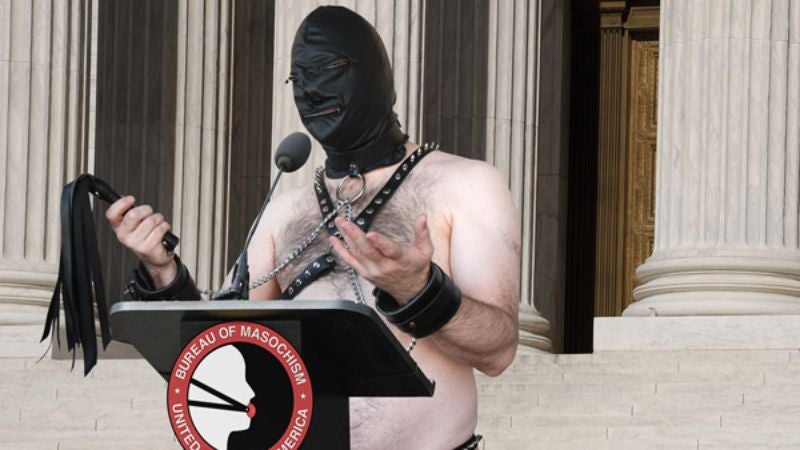
WASHINGTON—A new study released this week by the U.S. Bureau of Masochism has concluded that American nipples are critically under-clamped, bolstering long-held suspicions that the nation is rapidly losing interest in the thin, delectable line between pleasure and pain.
According to the study, which surveyed a wide swath of citizens who have been very, very bad, 78 percent of all U.S. nipples are not being pinched, tweaked, or otherwise constricted in a severe enough manner. In addition, the study found that nearly 90 percent of all Americans are not currently down on their hands and knees, begging for more.
“The vast majority of U.S. citizens are just not receiving the physical punishment they deserve,” said Masochism Bureau director Geoff Knowlton, who was permitted by his mistress, Alexandria, to meet with reporters despite being unfit for anything but groveling at her boot heels. “Unless something is done—whether with a riding crop, a stiff wooden paddle, or a series of humiliating commands to bark like a dog—this problem will only get worse.”
“We are sniveling, spineless scum,” Knowlton continued. “And it’s time we were taught a lesson.”
Though disconcerting to many, the Masochism Bureau’s findings regarding nipple-abuse were not unexpected. Hooded sources confirmed the cruelty of erotically charged acts has dropped sharply in the past decade, which has also seen declines in the overall use of bondage gear, the tightness of leather harnesses, and the number of instances of naked, dominated citizens screaming out in delight while being flogged repeatedly against the hindquarters.
The use of hot, ripe eggplants has also reportedly fallen off.
“Most Americans we spoke to indicated that they had never engaged in any form of formalized nipple torture,” said Masochism Bureau researcher Brian Henley. “Furthermore, only 3 percent of citizens indicated that they were likely to dangle heavy weights from their outstretched areolas while being ordered to crawl inside of a small metal cage.”
Added Henley, “I’m sorry, but that’s just a frightening statistic.”
Despite the pessimistic conclusions of the study, researchers said that robust nipple-clamping and flagellation were still occurring in small pockets across the country, giving them hope that there could be a national masochism resurgence someday.
“For whatever reason, certain regions have bucked the trend,” Knowlton said. “If we can figure out why a suburb like Coral Springs, FL, with its predominantly elderly and conservative population, has actually seen its rate of urolagnia and other water sports increase, we could potentially use that information to stage a turnaround.”
Many have praised the study as an urgently needed wake-up call, saying they hope it will encourage more direct government involvement in the public’s eroticized pain needs.
“With any luck, this study is just the beginning,” Topeka, KS submissive Glenn Lange said. “Unless we want to live in a nation where you’ll only find nipple vices or welting rods in a museum, the government needs to step up.”
However, citizens like Nathan Cardozzi of Boston disagreed, claiming that increased government regulation would only stymie what has always been a private act of exquisite torture between two or more consenting adults.
“Mmmph mmmph mrrrr mmmmph,” Cardozzi said through the ball gag he was forced to wear to plug his filthy voice hole. “Mmmmrh mrrrhhhhh mmmph mummm.”
“Mmmrphmphmmhmmmrh,” he added, slowly shaking his head.
The Bureau of Masochism study offered several recommendations aimed at reversing the downward trend in nipple-clamping, all of which were redacted by their superiors at the Department of Sadism, who ordered them to shut up at once and get back to licking the floors clean.
Consciousness, spirituality, biography, sexuality, androgyny, futurism, space, the arts, science, astrology, democracy, humor, books, movies and more