
|
|||||||
|
|||||||
|
|||||||
|
|||||||
|
|||||||
|
|||||||
|
|||||||
|


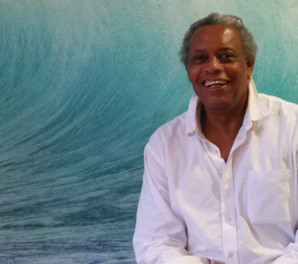


Gerard Senehi’s Limitless Experience
Gerard Senehi’s new video shows different ways he infuses his brand of optimism – one where not knowing creates the space to discover so much more.
As a mentalist and entertainer, he loves to create an experience that people find difficult to comprehend or categorize. This not only creates a sense of wonder and mystery but makes room for what’s Unknown, and creates an opening through which something extraordinary can come through…
Gerard says, “As human beings we have limitless capacity to think, create, and care…and thus there is an infinite space where so much is possible. The biggest limitation to that space is thinking we already know.”
“How Living in Big Inner Cities Makes People Healthier and Happier” by Derek Beres

People participate in a free outdoor yoga class in Bryant Park in New York City. (Spencer Platt/Getty Images)
It’s strange, this desire we show for neatly packaged stories. Our brains love easy narratives. We like our folklore quickly digestible. Take the agriculture myth: humans were hunter-gatherers, someone figured out farming, the world began planting. End of story.
That story is way more complex, as James C Scott argues in his fascinating new survey of the formation of the earliest states, Against the Grain. Sedentism didn’t just happen; societies rebelled against the formation of cities. The transition to an agrarian state didn’t take one generation, but 160 of them—4,000 years in total.
“Clearly our ancestors did not rush headlong into the Neolithic revolution or into the arms of the earliest states,” writes Scott.
Interestingly, common history states that agriculture happened, then people started clustering together. Yet there is evidence that sedentism began occurring before farms were in place. Widespread food distribution networks—and the tax revenue they supplied—might have taken millennia, but humans forming cities is old indeed. Humans have long known that crowding into small spaces and working together is to our benefit.

Commuters pass through Grand Central Terminal during morning rush hour in New York City. (Mario Tama/Getty Images)
Which is what recent research published in The Lancet argues. Recognizing the global pervasiveness of obesity and diseases too much sedentism promotes, such as cardiovascular disease and type 2 diabetes, the study’s authors claim that living in areas with tight social networks fosters physical activity and emotional bonds. As co-author Chinmoy Sarkar told Reuters,
“As cities get more and more compact, they become more walkable. In denser residential areas, they are better designed and more attractive destinations. We are less dependent on our cars and use public transport more.”
This research comes in the wake of prime minister Theresa May’s announcement that the British government is lending $2.6 billion for the construction of 25,000 rental homes in the social housing sector. This is on top of another $13.2 billion that will help new homeowners secure property by lowering deposit requirements.
For the paper’s authors, Sarkar and Chris Webster, time and space are relevant issues. Lower population densities, they argue in a paper from January, means less specialized services, fewer chances for social interactions, less populated city centers, and longer travel times for health care services (specifically, emergency services). Of course, infectious diseases are more likely to spread in densely packed neighborhoods, though the authors believe quicker access to health care makes it a worthwhile tradeoff.
We often treat disease like early cities, as if a clear-cut story explains the process: you get sick, you need medicine, you get better. Only disease does not work like that either. In fact, one of the number one indicators that your immune system will resist disease is your social support network. Humans are no islands floating through a world of infectious agents. We are an interconnected species inextricably linked to our environment. The more we populate our environment with others, the healthier we are.
This does not mean a city is automatically utopia, however. The authors point out that design is crucial:
“Health status and risk originates from complex interactions between an individual’s inherent physiology and genetics interacting with contextual socio-economic, built and natural environmental variables.”
The built environment (BE) must promote active living, which includes plenty of green areas, spaces for walking and cycling, and make access to public transportation and designated walking regions easy to reach.Being able to socially interact is critical, so designing such meeting places is mandatory. Spaces for natural healing, such as parks and hiking trails, reduces physiological and psychological stress. Reducing noise and air pollution is a must. And facilitating nutritious food companies while limiting junk food providers is also paramount to the success of a healthy city.

Patrons sit before a free concert in Central Park by the New York Philharmonic in New York City. (Mario Tama/Getty Images)
Such models are hard to imagine in a free market like America, especially given its growing insistence on less governmental intervention. While a city like Los Angeles, where I live, is booming with fresh, natural food choices, we are also experiencing a housing crisis for both homeless and low income residents as well as middle class citizens, plus a dearth of immediate green spaces.
The authors do consider supply-side economics next to public health initiatives. While admitting regulations are sometimes necessary, they point to high taxes on cigarettes and alcohol as effective means for promoting healthier lifestyles, wondering if that can translate into city planning. Such a translation is difficult to imagine in some cities, however. The median home price in my neighborhood of Palms is $939,800, well beyond the means of most Angelenos. The health of cities, in some ways, is like the health of individuals: good for those who can afford it.
Which doesn’t escape the authors. Having spent decades in city planning, they conclude with their own questions. Does one giant park or several smaller ones make more sense? What is the proper balance of public zones and private real estate? How are different age demographics best served from neighborhood to neighborhood? How do you best separate industry, a necessary component of a city, with residential regions?
Sarkar is optimistic that well informed data presented to local governments will be a no-brainer:
“With evidence, we can plan multi-functional, attractive neighborhoods that promote physical activity, promote social interaction, and shield from negatives such as pollution and feeling unsafe.”
Their questions above, among many others, will define city planning in the decades to come. One thing the authors are certain of is that cities are better for the health of humans. How to honor that fact remains to be seen.
—
Derek is the author of Whole Motion: Training Your Brain and Body For Optimal Health. Based in Los Angeles, he is working on a new book about spiritual consumerism. Stay in touch on Facebook and Twitter.
Blame it on Theatre! (with forward by Calvin Harris, HWM)
It is fall, here in Southern California, as such the days are growing shorter, and the need for physical recreation now turns to mental recreation, due to hours spent indoors increases, and as the sun moves across the sky more quickly and drops from the horizon sooner.
One preoccupation besides the Football games that can move to the forefront of things to do is the Fall-Winter Theater Season, this can include anything from state-of-the-art theaters to a world-renowned symphony and a plethora of live performances, I’d suggest giving a live stage performance ago. Much that I have learned about human interaction or some of what I now know about my own inner-personal interactions was revealed to me in a non-combative observational way, presented to me on stage.
I began looking for these clues, after hearing my Teacher Thane, tell about these insights in his class lectures for The Prosperos on self- observation and self-awareness. He would reference live theatrical performance or musicals as a way to unlock some unknown factor, to perceive something about our situation that we normally would not see, a place to glimpse authenticity, or Truth based reality rather than on sense testimony alone.
In the Foot Lights LA, a theatrical publication handed out at the recent musical performance of Cabaret, that I attended, I had a chance to read a story, I’d like to share. written by Peter Finlayson, called Blame it on Theatre. The article had a resonance with this concept of seeing beyond sense testimony and the function of Theatre.
“Blame it on Theatre” by Peter Finlayson
I’ve found myself in an interesting position of late. Through the genius of social media, I’ve had the opportunity of being reacquainted with people I’ve not seen since I came to California. Back in 1981, it means I’ve had a bit of catching up to do. The first thing I discovered was that for those that were true friends, well, we are still friends. Getting past all the ‘what have you been up to’ took about a nano-second before we were back to conversation and feeling we shared as if we hadn’t missed a beat in 35 plus years.
What was a little surprising was that even though I am still most assuredly a child of the 60’s and an unabashed left-leaning liberal, many of my old friends had adopted more conservative positions. So as always been my want, political discussion quickly ensued, and the current political climate certainly added fuel to the debate.
At the same time, I’ve also had the opportunity to engage with my more recently acquired friends, mostly theatre-makers, on the same topics. The resulting conversations really brought me to think – how did I, a radical loud-mouthed protester who’d marched on Washington, the capital not the man, suddenly appear to be opposed to both right and left, positions that were being vociferously expressed to me by people I assumed to share values.
I’ve become a centrist? Not possible!
Thank god, those that were friends are still friends, and no permanent scars were created. But why was it that I was arguing against both sides, this is all in regard to free speech, and I was essentially saying the exact same thing to both, and being met with exhaustive fervency in opposition.
I blame it on Theatre!
What? Yep! My passion for change has been tempered by my passion for theatre. For a while I was feeling a bit like Data on Star Trek, Next Generation, rapidly scanning my memories as to what has influenced me the most to seek a position of principal with the understanding that the principal has limitations.
Theatre Always serves as an allegory, and in the 3-plus millennia of recorded history, there is an over-riding principle that is essentially the moral of virtually every play. Moderation. Heroes become tragic when they act in haste or out of self-interest. In comedy, heroes become fools when acting for the same reasons. Causes are not noble if concern for “others” is not part of the equation.
Before you scream foul and yell that theatre is not a voice of caution, hear me out. It is not caution that drives theatre, it is understanding. It is the demand that for me to reflect upon the evil men do, I must first understand that they come not from a position of evil, but from a position of self-interest. “My morals are more important”, “my wants are more immediate”, “my judgment is superior”.
Theatre Teaches us the nuances, the difference between caution and moderation. Theatre teaches us that we may be individuals, but are more assuredly a part of the whole. What impacts us, impacts everyone.
In its very process of creating a living play, the moderation I speak of is demanded of everyone at every level. A play, a musical, is the very essence of the social experience.
The participants, from writer to stagehand, are individuals. Each has a vision and a want to execute the play to bring a sense of fulfillment to the audience. Yet the writer ultimately knows that there are words that will change. The actor knows that the director is there to make sure the performance fits the scene. The designer may want the best set he or she has ever created, but it must serve the play.
Individually we are as the theatre-makers. Our will, our reason, our logic, dictates that certain things must occur for the betterment of humanity. The merits of the effort are determined not by the contributor, but the reality of value perceived by those around us. In a very real sense, it is the whole of humanity that determines what is best.
For more than 3000 years, theatre has expressed the position that the consequence of action is more important than the action itself. It demands of both artist and audience to take a journey of understanding and at a conclusion, become aware that intent is never the cause of the conclusion, the intent is only a catalyst to a journey.
The beauty that is expressed in theatre is that we must take the journey. We must examine the life we witness, we must encourage action, but we must do so with the weight of humanity upon our shoulders.
So what’s the takeaway? Jacques in Shakespeare’s “As You Like It.” tells us, “All the world’s a stage, and all the men and women merely players….” While the monologue is about Life played out on stages…. I think it also an admonition. Play the role, fit into the moment.
Respect ourselves for the roles we play, but accept that our wants will not be the determiner of accomplishments. Theatre teaches us to moderate our expectations to see beyond the vista of our eyes, and then act.
Hope you found value.
Calvin
Intense Scorpio Transits in October (from Robert McEwen, HWM)
Jupiter went into Scorpio a few days ago for one year. Your power base will expand if you learn how to use this. Secrets will come out, and emotional connections that are intensely passionate. Mysteries experience.
Mercury joined it today for one month so words will be either withheld or shared. Words of release, as in RHS, and transformations and healing energy.
Moon will enter Scorpio on the 19th lunar energy intensifies it even more. Makes it more personal.
Sun will express it creatively or revenge like on the evening of the 19th, after the new Moon in Libra by a few hours.
Then the Sun enters Scorpio on the 22nd bringing that expression of in more male outward expressive way for 30 days.
In other words, silent emotional energies will erupt in your consciousness. Excellent for RHS work.
Robert McEwen, H.W., M.
Mentor and Astrologer
robbystarman@aol.com
503 706-0396
Types of AI

William S. Burroughs on panic

“Panic is the sudden realization that everything around you is alive.”
—William S. Burroughs, from Ghost of Chance
William Seward Burroughs II (February 5, 1914 – August 2, 1997) was an American writer and artist. Burroughs was a primary figure of the Beat Generation and a major postmodernist author whose influence is considered to have affected a range of popular culture as well as literature. Wikipedia
“5 of the Biggest Questions That Science Can’t Answer Yet” by Scotty Hendricks

This the European Space Agency photograph released October 25, 2001 shows a supermassive black hole in the core of galaxy named MCG-6-30-15 as seen through the X-ray Multi-Mirror Mission (XMM-Newton) satellite. (ESA/Getty Images)
Science is one of the greatest tools for expanding understanding that mankind ever devised. While it’s reasonable to trust that science will eventually answer our unsolved questions, assuming that it has all of the answers right now is not. Here, we look at five of the biggest unanswered questions in science. There is no reason to think that we won’t get the answers to these questions eventually, but right now these are the issues on the cutting edge of science.
What are the boundaries of the Universe?
The universe is expanding, which we’ve known for a while. But where is, or what is, the boundary? We can only see a part of the universe, the so called “observable universe”, which goes on for 46.5 billion light years in all directions. However, we can only interact with things inside of 16 billion light years. But how far does it go past that?
Thanks to cosmic background radiation and the path it takes, scientists currently believe the universe is flat—and therefore infinite. However, if there is even a slight curve to the universe, one smaller than the margin of error in their observations, then the universe would be a sphere. Similarly, we can’t see anything past the observable universe, so we can rely only on our math to say if the universe is likely to be finite or infinite. The final answer on the exact size of the cosmos may never be knowable.

Credit: NASA/WMAP Science Team via Phys.org
What is consciousness?
While the question of what consciousness is exactly belongs to philosophy, the question of how it works is a problem for science. How is it that a grey mass of cells, themselves made of carbon, is able to understand its own existence? In one study from Harvard, scientists mapped the brain activity of people in comas and compared it to typical MRI scans. In the healthy brain scans, the brain stem and portions of the frontal cortex were connected, creating a neural network tying parts of the brain that work with awareness to the automatic systems in the body. In every coma patient, all three of the regions in this network were out of commission. Could consciousness just be connections? This study suggests it.
In his Big Think interview, Daniel Dennett suggests that it is nothing more than“mundane tricks” in the brain.
What is dark energy?
The universe is expanding, and that’s getting faster all the time. We say that the cause of the acceleration is “Dark Energy”, but what is it? Right now, we don’t really have any idea. The hypothesis is rather ad hoc, and is an attempt to account for the increasing speed of the universe’s expansion. In practical terms, it works like anti-gravity. One hypothesis is that it is the unchanging energy of empty space, also called the cosmological constant.
However, while it is simple to add that constant to Einstein’s theories—and quantum theories give us a field energy to work with—the same quantum theories suggest that constant should be much stronger than it is.
What happened Before the Big Bang?
The Big Bang is often thought of as an explosion which caused the beginning of our universe. However, it is better understood as the point where space began to expand and the current laws of physics begin. There was no explosion. Working backwards from now, we can show that all the matter in the universe was in one place at the same time. At that moment, the universe began to expand and the laws of nature, as we understand them, begin to take shape. But what happened before that?
To know, we will need a theory that can combine gravity with quantum mechanics just to get started. Right now, our laws of physics break down just after the big bang happens. If we can show that quantum mechanics was accurate before the big bang, then we could show that the entire universe emerged from nothing; the result of quantum fluctuation.
In her Big Think interview, Dr. Katie Freese explains more.
Is there a limit to computing power?
Right now, many people subscribe to Moore’s law, the notion that there is a constant rate to how cheap and how powerful computer chips become over time. But what happens when you can’t fit anymore elements onto a chip? Moore himself suggested that his law will end in 2025 when transistors can’t be made any smaller, saying that we will be forced to build larger machines to get more computing power after that. Others look to new processing techniques and exotic materials to make them with to continue to the growth in power.
Astronomers Strike Gravitational Gold In Colliding Neutron Stars
October 16, 201710:01 AM ET


The collision of two neutron stars, seen in an artist’s rendering, created both gravitational waves and gamma rays. Researchers used those signals to locate the event with optical telescopes.
Robin Dienel/Carnegie Institution for Science
For the first time, scientists have caught two neutron stars in the act of colliding, revealing that these strange smashups are the source of heavy elements such as gold and platinum.
The discovery, announced Monday at a news conference and in scientific reports written by some 3,500 researchers, solves a long-standing mystery about the origin of these heavy elements — which are found in everything from wedding rings to cellphones to nuclear weapons.
It’s also a dramatic demonstration of how astrophysics is being transformed by humanity’s newfound ability to detect gravitational waves, ripples in the fabric of space-time that are created when massive objects spin around each other and finally collide.
“It’s so beautiful. It’s so beautiful it makes me want to cry. It’s the fulfillment of dozens, hundreds, thousands of people’s efforts, but it’s also the fulfillment of an idea suddenly becoming real,” says Peter Saulson of Syracuse University, who has spent more than three decades working on the detection of gravitational waves.
Albert Einstein predicted the existence of these ripples more than a century ago, but scientists didn’t manage to detect them until 2015. Until now, they’d made only four such detections, and each time the distortions in space-time were caused by the collision of two black holes.
That bizarre phenomenon, however, can’t normally be seen by telescopes that look for light. Neutron stars, by contrast, spew out visible cosmic fireworks when they come together. These incredibly dense stars are as small as cities like New York and yet have more mass than our sun.
In this case, what scientists managed to spot was a pair of neutron stars that likely spent more than 11 billion years circling each other more and more closely before finally slamming together about 130 million years ago.
Here’s how it actually looked to astronomers

This explosive impact created ripples in space-time that traveled all the way to Earth, arriving at 8:41 a.m. ET on Aug. 17 and setting off detectors in the Laser Interferometer Gravitational-Wave Observatory — whose founders won the Nobel Prize in physics earlier this month.
That morning, all of a sudden, scientists’ cellphones began to ring.
“A phone alarm went off in my pocket,” recalls David Shoemaker of MIT, a physicist who serves as the spokesman for the LIGO Scientific Collaboration. He had been in a mundane organizational meeting, which was immediately abandoned. “The morning was transformed from ordinary bureaucracy to a morning of slightly breathless discovery as we tried to figure out how we could most quickly get the news out to observers to try and make the most of this event.”
What LIGO had seen did not look like the calling card of colliding black holes.
Importantly, two seconds after the gravitational waves’ detection, an orbiting NASA telescope registered an extremely powerful explosion called a gamma ray burst. It apparently came from the same region of the sky that had produced the gravitational waves.
“That put us into a very high state of excitement,” Shoemaker says.

Gravitational wave observatories, like this one in Italy, use giant arms to measure tiny ripples in the fabric of space-time.
The Virgo collaboration/CCO 1.0
Quickly, the LIGO team consulted with colleagues at Virgo, another gravitational wave detector located near Pisa, Italy. That lab had detected the waves, too, and their data helped pinpoint the exact patch of sky where astronomers should aim their telescopes.
The location was in the southern skies, so that meant the first place where astronomers could get to work was Chile. Astronomer Benjamin Shappee was there — and he was asleep.
“I actually woke up in the afternoon, because I work all night when I’m observing, and I just looked at my phone and I saw it was just covered with emails about a new source that was discovered by LIGO,” says Shappee, a professor at the University of Hawaii who was a Hubble fellow at the Carnegie Observatories during the discovery. “My first thought was just, ‘We’re in the perfect position to try to find this.’ ”
He and his colleagues began a mad scramble to figure out which galaxies to look at with which telescopes. As soon as the sun went down in Chile, they started searching for a new source of light among the familiar stars.
“Almost right off the bat, maybe 15 minutes into observing, I get an email basically saying that they think they found something from the Swope [Telescope], which is amazing,” Shappee says. “And then I get an email almost immediately from Josh Simon, also saying he was on the same galaxy, took another image and found the same source, and it’s real. And so at that point, I said, ‘This is almost too easy.’ ”
Less than 11 hours after the gravitational-wave detectors sounded the alarm, astronomers had their first glimpse of this never-before-seen event involving the neutron stars.
The Carnegie team worked quickly to make observations, because it had only about an hour until this spot was no longer visible in the sky. “It was probably the most surreal experience of my professional career. It was just completely unexpected, out of the blue,” Shappee says.
Other groups were searching, too, with other telescopes.
“We started scanning the region of the sky where LIGO told us the gravitational waves came from, and it took us 45 minutes until we found it,” says Edo Berger, an astronomer at the Harvard-Smithsonian Center for Astrophysics. “It was an incredibly amazing moment, because it just stood out there. It was kind of like searching for treasure and then seeing X marks the spot.”
What all the images showed was a brand-new point of light that started out blueish and then faded to red. This didn’t completely match what theorists thought colliding neutron stars should look like — but it was all close enough that Daniel Kasen, a theoretical astrophysicist at the University of California, Berkeley, found the whole experience a little weird.
“Even though this was an event that had never been seen before in human history, what it looked like was deeply familiar because it resembled very closely the predictions we had been making,” Kasen says. “Before these observations, what happened when two neutron stars merged was basically just a figment of theorists’ imaginations and their computer simulations.”
He spent late nights watching the data come in and says the colliding stars spewed out a big cloud of debris.
“That debris is strange stuff. It’s gold and platinum, but it’s mixed in with what you’d call just regular radioactive waste, and there’s this big radioactive waste cloud that just starts mushrooming out from the merger site,” Kasen says. “It starts out small, about the size of a small city, but it’s moving so fast — a few tenths of the speed of light — that after a day it’s a cloud the size of the solar system.”
According to his estimates, this neutron star collision produced around 200 Earth masses of pure gold, and maybe 500 Earth masses of platinum. “It’s a ridiculously huge amount on human scales,” Kasen says. He personally has a platinum wedding ring and notes that “it’s crazy to think that these things that seem very far out and kind of exotic actually impact the world and us in kind of intimate ways.”
The discovery has consumed the astronomical community in recent weeks. “By my count, 70 astronomical telescopes started looking for this event in the area of the sky that we found it,” says David Reitze, a physicist at Caltech who is executive director of the LIGO project. “This event, in some sense, is the first event that we’ve seen in gravitational waves and in light. It’s a new way to look at the universe.”
What could gravitational waves help astronomers see next? “If we were lucky, we would see a supernova from somewhere in our galaxy,” Reitze says, though he notes that these star explosions go off only every 50 years or so. Perhaps the next cataclysm on deck will be something like a black hole colliding with a neutron star.
(Submitted by Michael Kelly.)
Historians Discover Meditation Spread From Ancient China By Annoying Monk Who Wouldn’t Shut Up About How It Changed His Life (theonion.com)

Artworks of the period depict the monk irritatingly recounting how even after just a few days of meditation, he was already feeling more present in his own mind.
NEW YORK—In a groundbreaking new study published Friday in The Journal Of East Asian Studies, a team of leading historians has proved that meditation originally spread from ancient China because a single, highly annoying monk went around telling everyone how much it had changed his life.
Analyzing documents uncovered across the Eurasian continent, researchers determined that the monk, who lived in the seventh century A.D. and learned rudimentary breathing and visualization exercises from a group of Mahayana Buddhists, traveled widely and talked constantly about how practicing meditation for only a week had fundamentally altered his personal outlook. From the Korean peninsula to the Central Asian steppes, he is believed to have aggravated people everywhere he went, inevitably shifting every conversation to the importance of mindfulness and being centered, even when it was clear no one was interested.
“Our research shows that from Mongolia all the way down to Java, everyone hated this smug prick.”
“There are mentions of an unbearably irritating monk in many texts from the period, and once we realized they were all referring to the same person, we were able to conclude that much of the Eastern world learned about meditation from this one sanctimonious asshole,” said study co-author Sheila Ryan of New York University, explaining that contemporary accounts indicated the monk would travel the Silk Road via merchant caravan, nagging his drivers about the value of observing one’s negative thoughts without resistance or judgment. “For example, scrolls from Asuka-period Japan indicate the island nation’s first exposure to the practice was this monk droning on and on about all the insight he’d gained from a weekend spent meditating in Tibet.
“Our research shows that from Mongolia all the way down to Java, everyone hated this smug prick,” Ryan added.
In the fragments that remain of their written correspondence, traders who traveled the same routes as the monk remarked upon how every time a person said something negative, the exasperating little shit would invariably chime in with unsolicited advice about how they just needed to accept their worries for what they were and learn to appreciate the present moment. Three separate diaries found far apart from one another in present-day Cambodia, Bhutan, and Afghanistan independently verify that whenever the monk bragged about his morning meditation routine, people secretly wanted to punch him in the face.
According to the historians, the evidence they amassed has allowed them to confirm that a figure who appears in several gombi-style paintings from the period is in fact this same monk. In one typical depiction, which places the monk in the ancient city-state of Srivijaya around 680 A.D., he is seen sitting on a mat and meditating in the middle of a busy market square as visibly annoyed passersby shuffle past, many of them appearing to shake their heads, roll their eyes, or stare at him in quiet derision.
To this day, scholars have observed, oral histories passed down for centuries in remote parts of rural China tell of a monk who pestered the fuck out of everyone he could find until they reluctantly agreed to attend his shitty introduction to mindfulness course.
“In his extensive travelogues, the Tang dynasty writer Yi Jing describes an episode in which a man we now believe to have been this monk continually disrupts a hard-at-work blacksmith with lectures about how the mind is a muscle that must be exercised just like any other,” Ryan said. “Apparently, the only thing this pain-in-the-ass ever talked about was how spending 10 minutes a day focusing on his breathing had made him more relaxed and productive. He kept badgering everyone to let him lead them through a guided meditation so they could see how great it was. Some people even tried it just to get him to shut the fuck up.”
“Our findings suggest he spread meditation to as much as 40 percent of Asia,” she continued. “He might have kept going, too, but after the monk told the Khmer emperor Jayavarman II that his empire would be much larger if he just tried a few simple stress-reduction techniques, he was beheaded on the spot.”