
In this talk, Rick introduces us to a variety of ways to free ourselves from self-defeating patterns that were the result of formative experiences throughout our lives from infancy to the present, and even before conception during the evolution of life on this planet, that evolution being replayed during our gestation in our mother’s womb. This video is also an introduction to the Prosperos Class called Releasing the Hidden Splendor. To find out more about that Class, click on: http://theprosperos.org/community/classes/rhsclass_201911
Every Atom Belonging to Me as Good Belongs to You: Whitman’s Immortal Words, Illustrated in Stunning Cyanotype
By Maria Popova (brainpickings.org)

“Every atom belonging to me as good belongs to you,” Walt Whitman wrote in one of his profoundest verses, in a golden age of science and social change, yet an era at least as divisive as ours. The sentiment became a focal point for Figuring and inspiration for The Astronomy of Walt Whitman — the special pop-up edition of The Universe in Verse, taking place on Governors Island on October 26, 2019.
In the generous spirit of the show — an immense labor of love, with everyone involved donating their time and talent to the celebration of art, science, and community — artist Lia Halloran has painted a stunning cyanotype incarnation of Whitman’s ennobling words, which we are making available as a high-quality art print and framed wall art, with 100% of proceeds benefiting the endeavor to build New York City’s first public observatory at Pioneer Works.

Art by Lia Halloran for The Universe in Verse: The Astronomy of Walt Whitman. Available as a high-quality art print and framed wall art.
Lia is also donating the original painting to an auction benefiting Fulcrum Arts — a wonderful LA-based nonprofit at the nexus of art, science, and social change, advancing the equitable representation of women, people of color, and LGBTQ artists.
A limited number of prints will be available at the Governors Island gathering on Saturday — join us for an unusual, magical, and unrepeatable experience that widens our news-constricted perspective and invites us to unforget our shared belonging through the lucidity of science and the luminosity of poetry.
Jay Griffiths, “What we’re doing is utterly utterly necessary and right…” | Extinction Rebellion
Extinction Rebellion “Each generation is given two things. One is the gift of the world and the other is the duty of keeping it safe for those to come. The generations of yesterday trust those of today to not take more than their share, and those of tomorrow trust their elders to care for it. The contract is broken and it is happening on our watch. A pathological obsession with money and profit is engineering the breakdown. The system is contemptuous of humanity and the living world and held in place by a toxic media… power without truth; by a toxic finance… power without compassion; and by toxic politics… power without principle. ” , Jay Griffiths reads from ‘Why We Rebel’ as the Red Brigade occupies the steps of the City of London Magistrates’ Court.
Jay Griffiths is on trial for her work with Extinction Rebellion and will plead not-guilty. Jay is a British writer and author of Wild: An Elemental Journey, Pip Pip: A Sideways Look at Time, Anarchipelago, A Love Letter from a Stray Moon, Kith: The Riddle of the Childscape and Tristimania: A Diary of Manic Depression. https://en.wikipedia.org/wiki/Jay_Gri… If not now, when? …… If not you, who? Everybody now! Join the rebellion: https://Rebellion.Earth/ International: https://Rebellion.Global/#EverybodyNow 1. #TellTheTruth 2. #ActNow 3. #BeyondPolitics World Map of Extinction Rebellion Groups: http://bit.ly/2IGXuM7
It’s Official: Gen Z is Rejecting the Gender Binary & the World Needs to Follow Suit

by Amelia Edelman Oct 18, 2019 (sheknows.com)

We millennials (yes, I am an elder millennial thank you very much) get a lot of crap about a lot of things — from our start-up culture to our supposed entitlement to our avocado toast. But one thing I’m grateful for as a millennial parent is the ability to see and (at least somewhat) understand perspectives from the generations before and after us: Ye Olde Boomers and Gen X behind us, and Gen Z leading the way forward. And let me just say: thank god for Gen Z leading the way forward. These kids — despite their generation facing unprecedented stressors and all-time high mental health risks — are blazing trails in fighting for gun reform, climate justice, equality for everyone everywhere on the LGBTQIA+ spectrum, and more. And what can parents do to support them? In short: Shut up, sit down, and let the kids show the world what’s up.
That’s precisely why we at SHE Media followed a group of 25 preteens and teens for five years through our Hatch Kids project: to learn about these kids and from these kids as they evolve and grow in today’s weird, wild, but wonderful teen culture.
Recently, we sat down with these kids to get their P.O.V. on body confidence and vaping culture. And today they’re getting real about gender: the binary, the arbitrary roles, and why it’s high time we busted free from all of the above. Today’s teens are more gender-nonconforming and gender-fluid than any previous generation, and it’s serving them well.
A 2018 study from the journal Pediatrics, for example, noted that nearly 3% of kids they studied identified as transgender, gender-nonconforming, or non-binary; compare that with an earlier UCLA study (from 2017, so not that much earlier) that found only .7% of teens identifying as transgender, and it’s hard to deny the expansion of gender identity, gender terminology, or both. As for our five-year focus group of 25 kids, our recent follow-up interviews with them support just that trend, with an increase of 10% or more in un-articulated or non-binary gender identities among the 25 kids.
“Gender identity is not what you’re born with; it’s who you are,” one of the Hatch kids, Reed, tells SheKnows, reiterating what science has long known about gender (that it’s a social construct) — but a fact that this country seems oh-so-draggingly delayed in embracing. (Case in point: Why is it so damn hard to let trans kids use the bathroom they’re comfortable with??) “It doesn’t matter what they think,” Reed adds. “It just matters what I think, and how I imagine myself.”
Skye, for one, has reimagined the gender — and the pronouns — they were assigned at birth.
“I’m gender-neutral and I use they/them pronouns,” one teen — formerly referred to as Martha, now self-identified as Skye — tells SheKnows. When asked which bathroom they would use, Skye replies, “Whichever one has a shorter line.” Um, you can hang with us anytime for that response, Skye.
Skye goes on to explain that they’ve spent these past five years we’ve been following their story truly struggling with their gender before coming out as non-binary. “As of this summer I feel a lot more confident. I just felt really weird about myself [before]…I have some pretty specific memories of questioning my gender when I was younger… I’d suppress that.”
“I’m not a boy. I’m also not a girl,” Skye continues. And realizing and acknowledging this? “That was a really important step for me to take,” they add.
And Skye isn’t alone in their questioning. “Right now, I think I identify as male? I’m still kind of figuring it out,” another teen, Zaki, tells SheKnows.
But what’s the biggest struggle for kids coming into their own and identifying as gender-nonconforming? Aside from, you know, U.S. politics (see: aforementioned bathroom awfuless), a huge obstacle can, sadly, be the parents.
“My friends especially immediately started using the right pronouns and correcting themselves when they used the wrong ones,” Skye explains, “as well as using my [new] name as soon as I told them that’s the name I was comfortable with.” But the adults in their life? Not as accommodating.
“I think it’s more nerve-wracking to come out to your parents,” 19-year-old Sadie tells SheKnows, explaining that we expect folks of our own generation to be understanding — older generations, not so much.
So what can we, the parents — whether we’re elder millennials or elder generations entirely — do? Listen to and validate your child and their gender identity. Don’t question, don’t gloss over it, and above all, don’t refer to it as a “phase.” Accepting them for who they are is by far the most important thing you can do to be a good parent to your LGBTQ child — or any child, for that matter.
After all, as Zaki says, “It’s important to be yourself. Because if you’re not yourself, who are you?”
Watch the full video above for more of these firsthand Gen Z takes — and take note. Because these kids are our future, and they’re going to crush it.
(Contributed by Janet Cornwell, H.W., m.)
Rocketman (2019) – Trailer
Paramount Pictures The only way to tell his story is to live his fantasy. ✨ Taron Egerton is Elton John in #Rocketman, in theatres May 31. Watch the new trailer now! Get tickets: http://tickets.rocketman.movie Listen to “Rocket Man” from the album ‘Rocketman (Music From The Motion Picture)’: https://CastOfRocketman.lnk.to/RocketMan Pre-order/Pre-save the album now!
Out 24 May: https://castofrocketman.lnk.to/Rocket…#Rocketman is an epic musical fantasy about the incredible human story of Elton John’s breakthrough years. The film follows the fantastical journey of transformation from shy piano prodigy Reginald Dwight into international superstar Elton John. This inspirational story – set to Elton John’s most beloved songs and performed by star Taron Egerton – tells the universally relatable story of how a small-town boy became one of the most iconic figures in pop culture. ROCKETMAN also stars Jamie Bell as Elton’s longtime lyricist and writing partner Bernie Taupin, Richard Madden as Elton’s first manager, John Reid, and Bryce Dallas Howard as Elton’s mother Sheila Farebrother.
“This is not a pipe.”
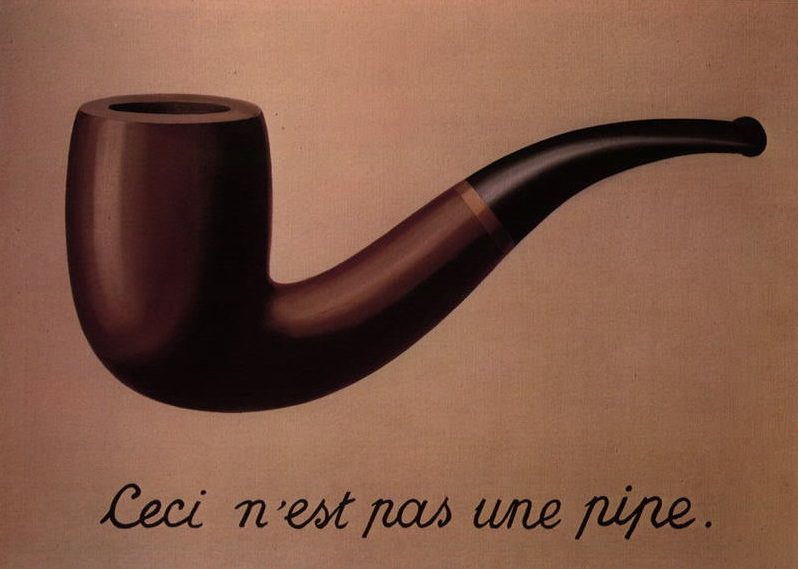
René MagritteBelgian artist
René François Ghislain Magritte (November 21, 1898 – August 15, 1967) was a Belgian Surrealist artist. He became well known for creating a number of witty and thought-provoking images. Often depicting ordinary objects in an unusual context, his work is known for challenging observers’ preconditioned perceptions of reality. Wikipedia
Have you ever explored your Dark Side?
Taking Ayahuasca When You’re a Senior Citizen
Some older adults are dabbling in this powerful psychedelic, which is mostly illegal in the United States.

By Casey Schwartz
- Published Oct. 19, 2019 (NYTimes.com)
At 74, the venture capitalist George Sarlo might not have seemed an obvious candidate for an ayahuasca experience. Mr. Sarlo, a Hungarian Jewish immigrant who arrived in the United States in 1956, has had great professional success as the co-founder of Walden Venture Capital. He lives in an upscale San Francisco neighborhood, in a large house with an unobstructed view of the Golden Gate Bridge.
And yet something was always lacking. Mr. Sarlo’s father had disappeared from their Budapest home in 1942. He had been drafted in a forced labor battalion, an experience he did not survive. At age 4, George had told himself that it was because he was “a bad boy” that his father had left that day, early in the morning, without saying goodbye. He believes that he never recovered from that early loss.
Mr. Sarlo’s close friend, a doctor, told him about ayahuasca, a psychedelic brew made from the Banisteriopsis caapi vine, native to the Amazon. Used for centuries in sacred healing traditions throughout Central and South America, ayahuasca is now gaining popularity around the world, featured in recent headlines about the habits of Silicon Valley, though N, N-Dimethyltryptamine or DMT, the active ingredient in an ayahuasca trip, is mostly illegal in the United States (there are a couple of exceptions, under religious exemption). Ayahuasca tourism is thriving, with more and more people happy to fly thousands of miles to take part in weeklong ceremonies in Peruvian jungles, or to seek out more luxurious contexts, like a four-star resort that comes complete with masseuses, pools, and state of the art fitness centers. And, notably, ayahuasca’s increasing popularity knows no age limits: many of those now showing interest are squarely in Mr. Sarlo’s own demographic.

Mr. Sarlo himself was initially skeptical. Taking ayahuasca would entail a potentially distressing night of hallucinations, and excretions of all kind, especially vomiting. One of the most notorious aspects of an ayahuasca journey is the violent purging involved. But he still decided to head to Yelapa, a small village in Mexico, and swallow down the bitter brew.
That night, he saw a series of “old-fashioned photographs of soldiers in Hungarian uniforms,” he said, and black-and-white movie footage. But he was scared, and sick, and swore that if he managed to come out of the hallucination, he would never go back in. The next day, exhausted and uncomprehending, he told the shaman that he was disappointed he hadn’t found his father. The shaman told him he should try again the next night: on the Mexican Day of the Dead.
Mr. Sarlo decided it was worth one more try. He drank again. Very quickly, he saw a forest covered with snow. “There were dead bodies all over the place,” he said. “There was one skeleton sticking out of the snow. And somehow I knew that was my father.
“I don’t know exactly how we communicated because I didn’t see anyone alive but I heard his voice. He came to me and I asked him a very important question, which was: ‘why didn’t you say goodbye?’ He said, he thought he could get out of it, and be back the same day, so why wake up little George?
“I asked a second question: ‘Did you love me?’ He pointed at the skeleton sticking out of the snow.” The skeleton’s mouth hung open. “He said: look at me. That’s my last breath. And with my last breath, I blessed you and I promised to guard you all your life.”
Mr. Sarlo said that afterward, something shifted. He realized that his life had been “absolutely full of miracles,” he said. “It changed my life completely.”
Granny Takes a Trip
His story is a testament to one strain of thinking about psychedelics: that, as Michael Pollan put it, “psychedelics might be wasted on the young.” Mr. Pollan, the author of the recent best seller “How To Change Your Mind,” a history of psychedelics and a chronicle of his own experiences trying them, said in an interview, “It’s not that young people don’t have valuable experiences, they do. It’s that what psychedelics seem to be particularly good for is jogging us out of our grooves of habit and allowing us to acquire a fresh perspective on familiar things. And as you get older, you get mired in habits.”

Indeed, Mr. Pollan, who is 64 (and has written for The Times), said he was surprised by the number of people he encountered when writing his book in their 70s and 80s expressing interest in trying psychedelics. Though perhaps he shouldn’t have been: as he himself has written, one of the reasons to come to psychedelics later in life is to tangle with one’s own mortality. “This is a taboo topic in our culture, nobody talks about death,” he said. “And with ayahuasca in particular, which can sponsor some pretty dark journeys, people often come back with insights about death.”
Scientific data on older people using ayahuasca is elusive but anecdotal evidence is growing.
At Rythmia, a high-end retreat which offers ayahuasca ceremonies in Costa Rica, Gerry Powell, the owner, carefully tracks all the guests who come for a week of plant medicine. Since opening in 2016, Mr. Powell said that about 6,000 people had stayed at Rythmia; of that number, more than 15 percent have been 65 or older. Every week, he said, there is at least one person in their late 70s partaking of ayahuasca, if not their 80s.
Mr. Powell said the motivation for trying ayahuasca differs, as one may expect, according to age. It’s the younger guests, 35 to 55, who tend to come because of problems they’re having, strained relationships, blocked careers. But for the 65-plus demographic, the question is often closer to “What is my purpose?”
“There was a time when you would retire at 63 and be dead at 65,” Mr. Powell said. “But because people are living so much longer, you have more time to do things with your life. People want to feel purposeful.”
Wendy Portnuff, 75, who has attended Rythmia, first went to Costa Rica three years ago with her husband, Tom Lorch, 82. Ms. Portnuff, who lives in San Francisco, is a former manager at IBM who heard about ayahuasca from a friend who is a naturopath. She was intrigued, having been unhappy with her relationship to food for decades. “I had worked on it for so long. I needed to get out of me to complete the process.”

Her husband wasn’t interested in drinking ayahuasca, but came to Costa Rica to support her. When they arrived, he became curious about the experience, but wasn’t able to participate because of heart problems. (At Rythmia all guests are screened in a medical intake both before and upon arrival.) As it happened, both husband and wife wound up having profound experiences that week. Ms. Portnuff, taking part in the nightly ayahuasca ceremonies, had an insight on the very first night that, as she said, “I had been denying my soul. And my soul was trying to speak to me. It was trying to say: ‘I’m okay.’”
Her husband went to a breath-work workshop and had a transformation: years of anger and dissatisfaction with the world melting away. The two say their marriage of 49 years changed dramatically that week. Three years later, they are still on their “second honeymoon.” “I’ve gotten a new lease on life, ”Ms. Portnuff said. “I was thinking that my life is winding down — and it’s not. It’s speeding up. I’m excited every day.”
“There is hope for us old people,” her husband added. Ms. Portnuff has returned to Rythmia two more times to continue her ayahuasca explorations.
People might startle at the image of someone old enough to be their grandparents willingly embarking on a night of hallucinations and vomiting. But Sophia Rokhlin, co-author of the new book on ayahuasca, “When Plants Dream,” said when it comes to the tradition of drinking ayahuasca, nothing could be more natural. In countries like Ecuador, for example, among tribes who practice healing traditions with ayahuasca (more often referred to there as yagé), the dynamic Ms. Rokhlin has more often observed is this: the elders are increasingly the only ones drinking. “The use of ayahuasca and plant medicines is actually quite stigmatized and looked down upon by communities who are really trying to get a leg up in the capitalist economy,” she said. Younger members of communities who partake in ayahuasca ceremonies, she said, are more intent on building materially successful lives in a global economy than they are preserving their local rituals.

But in the United States, Ms. Rokhlin sees the growth of interest among the 70-and-up set as inevitable, for two main reasons: first,more and more scientific studies are being published showing that psychedelic agents have potential in treating persistent mental distress. In one small study of 17 adults, ayahuasca helped relieve recurrent depression. She said that scientifically backed research matters more to this older demographic than trippy “kaleidoscopic articles in Vice” extolling the ayahuasca experience. But as well, she said, for those “closer to the end than the beginning,” there is also an increasing sense that “there’s nothing left to lose.”
And some of these older users are baby boomers, after all, turning again to the kind of mind-expanding substances they remember, at least culturally, from their youth.
This isn’t to say there aren’t risks associated. Heart problems can be disqualifying. So can many prescription medications. Rick Doblin, the founder of Multidisciplinary Association for Psychedelic Studies (or MAPS), notes that for this older age group, a smaller dose of any psychedelic often suffices, as we can become more sensitive to drugs as we age.
Dr. Charles Grob, professor of psychiatry and pediatrics at the UCLA School of Medicine, who has been researching psychedelics since the 1980s, said: “With elderly people, there should be some emphasis on being aware that higher doses may have a level of risk that would not be present with younger individuals. Particularly for cardiovascular problems,” such as arrhythmia. “There needs to be more research.” Dr. Grob advises older people to get a full cardiac work-up before using psychedelics.
Dr. Dan Engle, a psychiatrist in Boulder, Colo., warns that another risk for people in their 70s and 80s is the number of pharmaceutical drugs that are contraindicated for ayahuasca, including the most common form of anti-depressants, Selective Serontonin Reuptake Inhibitors (S.S.R.I.s). “But all of that said, ayahuasca is a visionary medicine and it can heal core psychological wounds,” Dr. Engle said. “At that stage in their life, in their 70s and 80s, ayahuasca can help people become present and have more acceptance.”
None of the medical caveats deterred James Kilkenny, 70. Mr. Kilkenny, a construction manager who lives in Manhattan’s West Village, began experimenting with ayahuasca over the last few years, after hearing about it from a friend who teaches yoga. He said that at this point, he’s done about 25 ayahuasca ceremonies.
He’s certainly not in it for pleasure-seeking. “Ayahuasca journeys for me are not fun,” he said. “They’re painful as hell. They can give you diarrhea and vomiting, sometimes one, sometimes the other, sometimes both at the same time.” Beyond the physical, there’s the unpredictable emotions: At times he has felt trapped, fearful and isolated. “And you can’t think your way out of it.”
Yet Mr. Kilkenny said he has gained extraordinary insight. During one ceremony in Peru, he said he was transported back to the earliest sense he had as a kid. “I knew that my childhood, while it wasn’t abusive, was very very cold. It had very little approval or affection in it. What I saw that night was: picture an upside-down pyramid. That point of the pyramid was the first thought. The first thought was loneliness and need for affection and approval. And the pyramid going up from that was my whole life. So my whole life was based on that one moment, seeking affection and approval.”
For Mr. Kilkenny, what the ayahuasca journeys have provided him with is profound “information.” Now, in the moments when he recognizes his own need for validation, he is less inclined to act on it. This has meant that certain relationships have become untenable, like a longstanding romantic involvement that had a lot to do with “neediness.” The relationship’s dissolution made him sad, but did not crush him.
“My life is a lot quieter and it’s a lot more peaceful,” he said. “Less seeking, less grasping, less needing. Less fear.”Correction: Oct. 17, 2019
An earlier version of this article misstaed the surname of the author of the book “When Plants Dream.” She is Sophia Rokhlin, not Rohklin.
A version of this article appears in print on Oct. 17, 2019, Section D, Page 1 of the New York edition with the headline: Psychedelics in the Golden Years. Order Reprints | Today’s Paper | Subscribe

