Shaping Our Own Life Course By Calvin Harris H.W.,M.

Calvin Harris, H.W., M.

21 October 2019  Calvin’s Journal Entry

In the afterglow of doing a therapeutic RHS release. (a self-encounter technique taught by the Prosperos School of Ontology.)

In those quite moments after such a treatment (RHS) my thoughts come and go like on a slide projector  moving through my mind =

How traditional religious codes of conduct can create empathy for others, and how they still make a difference in people’s lives. Glimpsing, those ideas and their relationship to our spiritual origin,  – We as God’s manifestation and the healing effect it has – physically, mentally, and morally.

Thoughts now move forward –

It is strange to comprehend sometimes that while we go about the business of the day, those things we do almost every day, you know like the list, because if you don’t do the list at lease you’ve though about the list – Handling the demands of your job, having or preparing meals, running errands, caring for family members, chatting with friends, being online, watching TV – the daily routine stuff.  –  Yet in this afterglow, call it meditation, there’s something else that I’ve found deserves a place on the daily list. Something we all want: to live a fuller and more satisfied life, to create a wholeness within our existence.

How to put that feeling into words –

It is the need to see beyond the common conception of life as purely material, a concept flawed with limitations, suffering, and loss, these concepts constantly being reinforced by pop culture and media hype – all marketing to sell us on material products we can’t resist, material conditions that alienates us, and then material remedies designed to restore material health.

Buying into this may seem unavoidable and doing so, may seem to hold the answers. Yet below the surface comes that uneasy feeling of a vacuum, an absence of authenticity and meaning. But right in the mist of that is an opening to the opportunities and guidance derived directly from a mind shift to divine Spirit always present whole and complete as you.

I love history as  teacher, for in it we find clues to living a freer, better daily life. Central to that is the spiritual teachings of  BUDDHA (Siddhartha), MUHAMMAD, CHRIST (Yeshusa – Jesus). Notice I did not say the religions of, but the teachings of the teachers.

I think of Christ followers as not all that different from us today – people coming up against all kinds of problems and looking for  ways to be free of the conflicts of them. Christ pointed the way of consciously breaking the shackles of their conventional, materialistic life view by introducing them to  new idea of life. A concept of abundant life that is whole and present and that already belongs to each one of us – our perfect spiritual identity as Consciousness, Prosperos calls it Christ Consciousness – the ability to think, rather than what you are thinking. Then you are in the likeness of Spirit.

Our origin underpins’ spiritual teachings. It changes how we think of ourselves and of what we’re able to accomplish. As the ability to think and govern thought rather than what thought is about, we then can see ourselves not as creatures of the flesh, vulnerable and lacking, but Conscious aliveness, which gives us greater freedom and a more accurate view of our selves. That we are free to create and master the infinite ideas of  our mind.

Grasping and holding on to that  freeing admission within ourselves as a daily routine, day in and day out, helps us give up thinking constantly of ourselves as having been embedded in matter, with its inabilities and emptiness.

Thus, as Consciousness, what we think about – agree or disagree with, day after day, makes a huge difference over the outcomes within our lives. Thus our responsibility, that is “our ability to respond,”  is to the assumption of self, the family, the School, the community, the nation, the world, knowing the isness of such is beyond a material materialization, we’re challenging ourselves to go beyond whatever would place limits on the presence and expression of Spirit.

That, in turn, makes it easier to see a greater expression of the life, love, beauty, and intelligence to be expressed in our lives. We realize that our real selfhood isn’t in matter. Since that real selfhood is the image and likeness of God, it couldn’t be.

Daily practice will very naturally improves our mental, physical, and moral condition. We find that we have the ability to experience more of this improvement as we more fully accept the true idea of humankind’s as the image and likeness of God. That we live more in accord with the moral and spiritual laws found in Christ Consciousness.

RHS is an outgrowth of another Prosperos technique, Translation – which is a step-by-step change of view that occurs moment to moment as we keep our thoughts open and focused on the spiral of Consciousness. Its practicality is seen in its healing effect on our lives. 

gratitude in these moments of revelry to awaken to my true identity, that I have come to through the everyday routine, that have challenged me to add the spiritual, that then brings changed, in modest ways into my own life changes that become cumulative.

To be able to Set and advance on a course predicated on an identity of Consciousness becomes a natural, practical way to go about living a daily life filled with opportunities for doing good for all.

And So It Is

Bertrand Russell On Why Philosophy Matters

The writings of towering 20th-century philosopher Bertrand Russell have drawn many great thinkers to the subject. This article discusses his famous rallying cry for philosophy’s value.

Jack Maden
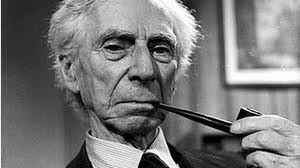
Bertrand Russell

By Jack Maden  |  October 2019 (philosophybreak.com)

Bertrand Russell was a giant of the twentieth century. Recognized as one of the founders of modern analytical philosophy, his work has significantly influenced mathematics, logic, artificial intelligence, cognitive science, and computer science.⁣⁣

The life Russell led was almost as interesting and inspiring as his work. From being dismissed by both Cambridge Trinity College and New York City College, living through two World Wars, and being arrested twice for political activism; to being awarded the Order of Merit, winning the Nobel Prize for Literature, becoming an early TV personality, and playing a role in halting the Cuban Missile Crisis — Russell was not a philosopher confined to the dusty halls of academia. ⁣⁣

Russell’s character is perhaps best typified by an event that occurred towards the end of his life. At the age of 89, he was jailed for seven days in Brixton Prison for ‘breach of peace’ after taking part in an anti-nuclear demonstration in London. The magistrate offered to exempt him from jail if he pledged himself to ‘good behavior’, to which Russell replied: ‘No, I will not.’⁣

Bertrand Russell
Bertrand Russell, disturber of the peace.

Throughout his academic life, Russell wrote a number of classics, from Principia Mathematica to Human Knowledge: Its Scope and Limits. But it is in his short but powerful introductory book on philosophy for the general reader, The Problems of Philosophy, in which Russell’s love for the subject is laid bare. Having presented a number of core philosophical topics, Russell then composes a beautiful exposition on why philosophy matters — and explains the value in practicing it at all.

To start, Russell outlines why there is typically a rather dismissive attitude towards philosophy. As he puts it:

“Many men, under the influence of science or of practical affairs, are inclined to doubt whether philosophy is anything better than innocent but useless trifling, hair-splitting distinctions, and controversies on matters concerning which knowledge is impossible.”

This dismissive attitude towards philosophy is caused by two main things, Russell argues. Firstly, it is due to the fact that philosophy doesn’t produce obvious material benefits like science does. Secondly, it is because philosophy is unable to provide answers to most of the questions it asks. Why, then, is philosophy valuable?

Uncertainty is important

Regardless of whether we find answers to satisfy our curiosity, Russell argues, it is vital to keep alive our speculative interest in the universe which is apt to be killed if we limit ourselves to what can be known. Why? Because it is precisely in philosophy’s uncertainty that we find its value. As Russell puts it:

“The man who has no tincture of philosophy goes through life imprisoned in the prejudices derived from common sense, from the habitual beliefs of his age or his nation, and from convictions which have grown up in his mind without the co-operation or consent of his deliberate reason. To such a man the world tends to become definite, finite, obvious; common objects rouse no questions, and unfamiliar possibilities are contemptuously rejected.”

As soon as we begin to philosophize, however, we find that “even the most everyday things lead to problems which only very incomplete answers can be given.”

“Thus, while diminishing our feeling of certainty as to what things are, philosophy greatly increases our knowledge as to what they may be; it removes the somewhat arrogant dogmatism of those who have never travelled into the region of liberating doubt, and it keeps alive our sense of wonder by showing familiar things in an unfamiliar aspect.”

Thinking beyond ourselves makes us better people

Humbling our certainty leads to another important value, Russell continues. By contemplating deep, abstract, mysterious subjects, our concern with the world is expanded beyond our own private sphere of interests. Without such contemplation, we may neglect attention to anyone or anything that doesn’t directly impact us — or, worse, mark such things as contrary to our interests, dividing the world into friend or foe. As Russell expounds:

“Unless we can so enlarge our interests as to include the whole outer world, we remain like a garrison in a beleaguered fortress… In such a life there is no peace, but a constant strife between the insistence of desire and the powerlessness of will. In one way or another, if our life is to be great and free, we must escape this prison and this strife. One way of escape is by philosophic contemplation.”

By thoughtfully dwelling on subjects bigger than ourselves, we attain a humble tranquility. As Russell puts it, “through the infinity of the universe the mind which contemplates it achieves some share in infinity”.

This contemplative spirit filters through to our actions, too — as we accordingly view our thoughts and desires in the context of the whole:

“Thus contemplation enlarges not only the objects of our thoughts, but also the objects of our actions and our affections: it makes us citizens of the universe, not only of one walled city at war with all the rest. In this citizenship of the universe consists man’s true freedom, and his liberation from the thraldom of narrow hopes and fears.”

The study and practice of philosophy therefore opens up whole new worlds for us, making us think beyond ourselves to care about the bigger, more fulfilling picture in life. As Russell concludes:

“Philosophy is to be studied, not for the sake of any definite answers to its questions since no definite answers can, as a rule, be known to be true, but rather for the sake of the questions themselves; because these questions enlarge our conception of what is possible, enrich our intellectual imagination and diminish the dogmatic assurance which closes the mind against speculation; but above all because, through the greatness of the universe which philosophy contemplates, the mind also is rendered great, and becomes capable of that union with the universe which constitutes its highest good.”

Eric Hoffer on power

Eric Hoffer

“It has often been said that power corrupts. But it is perhaps equally important to realize that weakness, too, corrupts. Power corrupts the few, while weakness corrupts the many. Hatred, malice, rudeness, intolerance, and suspicion are the faults of weakness… When it is their power to do so, the weak destroy weakness wherever they see it.”

– Eric Hoffer

Eric Hoffer (July 25, 1898 – May 21, 1983) was an American moral and social philosopher. He was the author of ten books and was awarded the Presidential Medal of Freedom in February 1983. Wikipedia

The Hate Spiral: How Your Identity Makes the World a Worse Place

Zat Rana Oct 20 · (medium.com)

Good and evil: order and entropy. The first is a story about God and morality and the devil and sin. It is a story that tells us what is right and what is wrong; how to act and how to be. The second, too, is a story about right and wrong and acting and being, but instead of metaphysical speculation, it grounds itself in science and progress and the unforgiving Universe and decay.

We see a version of this story — however innocent — play out anytime we set ourselves up to compete, to engage in a Me vs. Him or a Us vs. Them battle. For something to exist clearly in one form, it has to contrast itself with something that it is clearly not. It doesn’t focus on what is similar, but rather, it goes out of its way to conjure up differences. This kind of competition is what has driven our species to become what it is. Without competition, without something to fight against as a way to fight for something else, it’s hard to find a solid ground to stand on, and it’s hard to incentivize behavior, and it’s hard to make sense of the daily demands of reality.

When we use this aspect of our programming to fight some objective force of nature, say, like a deadly hurricane, or indeed entropy itself on the scale of the physical Universe, we mobilize the best of our capabilities. We work together. We build things. We connect. Not only that but when the enemy is a real, tangible thing, our certainty of the fact that it is indeed the villain of the story, without any reasonable doubt, is a source of both individual and collective strength. We are doing the right thing, and that is a good thing, and knowing that clarifies our course of action.

The problem, however, arises when this part of our mentality is applied in the social or the political arena, when the competition isn’t some objective process or thing but groups of other people banded together. Worse yet, in most of these instances, what is good and what is evil isn’t objectively clear because it stems from subjectivity itself. We are all very charitable when we think of our own beliefs, convincing ourselves that what we stand for is good and right and honest and that the other side is filled with people who are bad and wrong and dishonest. But when was the last time you actually met someone you disagreed with who claimed that they were fighting for evil or for entropy? Even the people we think of as the worst of the worst think they are doing the right thing, the noble thing, the important thing. Most of them, in fact, are people like you, with their own families, frustrations, and joys. We only forget all of this because we are so caught up in the self-centeredness of our own experiences.

The majority of the most insidious things that have been done in human history were done by people who thought they were fighting for good or for order as a part of a group against another group. Many of them even began banding together out of frustrations that most of us are familiar with. Many of them, in fact, claimed to represent causes whose premise most of us would broadly agree with, regardless of religious belief or political orientation. How is it, then, that groups of people fighting against other groups can start off from a place of genuine concern but end up causing destruction and disorder on a mass scale? How can we reasonably take subjective sides between good and evil in the social and the political realm when it is not always clear what is truly good and evil? The answers have something to do with the relationship between identity and hate.

Identity is the glue that binds groups of people together. It is who I am when I decide to attach myself with a collective of individuals formed due to similarity in belief systems. Feminism is an identity. Being a Googler is an identity. The label Buddhist is an identity. Identity is different from the self. The self is the emotional relationship you have with your physical body, as defined by the linguistic concepts you use to make sense of reality. It is purely individual, and it is a personal experience. Identity is the projection of some part of this self into a larger, collective story shared with other people. In order for an identity to exist, there is always a need for opposition, whether that opposition is evil or disorder or simply another person, and that creates Us vs. Them narratives.

Naturally, it’s worth noting that many groups engaged in Us vs. Them battles aim for constructive resolution through healthy debate and criticism, but generally when identity is involved at scale, rather than resolution, the goal of the group slowly morphs away from doing what is seemingly right into whatever it takes to destroy Them because this collective identity has become more important than the agency and the autonomy of the self. I could make a long list of examples gathered from history to see this in action, but realistically, we need to look no further than Twitter or the current news cycle to see how unfruitful and dangerous these kinds of battles end up becoming.

Now, the reason that the self gives up its agency and autonomy for an identity is simple: When there is unresolved pain that hasn’t been observed and reconciled internally to a satisfactory degree, the self looks for another outlet of expression, finding the perfect vehicle in an identity that can blame someone else for that pain — that can hate someone else for that pain. In this sense, groups of collectives that fight each other are really projections of internal, individual traumas on scale. Hate is a second-order effect of repressed pain, and identity is the second-order effect of an unhealed self.

People who are exceptionally tribal in their social views and in their politics project their pain into an identity, valuing the supremacy of their subjectivity and its experience. But in the process of doing so, they negate the pain and the subjectivity of people on the other side who are essentially doing the same thing. They want to be seen, but in the process of absorbing themselves in their own self-centeredness of what is good and what is bad, they deny that same possibility to those on the opposite end, because hating both yourself and other people is far easier than dealing with your own pain and compassionately acknowledging the pain of someone who is completely different from you.

Even if some of the intentions and actions at the core of an identity leads to positive change in the short-term, the long-term effects generally negate those benefits in different ways. Channeling pain into hate may provide the starting momentum needed for a socially invisible frustration to be voiced, but that hate eventually spirals out of control until you become a version of exactly the kind of person who you thought you were fighting against. Nobody who actually commits evil thinks they are doing so until it’s too late. Everyone has their reason for taking action in a particular direction, and when these reasons are marinated in self-centered intentions masked by a collective label, the boundary between right and wrong starts to quickly blur.

In December of 2018, I sat down for my first 10-day Vipassana meditation retreat. It’s a spiritual practice that seems to originate from the Theravada tradition of Buddhism prior to the 10th century, but its roots in the modern world can be traced to Burma some few hundred years ago. This particular organization was founded by S.N. Goenka. He also happens to be the teacher who instructs the practice via video recordings during the 10 days, where the aim of the students is to use their mind to refine their attention of the body until they can learn to see what is referred to as the true nature of reality.

There is nothing mystical or overly exotic about the retreat. You essentially sit still for two-thirds of the day to just experience your thoughts and the corresponding sensations that are present. There are no electronic devices to distract you. You can’t read. You can’t write. You can’t touch anyone. You can’t talk to anyone. It is an attempt to get as close to the veneer of the self as is possible in that time so that it is seen objectively for what it is rather than whatever ideas and attachment you have to it.

Every night during the retreat, after a full day of practice, all students gather in the meditation hall to listen to Goenka talk about the conceptual scaffolding that adds theoretical color to the raw experience of the Vipassana practice. He tells jokes. He explains experiences and sensations. He shares stories. And there is one story in particular that he told at some point in the middle of the retreat that I think about a lot when it comes to the relationship between self and identity, between curing our own ills and attempting to cure the ills of the world.

In the time of the Buddha, Goenka explained, there was apparently a King and a Queen who began to heed the Buddha’s teachings. They gave the Vipassana practice an honest go, digging deep into their narrative of self, their bodily sensations, and whatever pain and trauma they had accumulated over the course of life. One day, after years of shared practice, the Queen woke up next to the King and asked him a simple question: “Do you love me?” The King, taken back for a moment, thought about this, and to his surprise, answered that he didn’t. He only felt that he loved himself. The Queen, as it turned out, wasn’t too surprised by this and said that she felt the same way. At first, they were troubled by this development, but after further inquiry, they realized that their love of themselves was, in fact, the only thing that allowed them to share love with the world.

This story captures a cliche but illustrates something profound and important: We all live in separate bodies with distinct experiences of reality. And these experiences are filled with different kinds of pain and suffering that nobody can deal with but us. Before we learn to accept this simple fact and experience the love, compassion, and responsibility that comes with that, we can’t hope to positively impact the world. If inner pain isn’t dealt with, it subtly turns into hate and gets projected outward. You may think that you are doing something selfless by reducing the agency of the self in the name of some larger identity, but the truth is that you’re just scared to face your own pain because the spiral of hate is easier and more comforting than the alternative.

Groups of people gathered for a collective goal can accomplish incredible things, and using identity as a means to do that is an important strategical tool. But that identity should be no more than an association. As soon as the attachment to an identity is placed above the agency of a healed self, intentions get clouded and actions become needlessly competitive when they should instead be integrative. In our attempt to be seen, we begin to negate others. And so, it turns that another often repeated cliche is more true than it seems at first glance: Before you go out to change the world, do the work to change yourself.

WRITTEN BY

Zat Rana

Playing at the intersection of science, art, and philosophy. Trying to be less wrong. I share my more intimate thoughts at www.designluck.com/community.

Why we need the solstice

There is, of course, no need to fear the dark, much less prevail over it. Not that we could. Look up in the sky on a starry night, if you can still find one, and you will see that there is a lot of darkness in the universe. There is so much of it, in fact, that it simply has to be the foundation of all that is. The stars are an anomaly in the face of it, the planets an accident. Is it evil or indifferent? I don’t think so. Our lives begin in the womb and end in the tomb. It’s dark on either side

— Clark Strand,  from Why We Need the Winter Solstice

(Contributed by Marty Owens)

Consciousness, sexuality, androgyny, futurism, space, the arts, science, astrology, democracy, humor, books, movies and more