0ThouArtThat0 https://thesideview.co/articles__tras…
Introduction to Kant, Fichte, Schelling, Goethe, and Hegel Part 1 of 2
(Submitted by Colin MacAskill)

0ThouArtThat0 https://thesideview.co/articles__tras…
Introduction to Kant, Fichte, Schelling, Goethe, and Hegel Part 1 of 2
(Submitted by Colin MacAskill)
Brain Pickings (getpocket.com)

“Of all ridiculous things the most ridiculous seems to me, to be busy — to be a man who is brisk about his food and his work,” Kierkegaard admonished in 1843 as he contemplated our greatest source of unhappiness. It’s a sobering sentiment against the backdrop of modern life, where the cult of busyness and productivity plays out as the chief drama of our existence — a drama we persistently lament as singular to our time. We reflexively blame on the Internet our corrosive compulsion for doing at the cost of being, forgetting that every technology is a symptom and not, or at least not at first, a cause of our desires and pathologies. Our intentions are the basic infrastructure of our lives, out of which all of our inventions and actions arise. Any real relief from our self-inflicted maladies, therefore, must come not from combatting the symptoms but from inquiring into and rewiring the causes that have tilted the human spirit toward those pathologies — causes as evident to Kierkegaard long ago as to any contemporary person who crumbles into bed at night having completed the day’s lengthy to-do list yet feeling like a thoroughly incomplete human being.

How to heal that aching spirit is what Hermann Hesse (July 2, 1877–August 9, 1962) addresses in a spectacular 1905 essay titled “On Little Joys,” found in My Belief: Essays on Life and Art (public library) — the out-of-print treasure that gave us the beloved writer and Nobel laureate on the three types of readers and why the book will never lose its magic.
More than a century before our present whirlpool of streaming urgencies, Hesse writes:
Great masses of people these days live out their lives in a dull and loveless stupor. Sensitive persons find our inartistic manner of existence oppressive and painful, and they withdraw from sight… I believe what we lack is joy. The ardor that a heightened awareness imparts to life, the conception of life as a happy thing, as a festival… But the high value put upon every minute of time, the idea of hurry-hurry as the most important objective of living, is unquestionably the most dangerous enemy of joy.
Decades before the German philosopher Josef Pieper made his prescient case for liberating leisure and human dignity from the clutch of workaholism, Hesse laments how modern life’s “aggressive haste” — and what a perfect phrase that is — has “done away with what meager leisure we had.” He writes:
Our ways of enjoying ourselves are hardly less irritating and nerve-racking than the pressure of our work. “As much as possible, as fast as possible” is the motto. And so there is more and more entertainment and less and less joy… This morbid pursuit of enjoyment [is] spurred on by constant dissatisfaction and yet perpetually satiated.
Noting that he doesn’t have a silver bullet for the problem, Hesse offers:
I would simply like to reclaim an old and, alas, quite unfashionable private formula: Moderate enjoyment is double enjoyment. And: Do not overlook the little joys!
A century before psychoanalyst Adam Phillips made his compelling case for the art of missing out and the paradoxical value of our unlived lives, Hesse considers what moderation looks like in the face of seemingly unlimited possibilities for what to do with one’s time, and although the options available have changed in the hundred-some years since, the principle still holds with a firm grip:
In certain circles [moderation] requires courage to miss a première. In wider circles it takes courage not to have read a new publication several weeks after its appearance. In the widest circles of all, one is an object of ridicule if one has not read the daily paper. But I know people who feel no regret at exercising this courage.
Let not the man* who subscribes to a weekly theater series feel that he is losing something if he makes use of it only every other week. I guarantee: he will gain.
Let anyone who is accustomed to looking at a great many pictures in an exhibition try just once, if he is still capable of it, spending an hour or more in front of a single masterpiece and content himself with that for the day. He will be the gainer by it.
Let the omnivorous reader try the same sort of thing. Sometimes he will be annoyed at not being able to join in conversation about some publication; occasionally he will cause smiles. But soon he will know better and do the smiling himself. And let any man who cannot bring himself to use any other kind of restraint try to make a habit of going to bed at ten o’clock at least once a week. He will be amazed at how richly this small sacrifice of time and pleasure will be rewarded.
Learning this difference between binging on stimulation and savoring enjoyment in small doses, Hesse argues, is what sets part those who live with a sense of fulfillment from those who romp through life perpetually dissatisfied. He writes:
The ability to cherish the “little joy” is intimately connected with the habit of moderation. For this ability, originally natural to every man, presupposes certain things which in modern daily life have largely become obscured or lost, mainly a measure of cheerfulness, of love, and of poesy. These little joys … are so inconspicuous and scattered so liberally throughout our daily lives that the dull minds of countless workers hardly notice them. They are not outstanding, they are not advertised, they cost no money!

Illustration by Maurice Sendak from Open House for Butterflies by Ruth Krauss.
He points to the most readily available, most habitually overlooked of those joys — our everyday contact with nature. A century before throngs of screen zombies began swarming the sidewalks of modern cities, Hesse writes:
Our eyes, above all those misused, overstrained eyes of modern man, can be, if only we are willing, an inexhaustible source of pleasure. When I walk to work in the morning I see many workers who have just crawled sleepily out of bed, hurrying in both directions, shivering along the streets. Most of them walk fast and keep their eyes on the pavement, or at most on the clothes and faces of the passers-by. Heads up, dear friends!
Hesse offers his prescription for breaking this trance of busyness and inattention:
Just try it once — a tree, or at least a considerable section of sky, is to be seen anywhere. It does not even have to be blue sky; in some way or another the light of the sun always makes itself felt. Accustom yourself every morning to look for a moment at the sky and suddenly you will be aware of the air around you, the scent of morning freshness that is bestowed on you between sleep and labor. You will find every day that the gable of every house has its own particular look, its own special lighting. Pay it some heed if you will have for the rest of the day a remnant of satisfaction and a touch of coexistence with nature. Gradually and without effort the eye trains itself to transmit many small delights, to contemplate nature and the city streets, to appreciate the inexhaustible fun of daily life. From there on to the fully trained artistic eye is the smaller half of the journey; the principal thing is the beginning, the opening of the eyes.
In a sentiment which Annie Dillard would come to echo many decades later in her beautiful meditation on reclaiming our capacity for joy and wonder, Hesse adds:
A stretch of sky, a garden wall overhung by green branches, a strong horse, a handsome dog, a group of children, a beautiful face — why should we be willing to be robbed of all this? Whoever has acquired the knack can in the space of a block see precious things without losing a minute’s time… All things have their vivid aspects, even the uninteresting or ugly; one must only want to see.
And with seeing come cheerfulness and love and poesy. The man who for the first time picks a small flower so that he can have it near him while he works has taken a step toward joy in life.

Illustration by Sydney Smith from Sidewalk Flowers by JonArno Lawson, a wordless ode to living with presence.
Noting that these small joys take the form of different things for each of us, Hesse adds:
[There are] many other small joys, perhaps the especially delightful one of smelling a flower or a piece of fruit, of listening to one’s own or others’ voices, of hearkening to the prattle of children. And a tune being hummed or whistled in the distance, and a thousand other tiny things from which one can weave a bright necklace of little pleasures for one’s life.
He ends with an offering of counsel as valid and vitalizing today as it was a century ago, perhaps even more:
My advice to the person suffering from lack of time and from apathy is this: Seek out each day as many as possible of the small joys, and thriftily save up the larger, more demanding pleasures for holidays and appropriate hours. It is the small joys first of all that are granted us for recreation, for daily relief and disburdenment, not the great ones.
Complement this particular portion of Hesse’s wholly transcendent My Belief with philosopher Alan Watts on how to live with presence, cognitive scientist Alexandra Horowitz on the art of looking with attentive awareness, and this lovely wordless picture-book about living attentively.

This article was originally published on March 6, 2017, by Brain Pickings, and is republished here with permission.
Happy, 11th Hour News! A new support/study group for the 12 months, 90 min. meeting series online for “A Calendar of Archetypal Influences” is scheduled to begin Monday, November 25, 2019. This date may have a little flexibility. Time TBA. Details about “A Calendar of Archetypal Influences” at www.archetypalinsights.com – desktop view only.
Whether you are new to astrology or a seasoned practitioner these gatherings online are open to all. Please pass this along. Makes a great Holiday Season gift to yourself or a loved one.
In the interest of time here are Three Steps for Getting Onboard ––
Step One
As soon as possible, place your order for ‘A Calendar of Archetypal Influences.’ The turn around on the order is usually fairly good for you to receive it in the mail within a week. (We use the hard copy, not the PDF for our group purposes.)
To Order Your Personalized Copy of “A Calendar of Archetypal Influences” write to Philip Levine at philip@cosmicwindow.com
1. Give your name and current mailing address.
2. Mention this order is for your personalized hard copy of “A Calendar of Archetypal Influences,” working with me.
3. Ask that your Calendar be compiled to start November 2019.
4. Request in addition, that you want a set of your specific “Major Activity Pages” included and that they are bound into the back of your Calendar.
I believe the cost for your first order will be $75 plus $10 for the additional ‘Major Activity Pages,’ plus postage. Ask Philip for the exact cost.
Step Two
Register. Registration is considered complete upon receipt of a payment to be made before the first session. (Payment plan available upon request.)
1. Open your PayPal account. (If you do not have a PayPal account one is easily set up online if you so decide. If not write to me and I will send you details for a bank transfer.)
2. Go to Send and Request Payments.
3. Go to Send a Gift or Family and Friends.
4. Enter my UK PayPal e address: lifeodysseys01@gmail.com and the amount of the total cost $120 for the 12 monthly meetings.
Step Three
As soon as you receive the Calendar in the mail write and let me know that you have it in hand.
We’ll then arrange a one-on-one session (included with registration) in which I’ll show you how we work with the Calendar in preparation for our first group monthly meeting. Please confirm that November 25 works for you, if not suggest a date near the 25th.
Mahalo, ?
Zoë

The exalted Taurus Full Moon suggests that we have a mission to give extra support — or we could feel external pressure to do so — yet real power may lie with the person most in need of support. The Scorpio Sun conjoins communicative Mercury, giving needs a voice or threatening to expose something. Scorpio’s famous silence and hidden depths often keep information safely close to the chest, yet the sign’s fixity can create a situation of being stuck, with projects prevented from coming to fruition. Scorpio benefits from perseverance and dogged determination in reaching goals, but this may take time.
The Sun and Mercury huddle around 19° Scorpio. This is highlighted as a difficult degree by 17th-century astrologer William Lilly, who termed it (from 18°00′ to 18°59′ Scorpio) an Azimene degree: “lame” or “deficient” — often indicating a physical defect, if involving the Ascendant, Sun, or Moon. We might also see “lame” in a wider perspective, considering a later label for 19° Scorpio: “Serpentis,” associated with tragedy, misfortune, and wrongdoing. In Lilly’s Christian Astrology, he does not appear to focus only on events, but I have generally found the most significance in observing this degree in relation to life events, relationships, and decisions.
Anthony Louis, in his 1991 book Horary Astrology: The History and Practice of Astro-Divination, allows a 1° orb for significant degrees and notes Serpentis in charts where “all turned out well.” Derek Appleby, in Horary Astrology (1985), said of Serpentis: “This is a strange and potent degree … a tragic degree of the nature of Mars/ Saturn, and I have never known anything prosper under its ray.” (p. 51) These conclusions seem contradictory, and the arguably more positive Northern Scale/Zubeneschamali of sidereal Libra now occupies this degree. Over the years, I have noticed lame and deficient qualities at play, but believe it is up to us to work out our own positive lines of action, whatever the events. Such events, with the Sun around a 1° orb of Serpentis, have ranged from frankly shocking situations to social or business relationships petering out in a “deflating balloon” fashion.
One example is that of an associate literally stopped in their tracks when they were arrested for criminal activities — deeply hidden and typically Scorpionic — despite trying hard to combat a “dark” side. Less extreme was a frustrating work situation, with endeavors limping along unproductively or painfully and nothing progressing in a helpful direction. Both resulted in people quietly walking away (also Scorpionic). In a more lighthearted vein, there is the story of a visiting Eagles tribute band, normally strong ticket-sellers; our local arts venue gave them a lukewarm reception in a half-empty hall that night. Despite good music, their name (the title of a big hit) was in keeping with the Serpentis theme: “Desperado”!
The common thread, across these instances, is the sense of being powerless to influence a wholly positive outcome. Connections were somehow weak and, in some cases, eventually just dried up altogether. If there is a positive to be found in every negative, however, the lesson here may be to appreciate that we benefit from recognizing when to back off from a situation, that some outcomes must simply run their course and we are unable to affect anything.
This Taurus Moon may have the weightiness of a Serpentis shadow over it, but is also conjunct Vesta, providing a certain purity associated with fire. This brings to mind the sacred “Violet Flame” mantra to utter whenever protection or clarity is required: “I am a being of violet fire; I am the purity God desires” — perhaps especially useful for anyone dealing with Scorpio Mercury–Sun phenomena, such as stinging words, jealous thoughts, or intense feelings.
The Moon is helpfully trine Saturn–Pluto in Capricorn, strengthening the earthy idea of practicality and stability, hearth and home, where we can draw extra comfort. In trying situations, following rules and guidelines may provide inner support. The Moon also sextiles compassionate Neptune, eliciting a request for mercy and forgiveness for whoever needs it the most.
This article is from the Mountain Astrologer, written by Diana Collis.
By Subhash Kak – Oklahoma State University a month ago Tech (livescience.com)
Attempts to build supercomputer brains have not even come close to the real thing.

A cyborg may look conscious, but is it?(Image: © Shutterstock)
Many advanced artificial intelligence projects say they are working toward building a conscious machine, based on the idea that brain functions merely encode and process multisensory information. The assumption goes, then, that once brain functions are properly understood, it should be possible to program them into a computer. Microsoft recently announced that it would spend US$1 billion on a project to do just that.
So far, though, attempts to build supercomputer brains have not even come close. A multi-billion-dollar European project that began in 2013 is now largely understood to have failed. That effort has shifted to look more like a similar but less ambitious project in the U.S., developing new software tools for researchers to study brain data, rather than simulating a brain.
Some researchers continue to insist that simulating neuroscience with computers is the way to go. Others, like me, view these efforts as doomed to failure because we do not believe consciousness is computable. Our basic argument is that brains integrate and compress multiple components of an experience, including sight and smell — which simply can’t be handled in the way today’s computers sense, process and store data.
Related: Will AI Ever Become Conscious?RECOMMENDED VIDEOS FOR YOU…CLOSEVolume 0% PLAY SOUND
Living organisms store experiences in their brains by adapting neural connections in an active process between the subject and the environment. By contrast, a computer records data in short-term and long-term memory blocks. That difference means the brain’s information handling must also be different from how computers work.
The mind actively explores the environment to find elements that guide the performance of one action or another. Perception is not directly related to the sensory data: A person can identify a table from many different angles, without having to consciously interpret the data and then ask its memory if that pattern could be created by alternate views of an item identified some time earlier.
Another perspective on this is that the most mundane memory tasks are associated with multiple areas of the brain — some of which are quite large. Skill learning and expertise involve reorganization and physical changes, such as changing the strengths of connections between neurons. Those transformations cannot be replicated fully in a computer with a fixed architecture.
Related: Super-Intelligent Machines – 7 Robotic Futures
In my own recent work, I’ve highlighted some additional reasons that consciousness is not computable.
A conscious person is aware of what they’re thinking, and has the ability to stop thinking about one thing and start thinking about another — no matter where they were in the initial train of thought. But that’s impossible for a computer to do. More than 80 years ago, pioneering British computer scientist Alan Turing showed that there was no way ever to prove that any particular computer program could stop on its own — and yet that ability is central to consciousness.
His argument is based on a trick of logic in which he creates an inherent contradiction: Imagine there were a general process that could determine whether any program it analyzed would stop. The output of that process would be either “yes, it will stop” or “no, it won’t stop.” That’s pretty straightforward. But then Turing imagined that a crafty engineer wrote a program that included the stop-checking process, with one crucial element: an instruction to keep the program running if the stop-checker’s answer was “yes, it will stop.”
Running the stop-checking process on this new program would necessarily make the stop-checker wrong: If it determined that the program would stop, the program’s instructions would tell it not to stop. On the other hand, if the stop-checker determined that the program would not stop, the program’s instructions would halt everything immediately. That makes no sense — and the nonsense gave Turing his conclusion, that there can be no way to analyze a program and be entirely absolutely certain that it can stop. So it’s impossible to be certain that any computer can emulate a system that can definitely stop its train of thought and change to another line of thinking — yet certainty about that capability is an inherent part of being conscious.
Even before Turing’s work, German quantum physicist Werner Heisenberg showed that there was a distinct difference in the nature of the physical event and an observer’s conscious knowledge of it. This was interpreted by Austrian physicist Erwin Schrödinger to mean that consciousness cannot come from a physical process, like a computer’s, that reduces all operations to basic logic arguments.
These ideas are confirmed by medical research findings that there are no unique structures in the brain that exclusively handle consciousness. Rather, functional MRI imaging shows that different cognitive tasks happen in different areas of the brain. This has led neuroscientist Semir Zeki to conclude that “consciousness is not a unity, and that there are instead many consciousnesses that are distributed in time and space.” That type of limitless brain capacity isn’t the sort of challenge a finite computer can ever handle.
[ Like what you’ve read? Want more? Sign up for The Conversation’s daily newsletter. ]
This article was originally published at The Conversation. The publication contributed the article to Live Science’s Expert Voices: Op-Ed & Insights.
(Submitted by Suzanne Deakins, H.W., M.)
Al Haferkamp, H.W., M.
Al Haferkamp, H.W., M. will speak at The Prosperos Sunday Meeting on November 17, 2019 at 11 a.m. Pacific time. He will be speaking on “Ontology – In the beginning is the Word”.
Al has been a Prosperos member since 1970. He is also the Dean of The Prosperos and a Tai-Chi instructor in Los Angeles.
* * * * *
The Prosperos is a school of self-observation and self-transcendence. We draw a straight line between the latest scientific breakthroughs about the nature of reality and the most ancient mystical insights about the nature of God and man. Our goal is “to make spiritual truth an effective force for ordered freedom and common good” by transcending the ancient definition of man as fearful, grasping, limited and self-seeking and realizing the God-ness within each and every person.
We hope you will join us at 11 a.m. Pacific time on November 17 to hear Al speak. Al will be Introduced by Richard Hartnett, H.W., M.
Here’s the link: https://zoom.us/j/332275676
By Mike Zonta, H.W., M.
The subject of 4th Way teacher came up at the Trustee’s meeting on Sunday morning (November 10, 2019) and independently at the Sunday Night Translation Group. It was concluded that since Thane Walker is no longer with us, we no longer have a 4th Way teacher in our midst.
To catch up, if you are unfamiliar with the term “Fourth Way,” here’s the Wikipedia explanation:
Gurdjieff taught that traditional paths to spiritual enlightenment followed one of three ways:
The Fakir works to obtain mastery of the attention (self-mastery) through struggles with [controlling] the physical body involving difficult physical exercises and postures.
The Monk works to obtain the same mastery of the attention (self-mastery) through struggle with [controlling] the affections, in the domain, as we say, of the heart, which has been emphasized in the west, and come to be known as the way of faith due to its practice particularly in Catholicism.
The Yogi works to obtain the same mastery of the attention (as before: ‘self mastery’) through struggle with [controlling] mental habits and capabilities.
Gurdjieff insisted that these paths – although they may intend to seek to produce a fully developed human being – tend to cultivate certain faculties at the expense of others. The goal of religion or spirituality was, in fact, to produce a well-balanced, responsive and sane human being capable of dealing with all eventualities that life may present. Gurdjieff therefore made it clear that it was necessary to cultivate a way that integrated and combined the traditional three ways.
Gurdjieff said that his Fourth Way was a quicker means than the first three ways because it simultaneously combined work on all three centers rather than focusing on one. It could be followed by ordinary people in everyday life, requiring no retirement into the desert. The Fourth Way does involve certain conditions imposed by a teacher, but blind acceptance of them is discouraged. Each student is advised to do only what they understand and to verify for themselves the teaching’s ideas.
So Thane, who was a student of Gurdjieff, may no longer be with us, but his teachings are . . . and the Truth is. And it is my contention that Truth is still a 4th Way teacher. All It requires are 4th Way students.
By Richard Hartnett, H.W., M.
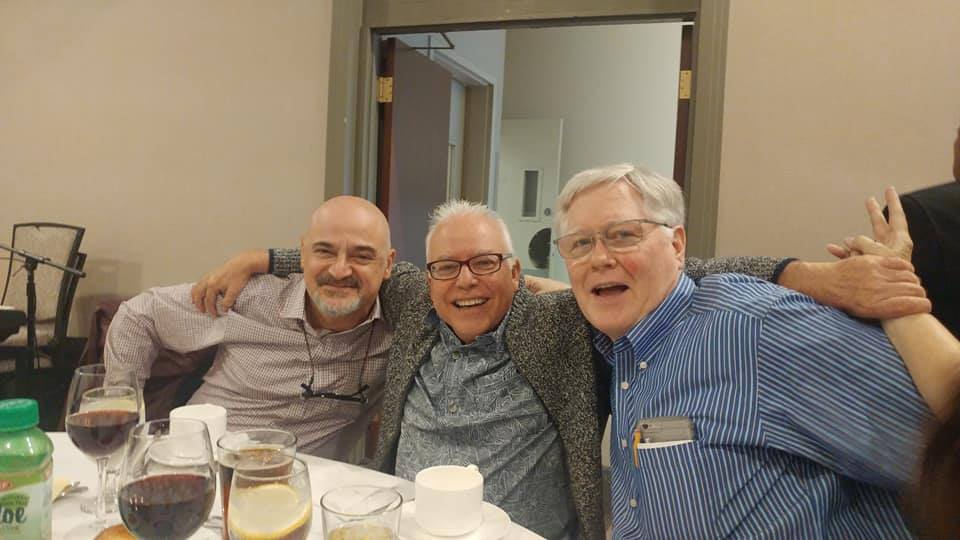
As many of you know The Prosperos Assembly is scheduled for Labor Day Week end 2020 in Colorado. I want to encourage all of you to attend this event. In 1976 We held our Assembly at the Stanley Hotel in Estes Park Colorado. It was the largest Assembly ever held. Why? Colorado is a good mid way point in the United States with a major hub airport.
The location for this assembly will be at the Westin Hotel in Westminster, Colorado. The Hotel is within walking distance of several restaurants and entertainment centers. New activities are going to be part of this event that will make it a truly memorial event.
Transportation to and from the Denver International Airport will be available. The Hotel is clean and very modern. It is a Westin just like the one where the Assembly was held in Long Beach recently.
What makes our school unique is our community. Global Awakening requires a world community. Community starts when two or more are gathered together with intent. Our school has always had the intention to help bring forth a Global Awareness. Thane was our inspiration, now let us carry forth his teachings into a new Global community. Remember without “U” there is no community. Come and help us make this assembly the best one ever.

