Dalai Lama The first session of His Holiness the Dalai Lama’s conversations with key thought leaders on “Compassion, Interconnection, and Transformation” organized by the Mind & Life Institute at his residence in Dharamsala, India on October 30th and November 1st, 2019.
October 30th: Conversation with David Sloan Wilson His Holiness’s conversation with David Sloan Wilson, President of Evolution Institute and State University New York Distinguished Professor of Biology and Anthropology at Binghamton University moderated by Susan Bauer-Wu
November 1st: Conversation with Pumla Gobodo-Madikizela His Holiness’s conversation with Pumla Gobodo-Madikizela, a clinical psychologist and social scientist and Research Chair in Historical Trauma and Transformation at Stellenbosch University in Cape Town, South Africa, moderated by Aaron Stern
Joining the canon of insightful meta-diarists is Sarah Manguso with Ongoingness: The End of a Diary (public library) — a collection of fragmentary, piercing meditations on time, memory, the nature of the self, and the sometimes glorious, sometimes harrowing endeavor of filling each moment with maximum aliveness while simultaneously celebrating its presence and grieving its passage.
Looking back on the 800,000 words she produced over a quarter-century of journaling, Manguso offers an unusual meta-reflection exuding the concise sagacity of Zen teachings and the penetrating insight of Marshall McLuhan’s “probes.” She becomes, in fact, a kind of McLuhan of the self, probing not the collective conscience but the individual psyche, yet extracting widely resonant human truth and transmuting it into enormously expansive wisdom.
Sarah Manguso
Manguso traces the roots of her diaristic journey, which began as an almost compulsive hedge against forgetting, against becoming an absentee in her own life, against the anguishing anxiety that time was slipping from her grip:
I wrote so I could say I was truly paying attention. Experience in itself wasn’t enough. The diary was my defense against waking up at the end of my life and realizing I’d missed it.
[…]
The trouble was that I failed to record so much.
I’d write about a few moments, but the surrounding time — there was so much of it! So much apparent nothing I ignored, that I treated as empty time between the memorable moments.
[…]
I tried to record each moment, but time isn’t made of moments; it contains moments. There is more to it than moments.
So I tried to pay close attention to what seemed like empty time.
[…]
I wanted to comprehend my own position in time so I could use my evolving self as completely and as usefully as possible. I didn’t want to go lurching around, half-awake, unaware of the work I owed the world, work I didn’t want to live without doing.
Discus chronologicus, a German depiction of time from the early 1720s, from Cartographies of Time
And yet this process of chronicling her orientation to the moment soon revealed that the recording itself was an editorial act — choosing which moments to record and which to omit is, as Susan Sontag observed of the fiction writer’s task to choose which story to tell from among all the ones that could be told, about becoming a storyteller of one’s own life; synthesizing the robust fact of time into a fragmentary selection of moments invariably produces a work of fiction. As Manguso puts it, the diary becomes “a series of choices about what to omit, what to forget.”
But alongside this pursuit of the fullness of the moment Manguso found a dark underbelly — a kind of leaning forward into the next moment before this one has come to completion. This particularly Western affliction has immensely varied symptoms, but Manguso found that it her own life its most perilous manifestation was the tendency to hop from one romantic relationship to another, oscillating between beginnings and endings, unable to inhabit the stillness of the middles. She writes:
I’d become intolerant of waiting. My forward momentum barely stopped for the length of the touch.
I thought my momentum led to the next person, but in fact it only led away from the last person.
My behavior was an attempt to stop time before it swept me up. It was an attempt to stay safe, free to detach before life and time became too intertwined for me to write down, as a detached observer, what had happened.
Once I understood what I was doing, with each commitment I wakened slightly more from my dream of pure potential.
It was a failure of my imagination that made me keep leaving people. All I could see in the world were beginnings and endings: moments to survive, record, and, once recorded, safely forget.
I knew I was getting somewhere when I began losing interest in the beginnings and the ends of things.
As her relationship to these markers of time changed, she became interested not in the “short tragic love stories” that had once bewitched her but in “the kind of love to which the person dedicates herself for so long, she no longer remembers quite how it began.” Eventually, she got married. Echoing Wendell Berry’s memorable meditation on marriage and freedom, she writes:
Marriage isn’t a fixed experience. It’s a continuous one. It changes form but is still always there, a rivulet under a frozen stream. Now, when I feel a break in the continuity of till death do us part, I think to myself, Get back in the river.
In a significant way, the stability of time inherent to such continuity was an experience foreign to Manguso and counter to the flow of impermanence that her diary recorded. This was a whole new way of measuring life not by its constant changes but by its unchanging constants:
In my diary I recorded what had changed since the previous day, but sometimes I wondered: What if I recorded only what hadn’t changed? Weather still fair. Cat still sweet. Cook oats in same pot. Continue reading same book. Make bed in same way, put on same blue jeans, water garden in same order … Would that be a better, truer record?
The record-keeping of truth, of course, is the domain of memory — and yet our memory is not an accurate recording device but, as legendary neurologist Oliver Sacks has pointed out over and over, a perpetually self-revising dossier. Manguso considers what full attentiveness to the present might look like when unimpeded by the tyranny of memory:
The least contaminated memory might exist in the brain of a patient with amnesia — in the brain of someone who cannot contaminate it by remembering it. With each recollection, the memory of it further degrades. The memory and maybe the fact of every kiss start disappearing the moment the two mouths part.
When I was twelve I realized that photographs were ruining my memory. I’d study the photos from an event and gradually forget everything that had happened between the shutter openings. I couldn’t tolerate so much lost memory, and I didn’t want to spectate my life through a viewfinder, so I stopped taking photographs. All the snapshots of my life for the next twenty years were shot by someone else. There aren’t many, but there are enough.
For Manguso, memory and its resulting record became stubborn self-defense not only against forgetting but also against being forgotten — a special case of our general lifelong confrontation with mortality:
My life, which exists mostly in the memories of the people I’ve known, is deteriorating at the rate of physiological decay. A color, a sensation, the way someone said a single word — soon it will all be gone. In a hundred and fifty years no one alive will ever have known me.
Being forgotten like that, entering that great and ongoing blank, seems more like death than death.
[…]
I assumed that maximizing the breadth and depth of my autobiographical memory would be good for me, force me to write and live with greater care, but in the last thing one writer ever published, when he was almost ninety years old, he wrote a terrible warning.
He said he’d liked remembering almost as much as he’d liked living but that in his old age, if he indulged in certain nostalgias, he would get lost in his memories. He’d have to wander them all night until morning.
He responded to my fan letter when he was ninety. When he was ninety-one, he died.
I just wanted to retain the whole memory of my life, to control the itinerary of my visitations, and to forget what I wanted to forget.
Good luck with that, whispered the dead.
Upon arriving at a view of death reminiscent of Alan Watts’s, Manguso revisits the limiting fragmentation of life’s ongoingness into beginnings and endings:
The experiences that demanded I yield control to a force greater than my will — diagnoses, deaths, unbreakable vows — weren’t the beginnings or the ends of anything. They were the moments when I was forced to admit that beginnings and ends are illusory. That history doesn’t begin or end, but it continues.
For just a moment, with great effort, I could imagine my will as a force that would not disappear but redistribute when I died, and that all life contained the same force, and that I needn’t worry about my impending death because the great responsibility of my life was to contain the force for a while and then relinquish it.
Then something happened — something utterly ordinary in the grand human scheme that had an extraordinary impact on Manguso’s private dance with memory and mortality: she became a mother. She writes:
I began to inhabit time differently.
[…]
I used to exist against the continuity of time. Then I became the baby’s continuity, a background of ongoing time for him to live against. I was the warmth and milk that was always there for him, the agent of comfort that was always there for him.
My body, my life, became the landscape of my son’s life. I am no longer merely a thing living in the world; I am a world.
[…]
Time kept reminding me that I merely inhabit it, but it began reminding me more gently.
As she awoke to this immutable continuity of life, Manguso became more acutely aware of those bewitched by beginnings. There is, of course, a certain beauty — necessity, even — to that beginner’s refusal to determine what is impossible before it is even possible. She writes:
My students still don’t know what they will never be. Their hope is so bright I can almost see it.
I used to value the truth of whether this student or that one would achieve the desired thing. I don’t value that truth anymore as much as I value their untested hope. I don’t care that one in two hundred of them will ever become what they feel they must become. I care only that I am able to witness their faith in what’s coming next.
But even that enlivening “untested hope” is a dialogic function of time and impermanence. Manguso captures the central challenge of memory, of attentiveness to life, of the diary itself:
The essential problem of ongoingness is that one must contemplate time as that very time, that very subject of one’s contemplation, disappears.
In a sentiment that calls to mind Mary Oliver’s assertion that “attention without feeling … is merely a report,” Manguso considers “the tendency to summarize rather than to observe and describe” and adds:
Left alone in time, memories harden into summaries. The originals become almost irretrievable.
Occasionally, a memory retains its stark original reality. Manguso recalls one particular incident from her son’s early childhood:
One day the baby gently sat his little blue dog in his booster seat and offered it a piece of pancake.
The memory should already be fading, but when I bring it up I almost choke on it — an incapacitating sweetness.
The memory throbs. Left alone in time, it is growing stronger.
The baby had never seen anyone feed a toy a pancake. He invented it. Think of the love necessary to invent that… An unbearable sweetness.
The feeling strengthens the more I remember it. It isn’t wearing smooth. It’s getting bigger, an outgrowth of new love.
Perhaps there is an element of “untested hope” in journaling itself — we are drawn to the practice because we hope that the diary would safe-keep precisely such throbbing, self-strengthening memories; that, in recording the unfolding ways in which we invent ourselves into personhood, it would become a constant reassurance of our own realness, a grownup version of The Velveteen Rabbit, reminding us that “real isn’t how you are made [but] a thing that happens to you.” Bearing witness to the happening itself, without trying to fragment it into beginnings and endings, is both the task of living and the anguish of the liver.
Manguso captures this elegantly:
Perhaps all anxiety might derive from a fixation on moments — an inability to accept life as ongoing.
The best thing about time passing is the privilege of running out of it, of watching the wave of mortality break over me and everyone I know. No more time, no more potential. The privilege of ruling things out. Finishing. Knowing I’m finished. And knowing time will go on without me.
Look at me, dancing my little dance for a few moments against the background of eternity.
She revisits her original tussle with time, memory, beginnings, and endings:
How ridiculous to believe myself powerful enough to stop time just by thinking.
[…]
Often I believe I’m working toward a result, but always, once I reach the result, I realize all the pleasure was in planning and executing the path to that result.
It comforts me that endings are thus formally unappealing to me — that more than beginning or ending, I enjoy continuing.
Seen in this way, the diary becomes not a bastion of memory but a white flag to forgetting, extended not in resignation but in celebration. Manguso writes:
I came to understand that the forgotten moments are the price of continued participation in life, a force indifferent to time.
[..]
Now I consider the diary a compilation of moments I’ll forget, their record finished in language as well as I could finish it — which is to say imperfectly.
Someday I might read about some of the moments I’ve forgotten, moments I’ve allowed myself to forget, that my brain was designed to forget, that I’ll be glad to have forgotten and be glad to rediscover as writing. The experience is no longer experience. It is writing. I am still writing.
And I’m forgetting everything. My goal now is to forget it all so that I’m clean for death. Just the vaguest memory of love, of participation in the great unity.
[…]
Time punishes us by taking everything, but it also saves us — by taking everything.
“I just can’t draw.” It’s a refrain most adults say when confronted with a blank piece of paper. Something happens in our teenage years that makes most of us shy away from drawing, fretting that our draftsmanship skills aren’t up to par, and leaving it to the “artists” among us.
But we’ve been thinking about drawing all wrong, says the design historian D.B. Dowd. In his illuminating new book, titled Stick Figures: Drawing as a Human Practice, Dowd argues that putting a pencil to paper shouldn’t be about making art at all.
“We have misfiled the significance of drawing because we see it as a professional skill instead of a personal capacity,” he writes. “This essential confusion has stunted our understanding of drawing and kept it from being seen as a tool for learning above all else.”
Put another way: Drawing shouldn’t be about performance, but about process. It’s not just for the “artists,” or even the weekend hobbyists. Think of it as a way of observing the world and learning, something that can be done anytime, like taking notes, jotting down a thought, or sending a text.
Mistaking drawing for art is embedded in our institutions, says Dowd, a professor of art and American culture at the Washington University in St. Louis. For centuries, schools have lumped drawing with painting and confined it in an “aesthetic cage,” he says.
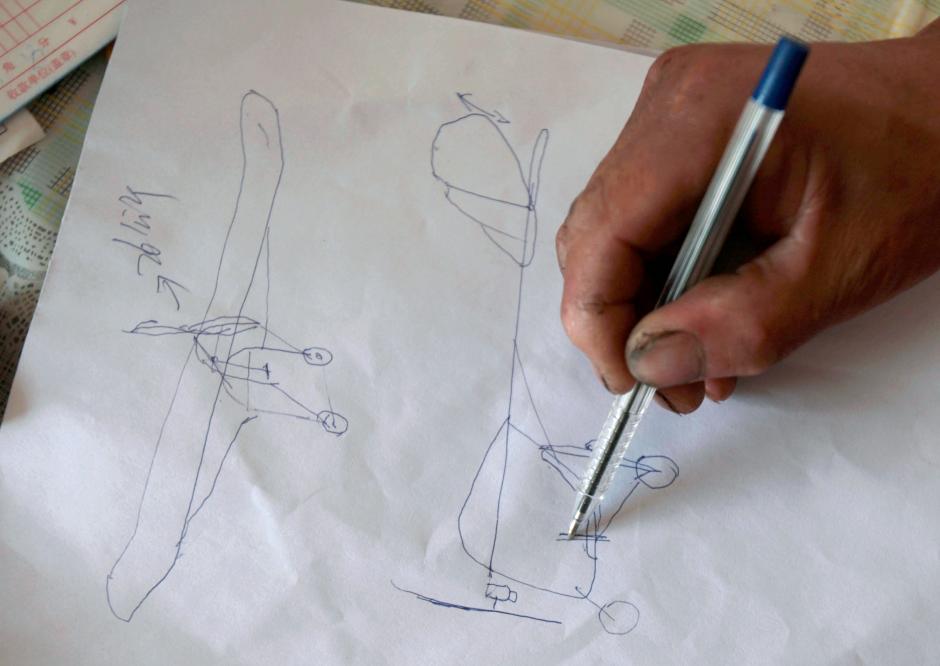
Our anxiety around drawing starts around puberty, when we begin self-critiquing our abilities to render a perfect likeness, Dowd says. “The self-consciousness associated with ‘good’ drawing, or a naive form of realism, is mostly to blame,” he explains to Quartz. ”If you take a step back, and define drawing as symbolic mark-making, it’s obvious that all human beings draw. Diagrams, maps, doodles, smiley faces: These are all drawings!”
Drawing Helps Us Think Better
At its core, drawing is a problem-solving tool. Scientists are often avid doodlers, like the Fields-Medal-winning mathematician Maryam Mirzakhani, for instance. “The process of drawing something helps you somehow to stay connected,” she explained in a 2014 interview. “I am a slow thinker, and have to spend a lot of time before I can clean up my ideas and make progress.”
Even if you’re not tackling hyperbolic geometry, drawing is useful for our daily affairs from giving directions, taking meeting notes, outlining an presentation, or making grocery lists. It fosters close observation, analytical thinking, patience, even humility.
Photo by Reuters/China Daily.
An Alternative to Google-Based Learning
Digital technology coddles us by giving us shortcuts to “instant knowledge,” but drawing breaks our collective instinct to Google everything, argues Dowd. He cautions against relying too much on easy paths to learning:
When we ask for something from Google Image Search—say “airplane”—we get contemporary definitions of same, which in that case yields thousands of pictures of commercial airliners. That’s a narrow result from a general inquiry, and one version of how aggregation keeps us from seeing a wider world. Drawing works in exactly the opposite way: close observation of almost any particular engages the senses and heightens experience, making the world seem bigger, not smaller.
There is a physical dimension to this, too. Our brains got bigger when our thumbs moved into an opposable position vis-a-vis our fingers. Our hands, fixed on the ends of our arms, brought us news of the world, and we evolved rapidly to take advantage. Our manual capacities are critical to our understanding of the world. Isn’t it weird, and a wicked paradox, that the digital has eroded the manual?
Dowd, who has been critical of the graphic design industry’s over-reliance on digital illustration tools like Adobe Illustrator or Photoshop, argues that drawing isn’t necessarily anti-tech: “I have no beef with technology per se—after all, pencil and paper is a technology. But drawing offers simplicity and directness compared to other information gathering procedures.”
Freedom. Photo by Reuters/Thomas Peter.
Drawing Makes Us Better Humans
There’s another fundamental reason for using drawing as a learning tool: It can bring out our better qualities as people. “If practiced in the service of inquiry and understanding, drawing does enforce modesty,” says Dowd. “You quickly discover how little you know.”
The observation that’s necessary for drawing is also enriching. “Drawing makes us slow down, be patient, pay attention,” he says. “Observation itself is respectful, above all else.”
In the closing chapter of Stick Figures, Dowd argues that drawing can even make us better citizens, in the sense that it trains us to wrestle with evidence and challenge assumptions. “It might seem sort of nutty, but I do think that drawing can be a form of citizenship,” he says. “Observation, inquiry, and steady effort are good for us.”
This form of individual sense-making is a practice that’s ever more vital at a time when we’re inundated with falsehoods and bad faith, says Dowd: “When we look hard and listen carefully, how are we not led back to questions of justice, of what is right?”
Perhaps drawing pads should be standard issue in government offices and boardrooms.
This article was originally published on September 15, 2018, by Quartz, and is republished here with permission.
Pop neuroscience has long been fascinated with uncovering secret biological differences between male and female brains. The question of whether men and women have innately different brains rarely fails to get people riled up. Just last year, the Google engineer James Damore caused an uproar after publishing a manifesto detailing the various ways women were biologically different from men.
But Lise Eliot, a professor of neuroscience at the Chicago Medical School and the author of Pink Brain, Blue Brain, says that anyone who goes searching for innate differences between the sexes won’t find them.
“People say men are from Mars and women are from Venus, but the brain is a unisex organ,” she said onstage Monday at the Aspen Ideas Festival, which is co-hosted by the Aspen Institute and The Atlantic.
That’s a bold statement, and one science is divided on. It seems to depend on what exactly is being measured. For example, a large study in the U.K. found that many regions of men’s brains were larger than women’s, and that women on average had thicker cerebral cortices. What does that mean for how the brain works? Unclear. Another study found that “averaged across many people, sex differences in brain structure do exist, but an individual brain is likely to be just that: individual, with a mix of features,” as New Scientistreported in 2015.
But there’s no doubt that whatever their brains look like, behavior and school performance differences between men and women are strongly shaped by socialization.
Eliot said that Damore has a misunderstanding of neuroscience and that his letter overstated the role of testosterone in male and female bodies. While testosterone is linked to aggression, it doesn’t offer a universal explanation for male behavior. Eliot also said that everyone, regardless of sex, can be competitive or aggressive, but males and females might have different ways of expressing those traits based on social norms.
Eliot blames academia and the media in part for the cycle that leads to the ongoing argument over biological brain differences. Because most scholars know that any small statistical difference between men and women will make headlines, academics, desperate for funding and attention, often focus studies on gender disparities. “You go back to data, analyze it for sex, and if you find a difference, then guess what: You have another paper,” Eliot said.
She said that even scientifically indisputable differences, such as the oft-cited statistic that male brains are 10 percent bigger than female brains, don’t mean anything. All of men’s organs are bigger on average, but that doesn’t mean they function differently.
If scientists and academics were to begin with the premise that men and women are equally capable, Eliot said, their studies would result in radically different conclusions.
For instance, many, including the then–Harvard University president Lawrence Summers, have used a 1970 study that showed men outperformed women 13 to one on the math portion of the SAT to explain why there aren’t more women at the top of STEM fields. “People said brilliance in math is a male phenomenon,” Eliot said.
Of course, it turned out women were being discouraged from pursuing STEM. Once more programs were put in place to foster this type of learning, the ratio dropped to three to one, Eliot said, and is now on its way to closing.
“We live in a gender-binary world,” said Eliot. “The default assumption is that these differences are hard-wired … But male and female brains are not much [more] different from each other than male or female hearts or kidneys.”
Updated June 26, 2018Taylor Lorenz is a staff writer at The Atlantic, where she covers technology.
This article was originally published on June 25, 2018, by The Atlantic, and is republished here with permission.
NOVEMBER 14TH 2019 By VICTOR TANGERMANN (futurism.com)
Dropping The Lander
China’s Mars lander just successfully completed its first public test: a spectacular drop from 230 feet onto a mountainous landscape north of Beijing. The lander hovered at first before slowly descending safely to the ground below.
The stunt tested one of the most difficult parts of sending a spacecraft to the Red Planet: making a soft landing while avoiding obstacles. It’s a feat that only the United States has achieved so far.
“[The simulation] is a critical milestone for the development of the Mars probe,” Wu Yanhua, vice administrator of the China National Space Administration, told reporters, as quoted by CNN.
Mars 2020
Both China and the U.S. are planning to launch uncrewed exploration missions to Mars next year. NASA has been working hard on completing its Mars 2020 rover, which will hopefully collect rock samples and bring them back to Earth in 2021.
The test is yet another sign that China is a force to be reckoned with when it comes to space exploration. Last winter, the country successfully landed a rover on the far side of the Moon, becoming the first to sprout plants on the lunar surface as well.
China is also planning for a crewed mission to the Moon in the 2030s. The China Academy of Space Technology recently showed off its next-generation spacecraft that could one day take Chinese astronauts to the Moon, thereby becoming only the second country after the U.S. to do so.
NOVEMBER 14TH 2019 By DAN ROBITZSKI (futurism.com)
Revisiting History
Nobel-winning cosmologist James Peebles has a bone to pick with the scientific community: he wants the world to stop referring to the earliest moments of our universe as the “Big Bang.”
His main beef, according to Agence France-Presse, is that there’s no good way to test whether such a thing actually happened — cosmologists have evidence of a rapid outward expansion, but not anything as discrete as a singular point that detonated to create everything in the universe.
“It’s very unfortunate that one thinks of the beginning whereas in fact, we have no good theory of such a thing as the beginning,” he told AFP.
Interesting Idea
Peebles doesn’t have an alternative to the Big Bang theory to propose, but that’s his exact point: without sufficient data, scientists shouldn’t assume a convenient hypothesis is correct.
“We don’t have a strong test of what happened earlier in time,” Peebles told AFP. “We have theories, but not tested.”
Martyrdom
But Peebles isn’t quite ready to die on this hill — he concedes that in the absence of a better way to describe the beginning of the universe, “Big Bang” does just fine.
“I have given up,” he told AFP, “I use Big Bang, I dislike it.”
“But for years, some of us have tried to persuade the community to find a better term without success,” he said. “So ‘Big Bang’ it is. It’s unfortunate, but everyone knows that name. So I give up.”
Sacred Economics traces the history of money from ancient gift economies to modern capitalism, revealing how the money system has contributed to alienation, competition, and scarcity, destroyed community, and necessitated endless growth. Today, these trends have reached their extreme – but in the wake of their collapse, we may find great opportunity to transition to a more connected, ecological, and sustainable way of being. This short contains some visuals from the upcoming feature doc Occupy Love http://occupylove.org
FULL CREDITS Directed & Edited by Ian MacKenzie Producers: Ian MacKenzie, Velcrow Ripper, Gregg Hill Cinematography: Velcrow Ripper, Ian MacKenzie Animation: Adam Giangregorio, Brian Duffy Music: Chris Zabriskie Additional footage: Steven Simonetti, Pond 5, Youtube Stills: Kris Krug, NASA Special thanks: Charles Eisenstein, Stella Osorojos, Hart Traveller, Clara Roberts-Oss, Line 21 Media
Russell Brand Author, environmentalist & Yale graduate Charles Eisenstein chats to me about alternative forms of economics, his skepticism of the mainstream climate change narrative and how we can create new systems outside of the norm that could work for everyone. He is author of “Sacred Economics” & “Climate – A New Story”
Listen to all the latest episodes of Under The Skin ONLY on Luminary – sign up for free here: http://luminary.link/russell
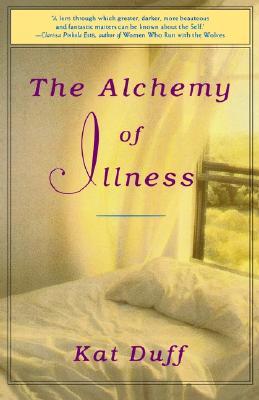
Illness is a universal experience. There is no privilege that can make us immune to its touch. We are taught to assume health, illnesses being just temporary breakdowns in the well-oiled machinery of the body. But illness has its own geography, its own laws and commandments. At a time when the attention of the whole nation is focused on health care, Kat Duff inquires into the nature and function of illness itself. Duff, a counselor in private practice in Taos, New Mexico, wrote this book out of her experience with chronic fatigue syndrome, but what she has to say is applicable to every illness and every one of us.
For those who are sick, this book offers solace and recognition. For those who care for them either physically or emotionally, it offers inspiration and compassion. Finally, this fresh perspective on healing reveals how every illness is a crucible that tries our mettle, tests our limits, and provides us with an unparalleled opportunity to integrate its lessons into our lives.
BY ZOE ROBINSON NOVEMBER 8, 2019 (hermes-magazine.com)
These words from Mme Blavatsky, perhaps encapsulate a sense of Anima Mundi/World Soul:
“Matter is the vehicle for the manifestation of soul on this plane of existence, and soul is the vehicle on a higher plane for the manifestation of spirit, and these three are a trinity synthesised by Life, which pervades them all.” SD i 491 In these few words we sense an environment of fusion, Oneness.
But how can we, living here in our day-to-day environment approach such a state of being? On this plane, where we find ourselves incarnated, we mostly live in what Martin Buber described as an ‘I-it’ relationship with the world around us, rather than one of an I-Thou relationship, one that is of the nature of inclusive Oneness. The I-it environment is that in which each of us identifies ourselves individually as an ‘it’ and everything else we perceive around us as an ‘it’ too. I’m here and that table is over there, it’s outside of me!
In the knowledge of our dual nature, that of the lower self and the Higher, we may well ask, how best to perceive beyond the physical senses, appearances of this I-it relationship, beyond our Personality self; that of the physical, emotional and lower mental (rational) aspects, and come consciously to ‘see through’?
Science has brought us some answers in light of the physical environment aspect of Personality.
To illustrate you are invited to view this video::
Universe is Conscious [Through the Wormhole]
As the video shows, science is revealing that there is much more to our physical self and the appearance of our physical environment than we usually perceive through the five senses. It intimates that it takes consciousness, or conscious awareness to be aware of any ‘thing’, to be aware of our physical self, another person, a family, a society et al. It is suggested that there is a Conscious Universe expressing on varying ‘planes’ of manifestation, some of which we as human beings are aware, and some of which exist, but of which we are unaware. In HPB’s words, “Matter is Spirit at its lowest point of manifestation and spirit is matter at its highest.”2
What does this knowledge have to do with us at this time living on planet Earth? As conscious beings we have the opportunity to view ourselves from different perspectives, plus we have the gift of choice.
With the three Personality aspects in mind we question our daily environmental experiences as to their purpose and meaning and discover much of the state of where we find ourselves is being enacted out of unexamined, conditioning thinking, ideas about who and what we think we are, what Life is. In the process we begin to become acutely aware, through honest self-observation, we are indeed relating to the environment in an I-it relationship. We automatically view, define and judge the things, people, et al around us as being separate, outside ourselves. A perspective that many times results in an environment of ‘dis-ease,’ both outwardly and inwardly. A far cry from the Unity of an I-Thou relationship with our environment.
The gift of conscious choice is part of the human dynamic and each one regardless of circumstances has the opportunity to exercise their ability to choose. Choose what? Whether to live out of automatic, conditioned thinking, in an I-it environment of the lower self, or to take a step inward and open into a different relational environment; one of I-Thou.
It takes a conscious act on our part to look within at our conditioned thinking patterns and automatic emotional responses. Once we become aware of these conditions, the challenge becomes actively to address, ‘loosen,’ ‘see through’ wherever we find ourselves ‘stuck’ in a sense of the Personality environment. The greatest challenge for many is to choose, “Do I want to remain caught in this state or not?” This movement is not achieved by the rational, lower mind. However, fortunately, if we choose yes, then through practice of various forms of meditation available to us we discover openings to a new sense of environment, a more unified sense, one of Unity, that may then reveal and allow for a conscious sense of Anima Mundi, World Soul.
Ecology is defined in part by the Oxford Learner’s Dictionaries as, “the relation of plants and living creatures to each other and to their environment; the study of this . . .”
Antahkarana, the Path, has long been practiced in the East but now, of necessity, is more prevalent in the West. This archetype exists within the human psyche and is therefore available for all to consciously use as in ‘internal cause,’ or as HPB describes, “. . . that imaginary bridge between the divine and the human egos.”3
We may surmise perhaps that Antahkarana, commonly known as the Rainbow Bridge, is of a similar archetypal nature or quality as that of Hermes, messenger of the gods. When we open our current Personality earth bound concepts, our rational thinking, and release bound up emotional energy patterns, our conscious awareness in traversing the Rainbow Bridge may open into the realm of Higher Self. It is a consciousness that is abstract in nature, not caught in aspects of the lower self of Personality. Although indescribable, it is sometimes intimated or glimpsed as that which is Nothingness, Infinite Being.
Hermes may then be free, by means of Antahkarana, to convey messages of the gods, from spirit infused Anima Mundi, World Soul to our now more receptive conscious awareness of the Personality for greater well-being and relatedness in daily life. Traversing the Rainbow Bridge brings about a fusion of the lower self and that of the Higher so we may function in more fulfilling ways within the environment of this incarnation. It is an alchemical process through which we may evolve and find ourselves more fully attuned with Anima Mundi, Divine Will and Love.
Note: Recommended meditation: “7 Chakras Spoken Word Guided Meditation, Visualization, Relaxing, Chakra Healing, Balancing” with Jason Stephenson https://youtu.be/00pNPZPtBpo
References
Blavatsky, H.P. The Secret Doctrine (1888). Facsimile edition of Volumes I and II, The Theosophy Company, Los Angeles, California, U.S.A. 1964.
H.P. Blavatsky. As quoted in Alice A. Bailey’s The Rays and the Initiations.
H.P.B. A Dictionary of Some Theosophical Terms, compiled by Powis Hoult, p10. London Theosophical Publishing Society 1910.
Born and raised in England, Zoë visited California at the age of twenty. The intended three-month visit in the 1960s extended into 35 years of residency in the States before she returned to live in Europe in 2002. In 1977, after six years, she successfully completed her mentorship training at The Prosperos School of Ontological Studies. Throughout her long practice as a mentor she has presented seminars, workshops, conducted one-to-one tutoring sessions and facilitated support/study groups. Her focus is to act as a facilitator to assist others to live beyond conditioned thinking and habitual emotional response patterns in an atmosphere of supportive community. Zoë tells that on a visit to a Greek archaeological site, someone asked her if she was an archaeologist. Tired of saying no to this oft-asked question she spontaneously responded, “I’m not an archaeologist per se, I’m an archaeologist of the soul.” That probably best describes her and her work. As she opens doors for herself she in turn opens doors for others. However, she states, “It’s up to each one of us to walk through that door.” Thus, she invites you to journey some of your Path with her.
Consciousness, sexuality, androgyny, futurism, space, the arts, science, astrology, democracy, humor, books, movies and more