U.S. Rep. Ilhan Omar (D-MN) (3rd L) listens during a news conference at the U.S. Capitol January 4, 2019 in Washington, DC. (Photo: Alex Wong/Getty Images)
After a man accused of threatening her life pled guilty to the crime in a U.S. District Court, Rep. Ilhan Omar on Tuesday released publicly a letter she wrote asking the federal judge presiding over the case to “show compassion” in his sentencing.
Patrick W. Carlineo Jr., a 55-year-old man from upstate New York, pled guilty on Monday on gun charges and for threatening to murder Omar in phone calls he made to her congressional office in March of this year. But in her letter to Judge Frank P. Geraci Jr., Omar said that while the charges were quite serious she did not think that an overly punitive sentence was the answer.
“The answer to hate is not more hate; it is compassion,” Omar wrote.
“Who are we as a nation,” her letter asks, “if we respond to threats of political retribution with retribution ourselves?”
The Minnesota Democrat posted the letter in its entirety on social media:
The formal complaint against Carlineo Jr. charged that he cited Omar being a Muslim before calling her a “terrorist” and threatening to “put a bullet in her [expletive] skull” when he called her office.
In her letter, Omar argues that punishing Carlineo “with a lengthy prison sentence or a burdensome financial fine would not rehabilitate him” or repair the harm he caused. Likely, Omar said, such a sentence “would only increase his anger and resentment.”
Omar has been a vocal critic of mass incarceration during her first term in Congress, calling the system which locks up more than two million people “a scourge on this country.”
In her letter, Omar said the U.S. must address the “systemic alienation” that victimizes people who often go on to commit acts of violence “through community reintegration and social services.”
Carlineo’s crime, Omar pointed out, is just a single example of the hate speech and political violence which “are an increasing feature in our public sphere.”
“We will not defeat it with anger and exclusion,” Omar wrote. “We will defeat it with compassion.”
The congresswoman’s letter garnered applause from progressives and critics of the U.S. prison system including Sen. Bernie Sanders (I-Vt.).
“I’m amazed at this letter from Ilhan Omar, asking for mercy for the man who was just convicted of threatening to assassinate her,” tweetedSlate writer and podcast host Aymann Ismail.
Our work is licensed under a Creative Commons Attribution-Share Alike 3.0 License. Feel free to republish and share widely.
It is often said that books save lives. Most of the time, however heartfelt the sentiment, it is figurative. Every once in an improbable while, it approximates the literal. But only on the rarest of occasions, in the most extreme of circumstances, do books become lifelines in the realest sense.
One such occasion is immortalized in A Velocity of Being: Letters to a Young Reader (public library) — the collection I spent eight years putting together in the hope of showing young people how essential reading is to an inspired and inspiring life. There are original illustrated letters about the transformative and transcendent power of reading from some immensely inspiring humans — scientists like Jane Goodall and Janna Levin, artists like Marina Abramović and Debbie Millman, musicians like Yo-Yo Ma, Amanda Palmer, and David Byrne, entrepreneurs like Richard Branson and Tim Ferriss, poets like Mary Oliver, Elizabeth Alexander, and Sarah Kay, media pioneers like Kevin Kelly, Jad Abumrad, and Shonda Rhimes, beloved writers of literature for young people like Jacqueline Woodson, Judy Blume, and Neil Gaiman, and a great many celebrated authors of books for so-called grownups. But one of the most powerful letters comes from someone whose name might not, or at least not yet, mean much to many: Helen Fagin.
Helen was twenty-one when her family was imprisoned in the Warsaw Ghetto in Nazi-occupied Poland. She and her sisters managed to escape, but they lost both of their parents in the Holocaust. Helen arrived in America not speaking a word of English, then went on to earn a Ph.D. and teach literature for more than two decades. She devoted her life to elucidating the moral lessons of humanity’s darkest hour and was instrumental in the creation of the Holocaust Memorial in Washington, D.C. To this day, she remains a voracious reader of literature and moral philosophy, swimming effortlessly from Whitman to Camus and back again in a single conversation.
Helen Fagin, a week after her 100th birthday, with Ash Gaiman. Photograph by Amanda Palmer.
Helen happens to be my dear friend Neil Gaiman’s cousin. One day over dinner, having just visited her in Florida, a very animated Neil told me the incredible story of how a book — a particular book — became a lifeline for the teenage girls at the secret school Helen had set up in the Warsaw Ghetto as an antidote to the innumerable assaults against dignity to which the Nazis subjected these Jewish youths: the denial of basic education. Her story stopped me up short as the profoundest embodiment of the core ethos of A Velocity of Being, and so I invited her to tell it in a letter.
To celebrate the publication of the book, which Helen sees as an invaluable part of her legacy, I asked her to read her letter for the New York Public Library launch event. She was 97 at the time she wrote her letter and is approaching her 101st birthday as she reads it:
Dear Friend,
Could you imagine a world without access to reading, to learning, to books?
At twenty-one, I was forced into Poland’s WWII ghetto, where being caught reading anything forbidden by the Nazis meant, at best, hard labor; at worst, death.
There, I conducted a clandestine school offering Jewish children a chance at the essential education denied them by their captors. But I soon came to feel that teaching these sensitive young souls Latin and mathematics was cheating them of something far more essential — what they needed wasn’t dry information but hope, the kind that comes from being transported into a dream-world of possibility.
One day, as if guessing my thoughts, one girl beseeched me: “Could you please tell us a book, please?”
I had spent the previous night reading Gone with the Wind — one of a few smuggled books circulated among trustworthy people via an underground channel, on their word of honor to read only at night, in secret. No one was allowed to keep a book longer than one night — that way, if reported, the book would have already changed hands by the time the searchers came.
I had read Gone with the Wind from dusk until dawn and it still illuminated my own dream-world, so I invited these young dreamers to join me. As I “told” them the book, they shared the loves and trials of Rhett Butler and Scarlett O’Hara, of Ashley and Melanie Wilkes. For that magical hour, we had escaped into a world not of murder but of manners and hospitality. All the children’s faces had grown animated with new vitality.
A knock at the door shattered our shared dream-world. As the class silently exited, a pale green-eyed girl turned to me with a tearful smile: “Thank you so very much for this journey into another world. Could we please do it again, soon?” I promised we would, although I doubted we’d have many more chances. She put her arms around me and I whispered, “So long, Scarlett.” “I think I’d rather be Melanie,” she answered, “although Scarlett must have been so much more beautiful!”
As events in the ghetto took their course, most of my fellow dreamers fell victim to the Nazis. Of the twenty-two pupils in my secret school, only four survived the Holocaust.
The pale green-eyed girl was one of them.
Many years later, I was finally able to locate her and we met in New York. One of my life’s greatest rewards will remain the memory of our meeting, when she introduced me to her husband as “the source of my hopes and my dreams in times of total deprivation and dehumanization.”
There are times when dreams sustain us more than facts. To read a book and surrender to a story is to keep our very humanity alive.
Sincerely,
Helen Fagin
Special thanks to Helen’s children, Gary and Judith Fagin, for filming this video, and most of all to Neil and Amanda for bringing this remarkable person into my world and, through her contribution to A Velocity of Being: Letters to a Young Reader, into our shared human world. What an honor.
Complement with a peek inside this massive labor of love eight years in the making, all proceeds from which we are donating to the New York public library system, then sit down with a cup of tea and watch the recording of the NYPL launch celebration — a magical evening of readings by sixteen of our letter writers, original art for the letters, live literature-inspired music, and a roomful of largehearted love of books.
On Tuesday, insect experts from across the United States gathered in St. Louis, Missouri, for the Entomological Society of America’s annual meeting — and when Ohio University Professor Emeritus William Romoser got a chance to address his peers, he made a shocking claim.
“There has been and still is life on Mars,” Romoser said in a press release about his presentation.
The only problem: his evidence isn’t exactly convincing.
According to the press release, Romoser believes that various Mars rovers have already captured images of both living and fossilized insects on the Red Planet. The poster he presented on Tuesday contains multiple photos he found on the internet with what he claims are bug body parts circled in red.
See this blurry spot? That’s an insect’s thorax. The spot next to it? Clearly, the creature’s head looking straight at the camera using its compound eye, which appears in the image to be — you guessed it — a blurry spot.
After analyzing the photos, Romoser says he believes Mars is home to creatures resembling snakes, bumble bees, reptiles, and more. In the press release, he notes how his “discovery” of the lifeforms on Mars aligns with the identification of terrestrial creatures.
“Three body regions, a single pair of antennae, and six legs are traditionally sufficient to establish identification as ‘insect’ on Earth,” he said. “These characteristics should likewise be valid to identify an organism on Mars as insect-like. On these bases, arthropodan, insect-like forms can be seen in the Mars rover photos.”
Perhaps the lesson to be learned from Romoser’s presentation, then, is not that insects exist on Mars, but that entomologists might want to look into more stringent bases for identifying bugs on Earth.
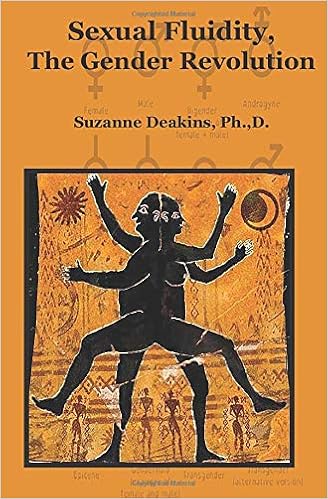
This is a book about binary thinking that has led us to many conflicts about our physical, emotional, and moral life.It’s about gender and the awakening within society, and the drive to create rather than procreate. Humanity is more than body parts, DNA/genes, and a brain, We are greater than the sum of our parts. I have covered, the biology of gender, the increase of transgender individuals, and the almost infinite number of genders in humanity. Multiple genders occur in heterosexual and homosexual cultures. Gender has little to do with our genitalia or our sexual choices, but how we interpret and see ourselves in relationship to the defined rules rules of gender in our different cultures. Every culture has a history of multiple genders. In the past our cultures embraced the difference as an important part of life.The changes we are seeing around us, the adaptations are all a natural force to create and survive, carrying forth the basic structure of life, intangibly as well as corporeal. Nature is infinite. Binary thinking doesn’t exist in nature, all nature is fractals that are full of wonderful patterns, infinite designs vying to carry forth the configurations for the future. Each new fractal in life seeks to continue its’ pattern and yet will encompass new if needed for survival and adaptation. Paleontology shows us a history of adaptation of life. Life did not continue to live on an either/ or basis, or a binary decision, but rather on a wild ride of erotic intelligence moving out in a limitless manner.Our DNA is the same, As we celebrate our sameness so should we celebrate the uniqueness each of us represents.
The four addictions that the Matrix (the society we mostly find ourselves living in) has made acceptable are codependence, porn, alcoholism and workaholism.
The ones we consider most ‘normal’ are workaholism and codependence. I will do my best to explain how we are gripped by co dependence and how it is suffocating us all in this newsletter. The subject merits a whole book as it seems such a blind spot for so many.
We have all ‘fallen’ in love. That delicious serotonin soaked feeling of the OTHER in our life making everything feel worthwhile. I have found the ONE and now I can make a home, have a family, buy a dog, feel secure.
But after a few years, I don’t feel so good.
What’s happening? Thats just normal, isn’t it? Oh well. I am safe now, even if I don’t feel so good. Never mind that we don’t have sex much anymore, that everything seems annoying, that I‘m always tired. Why does that waitress excite me? Why do I rush to work to be near that colleague? Why am I shouting at my kids?
It’s because we are in the arena of codependency not interdependency. We are projecting our fears and insecurities outwards. We are not self caring or self understanding. We are lost in the transferences of our childhoods.
Society sells a lot of goods to people to satisfy their addictions around this idealised model of the codependent couple with 2.2 kids. We are deep in transference (see my newsletter on Transference) and upsetting each other and our children.
As I said in my newsletter on Religion, a long time ago we put God outside of us. We are reared in an atmosphere of punishment and reward before we can understand it. We are separated conception to three from our mothers before we are ready for that separation. Separated from ourselves, we are looking for ourselves but think it lies outside of us in the ONE.
Interdependent love is when we are the one we love and we are integrated. From this centred place we can love others especially our children in a healthy way. Love like this is not jealous, angry, disappointed, controlling or submissive. Love like this will automatically include more than just one other person. We will know for a society or community to thrive we need sharing and connection with many without transference. I could write more but I hope this is food for thought.
Let me know your thoughts and what questions you would ask me for my book.
“We must mend what has been torn apart, make justice imaginable again in a world so obviously unjust, give happiness a meaning once more,” Albert Camus wrote as he contemplated how to live honorably thorough shameful times at the peak of World War II, a quarter century before he became the second-youngest Nobel laureate.
It took another seer of uncommon insight and unrelenting humanism to consider this necessary mending work as the maelstrom of injustice was only just beginning to seethe in the entrails of the world. That is what Bertrand Russell (May 18, 1872–February 2, 1970), who would himself receive the Nobel Prize shortly after the war for his “varied and significant writings in which he champions humanitarian ideals and freedom of thought,” examines in the preface to the 1935 edition of his book-length essay In Praise of Idleness (public library) — his insightful inquiry into the relationship between leisure and social justice.
Bertrand Russell
Shortly after Germany withdrew from the League of Nations and Hitler instituted his most bigoted racial laws, Russell writes:
The world is suffering from intolerance and bigotry, and from the belief that vigorous action is admirable even when misguided; whereas what is needed in our very complex modern society is calm consideration, with readiness to call dogmas in question and freedom of mind to do justice to the most diverse points of view.
Three decades later, as his ideas matured under the ferment of a war-savaged world, Russell would acknowledge that certain points of view are so unjust as to be unworthy of consideration in his remarkable response to a fascist. But he devoted his long life to the peaceable conciliation of humanity’s most divisive and self-destructive impulses — nowhere more pointedly than in the manifesto he issued a decade after Hitler’s death, when an even more explosive threat was looming over Earth in the midst of the Cold War.
Art by Olivier Tallec from What If… — a child’s vision for a better, juster world.
Addressing the measureless danger of weapons of mass destruction, Russell enlisted a dozen of the world’s leading scientific minds in co-signing this document of reason and humanism, calling on world leaders to find peaceful paths to resolving international conflict. Albert Einstein signed the manifesto, now known as the Russell-Einstein Manifesto, days before his death in April 1955. It was presented at a London press conference on July 9, 1955, and became the guiding spirit of the inaugural Pugwash Conferences on Science and World Affairs, co-founded by Russell and held two years later. Its text contains an enduring appeal to our noblest nature, our deepest shared stakes, and the singular human faculty of foresight, evocative of Maya Angelou’s wakeful and mobilizing poem “A Brave and Startling Truth.”
Russell writes:
We shall try to say no single word which should appeal to one group rather than to another. All, equally, are in peril, and, if the peril is understood, there is hope that they may collectively avert it.
We have to learn to think in a new way. We have to learn to ask ourselves, not what steps can be taken to give military victory to whatever group we prefer, for there no longer are such steps.
[…]
There lies before us, if we choose, continual progress in happiness, knowledge, and wisdom. Shall we, instead, choose death, because we cannot forget our quarrels? We appeal as human beings to human beings: Remember your humanity, and forget the rest.
A generation later, with our species having barely survived two World Wars and the Cold War, with the even graver new danger of planetary ecological collapse on the horizon, the great physician, etymologist, poet, and essayist Lewis Thomas would echo these sentiments in his inspiriting yet cautionary reflection on the wonders of possibility.
Scenes in Chile are reflecting the street violence between police and protesters in Hong Kong (Screenshot via YouTube)
Street demonstrations have flared up in cities around the world.
Lee Duffield writes that these have hallmarks of being one world movement with its causes in failing economic resources, exploitation, corruption and crime — and attacks on democratic rights.
THIS LAST WEEK, it has been mostly Chile and Hong Kong.
In Hong Kong, the police administration sent out a media spokesman to say law and order were “close to total breakdown”. That was after two days of intensified clashes with demonstrators inflamed by the first deaths on their side, one man who fell from a building, one shot at point-blank range. A police officer was set on fire and 30 people were injured in the latest stand-offs. Now-routine news coverage shows Hong Kong as a battlefield.
In Chile, workers across most of the country’s industries – miners, petroleum and building workers, public transport employees, wharfies, public servants, teachers, airport staff, agricultural workers – went on strike to support crowds confronting the government in cities up and down the long coastline.
MOVEMENT ACROSS THE WORLD
This movement across the world started bit-by-bit in some countries late August then flared up like an inferno right through October, continuing now. Several cities all at once began going through the same scenes: barricades, beatings, fires, tear gas, rubber bullets and live fire, charges against police lines, stone-throwing, cops with shields, their opponents in riot gear of their own, general paralysis blocking transport and work.
Even the beleaguered Hong Kong stock exchange, with mayhem just outside the door, started seeing falls — 2% in a day. There are so many demonstrators they cannot be ignored and while they keep coming, cannot yet be suppressed without lethal force.
Economic impacts are coming through. The eruptions have started to dampen the exploding global tourist trade: hundreds of thousands are occupying famous landmark squares and boulevards in all parts. The disturbances caused the cancellation of major international gatherings in Santiago de Chile: the APEC trade summit scheduled for this month and a United Nations meeting on climate change.
News media have been catching the events and looking for a sign of why, picking it up directly enough as it is there on the street in each place. This is a transparent world outbreak, mobilising millions, nothing hidden on the demonstrators’ side, authorities not managing to block it — hard in 2019 when everybody is transmitting pictures. The movements are being treated one-by-one in the news, as news is geared to follow events, place by place.
But the same things are happening and reasons are looking the same, in Hong Kong and Chile and other places across a panorama:
Bolivia, Ecuador, Peru and Venezuela were Tuesday’s news – 12 November – and saw the exit of another head of state: ‘Bolivia faced its worst unrest in decades amid a political vacuum Tuesday… Evo Morales, who transformed the Andean nation as its first indigenous president, fled the country following weeks of violent protests… as his supporters and foes fought on the streets of the capital,’ said this despatch from Time.
Lebanon, taking on the burden of waves of refugees from Syria, now has an uprising against domination by corrupt political organisations in the government. Those include the armed Shiite Islamist movement, depleted in respect and strength by its participation in government and the war in Syria.
Pakistan, where the government is confronted by two main opposition parties together, the staggering economy and aggressive actions by India, pushing to get a permanent hold on the disputed territory of Kashmir.
Spain returned the governing Socialists at elections last Sunday (10 November), but they lack a majority and have to struggle with the drive-by Catalonia to secede as an independent country. In yet another check on “business as usual” conservative economic management, they have been forced into a minority coalition with the anti-establishment, anti-austerity party Unidas Podemos.
An article posted by the ABC’s Zena Chamas provides a good summary, linking most of these cases. It includes protests by the Extinction Rebellion over climate change, started in England, rolling around the globe, led by teenagers and even children, with all kinds now joining in.
All of the locations have separate and different kinds of battles. Some of the governments under fire are conservative, some Left of centre. Some in the street movement are organised radicals, like the Leftist and also extreme Right activists who got into the French “yellow vests” protest movement and hardened up the actions against police.
By contrast, very many of those taking part are making their first entry into politics; things have become bad enough that they feel they have to do it. Many of the rebellions were set off by impositions felt hardest by plain folks, like increases in urban train fares — the metros where “real people” go have become the battleground.
Here’s what the movements in all the cities have in common:
First is the emotion. Participants everywhere are showing they are angry, indignant, disgusted, stressed, distressed, sometimes despairing but not giving up. They are persistent, keeping it going now, in strength, over months.
They are very determined and mean to get what they want. What they want is hard to gauge but it will be a very big order. The demonstrations are run as peaceful but not just symbolic protests. They make it plain that it must not come down to getting cleaned up by the police and silenced.
They are prepared to get rough, they dig in, keep coming back, and push back. The language of high school debates – that you should argue nicely – will not work. It has been tried by the government in Hong Kong, with its daily appeals for calm. In Chile, the conservative President Sebastián Piñera began by calling the demonstrators “evil delinquents” then backed off, became conciliatory and began trying concessions — getting knocked back on those.
PROTESTS, A REVOLUTION – OR “CHALLENGE”?
It has gone beyond calling this international rash of outbreaks a protest movement. It has not gone so far as revolution, as there is no armed insurrection and no standing organisation, it is still people just joining together in the street where mobilisation is in its early stages. The big crowds cannot themselves displace governments overnight. A right word might be that it is a hostile challenge — to the authority, legitimacy and power of anybody in charge.
Concessions, cabinet shake-ups, even the resignation of heads of government, as in Bolivia and Lebanon, do not satisfy these crowds. The Hong Kong campaigners began by demanding an end to plans to send persons accused of a crime to the Chinese mainland. That was suspended, considered not enough and they have moved to their five demands, including resignation of the Chief Executive Carrie Lam.
They really want an end to Chinese government interventions in Hong Kong and to be governed into the future on democratic lines. All of the movements want a better life that means not getting exploited economically, having political and social freedoms, taking part in open democratic government.
The seriousness of it all is being underlined by death. In Chile, they have a strong folk memory of the criminal use of state power — so no illusions. The barbaric military coup of 1973 was followed up with thousands murdered and handing over of the economy to an American-based experiment in ungoverned “free enterprise”, called the “Chicago boys” prescription in honour of the neoliberal putsch coming from that city. It meant wholesale privatisations, tax holidays for business corporations, more costs and impoverishment for ordinary citizens — all leading to this bad situation in 2019.
This year’s death toll in Chile is 18 with 1,100 injured, 38 of those shot. The threat to the Hong Kong demonstrators that the Communist Party in Beijing will order another Tiananmen Square massacre is obvious to all. They are prepared to face it in what has become a desperate campaign for democratic rights.
CAUSES OF OUTBREAKS
What are the causes?
Explanations being put forward for the explosion of 2019 include:
huge economic inequality;
far too many going into poverty;
a very small, very rich minority getting richer;
no jobs, especially for the young;
no money, with a great and real worry about going hungry; and
very poor government services, especially meagre education and negligent health care — the costs of “small government”.
Fear of climate change is banging on the door in many parts, where rivers are threatening to go dry, or drought driving extra numbers into overcrowded cities. The cities themselves can be contributors, getting less liveable. Ten of the 14 capitals listed here have over five million inhabitants, headed by Lima with 32.5 million, Jakarta with 9.6 million, Cairo with 9.5 million and Teheran with 8.7 million.
The demonstrators time and again blame the “system”, a potent charge as it supports removing the entire State structure and starting again — no compromising, no concessions. Talk against the “system” in Eastern Europe 30 years ago saw the crowds demanding total removal of the communist government there. Much of the focus was on removing the nomenklatura, the elite class of party loyalists fixated on getting themselves luxury goods from the West, out of touch with the deprived majority at home.
The “system” in 2019 is the more complex “free enterprise” model with economic freedom well on its way to conversion into a criminal free-for-all. General aversion to business regulation or tax matches up with grand-scale official corruption. Abused and disillusioned citizens go out on to the street to show they will stop it if they can, with no expectations that things will change or can be settled though concessions and “moderate reforms”.
A “must” for the serious student of Russell science and philosophy, The Universal One is Walter Russell’s first expression of his new Cosmogony explaining the Mind-centered electromagnetic universe.
Russell later revised some of the content of The Universal One in The Secret of Light and A New Concept of the Universe. Students of the Russell science should be aware of the historic sequence of Walter Russell’s books of science, and note the various changes in details which Walter Russell himself made.
Nikola Tesla told Walter Russell to hide his cosmogony from the world for a thousand years. Though a century or more ahead of its time, The Universal One, uniting spiritual Cause and scientifically observable Effect in a seamless whole, is now appealing to the many people—scientists and laymen alike—who are examining the nature of science and consciousness.
In this 1926 historic volume, Walter Russell first reveals the possibility of transmutation of the elements. This is a universe of Mind, a finite universe, limited as to cause, and to the effect of cause. A finite universe, in which the effects of cause are limited, must also be limited as to cause; so when that measurable cause is known, then can man comprehend and measure all effects. The effects of cause are complex and mystify man, but cause itself is simple.
The universe is a multiplicity of changing effects of but One unchanging cause. All things are universal. Nothing is which is not universal. Nothing is of itself alone. Man and Mind and all creating things are universal. No man can say: ‘I alone am I.’ There is but One universe, One Mind, One force, One substance. When man knows this in measurable exactness then will he have no limitations within those which are universal.” — Walter Russell, from The Prelude to The Universal One.
Part I: Creation; The Life Principle; Mind, The One Universal Substance; Thinking Mind; The Process of Thinking; Thinking Registered in Matter; Concerning Appearances; The Sex Principle; Sex Opposites of Light; The Reproductive Principle; Energy Transmission; A Finite Universe; A Dimensionless Universe; Concerning Dimension; The Formula of Locked Potentials; Universal Oneness; Omnipresence; Omnipotence; Omniscience.
Part II: Dynamics of Mind & Light Units of Matter; Electricity and Magnetism; New Concepts of Electricity and Magnetism; Electricity; The Elements of Matter; The Octave Cycle of the Elements of Matter; The Instability and the Illusion of Stability of Matter; The Universal Pulse; Concerning Energy; Electro-Magnetic Pressure; Attraction and Repulsion; Gravitation and Radiation; Expressions of Gravitation and Radiation – Universal Direction; Universal Mathematics & Ratios; Charging & Discharging Poles; The Wave; Time; Temperature; Color; Universal Mechanics; Rotation; Revolution; Crystallization; Plane and Ecliptic; Ionization; Valence; Tone; Conclusion; New Laws and Principles.
The Universal One Contains numerous charts and diagrams.The Universal One is both an historic and present/future treasure illuminating questions about universal cosmogony and philosophical considerations of the nature of the universe.
Translators: Mike Zonta, Melissa Goodnight, Richard Branam, Hanz Bolen
SENSE TESTIMONY: Misappropriation of resources and misuse of power causes damage to all involved.
5th Step Conclusions:
1) Truth is the only position of authority in which there is no misappropriation, total security, limitless resource, being undamaged and undamageable, the cause and effect of all happening/happiness, in which everything is entangled.
2) One Infinite Consciousness, is the singular source and endless supply, of every imaginable good — expressing limitlessly and sharing perfectly, the exceedingly profitable value, of knowing the fullness of Truth.
3) Truth Being Always on Target, Correct, Honest Analysis: this particular possessory Right of Transpositioning: Resurging usefulness, far seeing Voluminousness, Spiraling Ever Forward upon its Own Springboard of Universal Principle: Agreeing Relationships.
4) The primacy of Truth Guidance, inherent in all individuation and all agreement, expresses harmonious well being and abundant value in all there is. Truth only guides harmonious abundant value.
All Translators are welcome to join this group. See Weekly Groups page/tab.
Consciousness, sexuality, androgyny, futurism, space, the arts, science, astrology, democracy, humor, books, movies and more