John Gardner on the Function of the Ego in Art-Creation

“True artists are possessed…they are messianic egomaniacs. They believe that what they do is unspeakably important: it is only that conviction that makes the writer important…So Beethoven does draft after draft of his works, scrutinizing, altering, improvising them long after anyone commonly sane would have stopped, delighted…only the absolute conviction that with patience enough he [or she] can find his [or her] way through or around any obstacle—only the certainty solid as life that he [or she] can sooner or later discover the right technique—can get the true artist through the endless hours of fiddling, reconceiving, throwing out in disgust…If he [or she] does his work well, the ego that made it possible does not show in the work…He [or She] builds whatever world he [or she] is able to build, then evaporates into thin air, leaving what he [or she]’s built to get by on its own.”

– From “…the afterword he [Gardner] wrote for a collection of critical articles on his work…published in 1982…” (for more info about this collection, click here), as quoted by Charles Johnson in his Introduction to Gardner’s novel The Sunlight Dialogues.  

Also note Gardner’s subtle reference to Shakespeare (whose works, according to Wikipedia, were a constant presence in Gardner’s childhood years, due to his parents’ love of those works…), and indeed to Prospero, in his last sentence – thus adding an extra dimension of magic…

Are Our Children AI Servants? | Yuval Noah Harari & Russell Brand | Under The Skin #49

Russell Brand In this classic episode of Under The Skin I chat with the great thinker, historian and author Yuval Noah Harari. where we discuss his new book 21 Lessons For The 21st Century. We tackle the idea of the rise useless class, the power of new A.I. technology and what we can do to combat this potential assault on our identity and role as human beings in world. You can listen to all the latest episodes of Under The Skin only on Luminary. Sign up for free here: http://luminary.link/russell

National Book Award Handed To Edmund White

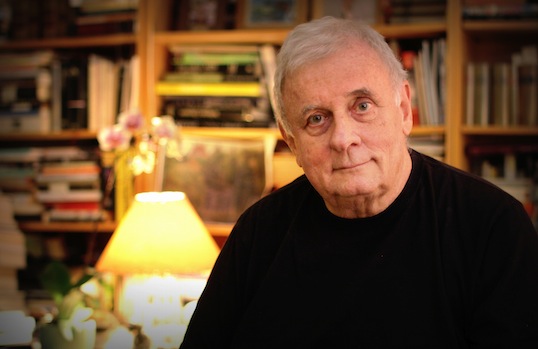
Edmund White

National Book Awards Handed To Susan Choi, Arthur Sze And More

11/20/19 (NPR website)

Edmund White won the medal for Distinguished Contribution to American Letters, the National Book Awards’ version of a lifetime achievement award.

The 79-year-old White, a trailblazing gay writer, has enjoyed a vast and varied life on the page, tackling biography, fiction, memoir and plenty that trod the unstable boundaries in between. It’s partly that versatility that attracted the National Book Foundation to his work, according to a statement from David Steinberger, the chairman of the foundation’s board of directors.

Director John Waters, who has enjoyed an attention-grabbing career in his own right, explained it a bit differently on stage before handing White his award.

“Edmund White helped start the Gay Men’s Health Crisis in 1982. He’s an AIDS activist, an AIDS survivor and he still loves sex,” Waters said. “He’s written so many top-notch memoirs that My Struggle seems stingy in the details department. He’s pissed off Susan Sontag and Gore Vidal, and the world is a better place for it.”

White himself explained that the path he forged was rarely easy.

“When I started submitting novels in the pre-Stonewall 1960s, my gay subject matter was offensive — especially since I didn’t write about hustlers or criminals or drag queens, but rather about the middle-class guy sharing an office with you. The familiar is more threatening than the exotic,” he recalled. “Years later, various editors would tell me that they’d been moved by my submissions but hadn’t dared accept them lest their colleagues think they themselves were gay.”

“To go from being the most maligned to a highly lauded writer in a mere half-century is a stunning is astonishing indeed,” he added.

(Submitted by Michael Kelly, H.W.)

The Prophet on love

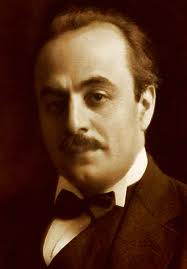
Kahlil Gibran

On Love

Kahlil Gibran – 1883-1931

Then said Almitra, Speak to us of Love.
     And he raised his head and looked upon the people, and there fell a stillness upon them. And with a great voice he said:
     When love beckons to you, follow him,
     Though his ways are hard and steep.
     And when his wings enfold you yield to him,
     Though the sword hidden among his pinions may wound you.
     And when he speaks to you believe in him,
     Though his voice may shatter your dreams as the north wind lays waste the garden.

     For even as love crowns you so shall he crucify you. Even as he is for your growth so is he for your pruning.
     Even as he ascends to your height and caresses your tenderest branches that quiver in the sun,
     So shall he descend to your roots and shake them in their clinging to the earth.
     Like sheaves of corn he gathers you unto himself
     He threshes you to make your naked.
     He sifts you to free you from your husks.
     He grinds you to whiteness.
     He kneads you until you are pliant;
     And then he assigns you to his sacred fire, that you may become sacred bread for God’s sacred feast.

     All these things shall love do unto you that you may know the secrets of your heart, and in that knowledge become a fragment of Life’s heart.

     But if in your heart you would seek only love’s peace and love’s pleasure,
     Then it is better for you that you cover your nakedness and pass out of love’s threshing-floor,
     Into the seasonless world where you shall laugh, but not all of your laughter, and weep, but not all of your tears.
     Love gives naught but itself and takes naught but from itself.
     Love possesses not nor would it be possessed;
     For love is sufficient unto love.

     When you love you should not say, “God is in my heart,” but rather, “I am in the heart of God.”
     And think not you can direct the course of love, for love, if it finds you worthy, directs your course.

     Love has no other desire but to fulfil itself.
     But if you love and must needs have desires, let these be your desires:
     To melt and be like a running brook that sings its melody to the night.
     To know the pain of too much tenderness.
     To be wounded by your own understanding of love;
     And to bleed willingly and joyfully.
     To wake at dawn with a winged heart and give thanks for another day of loving;
     To rest at the noon hour and meditate love’s ecstasy;
     To return home at eventide with gratitude;
     And then to sleep with a prayer for the beloved in your heart and a song of praise upon your lips.

Predictive coding

From Wikipedia, the free encyclopedia

Predictive coding is a theory of cognition in which the brain is constantly generating and updating a mental model of sensory input. The model is broadcast through the network of sensory processing brain regions. In each region, the model being propagated is compared to the sensory input and if they do not match, a Prediction Error is sent back up the network and the model is revised.

Origins

Theoretical ancestors to predictive coding date back as early as 1860 with Helmholtz’s concept of unconscious inference. Unconscious inference refers to the idea that the human brain fills in visual information to make sense of a scene. For example, if something is relatively smaller than another object in the visual field, the brain uses that information as a likely cue of depth, such that the perceiver ultimately (and involuntarily) experiences depth. The understanding of perception as the interaction between sensory stimuli (bottom-up) and conceptual knowledge (top-down) continued to be established by Jerome Bruner (psychologist) who, starting in the 1940s, studied the ways in which needs, motivations and expectations influence perception, research that came to be known as ‘New Look’ psychology. In 1981, McClelland and Rumelhart in their seminal paper examined the interaction between processing features (lines and contours) which form letters, which in turn form words. While the features suggest the presence of a word, they found that when letters were situated in the context of a word, people were able to identify them faster than when they were situated in a non-word without semantic context. McClelland and Rumelhart’s parallel processing model describes perception as the meeting of top-down (conceptual) and bottom-up (sensory) elements.

In the late 1990s, the idea of top-down and bottom-up processing was translated into a computational model of vision by Rao and Ballard (1999). Their paper demonstrated that there could be a generative model of a scene (top-down processing), which would receive feedback via error signals (how much the visual input varied from the prediction), which would subsequently lead to updating the prediction. The computational model was able to replicate well-established receptive field effects, as well as less understood extra-classical receptive field effects such as end-stopping. Today, the fields of computer science and cognitive science incorporate these same concepts to create the multilayer generative models that underlie machine learning and neural nets (Hinton, 2010).

General framework

Most of the research literature in the field has been about sensory perception, particularly vision, which is more easily conceptualized. However, the predictive coding framework could also be applied to different neural systems. Taking the sensory system as an example, the brain solves the seemingly intractable problem of modelling distal causes of sensory input through a version of Bayesian inference. It does this by modelling predictions of lower-level sensory inputs via backward connections from relatively higher levels in a cortical hierarchy (Clark, 2013). Constrained by the statistical regularities of the outside world (and certain evolutionarily prepared predictions), the brain encodes top-down generative models at various temporal and spatial scales in order to predict and effectively suppress sensory inputs rising up from lower levels. A comparison between predictions (priors) and sensory input (likelihood) yields a difference measure (e.g. prediction error, free energy, or surprise) which, if it is sufficiently large beyond the levels of expected statistical noise, will cause the generative model to update so that it better predicts sensory input in the future.

If, instead, the model accurately predicts driving sensory signals, activity at higher levels cancels out activity at lower levels, and the posterior probability of the model is increased. Thus, predictive coding inverts the conventional view of perception as a mostly bottom-up process, suggesting that it is largely constrained by prior predictions, where signals from the external world only shape perception to the extent that they are propagated up the cortical hierarchy in the form of prediction error.

Precision weighting

Expectations about the precision (or inverse variance) of incoming sensory input are crucial for effectively minimizing prediction error in that the expected precision of a given prediction error can inform confidence in that error, which influences the extent to which the error is weighted in updating predictions (Feldman & Friston, 2010). Given that the world we live in is loaded with statistical noise, precision expectations must be represented as part of the brain’s generative models, and they should be able to flexibly adapt to changing contexts. For instance, the expected precision of visual prediction errors likely varies between dawn and dusk, such that greater conditional confidence is assigned to errors in broad daylight than errors in prediction at nightfall (Hohwy, 2012). It has recently been proposed that such weighting of prediction errors in proportion to their estimated precision is, in essence, attention (Friston, 2009), and that the process of devoting attention may be neurobiologically accomplished by ascending reticular activating systems (ARAS) optimizing the “gain” of prediction error units.

Active inference

The same principle of prediction error minimization has been used to provide an account of behavior in which motor actions are not commands but descending proprioceptive predictions. In this scheme of active inference, classical reflex arcs are coordinated so as to selectively sample sensory input in ways that better fulfill predictions, thereby minimizing proprioceptive prediction errors (Friston, 2009). Indeed, Adams et al. (2013) review evidence suggesting that this view of hierarchical predictive coding in the motor system provides a principled and neurally plausible framework for explaining the agranular organization of the motor cortex. This view suggests that “perceptual and motor systems should not be regarded as separate but instead as a single active inference machine that tries to predict its sensory input in all domains: visual, auditory, somatosensory, interoceptive and, in the case of the motor system, proprioceptive” (Adams, Shipp, & Friston, 2013).

Neural theory in predictive coding

Evaluating the empirical evidence that suggests a neurologically plausible basis for predictive coding is a broad and varied task. For one thing, and according to the model, predictive coding occurs at every iterative step in the perceptual and cognitive processes; accordingly, manifestations of predictive coding in the brain include genetics, specific cytoarchitecture of cells, systemic networks of neurons, and whole brain analyses. Due to this range of specificity, different methods of investigating the neural mechanisms of predictive coding have been applied, where available; more generally, however, and at least as it relates to humans, there are significant methodological limitations to investigating the potential evidence and much of the work is based on computational modeling of microcircuits in the brain. Notwithstanding, there has been substantial (theoretical) work that has been applied to understanding predictive coding mechanisms in the brain. This section will focus on specific evidence as it relates to the predictive coding phenomenon, rather than analogues, such as homeostasis (which are, nonetheless, integral to our overall understanding of Bayesian inference but already supported heavily; see Clark, 2012 for a review).

Much of the early work that applied a predictive coding framework to neural mechanisms came from sensory neurons, particularly in the visual cortex (e.g., Rao and Ballard, 1999; Bolz & Gilbert, 1986).

More generally, however, what seems to be required by the theory are (at least) two types of neurons (at every level of the perceptual hierarchy): one set of neurons that encode incoming sensory input, so called feed-forward projections; one set of neurons that send down predictions, so called feed-backward projections. It is important to note that these neurons must also carry properties of error detection; which class of neurons has these properties is still up for debate (see Koster-Hale & Saxe, 2013; Seth, 2013). These sort of neurons have found support in superficial and non-superficial pyramidal neurons.

At a more whole-brain level, there is evidence that different cortical layers (aka laminae) may facilitate the integration of feedforward and feed-backward projections across hierarchies. These cortical layers, divided into granular, agranular, and dysgranular, which house the subpopulations of neurons mentioned above, are divided into 6 main layers. The cytoarchitecture within these layers are the same, but they differ across layers. For example, layer 4 of the granular cortex contain granule cells which are excitatory and distribute thalamocortical inputs to the rest of the cortex. According to one model:

“…prediction neurons… in deep layers of agranular cortex drive active inference by sending sensory predictions via projections …to supragranular layers of dysgranular and granular sensory cortices. Prediction-error neurons ….in the supragranular layers of granular cortex compute the difference between the predicted and received sensory signal, and send prediction-error signals via projections…back to the deep layers of agranular cortical regions. Precision cells … tune the gain on predictions and prediction error dynamically, thereby giving these signals reduced (or, in some cases, greater) weight depending on the relative confidence in the descending predictions or the reliability of incoming sensory signals.” (Barrett & Simmons, 2015)

In sum, the neural evidence is still in its infancy.

Applying predictive coding

Perception

The empirical evidence for predictive coding is most robust for perceptual processing. As early as 1999, Rao and Ballard proposed a hierarchical visual processing model in which higher-order visual cortical area sends down predictions and the feedforward connections carry the residual errors between the predictions and the actual lower-level activities (Rao and Ballard, 1999). According to this model, each level in the hierarchical model network (except the lowest level, which represents the image) attempts to predict the responses at the next lower level via feedback connections, and the error signal is used to correct the estimate of the input signal at each level concurrently (Rao and Ballard, 1999). Emberson et al. established the top-down modulation in infants using a cross-modal audiovisual omission paradigm, determining that even infant brains have expectation about future sensory input that is carried downstream from visual cortices and are capable of expectation-based feedback (Emberson et al., 2015). Functional near-infrared spectroscopy (fNIRS) data showed that infant occipital cortex responded to unexpected visual omission (with no visual information input) but not to expected visual omission. These results establish that in a hierarchically organized perception system, higher-order neurons send down predictions to lower-order neurons, which in turn sends back up the prediction error signal.

More at: https://en.wikipedia.org/wiki/Predictive_coding

Peggy Lee – It’s a Good Day!

Andrey Ivanov 1946

It’s A Good Day Peggy Lee

Yes, it’s a good day for singin’ a song,
And it’s a good day for movin’ along
Yes, it’s a good day, how could anything go wrong,
A good day from mornin’ till nightYes, it’s a good day for shinin’ your shoes,
And it’s a good day for losin’ the blues
Ev’rything to gain and nothin’ to lose,
‘Cause it’s a good day from mornin’ till nightI said to the sun, “good mornin’, sun
Rise and shine, today”
You know you’ve gotta get goin’
If you’re gonna make a showin’
And you know you’ve got the right of way’Cause it’s a good day for payin’ your bills
And it’s a good day for curin’ your ills,
So take a deep breath and throw away your pills
‘Cause it’s a good day from mornin’ till night

Source: LyricFind

NASA Finds Supermassive Black Hole Birthing Stars at “Furious Rate”

It’s surrounded by trillions of Suns’ worth of hot gas — and churning out stars 500 times faster than the Milky Way.

VICTOR TANGERMANN NOVEMBER 19TH 2019 (futurism.com)

Galaxy clusters have been fascinating astronomers for decades. Often consisting of thousands of galaxies, the clusters are the largest known structures being held together by gravitational forces.

At their centers, astronomers have found some of the biggest and most powerful black holes ever discovered, and high-energy jets of extremely hot particles emanating from these black holes were found to be preventing the formation of stars — which, of course, raised a galactic mystery: where are all the stars coming from?

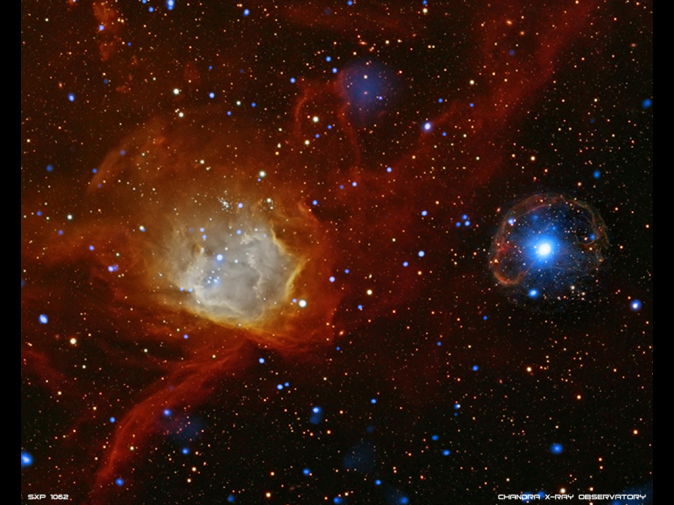
But now, thanks to data collected by NASA’s Chandra X-ray Observatory and the Hubble Space Telescope, a team of scientists has found that a galaxy cluster called the Phoenix Cluster, some 5.8 billion light years from Earth, is birthing stars at a “furious rate.”

Its black hole seemed to be far weaker than other clusters’ black holes, with trillions of Suns’ masses worth of hot gas cooling around it, allowing the formation of a vast number of stars. Usually black holes have keep those gases from cooling — thereby stopping the formation of stars — by continuously spewing out high-energy jets of particles.

The research could help us understand the life cycle of galaxy clusters and how the supermassive black holes at their centers interfere — and sometimes, seemingly, aid — the formation of stars within them.

A paper of the results was published in The Astrophysical Journal last month.

“Imagine running an air-conditioner in your house on a hot day, but then starting a wood fire. Your living room can’t properly cool down until you put out the fire,” co-author Brian McNamara from the University of Waterloo, Canada, said in a statement. “Similarly, when a black hole’s heating ability is turned off in a galaxy cluster, the gas can then cool.”

In fact, they found that the hot gas was cooling at the same rate as when a black hole stops injecting energy. And that means a huge amount of stars are allowed to be born in regions where the hot gas has cooled sufficiently — in fact, the Phoenix Cluster is forming new stars at 500 times the rate of the Milky Way galaxy, according to X-ray observations made by the Chandra Observatory.

This effect won’t go on forever, though.

“These results show that the black hole has temporarily been assisting in the formation of stars, but when it strengthens its effects will start to mimic those of black holes in other clusters, stifling more star birth,” co-author Mark Voit from Michigan State University said in the statement.

READ MORE: A Weakened Black Hole Allows Its Galaxy to Awaken [NASA]

More on galaxy clusters: Astronomers Just Found the Oldest Galaxies in the Universe

The Portal of the Expanding Heart is Wide Open (Venus conjunct Jupiter 11/15 – 11/30)

Matthew Stelzner Venus-Jupiter Conjunction November 15-30 Sign up for my mailing list and check my availability for a consultation at www.stelz.biz

The Portal of the Expanding Heart is wide open and getting larger everyday. 

We have a Venus Jupiter conjunction, one of the most beautiful astronomical events, happening from November 15th to November 30th and it peaks on the 27th and 28th. This overlaps with Thanksgiving here in the United States, and its a perfect alignment for a celebration of gratitude and generosity, and also for enjoying an extra serving (or two) of dessert. This is such a beautiful alignment to observe, so be sure to get out in the evening at sunset and look towards the western horizon to see the two brightest planets embracing in the twilight. On the 27-28 you will also see a beautiful sliver of a crescent moon joining Venus and Jupiter to form one of the most striking displays of nature that can be observed. Venus calls us towards love and pleasure and art and music. She moves us towards sweetness and friendship and the sensual joys of human intimacy (with self and others). She is the experience of the opening heart chakra and the force of kindness and selfless loving actions. So this Jupiter-Venus conjunction is a great time to be more generous with our kind messages and compliments towards those we love and also towards the new relationships that often form at the beginning of a new cycle of time such as this. Jupiter, the largest planet in the solar system, is a force of expansion and it magnifies whatever it touches. It also represents joy and humor and brings a smile to our face. When Jupiter and Venus come together in the sky approximately once per year (the next conjunction will happen in February 2021) there is an opportunity to let our heart get bigger and to surrender to the healing force that can transform loneliness and a wounded heart into feelings of gratitude and joy. It is a time to broaden our horizons when it comes to love and pleasure, a time to reach out to loved ones, and to open to new experiences of intimacy beyond our typical relational patterns. It is an opportunity for forgiveness and humor to redeem any losses of love and a chance to alleviate hurt feelings. If we are looking for love, this is one of the best alignments for dating, and often there can be a feeling of good fortune and grace with the experiences of intimacy that we find during these times. So this is a great opportunity to stretch beyond our fears and let more love into our lives. This can be a chance to begin a new cycle in our patterns of relationship, and to move onto new timelines that come when we let our hearts grow a little larger, one day at a time. We should also be on the lookout for ways to expand the presence of art and music in our lives and to ride the waves of joy that can come just from going out dancing or to hear live music with a beloved friend or partner. Jupiter has to do with travel, and so when it aligns with Venus I sometimes speak of it as the “Paris weekend archetype.” It can bring a form of “vacation consciousness” where we remember how healing devoted time for pleasure and relaxation can be, especially when extended over a period of days or weeks. If you happen to be on vacation during these dates, look for especially healing experiences, and if you have the means to be spontaneous, please consider taking some extra days off to travel to the places that you find the most beautiful and joyful. The best way to align with a new cycle of time is to relax and let ourselves be pulled in new directions, pulled towards new settings and experiences that naturally are orchestrated on the level of consciousness itself. The planets are the most massive expressions of consciousness that can be experienced through the intimacy of sight, and so I feel that the actual observation of the planets, when possible, is the best way to receive their guidance. I suggest that we find a place to observe this alignment and pray to the planets for support. Let the photons from Venus and Jupiter penetrate our bodies and guide us towards more more joy and love in our lives. The planets are massive expressions of intelligence and it is my experience that they wish to grow their relational intimacy with each of us. They wish to form loving relationships with us and they want to send us loving messages of guidance. So I hope we will get outside and commune with the night sky over the next couple of weeks to receive their love. 

Please check out my new video for more exploration of these and other themes, and if you are interested in working with me individually to maximize the special opportunities of this alignment, please visit my website to see my availability and to sign up for a consultation. I send you blessings and wish you much joy and love.  –Matthew

Consciousness, sexuality, androgyny, futurism, space, the arts, science, astrology, democracy, humor, books, movies and more