“During the Vichy era, French residents sent between three and five million denunciation letters.[3] Civilians sent denunciations to everyone from local officials and law enforcement bureaus to national agencies and individuals such as the General Commissariat for Jewish Questions or even Marshal Pétain himself. Natives of the Limousin denounced newly arrived refugees, while some refugees denounced Limousins or other refugees; long-time neighbors denounced each other; and non-Jewish French men and women denounced “undesirable” Jews. Motivated by material gain, ideological commitment, self-preservation, or petty differences, residents of the region picked up their pens and regularly informed the government of their neighbors’ and acquaintances’ immorality and misdeeds. Individual willingness to resort to denunciations created an atmosphere in which officials noted that “Few people dare to talk. One has a tendency to see in his neighbor a possible denouncer.”[4] While denunciations could provide information on food or “racial” infractions that were admittedly difficult to police, they also created an atmosphere of fear and suspicion that opposed the ideals of the National Revolution. Rather than building a stronger community through the purge of harmful elements such as black marketeers, hoarders, and cultural outsiders, denunciations encouraged lying, dissimulation, and self-interested actions.”
–excerpted from Denunciations, Community Outsiders, and Material Shortages in Vichy France by Shannon L. Fogg
A vigorous, imaginative, and idealistic young man, he was among the seventeen people who first put the Theosophical Society together. Like Helena Petrovna Blavatsky and Henry Steel Olcott, he stayed in the organization when others left. When Olcott and Blavatsky left the United States for India, Judge stayed behind to manage the Society’s work, all the while working as a lawyer.
When Blavatsky and Olcott left America, they left Theosophy in North America in Judge’s hands. While Judge kept in close contact with both Blavatsky and Olcott through correspondence, there was little if any organized activity for the next several years. His difficulties over this period of time are illustrated by a biographical passage written by Mrs. Archibald Keightley: “It was a time when Madame Blavatsky – she who was then the one great exponent, had left the field … the interest excited by her … striking mission had died down. The T.S. was henceforth to subsist on its philosophical basis … From his twenty – third year until his death, (Mr. Judge’s) best efforts and all the fiery energies of his undaunted soul were given to this work.“
In 1876, business affairs caused him to visit South America, where he contracted “Chagres fever”,[1] and he was ever after a sufferer from that torturing disease. Other “phases” of his experiences on this journey are recorded in his writings, often allegorical, suggesting the character of the occult contacts which may have been established on this journey.
In India, Blavatsky established a new headquarters. As a European, her efforts to restore respect for the Hindu faith were quite effective. As a result, she made enemies among the missionaries of conventional Christianity. The Theosophical Movement 1875-1950 sets out some of the events that followed: “William Q. Judge, who arrived in India soon after the Coulombs had been sent away from headquarters, made a detailed examination of the false door constructed in Madam Blavatsky’s “occult room”. He showed the product of Coulomb’s interrupted labours to some three hundred witnesses who signed their names to a description of the place. He removed the “shrine” in which the Coulombs had attempted to plant evidence of fraud. Even many years later, these actions provide cogent evidence of “the Coulomb Conspiracy” and vindicate Madame Blavatsky.
In 1885, after his return to America, Judge set about to revitalize the Movement in the United States. The real beginning of the work of Theosophy in the United States began in 1886, when Judge established The Path, an independent Theosophical magazine. Until this time, not much had been accomplished in the way of growth of the Society in America. Mr. Judge addressed the common man in homely language and with simple reason. The Path showed that he had found himself and was now cultivating the area of his greatest usefulness, as a writer. His natural interest in the welfare of others affected everything he did, so that his articles and Theosophical talks are cast in the idiom of the common man. In his first editorial, he wrote: “It is not thought that utopia can be established in a day … Certainly, if we all say that it is useless … nothing will ever be done. A beginning must be made and it has been made by the Theosophical society … Riches are accumulating in the hands of the few while the poor are ground harder every day as they increase in number … All this points unerringly to a vital error somewhere … What is wanted is true knowledge of the spiritual condition of man, his aim, and destiny … those who must begin the reform are those who are so fortunate as to be placed in the world where they can see and think out the problems all are endeavouring to solve, even if they know that the great day may not come until after their death.“
He also wrote: “The Christian nations have dazzled themselves with a baneful glitter of material progress. They are not the peoples who will furnish the clearest clues to the Path … The Grand Clock of the Universe points to another hour, and now Man must seize the key in his hands and himself – as a whole – open the gate … Our practice consists in a disregard of any authority in matters of religion and philosophy except such propositions as from their innate quality we feel to be true.“
It has been said of Judge: “Everything he wrote of a metaphysical nature can be found, directly or indirectly, in the works of Madame Blavatsky. He attempted no new “revelation” but illustrated in his own works the ideal use of the concepts of the Theosophical Teachings.” The Theosophical Mov’t, 1875 – 1950. Over the years, Mr. Judge attracted to the Movement a nucleus of devoted followers. The movement grew steadily in America.[2]
Judge wrote theosophical articles for various theosophical magazines, and also the introductory volume, The Ocean of Theosophy in 1893. He became the General Secretary of the American Section of the Theosophical Society in 1884, with Abner Doubleday as President.
Judge left no record of the period before the founding of the Theosophical Society but some of his published statements reveal the character of his relationship with Blavatsky during this period. On the occasion of her death in 1891, he referred to their first meeting in her rooms in January 1875. He wrote:[3]
It was her eye that attracted me, the eye of one whom I must have known in lives long passed away. She looked at me in recognition for that first hour, and never since has that look changed. Not as a questioner of philosophies did I come before her, not as one groping in the dark for lights that schools and fanciful theories had obscured, but as one who, wandering through the corridors of life, was seeking the friends who could show where the designs for the work had been hidden. And, true to the call, she responded, revealing plans once again, and speaking no words to explain, simply pointed them out and went on with the task. It was as if but the evening before we had parted, leaving yet to be done some detail of a task taken up with one common end; it was teacher and pupil, elder brother and younger, both bent on the one single end, but she with the power and knowledge that belong but to lions and sages.
Blavatsky often referred to the founding of the Theosophical Society as coming about as a result of occult direction from her teachers. Judge would later write that the objects of the Society had been given to Olcott by the Masters before the meeting at which they were adopted. Thus, the founding of the Theosophy Society may be seen to have been inspired.
In 1881, looking back on the founding of the Society, Blavatsky wrote: “Our society as a body might certainly be wrecked by mismanagement or the death of its founders, but the IDEA which it represents and which has gained so wide a currency, will run on like a crested wave of thought until it dashes upon the hard beach where materialism is picking and sorting its pebbles … ” At this time, the affairs of the Society were largely in Olcott’s hands. Meetings were held irregularly, and many plans for occult experimentation were proposed. Neither Blavatsky nor Judge took any active part in the meetings after the first few sessions. He was busy with his law practice. She was beginning to write her first book, Isis Unveiled.[4]
After Blavatsky died in 1891, Judge became involved in a dispute with Olcott and Annie Besant, whom he considered to have deviated from the original teaching of the Mahatmas. As a result, he ended his association with Olcott and Besant during 1895 and took most of the Society’s American Section with him. Despite being hounded by devotees to Besant, Judge managed his new organization for about a year until his death in New York City, whereupon Katherine Tingley became manager. The organization originating from the faction of Olcott and Besant is based nowadays in India and known as the Theosophical Society – Adyar, while the organization managed by Judge is known nowadays simply as the Theosophical Society, but often with the specification, “international headquarters, Pasadena, California“.
When we look back historically, many traditional spiritual paths were focused on helping us learn how to liberate ourselves from the mind. These meditation practices usually involved sitting down each day for a period of time to try to do that. The belief was that when we do this, our experience will then change everything else in our lives, which it will.
In a sense, the meditation that I teach is basically meant to do the same thing. The intention is to liberate us from our compulsive identification with thought and feeling in order to free us up to respond to life in an unconditioned way.
And yet what also excites me about this evolutionary spiritual path is that it isn’t just something we do for 30 minutes or an hour a day or something we just do when we go on a retreat away from the world. This is really a 24/7 spiritual practice (except when you’re asleep). It’s a spiritual practice you can engage all day. It’s woven into your life.
For me, that’s really good news, since we spend most of our lives engaged, not just sitting quietly. This means we have a lot more time to practice. We have the potential to dramatically accelerate our progress on the spiritual path because we’re not just doing it for an hour here and there. We’re practicing all day long.
This evolutionary relationship to life plays out in very specific ways, which means there are a variety of practices that we can engage as we go through the day.
Before we get into these specific evolutionary life practices, I want to first explore the essential orienting framework for this way of living, which has four dimensions.
First, this evolutionary relationship to life rests on the recognition that life is not fundamentally about “me.” It’s the opposite of the egoic position. The ego says, “Life’s only about me. I’m the center of the universe.” But when you’re relating to life from this evolutionary orientation, you say, “No, it’s not fundamentally about me. I’m part of a universal, unfolding, cosmic process. Therefore, I’m more concerned with the evolution and health of that whole process than I am with my own personal welfare.
“Of course, I recognize that giving my energies to the evolution of the whole will include taking care of my own genuine needs. I’m not completely left out of that picture, but I am no longer the be-all and end-all. I’m no longer the center of the universe. My life isn’t my own. I’m beholden to something bigger.”
This stance, in a sense, flows right into the second orienting point. This is the recognition that not only is life not about me, but my life isn’t my own to do with as I please. Instead, I have an obligation to other people, to life, to the evolutionary process, to God, if you will. I’m beholden to becoming the most enlightened human being that I can possibly be, because that will be of greatest service to this process. Only then can I really truly function as a contributor to our higher evolution. I strive to take full responsibility for all the ways in which I’m not yet that evolved, so I can show up in every situation as an expression of my most enlightened self.
The third of these four orienting points is that I relate to my life as an evolutionary experiment. I recognize that there is no road map for the future that we’re creating. Nobody knows where this is all going. So if I’m going to participate in this great process of evolving consciousness and culture, I need to have an approach to life that is experimental, ever-learning, inquisitive, and open. I’m always open to new information and new data, and I’m always ready to change course or shift my behavior in response to new opportunities.
The last orienting principle is that I’m more interested in the future that’s being born in each moment than I am in the past, or even in the present. I’m more interested in what’s next—in where this is going. I’m animated by the call of a higher potential to emerge. I’m not just complacent or content to sit here in the moment and just be. And I’m definitely not oriented to just dwelling on what has been in the past. Instead, I’m always leaning forward into the emerging future that’s coming into being. I’m living on the edge of evolution and maintaining a continual posture of stretching forward into that unknown edge.
These four orientations together make up a kind of latticework upon which these evolutionary life practices rest. To distill them down even further, these four points make up the North Star of our lives. They are the simple questions that guide us in every moment. We are constantly asking ourselves, “What’s the most evolutionary or helpful response I could have in this moment? What’s the response that would break me free from the patterns of the past and make room for a new higher possibility?”
Within this simple framework, we could create hundreds of practices to guide us through our lives, but today we’re going to explore three of them. They are all focused on how to live an enlightened, evolutionary life in a very practical sense.
The first practice I want to talk about is the practice of caring for the greatest good. That can sound very abstract. What is “the greatest good,” anyway? What does that even mean? And who’s to say what’s the greatest good?
What I mean by the practice of caring for the greatest good that in every situation you find yourself in, you stand in a place where you’re genuinely interested in serving the best outcome for the whole situation rather than just advocating only for your own personal benefit.
The egoic stance would be, “What’s in this for me? What do I stand to gain? What do I stand to lose? How am I going to get my needs met?” That would be the basic egoic orientation to every situation we could ever encounter. Most of us consider that normal, right? Humans beings are considered to be self-interested creatures trying to get our needs met, to fulfill our agendas, and get what we want.
So this is actually a very radical practice. Instead of just going with the selfish momentum of the ego, we choose to say, “What is truly in the interest of the greatest good here?”
The greatest good isn’t just some abstract higher principle. It’s practical. In every situation you ask, “What will serve the greatest good of the whole?” which means all parties concerned. Some situations concern just a couple of people. Other situations concern a large group of people. You could even argue that some situations extend beyond people to impact larger entities like the entire planet. Certain choices we make on a daily basis affect our whole biosphere.
From a spiritual perspective, some choices we make can potentially impact all of consciousness. We realize, “Wow. If I give myself wholeheartedly to meditation, that’s adding momentum to the awakening of humanity.” So this question relates even to those deep interior choices we make in our spiritual practice. Are we practicing for ourselves or something greater? The ego would say, “Do I want to meditate today or not? What’s in it for me?” But instead we say, “What do I need to do now to serve the highest possible good?”
This is something you can apply to any situation at any level. It’s a shift in orientation and it’s a practice. You might not feel like serving the greatest good, but you still make the effort to do it. You can say, “I’m going to plant my stake here. I’m going to do it whether it feels good or not.”
As we engage this practice of always orienting towards the greater good, we begin to develop a deep moral compass. We awaken to a kind of inner navigation system, like our conscience, that tells us which way to go and what to do. We can practice remaining responsive to the call of that inner compass. In essence, we practice by following our deepest, clearest sense in every moment of the best thing to do.
So, that’s the first practice, and itleads directly into the second practice, which has to do with our ability to see the truth of things. In order to be able to discern the greatest possible good or the right thing to do, we need to be able to see clearly. And when we try to do this, we quickly confront the many ways in which our perception is distorted.
We know that human beings are deeply prone to distorting reality. We know that all the ego defense mechanisms that have been catalogued by psychologists are all ways of distorting our perception in order to defend our self-image. We are also full of cognitive biases, which get in the way of our ability to see things as they are. Sometimes they lead us to want to see things as better than they are. Other times we want to see things as worse than they are, or to justify decisions we’ve made.
Because we don’t naturally see things as they are, it’s important to make a practice of being interested in the truth. This sounds really simple. You might be thinking, “Of course I’m interested in the truth.” But this has to be a very rigorous practice. The kind of truth seeking I’m pointing to is constant. In every situation you encounter, you want to be more interested in seeing what’s true than in how you feel, or in defending any belief you have. This is such a powerful practice that if you could do only one thing to get through this life with grace and wisdom, facing the truth in every moment would probably be it.
Facing the truth in this way plays out as a willingness to consistently question our assumptions. We have to assume that our perception is full of cognitive biases and defense mechanisms. We want to be interested in seeing all the tendencies to distort the picture.
This practice requires a rigorous, and at times ruthless willingness to simply see what’s going on. It’s almost a yearning to see clearly. You’re constantly saying to yourself, “I want to be in right relationship to the universe. I want to be in right relationship to other people. I want to be in right relationship to reality. So I have to see what’s true. I have to see clearly, so I have to get out of my filters.”
This practice propels us into inquiry with others, because we need other people to get outside of the limitations in our own perspective. It propels us to deeply question ourselves and our assumptions. We are compelled to look, again and again, striving for the naked, unadorned truth.
This practice of cultivating a relentless interest in seeing clearly in each moment rests on another practice, which Suzuki Roshi called “beginner’s mind.” This is a practice of not already knowing. It’s a practice of letting go of what we already know. You could say it’s a practice of innocence, but not the naïve innocence of a young child. It’s not an innocence where we throw out and reject the hard-won wisdom that we already have.
It’s a practice of being more interested in what we don’t yet know than in what we already know. We suspend, at least temporarily, the things we already know and say, “If I already know something, then it will still be there. I’ll still know it, even when I let go of it. I don’t have to hold onto it to know it. If it’s true, it will continue to be self-evident and so I can just let go and I can rest in this place of innocent interest. I don’t know, but I want to know.”
In this practice, we’re emptying out all of our fixed ideas and assumptions and beliefs. It’s a powerful experience to have, even though not knowing is terrifying to the ego. Ultimately, it’s very calming for the deeper parts of us. It’s an easy place to be, because we’re really not clinging on anymore. There’s not a fear. There’s a letting go of knowing and a willingness to simply trust, which brings us to the next practice.
The third evolutionary life practice is learning to deeply trust—in life, in God, or in the mystery. Those words get thrown around a lot these days: “Oh, I just need to trust the universe,” or “I just need to trust life,” or “I just need to trust God.” It changes depending on the context we’re in.
But this way of understanding “trust” often doesn’t really make a lot of sense. What people tend to mean is they’re trusting that some external force is going to take care of things. If they just stop trying to make things happen, then some external cosmic force will somehow step in and take care of it. There may be a little bit of truth to this. To some degree, there is more under heaven and on earth than any of us can imagine and there do seem to be mysterious forces at work in certain situations. But we don’t want to rely on any of that. I wouldn’t call that a very wise way to live: to just cast it all into the hands of some hopefully benevolent external force that we believe in, even though we claim we’ve left the mythic God in the sky behind.
This notion of fundamental or essential trust that I’m pointing to is much more profound than that. When you let go of the need to know what’s going to happen beforehand—of the need to control outcomes—and you allow yourself to trust that what you need to know will be revealed in the moment, you make yourself available for a mysterious process to begin to happen within and through you that you really can’t know anything about. There’s a spontaneous emergence of wisdom.
If I make the choice to go out to that edge and let go of everything—of all my certainty, all my knowing, all my need to control life and have it go my way—and I just allow myself to show up empty-handed, then I find something mysterious and profound. There’s a depth of wisdom and clarity. There’s also the passion and drive and power to act on that wisdom. It all shows up from somewhere utterly mysterious that we don’t anything about and that we’ll never know anything about. It’s the great unknown.
If you had to say there is one key to living an enlightened life, it would be this practice of trust. It’s not that we need to feel trusting. It’s that we need to decide to trust—decide to act from this unpremeditated, unscripted place.
This practice of trust doesn’t mean we are not doing long-term planning for our goals and projects. It means that there’s a fundamental trust that something deeper will emerge when we don’t grasp. It’s a practice of essential trust.
Another way to look at this practice of trust is as a willingness to take risks. I’m not talking about careless or reckless risk-taking. Nor am I talking about risk-taking just for its own sake. Many of the things that living a spiritual life requires of us will feel like a gigantic risk to our egos—to the part of our self that’s organized around comfort, safety and security.
If you’re really doing the practice of facing the truth, which we explored earlier, you’re going to see a lot of things that you were previously avoiding, but that need to be said. Once the truth is known, it needs to be named, regardless of the context. In a relationship, for example, you might suddenly realize, “Hey, there are lies between us. We’re deceiving each other. We’re deceiving ourselves. We’re pretending something didn’t happen that needs to be addressed. We’re avoiding how bad things are or we’re denying how good things are.” When we start to face and see the truth, there’s this overwhelming sense of risk associated with speaking the truth.
So a big part of this practice of trust includes healthy risk-taking for a greater good. We’re not doing it just to get what we want. We’re doing it for its own sake. We’re doing it because it needs to be done.
Sometimes it’s around speaking challenging truths. Sometimes it’s about revealing something about ourselves that we’re terrified for other people to see. It could be admitting that we don’t know what to do in a situation where we’re responsible, or being transparent about a limitation.
We might feel we’re taking a risk by admitting that we don’t have it all together, but we need to do it for a greater good because if we don’t, we’re potentially going to do more harm or damage through our ignorance. Admitting to others that they “don’t know”is a risk many people are afraid to take. They don’t want to reveal that they have a certain vulnerability, or lack of capacity, or a weakness they’re struggling with.
Another element of risk that comes into play is that many of us are terrified to stand for our own depth in the world. We’re afraid to fully step into the deepest, most awake part of ourselves and speak from that place with great clarity. We’re timid about revealing the depth of what we’ve discovered about our own true self. We’re afraid that when we do this we can’t go back, because the world will now expect it of us and we’re not sure whether we have what it takes to consistently show up with that much clarity, courage, care, love, and wisdom.
It’s like that phrase from the Bible, “Don’t hide your light under a bushel.” People will hide their light. People will hide the deepest, truest part of themselves out of fear for being called to a higher responsibility in the future. We’ll act less enlightened than we are. We’ll dumb down and pretend.
So risk-taking goes both ways. It’s taking a risk to reveal both the smallest and biggest parts of ourselves. In essence, it’s really a practice of consistently taking emotional risks, all the time: the risk to be vulnerable, the risk to be authentic, the risk to challenge a situation, the risk to step up and reveal our own wisdom. And many other things.
This may be one of the most challenging evolutionary practices because it means walking straight into those things we’re most afraid of.
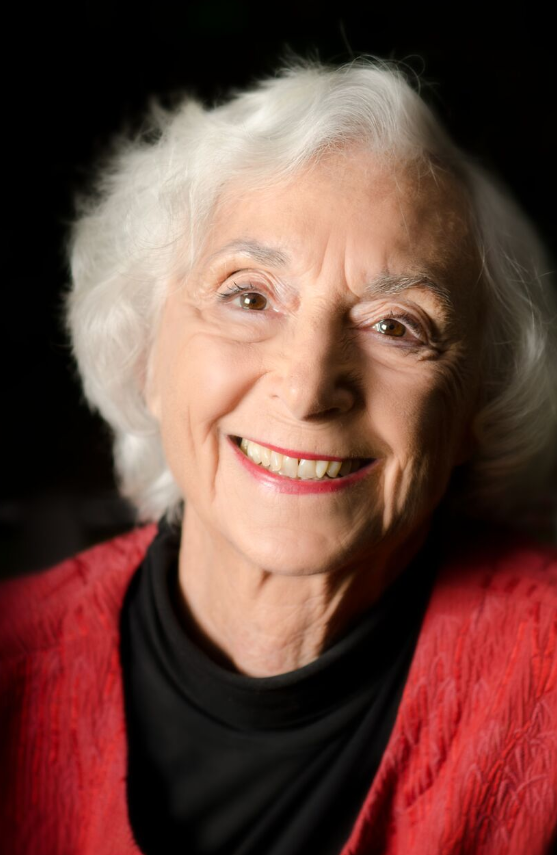
Sometimes deaths come in spates. In 2016 we lost several famous rock stars, including David Bowie, Prince, Leonard Cohen and George Michael. I hope 2019 isn’t turning into the year that we lose too many rock stars of the future/visionary world. In 2019 Bernard Lietaer passed away, and last week I heard that Barbara Marx Hubbard had died. She was 89 years old, admittedly, but had been in excellent health until a swollen knee led to a chain of events that ended with her life support being turned off.
I never met Barbara, as I never met Bernard, and yet both had a significant influence on my worldview, particularly on how I perceive the future and what needs to happen to make it both peaceful and sustainable. As you have hopefully gathered from recent blog posts, I am extremely doubtful that we can solve our problems from within the same structures that have created them, and believe that we need a new narrative about what it means to be human in the 21st century: as Alex Evans puts it in The Myth Gap, we need a narrative that embodies “a larger us, a longer now, a better good life”.
If you’re not familiar with Barbara’s work, I will attempt to do it some small amount of justice in this blog post, and I’d also encourage you to watch one of her talks, like this one. Her central thesis was that, after millions of years of evolution on Planet Earth, we are the first species to be aware of the process of evolution, so it is incumbent on us to use that awareness to consciously manage our future evolution.
She has sometimes been disparagingly referred to as part of the New Age movement, but I think this is to do her a disservice. She brought immense intellectual curiosity to her work, with great questions being her particular stock in trade.
A turning point in Hubbard’s life was the end of World War II and the bombing of Hiroshima and Nagasaki. “What was all this power for?” she wondered.
In 1952, her father took her to see President Eisenhower in the Oval Office. “What can I do for you, young lady?” he asked casually. “Mr. President,” she said, “I have a question for you. What is the meaning of our new powers that is good?”
He looked startled, shook his head, and said, “I have no idea.”
Then we better find out, she thought, and the quest for a vision of the future equal to our new power became the driving question of her life.
This question also led her to meet her husband. She was a student at Bryn Mawr in Pennsylvania when she took a year out in Paris. One day, while hanging out in a Parisian café, she struck up a conversation with an artist, a man by the name of Earl Hubbard. She asked him the questions she had been asking everyone, the questions inspired by Hiroshima: “What do you think is the meaning of our new power that is good, and what do you think is your purpose?” This young man had an immediate answer: “I’m seeking a new image of man commensurate with our power to shape the future. When a culture loses its story, loses its self-image, it loses its greatness. The artist has to find a new story and until it is expressed by artists, we won’t be able to bring our culture to fruition.” Her only response was a small voice in her mind that said, “I’m going to marry him.”
And she did. And went on to have five children as a housewife in Connecticut. But she needed more than domestic bliss, and started reading books in search of answers.
It started with Maslow’s Toward a Psychology of Being. He said that every self-actualizing person has one thing in common: a chosen vocation they found intrinsically self-rewarding. Here she found a great clue to conscious evolution: the need to find innate life purpose that transcends mere selfish desire to prevail, with vocation being a vital way of directly experiencing the evolutionary impulse.
Then came Teilhard de Chardin. She wrote later: “This was the real opening. I could tell from his Law of Complexity/Consciousness — the understanding of God in evolution rising to higher consciousness, freedom and more complex order, that my own impulse to grow, to be more, to realize my potential was not the musings of a neurotic housewife, but rather, it was the universe unfolding in me as me.”
Then came Buckminster Fuller, who told us that we have the resources, technologies and know-how to make of humanity a 100% physical success without destroying our environment.
It was February 1966 when she had a life-changing vision while walking on a frosty hill near her Connecticut home. She wrote:
“I asked the universe a question: “What is Our Story? What on Earth is comparable to the birth of Christ?” What I meant by that is the Gospels were such an amazingly effective story. What could be our story comparable in power to that?
Suddenly, my mind’s eye penetrated the blue cocoon of earth and lifted me up into the utter blackness of outer space. A Technicolor movie turned on. I felt the earth as a living organism, heaving for breath, struggling to coordinate itself as one body. It was alive! I became a cell in that body.
In the next few minutes I saw conscious evolution as the next stage of evolution itself. It is the evolution of evolution from unconscious to conscious choice. I realized that we are literally in a crisis of birth of the next stage of our evolution. We are outgrowing the womb of self-conscious humanity and planet-boundedness. We can learn to restore the Earth, free ourselves from scarcity and move forward into an immeasurable future as a co-evolutionary co-creative species. Like a newborn infant, we innately know how to do this…. when we have the right story to guide us.”
She dedicated herself to learning the story and to telling it in every way that she could. She believed that Maslow was right, in that a true vocation is a key to participation in conscious evolution.
“I see vocation as the enfolded implicate order, the process of creation localizing and unfolding in each of us as our own passion to create. Once that happens the Consciousness Force internalizes and we enter the process of conscious self-evolution. We become conscious evolutionaries.”
She saw the essential task of conscious evolution as being “to learn how to be responsible for the ethical guidance of our evolution. It is a quest to understand the processes of developmental change, to identify inherent values for the purpose of learning how to cooperate with these processes toward chosen and positive futures, both near term and long range.”
She boiled this down to “the three C’s:”—new cosmology, new crises, and new capacities.
Our new cosmology is the story that science has revealed about where our universe came from, about the extraordinary process of which we are a part. It is important, Hubbard wrote, because it gives us “a new sense of identity, not as isolated individuals in a meaningless universe but rather as the universe in person” Our new crises, she explained, are those potentially catastrophic global issues we face, such as climate change. In light of evolution’s trajectory, these are reframed as a “natural but dangerous stage in the birth process” of our next evolutionary stage. Hubbard points out that there have always been crises as part of the process—mass extinctions, ice ages, and so on—but never before have we had advance warning of our pending self-destruction and therefore had the opportunity to do something about it. We are shifting, she wrote, from “reactive response to proactive choice.”
The third piece in Hubbard’s triad, new capacities, are recently developed powers such as biotechnology, nuclear power, nanotechnology, cybernetics, artificial intelligence, and artificial life. She acknowledged that in our current state of “self-centred consciousness” these are potentially hazardous, and yet, she suggests, they may be exactly what we need for the next phase of our evolution. She cautioned against acting out of fear and prematurely destroying these new technologies. The task of conscious evolution is rather to “guide their capacities toward the emancipation of our evolutionary potential.”
She saw a special role for women in the emerging new consciousness: “An evolutionary woman is activated by an inner impulse to create, to love more, be more, create more and give more… The evolutionary woman is able to love what’s being born in her – the creative feminine – and able to love giving her gift to the unknown world.”
I will give the last word to BMH:
“Perhaps we are indeed coming to the end of this world, to the end of civilization, the end of separate self consciousness as we have known it. And this is good. We are being instructed by Failure – the failure of war to win, the failure of consumerism to satisfy, the inevitable rise of the seas in response to global warming brought on in part at least by human destruction of nature. All of these evolutionary drivers may indeed be the impulse needed to jump our species to a higher order, or to self destruction.”
She lived a long and prolific life, and many will miss her, but she has left a huge legacy of thought leadership, books, and presentations. Although I don’t particularly believe in a heaven as such, I nonetheless like to imagine that her spirit is now somewhere where she can ask great questions to her heart’s content, and get the answers she so enthusiastically sought.
Many readers think of haiku, with its three short lines in a five-seven-five syllabic pattern, as a poetic form particularly well suited to evocations of nature and the open road. The prose-and-haiku travelogue of the seventeenth-century Japanese poet Basho’s Narrow Road to the Deep North comes to mind, or the Beat poet Gary Snyder’s “Hitch Haiku” (1967). A typical Snyder haiku yokes the unspooling highway to the surrounding natural world: “A truck went by / Three hours ago: / Smoke Creek desert.” And yet, some of the most moving haiku of the past century or so were written under conditions all too familiar to us at this present pandemic moment: illness, confinement, loneliness, and pervasive fear.
Bedridden in his Odéon apartment, Richard Wright—author of the 1940 novel Native Son and the autobiographical Black Boy (1945), his searing account of growing up in the Jim Crow South—spent the last year and a half of his life, before his death in 1960 at the age of fifty-two, writing haiku: “The sound of the rain / Blotted out now and then / By a sticky cough.” Wright had moved his family to France in 1946 to avoid the suffocating racism of the United States and the harassment of the FBI, which investigated his past ties to Communists, his advocacy of civil rights, and his criticism of imperialist American foreign policy during the cold war. “So far as the Americans are concerned,” he wrote, at the height of his haiku period, “I’m worse than a Communist, for my work falls like a shadow across their policy in Asia and Africa.”
A South African friend had given Wright, who was suffering from a severe case of amoebic dysentery probably picked up in Ghana, a book of Japanese haiku in R.H. Blyth’s translation, little suspecting the torrent of poems that the gift would unleash. Julia Wright recalled how her father “would hang pages and pages of them up, as if to dry, on long metal rods strung across the narrow office area of his tiny sunless studio in Paris, like the abstract still-life photographs he used to compose and develop himself at the beginning of his Paris exile.” Wright feverishly wrote some 4,000 haiku, from which he selected 817 as worthy of publication. (Housed at Yale’s Beinecke Library, they remained unpublished until 1998.) Julia Wright chose one of the poems, a metaphorical self-portrait, as Wright’s epitaph: “Burning out its time, / And timing its own burning, / One lonely candle.”
Those sheets of haiku hanging in Wright’s studio recall the career of the Japanese poet Masaoka Shiki (1867–1902), the greatest of all modern haiku masters, and a major influence on Wright. It was Shiki who, during the 1890s, revived haiku (a word he invented, to replace the older hokku) in response to the cultural pressures of Westernization. “When Shiki began his work,” Donald Keene notes in The Winter Sun Shines In: A Life of Masaoka Shiki (2013), “there was only a wandering interest in haiku and not one poet who is still remembered.” Shiki had studied English, admired Abraham Lincoln for his self-sacrifice to his principles, and loved to play baseball. But Shiki was also a passionate scholar and practitioner of traditional Japanese and Chinese poetic forms. He shrewdly countered Anglo-American modernism—with its emphasis on the spare, the fragmentary, and the suggestive (and, in Ezra Pound’s case a decade later, an Orientalist interest in Confucianism and the Chinese written character)—by promoting a Japanese alternative steeped in tradition but laced with contemporary experience. “As it spills over / In the autumn breeze, how red it looks— / My tooth powder!”
Like Wright, Shiki was bedridden when he wrote his best-known haiku, suffering for the last seven years of his life—he died in 1902 at the age of thirty-four—from excruciating tuberculosis of the spine. “Unable to sit or stand,” Keene notes, “he wrote his manuscripts on sheets of paper pinned above his bed.” Shiki took his pen name from the cuckoo, whose song is said to resemble the sound of someone coughing up blood. Many of his late poems invoke illness, like his so-called “farewell to the world,” a tradition among haiku poets: “The sponge gourd has flowered: / here lies a man dead, / suffocated by phlegm.” The poem invokes the loofah plant, grown for medicinal purposes; harvested before flowering, its juice was believed to thin mucus and ease coughing.
Shiki’s poetry also inspired Jack Kerouac, who began writing haiku around the same time that Wright did. “The greatest haiku of them all probably is the one that goes ‘The sparrow hops along the veranda, with wet feet.’ By Shiki,” says Japhy Ryder (modeled on Gary Snyder) in Kerouac’s Dharma Bums (1958). “You see the wet footprints like a vision in your mind and yet in those few words you also see all the rain that’s been falling that day and almost smell the wet pine needles.”
Both Wright and Kerouac were drawn to haiku as an art of improvisation. “How about making them up real fast as you go along, spontaneously?” Japhy Ryder suggests. While Wright’s haiku rarely invoke racial identity, and even when they do, only indirectly (“In the falling snow / A laughing boy holds out his palms / Until they are white.”), they engage African-American culture by evoking jazz: “From a tenement, / The blue jazz of a trumpet / Weaving autumn mists.” The way Wright played with the conventions of haiku—honoring the seventeen-syllable pattern and evoking its traditional seasonal themes while giving both a contemporary twist—can be likened to a jazz musician’s adapting a “standard” (a Broadway showtune, a spiritual, a classical melody) and finding fresh ways to give it new life, often with a dash of humor. “With a twitching nose / A dog reads a telegram / On a wet tree trunk.”
Wright’s haiku can also be thought of as a late contribution to Imagism. “No ideas but in things,” wrote the poet William Carlos Williams, calling for a new kind of poetry that would banish Romantic self-involvement and Victorian verbosity. A pediatrician by profession, Williams explicitly linked his Imagist practice to the flu pandemic of 1918. In the first poem of his epochal Spring and All (1923), he wrote: “By the road to the contagious hospital / under the surge of the blue / mottled clouds driven from the / northeast—a cold wind.” It is as though the threat of contagion has sharpened the poet’s vision, italicized it, so to speak, with a steel-edged acuity resembling haiku.
We have all experienced the ways in which the Covid-19 pandemic has shortened our attention spans, drained our energy, and made us fearful of the future. For Richard Wright and Masaoka Shiki, lying on their sickroom beds, writing haiku was an art of short spurts of insight followed by exhaustion. “I believe his haiku were self-developed antidotes against illness,” Julia Wright wrote of her father, “and that breaking down words into syllables matched the shortness of his breath.” On the morning before Shiki died, his sister held up a drawing board so that he could write his final poems. She said nothing as he paused after each line, choking on phlegm. When he had finished, according to Keene, “he let the brush drop, apparently exhausted by the effort.”
“Each event spoke with a cryptic tongue,” Wright wrote, in a lyrical passage from Black Boy. “And the moments of living slowly revealed their coded meanings.” With Whitmanian expansiveness, he wrote of the “echoes of nostalgia I heard in the crying strings of wild geese winging south against a bleak, autumn sky.” In the tighter confines of Japanese haiku, and the isolation of his Paris apartment, Wright found a more surgical way to register how moments might speak with a cryptic tongue. “As day tumbles down, / The setting sun’s signature / Is written in red.”
| Joseph Chair in Catholic Philosophy at Boston College. Formerly Professor of Philosophy (Metaphysics & Logic) at University College Dublin
Throughout the history of philosophy there has been a tension between the valuable introspection afforded by solitude and the intrinsic need to understand ourselves in relation to others. In the phenomenological tradition of Edmund Husserl and Martin Heidegger we find a vivid picture of man as a being meditatively alone but fundamentally social.
It is often thought that philosophers favor living alone, in isolation, devoting themselves to quiet contemplation. There is the standard image of the guru or sadhu living in a cave. And this really happens. A young British woman, Tenzin Palmo (formerly Diana Perry), converted to Buddhism in her teenage years, travelled to India to study at the age of 20, and then lived for some 12 years on her own in a tiny cave in the high Himalayas in Northern India. She lived alone in great hardship, but claimed she was never lonely – “not for one minute” (MacKenzie 1999, 87). Living alone in such isolation is an almost impossible ideal; and, indeed, she depended on others for regular deliveries of food and other necessities.
The Christian monastic system offers further examples of these extreme retreats. Skellig Michael rock off the West Coast of Ireland (made famous recently as a location in Star Wars: The Last Jedi) contains the stone huts of an early monastic settlement where monks lived in great deprivation and hardship in the eighth and ninth centuries CE, observing very strict, severe rules.
To philosophize is to be in dialogue with others, even if one is in search of oneself, as Socrates says.
The classical Greek philosophical tradition also has examples of such isolation. For example, Diogenes of Cinope, the Cynic (c.404-323 BC), lived rough, spurning all comforts, and sometimes sleeping in a large storage jar or urn (pithos). He left no writings but is commemorated in Diogenes Laertius’ Lives of Eminent Philosophers. He was critical of Plato and often disrupted his seminars.
In fact, however, the main Greek philosophical tradition was more urbane and cosmopolitan, centered around Athens. Socrates was a city dweller, frequenting the marketplace (agora), surely the busiest spot in Athens. Socrates wanted to live and discourse with others, but in order to learn about himself. In Plato’s dialogue Phaedrus, Socrates and Phaedrus are going for a walk outside of the walls of the city and Socrates says to Phaedrus: “I am a lover of knowledge, and the men who dwell in the city are my teachers, and not the trees or the country. Though I do indeed believe that you have found a spell with which to draw me out of the city into the country, like a hungry cow before whom a bough or a bunch of fruit is waved. For only hold up before me in like manner a book, and you may lead me all round Attica, and over the wide world” (Phaedrus 230d-e). Generally speaking Socrates, Plato and Aristotle emphasized that human beings were political animals; humans flourish in the polis, in the well-organized political community. To philosophize is to be in dialogue with others, even if one is in search of oneself, as Socrates says.
The twentieth-century hermeneutic philosopher, Hans-Georg Gadamer (1900-2002), who loved to both walk and talk, frequently made the point that the idea of going for a solitary walk is very much a European Romantic idea from the eighteenth and nineteenth centuries. It would have been almost inconceivable to those living in antiquity or in the Middle Ages to go for a solitary walk just to gain access to one’s thoughts, as Socrates’ remarks indicate.
To illustrate the Medieval and Renaissance disinterest in being alone with nature, it is interesting to consider that Petrarch (in his letter to Dionigi da Borgo San Sepulcro, translated in Cassirer 1948) recounts his climb of Mont Ventoux, in Southern France, accompanied by his brother, but, after appreciating the view of nature from the summit, he sits down to read St. Augustine’s Confessions and finds a passage where Augustine, in Confessions, Book Ten. Ch. 8 para. 15, says humans admire mountains, the seas and the stars – earthly things – but don’t see the value of the vastly richer inner world of the mind. The climb to the summit, for Petrarch, is really a Christian Neoplatonic allegory for the ascent to the inner mind, away from the external sense.
The European Romantics (including Lord Byron and William Wordsworth) developed a new idea of being alone in nature communing with oneself as a way of becoming authentic. Retreating into rural isolation away from humanity becomes a trope that will continue into the twentieth century with the hippie and ‘back to nature’ movements of the sixties. One goes into isolation in order to be “far from the madding crowd’s ignoble strife” (Thomas Gray, ‘Elegy Written in a Country Graveyard’, 1751). Jean-Jacques Rousseau was one of the first to promote solitude as the natural state of human existence, in his unfinished Reveries of the Solitary Walker (Rousseau 1782), composed shortly before his death in 1778, recording his thoughts as he did 10 walks around Paris. Similarly, Henry David Thoreau felt the need to shun society to live in his cabin for two years (1845-1847) in Walden, a day’s journey from Boston. He writes: “I have, as it were, my own sun and moon and stars, and a little world all to myself.” Thoreau, incidentally, quotes Thomas Gray’s elegy, “left the world to darkness and to me.” For Thoreau, and indeed, for all scholars, being alone is a necessary part of one’s vocation. Thoreau writes:
I never found the companion that was so companionable as solitude. We are for the most part more lonely when we go abroad among men than when we stay in our chambers. A man thinking or working is always alone, let him be where he will. Solitude is not measured by the miles of space that intervene between a man and his fellows. The really diligent student in one of the crowded hives of Cambridge College is as solitary as a dervish in the desert. (Thoreau 2004, 135)
Following a similar desire for solitude away from bustling civilization, Martin Heidegger constructed his own hut on the slopes of the Black Forest hills in Todtnauberg, outside Freiburg. But, in this remote hut, he read Aristotle’s Metaphysics and the works of Wilhelm Dilthey (according to Hans-Georg Gadamer, who visited him there in 1923), and wrote his classic Being and Time (1927/1962). For the phenomenological tradition of Husserl and Heidegger, a key ‘existential’ characteristic of human existence (Dasein) is that human beings are also Being-with (Mitsein). The everyday, public, cultural world of oneself-among-others is a ‘primary phenomenon’, for Heidegger. Our individual lives are saturated with our connections with others, linked through shared social practices.
For Heidegger, there is no isolated ego, human existence is a priori oriented to others.
In Being and Time, Heidegger discusses Mitsein (literally ‘being-with’, which, in normal German, simply means ‘togetherness’ or ‘companionship’). Heidegger gives the term the particular philosophical inflection: human existence is always already structurally related to others (even when one is alone and others are actually absent). For Heidegger, there is no isolated ego (“a bare subject without a world never ‘is’ proximally, nor is it ever given,” Heidegger 1962, 152), human existence is a priori oriented to others. As he puts it, ‘being-with’ (Mitsein) is co-original with ‘being-oneself’ or ‘being a self’ (Selbstsein). Mitsein is an existential constituent of being-in-the-world. One is never an isolated self. Being a self means being in a community. Even in solitude one hears the voice of the other, the absent friend, the dead mother, and so on. One visits oneself and others in memories of past times.
Human existence has the character of ‘being-with’ even if there are no others in one’s immediate vicinity. I walk by a field that shows itself as having been tilled by someone; the boat is owned by an acquaintance. Others are encountered in the ‘ready-to-hand’ world of equipment, e.g. a door handle is there ‘for everyone’. Humans are essentially other-oriented and communal, entangled in one another’s project and environments. The general other is encountered everywhere: Someone parked a car over there; they are digging up the street, that designer of that dress is very good: ‘the environing world [Umwelt] … is not only mine, but also that of others’ (History of the Concept of Time, p. 237; GA 20 326–27).
Other phenomenologists also emphasize human collectivity even in isolation. Max Scheler writes, in his classic Formalism in Ethics (1916/1973), that even Robinson Crusoe was never completely alone; he brought with him into solitude all the language, ideas, skills, clothing, of his seventeenth-century world. Scheler writes:
An imaginary Robinson Crusoe еndowed with cognitive-theoretica1 faculties would also со-ехрeriеnсе his being а member of а social unit in his experiencing the lack of fulfillment of acts of act-types constituting а person iп general. (Scheler 1973, 521)
In the Nature of Sympathy (1923/1954), Scheler clarifies further:
Robinson Crusoe would never think: ‘There is no community and I belong to none : I am alone in the world’. He would not only possess the notion and idea of community, but would also think: ‘I know that there is a community, and that I belong to one (or several such); but I am unacquainted with the individuals comprising them, and with the empirical groups of such individuals which constitute the community as it actually exists.’ (Scheler, 1954, 234)
Humans are intrinsically social even if there are no ‘others’ in my immediate community. Indeed, solitude can only ever be an artificial state. One needs extraordinary discipline – to maintain silence, to lose physical contact with other human beings. Indeed, unless it is explicitly chosen as a methodological way to gain access to oneself, solitary confinement is a punishment – a torture for human beings. Part of the key to coping with living in solitude is structured routine and tremendous mental discipline.
The meditating ‘I’ makes our everyday familiarity with ourselves unfamiliar to the point that I have to suspend all my knowledge of what an ego is. This is a supreme kind of solitude.
Edmund Husserl in fact thought that practicing his method of bracketing and suspension – the phenomenological epoché – was precisely a way to break with this being-with-others in the natural attitude. Husserl thought of the practice of philosophy as requiring a unique kind of philosophical solitude that breaks with the natural attitude. He writes in the Crisis of European Sciences (1936) about the very special status of the meditating ego operating under the epoché:
In this solitude I am not a single individual who has somehow willfully cut himself off from the society of mankind, perhaps even for theoretical reasons, or who is cut off by accident, as in a shipwreck, but who nevertheless knows that he still belongs to that society. I am not an ego, who still has his you, his we, his total community of co-subjects in natural validity. All of humankind, and the whole distinction and ordering of the personal pronouns, has become a phenomenon within my epoché; and so has the privilege of I-the man among other men. The “I” that I attain in the epoché, which would be the same as the “ego” within a critical reinterpretation and correction of the Cartesian conception, is actually called “I” only by equivocation—though it is an essential equivocation since, when I name it in reflection, I can say nothing other than: it is I who practice the epoché, I who interrogate, as phenomenon, the world which is now valid for me according to its being and being-such, with all its human beings, of whom I am so fully conscious; it is I who stand above all natural existence that has meaning for me, who am the ego-pole of this transcendental life, in which, at first, the world has meaning for me purely as world … (Husserl 1970, 184)
The meditating ‘I’ makes our everyday familiarity with ourselves unfamiliar to the point that I have to suspend all my knowledge of what an ego is. This is a supreme kind of solitude, attainable only through special methodological reflection.
Our circumspective concern decides what is closest. One’s spectacles do not seem nearer to us than the computer screen.
Much more often, however, phenomenologists (including Max Scheler, Adolf Reinach, Edith Stein, Gerda Walther, Herbert Marcuse, Alfred Schutz, Aron Gurwitsch, Karl Löwith, among many others) some stimulated by the writings of Karl Marx and Max Weber turned their attention to the a priori structures of social existence and the constitution of the social world. For instance, Karl Löwith’s Habilitation thesis, written under Heidegger in 1928, was entitled Das Individuum in der Rolle des Mitmenschen ([The Individual in the Role of Fellow Human Being], Löwith 1969). Similarly, the Austrian social phenomenologist Alfred Schutz (who had read Husserl independently) offered a detailed exposition of the world of everyday life in his Der sinnhaften Aufbau der sozialen Welt (1932; translated as The Phenomenology of the Social World, Schutz, 1967). Schutz distinguishes four dimensions of the life-world, namely: ‘the world of contemporaries’ (Mitwelt — Schutz’s own translation), and ‘the world of predecessors’ (Vorwelt), ‘the surrounding world’ (Umwelt), and ‘the world of our successors’ (Folgewelt). For Schutz, ‘die Mitwelt’, the ‘world of our contemporaries’, can be primarily impersonal and anonymous and Schutz distinguishes it from the world we have through ‘face to face encounters’. We belong with others, before we can separate ourselves as individuals.
For Heidegger, in Being and Time, we can be with ourselves in the community in different ways, that he named ‘authentic’ (eigentlich) and ‘inauthentic’ (uneigentlich). In the public domain (die Öffentlichkeit, ‘publicity’, or ‘public sphere’, Heidegger 1962, 165) we are aware of others in all kinds of ways, some closer and some more distant. But there is an implicit leveling down, averaging out, and distantiation (Entfernung) involved in this ‘publicness’ (e.g. seats on planes are designed to accommodate average size humans). This social world of others is often anonymously given and is experienced in terms of ‘the one’ or ‘they-self’ (Heidegger’s das Man). In this experience, I am less myself as I am just ‘anyone’, part of the anonymous, collective ‘they’ (as in ‘I hear they are going to ban smoking in private cars’). Further, das Man is, for Heidegger, a modality of Mitsein, it is a way of being myself among others. We all belong to the same shared world that occupies us and engages our solicitude. Heidegger correctly points out that purely personal authentic ‘owned’ acts are what they are precisely against a background of anonymous acts where one does what one (‘the one’, ‘anyone’, das Man) does along with others.
Isolation is a discipline that has to be learned. It has its place, but its place is within the larger environment of the ‘world-with-others’. This is surely the lesson of phenomenology.
Meditation on human solitude and co-existence with others leads a consideration of the peculiar nature of ‘nearness’ (Nähe) and ‘distance’ (Distanz) with respect to others. These concepts are being profoundly altered in our modern technological worlds. Heidegger and others (e.g. Marshall McLuhan) point out how technology (roads, railways, ships, planes, radio) in one sense brings things nearer. We indeed live in a “global village” (McLuhan 1962). Heidegger makes the point that just because human existence is ‘in’ the world, that does not mean it has a neutral way of occupying space and time. Things are experienced as near or distant. The voice on the radio is in the room with us but it could be reporting on a disaster thousands of miles away. The far is brought near, in one sense, but it is not necessarily closer. Indeed, for Heidegger, it is the essence of human existence to overcome or domesticate the distant in that way (Heidegger, 1962,139). Heidegger emphasizes, as we now know from the new media, this kind of ‘nearness’ (Nähe) or ‘proximity’ brings with it a peculiar kind of distance. Our Facebook ‘friends’ are not necessarily real friends. For Heidegger, the radio has brought us closer but perhaps also emphasized gaps between us. Heidegger in Being andTime discusses this characteristic of both making-near and distancing (Entfernung) as something most complex – relating to the temporality and spatiality of Dasein. Human beings both distantiate (‘make strange’) and domesticate: “In Dasein there is an essential tendency towards closeness” (Heidegger, 1962, 140). Our circumspective concern decides what is closest. One’s spectacles do not seem nearer to us than the computer screen.
In the current pandemic, everyone has suffered social restrictions and ‘social distancing’. Philosophers had in the past perhaps too readily assumed that normal everyday life was rather boring and not morally significant, but now we see everyday life harbors and nourishes the most important values we have – values of comradeship, family, social participation, and so on. We long for a time when we can meet face-to-face, when we can embrace each other. We long to see our children playing together in the playground. Our future response must be to protect our everyday human environment, our capacity to bodily interact with each other, and to be able to feel each other’s emotional responses directly and not just mediated through technology. Arising from this crisis, I think there will be renewed interest in the philosophy of embodiment, empathy, intersubjectivity and the life-world, all themes of the phenomenological and existential movements. Isolation is a discipline that has to be learned. It has its place, but its place is within the larger environment of the ‘world-with-others’. This is surely the lesson of phenomenology.
References
Cassirer, Ernst et al. Ed. 1948. Renaissance Philosophy of Man. Chicago: U. of Chicago Press.
Diogenes Laertius. 1965/1966. Lives of Eminent Philosophers. 2 Vols. Trans. R. D. Hicks. London/Cambridge, MA: William Heinemann Ltd./Harvard University Press, 1965-66.
Heidegger, Martin. 1962. Being and Time. [1927]. Trans. John Macquarrie and Edward Robinson. New York: Harper & Row.
Husserl, Edmund. 1970. The Crisis of European Sciences and Transcendental Philosophy. [1936]. Trans. David Carr. Evanston: Northwestern University Press.
Löwith, Karl. 1969. Das Individuum in der Rolle des Mitmenschen. [1928]. Darmstadt: Wissenschaftliche Buchgesellschaft.
Mackenzie, Vicki. 1999. Cave in the Snow, a Western Woman’s Quest for Enlightenment. London: Bloomsbury.
McLuhan, Marshall. 1962. The Gutenberg Galaxy. The Making of Typographic Man. Toronto: University of Toronto Press.
Rousseau, Jean-Jacques 1782. Reveries of the Solitary Walker. London: Penguin Books, 1979.
Scheler, Max, 1973. Formalism in Ethics and Non-Formal Ethics of Values. [1916]. Trans. Manfred S. Frings and Roger L. Funk. Evanston, IL: Northwestern University Press.
Scheler, Max, 1954. The Nature of Sympathy. [1923]. Trans. Peter Heath, Hamden. London: Routledge & Kegan Press.
Schutz, Alfred. 1967. The Phenomenology of the Social World. Trans. G. Walsh and F. Lehnert. Evanston: Northwestern University Press.
Thoreau, Henry David. 2004. Walden, 150th Anniversary Edition. With an Introduction by John Updike. Princeton: Princeton University Press.
Zach Bush MD is a physician specialising in internal medicine, endocrinology and hospice care.
He is an internationally recognised educator and thought leader on the microbiome as it relates to health, disease and food systems.
Dr. Zach founded Seraphic Group and the non-profit Farmer’s Footprint to develop root-cause solutions for human and ecological health.
His passion for education reaches across many disciplines, including topics such as the role of soil and water ecosystems in human genomics, immunity, and gut/brain health.
His education has highlighted the need for a radical departure from chemical farming and pharmacy, and his ongoing efforts are providing a path for consumers, farmers, and mega-industries to work together for a healthy future for people and planet.