
13 Practices of an Awakened Person
13 Practices of an Awakened Person

By Paul Lenda
Guest Writer for Wake Up World
Tog-me Zong-po lived nearly 800 years ago yet his 37 Practices of a Bodhisattva is still considered a pinnacle list of traits a person who wishes to become enlightened for the benefit of all beings has. The following 13 practices (which I’ve put into simpler terms to make them easier to understand) are what I consider the most practical and helpful out of the 37 and by applying these practices to our daily lives we can make a lasting positive impression on the collective consciousness of humanity…a positive influence that is deeply needed in this time of transition from the old order to the new paradigm. Some of these are not easy but for those of us that want to embark on the journey to awakened enlightenment, these are practices that will lead us there.
1.) Day and night, be fully alert and present. Listen, reflect, and do alot of meditation.
2.) Attraction to those close to you catches you in its currents. Aversion to those who hate on you burns inside. Indifference that ignores what should be done is a black hole. Take a step outside your comfort zone.
3.) Some so-called friends take you further and further away from the path to awakened consciousness. These kinds of friends ridicule and discourage learning, reflection, and meditation. These kinds of friends make you lose kindness and compassion. Give up these bad friends.
4.) All suffering comes from wanting to please our own selves. Enlightened awakening arises from when our thoughts and actions help others. So, in exchange for our selfish desires and neglect of our suffering humanity, replace thoughts of self with concern for all others.
5.) If someone spreads ugly rumors about us with cruel words, and even if what that person has said spreads to others and gains wide acceptance as being the truth; wish for that person to overcome their troubles and gain peace of mind. Applaud all their positive traits and treat them with kindness.
6.) If in a crowd full of people someone exposes our faults before others and points out the flaws we still have; do not get angry or become defensive; just listen in silence and reflect on their words. Treat this person as a teacher.
7.) If someone we love and have cared for with kindness treats us with thankless resentment and treats us as if we are their most hated enemy, then see these acts as a terrible sickness that has infected and affected their mind. Treat them with even more love and affection.
8.) Even when you are famous, praised, and rich don’t be arrogant. Know that the magnificence of existence, as awesome as it is, ultimately has no substance. Cast out what pride you might have as a result of fame.
9.) If we are not able to take control of the anger inside of us, although we may overpower and conquer others outside, the anger will just keep coming. Turn inwards and tame the wild flow of your mind-stream.
10.) Whatever appears to be truly real is simply what a mind in delusion creates. This mind of ours is also from the beginning devoid of an essence inherently real. Realize Truth is beyond the conceptions we have known and beyond the knower as well. Dispel the belief in inherent existence.
11.) Abusive words and language that we say in anger cause others alot of pain by disturbing their minds and we who are striving to be enlightened will find that our practice will decline. So seeing the faults that arise from harsh language, abandon abusive and hurtful language.
12.) Without making efforts to clearly analyze delusions we have and mistakes we commit, then even though on the outside we look and play the part, we may simply be spiritual materialists. For this reason, try to examine mistakes, delusions, and faults you possess, then afterwards try to remove them completely.
13.) In everything you do, be mindful of what is happening in your mind. By being constantly present and aware that you are feeling, thinking, and acting in a way that helps others.
Perspectives on the Pandemic | Professor Knut Wittkowski Update Interview | Episode 5
Journeyman Pictures Perspectives on the Pandemic Episode 5: In this highly-charged follow-up interview, Knut Wittkowski says his initial claim has been vindicated: The lockdowns – always a dubious proposition for a respiratory virus – came too late in the U.S. and elsewhere, and were therefore even worse than useless. By turns emotional and darkly comic, Wittkowski ranges across all the essential topics of the crisis, and gives answers you are unlikely to see in the major media. Not to be missed.
Watch previous episodes of Perspectives on the Pandemic here:
Episode 1: https://youtu.be/d6MZy-2fcBw
Episode 2: https://youtu.be/lGC5sGdz4kg
Episode 3: https://youtu.be/VK0Wtjh3HVA
Episode 4: https://youtu.be/cwPqmLoZA4s
And, read Wittkowski’s study here: https://doi.org/10.1101/2020.03.28.20… Subscribe to Journeyman here: http://www.youtube.com/subscription_c… Knut Wittkowski spent twenty years as head of The Rockefeller University’s Department of Biostatistics, Epidemiology, and Research Design. As Dr. Wittkowski has been accused of misrepresenting previous affiliations and not disclosing potential conflicts of interest, he would like to declare that he (a) never was or claimed to have been a Professor at The Rockefeller University and (b) currently is the CEO of ASDERA LLC, a company that discovers novel interventions against complex diseases including one that could potentially be effective against virus (including coronavirus) diseases. For more information, visit https://www.journeyman.tv/film/ Like us on Facebook: https://www.facebook.com/journeymanpi… Follow us on Twitter: https://twitter.com/JourneymanNewshttps://twitter.com/JourneymanVOD Follow us on Instagram: https://instagram.com/journeymanpictures Visit our subreddit: https://www.reddit.com/r/JourneymanPi… Libby Handros & John Kirby
How to ‘smize’ like you mean it
Tony Bravo May 4, 2020 (SFChronicle.com)
With our faces covered from the nose down by masks when we go out in public, our eyes are more important communication tools than ever. That’s where the ability to smize like you mean it comes into play.
The term “smize” entered the lexicon in 2009 when Tyra Banks first used it on the 13th season of her competition series, “America’s Next Top Model.” Banks taught the contestants how to bring life and expression to their eyes — to “smile with your eyes” — while keeping the rest of their face neutral. (Smile + Eyes = Smize.)
The term quickly took hold in modeling and photography. Cyril Kollock, the director of Look Model Agency in San Francisco, says it’s part of model vocabulary now. The word has also been in use in Europe for the past decade, says London photographer Frederic Aranda, who has shot portraits of everyone from Pharrell Williams to Prince Philip. (Pharrell is smizing in his photo, Aranda notes. Prince Philip, alas, is looking sideways.) The word also caught on in pop culture, was added to Urban Dictionary in 2009, and rose in usage with another combination word: selfie. If you can smize while you selfie, all the better.
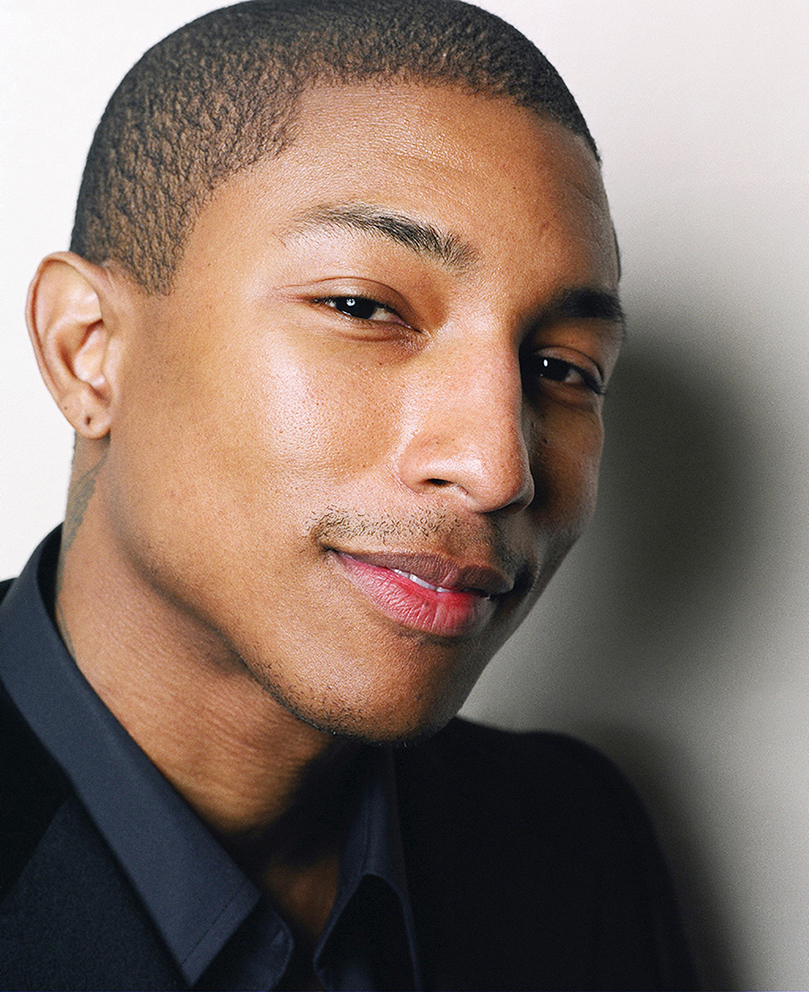
While Banks may have popularized the idea, smizing has long existed in culture. The subjects of Renaissance paintings including Paolo Veronese’s “Portrait of a Woman” and Albrecht Durer’s “The Furlegerin With Braided Hair” are smizing hard, and the silent films of the 1910s and ’20s are dependent on smizing. Actors Charlie Chaplin and Greta Garbo were among the most prolific smizers of their era.
But go to a mirror and try to bring life to your eyes without actually smiling and you’ll see it is harder than it looks. I don’t just want my smize to be sufficient, I want people to be able to read my smize from 6 feet of social distance.
Banks’ usual advice is to think of something warm and desirable and let that feeling wash over your expression. When I’ve tried that, I just look confused, so I asked model Laila Rachki if she had a different method for getting the perfect smize. I worked with Rachki in 2016 for a Chronicle photo shoot at the Marin Civic Center, and her smize was so intense you could see it through sunglasses.
In addition to The Chronicle, Rachki has modeled for Banana Republic, the North Face and Levi’s and walked the runway at Milan Fashion Week. She’s also the creator and co-host of the “Model Lite” podcast with Melissa Haro, where they discuss stories from behind the scenes in the industry. Their May 12 episode will be dedicated to smizing.

For Rachki, smizing is as much a feeling as it is a facial expression. To have that inner ebullience, she says you have to be relaxed, which isn’t easy during a pandemic. One of the ways she practiced smizing early in her career was to look in the mirror and isolate the movement of different parts of her face. She’d start by smiling, then would let her mouth drop back to a neutral expression while keeping her eyes as much like they were when she was smiling as possible.
“One of the mistakes people make is thinking smizing is just about the eyes,” says Rachki. “It’s about everything around your eyes, too. Look at what your cheekbones are doing. Look at what your eyebrows are doing when you smile.”
Rachki says that, “like a smile, everyone’s smize is different.” She suggests I think about something I want or something that makes me happy to keep the lift in my eyelids and the intention in my focus. For me, that something is life beyond coronavirus.
I thought about museums and venues being open again. I thought about what it will be like to hear live music without streaming it. I thought about the people I can’t wait to see outside the square views of Zoom conferencing. And it helped!
I’m prepping my smize for whenever that day is, when we can start gathering again. The way things look now, it’s hard to imagine masks and distance won’t be a part of those first gatherings. When I finally get to see the people I’ve been missing in person again, I want them to see the happiness on the part of my face that’s uncovered. In 2020, the smize have it.
- Tony BravoTony Bravo’s column appears Mondays in Datebook. Email: tbravo@sfchronicle.com Twitter: @TonyBravoSF
Read, Feel and Research in your Gut and your Heart, not just your Mind

| As we know and if you watch or read Bruce Lipton, you know the science around positive thought and how important it is to collectively project positive thought out into the world. I would encourage you all as I am sure you are doing, to use this time to be positive and imagine a new future of peace and connectedness to each other and nature. At the same time it’s important to stand up for our rights and question what the mainstream news media is telling us about the crisis. Is social distancing actually the right way to handle this virus and why the world, to the detriment of so many people, has been bought to a standstill. Why is it that people are so easily led by what they read in the news and aren’t interested in what kind of draconian laws are in place during these times? Why believe one person’s science and not another’s? Business men like Bill Gates have huge power that they wield through the funding of institutions, the very institutions that our government bases its policies on… As I said in my last newsletter, know the shadow inside you and outside of you and do not allow it to run our precious lives and the life of your mother, this planet. I know there is a great storm of information blowing around out there, so If any of you would like to ask me more about what I see before me during these unprecedented times then do get in touch. Much love Wendy For more clues to what I’m talking about: Video from straight talking virologist Knut Wittkowski: https://www.youtube.com/watch?v=lGC5sGdz4kg Video about the Control of Diseases Act in the UK: https://www.youtube.com/watch?v=HzJpRvSUbl4 (note: they have not made Vaccination mandatory, yet) |
| Copyright © 2019 *Wendy Mandy, All rights reserved. You can contact me at www.wendymandy.uk |
Mikhail Gorbachev: When the Pandemic Is Over, the World Must Come Together

Throughout his presidency, Gorbachev promoted peaceful diplomacy, which led to the end of the Cold War Martin Schoeller—AUGUST
BY MIKHAIL GORBACHEV APRIL 15, 2020 (time.com)
During the first months of this year, we have seen once again how fragile is our global world, how great the danger of sliding into chaos. The COVID-19 pandemic is facing all countries with a common threat, and no country can cope with it alone.
The immediate challenge today is to defeat this new, vicious enemy. But even today, we need to start thinking about life after it retreats.
Many are now saying the world will never be the same. But what will it be like? That depends on what lessons will be learned.
I recall how in the mid-1980s, we addressed the nuclear threat. The breakthrough came when we understood that it is our common enemy, a threat to all of us. The leaders of the Soviet Union and the U.S. declared that a nuclear war cannot be won and must never be fought. Then came Reykjavik and the first treaties eliminating nuclear weapons. But even though by now 85% of those arsenals have been destroyed, the threat is still there.
Yet other global challenges remain and have even become more urgent: poverty and inequality, the degradation of the environment, the depletion of the earth and the oceans, the migration crisis. And now, a grim reminder of another threat: diseases and epidemics that in a global, interconnected world can spread with unprecedented speed.
The response to this new challenge cannot be purely national. While it is the national governments that now bear the brunt of making difficult choices, decisions will be have to be made by the entire world community.
We have so far failed to develop and implement strategies and goals common to all mankind. Progress toward the Millennium Development Goals, adopted by the U.N. in 2000, has been extremely uneven. We see today that the pandemic and its consequences are hitting the poor particularly hard, thus exacerbating the problem of inequality.
What we urgently need now is a rethinking of the entire concept of security. Even after the end of the Cold War, it has been envisioned mostly in military terms. Over the past few years, all we’ve been hearing is talk about weapons, missiles and airstrikes.
This year, the world has already been on the brink of clashes that could involve great powers, with serious hostilities in Iran, Iraq and Syria. And though the participants eventually stepped back, it was the same dangerous and reckless policy of brinkmanship.
Is it not clear by now that wars and the arms race cannot solve today’s global problems? War is a sign of defeat, a failure of politics.
The overriding goal must be human security: providing food, water and a clean environment and caring for people’s health. To achieve it, we need to develop strategies, make preparations, plan and create reserves. But all efforts will fail if governments continue to waste money by fueling the arms race.
I’ll never tire of repeating: we need to demilitarize world affairs, international politics and political thinking.
To address this at the highest international level, I am calling on world leaders to convene an emergency special session of the U.N. General Assembly, to be held as soon as the situation is stabilized. It should be about nothing less than revising the entire global agenda. Specifically, I call upon them to cut military spending by 10% to 15%. This is the least they should do now, as a first step toward a new consciousness, a new civilization.
Gorbachev, a Nobel Peace Prize laureate, was the only President of the Soviet Union
This article is part of a special series on how the coronavirus is changing our lives, with insights and advice from the TIME 100 community. Sign up for access to TIME 100 Talks, our virtual event series, featuring live conversations with influential newsmakers.
Annie Dillard on writing

“Your work is to keep cranking the flywheel that turns the gears that spin the belt in the engine of belief that keeps you and your desk in midair.“
–Annie Dillard (born April 30, 1945) is an American author, best known for her narrative prose in both fiction and non-fiction. She has published works of poetry, essays, prose, and literary criticism, as well as two novels and one memoir. Her 1974 work Pilgrim at Tinker Creek won the 1975 Pulitzer Prize for General Nonfiction. Wikipedia
(Contributed by Michael Kelly, H.W.)
Sunday Meeting with Heather Williams, H.W., M.
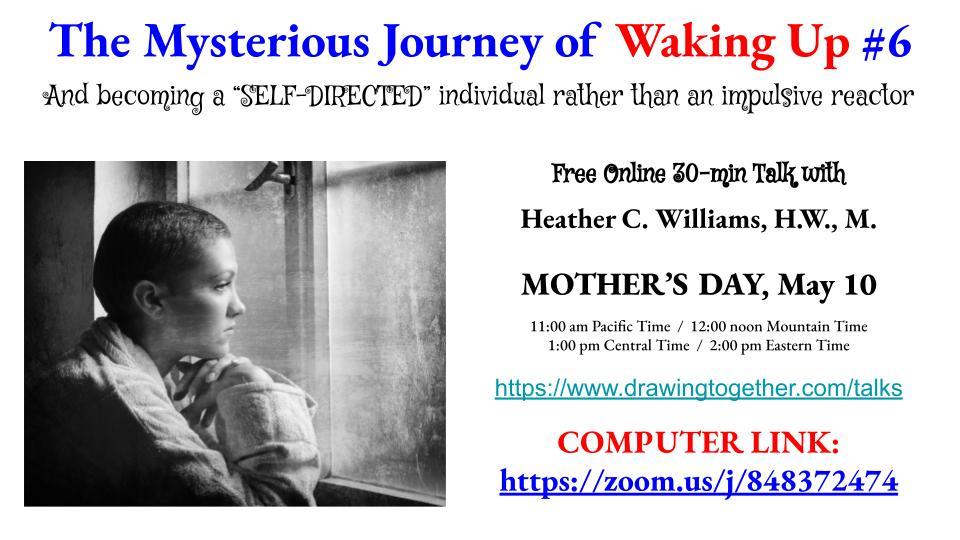
Hope you can join us! We will honor our mothers, discuss life lessons we’ve learned from our mothers and share stories of how the CORONAVIRUS is challenging us to WAKE UP and become “Self-Directed” individuals.
DATE: Sunday, May 10, 2020
TIME: 11:00 am Pacific / Noon Mtn / 1:00 pm Central / 2:00 pm Eastern
FEE: Free (NOTE: Contributions are always accepted by The Prosperos School of Ontology, a non-profit organization whose mission statement is: “To make Spiritual Truth an effective force for ordered freedom and common good.”)
ZOOM LINK: https://zoom.us/j/848372474
How did the Bubonic Plague make the Italian Renaissance possible?
(dailyhistory.org)

Contemporary Image of Black Death
The Black Death (1347-1350) was a pandemic that devastated the populations of Europe and Asia. The plague was an unprecedented human tragedy in Italy. It not only shook Italian society but transformed it. The Black Death marked an end of an era in Italy, its impact was profound, and it resulted in wide-ranging social, economic, cultural and religious changes.[1] These changes, directly and indirectly, led to the emergence of the Renaissance, one of the greatest epochs for art, architecture, and literature in human history.
The Impact of the Plague of Italy
To Black Death spread to Italy from modern-day Russia. Genoese merchants spread the plague while fleeing a Mongol attack on their trading post in Crimea. The plague was carried and spread by the fleas that lived on the Black Rat and brought to Italy on the Genoese ships.[2] The population of Italy was ill prepared for the spread of the disease. There had been a series of famine and food shortages in the region, and the population was weak and vulnerable to disease, and furthermore, the population did not have any natural resistance to the disease. Italy was the most urbanized society in Europe, Milan, Rome, Florence, and other Italian centers among the largest on the continent.[3]
The majority of the urban population in cities such as Naples were impoverished and lived in squalid and dirty conditions. These factors ensured that the diseases spread quickly and that there was a high level of mortality, among the poor, although even the rich could not escape the plague.[4] From the cities, the plague spread like wildfire to the small towns and villages of the peninsula.

Dance of Death image from 15th-century woodcut
There is no firm data on the impact of the plague on the population of Italy. However, some examples show the full extent of the disease in Italy. The plague halved the population of Florence. The population crashed and fell from approximately 100,000 to 50,000. The experience of Florence was replicated across all the major cities of Italy which also experienced similar drastic declines. The death rate in rural Italy was not nearly as high, but there was a significant loss of life. In general, the total population of Italy may have dropped by as much as a third.[5]
The Black Death was also an economic crisis as trade ceased because of fear of the spread of plague. As trade stagnated, businesses failed, and unemployment rose. The plague caused a complete social breakdown in many areas. Boccaccio in the Decameron, describes people abandoning their occupations, ignoring the sick and living lives of wild excess, as everyone expected to die.
“Thus, doing exactly as they prescribed, they spent day and night moving from one tavern to the next, drinking without mode or measure, or doing the same thing in other people’s homes, engaging only in those activities that gave them pleasure….. And they combined this bestial behavior with as complete an avoidance of the sick as they could manage.”[6]
Socio-Economic Consequences
The social consequences of the plague on society came to be profound. The high mortality rate resulted in a drastic decline in the labor force.[7] Wages rose for both agricultural and urban workers. The survivors of the Black Death generally had a higher standard of living than before the plague.[8] This was a phenomenon that occurred in both urban and rural areas. The crisis caused by the Black Death led to many changes in the economy, in response to the fall in the population. Because of the labor shortages, there was a move from labor-intensive farming such as cereal to livestock and increase both in industry and agriculture more labor-saving devices employed.[9] The impact of the Black Death was contrary on feudalism in Italy. Feudalism was a system whereby peasants and farm laborers bound, as serfs, to serve a local lord. In the north of Italy, good farmland was plentiful, and wages increased, and the last vestiges of feudalism disappeared as serfs increasingly could purchase their freedom.
In the south of Italy the opposite occurred, here, since the Norman kings, the aristocracy had been consolidating feudalism. After the Black Death, the elite responded to the labor shortages by strengthening the restrictions on the peasants and thereby strengthened feudalism in southern Italy. The consequences of the plague resulted in a growing divide between the North and South of Italy that persists to this day.[10] In general, after a period of recovery, much of Italy became very wealthy as a more sophisticated economy emerged, especially in the North of Italy. This was crucial, as the increased wealth of Italy allowed the elite, such as the De Medici’s in Florence to become the patrons of great artists such as Michelangelo and Leonardo da Vinci.[11]
Religious Consequences
Initially, in Italy, the plague led to a revival in religion among many. The middle ages was a time when people believed that events are a result of God’s will. Many viewed the plague as punishment for God for the wickedness and immorality of the people. There was an upsurge in religious observance, and many sections of the public became swept by religious fervor, as many sincerely believed that the Black Death was a sign that the end of the world was coming.[12] Religious fanaticism spread throughout the peninsula and many men and women performed in extreme religious practices, such as the flagellants. The flagellants whipped themselves into a frenzy to atone for their sins. The Church suffered greatly during the plague, many priests and especially monks died. The monasteries proved ideal breeding grounds for the plague while many priests contracted the sickness as they gave the last rites to the dying. [13]
The result was a shortage of trained monks and priests. To deal with this, the Church hastily trained new monks and priests to serve the spiritual needs of the community, still coming to terms with the trauma of the Black Death. This meant that many unsuitable individuals became clerics and this led to a drop in standards among parish priests, in particular.[14] The Church became corrupt and gradually over time lost the respect of many believers. In the short term the Black Death strengthened the Catholic Church in Italy, but in the long run, an increasingly corrupt institution meant that many people lost their faith. This led to the increasing secularisation of Italian society as many increasingly turned away from the church in disgust as the worldliness of prelates and priests. The contempt that many felt is evident in the stories of Boccaccio of venal and depraved priests, monks and nuns.[15] The church had traditionally monopolized education, but after the Black Death, there was more secular education, especially in the cities. This was decisive in the emergence of the Renaissance, with its emphasis on human values and experiences rather than religion.[16]
Questioning of authority

Petrarch- poet and scholar
The world was turned upside down by the Black Death. The mental outlook of people changed dramatically. Previously, people assumed that the world was fixed and God-ordained. The Black Death overturned old certainties. As we have seen the plague and its devastation undermined religious orthodoxy and beliefs. People at the time were no longer willing to accept the status quo. This change manifested in the numerous political revolts of the time.[17] The most famous of these, led by the poor workers and weavers called popularly the Ciompi, that took place in Florence in 1378. For four years, the poor formed the government of the city. The revolt was one of several in Italy at the time. No longer are people as willing to question the old ways of doing things and no longer accepted things because they were sanctioned by tradition.
The Black Death led to a great questioning of the old certainties. This led many, especially among the urban elite to use reason to understand the world. They also increasingly turned to the classics to find answers to the problems of life. The new spirit of inquiry helped to ignite the Renaissance, especially in politics and philosophy.[18] However, that is not to say, that Italy rejected all traditions, it was still a very conservative society in many ways. However, those who questioned authority and the received wisdom, such as the Poet and Scholar Petrarch inspired the Humanist movement, which valued reason and critical thinking. The Humanist are essential in the development and progress of the Renaissance.[19]
Cultural Change

Primevera by Botticelli
Initially, the Black Death led to a fascination with death among many Italians. The loss of life and the suffering led many to become obsessed with death.[20] The Dance of Death was a popular motif in art and architecture at this time. The general mood was one of pessimism, and indeed many expected that sooner or later that the world would end. Alongside this fear of death and the general mood of pessimism, there was a desire to experience the pleasures of life and to seize any happiness that was on offer. This contradictory impact of the Black Death on the culture of the time can be seen in the writings of two of the greatest figures in European literature, Petrarch and Boccaccio.[21] These two writers at times wrote in despair about the human condition yet they also wrote about the joys of life and the beauties of nature.
This sense that life was fleeting and that every happiness should be seized, led many Italians to seek solace in art and literature and this was one of the factors in the development of the Renaissance. Many of the elite were eager to enjoy the pleasures of life, and this led them to patronize artists. It also resulted in a shift in the themes of artists.[22] Religious topics remained popular, however, there was also a fascination with secular themes, especially from the classical world. The new interest in secular subjects can be seen in a comparison between Giotto and Botticelli. Giotto painted almost exclusively religious paintings. While Giotto, painted both secular and religious themes, indeed he is best known for his secular works as in masterpieces such as Primavera.[23]
Social Mobility
The plague disrupted society to an unprecedented state. It overturned the existing social structure. Previous, to the outbreak of the plague, Italy was a rigid and stratified society. The Black Death changed everything. Increasingly, because of the demographic disaster caused by the plague were able to take advantage of the opportunities caused by the high death rate. In the period after the Black Death, an unprecedented amount of social mobility took place. Laborers became merchants and merchants become members of the nobility. No longer was a person’s destiny to be fixed by their birth. Previously, people assumed that one’s station was fixed at one’s birth and that one had to remain a member of the class you were born into.[24] People believed that a peasant would always be a peasant, an aristocrat, and aristocrat. Italians, like other peoples, in Europe, believed that one’s birth determined one’s future and that this was determined by God.[25]
However, as social mobility became more widespread because of the Black Death, many people, came to believe that a person’s merits or abilities were what mattered and not one’s birth.[26] This led to a growing individualism in Italian society. This, in turn, encouraged people to strive and to develop their talents and achieve excellence or virtue.[27] The belief in the individual was central to the Renaissance and it inspired many of the greatest artists, architects, sculptures and writers, the world have ever seen to create peerless works.
Decline of the Nobility
One group that was adversely impacted by the Black Death was the nobility. This was also the case in many other European regions and kingdoms. The nobility suffered as much as many others classes as a result of the plague and many families died out during the period. In the aftermath of the epidemic, they found themselves in serious financial difficulties. The loss of population meant that there was no longer a high demand for their land and rents fell.[28]
Many of their laborers simply left the land, and they were not replaced. Many of the nobility found themselves obliged to sell their serfs their freedom or to sell land to merchants from the cities. At this time, many wealthy merchants purchased new estates. The demise of the traditional elite meant that a new elite came to the fore, composed of merchants and self-made men. This new elite often keen to patronize arts. They were very conscious of their lack of birth and humble origins.[29]
They were keen to use art and to patronize men of letters to compensate for the lack of traditional authority. In order to appear the equal of the old aristocracy, they sought to sponsor artists who would win the esteem of the public.[30] This was one of the reasons for the lavish patronage of the de Medici’s in Florence. They were keen patrons of the arts, to justify their status in society and to impress the general population. This meant that the great artists had many patrons, who often competed for their talents and this allowed them to concentrate on their art and to produce some of the greatest art, ever known.[31]
Who benefitted from the Renaissance in Italy?
While the Renaissance may have laid the foundation for broad changes in Europe over the longterm, the wealthy in Italy were the primary people who benefitted during the Renaissance. While wages for agricultural workers increased after the plague arrived, wages did not increase throughout the Renaissance. Additionally in Florence, life expectancy declined for people during the Renaissance. Wealthy Italians during the Renaissance did clearly did benefit. Their wealth essentially funded the artistic achievements of the era, but most Italian peasants probably would have preferred higher wages rather than the Mona Lisa.[32]
Conclusion
The Black Death devastated Italian society in the middle of the 14th century. It led to great socio-economic, cultural and religious changes. After the initial horrors of the plague, Italian society, staged a spectacular recovery. Italy became richer than before. The impact of the plague reduced the influence of the Catholic Church as diminished, and the culture became more secular. The new social mobility meant that individualism came to be respected. The Black Death unleashed the forces in Italian society that made the Renaissance possible.
Marianne Williamson – Coronavirus reflections 4/28/20
Marianne Williamson Author and activist Marianne Williamson reflects on the current crisis on April 28, 2020.
“Self-purification must precede political activism.“
–Mahatma Gandhi (paraphrased by Marianne Williamson)