simonsaid66 From Sydney, Australia at the Basement Nightclub 2003… Surely the best version……great
Johnnie Clyde Johnson (July 8, 1924 – April13, 2005) was an American pianist who played jazz, blues and rock and roll. His work with Chuck Berry led to his induction into the Rock and Roll Hall of Fame. Wikipedia
Our Life Documentary in which Emmy award-winning film-maker Deeyah Khan meets US neo-Nazis and white nationalists face-to-face, and attends America’s biggest and most violent far right rally in recent years. Khan, who has received death threats in the past after advocating diversity and multiculturalism, tries to get behind the violent ideology in a bid to understand the personal and political reasons behind the apparent resurgence of far right extremism in the US. This film was first broadcast: 11 Sep 2017 Our Life brings you fascinating stories of social interest from around the world. You can discover award winning documentaries, films and groundbreaking reports that capture the complexities of our daily life, with stories that will entertain, inspire and inform. Content distributed by ITV Studios.
Gödel’s incompleteness theorems are two theorems of mathematical logic that demonstrate the inherent limitations of every formal axiomatic system capable of modelling basic arithmetic. These results, published by Kurt Gödel in 1931, are important both in mathematical logic and in the philosophy of mathematics. The theorems are widely, but not universally, interpreted as showing that Hilbert’s program to find a complete and consistent set of axioms for all mathematics is impossible.
The first incompleteness theorem states that no consistent system of axioms whose theorems can be listed by an effective procedure (i.e., an algorithm) is capable of proving all truths about the arithmetic of natural numbers. For any such consistent formal system, there will always be statements about natural numbers that are true, but that are unprovable within the system. The second incompleteness theorem, an extension of the first, shows that the system cannot demonstrate its own consistency.
Employing a diagonal argument, Gödel’s incompleteness theorems were the first of several closely related theorems on the limitations of formal systems. They were followed by Tarski’s undefinability theorem on the formal undefinability of truth, Church‘s proof that Hilbert’s Entscheidungsproblem is unsolvable, and Turing‘s theorem that there is no algorithm to solve the halting problem.
In this continuing series, you are invited to find insights that awaken from in-depth conversations with interesting and poignant guests and your host Calvin Harris H. W., M.
Meet my guest, Cheryl Charlesworth (aka – C. L. Charlesworth), who is a fictional writer, published author, and blogger who has written on the subjects of color, child abuse, molestation, rape, and yes, redemption through self-empowerment.
Cheryl writes so we can look at the narratives and once they are revealed, we see how they can be changed.
Cheryl will discuss tidbits about her life; about her artistry in coming up with and putting on paper, her stories and her blogs; and if we are lucky a glimpse about her new book in the works.
We want to look at the creative potential in each of us as a way to create more personal fulfillment and more meaningful life.
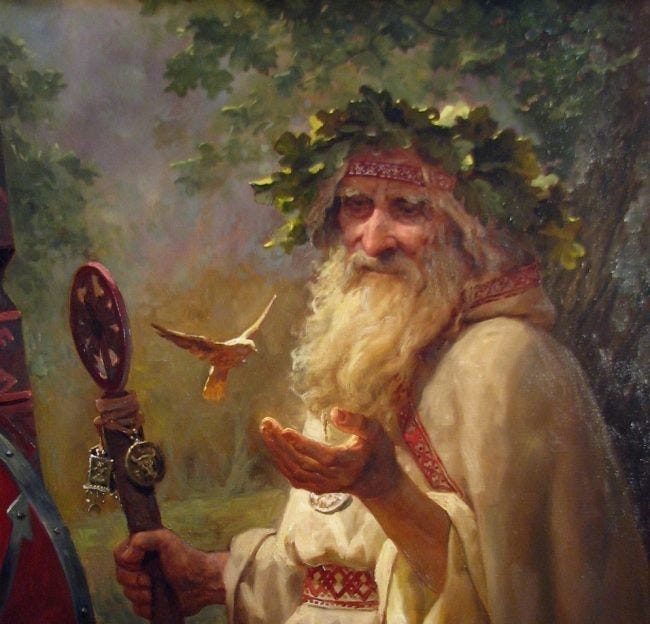
More than two millennia ago, in the year 335 Before the Common Era (BCE), Alexander the Great encountered a group of Celtic warriors with huge golden neck rings and brightly colored cloaks. As the story goes, he asked the so-called barbarians what they feared most in this world, hoping that they would say him. However, to his surprise, the noble knights just laughed at him and said they feared nothing at all. Unbeknownst to him, they understood the truth about reincarnation and this is what gave them such intense courage on the field of battle. That is to say, knowing that they would be reborn to live and fight again, they went to war with no concern of dying. They had learned this esoteric insight from the Druids, who were mystical Iron Age intellectuals that were part of the priestly caste of Celts among the islander Britons and mainlander Gauls, from about 600 BCE to 600 CE, give or take a century or two.
As pagan polytheists, the Celts worshiped many different deities, such as Tamesis the goddess of the River Thames. More importantly, Druids had to oversee every important ceremony in their society. In line with this, unlike other ancient civilizations that celebrated the solstices and equinoxes, the Celts observed the cross-quarter holidays instead. These are known as Imbolc, Beltaine, Lughnasa, and Samhain. They happen on January 31st to February 1st, April 30th to May 1st, July 31st to August 1st, and October 31st to November 1st, respectively. Moreover, this used to occur from sundown to sundown, as part of an eight-day, rather than a seven-day week. In addition to this, the Druids also supervised every religious practice in the Celtic world, including the sacrifices that were given to the gods and goddesses of regional pantheons. Plus, Druids were required to study everything from cosmology to theurgy. Unfortunately, understanding the precise history, philosophy, and theology of the Druids is rather difficult because, although they were highly literate polyglots and proficient polymaths, Druids were strictly forbidden from recording anything.
As part of this, it took a Celtic priest or priestess two decades of apprenticeship in order to master three levels of initiation, from Bard to Ovate to Druid. They progressed from storytellers to soothsayers to spellcasters. So, these were not separate professions as the ancient Greeks and Romans thought. Rather, the role of a Bard was to preserve the living memory of their heritage through native poetic songs. Then, after memorizing that, an Ovate would learn the art of extispicy, the divinatory practice of using anomalies in animal entrails, most often the liver, to predict future events. They also learned to use astrology to forecast the most auspicious days for different kinds of things to occur. After that, a Druid learned to use philosophical riddles, similar to the way koans are used. Finally, they would learn to superintend at sacrifices for more than two hundred different deities. They also learned about the fairies that inhabit the wilderness, as well as the sacredness of certain plants. So, rather than building temples, oak groves served as their sacred sites. Even the proto-Celtic word “druwides” meant “oak-knowers”. In this way, a fully trained Celtic priest or priestess could harness the power of “draiocht”, meaning both “magic” in general and “Druidry” specifically.
In line with this, according to the accounts of some of their Greek and Roman contemporaries, the Druids were religious leaders, legal authorities, lore keepers, medical professionals, political advisors, and more. Julius Caesar even claimed that the Druids burned prisoners alive in immense wicker man burnt offerings of public execution. They also occasionally performed willing human sacrifices, in three-fold ritual killings, that left behind bog bodies as gifts to the gods. That is to say, after the victim’s skull was smashed, their neck was garrotted, and their throat was slashed, then they were kicked face-first into the peat bogs, which were believed to be portals to the underworld. At the same time though, Druids were primarily peacekeeping pacifists who could step between warring tribes in the middle of a battle and call an end to the fighting. No Celtic warrior would have ever harmed a Druid or questioned their authority. Oddly enough, this same respect was even given to mistletoe, which Druids believed to have magical and medicinal properties. This was partly because in the winter when all the trees are bare, mistletoe stays green, as if by a miracle.
More to the point, if two enemies ever met beneath a tree on which mistletoe was growing, they would lay down their weapons, exchange greetings, and observe a truce until the following day. Regardless, in spite of the peacekeeping efforts of the Druids and the benevolent spirits of the mistletoe, the Celts were highly combative, with blood-thirsty chiefs constantly declaring war on each other. The problem was that when the Common Era began, the Celts had spread across Europe from Asia Minor in the east to Spain and the islands of Britain and Ireland in the west. However, they were strictly tribal, not imperial. So, they never formed an empire. As such, the Celts were very easy to conquer, and the Romans took full advantage of that fact. In the process, they massacred countless Druids and their followers, along with the sacred oak groves where they gathered. This long painful demise of classical Druidry first began in the year 43, and by the end of the 1st century, Ireland alone, far out at sea, remained unconquered. There, the ways of the ancient Celts survived untouched by the outside world long after the fall of Rome.
Unfortunately for the natives of the British Isles and western Europe, the Christians soon followed in the wake of the Romans, with devastating consequences for Celtic culture, even in Ireland. In the most famous instance of this, during the 5th century, Saint Patrick became partly responsible for the Christianization of the Picts and Anglo-Saxons. Simply put, the widespread violent conversion of the indigenous people was more or less pervasive throughout the lands. In fact, in the year 573, even the renowned Welsh Druid Merlin was forced to flee into the forest and hide from the militant monotheistic missionaries for the rest of his life. Ultimately, throughout the Middle Ages, the Church did all that it could to put an end to the sorcery of the Druids. Thus, over time, the spirituality and religiosity of France, England, Scotland, Wales, and Ireland were permanently altered by evangelical iconoclasts. Tragically, in the end, as the Christian conversion continued on, by the year 800, the ancient Druids were all dead and gone.
3VIEW ALL PHOTOSRep. Joyce Beatty, D-Ohio, center, listens as Rep. Sheila Jackson Lee, D-Tex., right, chair of the Subcommittee on Crime, Terrorism, and Homeland Security, attends a markup in the House Judiciary Committee of a bill to create a commission to study and address social disparities in the African American community today. Rep. Jackson-Lee is the sponsor of that legislation. (AP Photo/J. Scott Applewhite)
WASHINGTON (AP) – A House panel advanced a decades-long effort to pay reparations to the descendants of slaves by approving legislation Wednesday that would create a commission to study the issue.
It’s the first time the House Judiciary Committee has acted on the legislation. Still, prospects for final passage remain poor in such a closely divided Congress. The vote to advance the measure to the full House passed 25-17 after a lengthy and often passionate debate that stretched late into the night.
The legislation would establish a commission to examine slavery and discrimination in the United States from 1619 to the present. The commission would then recommend ways to educate Americans about its findings and appropriate remedies, including how the government would offer a formal apology and what form of compensation should be awarded.
The bill, commonly referred to as H.R. 40, was first introduced by Rep. John Conyers, D-Mich., in 1989. The 40 refers to the failed government effort to provide 40 acres (16 hectares) of land to newly freed slaves as the Civil War drew to a close.
“This legislation is long overdue,” said Rep. Jerrold Nadler, the Democratic chairman of the committee. “H.R. 40 is intended to begin a national conversation about how to confront the brutal mistreatment of African Americans during chattel slavery, Jim Crow segregation and the enduring structural racism that remains endemic to our society today.”
The momentum supporters have been able to generate for the bill this Congress follows the biggest reckoning on racism in a generation in the wake of George Floyd’s death while in police custody.FILE – In this Nov. 25, 2019 file photo, Alderman Robin Rue Simmons, 5th Ward, proposes a reparations fund during a City Council meeting in Evanston, lll. (Genevieve Bookwalter/Chicago Tribune via AP)
Still, the House bill has no Republicans among its 176 co-sponsors and would need 60 votes in the evenly divided Senate, 50-50, to overcome a filibuster. Republicans on the Judiciary Committee were unanimous in voting against the measure.
Rep. Jim Jordan of Ohio, the ranking Republican on the committee, said the commission’s makeup would lead to a foregone conclusion in support of reparations.
“Spend $20 million for a commission that’s already decided to take money from people who were never involved in the evil of slavery and give it to people who were never subject to the evil of slavery. That’s what Democrats on the Judiciary Committee are doing,” Jordan said.
Supporters said the bill is not about a check, but about developing a structured response to historical and ongoing wrongs.
“I ask my friends on the other side of the aisle, do not ignore the pain, the history and the reasonableness of this commission,” said the bill’s sponsor, Rep. Sheila Jackson Lee, D-Texas.
Other Republicans on the committee also spoke against the bill, including Rep. Burgess Owens, an African American lawmaker from Utah, who said he grew up in the Deep South where “we believe in commanding respect, not digging or asking for it.” The former professional football player noted that in the 1970s, Black men often weren’t allowed to play quarterback or, as he put it, other “thinking positions.”
“Forty years later, we’re now electing a president of the United States, a black man. Vice president of the United States, a black woman. And we say there’s no progress?” Owens said. “Those who say there’s no progress are those who do not want progress.”
But Democrats said the country’s history is replete with government-sponsored actions that have discriminated against African Americans well after slavery ended. Rep. David Cicilline, D-R.I., noted that the Federal Housing Administration at one time refused to insure mortgages in Black neighborhoods while some states prevented Black veterans of World War II from participating in the benefits of the GI Bill.
“This notion of, like, I wasn’t a slave owner. I’ve got nothing to do with it misses the point,” Cicilline said. “It’s about our country’s responsibility, to remedy this wrong and to respond to it in a thoughtful way. And this commission is our opportunity to do that.”
Last month, the Chicago suburb of Evanston, Illinois, became the first U.S. city to make reparations available to its Black residents for past discrimination and the lingering effects of slavery. The money will come from the sale of recreational marijuana and qualifying households would receive $25,000 for home repairs, down payments on property, and interest or late penalties on property in the city.
Other communities and organizations considering reparations range from the state of California to cities like Amherst, Massachusetts; Providence, Rhode Island; Asheville, North Carolina; and Iowa City, Iowa; religious denominations like the Episcopal Church; and prominent colleges like Georgetown University in Washington.FILE – In this Friday, Aug. 28, 2020, file photo, Yolanda Renee King, granddaughter of the Rev. Martin Luther King Jr., raises her fist as she speaks during the March on Washington, on the 57th anniversary of the Rev. Martin Luther King Jr.’s “I Have A Dream” speech.(Jonathan Ernst/Pool via AP, File)
Polling has found long-standing resistance in the U.S. to reparations to descendants of slaves, divided along racial lines. Only 29% of Americans voiced support for paying cash reparations, according to an Associated Press-NORC Center for Public Affairs Research poll taken in the fall of 2019. Most Black Americans favored reparations, 74%, compared with 15% of white Americans.
President Joe Biden captured the Democratic presidential nomination and ultimately the White House with the strong support of Black voters. The White House has said he supports the idea of studying reparations for the descendants of slaves. But it’s unclear how aggressively he would push for passage of the bill amid other pressing priorities.
Members of the Congressional Black Caucus brought up the bill during a meeting with Biden at the White House on Tuesday.
“We’re very comfortable with where President Biden is on H.R. 40,” Jackson Lee told reporters after the meeting.
The story of one man’s search for an uncharted, legendary island to which all navigators are said to go on the eve of their deaths. A tale of high adventure, ancient mystery and modern men and women rediscovering love, comradeship and tribal life, in the face of primal terrors.
The small man Builds cages for everyone He Knows. While the sage, Who has to duck his head When the moon is low, Keeps dropping keys all night long For the Beautiful Rowdy Prisoners.
(Ladinsky, 1999, p. 206):
(Contributed by John Atwater, H.W.)
Consciousness, spirituality, biography, sexuality, androgyny, futurism, space, the arts, science, astrology, democracy, humor, books, movies and more



 FILE – In this Nov. 25, 2019 file photo, Alderman Robin Rue Simmons, 5th Ward, proposes a reparations fund during a City Council meeting in Evanston, lll. (Genevieve Bookwalter/Chicago Tribune via AP)
 FILE – In this Friday, Aug. 28, 2020, file photo, Yolanda Renee King, granddaughter of the Rev. Martin Luther King Jr., raises her fist as she speaks during the March on Washington, on the 57th anniversary of the Rev. Martin Luther King Jr.’s “I Have A Dream” speech.(Jonathan Ernst/Pool via AP, File)
