Free Will Astrology: Week of April 29, 2021

APRIL 27, 2021 AT 7:00 AM  (newcity.com)

BY ROB BREZSNY

Mirror statue. Gyor, Hungary.

ARIES (March 21-April 19): Poet Allen Ginsberg despairingly noted that many people want MORE MORE MORE LIFE, but they go awry because they allow their desire for MORE MORE MORE LIFE to fixate on material things—machines, possessions, gizmos and status symbols. Ginsberg revered different kinds of longings: for good feelings, meaningful experiences, soulful breakthroughs, deep awareness, and all kinds of love. In accordance with astrological potentials, Aries, I’m giving you the go-ahead in the coming weeks to be extra greedy for the stuff in the second category.

TAURUS (April 20-May 20): In her poem “Mirror,” Taurus poet Halina Poswiatowska wrote, “I am dazed by the beauty of my body.” I applaud her brazen admiration and love for her most valuable possession. I wish more of us could genuinely feel that same adoration for our own bodies. And in accordance with current astrological omens, I recommend that you do indeed find a way to do just that right now. It’s time to upgrade your excitement about being in such a magnificent vessel. Even if it’s not in perfect health, it performs amazing marvels every minute of every day. I hope you will boost your appreciation for its miraculous capacities, and increase your commitment to treating it as the treasure that it is.

GEMINI (May 21-June 20): Gemini poet Buddy Wakefield writes that after the Indian Ocean earthquake and tsunami of 2004, “the only structure still standing in the wiped-out village of Malacca [in Malaysia] was a statue of Mahatma Gandhi. I wanna be able to stand like that.” I expect you will indeed enjoy that kind of stability and stamina in the coming weeks, my dear. You won’t have to endure a metaphorical tsunami, thank Goddess, but you may have to stand strong through a blustery brouhaha or swirling turbulence. Here’s a tip: The best approach is not to be stiff and unmoving like a statue, but rather flexible and willing to sway.

CANCER (June 21-July 22): No educator had ever offered a class in psychology until trailblazing philosopher William James did so in 1875. He knew a lot about human behavior. “Most people live in a very restricted circle of their potential being,” he wrote. “They make use of a very small portion of their possible consciousness, and of their soul’s resources in general, much like a person who, out of his whole bodily organism, should get into a habit of using only his little finger.” I’m going to make an extravagant prediction here: I expect that in the coming months you will be better primed than ever before to expand your access to your consciousness, your resources,and your potentials. How might you begin such an adventure? The first thing to do is to set a vivid intention to do just that.

LEO (July 23-Aug. 22): “Someone in me is suffering and struggling toward freedom,” wrote Greek author Nikos Kazantzakis. To that melodramatic announcement, I reply, good for him! I’m glad he was willing to put himself through misery and despair in order to escape misery and despair. But I also think it’s important to note that there are other viable approaches to the quest for liberation. For example, having lavish fun and enjoying oneself profoundly can be tremendously effective in that holy work. I suspect that in the coming weeks, Leo, the latter approach will accomplish far more for you than the former.

VIRGO (Aug. 23-Sept. 22): Virgo novelist Agatha Christie sold hundreds of millions of books, and is history’s most-translated author. While growing up, she had few other kids to associate with, so she created a host of imaginary friends to fill the void. They eventually became key players in her work as an author, helping her dream up stories. More than that: She simply loved having those invisible characters around to keep her company. Even in her old age, she still consorted with them. I bring this to your attention, Virgo, because now is a great time to acquire new imaginary friends or resurrect old ones. Guardian angels and ancestral spirits would be good to call on, as well. How might they be of assistance and inspiration to you?

LIBRA (Sept. 23-Oct. 22): “To hurry pain is to leave a classroom still in session,” notes Libran aphorist Yahia Lababidi. On the other hand, he observes, “To prolong pain is to miss the next lesson.” If he’s correct, the goal is to dwell with your pain for just the right amount of time—until you’ve learned its lessons and figured out how not to experience it again in the future—but no longer than that. I suspect that such a turning point will soon be arriving for you.

SCORPIO (Oct. 23-Nov. 21): In her poem “Every Day,” Scorpio poet Denise Levertov wrote, “Every day, every day I hear enough to fill a year of nights with wondering.” I think that captures the expansive truth of your life in the coming weeks. You’ve entered a phase when the sheer abundance of interesting input may at times be overwhelming, though enriching. You’ll hear—and hopefully be receptive to—lots of provocative stories, dynamic revelations and unexpected truths. Be grateful for this bounty! Use it to transform whatever might be stuck, whatever needs a catalytic nudge.

SAGITTARIUS (Nov. 22-Dec. 21): I hope you’re not too stressed these days. There has been pressure on you to adjust more than maybe you’d like to adjust, and I hope you’ve managed to find some relaxing slack amidst the heaviness. But even if the inconvenience levels are deeper than you like, I have good news: It’s all in a good cause. Read the wise words of author Dan Millman, who describes the process you’re midway through: “Every positive change, every jump to a higher level of energy and awareness, involves a rite of passage. Each time we ascend to a higher rung on the ladder of personal evolution, we must go through a period of discomfort, of initiation. I have never found an exception.”

CAPRICORN (Dec. 22-Jan. 19): We can safely say that Anais Nin was a connoisseur of eros and sensuality. The evidence includes her three collections of erotic writing, “Delta of Venus,” “Little Birds,” and “Auletris.” Here’s one of her definitive statements on the subject: “Sex must be mixed with tears, laughter, words, promises, jealousy, envy, all the spices of fear, foreign travel, new faces, stories, dreams, fantasies, music.” In response to Nin’s litany, I’m inclined to say, “Damn, that’s a lot of ambiance and scaffolding to have in place. Must it always be so complicated?” According to my reading of upcoming cosmic rhythms, you won’t need such a big array of stuff in your quest for soulful orgasms—at least not in the coming weeks. Your instinct for rapture will be finely tuned.

AQUARIUS (Jan. 20-Feb. 18): “One is always at home in one’s past,” wrote author Vladimir Nabokov. I agree. Sometimes that’s not a good thing, though. It may lead us to flee from the challenges of the present moment and go hide and cower and wallow in nostalgia. But on other occasions, the fact that we are always at home in the past might generate brilliant healing strategies. It might rouse in us a wise determination to refresh our spirit by basking in the deep solace of feeling utterly at home. I think the latter case is likely to be true for you in the coming weeks, Aquarius.

PISCES (Feb. 19-March 20): “Not everything is supposed to become something beautiful and long-lasting,” writes author Emery Allen. “Not everyone is going to stay forever.” Her message is a good one for you to keep in mind right now. You’re in a phase when transitory boosts and temporary help may be exactly what you need most. I suspect your main task in the coming weeks is to get maximum benefit from influences that are just passing through your life. The catalysts that work best could be those that work only once and then disappear.

Homework: Write an essay on “What I Swear I’ll Never Do Again As Long As I Live—Unless I Can Get Away with It Next Time.” FreeWillAstrology.com
Stunning super Pink Moon captured by Bay Area photographers

Douglas Zimmerman April 27, 2021 (SFGate.com)

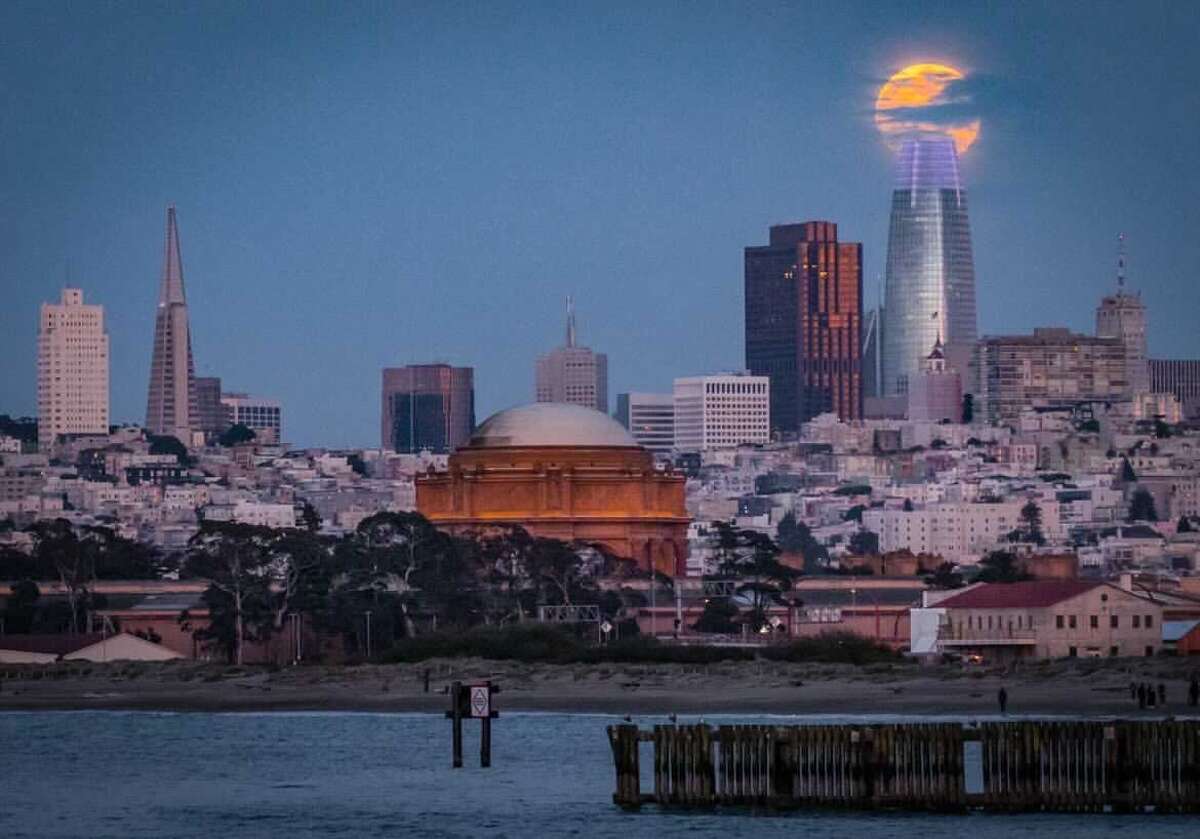
April’s supermoon had to fight with some low-level clouds to be seen as it rose in the sky above the San Francisco Bay Area on Monday evening. But even that slight obstruction of the moon didn’t deter legions of photographers from composing stunning images of the second brightest full moon of 2021.

“There were beautiful clouds in the Eastern sky that turned pink, which made it even more appropriate,” noted photographer Vincent James, who traveled to the Marin Headlands to photograph the moonrise above the Bay Bridge and East Bay hills.

April’s full moon, called the Pink Moon, was considered a supermoon, with Earth’s natural satellite 222,211.7 miles away. A supermoon is defined as when the moon reaches its perigee at less than 224,000 miles away from Earth, making it look up to 14% bigger and 30% brighter than a normal full moon.

This month’s celestial event will be the appetizer for next month’s supermoon, named the Flower Moon. Not only will the moon’s perigee be about 100 miles closer to Earth on May 26, but there will also be a total lunar eclipse of the orb starting a few hours before sunrise. It will be visible throughout the western United States and the San Francisco Bay Area (fog permitting, of course).

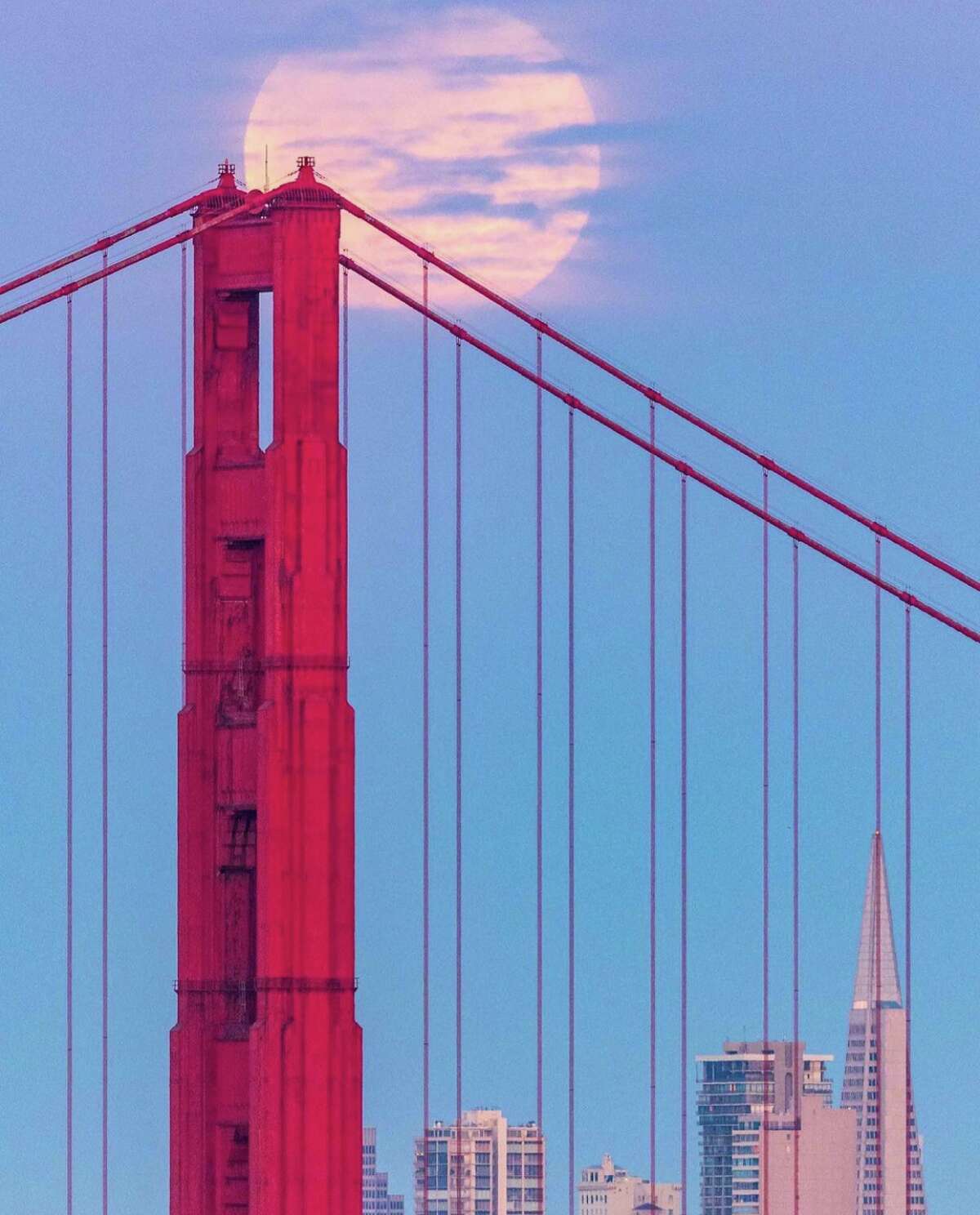
@telephototim used his telephoto lens to photograph the supermoon rising over one of the towers of the Golden Gate Bridge shortly after sunset on Monday evening.
Instagram / telephototim@telephototim used his telephoto lens to photograph the supermoon rising over one of the towers of the Golden Gate Bridge shortly after sunset on Monday evening.
@subhajoshiphotography perfectly aligned the supermoon with Salesforce Tower in San Francisco on Monday evening, April 26, 2021. 
Instagram / subhajoshiphotography@subhajoshiphotography perfectly aligned the supermoon with Salesforce Tower in San Francisco on Monday evening, April 26, 2021. 
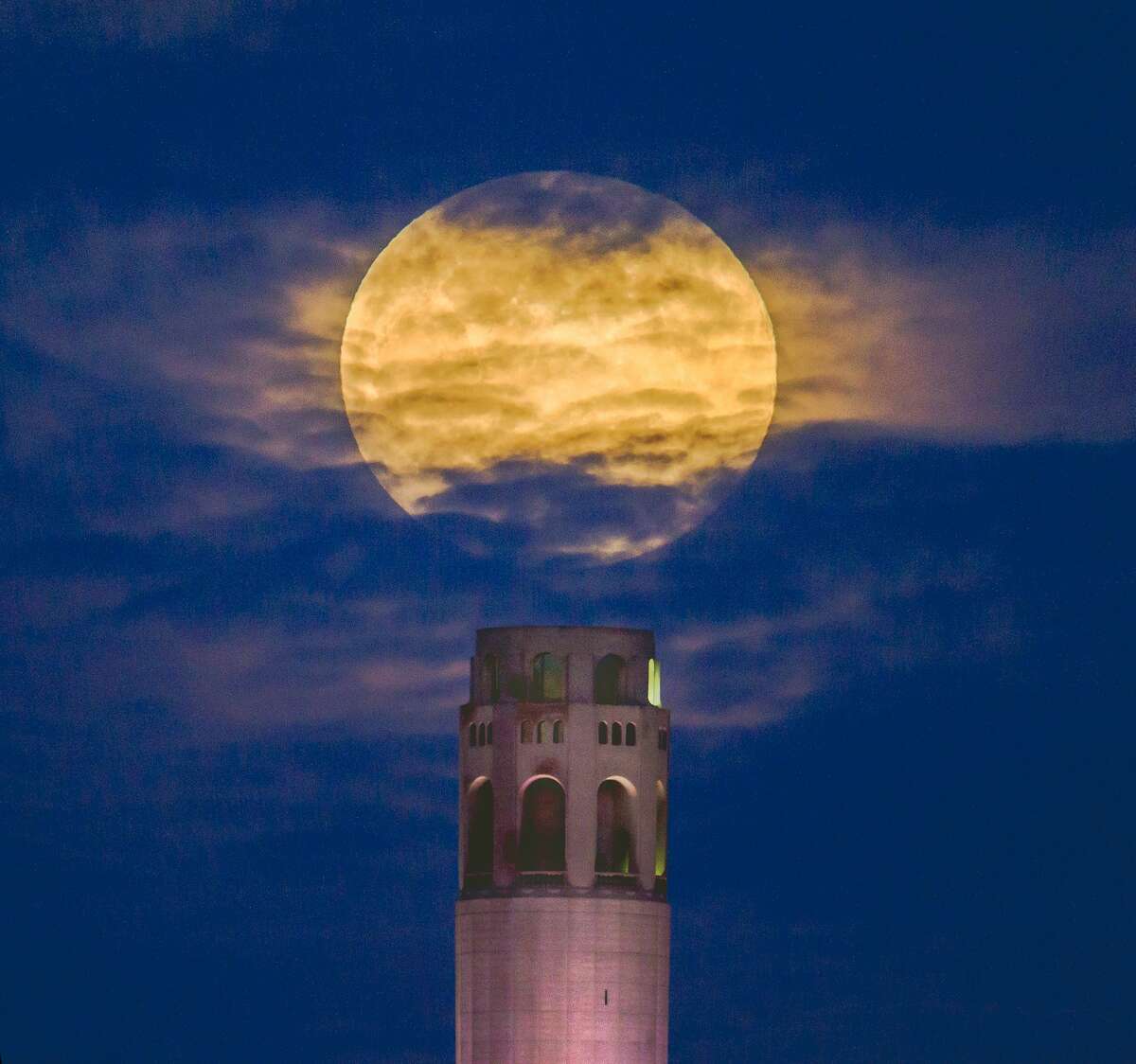
Frederic Larson, @mysticalphoto, photographed April's supermoon in the night sky over Coit Tower in San Francisco on Monday evening, April 26, 2021.
Instagram / mysticalphotoFrederic Larson, @mysticalphoto, photographed April’s supermoon in the night sky over Coit Tower in San Francisco on Monday evening, April 26, 2021.

Working on yourself

There are things that are infinite. Working on yourself is not one of them.

–Patricia Albere

Patricia Albere is a transformational educator and spiritual visionary focused on the leading edge of consciousness. She is the founder of the EVOLUTIONARY COLLECTIVE INSTITUTE, popular host for EVOLUTIONARY COLLECTIVE CONVERSATIONS and co-founder of a new global initiative – THE GLOBAL COLLECTIVE.

The intergenerational wisdom woven into Indigenous stories

Tai Simpson|TEDxBoise (ted.com)

The way we behave politically, socially, economically and ecologically isn’t working, says community organizer and activist Tai Simpson. Sharing the creation myth of her Nez Perce tribe, she advocates for a return to the “old ways” guided by Indigenous wisdom that emphasize balance, community and the importance of intergenerational storytelling in order to protect what’s sacred.

This talk was presented to a local audience at TEDxBoise, an independent event. TED’s editors chose to feature it for you.

ABOUT THE SPEAKER

Tai Simpson · Community organizer and activistAs a direct descendant of Chief Redheart in the Nez Perce Tribe of Idaho, Tai Simpson takes great pride in serving her community as an organizer, activist and advocate.

The Astrology of May – Jupiter Enters Pisces

by Astro Butterfly (astrobutterfly.com)

May 2021 is a huge month astrologically.

Jupiter enters Pisces, Mercury and Saturn go retrograde, and the Eclipse season starts, with a Total Lunar Eclipse in Sagittarius. 

But what is particularly ‘unusual’ about May – which is the icing on the cake – is that we have a record number of out-of-bounds planets.

Mercury, Venus, Mars and the Moon are all out of bounds, with Mercury and Mars out of bounds for almost the entire month.

If you are not familiar with the concept of “out of bounds” planets, this is a special condition a planet is in, when its declination is more than 23⁰26’22” either North or South of the equator

The word “declination” may sound like maths, and you may be tempted to roll your eyes and say “I don’t get this”, but it is nothing complicated really.

When a planet is out of the bounds of the Sun, it is out of the rules of the Sun, which means it does pretty much whatever it wants! It is a bit like Uranus – free, creative and unpredictable.

Planets rarely go out of bounds, and we can have months on end with zero out-of-bound planets. And in May we have 4! The probability to have 3 or 4 out of bound planets is around 1%. 

When we have such an incredible line-up of out-of-bound planets, we know we are onto something very special.

Basically, this month, no one listens to the Sun anymore. No one listens to “the boss”. Mercury, Venus, Mars, the Moon – they all pretty much do what they want.

We suddenly get all this freedom that will come to us, pretty much, all of a sudden. The question is – what do we do with it? We are up for quite a ride, that’s for sure! 

But let’s take a look at the most important astrological events of the month:

May 3rd, 2021 – Mercury Enters Gemini

On May 3rd, 2021 Mercury enters Gemini. Mercury is in domicile in Gemini, so a great place to be in.

If in Taurus, Mercury slows down, if, in Cancer, Mercury gets emotional, when in Gemini, Mercury can be itself: articulate, factual, and logical. Our communication, thinking processes and awareness, in general, will function at optimal parameters.

We will find it easier to speak up your mind, and we will also find it easier to relate to other people. Things sometimes get lost in translation – but less so when Mercury is in Gemini.

May 8th, 2021 – Venus Enters Gemini

On May 8th, 2021 Venus joins the Gemini party. Venus is about feelings, and Gemini is about logic and communication. When Venus is in Gemini, we find it easier to articulate our feelings.

Of course, feelings are there to be felt, but sometimes knowing how to label, translate, and put your feelings into words can make a big difference. 

May 10th, 2021 – Mercury Conjunct North Node 

On May 10th, Mercury is conjunct the North Node at 10° Gemini. This is the first North Node conjunction of the month (Venus and Sun will also conjunct the North Node later in the month).

When multiple planets apply to the North Node, we feel destiny calling. There is a buzz, a pull, a drive to break through the limitations of the past.

Of course, any great adventure begins in our minds. When Mercury is conjunct the North Node, we will get our first clues on what this new adventure may be about. To ‘see’ it with our mind’s eyes.

This insight can come from within as an aha moment, or from the outside, in the form of news, an opportunity or an inspiration. Pay attention to whatever message comes your way around May 10th, because it is important. 

May 11th, 2021 – New Moon In Taurus

On May 11th 202 we have a beautiful New Moon at 21° Taurus.

The New Moon is trine Pluto in Capricorn and has a very earthy feel. The New Moon in Taurus is great for new beginnings that are connected to Taurus topics: the earth, the body, money and possession, food and nutrition, land and properties. 

May 13th, 2021 – Jupiter Enters Pisces

May is a very eventful month, full of twists and turns, but if we have to pick THE most important transit of the month of May, that’s Jupiter’s ingress into Pisces.

Jupiter only changes signs once a year and when it does, it pretty much sets the scene, and gives us that “one topic” to focus on.

Jupiter is only temporarily in Pisces. Jupiter goes retrograde in June and then moves back into Aquarius in July. However, these 2 and a half months of Jupiter in Pisces are a great drive run for 2022, when Jupiter moves into Pisces for good.

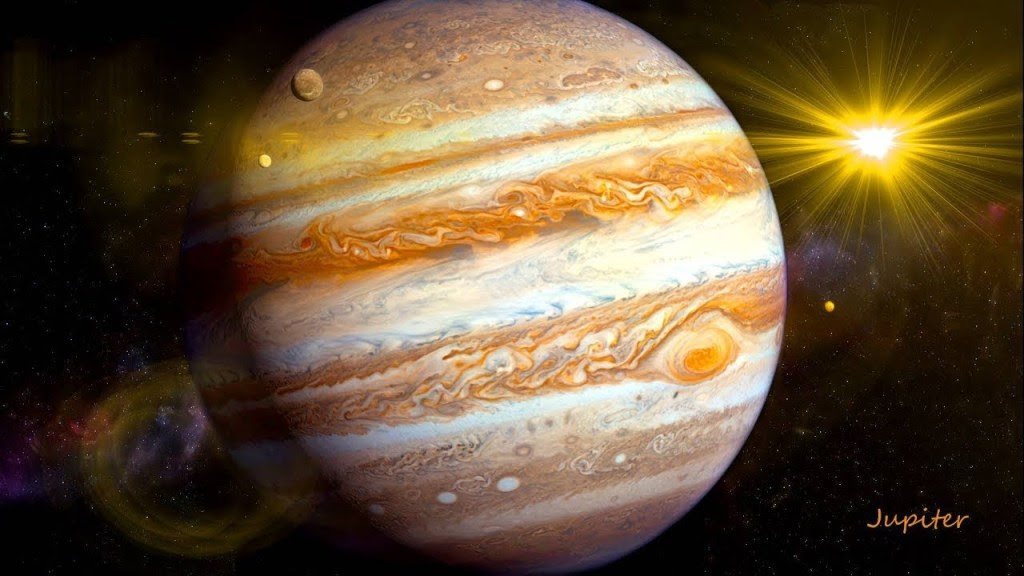
The great news about this transit is that Jupiter is in domicile in Pisces, so it feels great here. In Pisces, Jupiter can be as wise, spiritual, and big-picture as he wants.

The last 2 years or so haven’t been easy. That pile-up of energy in Capricorn has been heavy and confining. Jupiter in Aquarius is overall a better placement than Jupiter in Capricorn, but since Jupiter shares the sign with Saturn (in domicile in Aquarius) it gets to play by Saturn’s rules.

Now that Jupiter moves into Pisces, our sense of faith and optimism will finally be restored.  

May 17h, 2021 – Venus Conjunct North Node

On May 10th we had Mercury conjunct the North Node. At first, it was the thought.

Now that Venus joins the North Node at the same degree of Gemini, we will be like “Wait a minute: that idea, that thought, that opportunity I was presented last week is REALLY something. It actually feels right. Yes, it is a bit frightening, but there is also that feeling of “rightness”, I have those butterflies in the stomach that tell me yes, this time, I am onto something”.

The North Node spends quite a bit of time at the 10th degree of Gemini, and when that happens, we know that we are in the Eclipse season. Indeed, when we have the Eclipse season,  the Nodes spend a lot of time at the same degree of the Zodiac.

If you have planets or angles around 10° Gemini or 10° Sagittarius, this transit, as well as the other Nodal transits, and the whole month of May, will be particularly important for you, and can come with incredible developments and opportunities. 

May 20th, 2021 – Sun Enters Gemini

Happy birthday to all Geminis out there! On May 20th, the Sun enters Gemini and the Gemini season officially starts.

With Mercury, Venus and the North Node already in Gemini, you may feel that the Gemini season has started a long time ago. But it is really when the Sun is in the sign that we get the full experience.

Gemini is a very curious, witty, expressive, verbal and intellectual energy. Gemini is the Jack of all trades of the zodiac, without having the “know it all” Jupiter/Sag attitude.

Because Gemini energy is intrinsically curious, we will actually get to pay attention to what is going on, and approach things with a beginner’s mind. And this is when we usually finally find solutions to old problems that felt impossible to solve in the past. 

May 23rd, 2021 – Saturn Goes Retrograde 

When the slowest visible planet stations retrograde, the world doesn’t turn upside down as it does when Mercury or Mars go retrograde… but Saturn’s retrograde stations rarely go unnoticed, even if for different reasons.

If some things in your life went on by inertia, or they were kind of sluggish, now they will stop working altogether. Imagine you have an old car that takes ages to start.

You expect any moment to crash, and unsurprisingly, one day the car does crash. Is not that you haven’t seen it coming.

But the fact that it has stopped working will finally push you to do something about it. 

Now the problem becomes obvious, it becomes tangible, it becomes a reality. You can’t just get away with it anymore.

When Saturn goes retrograde, you will finally stop, so you can reassess an area of your life that is not working as well as it could be.

Saturn retrograde is an opportunity to rethink and re-engineer that sector of your life. By the time Saturn goes direct, you will find a new solution, a new operating model, that will improve your life in the long run. 

May 26th, 2021 – Lunar Eclipse In Sagittarius

One of the highlights of the month is, of course, the Full Moon and Total Lunar Eclipse in Sagittarius.

The eclipse is at 5° Sagittarius and it is a South Node eclipse, so it is a culmination of what we’ve been building and creating since the Nodes have shifted in Gemini and Sagittarius. But more about this extremely important event closer to the date!

May 29th, 2021 – Mercury Goes retrograde, Mercury Conjunct Venus

On May 29th, 2021 Mercury goes retrograde at 24° Gemini, and just before it changes direction, Mercury conjuncts Venus, also at 24° Gemini. Most of the time, Mercury is faster than Venus, but this time, it is Venus that applies to Mercury.

We will first “feel” or experience something (Venus), and then try to make sense of what happened (Mercury). You can have an experience that will turn you upside down.

This experience can be so powerful, so emotionally and sensorially stimulating, that you may need weeks to process it. But this is what we have Mercury retrograde for! 

May 31st, 2021 – Sun Conjunct North Node 

At the end of the month, the Sun is the last planet to greet the North Node of the Moon. The Sun has had quite a tough time this month: Mercury, Venus, and even Mars – planets that used to listen to Sun’s directives, have been totally out of control.

They have been out of the bounds of the Sun. The Sun is now left with the “What was that all about?” “What if – only if, it is ME that needs to change? “

The Sun is the most predictable ‘planet’ in astrology: it always rises and sets in the skies. It gives us the seasons, the signs and the houses.

The Sun is pretty much the backbone of astrology, and the “manager” of our natal chart. The Sun sets the direction. The Sun is our life purpose. And now, when the Sun meets with the North Node of purpose, this overall direction of our life is actualized and upgraded.

Just like when we install a new software update on our computer, Sun conjunct North Node can feel sluggish at the beginning. The new features may be difficult to learn at first.

But it won’t take long until we will not only get used to it, but wonder how we have been living without them all this time. In June, when we will have a total Solar Eclipse in Gemini, this new direction will become more clear. 

Age Of Aquarius – “Out Of Bounds Planets”

In the Age of Aquarius COmmunity, every month we have a “Topic of the month” which is inspired by the transits of the month. In May, the topic of the Month is “Out of bounds planets”.

This means that, in addition to the regular forecast and New Moon goal-setting practice, we will have 1. a training2. a webinar 3. forum Q&A discussions specifically focused on out of bound planets.

Out-of-bound planets is a very exciting – but not that much talked about – astrological concept. If you are curious to learn more, and even get feedback on your own out-of-bound planets, make sure you join us while the doors are open!

Joining a membership program can feel scary. What if I forget about it? What if I can’t cancel? What if I feel bad about canceling? 

Do not worry. You will not forget about the membership, because we send weekly emails which you will love to open. And if at any time you want to cancel, you can do that from the profile settings.

The Age of Aquarius platform is very user-friendly and also comes with a mobile app. Once you install the app, you can access all the content, including the forum, at a touch of a fingerprint, without having to log in all the time.  

Join us here: 

https://www.ageofaquarius.com/join

HUMANITY MIGHT HAVE BEEN BORN TO LIVE IN CITIES

Paleo-Style Sensibilities Aside, Earth’s Future Hinges on the Success of Our Urban Spaces

Humanity Might Have Been Born to Live in Cities | Zocalo Public Square • Arizona State University • Smithsonian

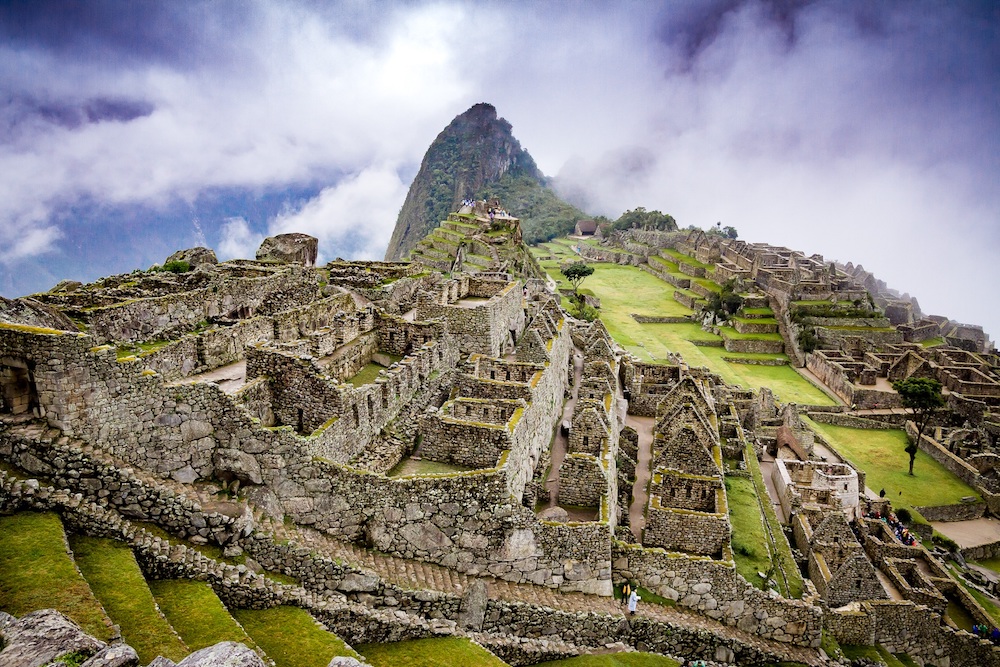
From Machu Picchu to the Mediterranean, humans have invented and reinvented cities, over and over again. Courtesy of Poswiecie/Pixabay.

by GREG WOOLF | APRIL 26, 2021 (zocalopublicsquare.org)

Sometimes it feels like we made a wrong turn a long way back.

Perhaps it was the shift to fossil fuels and scientific medicine that led us to this place, a population of nearly 8 billion crowded onto a warming planet, a terrestrial species melting the ice caps so there is less and less land to inhabit or to grow food.

Or maybe it happened further back, with our jump down the food chain to become growers and eaters of grass (and maize, and rice, and sorghum). Agriculture started the slow demographic explosion of the last 10 millennia, pressing on biodiversity, and bringing on the sixth extinction. The anthropologist and political scientist James C. Scott makes a strong case in his book Against the Grain that the shift to agriculture also ushered in slavery, oppressive states, and social inequality.

But it would be a mistake to see life before agriculture as the answer to our problems. Proponents of the “Paleo diet” promise personal wellbeing if we only return to pre-agricultural gastronomy. They usually stop short of suggesting we go big on protein by scavenging on the kills of big cats and hyenas, an important food source in some periods of prehistory.

So how does city life fit into all this? Is urban life another wrong turn? Should we return to the countryside—ideally, a bit of it with decent broadband and a farmers market within cycling distance? Not quite.

The spread of cities over the last 6,000 years is one of the epic themes of human history. It is well documented, since so many societies that built cities also developed writing systems. It is a global phenomenon—not because cities originated in one place and spread out over the planet, but because people invented cities, out of nothing, so many times. Ancient humans congregated and built in the valleys of Mexico, Mesopotamia, Egypt, the Indus and north China, and also in the Sahel region south of the Sahara, in the Amazon Basin, in what are now the southeastern states of the U.S., in the Andes, in the forest of southeast Asia. People probably built cities in yet-unknown other places, too, where LiDAR and satellite imaging have not yet found them.

Cities followed agriculture in all these regions. At first, they varied widely from one place to another. There were low-density cities like those of the Maya, and tightly packed hill towns; instant cities built at the command of an Assyrian, Chinese, or Roman emperor, and others that grew slowly out of collective efforts like the settlements of the Etruscans. Modern cities, with their convergent architectures of steel and concrete, fiber optics and tarmac, are much more similar to each other than were the many seeds from which they have grown.

Today about a quarter of the people of the world live in cities of more than one million people: that share is growing faster than the global population. Growth has not been smooth, but it is now irreversible. The landscapes and biodiversity needed for gathering and hunting are long gone, and could never sustain today’s global population. We cannot turn our backs on farming or on cities. Indeed, it is difficult to imagine a human future that is not more urban than ours, unless it’s a dystopian world founded on some species-wide catastrophe, like the one that destroyed the dinosaurs. Is such a colossal cull plausible? Even a year into the COVID-19 pandemic, global deaths add up to less than 0.4 percent of the world’s population. Could anything less than an asteroid strike or a super volcano explosion derail our urban journey now?

These doomsday scenarios aside, an increasingly urban future seems assured. But there is no need to be alarmed by it. One reason not to consign cities to the trash can of some of our species’ worst ideas is that we have turned out to be very well adapted to live in them. Human beings move easily in cities’ complex three-dimensional topography. We are adept at building social groups with strangers as well as kith and kin, we are tolerant of the new (and often nutritionally impoverished) diets that cities impose on their inhabitants, and we combine a sense of local territory (our homes, our neighborhoods) with a capacity for exploring and mapping new spaces that is far superior to that of our nearest animal relatives. We might have been born to live in cities.Could anything less than an asteroid strike or a super volcano explosion derail our urban journey now?

We were not, of course, designed for city life. Evolution is the opposite of movement by design—it’s a lurching blindly into the future, through one happy accident after another (or at least, by following paths that are less disastrous than the alternatives). Our species has been around for some 300 million years, and we owe most of our city-friendly features to evolutionary processes that go back even further. For instance, our sociality, linked to the development of our frontal cortex, is pure primate. Our dietary flexibility probably developed in environments where it was never certain exactly which foods would be available. All this added up to an awesome potential for living in cities. We are not the only species with this potential. Mice, rats, bats, and house sparrows also do pretty well in concrete jungles. The difference is, we build cities. They have colonized them.

The evolutionary biologist Edward O. Wilson pointed out, in The Social Conquest of Earth, that other species too have taken advantage of the chance to live in dense communities. Some (but not all) bees and wasps, coral polyps and termites, and even naked mole rats have come to live what Wilson called eusocial lives, in which social cooperation becomes central. These species are not closely related—not to each other, and not to us—but they have one crucial thing in common. They all make something like a nest. Getting the most out of a social existence, argues Wilson, required cohabitation. Big brains need crowds.

Cities are our nests, so natural to the human animal that we find it difficult to imagine how we ever got on without them. How did we look after our big-brained but slow-developing children when we had no homes, nor enough neighbors or grandparents to care for the kids when we went foraging? How did our astonishing capacity to make tools and artifacts operate when we were so often on the move? If we wanted to develop technologies that were not all small, light, and easy to carry) we had to have a base. Camps and temporary homes must have done some service, and villages were good nests for a while, but only cities have made it possible for human societies to specialize, so everyone lived near a smith or a doctor or a priest, and we could make the most out of our talent for cooperation.

Cities are a new experiment, in evolutionary terms. Probably in the first thousand years or so there were many failures; archaeologists are beginning to map more clearly the urban civilizations that collapsed like so many houses of cards. But we got better at it. Most ancient cities were small just because it was so difficult to provision large ones in time of crisis. The first city builders often concentrated their energy on the house of gods and kings, and on defensive walls. Later generations turned their attention to water supply and drainage, and to constructing roads and canals, granaries and reservoirs. Fire and earthquakes ravaged many ancient cities until architects learned to build in stone and brick, to plan cities for safety, to build resilient structures.

Some of those cities turned out to be so resilient they are still with us today. Athens is maybe 3,500 years old; Rome and Istanbul, nearly 3,000 years old. Even medieval capitals such as Cairo and Tunis are close by ancient predecessors in Memphis and Carthage. Once we found good places to nest, we often stayed.

Modern cities are far more elaborate of course. Few ancient cities had more than 100,000 inhabitants. Today there are more than 30 cities of more than 10 million. We have learned to pack our nests more densely, piling our homes high. Even more important have been improvements in our cities’ nervous and circulatory systems (electricity, gas, the internet)—the channels by which food and water enter the nest, and waste is removed from it. The modern megacity depends on fast transportation that allows citizens to live far from where they work. These technologies are different from those employed in Tenochtitlan, Alexandria and Baghdad, but the principles are the same.

For the last few thousand years, our societies have mostly been ruled from cities, and our key infrastructures have been designed for urban populations—a state of affairs that holds great promise for humanity and the natural world. Done properly, city life is the most environmentally friendly way to live. Waste disposal, sanitation and recycling is easier to organize in cities than in the countryside. Our generation will see the end of private cars powered by fossil fuels. Already many city dwellers use public transport for most of their travel needs. Electric cars and buses are city friendly as well as environmentally friendly.

Romantics have been calling for us to go back to nature ever since the Industrial Revolution began. But the sums don’t add up. There is not enough “nature” out there to support us all. The kinds of lives we want now—high tech, highly connected, materially rich—work better in cities. And it is better for the planet that we don’t try and live this way in what wilderness is left.

We have not arrived at the city of the future yet, but it’s early days. Each generation our nests get better and better. Cities will continue to be better connected, greener and healthier, and that is all good news. So, city life: not one of our worst ideas, then, after all.

GREG WOOLF is director of the Institute of Classical Studies in London and the author, most recently, of The Life and Death of Ancient Cities. Starting in July 2021, he will be Ronald J. Mellor Professor of Ancient History at UCLA.

Milton versus the mob

He spoke truth to power and made heresy a virtue. Lessons on free speech and intellectual combat from John Milton

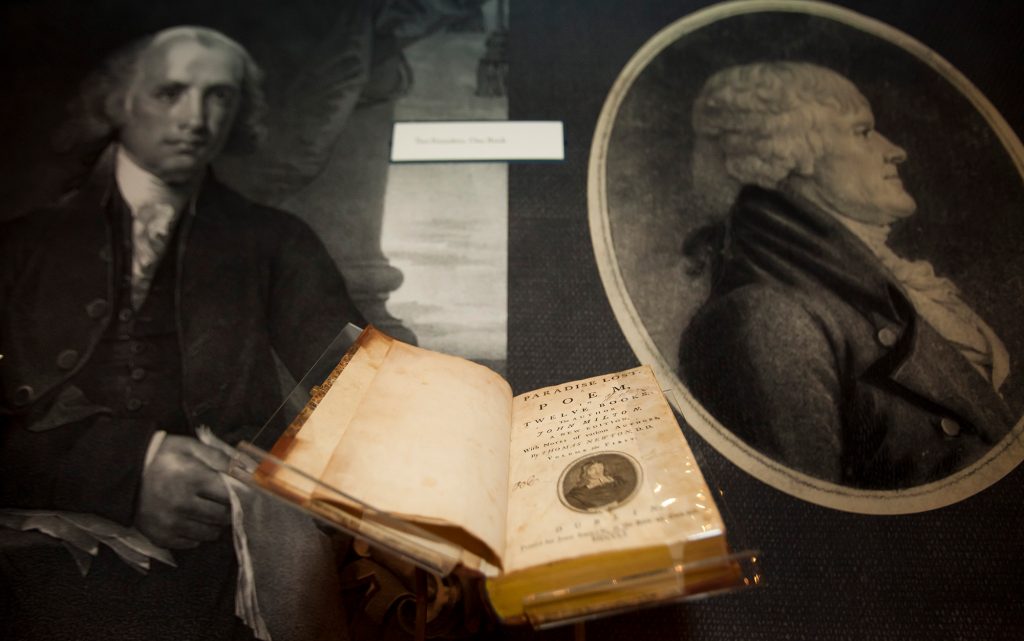
A copy of John Milton’s Paradise Lost (1667) is believed to be the only book known to have the signatures of two of the Founding Fathers of the United States, Thomas Jefferson and James Madison. Photo by Dai Sugano/Mercury/Getty

Nicholas McDowell

is professor of early modern literature and thought at the University of Exeter. He is the author and editor of several books on the relationship between literature, history and ideas in the 17th century, including The Oxford Handbook of Milton (2009). His most recent book is Poet of Revolution: The Making of John Milton (2020), the first volume of a two-part intellectual biography of Milton.

26 April 2021 (aeon.co)

Edited by Nigel WarburtonSYNDICATE THIS ESSAYTweet416

Aeon for Friends

Find out more

Published at the height of the first English Civil War, Areopagitica: A Speech of Mr John Milton for the Liberty of Unlicensed Printing, to the Parliament of England (1644), remains a powerful defence of free expression. Printing might now have almost given way to digital media as the form in which beliefs and ideas are proposed, argued with and attacked, but the questions raised by Areopagitica about liberty of thought and speech, and more specifically writing, are more urgent than ever. John Milton, the poet who, in Paradise Lost (1667), composed an English epic that could compete with and even surpass the Greek and Latin classics, was also a prose writer of distinction. This fact tends to be eclipsed by his reputation as a poet. But in Areopagitica, he gave Western liberalism some of the language through which it still conceives of itself. It’s both illuminating and salutary, at a moment of crisis in the liberal tradition, to return to the principles that shaped that tradition. At a time when the possibility of civil war in the United States is openly entertained by some, literally as well as metaphorically, we can learn much about the tensions inherent in liberalism by returning to the origins of Milton’s arguments amid the actual civil war that raged in Britain and Ireland in the mid-17th century.

Courtesy Wikipedia

There’s little evidence that what has become Milton’s best-known prose work had any wide impact on the thinking of his contemporaries: one German reader in 1647 suggested that it should be translated into other languages to ‘give it good circulation in other lands where such tyranny reigns’, but he also thought it ‘rather too satirical’ and that its arguments needed to be ‘more moderately set forth’. The real impact of Areopagitica ­– the title alludes to Isocrates’ seventh oration addressed to the Areopagus, the ancient council of Athens – came in later revolutions and in different lands. Thomas Jefferson quoted it, and the comte de Mirabeau’s translation into French went through four editions between 1788 and 1792.

Its eventual influence on British thought is apparent in the echoes of its argument and imagery in John Stuart Mill’s essay On Liberty (1859), in which Mill insists that freedom of expression is a precondition of a flourishing society. The occasion for George Orwell’s powerful essay ‘The Prevention of Literature’ (1946), in which he considers the twin threats posed to ‘intellectual liberty’ by ‘totalitarianism’ and ‘monopoly and bureaucracy’, was Orwell’s dismay after attending a meeting of the PEN Club – a society founded in 1921 to further intellectual cooperation among writers – to commemorate the tercentenary of the publication of Areopagitica. That ‘no speaker quoted from the pamphlet which was ostensibly being commemorated’ was, for Orwell, an indication of the failure of his contemporaries to live up to the ideals that they claimed to promote.

The resonance of Areopagitica for US ideals of the free exchange of ideas is, however, apparent to anyone who has been to the New York Public Library. A plaque on Library Way bears this quotation from the pamphlet beside an image of a printing press: ‘Where there is much desire to learn, there of necessity will be much arguing, much writing, many opinions; for opinion in good persons is but knowledge in the making.’ More prominent is the quotation displayed above the entrance to the main reading room, which preserves the original spelling: ‘A good Booke is the pretious life-blood of a master spirit, imbalm’d and treasur’d up on purpose to a life beyond life.’

These lofty and poetic declarations emerged out of a more prosaic personal context for Milton. The outbreak of civil war between parliament and the Royalist forces of Charles I in 1642 had caused the ecclesiastical and political mechanisms of prepublication licensing in England, according to which every publication had first to be approved by a committee of bishops, to fall into disuse. The early 1640s consequently witnessed an unprecedented spike in the number of publications in England, many of them polemical attacks on the other political side in the civil war. The Westminster Assembly, composed mainly of clerics of various Puritan beliefs, had begun, by 1643, to discuss what forms of worship should replace the structures of the collapsed Church of England. It was in this atmosphere of innovation and revolution that Milton felt that he could publish, in the same year, proposals for a reform of the divorce laws that would enable a husband to separate from a wife on the grounds, not merely of nonconsummation or adultery, but of unhappiness and incompatibility. For Milton, who was 34 at this point, the argument for reform seemingly had a deeply personal impetus: in the early summer of 1642, he had married Mary Powell, but she had left him after little more than a month to return to her family, and hadn’t come back.

From True Platforme and Manner of the Sitting in the Lower House of Parliament (1624). This is the earliest representation of the English House of Commons sitting in the former St Stephen’s Chapel in the Palace of Westminster. Courtesy the Trustees of the British Library

The reception of his tract The Doctrine and Discipline of Divorce (1643), which he published anonymously and unlicensed, deeply shocked him: it was condemned by the Puritan clergy as being heretical and intending to foster sexual libertinism, and it was cited in petitions to parliament as evidence of the need to reinstall a system of prepublication licensing. Parliament’s Licensing Order of June 1643 required once again that appointed officers, including clerics, examine books for heterodoxy, sedition and libel before licensing them for printing. It was in response to these attempts to restore prepublication censorship on the grounds of the appearance of his own book on divorce reform, among other books charged with promoting heresy, that Milton issued Areopagitica in November 1644 (again without a licence). Yet, as I show in my intellectual biography of the young Milton, Poet of Revolution: The Making of John Milton (2020), his interest in these matters wasn’t sudden, nor entirely the result of a sense of personal insult.

Milton had been thinking hard about how censorship and state persecution suppressed intellectual and literary achievement for some years prior to Areopagitica. After leaving Christ’s College, Cambridge in 1632, he had embarked on an intensive period of reading about the history of Europe and became particularly interested in episodes of literary censorship in Italy, the country in which he lived and travelled from 1638 to 1639. In 2014, Milton’s copy of the 1544 edition of Giovanni Boccaccio’s book Vita di Dante (c1360), translated as Life of Dante, was discovered in the Bodleian Library in Oxford, complete with annotations, dating from around 1637 to 1638, that mark Boccaccio’s account of how Dante’s political work On Monarchy (1313) was burnt as a heretical text by the papal authorities. Milton even shows his awareness that Boccaccio’s account of this censorship of Dante was itself later censored and that parts of it are missing from some editions of the Life of Dante, marking in his annotations the passages that were excised by the authorities between editions. In other words, Milton identified a process of double censorship that had been imposed in different centuries on two of the Italian writers whom he most admired.

Milton’s fascination with the topic of censorship and the Catholic Church’s Index of Prohibited Books, before he wrote Areopagitica, is evident also in his surviving commonplace book, a manuscript notebook compiled mostly during the late 1630s and early 1640s, in which he gathered a list of entries to do with the prohibition of books, among other topics. He makes repeated reference there to the Historia del Concilio Tridentino (‘History of the Council of Trent’), a deeply critical account by the Venetian scholar and statesman Paolo Sarpi of the proceedings of the Council of Trent, convened by the Catholic Church from 1545 to 1563 to develop the policies of the Counter-Reformation. Sarpi’s critique of the abuses of clerical power and defence of the authority of the Venetian republic to govern its own Church was considered so potentially incendiary that his work was smuggled out of Venice in instalments and first published under a pseudonym in London in 1619. Milton refers to ‘Padre Paolo the great Venetian antagonist of the Pope’ in his first major work of polemical prose, Of Reformation (1641), warning that the same clerical usurpation of political power recorded by Sarpi in Counter-Reformation Italy had occurred in England under the bishops of the Church of England under Charles I.

Milton turns to the pagan understanding of rational choice as the exercise of virtue

The two major intellectual figures that we know Milton visited during his European tour of 1638 to 1639 were the Dutch polymath Hugo Grotius, an exile in Paris for his theological views, and Galileo, placed under house arrest in Florence since 1633 for his belief that the Earth moved around the Sun. The meeting with Galileo is recounted in a key moment in Areopagitica, as Milton warns parliament that the adoption of such measures as the Licensing Order would foster in England, as it had in Italy under the Index, fear and servility that were inimical to any real intellectual and literary achievement:

I have sat among their learned men, for that honour I had, and been counted happy to be born in such a place of philosophic freedom, as they supposed England was, while themselves did nothing but bemoan the servile condition into which learning amongst them was brought; that this was it which had damped the glory of Italian wits; that nothing had been there written now these many years but flattery and fustian. There it was that I found and visited the famous Galileo, grown old, a prisoner to the Inquisition, for thinking in astronomy otherwise than the Franciscan and Dominican licensers thought.

In referring to the ‘philosophic freedom’ that his Italian acquaintances believed that they had lost, and which they erroneously believed to be preserved in England, Milton translates into English a Latin phrase, libertas philosophandi, which appears to have been used in print for the first time by Tommaso Campanella in his Apologia pro Galileo (‘Defence of Galileo’) in 1622. Campanella argued for the necessity of ‘the freedom of philosophising’ in Christian nations, perhaps himself echoing Galileo, who in several of his writings had quoted the dictum attributed to the Platonic philosopher Alcinous: ‘The philosopher needs to think like a free-born man.’ ‘Philosophy’ here encompasses ‘natural philosophy’, or what we call science: the modern concept of ‘academic freedom’ has roots in this 17th-century notion of ‘philosophic freedom’.

The striking personification of suppressed books as persecuted martyrs to the truth, with which Milton opens Areopagitica, introduces his repeated claim that the English parliament is acting like the Inquisition in their tyrannous imposition of prepublication censorship:

We should be wary therefore what persecution we raise against the living labours of public men, how we spill that seasoned life of man, preserved and stored up in books; since we see a kind of homicide may be thus committed, sometimes a martyrdom, and if it extend to the whole impression, a kind of massacre …

It might be contended that such imagery of martyrdom shows Milton to have been concerned with religious truth only, and that his arguments aren’t intended to have any relevance to wider issues of intellectual liberty and free speech. Certainly, Milton places his arguments in the context of a struggle to articulate religious truth against persecution by clerical elites, which he identified with the history of the Reformation. But he invokes historical examples of religious persecution to show how censorship and heresy-hunting have suppressed intellectual endeavour of all kinds, in different times and in different countries. Nothing of enduring value can be created under such conditions of intellectual enslavement: in one of his polemics against the episcopal Church of England in 1642, Milton had already declared that he would be prevented from fulfilling his own ambition to write an epic poem in English that could equal the achievement of Homer and Virgil until the nation had ‘enfranchised herself from this impertinent yoke of prelacy, under whose inquisitorious and tyrannical duncery no free and splendid wit can flourish’.

Indeed, perhaps the most radical move that Milton makes in Areopagitica, although it’s rarely given much prominence, is to transform the definition of ‘heresy’ by returning the term to its etymological root in the Greek proairesis. In the Nicomachean Ethics, Aristotle uses proairesis to mean the intellectual process of distinguishing and choosing between good and bad. In place of the Augustinian definition of heresy as that which is forbidden and needs to be rooted out of Christian belief, Milton turns to the pagan understanding of rational choice as the exercise of virtue. ‘Reason is but choosing,’ declares Milton, and true knowledge is a product of a rational encounter with diverse opinions and arguments, whether or not they’re potentially dangerous: ‘He that can apprehend and consider vice with all her baits and seeming pleasures, and yet abstain, and yet distinguish, and yet prefer that which is truly better, he is the true wayfaring Christian.’ It’s fundamental to the Christian life to face a continual trial of one’s virtue and to have to choose between good and evil in books and ideas, as in all other things. Paradise Lost is Milton’s ultimate meditation on the origin of human existence as a trial of virtue.

Milton also turned to ancient Greek values in asserting the importance of speaking truth to power. The title page of Areopagitica bears a motto from Euripides’ tragedy The Suppliants, which Milton both quotes in Greek and then translates:

This is true Liberty when free born men
Having to advise the public may speak free,
Which he who can, and will, deserves high praise,
Who neither can nor will, may hold his peace;
What can be juster in a State then this?

These lines invoke the Athenian concept of parrhesía, a form of free and bold speech, usually voiced by a distinguished citizen addressing a public assembly on a controversial matter. Milton represents himself as a parrhesiastés, whose love of liberty has impelled him to criticise parliament publicly at some risk to his own safety. But Milton didn’t conceive of free speech as most Western societies do today (or, at least, as they have tended to conceive of it over the past two centuries): as a right secured by law and protected in the courts. As the historian James Hankins has shown in his book Virtue Politics (2019), for humanists in Renaissance Italy: ‘To speak with freedom, to advocate what was right, especially before a tyrant or a howling mob, was a great virtue that required other virtues such as prudence and courage.’ We read Milton anachronistically if we fail to realise that free speech is similarly for him, as for the great Renaissance humanists, primarily the exercise of virtuous character, not a right enshrined in law. By speaking freely, a person demonstrates their possession of moral virtue; and their freedom to speak in such a manner embodies the virtuous nature of the society in which they live.

Milton argues not for legal rights but against legislation that prevents and prohibits freedom of speech – at least until it’s concluded, after publication, that a book promotes ideas so ‘impious or evil absolutely either against faith or manners no law can possibly permit’ them, in which case ‘the fire and the executioner will be the timeliest and the most effectual remedy’. In other words, let heretical ideas be published, then judge them: if they are found wanting, punishment is appropriate. But ideas shouldn’t be censored in advance of their airing, an act that Milton compares to a kind of intellectual stillbirth: the ‘issue of the brain’ should be ‘no more stifled than the issue of the womb’.

Of course, this qualification raises the question of who decides on the harmful effects of a text after its publication: these lines are habitually cited to prove the sharp limits or elitism of Miltonic liberty and demonstrate its disappointing distance from modern liberal conceptions of free speech as a fundamental legal right. The conviction that books can be suppressed after publication, if they are found ‘impious or evil’, derives in part from Milton’s notion of virtue as the exercise of reason in choosing between good and evil. Truth will emerge from a dialectical process of sifting good from evil, which Milton imagines as a form of intellectual combat: ‘who ever knew Truth put to the worse, in a free and open encounter.’ Here, Milton’s arguments most clearly anticipate the concept of the ‘marketplace of ideas’ that’s associated with Mill’s essay On Liberty and that has often been invoked in debates about the freedom of the press in liberal democracies, and which no doubt was directly influenced by Milton’s pamphlet.

Societies can foster intellectual liberty only by somehow restraining those who would deny it

One aspect of Milton’s arguments against prepublication licensing is indeed an insistence that parliament’s reimposition of licensing was influenced by lobbying from the Company of Stationers, whom he accused of seeking to retain a commercial monopoly on the print trade. His images of truth sometimes continue this commercial theme as he transfers the charge of monopoly from economic to intellectual and religious contexts: ‘Truth and understanding are not such wares as to be monopolised and traded in by tickets, and statutes, and standards.’ To allow any interest group to control the circulation of ideas, in the way that a company seeks to control the market in pursuit of its own profit, will lead to the general intellectual and spiritual poverty of a society.

Yet for all the surface similarities between the liberal concept of an untrammelled, deregulated marketplace of ideas and Milton’s demand for an absence of legislation, which would allow readers to choose the good and the true and reject the false and evil, Milton was not only insistent that bad books should be suppressed, once they had been found to be bad, but adamant also that those who sought to espouse intolerance should themselves be denied the freedom to do so:

I mean not tolerated Popery, and open superstition, which, as it extirpates all religions and civil supremacies, so itself should be extirpate, provided first that all charitable and compassionate means be used to win and regain the weak and the misled.

The second part of this statement, which asserts the importance of charity and persuasion, is usually left out by those quoting the first part to show that Milton was, at heart, a religious bigot, and that his ideas about free speech and intellectual liberty have little to teach us about liberalism today. Nonetheless, Milton remains vague on whether he means by this that prepublication censorship is, after all, permissible in the case of those who would impose the structural repression of free speech by ‘extirpating’, or destroying utterly, all other forms of belief and government. The issue of whether we should tolerate those who would take advantage of freedom of speech to encourage violence, illegality and intolerance is today more urgent and live than it has ever been, whether in relation to ‘hate speech’ or to religious extremism. Milton, writing in the midst of a devastating civil war, maintained that societies can foster intellectual liberty only by somehow restraining those who would deny it: in its rousingly eloquent articulation of problems that continue to bedevil liberalism, the arguments of Areopagitica still matter in the information age.

Stories and literaturePolitical philosophyThinkers and theories

Melissa Etheridge – Take My Number

Melissa Etheridge “Take My Number” directed by Dale “RAGE” Resteghini Available now on iTunes: http://bit.ly/1xbi3Tv​ Taken from the album THIS IS M.E. available in the US & Canada Sept. 30, 2014 Pre-order now: http://store.melissaetheridge.com/​ iTunes: http://smarturl.it/ThisIsME_iTunes​ Amazon: http://smarturl.it/ThisIsME_AmzMp3​ Walmart: http://smarturl.it/ThisIsMe_Walmart​ Watch all official Melissa Etheridge videos here: https://www.youtube.com/melissaetheridgehttps://www.youtube.com/MelissaEtheri…​ Connect with Melissa: Website: http://www.melissaetheridge.com/​ Fan Club: http://mein.melissaetheridge.com/​ Facebook: https://www.facebook.com/MelissaEther…​ Twitter: https://twitter.com/metheridge​ Pinterest: http://www.pinterest.com/mletheridge/

Music in this video

Learn more

Listen ad-free with YouTube Premium

Song

Take My Number

Artist

Melissa Etheridge

Album

Take My Number

Licensed to YouTube by

UMG, The Orchard Music, SME (on behalf of SPV Recordings); PEDL, Warner Chappell, ARESA, ASCAP, BMG Rights Management (US), LLC, CMRRA, and 5 Music Rights Societies

(Contributed by William P. Chiles)

Scorpio Full Moon April 26th, 2021

Wendy Cicchetti

The Scorpio Full Moon forms a powerful t-square configuration, giving it a loaded feel, yet with many options for finding relief and solutions. Often the case with a Full Moon, the Moon is rather out on a limb. Observing the overall chart pattern, we can see the “handle” of a bucket shape with the planets, suggesting that the Moon, as a singleton, could be a deeply purposeful mover and shaker, keen to make a point or create an impact (for further information on the chart shapes theory developed by Marc Edmund Jones see https://www.astro.com/info/ in_jonespatterns_e.htm). We should not, therefore, underestimate the significance of a determined Scorpio Moon, standing alone opposite four planets in Taurus (Sun, Uranus, Venus, and Mercury), even if they do present an apparently indomitable team!

Any close contact with Taurus Sun folk will quickly reveal that these tend to be strong, resolute people who do not back down easily on anything that matters to them — sometimes they dig their heels in just on a matter of principle, whether they believe they are right or wrong! But we have to love that powerful tenacity because at times we really need it. With the Moon in Scorpio, the range likely runs from deep, emotional drives and scars to physical pain; whilst Scorpio can often tolerate a lot, the Moon’s placement here indicates that some healing is desired. And if anyone can push themselves to any lengths (or depths) to get it, it’s probably Scorpio!

Meanwhile, the army of planets in solid Taurus lines up like bricks in a wall. The Sun conjunct with Uranus accentuates a rebellious attitude; these two are quite ready to spring a few surprises, in order to gain an advantage. Nearby Venus backs up the charge, using whatever weapons she has to hand — charm and sensuality, supplies of food, drink, clothing, and beauty products, if necessary! And Mercury can make and back up “the point,” whatever the point may be.

Can anything alleviate the extreme tension of this opposition? Yes! Good old Saturn, in Aquarius, sits in a t-square, potentially lending support to both “sides” of the opposition. Saturnine “support” can be a little on the dry and stiff side, admittedly, but, in this case, someone laying down the law or reiterating “the rules” could be helpful. At the simplest level, an answer of “no,” or refusal to connect, may help to clear up where support is realistically available, or not as the case may be. Although that might feel like a blow at first, it could mean that no more time is wasted in futile pursuits.

Besides, action of a different sort might be more rewarding, according to the Moon’s trine to Mars in Cancer. Trying to get emotional support from a source only able to give practical support — as per the opposition dynamic of the Full Moon — looks problematic. But Mars, like the Moon, sits in a water sign, suggesting that there may be other routes towards emotional assistance. The easy flow of the trine aspect can lure us into not trying, or feeling too comfortable to be bothered to action. However, the tensions brought forth by the t-square serve as an impetus to turn in another direction for support this time. Alternatively, something may just swim up in the stream of life, as it were, which happens to offer just what we need! All we need do is reach out to connect with it.

This article is from the Mountain Astrologer, written by Diana Collis.

Consciousness, spirituality, biography, sexuality, androgyny, futurism, space, the arts, science, astrology, democracy, humor, books, movies and more