
San Francisco Public Library Author Cesar Love discusses his latest book, Baseball: An Astrological Sightline, and narrates the astrological history of the San Francisco Giants. Baseball: An Astrological Sightline presents the correspondences between astrology and the game of baseball and introduces the astrological birth charts of every major league baseball team.
The Meaning of July 4th: A Conversation with Thom Hartmann (The Marianne Williamson Podcast)
Marianne Williamson John Adams said that he hoped that every July 4th, Americans would revisit its first principles. Those principles are found in the Declaration of Independence and today we celebrate the 245th anniversary of its signing. I sat down with author and progressive radio host, Thom Hartmann, to discuss those first principles, how our democracy is being threatened and the steps needed to save it… Let this year’s July 4th celebration be mindful rather than mindless. What should we celebrate, and what should we beware of? Thom’s Website: https://www.thomhartmann.com Follow Thom on Social Media Twitter: https://twitter.com/Thom_Hartmann Instagram: https://www.instagram.com/thom_hartmann YouTube: https://www.youtube.com/user/thomhart… Follow Marianne on Social Media Twitter: https://twitter.com/marwilliamson Facebook: https://www.facebook.com/williamsonma… Instagram: https://instagram.com/mariannewilliamson YouTube: https://www.youtube.com/user/Marianne…
Shakespeare on imagination bodying forth

“And as imagination bodies forth
The forms of things unknown, the poet’s pen [the mind of man]
Turns them to shapes and gives to airy nothing
A local habitation and a name”
― William Shakespeare, A Midsummer Night’s Dream
New Moon In Cancer – A Priest Performing A Marriage Ceremony
| by Astro Butterfly (astrobutterfly.com) |
On July 9th, 2021 we have a beautiful New Moon at 18° Cancer.
Cancer New Moons are special New Moons by default, because Cancer is ruled by the Moon. We are talking about Moon’s favorite New Moon of the year!

Cancer is the sign of conception, and New Moons in Cancer are great for birthing personal projects that you’ve been nurturing and working on for some time.
The good news doesn’t stop here. The New Moon is supported by Neptune and Uranus. The New Moon is trine Neptune in Pisces, sextile Uranus in Taurus, and opposite Pluto in Capricorn.
Basically the New Moon makes aspects with all outer planets. Outer planets aspects always feel fated, it’s like there are higher forces at play, like there is a divine orchestra that guides our actions.
That’s why this New Moon in Cancer will have an almost magical feel to it. Things are finally falling into place.
The outer planets (Uranus, Neptune, Pluto) work at a subtle level, but they nevertheless influence us every step of the way. Nothing may actually happen, but we will feel a sense of direction, of “rightness”, a feeling that God is on our side.
New Moon In Cancer – What Feels Right
Of course, this is a New Moon in Cancer, so we are in the realm of feelings.
Cancer is a cardinal, water sign. Just like the river intuitively finds its way to the sea, our feelings always guide us in the right direction.
If you are a more intellectual type of person, trusting your emotions can feel awkward; you may not even know where to start.
Well… the good news is that you don’t have to start anywhere! A New Moon in Cancer is not a “7 steps to… (fill in the blanks) type of thing.
New Moons in Cancer are not about fixing something, following a plan etc… not even about meditation or any other type of spiritual practice. I mean, it can be about meditation, but the key here is that there is no process, no “best practice”, no “how to” to a New Moon in Cancer.
With the New Moon in Cancer, you only have to do what feels right. That’s it!
Easy no? Well, that’s why the Moon is in domicile in Cancer, because Moon and Cancer speak the same language – the language of emotions.
The New Moon in Cancer is a time to honor your emotions, to pay attention to what you actually feel. Within Cancer’s cardinal waters, if something ‘feels’ right, then it probably is right.
And here comes the “task” of the New Moon in Cancer: this task can be incredibly easy, or incredibly difficult. Can you welcome your emotions? Can you allow the Cancerian waters to guide your actions? Can you actually act upon your feelings?
Some may say: if I really act on my feelings, then someone’s going to get hurt. But bottled hurt is not really what Cancer is about (that’s more the Fixed Water Scorpio).
Cancer is Cardinal Water – Cancer is that very first emotional input, that is rooted in the truth of who we are.
The Moon In Cancer – The Womb Of Creation
 In Astrology, Cancer is connected with our home and family, with our safety and comfort zone.
Cancer is our roots, the womb of creation, that safe, nurturing space where life is formed.
Cancer is the source, the root cause, the deeper truth. When we acknowledge, when we connect with our Cancer zone of genius, when we trust our gut feeling, we automatically do the right thing.
It’s interesting that in Cancer’s safe womb of creation, new life can emerge only if there is some chromosomal match, if it makes evolutionary sense for mother’s and father’s genes to come together.
If there is a match, new life emerges. If not, nothing happens.
Similarly, when we trust our emotions, when we’re confident about how we feel, things come easily. Nothing good can ever come to life if it’s not rooted in our intuition and emotions.
New Moon In Cancer – A Priest Performing A Marriage Ceremony
The Sabian symbol of the New Moon in Cancer is “A priest performing a marriage ceremony”.

This Sabian symbol is a perfect description of the energies at play. The New Moon in Cancer is about birthing something new into existence.
And the outer planets that aspect this New Moon are the divine orchestration, “the priest” that gives us a ceremonial blessing, ensuring we are aligned with the higher forces of the universe.
In a marriage ceremony, we have 3 “players”: the two people getting married and the priest.
Throughout time and cultures, people have always felt the need to include a 3rd entity, an “intermediary”, such as a priest, or a master of ceremony, someone who can ritualize the experience, and help us connect with God/Universe/The Source.
We feel the need to include a “3rd party” perhaps because we know that in the sacred process of creation, we are never “alone”. There is this 3rd entity that guides us, makes things happen, and gives us its blessing.
At the New Moon in Cancer, let your intuition and gut feelings guide your actions and become your inner priest. When you’ll feel a sense of alignment, you’ll know you’re on the right path.
Love Is A Place
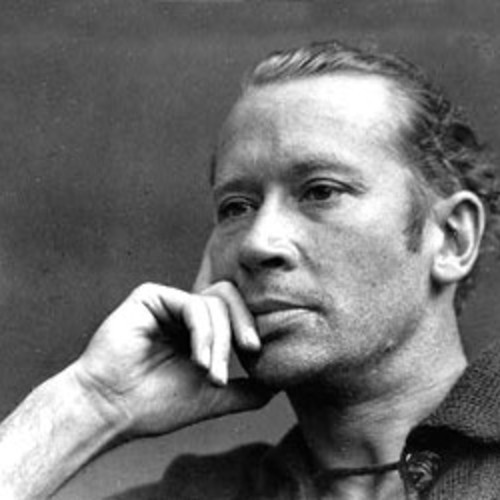
love is a place
& through this place of
love move
(with brightness of peace)
all places
yes is a world
& in this world of
yes live
(skilfully curled)
all worlds
“love is a place” by E.E. Cummings from Complete Poems 1904-1962, edited by George James Firmage. Copyright © 1935, 1963, 1991 by the Trustees for the E.E. Cummings Trust. Copyright © 1978 by George James Firmage. Reprinted with the permission of Liveright Publishing Corporation. (poetrysociety.com)
Picasso on art and truth

Bio: Maimonides
From Wikipedia, the free encyclopedia
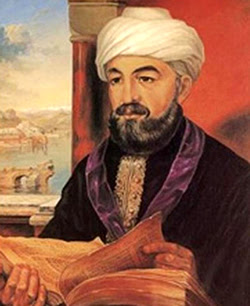
| Maimonides Moses ben Maimon | |
|---|---|
| Speculative 18th-century depiction of Maimonides | |
| Born | 30 March[1] or 6 April[2] 1135 Possibly born 28 March or 4 April[3] 1138 Córdoba, Almoravid Empire (present-day Spain) |
| Died | 12 December 1204 Fostat, Ayyubid Sultanate (present-day Egypt)[4] |
| Notable work | Mishneh Torah The Guide for the Perplexed |
| Spouse(s) | (1) daughter of Nathaniel Baruch (2) daughter of Mishael Halevi |
| Era | Medieval philosophy |
| Region | Egypt |
| School | Aristotelianism |
| Main interests | Religious law, Halakha |
| Notable ideas | Oath of Maimonides, Maimonides’ rule, Golden mean, 13 principles of faith |
| showInfluences | |
| showInfluenced | |
| Signature | |


| Part of a series on the |
| Philosophy of religion |
|---|
| showReligious concepts |
| showChallenges |
| showGod |
| showTheories of religion |
| showPhilosophers of religion |
| showRelated topics |
| Philosophy of religion article index |
| vte |
Moses ben Maimon[note 1] (1138–1204), commonly known as Maimonides (/maɪˈmɒnɪdiːz/ my-MON-i-deez)[note 2] and also referred to by the acronym Rambam (Hebrew: רמב״ם),[note 3] was a medieval Sephardic Jewish philosopher who became one of the most prolific and influential Torah scholars of the Middle Ages. In his time, he was also a preeminent astronomer and physician, serving as the personal physician of Saladin.[8][9][10][11][12] Born in Córdoba, Almoravid Empire (present-day Spain) on Passover eve, 1138 (or 1135),[13][14][15][16][17] he worked as a rabbi, physician and philosopher in Morocco and Egypt. He died in Egypt on 12 December 1204, whence his body was taken to the lower Galilee and buried in Tiberias.[18][19]
During his lifetime, most Jews greeted Maimonides’ writings on Jewish law and ethics with acclaim and gratitude, even as far away as Iraq and Yemen. Yet, while Maimonides rose to become the revered head of the Jewish community in Egypt, his writings also had vociferous critics, particularly in Spain. Nonetheless, he was posthumously acknowledged as among the foremost rabbinical decisors and philosophers in Jewish history, and his copious work comprises a cornerstone of Jewish scholarship. His fourteen-volume Mishneh Torah still carries significant canonical authority as a codification of Talmudic law. He is sometimes known as “ha’Nesher ha’Gadol” (the great eagle)[20] in recognition of his outstanding status as a bona fide exponent of the Oral Torah.
Aside from being revered by Jewish historians, Maimonides also figures very prominently in the history of Islamic and Arab sciences and is mentioned extensively in studies. Influenced by Al-Farabi, Ibn Sina, and his contemporary Ibn Rushd, he became a prominent philosopher and polymath in both the Jewish and Islamic worlds.
Name
His full Hebrew name is Rabbi Moshe ben Maimon (רבי משה בן מימון), whose acronym forms “Rambam” (רמב״ם). His full Arabic name is Abū ʿImrān Mūsā bin Maimūn bin ʿUbaidallāh al-Qurtabī (ابو عمران موسى بن ميمون بن عبيد الله القرطبي), or Mūsā bin Maymūn (موسى بن ميمون) for short. The portion bin ʿUbaidallāh should not imply that Maimon’s father was named Obadiah, instead bin ʿUbaidallāh is treated as Maimonides’ surname, as Obadiah was the name of his earliest direct ancestor. In Latin, the Hebrew ben (son of) becomes the Greek-style patronymic suffix -ides, forming “Moses Maimonides”.
Biography
The dominion of the Almohad Caliphate at its greatest extent, c. 1200 CEFurther information: History of the Jews in Egypt § Arab rule (641 to 1250)

Early years
Maimonides was born 1138 in Córdoba, Andalusia in the Muslim-ruled Almoravid Empire during what some scholars consider to be the end of the golden age of Jewish culture in the Iberian Peninsula, after the first centuries of the Moorish rule. His father Maimon ben Joseph, was a Spanish dayyan (Jewish judge), whose family claimed direct paternal descent from Simeon ben Judah ha-Nasi, and thus from the Davidic line. Maimonides later stated that there are 38 generations between him and Judah ha-Nasi.[21][22] His ancestry, going back four generations, is given in his Iggeret Teiman (Epistle to Yemen), as Moses son of Maimon the Judge (hadayan), son of Joseph the Wise (hachakham), son of Isaac the Rabbi (harav), son of Obadiah the Judge.[23] At an early age, Maimonides developed an interest in sciences and philosophy. He read those Greek philosophers accessible in Arabic translations, and was deeply immersed in the sciences and learning of Islamic culture.[24]
Maimonides was not known as a supporter of Kabbalah, although a strong intellectual type of mysticism has been discerned in his philosophy.[25] He expressed disapproval of poetry, the best of which he declared to be false, since it was founded on pure invention. This sage, who was revered for his personality as well as for his writings, led a busy life, and wrote many of his works while travelling or in temporary accommodation.[26] Maimonides studied Torah under his father, who had in turn studied under Rabbi Joseph ibn Migash, a student of Isaac Alfasi.Maimonides’ house in Fez, Morocco

Exile
Another Berber dynasty, the Almohads, conquered Córdoba in 1148 and abolished dhimmi status (i.e., state protection of non-Muslims ensured through payment of a tax, the jizya) in some[which?] of their territories. The loss of this status left the Jewish and Christian communities with conversion to Islam, death, or exile.[26] Many Jews were forced to convert, but due to suspicion by the authorities of fake conversions, the new converts had to wear identifying clothing that set them apart and made them subject to public scrutiny.[27][28]
Maimonides’s family, along with most other Jews,[dubious – discuss] chose exile. Some say, though, that it is likely that Maimonides feigned a conversion to Islam before escaping.[29] This forced conversion was ruled legally invalid under Islamic law when brought up by a rival in Egypt.[30] For the next ten years, Maimonides moved about in southern Spain, eventually settling in Fez in Morocco. During this time, he composed his acclaimed commentary on the Mishnah, during the years 1166–1168.[31] Some say that his teacher in Fez was Rabbi Yehuda Ha-Cohen Ibn Susan, until he was killed in 1165.[32]
Following this sojourn in Morocco, together with two sons,[33] he sojourned in the Land of Israel before settling in Fustat in Fatimid Caliphate-controlled Egypt around 1168. While in Cairo, he studied in a yeshiva attached to a small synagogue, which now bears his name.[34] In the Land of Israel, he prayed at the Temple Mount. He wrote that this day of visiting the Temple Mount was a day of holiness for him and his descendants.[35]
Maimonides shortly thereafter was instrumental in helping rescue Jews taken captive during the Christian Amalric of Jerusalem‘s siege of the southeastern Nile Delta town of Bilbeis. He sent five letters to the Jewish communities of Lower Egypt asking them to pool money together to pay the ransom. The money was collected and then given to two judges sent to Palestine to negotiate with the Crusaders. The captives were eventually released.[36]
I was abused. Each day is a struggle not to become my abusers
Juan Michael Porter II July 5, 2021 (SFChronicle.com)
Every Sunday after church, my father and I had a date. Invariably, my behavior would lead him to beat me once we returned home. It’s perverse to say, but at a certain point the pain transformed into something I looked forward to.
We took drives to purchase fruit yogurt to reward me for having endured the beating. I have always hated fruit yogurt, but I look back on those rides as the sole moments of calm that we ever shared.
It wasn’t until years later that I discovered how uncommon it was to run out of the house screaming to escape a post-bath belt-whipping. Or, after I was hunted down, to be laughed at as my oozing welts stuck to my pajamas.
I was 9 years old when I gave up on winning my parents’ love.
Because I was an outspoken brat who never skipped an opportunity to talk back, I was told that I wanted and deserved the treatment I received. The horror is that I accepted this rationale. It imbued me with an “I’m screwed no matter what I do, so I might as well screw up big” world view — one that I’m still struggling to unpack.
Whenever the possibility of an argument materialized, I ignited it. If I’d bitten my tongue, I might have escaped. But I couldn’t; my parents’ slaps were the only love language that I was offered. It was also the sole form of control that I had over my life. I could not make my parents smile, but I could trigger their hate effortlessly at the drop of a dime — and though it left me scarred, at least their rage was a sign that I mattered.
But I eventually grew tired of dealing with my bruised skin and emotions. So I put away childish things, targeted other grown-ups, and pumped them full of the feelings I didn’t dare show at home.
I groomed older men and women at the church where I served as an altar boy and blackmailed adults who showed me untoward attention into having sex. I made clear that refusing me would result in the accusation of raping an innocent boy with highly litigious parents.
My first time was with a 25-year-old congregant. I was a 10-year-old boy who had sexual desire but no business sleeping with an adult. Besides confusion, what stays with me is the memory of relief that someone was finally touching me because they wanted to use me for pleasure and not because they wanted to hurt me.
At the time, I felt proud of my accomplishments; I was finally worthy of painless attention. It doesn’t feel so great now to realize that my “partners” were pedophiles or that I was a predator.
I separated from my parents at 16 and appointed my best friend’s mother as my guardian. I became the son she never had, the overachieving brother my new sister never wanted, and celebrated my triumph by pretending that everything was fine, while pushing away the friends who cared about me.
I told my adopted mother that I didn’t want to be like my father. She kindly informed me that I would be unless I figured out how to undo the damage that had been done to me.
I am still learning.
Some people say that if you spare the rod, you’ll spoil the child. Corporal punishment teaches values. All it taught me was that violence was the answer — though I substituted psychological warfare for brute force.
My list of misdeeds is long.
After a bad breakup in 2003, I demanded that my ex-girlfriend, who was a professional photographer, delete every digital picture she had taken during our yearlong relationship. If she refused, I told her that I would expose her illegal sublet to the management of her Section 8 housing, which would have resulted in an immediate eviction.
She deleted the photos.
There are other stories. Many far worse.
When I moved to New York City in 2000, I spent my first two years celibate because I didn’t trust myself.
I still don’t.
I admit that I’d rather inflict harm than feel like a victim. This legacy haunts every survivor of sexual abuse, because hurting people is what we have been taught to do.
We can spot each other from 15 miles away. We twist our heads in a peculiar fashion while sizing people up. We tilt our pelvises while laughing as if to invite someone, anyone, to spend the afternoon exploring what it means to finally be in love. What I recognize in my fellow survivors is the desire for something that we lost a long time ago and possibly never had.
What keeps me going is the knowledge that I don’t have to behave monstrously.
Whenever I feel doubtful about this, I remember that there is life after abuse. I remember that it is possible to grow beyond victimhood without transforming into the people who hurt you.
Confronting your trauma can be excruciating, but it also allows you to heal. And we all deserve to live unencumbered by someone else’s decision to abuse us.
Juan Michael Porter II is the staff writer for TheBody and TheBodyPro, as well as a contributor to the Christian Science Monitor. His writing has appeared in the New York Observer, Time Out NY, Anti-Racism Daily, American Theatre, Dance Magazine and Xtra.
Written ByJuan Michael Porter II
 ©2021 Hearst
Carl Jung Triggers Patient’s Shadow…
Core Integrity A wonderful clip featuring Mary Bancroft from the documentary on C.G. Jung “Matter of The Heart.” When Jung poked Mary with a very simple question, she was shown a reflection that she wasn’t quite ready to honesty acknowledge… Her response is a quintessential example of “projection”. Jung’s connection to the unconscious meant that he could peer into the depths, and bring it right back out to meet you. This intuitive sensitivity meant that Jung could “know” the (supposedly) unknowable. Watch documentary here: https://youtu.be/Ed3vPb9bmcw
How Memory Makes Us and Breaks Truth: The Rashomon Effect and the Science of How Memories Form and Falter in the Brain
By Maria Popova (brainpickings.org)
It is already disorienting enough to accept that our attention only absorbs a fraction of the events and phenomena unfolding within and around us at any given moment. Now consider that our memory only retains a fraction of what we have attended to in moments past. In the act of recollection, we take these fragments of fragments and try to reconstruct from them a totality of a remembered reality, playing out in the theater of the mind — a stage on which, as neuroscientist Antonio Damasio has observed in his landmark work on consciousness, we often “use our minds not to discover facts, but to hide them.”
We do this on the personal level — out of such selective memory and by such exquisite exclusion, we compose the narrative that is the psychological pillar of our identity. We do it on the cultural level — what we call history is a collective selective memory that excludes far more of the past’s realities than it includes. Borges captured this with his characteristic poetic-philosophical precision when he observed that “we are our memory… that chimerical museum of shifting shapes, that pile of broken mirrors.” To be aware of memory’s chimera is to recognize the slippery, shape-shifting nature of even those truths we think we are grasping most firmly.
Art by Cecilia Ruiz from The Book of Memory Gaps, inspired by Borges
Nearly a century after Nietzsche admonished that what we call truth is “a movable host of metaphors, metonymies, and anthropomorphisms… a sum of human relations which have been poetically and rhetorically intensified, transferred, and embellished,” the great Japanese filmmaker Akira Kurosawa (March 23, 1910–September 6, 1998) created an exquisite cinematic metaphor for the slippery memory-mediated nature of truth in his 1950 film Rashomon, based on Ryunosuke Akutagawa’s short story “In a Grove” — a psychological-philosophical thriller about the murder of a samurai and its four witnesses, who each recount a radically different reality, each equally believable, thus undermining our most elemental trust in truth.
As researchers in the second half of the twentieth century came to shed light on the foibles of memory, Kurosawa’s masterpiece lent its name to the amply documented unreliability of eyewitness accounts. The Rashomon effect, detailed in this wonderful animated primer from TED-Ed, casts a haunting broader nimbus of doubt over our basic grasp of reality — we only exist, after all, as eyewitnesses of our own lives.

All of these psychological perplexities arise from the basic neurophysiological infrastructure of how memories form and falter in the brain — something the great neurologist Oliver Sacks explored in his classic medical poetics of memory disorders, and something South African biomedical scientist Catharine Young explores in another TED-Ed episode, animated by the prolific Patrick Smith:

Complement with Neurocomic — a graphic novel about how the mind works — and the animated science of how playing music benefits your brain more than any other activity, then revisit Virginia Woolf on how memory seams our lives, Sally Mann on how photographs can unseam memory, and neuroscientist Suzanne Corkin on how medicine’s most famous amnesiac illuminates the wonders of consciousness.