
Complled by Mike Zonta, H.W., M., BB editor
“Samuel Coleridge once lamented that many people contemplate ‘nothing but parts’–the universe for them amounts to nothing but a ‘mass of little things,’ whereas Coleridge himself ‘ached to behold and know something great–something one and indivisible … something Great and Whole.’”
“Jung says that the instinct for wholeness and unity is ‘the most important of the fundamental instincts.’ Nonetheless, it plays the least conspicuous part in contemporary consciousness because it is contaminated by two much more obvious instincts: sexuality and power. Therefore the instinct for wholeness ‘requires for its evidence a more highly differentiated consciousness, thoughtfulness, reflection, responsibility, and sundry other virtues.’ Otherwise, the instinct for wholeness will remain hidden in our secular, materialistic world.”
“Fairbairn’s idea that traumatic relationships in the child’s life are recreated within picks up Ferenczi’s and Anna Freud’s early emphasis upon the child’s ‘identification with the aggressor.’ Aggression that rightfully belonged ‘in the world’ as a healthy impulse toward an outer abuser, was inverted back into the psyche, attacking the child inside … and leading to the psychic equivalent of autoimmune disease.”
“As William James made clear many years ago, people who are ‘broken’ by trauma are also broken open to another dimension of reality. And sometimes their experiences in this dimension can have life-saving significance….”
“Self-actualizing people are, without one single exception, involved in a cause outside their own skin, in something outside of themselves. They are devoted, working at something, something which is very precious to them–some calling or vocation in the old sense, the priestly sense. They are working at something which fate has called to them somehow and which they work at and which they love.” (quoting Abraham Maslow, 1972)
“‘The true god is reached through a deep and sustained reflection on the nature of reality.” [e.g., Translation]
“the ‘dead child” is universally ensconced in abused and traumatized patients and is transformed into the “undead child,” the one who relentlessly haunts them for their having made a Faustian bargain with an internal dark force in order to survive. They have ‘died a little’ in order to be safe.”
“Thus human innocence is an imprisoned hostage within … the devil himself. The devil paradoxically symbolized [holds] the most holy aspect of ourselves, the innocent self that we sold into bondage and left to the embrace of the dark demon. (Grostein, 2000)
The bud
stands for all things,
even for those things that don’t flower,
for everything flowers, from within, of self-blessing;
though sometimes it is necessary
to reteach a thing its loveliness,
to put a hand on its brow
of the flower
and retell it in words and in touch
it is lovely
until it flowers again from within, of self-blessing;
–Galway Kinnell, St. Francis and the Sow (1993)
“At some time before the ego is formed, the infant psyche encounters the daimonic aspect of the sacred, the dark side of the numen; this encounter imprints the infant’s archaic psyche with a sense not of ‘shame’ but of its own defilement and consequent feeling of dread which, unless mitigated by a holding environment created by an empathetic mother, becomes pervasive and chronic. … because the trauma is caused by the parent-qua-god, the unspoken message is that the child is inherently unworthy before god or she [sic] would not be subjected to (chosen for) this experience.” (Edelman, 1998)
“St. Augustine is reported to have said (Romanyshyn, 2002) that to be an orphan is to be related to God. Or to put in psychological language, when an essential God-given core of the self is split-off (orphaned) and banished to the unconscious as happens in trauma, it is ‘care-taken’ there by archetypal powers (angels and demons) that feed it on the ‘ambrosia’ of the Gods (necessary illusion) until such time as it can come back into the world and start to eat real food.”
“A traumatic complex brings about dissociation of the psyche. The complex is not under the control of the will … it forces itself tyrannically upon the conscious mind. The explosion of affect is a complete invasion of the individual, it pounces upon him like an enemy or a wild animal.” (Jung, 1928)
By enspiriting the body, the Spirit turns the body into a living body–an ensouled body. At the same time, by embodying the Spirit the body helps ground the spirit in time and space, making it real. Spirit and matter appear to seek each other through the psyche, and the place where they meet is the human soul.
As the Surrealist poet Paul Eluard is reported to have said, “Il y a un autre monde mais il est dans celui-ci” which translates as “There’s another world, but it’s in this one.”
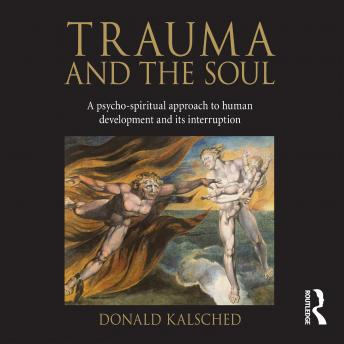
(Photo from Goodreads.com)