Yesterday, upon the stair, I met a man who wasn’t there He wasn’t there again today I wish, I wish he’d go away…
When I came home last night at three The man was waiting there for me But when I looked around the hall I couldn’t see him there at all! Go away, go away, don’t you come back any more! Go away, go away, and please don’t slam the door… (slam!)
Last night I saw upon the stair A little man who wasn’t there He wasn’t there again today Oh, how I wish he’d go away…
This poem is in the public domain.
William Hughes Mearns, better known as Hughes Mearns, was an American educator and poet. A graduate of Harvard University and the University of Pennsylvania, Mearns is remembered as the author of the poem “Antigonish”. Wikipedia
Yes, there is a direct etymological connection between sanity and health. Both words stem from roots implying wholeness and soundness: “sanity” comes from the Latin sanus (healthy, sane) and sanitas (health), while “health” originates from Old English and Germanic roots for “wholeness”. Cosmos and History +2
Key Etymological Connections:
Sanity (Latin roots): Derived from sānus (healthy, sane) and sanitātem (health, soundness of body). Early 15th-century usage meant “healthy condition” before evolving to mean soundness of mind by c. 1600.
Health (Germanic roots): Derived from Old English hælþ (wholeness, soundness), which is tied to being “whole” or “uninjured”.
Insanity connection: Insanity shares this root, originating from insanitatem, meaning “unhealthfulness” or “unsoundness”. Cosmos and History +5
Ultimately, both concepts describe a state of being “whole” or “sound,” with sanity specifically applied to the mind, while health traditionally applies to the body.
New Thinking Allowed with Jeffrey Mishlove Mar 13, 2026 This video is a special release from the original Thinking Allowed series that ran on public television from 1986 until 2002. It was recorded in about 1993. It will remain public for only one week. Stephan A. Schwartz is author of The Secret Vaults of Time and The Alexandria Project. He is a founder and was the first president of the Society for the Anthropology of Consciousness. He is also a founder of the International Remote Viewing Association. Additionally, he has been a foremost practitioner of applied remote viewing in the fields of archeology, criminology, and related disciplines. Stephan explores how ancient cultures and indigenous peoples understood consciousness, interconnectedness, and human potential beyond the purely material. He highlights empirical wisdom from ethnohistoric traditions, showing how pre-industrial societies observed and influenced health, community, and social cohesion. Schwartz reveals that modern science is increasingly confirming these ancient insights, suggesting new ways to approach social and cultural challenges today. 00:00:00 Introduction: Society and consciousness 00:02:07 Interconnectivity: Human and cultural networks 00:03:38 Ancient wisdom: Lessons from ethnohistoric traditions 00:05:00 Ancient medicine: Egypt, Tibet, China, India, & Mesoamerica 00:07:20 Empirical insights: Observations validated by science 00:10:04 Living network: Humans and nature interconnected 00:11:28 Beyond the senses: Remote viewing and ESP 00:14:42 Cultural perspectives: Bushmen and Amish examples 00:19:07 Societal implications: Disconnection, and consequences 00:28:32 Conclusion: Lost interconnectedness Now you can watch all of the programs from the original Thinking Allowed Video Collection, hosted by Jeffrey Mishlove. Subscribe to the new Streaming Channel (https://thinkingallowed.vhx.tv/) and watch more than 350 programs now, with more, previously unreleased titles added weekly. Free month of the classic Thinking Allowed streaming channel for New Thinking Allowed subscribers only. Use code THINKFREELY.
New Thinking Allowed with Jeffrey Mishlove Mar 14, 2026 Psychology and Psychotherapy August Goforth, a licensed psychotherapist in private practice in New York City, is also an intuitive-mental and psychophysical spirit medium. He was given this name as a child by guides, and uses it here for the sake of his personal privacy and that of his therapy patients. With coauthorship from the realm of spirit, he has written The Risen: Dialogues of Love, Grief & Survival; The Risen: A Companion to Grief; Tangible Dreaming; and Grief: Ponderings From The Afterlife. He describes his childhood experiences growing up in a family of mediums. He shares the circumstances of his relationship with Timothy Gray, Tim’s death, and their eventual communication link. He explains many subtleties of mediumistic communication and the role that is played by the emotions of grief and love. New Thinking Allowed host, Jeffrey Mishlove, PhD, is author of The Roots of Consciousness, Psi Development Systems, and The PK Man. Between 1986 and 2002 he hosted and co-produced the original Thinking Allowed public television series. He is the recipient of the only doctoral diploma in “parapsychology” ever awarded by an accredited university (University of California, Berkeley, 1980). He is also the Grand Prize winner of the 2021 Bigelow Institute essay competition regarding the best evidence for survival of human consciousness after permanent bodily death. He is Co-Director of Parapsychology Education at the California Institute for Human Science. (Recorded on October 29, 2020)
Amrit Sandhu ???????? Sep 17, 2025 Inspired Evolution Podcast ????????Lynne McTaggart’s groundbreaking research proves we’re not meant to navigate transformation alone – her Power of 8 experiments show intention amplifies exponentially in groups. That’s exactly what we’ve created in the Inspired Evolution Circle – a conscious community where members support each other’s growth and manifestation work. Join our intimate community of evolved souls practicing the principles you just heard about – intention work, collective healing, and conscious creation together. ???? THE INSPIRED EVOLUTION COMMUNITY CIRCLE Join our intimate community of inspired, evolved and evolving souls navigating these times together — all for just $22/month (less than Netflix). ???? JOIN US: https://inspiredevolution.com/circle
Through his profound storytelling, Kritkausky shows how ancestral connections and intimate communications with Nature are not unique or restricted to those with indigenous cultural roots. Offering a bridge between cultures, a path that can be followed by Native and non-Native alike, the author shows that spiritual awakening can happen anywhere, for anyone, and can open the gateway to deeper understanding.
A presentation of a century of research using remote viewing in archaeology. It demonstrates that systematic psychic research can produce meaningful, evidence-based insights. The work explores how remote viewing has contributed to understanding human history.
This book approaches grief through an integrative lens that draws on psychology, philosophy, science, and the healing arts, emphasizing reflective inquiry over prescriptive conclusions. It invites readers to observe their own emotional processes with curiosity and rigor, encouraging personal meaning making rather than definitive answers. The work is intended to support adaptive understanding of loss by offering a flexible conceptual framework that evolves with each reader’s experience.
American Psychic presents a first-person case narrative of anomalous perception explored across clinical, investigative, and experimental contexts, including collaboration with law enforcement and U.S. military research programs. It traces the psychological and developmental impact of sustained intuitive experiences alongside trauma, career transition, and meaning-making. The account situates personal testimony within ongoing questions about consciousness, nonlocal information, and the limits of conventional explanatory models, as described by Marla Frees.
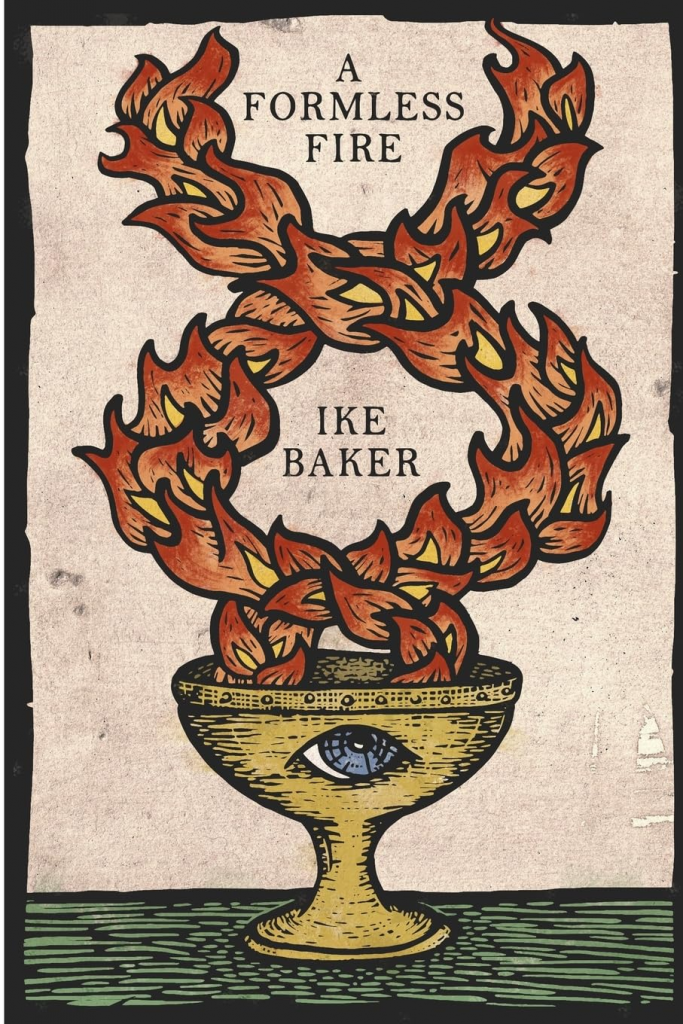
Drawing on decades of study and personal experience, Formless Fire explores the history and living practice of Western esoteric traditions. It examines fields such as ceremonial magic, astrology, tarot, geomancy, and alchemy while tracing their development from the ancient world to the present. The work also looks closely at influential spiritual societies and movements, offering historical insight together with practical reflections for modern readers.
“G-d’s only desire is to reveal unity through diversity. That is, to reveal that all reality is unique in all its levels and in all its details, and nevertheless united in a fundamental oneness.”
“Blame Keeps the sad game going. It keeps stealing all your wealth— Giving it to an imbecile with No financial skills. Dear one, Wise Up.”
~ Hafiz
Khājeh Shams-od-Dīn Moḥammad Ḥāfeẓ-e Shīrāzī (Persian: خواجه شمسالدین محمد حافظ شیرازی), known by his pen name Hafez (حافظ Ḥāfeẓ lit. ’the memorizer’ or ‘the keeper’; 1325–1390) or Hafiz,[1] also known by his nickname lesān-al-ḡayb (‘the tongue of the unseen’),[2] was a Persianlyric poet[3][4] whose collected works are regarded by many Iranians as one of the highest pinnacles of Persian literature. His works are often found in the homes of Persian speakers, who learn his poems by heart and use them as everyday proverbs and sayings. His life and poems have become the subjects of much analysis, commentary, and interpretation, influencing post-14th century Persian writing more than any other Persian author.[5][6] (Wikipedia.org)
“Your conflicts, all the difficult things, the problematic situations in your life are not chance or haphazard. They are actually yours. They are specifically yours, designed specifically for you by a part of you that loves you more than anything else. The part of you that loves you more than anything else has created roadblocks to lead you to yourself. You are not going in the right direction unless there is something pricking you in the side, telling you, “Look here! This way!” That part of you loves you so much that it doesn’t want you to lose the chance. It will go to extreme measures to wake you up, it will make you suffer greatly if you don’t listen. What else can it do? That is its purpose.”
–A.H. Almaas
A. H. Almaas is the pen name of A. Hameed Ali, an American writer and spiritual teacher who writes about and teaches an approach to spiritual development informed by modern psychology and therapy which he calls the Diamond Approach. “Almaas” is the Arabic word for “diamond”. Almaas is originally from Kuwait. Wikipedia
“My dear, is it true that your mind is something like a battering ram running all through the city, shouting so madly inside and out about the ten thousand things that do not matter?”
~ Hafiz
Khājeh Shams-od-Dīn Moḥammad Ḥāfeẓ-e Shīrāzī (Persian: خواجه شمسالدین محمد حافظ شیرازی), known by his pen name Hafez (حافظ Ḥāfeẓ lit. ’the memorizer’ or ‘the keeper’; 1325–1390) or Hafiz,[1] also known by his nickname lesān-al-ḡayb (‘the tongue of the unseen’),[2] was a Persianlyric poet[3][4] whose collected works are regarded by many Iranians as one of the highest pinnacles of Persian literature. His works are often found in the homes of Persian speakers, who learn his poems by heart and use them as everyday proverbs and sayings. His life and poems have become the subjects of much analysis, commentary, and interpretation, influencing post-14th century Persian writing more than any other Persian author.[5][6] (Wikipedia.org)
Consciousness, spirituality, biography, sexuality, androgyny, futurism, space, the arts, science, astrology, democracy, humor, books, movies and more