All posts by Mike Zonta

Venus Conjunct Chiron and Eris – The Bullied Kid at School

Slowly and almost undetected, Chiron and Eris have been moving toward a conjunction in Aries.

On March 26th, 2026, Venus joins in, forming a triple Venus–Chiron–Eris conjunction at 25° Aries.

This is a highly underrated astrological event between slow-moving bodies that explains A LOT of what’s going on right now.

Let’s unpack this:

In the past 7 years, Chiron in Aries has been stirring parts of ourselves that needed a voice – even when they were never allowed one.

Chiron In Aries – The Wound of “I am”

Through this – sometimes painful, sometimes relieving, always vulnerable – process, we’ve gained a little more self-understanding, and a little more courage to stand for who we are.

venus conjunct chiron conjunct eris in aries

Chiron points to the fundamental wound of existence – to that part of us that feels existentially unwelcome.

In Aries, this fundamental wound of existence becomes raw and direct: why am I here? 

The Chiron in Aries transit has been bringing to light the ways we’ve been acting as if our existence doesn’t really matter – and, in response, the ways we’ve worked to prove that it does.

In the past years, Chiron has been like the bullied kid at school who has quietly worked on what they were bullied for

  • “You’re stupid” has turned into persistent effort and education.
  • “You’re ugly” into care for the body – not necessarily for appearance, but for health and well-being.
  • “You’re poor” into the ability to build something with minimal resources, becoming efficient and productive in the process.

What about the uglier forms of bullying – like “I invite you to the birthday party, and when you come I slam the door and laugh because you’ll never be one of us”

… or “your mother is trash”, “your brother is a loser” – things the bullied kid has no control over, and that hurt the most?

For that type of bullying – the “just because we can” kind – we have Eris.

Unlike Chiron, whose wounds – however painful – can be worked with and gradually integrated, Eris speaks of systemic injustice. Of the kind of exclusion and constraint we cannot fix, negotiate, or grow out of.

In Greek mythology, Eris was the sister of Ares, the god of war. But unlike Ares, her weapons were not brute force.

Cast out from the company of the gods, Eris learned a different kind of strategy. Her weapons became her mindwords, and timing.

Eris In Aries – The Elephant In The Room

Uninvited from the wedding of Peleus and Thetis, Eris shows up anyway and throws the Golden Apple – the same apple the snake used to lure Eve, the same Apple that lures us into endless scrolling, and sucks our prime mental real estate – our attention – away from what matters. 

Eris’ Golden Apple is inscribed “to the fairest”.

That’s all it took. The 3 most powerful and vain goddesses wanted it, and what followed was a chain of events that led to the Trojan War​.

One way to look at Eris’s action is as vengeful – did she really have to provoke a war because she was not invited to the wedding? 

OR we can see it as what happens when a system reaches a point where it begins to collapse under its own outdated structure.

Was Eris vengeful – or did she simply expose the hypocrisy of a system that kept her out because she was uncomfortable – a system built to preserve its power, not to be challenged by what doesn’t fit?

Astrologically, Eris represents the big elephant in the room – that undeniable, structural truth that no one wants to see.

And the moment the elephant is acknowledged, the script flips. What was hidden can no longer be ignored – and the narrative inevitably follows suit.

Venus In Aries – When Choice Becomes Inevitable

What about Venus? 

When Venus meets Eris and Chiron, the wound and the injustice become charged with personal value, pointing to what we are no longer willing to betray in ourselves.

Once that threshold is crossed, choice becomes inevitable.

In the myth, of course, it was Aphrodite (Venus) who won Eris’ challenge – by promising Paris the most beautiful woman on Earth, Helen. It’s always Venus who decides what is worth choosing, isn’t it – and everything else follows from that.

The rest is history, the Trojan War begins, and the world will never be the same again. 

The key insight here is that Eris is not the cause of the conflict, as it might appear to be the case,

–>  but the necessary ‘last straw’ – the precise activation point that released the tension of a system that could no longer sustain its own contradictions.

With the fall of Troy, the system resets – and a new order begins.

Venus, Chiron, and Eris in Aries – The Bullied Kid at School

Coming back to our upcoming Chiron-Eris-Venus conjunction.

Venus’s approach accelerates what has already been building – bringing to the surface, in a more immediate and personal way, what has long outgrown its current form.

Together, Venus, Chiron, and Eris reveal what happens when the beaten horse is now a stallion. 

When the kid everyone laughed at is now the one no one can ignore. When that version of us that was pushed around now stands its ground.

What we are witnessing right now – in the world and in our own lives – is the reset of structures that have lost their authenticity and can no longer sustain themselves, not in the current form. 

And while the temptation is to focus on what’s happening outside, the real gift of this transit is the recognition of what in our own lives has reached its limit – and where something in us is ready to respond differently.

What in your life can no longer be sustained in its current form? Where have you been adapting, negotiating, or staying quiet – when something deeper is ready to be acknowledged?

Where has the bullied kid at school now outgrown their environment – and can no longer tolerate what is born from the wound

What needs to change, what script needs to be flipped, so we can restore what was never allowed to be?

The Chiron–Eris conjunction builds on another important aspect between 2 outer planets. 

At the same time the Chiron-Eris saga unfolds, we have a supportive Saturn-Pluto sextile which represents Stage II of this process. A dedicated report will follow in the next few days.

Subscribe To Future Updates

If you want to keep up with the future transits, make sure you subscribe to Astro Butterfly’s weekly newsletter

Join 49.000+ Astro Butterflies around the world!

Click here to subscribe
Every Sufi master is, in a sense, a Freudian psychotherapist

“Your remedy is within you,
But you do not sense it,
Your illness is from you,
But you do not perceive it.
You presume you are an insignificant entity,
But within you is enfolded
The entire universe.
Thus, you have no need to look beyond yourself
What you seek is within you,
If only you reflect!”

~ Sufi Teaching

Every Sufi master is, in a sense, a Freudian psychotherapist

Omnia El Shakry is professor of history at the University of California, Davis. Her latest book is The Arabic Freud: Psychoanalysis and Islam in Modern Egypt (2017).

Edited by Sam Haselby

17 April 2018 (aeon.co)

REPUBLISH FOR FREE

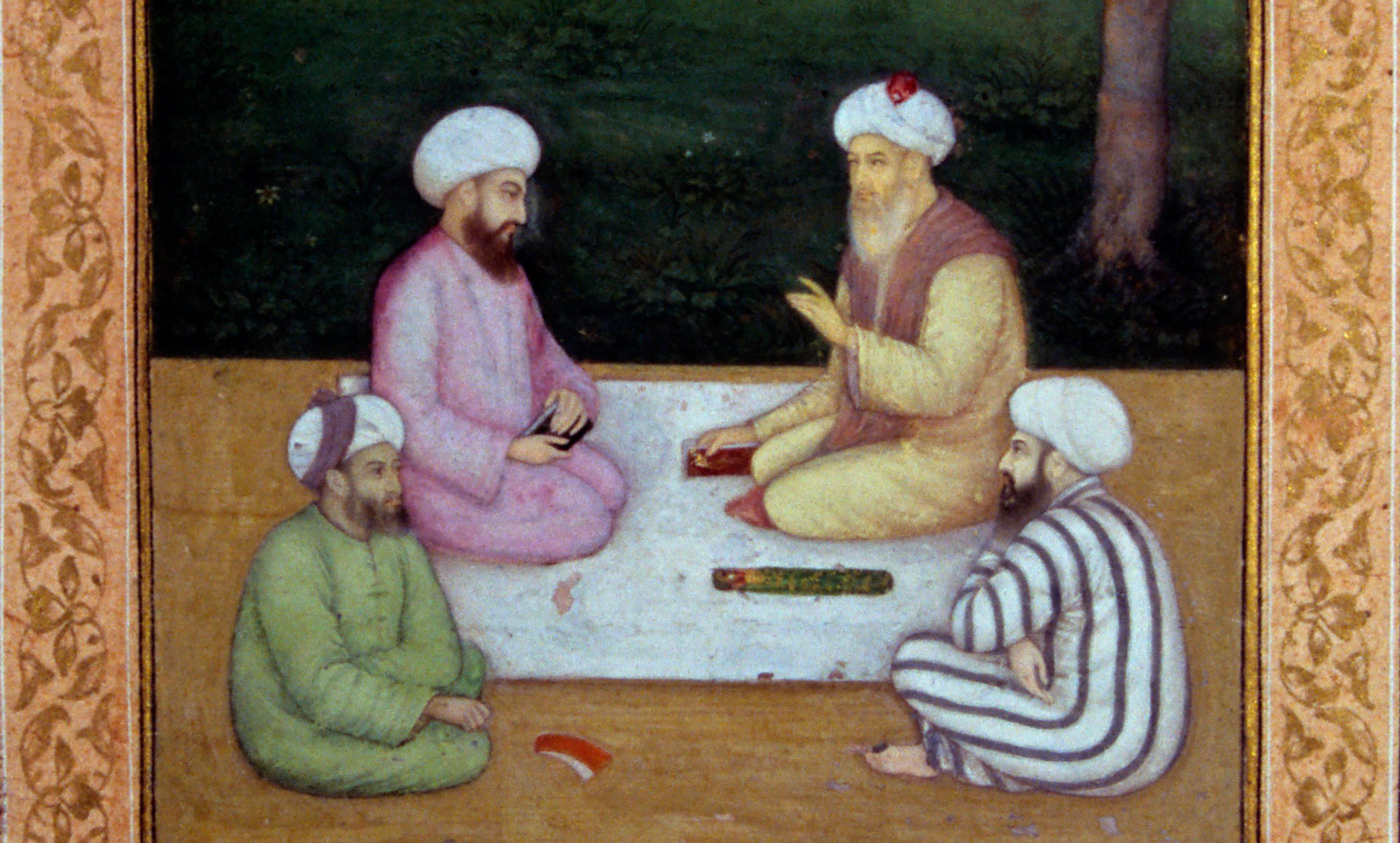
Painting of four bearded men in turbans sitting on the ground, conversing, surrounded by an ornate floral border.

Detail from a miniature painting of Sufis, 1750, National Museum, New Delhi, India. Photo by Getty

Even in the most revolutionary thinkers, you will find the uncannily familiar. Sigmund Freud was no exception. Arabs recognised in Freud’s body of thought ideas from classical Islamic thinkers. In the 1940s and ’50s, when intellectuals translated Freud’s work into Arabic, they reached out to Ibn Arabi, the great 12th-13th-century Sufi mystic philosopher. The Egyptian playwright and novelist Tawfiq al-Hakim dates the impulse to blend traditions as far back as Alexander’s conquest of Syria and the eventual translation of philosophical works from Greek to Syriac.

Under Roman rule, Egypt was a centre of learning and part of a shared classical intellectual world, which included Alexandria as much as it did Athens and Rome. Subsequently, Greek philosophy, and particularly the works of Plato and Aristotle, had been energetically translated into Arabic throughout the early Islamic period, contributing to the vitality of Hellenic philosophy. For al-Hakim, Greek ideas were poured into the mould of Islamic philosophy. This process was also evident in al-Hakim’s own work combining Greek tragedy and Islamic legends, in order to effect what he called an ‘intermarriage between two literatures and two mentalities’. It is not at all surprising, then, given this tendency to draw on shared traditions, that Arab intellectuals turned to a mystical Islamic vocabulary when translating Freud in the middle of the 20th century.

Beginning in 1945, Yusuf Murad, an academic psychologist and purveyor of the Freudian and psychoanalytic tradition, published a dictionary of terms that provided the Arabic equivalents to English, French and German terms in the fields of psychology and psychoanalysis. Freud’s concept of the ‘unconscious’ merited special attention. The Arabic term became Ibn Arabi’s redolent al-la-shuur, discussed in his classic, The Bezels of Wisdom. Ibn Arabi’s poetic and elliptical work had fascinated readers for centuries, just as it fascinated 20th-century Arab Freudians. In the Bezels, Ibn Arabi relates the parable of Abraham, whom God visits in a dream and tells to sacrifice his son. According to Ibn Arabi, sleep and dreams occur in the plane of the imagination (hadrat al-khayal) and must be subject to interpretation.

As Ibn Arabi relates, God said to Abraham: ‘You believed in a vision,’ which Ibn Arabi understands as Abraham’s quintessential error. Ibn Arabi thinks that Abraham errs in taking the dream literally when he should have interpreted it instead. Or as the French psychoanalyst Jean-Michel Hirt phrased it in 2009, the dilemma is ‘whether to believe or to interpret one’s dream’. It was precisely because he was unaware or unknowing (unconscious – la-yashuur) of what he saw (‘the true expression of his vision with God’) that Abraham became heedless, neglecting the necessity of interpretation, and instead taking the dream literally. Indeed, Ibn Arabi continues, the ‘Real is never unconscious of anything, while the servant is necessarily unconscious of such a thing in relation to some other.’ Later Arab interpreters of Freud drew upon this idea of an ‘unknowing’ as indicating the presence of an unconscious in man.

The parable of Abraham and his son provides rich material for a Freudian perspective. It deeply resonates with Freudian concepts and preoccupations, in addition to the idea of man’s unconscious. The parable illustrates the need for the interpretation of dreams, for example. The understanding of dreams in Arab and Muslim cultures are part of very old and rich traditions of oneiric interpretation. Dreams, like texts, had both manifest (zahir) and latent (batin) meanings. The latent meanings of dreams could be understood with the help of signs (ayat) and allusions (isharat). A classic example from the Quran is Joseph’s description to his father: ‘I saw [in a dream] 11 stars, as well as the sun and the moon: I saw them prostrate themselves before me.’ For Joseph, this dream can be interpreted symbolically with the stars representing his brothers, who do in fact later prostrate before him once he is in a position of authority in Egypt.

Ibn Arabi finds this interpretation sorely lacking and suggests, rather, that Joseph is unaware that he is in actuality still dreaming, even when he later sees his brothers in Egypt. Joseph believes his dream, and therefore the work of interpretation, to have ended. But as the Islamic studies scholar Henry Corbin has pointed out, Ibn Arabi proposes instead the prophetic tradition: ‘Humans are asleep; at their death they awaken.’ Earthly existence, Ibn Arabi states, is a ‘dream within a dream’. As the Japanese scholar Toshihiko Izutsu noted in Sufism and Taoism (1983), this reveals ‘the very starting-point of Ibn Arabi’s ontological thinking, namely, that so-called “reality” is but a dream … an unreality’. But this does not mean that it is a subjective fantasy, rather we can view it, Izutsu argues, as ‘an “objective” illusion’.

Join more than 270,000 newsletter subscribers

Our content is 100 per cent free and you can unsubscribe anytime.

Daily: A daily dose of Essays and Videos

Weekly: A week’s worth of big ideasSign upI’m already subscribed

Privacy Policy

This conception of reality as being at once an unreality, while at the same time not an illusion at all, brings to light another concept intimately connected to psychoanalysis, the concept of the Imaginary. The Imaginary is greatly elaborated in the later psychoanalytic tradition, most notably by Jacques Lacan – Lacan had read about Ibn Arabi by way of Corbin. As the religious studies scholar William Chittick elaborates, Ibn Arabi perceived the Imaginal world as an intermediate realm, a world in between the spiritual and the corporeal. As Lacan would later do, Ibn Arabi theorised the example of one’s own reflection in the mirror. Is my image in the mirror real or unreal? In one sense it is, and in another sense it is not. This clarifies the nature of the Imaginary as both existent and non-existent.

The affinities between mystical Islam and Freudian thought are clear, and deep. But did Islamic thinkers make these connections between psychoanalysis and Islam? They did, often pointing to the shared traditions of dream interpretation, as well as the shared technique of understanding texts and dreams through the relationship between the latent and manifest meaning of religious knowledge. Islamic thinkers also recognised the uncanny resemblance between the analyst-analysand and the shaykh (or spiritual master)-disciple relation in Sufism. The mid-20th-century Egyptian Abu al-Wafa al-Ghunaymi al-Taftazani, a shakyh of a Sufi order and later a professor of Islamic philosophy and Sufism at Cairo University, began writing about Sufism in the 1950s. He was widely read in Egypt and beyond, and he often compared Sufism and the psychoanalytic tradition.

In particular, al-Taftazani noted that both Sufism and psychoanalysis relied upon an introspective method; both engaged not with the manifest content of the psyche or soul (nafs), but with its latent content, a domain often marked by sexual desires. Most importantly, both exhibited a concern for the batin or the realm of hidden meaning, as well as for the inner reaches of the unconscious (al-la-shuur). The Sufi shaykh, much like the analyst, he observed, must ascertain unconscious thoughts and desires from his disciple, in order to facilitate a transformation of the self. Sufism and Freudianism were obviously closely related. Abd-al-Halim Mahmud, a scholar of Sufism who would eventually become Grand Imam of Al-Azhar, noted that ‘every Sufi master is a “psychotherapist”, so to speak’. The relationship between the Sufi shaykh and his disciple is, then, one of attunement with potential for psychotherapeutic transformation.

Sufi practitioners understood their struggle to be part of a larger battle between the noble and ignoble tendencies of man. Al-Taftazani emphasised that Sufis aimed to attain direct knowledge and love of God. They sought a mystical union with God, annihilating the ego-self, in which God remains as a sublime excess. It was not, al-Taftazani pointed out, a subjective and individual self-exploration; it was a union with the divine. Freud would likely have seen Sufism as ‘nothing but psychology projected into the external world’, but to al-Taftazani and others it was as an ethical path toward the divine.

Al-Taftazani’s engagement with the Freudian tradition is just one example from the mid-20th century Arab world of the exchange between psychoanalysis and Islam. It was a sympathetic and creative exchange, involving a mutual recognition, and built on genuinely shared and deep affinities between Freudianism and the Islamic mystical tradition.

Earth hit record heat levels in 2025 as UN says warming will last thousands of years

Environment

Earth’s heat-trapping levels hit a record in 2025, with impacts expected to persist for thousands of years, the United Nations warned on Monday. The World Meteorological Organisation said the 11 warmest years on record occurred between 2015 and 2025, underscoring global warming in its State of the Global Climate report.

Issued on: 23/03/2026 (France24.com)

By: FRANCE 24

Emperor penguins are seeing their habitat cut back by climate change with potentially deadly consequences
Emperor penguins are seeing their habitat cut back by climate change with potentially deadly consequences. © Richard Gill, AFP

The amount of heat trapped by the Earth reached record levels in 2025, with the consequences of such warming feared to last for thousands of years, the UN warned Monday.

The 11 hottest years ever recorded were all between 2015 and 2025, the United Nations’ WMO weather and climate agency confirmed in its flagship State of the Global Climate annual report.

Last year was the second or third hottest year on record, at about 1.43 Celsius above the 1850-1900 average, the World Meteorological Organisation said.

“The global climate is in a state of emergency. Planet Earth is being pushed beyond its limits. Every key climate indicator is flashing red,” said UN Secretary-General Antonio Guterres.

“Humanity has just endured the 11 hottest years on record. When history repeats itself 11 times, it is no longer a coincidence. It is a call to act.”

For the first time, the WMO climate report includes the planet’s energy imbalance: the rate at which energy enters and leaves the Earth system.

Read moreFlights, petrol cars and cruise ships: Amsterdam bans fossil fuel ads

Under a stable climate, incoming energy from the Sun is about the same as the amount of outgoing energy, the Geneva-based agency said.

However the increase in concentrations of heat-trapping greenhouse gases – carbon dioxide, methane and nitrous oxide – “to their highest level in at least 800,000 years” has “upset this equilibrium”, the WMO said.

“The Earth’s energy imbalance has increased since its observational record began in 1960, particularly in the past 20 years. It reached a new high in 2025.”

Ocean heat record

WMO chief Celeste Saulo said scientific advances had improved understanding of the energy imbalance and its implications for the climate.

“Human activities are increasingly disrupting the natural equilibrium and we will live with these consequences for hundreds and thousands of years,” she said.

More than 91 percent of the excess heat is stored in the ocean.

“Ocean heat content reached a new record high in 2025 and its rate of warming more than doubled from 1960-2005 to 2005-2025,” the WMO said.

Read moreThe race for Paris: Why France’s capital has likely gone green for good

Ocean warming has far-reaching consequences, such as degradation of marine ecosystems, biodiversity loss and reduction of the ocean carbon sink, the agency said.

“It fuels tropical and subtropical storms and exacerbates ongoing sea-ice loss in the polar regions.”

The Antarctic and Greenland ice sheets have both lost considerable mass, and the annual average extent of Arctic sea ice in 2025 was the lowest or second-lowest ever recorded in the satellite era.

Last year, the global mean sea level was around 11 centimetres higher than when satellite altimetry records began in 1993. 

Ocean warming and sea level rise are projected to continue for centuries.

‘Dire picture’

WMO scientific officer John Kennedy said global weather is still under the influence of La Nina, a naturally occurring climate phenomenon that cools surface temperatures in the central and eastern equatorial Pacific Ocean. It brings changes in winds, pressure and rainfall patterns.

Conditions oscillate between La Nina and its warming opposite El Nino, with neutral conditions in between.

Read moreTrump revokes Obama-era climate finding on greenhouse gas risks

The warmest year on record, 2024, was around 1.55C above the 1850-1900 average, and started in a strong El Nino.

Forecasts indicate neutral conditions by the middle of 2026 with a possible El Nino developing before the end of the year, said Kennedy.

If so, “then we’re likely to see maybe elevated temperatures again in 2027”, he told a press conference.

The World Meteorological Organisation’s deputy chief, Ko Barrett, said the outlook was a “dire picture”.

She said the WMO provided the evidence it sees, hoping that the information “will encourage people to take action”.

But there was “no denying” that “these indicators are not moving in a direction that provides for a lot of hope”, she said.

With war gripping the Middle East and fuel prices soaring, Guterres said the world should heed the alarm call.

“In this age of war, climate stress is also exposing another truth: our addiction to fossil fuels is destabilising both the climate and global security,” he said.

“Today’s report should come with a warning label: climate chaos is accelerating and delay is deadly,” he said.

(FRANCE 24 with AFP)

“Orwell: 2+2=5”: Raoul Peck & Alex Gibney on New Documentary

Democracy Now! Oct 2, 2025 Support our work: https://democracynow.org/donate/sm-de… We speak with the acclaimed filmmakers Raoul Peck and Alex Gibney about their latest documentary, “Orwell: 2+2=5,” which explores the life and career of George Orwell and why his political writing remains relevant today. Democracy Now! is an independent global news hour that airs on over 1,500 TV and radio stations Monday through Friday. Watch our livestream at democracynow.org Mondays to Fridays 8-9 a.m. ET. Subscribe to our Daily Email Digest: https://democracynow.org/subscribe

Book: “Jesus: A New Vision”

Jesus: A New Vision

Whitley Strieber

Whitley Strieber is a literary legend, and A New Vision is the most provocative book of his career. It is intended for the spiritual but not religious who want to understand and use the teachings of Jesus in their lives. For the religious, it offers rich insight into the man and the teachings behind the doctrine.As the author of such influential books as Warday, Nature’s End, Communion and Superstorm, Mr. Strieber ranks among the cultural forces of our A New Vision is at once a magisterial work of scholarship and a completely new approach to the meaning and message of Jesus. It comes at a time when the western world is divided between a declining number of believers in Christian doctrine and an ever-increasing number of people who feel that Jesus was nothing more than a religious zealot who was executed for the crime of sedition. What if neither of these approaches is right? What if Jesus really did perform miracles, including the resurrection, but that this says not that he was a deity, but that he was exercising human powers which are buried within us all, and which we do not suspect are there?By exploring the life of Jesus and his teachings in an entirely new way, A New Vision sheds fresh light on the meaning and power of his parables, explores the mysteries of the gospels of Thomas and Mary with fresh insight, and explains why, as Strieber puts it, he “committed suicide by crucifixion.” It also addresses the questions that continue to surround the Shroud of Turin, exploring both the science that concluded that it was a medieval forgery and the more recent studies that have shown it to be something very different. It explores what happened after Jesus’s death that led to the ultra-violence that destroyed the entire polytheistic culture of the Roman Empire, and explains why this greatest of all human revolutions happened, relating it to the pandemics and uncontrollable migrations that resulted from a climate change event that began around 150 A.D. and led to extraordinary disruptions that the Romans, knowing nothing of solar variability, blamed on their gods. In its sweep and its drama, there has never been another book like A New Vision.”Whitley Strieber’s take on Jesus is thought-provoking and surprising. This is an important investigation, filled with new insights. Highly recommended.” Graham Hancock, author of Fingerprints of the Gods “Very wise, and satisfying for the contemporary mind.” Toby Johnson, author of Finding Your Own True What I Learned from Joseph Campbell

About the author

Whitley Strieber

American writer best known for his novels The Wolfen,The Hunger and Warday and for Communion, a non-fiction description of his experiences with apparent alien contact. He has recently made significant advances in understanding this phenomenon, and has published his new discoveries in Solving the Communion Enigma.

Strieber also co-authored The Coming Global Superstorm with Art Bell, which inspired the blockbuster film about sudden climate change, The Day After Tomorrow.

His book The Afterlife Revolution written with his deceased wife Anne, is a record of what is considered to be one of the most powerful instances of afterlife communication ever recorded.

(Goodreads.com)

Sexual fawning

  • Google AI Overview

Sexual fawning is a trauma survival mechanism where individuals appease, comply with, or please a person—particularly a sexual partner or abuser—to avoid conflict, danger, or further harm. As a form of the “fawn” response, it is a involuntary, autonomic reaction rooted in fear and the need for safety, often leading to self-abandonment, boundary violation, and profound feelings of shame or guilt. Facebook +4

Key Aspects of Sexual Fawning:

  • Not Consent: Fawning is a coping mechanism in response to fear, not a voluntary agreement or consent to sexual activity.
  • The “Appease” Reaction: Victims may act agreeable, compliant, or even flirtatious to manage a perpetrator’s behavior and reduce the threat, a tactic often seen in, but not limited to, situations involving intense power imbalances.
  • Relationship Patterns: While common in abuse, it can manifest in intimate, consensual relationships, where a person ignores their own desires, engages in unwanted sexual activity, or fakes pleasure to please their partner.
  • Trauma Adaptation: Often stemming from childhood, the body may treat being a “sexual object” as its only source of safety or power, leading to a tendency to prioritize another’s pleasure over one’s own. Holistic Life Navigation +7

Signs and Behaviors:

  • Feeling incapable of saying “no” to sexual advances due to fear or pressure.
  • “Shutting down” or freezing while going along with acts to get them over with.
  • Being hyper-attuned to a partner’s sexual needs while disassociating from one’s own body.
  • Faking orgasms or enjoyment to pacify a partner. Facebook +3

Survivors who experience this response may blame themselves, but it is crucial to recognize it as a involuntary, survival-based reaction to trauma. Therapy in a Nutshell +1

Dulce et Decorum Est

BY WILFRED OWEN

Bent double, like old beggars under sacks,

Knock-kneed, coughing like hags, we cursed through sludge,

Till on the haunting flares we turned our backs,

And towards our distant rest began to trudge.

Men marched asleep. Many had lost their boots,

But limped on, blood-shod. All went lame; all blind;

Drunk with fatigue; deaf even to the hoots

Of gas-shells dropping softly behind.

Gas! GAS! Quick, boys!—An ecstasy of fumbling

Fitting the clumsy helmets just in time,

But someone still was yelling out and stumbling

And flound’ring like a man in fire or lime.—

Dim through the misty panes and thick green light,

As under a green sea, I saw him drowning.

In all my dreams before my helpless sight,

He plunges at me, guttering, choking, drowning.

If in some smothering dreams, you too could pace

Behind the wagon that we flung him in,

And watch the white eyes writhing in his face,

His hanging face, like a devil’s sick of sin;

If you could hear, at every jolt, the blood

Come gargling from the froth-corrupted lungs,

Obscene as cancer, bitter as the cud

Of vile, incurable sores on innocent tongues,—

My friend, you would not tell with such high zest

To children ardent for some desperate glory,

The old Lie: Dulce et decorum est

Pro patria mori.

Notes:

Latin phrase is from the Roman poet Horace: “It is sweet and fitting to die for one’s country.”

Copyright Credit: Wilfred Owen, “Dulce et Decorum Est” from Poems, ed. Siegfried Sassoon. New York: The Viking Press, 1921. Public domain.

Source: Poems (Viking Press, 1921)

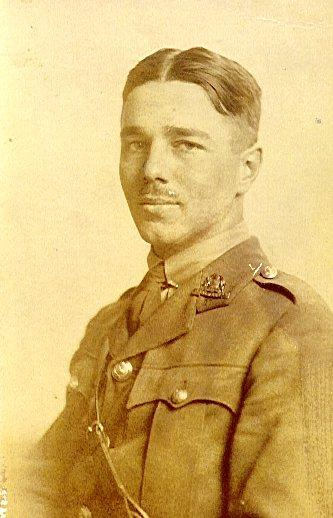
Wilfred Edward Salter Owen MC was an English poet and soldier. He was one of the leading poets of the First World War. Wikipedia

BornMarch 18, 1893, Oswestry, United Kingdom

DiedNovember 4, 1918 (age 25 years), Sambre-Oise Canal, France

Where Love Goes When It Goes

By Maria Popova (themarginalian.org)

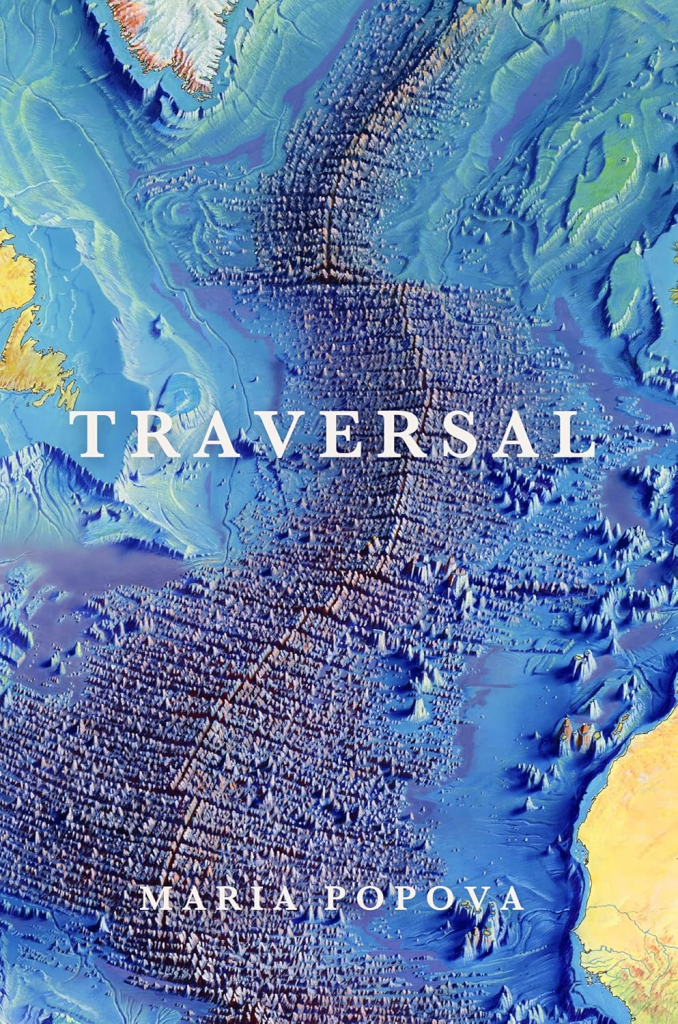
These passages appear on pages 126-127 of Traversal in the context of Mary Shelley’s life.

Where does love go when it goes?

It is a common question, contrived in its commonness yet savagely sincere, bellowing in the bosom of every brokenhearted lover, reverberating through the body of every civilization’s love songs and sonnets, radiating from cave drawings and dive bar graffiti. It is also a peculiar question, lexically and syntactically, for it presupposes two things about the life of the heart: a movement and a destination, as if love rose to its feet one day and headed for an elsewhere, left without a map, got lost, lost to seasons and cycles, lost like the mammoth and the human dorsal fin and the surnames of millennia of daughters. It feels like nothing less than a violation of the universe—how love alone can defy the first law of thermodynamics, how this most immense energy of being can simply dissipate into the oceanic austerity of time.

We build the sandcastles of our loves and fancy them fortresses of granite, then watch bewildered as the waves of our inconstancy lap them away, along with the footprints of the builder. Each love we love and unlove alters the way we walk through life, alters the trajectory of our traversal along the shoreline of the self. The only constant is that we go on walking, that we remain pilgrims of possibility. We would not walk if we had already arrived. We would not write if we had already arrived. Out of our incompleteness and our disorientation, out of our longing and our wanderlust, arises the motive force of every love and every revolution, of our science and our art, of our creation and our self-creation. Every creative act is an act of traversal.

Roots and the Meaning of Life

By Maria Popova (themarginalian.org)

They are so far out of sight for us, creatures of the upper world, that we don’t readily think of them. But as soon as we do, as soon as we plunge the mind into the cold dark humus to which the body will one day return, they become a spell against despair and a consecration of all that is alive.

Beneath our feet, roots spread fractal and pulmonary, veining the biosphere with the bloodstream of life. The word itself shares its root with “radical” and “race” in the Latin radix — the origin point from which all things centripetally grow.

Just as I was contemplating the logical language of roots — the exposed fragments of them across the trail like a message in Morse code, a poem in Braille, a code language of fractals and Fibonacci sequences and mathematics we are yet to discover — I came upon botanist and prairie ecologist John Weaver’s marvelously illustrated century-old book The Ecological Relations of Roots.

Schematic bisect showing the root stem relations of important prairie plants: hu, Heuchera glabella; a, Astragalus arrectus; s, Sidalcea oregana; h, Helianthella douglasii; ag, Agropirum spicatum. (Available as a print and a field notebook, benefitting The Nature Conservancy.)

In the first year of the First World War, Weaver set out to understand how life anchors itself to the substrate of living. He spent four years studying 1,150 individual root systems of about 140 different species of shrubs, grasses, and herbs across Nebraska, Washington, and Colorado’s Rocky Mountains.

Belonging to the last generation of scientists who were not yet schooled out of art and its power to magnify thought, he illustrated the book himself, drawing the root systems as he excavated them, always to exact measurements, and later retracing them in India ink.

Schematic bisect: h, Hieracium scouleri; k, Keleria cristata; b, Balsamorhiza sagittata; f, Festuca ovina ingrata; g, Geranium oviscosissimum; p, Poa sandbergit; ho, Hoorebekia racemosa; po, Potentilla blaschheana. (Available as a print and a field notebook, benefitting The Nature Conservancy.)

Schematic bisect: s, Sieversia ciliata; w, Wyethia amoplezicaulis; ll, Lupinus leucophyllus; lo, Lupinus ornatus; p, Poa sandbergii; e, Leptotenia multifida; a, Agropyrum spicatum. (Available as a print and a field notebook, benefitting The Nature Conservancy.)

Looking back on the discoveries, he observes:

The general characters of the root systems of a species are often as marked and distinctive as the above-ground vegetative characters. But the root systems of different species of the same genus, while often somewhat similar, may be of entirely different types.
It is not hard to see ourselves in them — how much of our essential character dwells beneath the surface of the self, how seemingly similar people may differ profoundly in their subterranean essence. It helps to remember that the visible self is fed by an invisible counterpart at least as intricate and extensive; that the two are so tightly stemmed together that we are always interacting with both the visible person and their invisible root system.

Root system relations. (Available as a print, benefitting The Nature Conservancy.)

As it happens, my friend Hannah Fries has just the right poem to reverence this existential dimension of roots and their relations, found in her altogether wonderful collection Little Terrarium (public library):

EPITHALAMION
by Hannah Fries

The elm weaves the field’s late light, this hill
hanging from the tree’s roots like the moon
from its shadow and the whole
world beneath suspended.

Roots knead the earth’s thick sorrow.
Still, leaves from this.
From this unshackling, birdsong.

I am a blade of corn where you kneel,
wind and quaking stalk.
The elm’s body a vase of poured sky.

The tree will die.
Someday, the tree will die.

For now, this axis —
what we choose to compass by.

Couple with Hannah’s poem “Let the Last Thing Be Song,” then revisit a kindred meditation on lichens and the meaning of life.

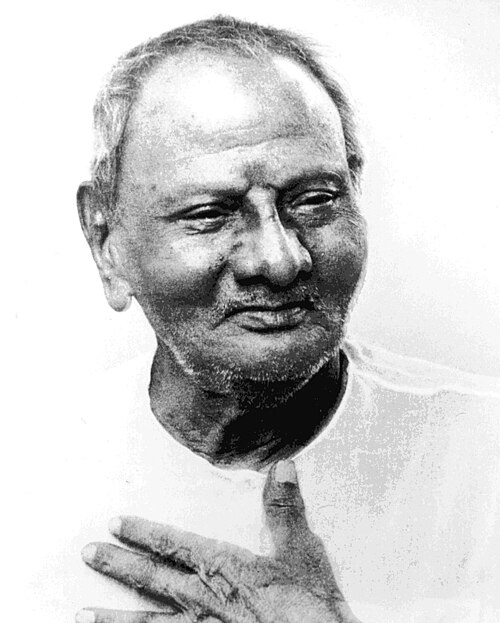
Nisargadatta on person

“There is no such thing as a person. There are only restrictions and limitations. The sum total of these defines the person. (…)
The person merely appears to be, like the space within the pot appears to have the shape and volume and smell of the pot.”

~ Nisargadatta

Nisargadatta Maharaj was an Indian guru of nondualism, belonging to the Inchagiri Sampradaya, a lineage of teachers from the Navnath Sampradaya. Wikipedia

Born April 17, 1897, Mumbai, India

Died September 8, 1981 (age 84 years), Mumbai, India