JERUSALEM—Historians confirmed Friday that a recent archaeological find in the Judean Hills is an authentic early Christian scroll, one that depicts the previously unknown miracle of Jesus Christ correctly guessing people’s weights just by looking at them. “The papyrus is remarkably well-preserved, with an unbroken Aramaic script that describes Christ strolling through Galilee with a serene smile, calling out, ‘Come forth, all ye people, but for a single coin of silver,’ before closing His eyes and naming a weight that was always accurate within a few shekels,” said biblical scholar Harris Solomon, noting that the scroll depicts a clay jar of small prizes kept beside Christ at all times to be handed out to anyone whose weight He guessed wrong, something that, according to the text, never occurred. “This scroll completely upends our traditional image of Jesus, as the text describes Him not in simple robes and a beard but in a pinstripe tunic with a waxed mustache. Yet Christ’s generosity is still evident, as one passage recounts Him performing His miracle for an emaciated leper free of charge. The verse reads, ‘And lo, He lifted His hand and spake: The leper’s weight is one talent, 19 minas, and 13 shekels. And they were sore amazed, for it was true unto the very last measure.’” The newly unearthed scroll also reveals that in quieter moments, Christ would cover Himself in silver dust and stand motionless on a box on the side of a busy Nazareth street, miraculously transforming Himself into a statue for hours on end.
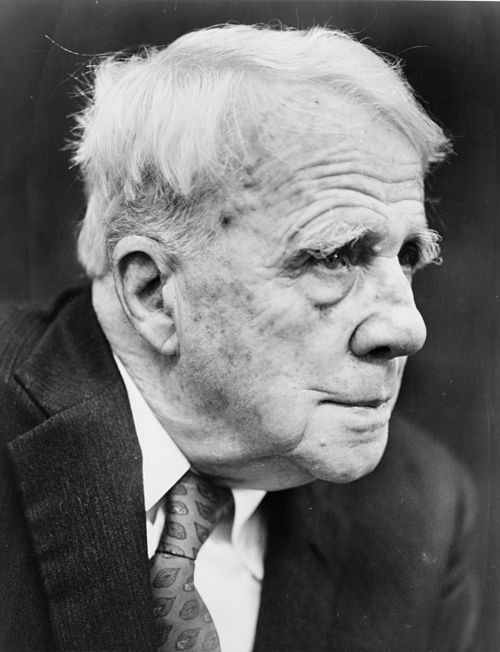
“Don’t ever take a fence down until you know why it was put up.”
~ Robert Frost
Robert Lee Frost was a widely read and celebrated American poet known for his realistic depictions of rural New England life in the early 20th century. His work often incorporated American slang and explored complex social and philosophical themes. Frost was awarded four Pulitzer Prizes for Poetry and is considered an icon of American literature. Born in San Francisco, Frost spent much of his life living and teaching in Vermont and Massachusetts. Wikipedia.org
Shakespeare, Tolstoy, Joyce, E.M. Forster and Ingmar Bergman all made the paranormal essential to their depiction of humanity. Freud recognized telepathy as an everyday phenomenon. Observations on parapsychological aspects of psychoanalysis also include the findings of the Mesmerists, Jung, Ferenczi and Eisenbud.
Anthony Peake explores whether experiences such as deja vu, intuition, and precognitive feelings may point to a deeper continuity of consciousness beyond bodily death. Drawing on neurology, quantum theory, and consciousness research, he advances the provocative argument that personal death may not be the end of individual awareness. The work invites readers to reconsider mortality, identity, and the possibility that life may unfold within a larger pattern than ordinary perception suggests.
Charles Upton reflects on a life that moved through poetry, activism, religion, and social critique, using his own journey to trace major cultural and spiritual currents in America across five decades. The narrative brings together memoir, cultural history, psychological reflection, and accounts of unusual or paranormal experiences, while examining how metaphysical ideas take shape in lived experience. It also serves as a wider meditation on the Baby Boom generation’s encounter with art, religion, and politics during a period of profound social and spiritual upheaval.
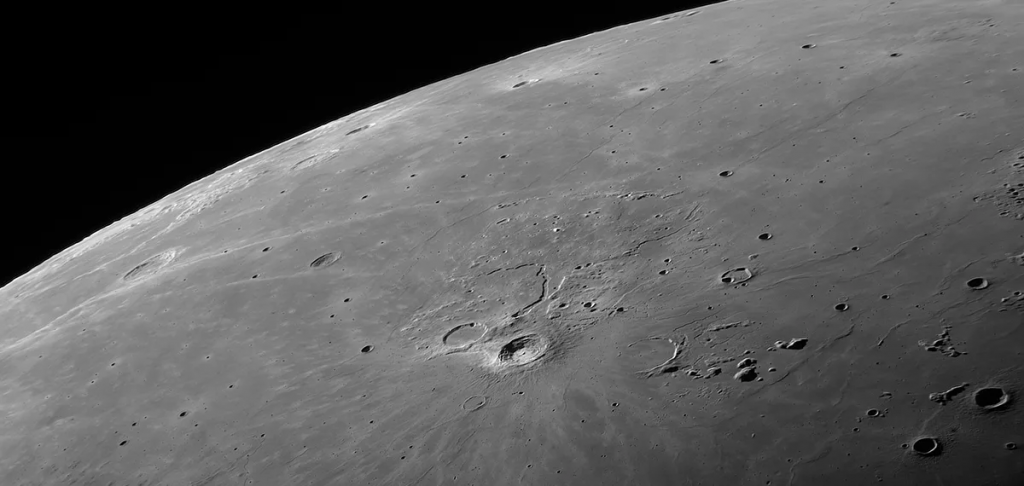
In this close view of the Moon, the crater Aristarchus appears as a luminous scar in the lunar crust, its bright walls and radiating debris tracing the violent geometry of an ancient impact preserved in airless silence. Measuring roughly forty kilometers across and surrounded by a constellation of secondary craters, the formation reveals how celestial collisions sculpt planetary surfaces with a precision that resembles both catastrophe and design. Captured by Raul Cantemir for Astronomy Photographer of the Year, the image invites contemplation of the Moon not as a static companion of Earth, but as a vast geological archive quietly recording the history of our solar neighborhood.
New Thinking Allowed with Jeffrey Mishlove Mar 27, 2026 This video is a special release from the original Thinking Allowed series that ran on public television from 1986 until 2002. It was recorded in about 1990. It will remain public for only one week. Jack Sarfatti presents his model for “post-quantum physics” in which he postulates that consciousness, both human and non-human, is a physical but non-material process that interacts with the material world through synchronicity. Jack Sarfatti, PhD, is President of the Internet Science Education Project. He is coauthor of Space, Time and Beyond. Now you can watch all of the programs from the original Thinking Allowed Video Collection, hosted by Jeffrey Mishlove. Subscribe to the new Streaming Channel (https://thinkingallowed.vhx.tv/) and watch more than 350 programs now, with more, previously unreleased titles added weekly. Free month of the classic Thinking Allowed streaming channel for New Thinking Allowed subscribers only. Use code THINKFREELY.
NOVA PBS Official Mar 19, 2026 NOVA Remix See how quantum mechanics powers tomorrow’s tech—and rewrites our understanding of reality itself. Quantum particles are breaking the rules of reality – or so it seems. Can they truly communicate across time and space instantly? Einstein dismissed this “spooky action at a distance,” convinced it exposed flaws in quantum theory. But the deeper scientists looked, the stranger the universe became. From fierce debates to important discoveries, discover how a once‑controversial quantum oddity is now reshaping how we think, how we compute, and how the future gets built. To watch the full film, visit https://www.pbs.org/wgbh/nova/video/e…
The Onion Mar 25, 2026 Health experts believe the discovery could explain the sudden rise in cases, which rapidly progresses from skin tightness to the sudden onset of severe facial disfigurement. Become an Onion member while it’s still optional: https://membership.theonion.com/?camp…
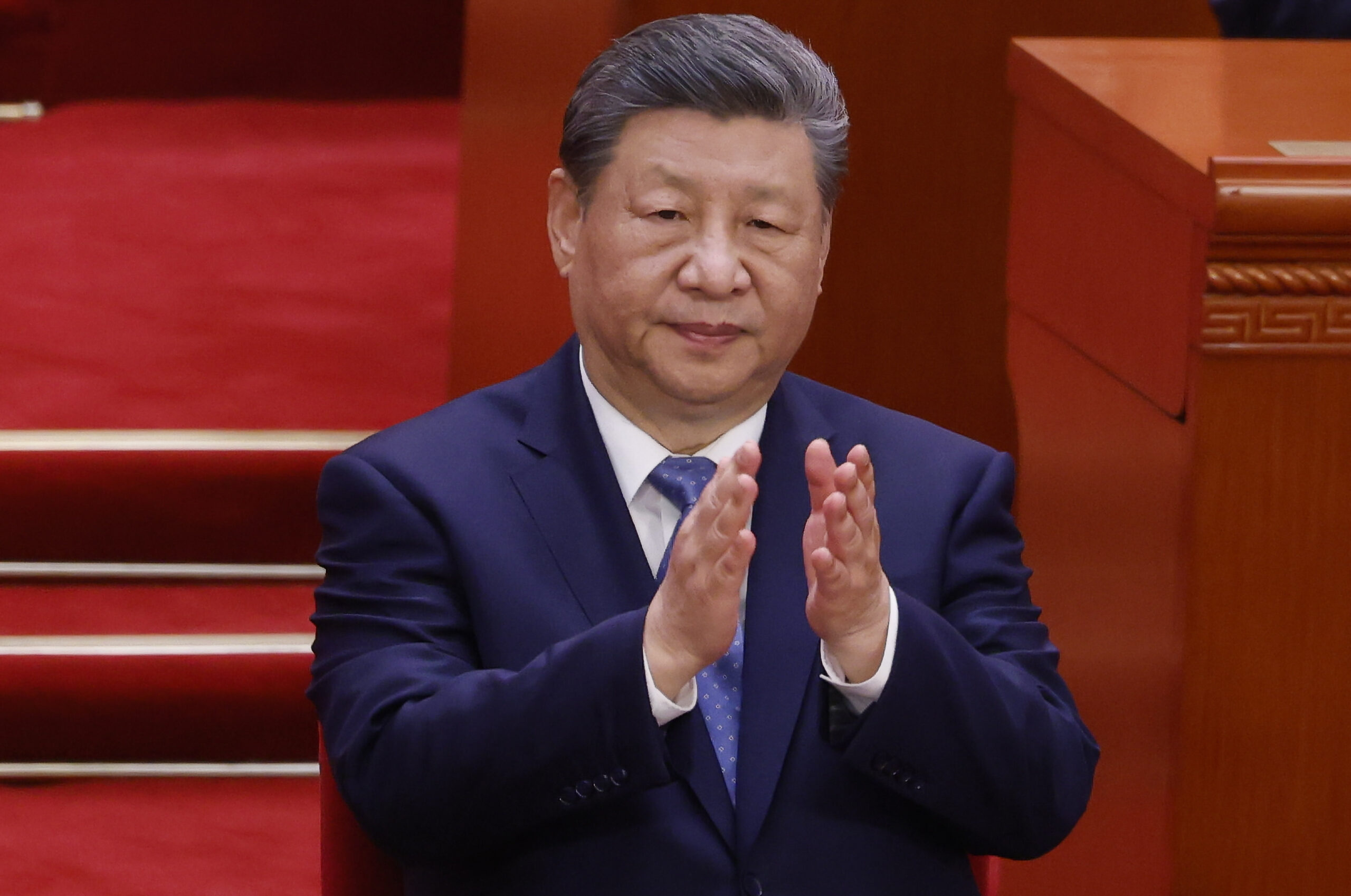
Xi’s ongoing purge of China’s leaders — including his political allies — marks a return to Mao-style court politics. He is cementing his absolute control — and laying the groundwork for a major succession crisis.
In the final days of 2025, the demise of Ma Xingrui, the former Xinjiang party secretary, was confirmed when his name conspicuously vanished from a ceremonial wreath. While the chattering class waited for the official word, a greater shockwave struck: A terse communiqué abruptly announced that Zhang Youxia, the first vice-chairman of the Central Military Commission (CMC), had been placed under investigation. From CMC Second Vice-Chairman He Weidong to Ma, and now Zhang, the targets are growing more politically significant. The purge of three incumbent Politburo members within a single term marks the most extensive high-level political shake-up since the 1970s.
Years from now, when historians look at this moment, they will realize that the true era of ruthless turbulence in Beijing had only just begun.
In the early stages of this wave of purges, external observers largely misread the tremors. As Xi Jinping’s loyalists were ousted one by one, conventional wisdom held that the supreme leader was struggling to maintain his grip, perhaps even facing resurgent opposition. This narrative evoked images of “dynastic decline,” suggesting a fatal fracturing of his power base. Many even projected Zhang Youxia as the ultimate challenger — a formidable counterweight capable of holding the line. It was not until Zhang himself was abruptly purged that this illusion was shattered, waking analysts from their wishful thinking.
Far from signaling weakness, this “Great Purge” is a defining feature of Xi’s drive toward personalist dictatorship. We are witnessing a paradigm shift away from the post-Mao era’s oligarchic equilibrium toward a system of absolute obedience. Xi does not purge out of fear of opposition. The purge is the point — a naked display of the sovereign’s unbridled capacity to dispose of any official, regardless of past loyalty, bloodline, or competence.
For decades, the primary lens for understanding Beijing’s machinations was the interplay between competing factions. During the Jiang Zemin and Hu Jintao eras, purges often adhered to an unwritten code, primarily targeting rivals while generally respecting the tacit immunity of top elites to maintain a delicate balance of power. That was an age of oligarchy, where political control relied on private compromise and backroom negotiation.
That old paradigm is now dead. The “Shanghai Gang” is a memory, the Communist Youth League faction has been decimated, and the “Princelings” have withered away. The Chinese Communist Party’s (CCP) senior ranks are now overwhelmingly dominated by “Xi’s Army.” Today’s purges are no longer about merely eliminating opponents; they are about a show of power.
This transformation reveals the core logic of the new court: Under absolute rule, there are no allies, only servants. It is an axiom of authoritarian politics that once a dictator eliminates external rivals, the gravest danger invariably emerges from the inner circle. For Xi, any subordinate commanding an independent power base or wielding extensive local resources — even if outwardly loyal — represents an intolerable threat. By purging seemingly unassailable lieutenants, Xi broadcasts a chilling ultimatum: No one is beyond his reach.
By deliberately fostering internal discord and atomizing his subordinates, Xi engineers unpredictability to cement his status as the sole arbiter of power, trapping every official in a state of existential dread and absolute obeisance. Hardly a modern invention, such a ruling strategy represents a chilling return to the machinations of dynastic court politics — one that draws directly from the Maoist playbook.
In the early years of the People’s Republic, Mao Zedong famously used Gao Gang, an early leader of the CCP, to curb chairman Liu Shaoqi’s rising influence, allowing Gao — who imagined himself the Chairman’s favored blade — to aggressively target Liu’s factional network. Yet, when Liu mounted a counteroffensive exposing Gao’s political ambitions, Mao unhesitatingly discarded his instrument as the head of an “anti-Party clique.” The victor’s reprieve, however, was merely a stay of execution: Liu would eventually be consumed by the same machinery of the purge once Mao decided that Liu, too, represented an intolerable threat.
A modern reprise of this cycle has just unfolded. Xi likely permitted his handpicked protégés, He Weidong and Miao Hua, to target the entrenched network of Zhang Youxia. However, when Zhang counterattacked, reportedly presenting evidence of their crimes, Xi replicated the Maoist pivot. He jettisoned his loyalists. But once the rival faction was eliminated, it was Zhang’s turn to be discarded — not the victor, but merely the last one eaten. In the court, a vassal who possesses the power to destroy another vassal is, by definition, a threat to the sovereign.
Unlike the Mao era, where “counterrevolution” was the weapon of choice, today’s purge is cloaked in “anticorruption.” Yet the core remains identical: The decision of when and who is purged is entirely a function of the leader’s own political necessity. Whether to quell intraparty discord or simply to reinforce the sovereign’s power, any official, regardless of rank, becomes an expendable pawn. This has terrorized the bureaucracy, compelling officials to prioritize self-preservation over sound policy, obsessed with avoiding the fate of becoming the next “example.”
A telling anecdote from Mao’s twilight years vividly illuminates the psyche of China’s highest-ranking officials today, such as Premier Li Qiang or Chief of Staff Cai Qi. It is recorded that early one morning, Zhou was informed that Mao had collapsed. Zhou rushed to the chairman’s bedside, where the sight of the unconscious Mao caused him to lose control of his bowels and bladder. Minutes later, when Mao came to, Zhou’s immediate instinct was to cry out: “Chairman, the power is still in your full command!”
This single sentence encapsulates the survival instinct of the inner court: The apparatus does not fear Xi losing power; it fears Xi suspecting that he is losing power. Should the leader harbor such insecurity, a fresh wave of frenzied purges becomes the only inevitable response. For lieutenants like Li and Cai, daily politics has devolved into a permanent performance — a feverish, nonstop reassurance that “the power is still in your full command.” Any lapse in this theater is to invite the next sacrifice.
Yet, while Xi’s power remains unassailable, his prestige is inexorably drawing closer to a “Lin Biao moment.” It is crucial to distinguish between the capacity to instill fear and the legitimacy derived from widespread conviction. Xi undoubtedly possesses the former, but is rapidly forfeiting the latter. Lin Biao’s death in 1971 marked the ideological watershed of the Mao era; the sudden downfall of a political successor formally enshrined in the Party Charter shattered the myth of the leader’s infallibility and exposed the sheer absurdity of the political struggle.
Today, Xi finds himself in a parallel predicament. The political myth of the leader’s “sage wisdom” and “astute appointments” is crumbling. Qin Gang, Li Shangfu, Wei Fenghe, Miao Hua, He Weidong, Ma Xingrui — and now Zhang Youxia and Liu Zhenli — were not holdovers, but all leaders handpicked by Xi. Their purge creates an insoluble paradox: Either Xi possesses profoundly flawed judgment, consistently picking “bad apples,” or the system itself has become a relentless meat grinder where no status guarantees safety. Regardless of the answer, it inflicts a crushing blow to his political prestige.
The political endgame is stark. As Xi enters his later years, the high-pressure campaign of purges will not cease; instead, it is bound to intensify, fueled by increasing fears of aging and betrayal. By systematically purging all capable and prestigious potential heirs, Xi is engineering a monumental succession crisis. His eventual departure will leave a profound power vacuum, triggering a fierce struggle for survival among those who remain. Given the progressive erosion of his moral authority, any victor emerging from this struggle will inevitably seek legitimacy by systematically repudiating Xi’s legacy — a pattern of posthumous reckoning seen after both Stalin and Mao. The purge is the point — but a dynasty of one condemned to endless purges will not have a second opportunity, destined only to consume everything the purger sought to build.
Christopher Nye is a Non-Resident Fellow at The Jamestown Foundation. He previously served as a professor and directed a university think tank in China. He specializes in China’s elite politics, local governance, legal institutions, and U.S.-China technology competition.
Combined observations offer the most detailed portrait of the ringed planet to date.
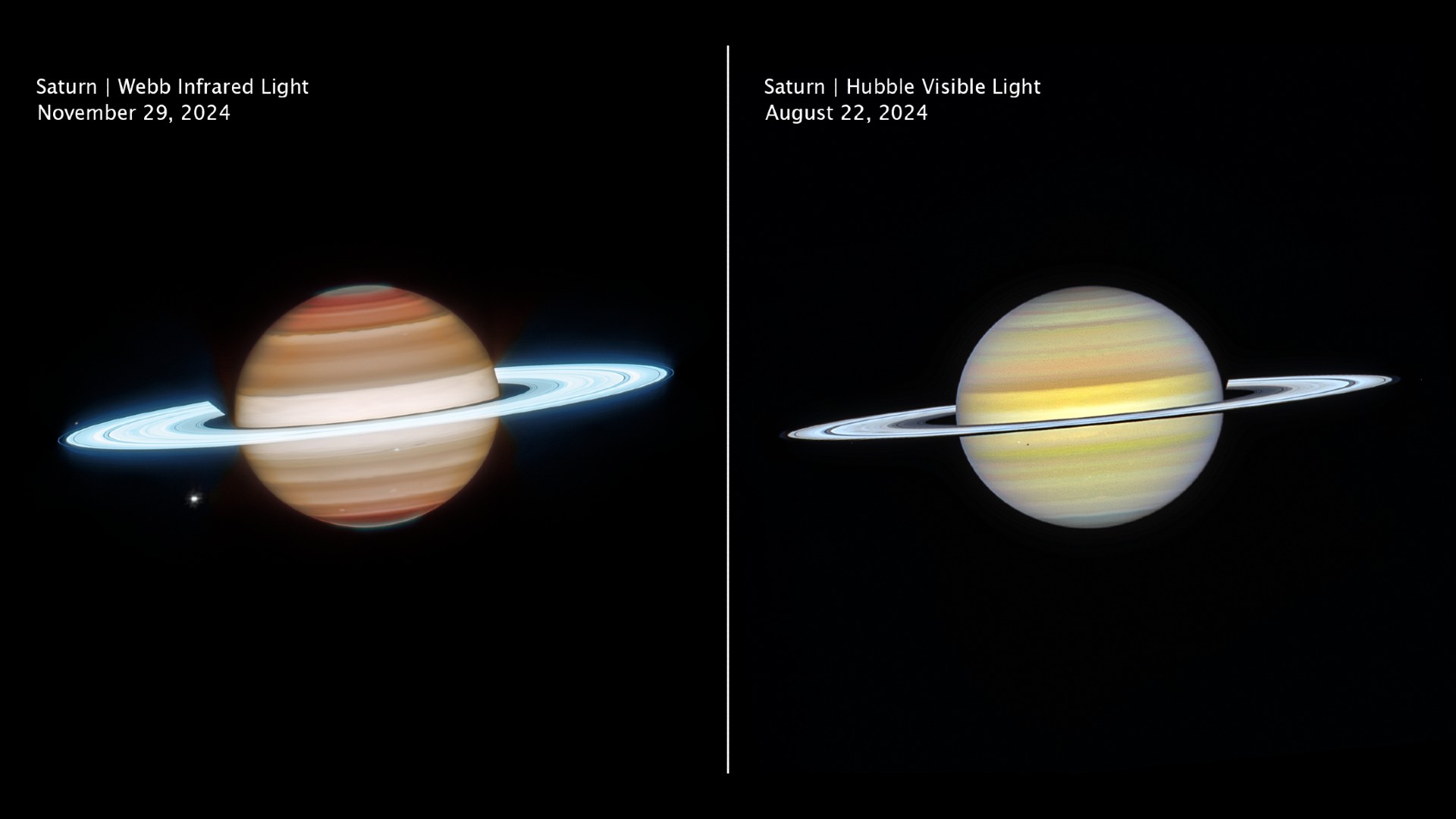
Complementary views of Saturn from NASA’s James Webb Space Telescope and Hubble Space Telescope. (Image credit: NASA, ESA, CSA, STScI, Amy Simon (NASA-GSFC), Michael Wong (UC Berkeley); Image Processing: Joseph DePasquale (STScI))
Stunning new views of Saturn offer the most detailed portrait yet of the ringed planet, showcasing the combined power of NASA’s most advanced space telescopes.
Using observations from the James Webb Space Telescope (JWST) and the Hubble Space Telescope, astronomers have created the most comprehensive look at Saturn to date, blending infrared, visible and ultraviolet light into a single, richly layered image, according to a statement from NASA.
“Together, scientists can effectively ‘slice’ through Saturn’s atmosphere at multiple altitudes, like peeling back the layers of an onion,” NASA officials said in the statement. “Each telescope tells a different part of Saturn’s story, and the observations together help researchers understand how Saturn’s atmosphere works as a connected three-dimensional system.”Article continues below You may like
Each space telescope brings a distinct perspective. Hubble captures crisp, long-term visible-light views of Saturn’s cloud bands and atmospheric changes, while the JWST peers deeper into the planet’s atmosphere in infrared, revealing heat patterns and structures hidden beneath the upper cloud layers.
The Hubble data, captured in August 2024 as part of the long-running Outer Planet Atmospheres Legacy (OPAL) program, was followed about 14 weeks later by Webb observations taken through Director’s Discretionary Time, showing Saturn shifting from northern summer toward its 2025 equinox. Saturn’s long seasonal cycles — each lasting about seven Earth years — also provide important context for interpreting changes in the planet’s atmosphere and rings over time.
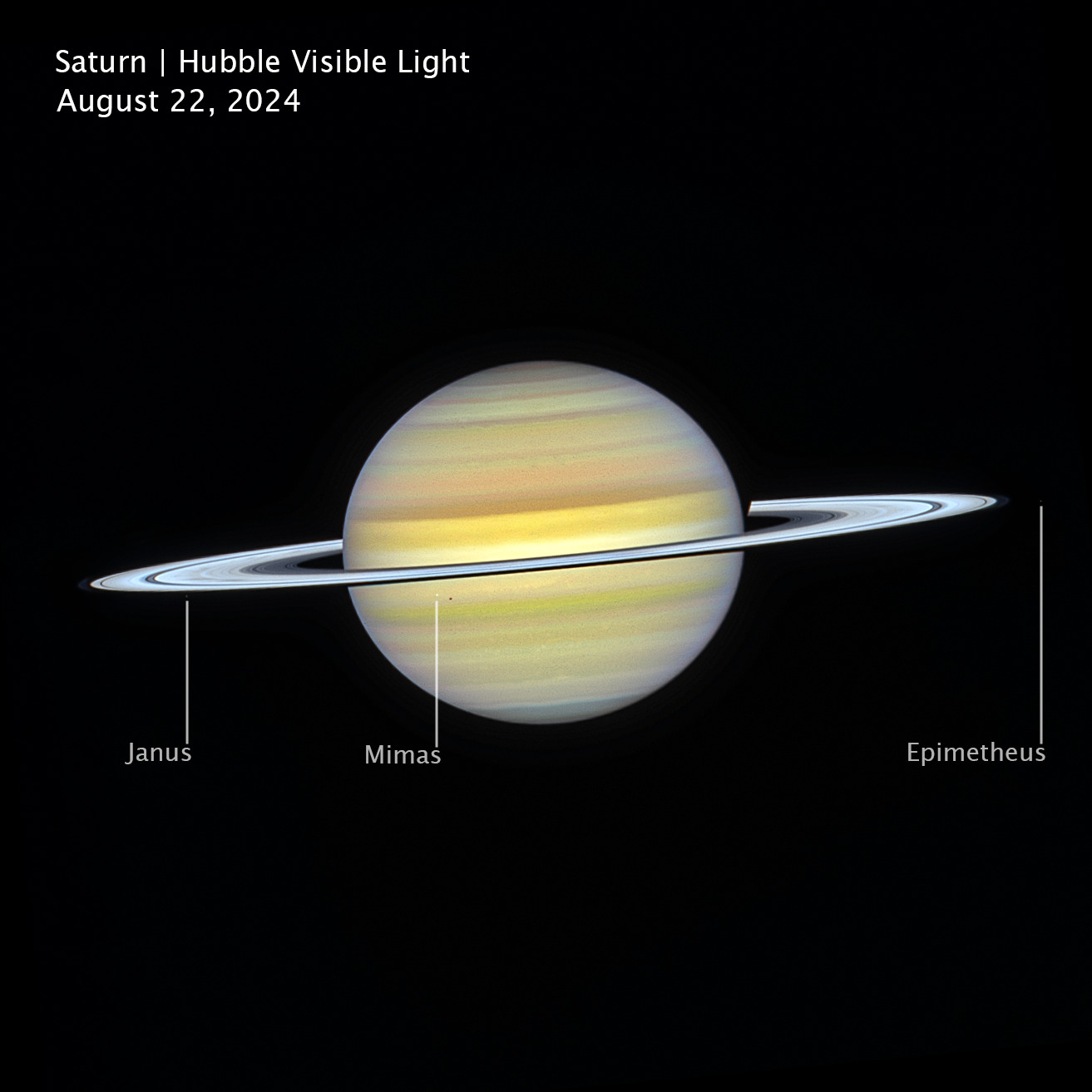
This visible-light image of Saturn, captured Aug. 22, 2024, by NASA’s Hubble Space Telescope, reveals the planet’s softly banded atmosphere and bright ring system. (Image credit: NASA, ESA, STScI, Amy Simon (NASA-GSFC), Michael Wong (UC Berkeley); Image Processing: Joseph DePasquale (STScI))
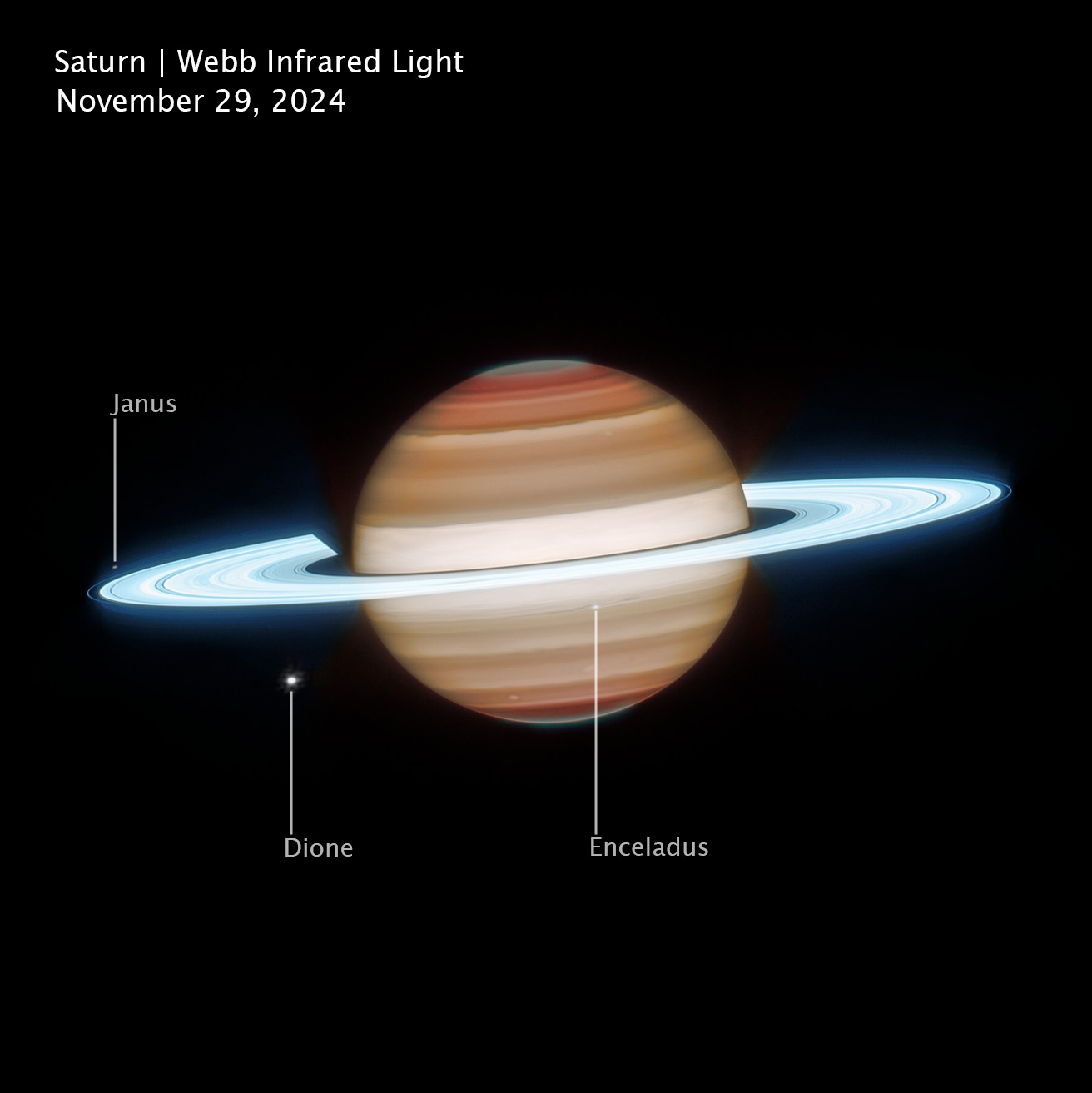
Together, the observations present Saturn as a layered and dynamic world. Hubble’s visible-light view shows the planet’s softly banded atmosphere, while Webb’s infrared observations reveal additional structure, including deeper atmospheric layers, a meandering jet stream in the northern mid-latitudes, possible auroral activity, and several storms scattered across the southern hemisphere.
The combined data highlights how Saturn’s appearance changes across different wavelengths, offering a more complete view of its atmosphere, according to the NASA statement.
Get the Space.com Newsletter
Breaking space news, the latest updates on rocket launches, skywatching events and more!By signing up, you agree to our Terms of services and acknowledge that you have read our Privacy Notice. You also agree to receive marketing emails from us that may include promotions from our trusted partners and sponsors, which you can unsubscribe from at any time.
The images also provide complementary views of Saturn’s rings. In Hubble’s data, the rings, made of water ice, appear bright in reflected sunlight, with clearly defined structure. In Webb’s infrared view, the rings shine even more prominently, standing out against the darker background of space and revealing additional detail in the ring system.
This infrared view of Saturn was captured Nov. 29, 2024, by NASA’s James Webb Space Telescope. Observing the planet in infrared wavelengths allows Webb to reveal details of Saturn’s atmosphere and rings that can’t be seen in visible light. (Image credit: NASA, ESA, CSA, STScI; Image Processing: Joseph DePasquale (STScI))
Subtle differences between the telescopes’ views also reveal ring features like spokes and structure in the thick central region, as well as differing perspectives of the outer ring, which appears thin and sharply defined in Webb’s image but only faintly visible in Hubble’s, according to the statement.
Seasonal context adds further value to the observations. Hubble’s OPAL program has been tracking changes in the outer planets for more than a decade, providing a long-term record of Saturn’s atmosphere. The new Webb observations build on that dataset, offering a broader, multiwavelength perspective as the planet continues its progression toward its next equinox.
The new dataset underscores the power of combining multiple observatories. By integrating Webb’s infrared sensitivity with Hubble’s long-standing visible-light record, scientists can construct a far more complete picture of planetary behavior than either telescope could achieve alone.
As both observatories continue their missions, researchers plan to build on these observations, tracking Saturn’s evolving atmosphere, monitoring storm systems and refining models of its complex climate. With this new composite view, Saturn isn’t just a distant gas giant — it’s a dynamic world whose hidden layers are finally coming into focus.
Samantha Mathewson joined Space.com as an intern in the summer of 2016. She received a B.A. in Journalism and Environmental Science at the University of New Haven, in Connecticut. Previously, her work has been published in Nature World News. When not writing or reading about science, Samantha enjoys traveling to new places and taking photos! You can follow her on Twitter @Sam_Ashley13.
Consciousness, spirituality, biography, sexuality, androgyny, futurism, space, the arts, science, astrology, democracy, humor, books, movies and more