
Amrit Sandhu ???????? and Rupert Sheldrake Apr 1, 2026 Inspired Evolution Podcast ???????? Dr. Rupert Sheldrake was BANNED for challenging some of the deepest assumptions of modern science. What if memory isn’t stored in the brain at all? What if parts of the mind extend beyond the body? What does this imply about consciousness? And what might this reveal about the true nature of reality itself? In this conversation, Rupert turns reality on its head as he explores morphic fields, collective memory, telepathy, healing, karma, and the possibility that minds are far more interconnected than we’ve been taught. He shares why nature may be guided less by fixed laws and more by evolving habits, how memory may stretch across space and time, and why consciousness may be something far greater than the individual self. If this conversation resonates deeply within you, then join us inside The Circle, where conversations like this become a way of life — and where like-minded, like-hearted brothers and sisters are walking this great awakening together. ???? JOIN THE COMMUNITY CIRCLE: https://inspiredevolution.com/circle
All posts by Mike Zonta
Book: “Healing in Your Hands: Self-Havening Practices to Harness Neuroplasticity, Heal Traumatic Stress, and Build Resilience”

Healing in Your Hands: Self-Havening Practices to Harness Neuroplasticity, Heal Traumatic Stress, and Build Resilience
Kate Truitt
The power to heal the wounds of your past, create your present, and build your future is in your own hands. Written by Dr. Kate Truitt, a psychologist, neuroscientist, and trauma expert, Healing in Your Hands is the first book of its kind to integrate the neuroscience of trauma with cutting-edge research on self-havening—a groundbreaking technique that draws on the power of mindful touch to heal even the most profound traumatic stress. It weaves together powerful client stories, insights from the field of neuroscience, and personalized havening practices to create a complete self-healing program that anyone can use. With the simple and effective tools in this book, you will learn how …all with the palms of your own hands.
(Goodreads.com)
(Contributed by John Atwater, H.W.)
Male emus are exclusively responsible for incubating eggs and raising chicks.
- Google AI Overview

Yes, male emus are exclusively responsible for incubating eggs and raising chicks. After the female lays the eggs, the male sits on them for about 50–60 days, during which he rarely eats, drinks, or leaves the nest. He survives on stored body fat while protecting the clutch, losing significant weight before chicks hatch. Reddit +4
Key Details on Male Emu Incubation:
- Duration: Incubation lasts roughly 8 weeks (about 56-60 days).
- Dedication: During this period, the male rarely leaves the nest, sometimes going without food or water, relying on stored fat.
- Nest Care: He diligently protects the nest from predators, turns the eggs frequently, and remains vigilant.
- Role Reversal: The female does not participate in incubation and often mates with other males, leaving the first male to raise the young alone.
- Post-Hatch: After the chicks hatch, the male guides, protects, and feeds them for several months. Reddit +4
Archetypal Forms and Forces, Part II, with Angeles Arrien (1940 – 2014)
New Thinking Allowed with Jeffrey Mishlove Apr 3, 2026 This video is a special release from the original Thinking Allowed series that ran on public television from 1986 until 2002. It was recorded in about 1990. It will remain public for only one week. Archetypal energies beckon us to live a larger life. We are all healers, warriors, visionaries and teachers—but often these potentials remain in latent form. Through song, dance, storytelling and meditation we can activate these archetypes. The late Angeles Arrien, PhD, a cross-cultural anthropologist, was on the faculty of the California Institute of Integral Studies and the Institute of Transpersonal Psychology. She is author of The Tarot Handbook, The Four-Fold Way and Signs of Life. Now you can watch all of the programs from the original Thinking Allowed Video Collection, hosted by Jeffrey Mishlove. Subscribe to the new Streaming Channel (https://thinkingallowed.vhx.tv/) and watch more than 350 programs now, with more, previously unreleased titles added weekly. Free month of the classic Thinking Allowed streaming channel for New Thinking Allowed subscribers only. Use code THINKFREELY.
Ralph Waldo Emerson on what lives within us
| “What lies behind us and what lies ahead of us are tiny matters compared to what lives within us.” Ralph Waldo Emerson (1803-1882) American Philosopher |
 Classes begin the week of April 13th! Join us at the School of Practical Philosophy and Meditation for our Philosophy Works course, available most days! Click the button below to check the schedule and register. Classes begin the week of April 13th! Join us at the School of Practical Philosophy and Meditation for our Philosophy Works course, available most days! Click the button below to check the schedule and register.REGISTER TODAY AN OPPORTUNITY FOR DAILY REFLECTION BROUGHT TO YOU BY THE SCHOOL OF PRACTICAL PHILOSOPHY |
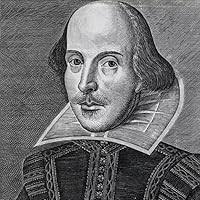
Shakespeare on being two-faced
(Image from Goodreads.com)
“God hath given you one face, and you make yourself another.”
–Hamlet to Ophelia in Act 3, Scene 1 in Hamlet by William Shakespeare
Hamlet
Play by William Shakespeare
Hamlet, by William Shakespeare, is a tragedy about the Prince of Denmark seeking revenge for his father’s murder by his uncle, Claudius, who has usurped the throne and married Hamlet’s mother, Gertrude. The play follows Hamlet as he feigns madness, contemplates life and death, and stages a play to confirm Claudius’s guilt, leading to a tragic finale with multiple deaths, including his own. It explores themes of revenge, madness, morality, and corruption, and is considered one of Shakespeare’s most powerful and influential works.
Plot summary
- The Ghost: The ghost of Hamlet’s father appears, revealing he was murdered by his brother, Claudius, and commands Hamlet to seek revenge.
- Feigned Madness: Hamlet pretends to be insane to investigate the ghost’s claims, confusing the court and his love interest, Ophelia.
- “The Mousetrap”: Hamlet uses a troupe of actors to perform a play that mirrors his father’s murder, and Claudius’s guilty reaction confirms his crime.
- Polonius’s Death: Hamlet mistakenly kills Polonius (Ophelia’s father) while confronting his mother, believing him to be Claudius hiding behind a curtain.
- Ophelia’s Tragedy: Grief-stricken by her father’s death and Hamlet’s rejection, Ophelia goes mad and drowns.
- The Duel: Claudius arranges a duel between Hamlet and Laertes (Ophelia’s brother), using a poisoned sword and a poisoned drink to ensure Hamlet’s death.
- The Finale: Gertrude drinks the poison, Laertes wounds Hamlet with the poisoned sword, Hamlet wounds Laertes, and Hamlet kills Claudius before dying himself. He asks his friend Horatio to tell the story.
Key characters
- Hamlet: The Prince of Denmark, driven to avenge his father’s death.
- Claudius: Hamlet’s uncle, the new king, and murderer of his brother.
- Gertrude: Hamlet’s mother, who marries Claudius.
- Ophelia: Polonius’s daughter and Hamlet’s love interest.
- Polonius: The Lord Chamberlain, father of Ophelia and Laertes.
- Laertes: Polonius’s son, who seeks revenge for his father and sister.
- Horatio: Hamlet’s loyal friend.
Themes
Revenge and justice, Madness (real vs. feigned), Mortality and the meaning of life, and Corruption and betrayal.
(Google.com)
The Metaphysics of Passover and Easter | Marianne Williamson
Marianne Williamson Apr 2, 2026 Marianne Williamson’s classic talk, “The Metaphysics of Passover and Easter.” Marianne will be giving a free live Easter talk on Zoom this Sunday, April 5, 2026 at 12PM PT / 3PM ET. Register here: https://marianne.com/easter-sunday-2026/ Subscribe to Marianne’s Substack: MarianneWilliamson.Susbtack.com
Iran Imposes New ‘Cash, Grass, Or Ass’ Fee For Strait Of Hormuz

Artemis II’s moonbound astronauts capture Earth’s brilliant blue beauty as they leave it behind
By MARCIA DUNN, AP Aerospace Writer
Updated April 3, 2026 (SFGate.com)
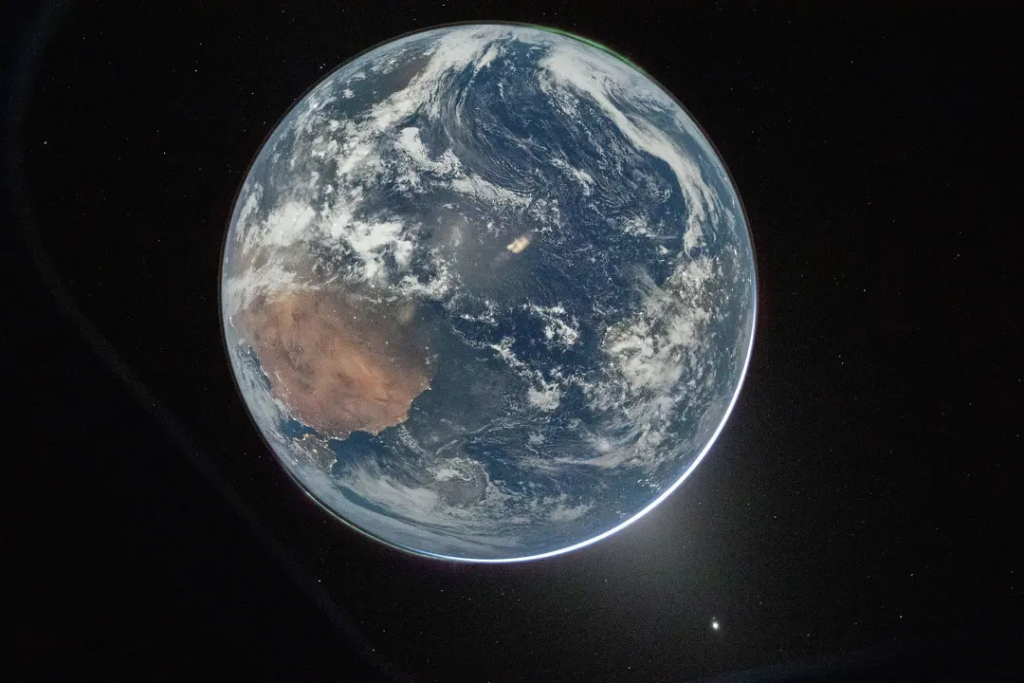
This image provided by NASA shows a view of Earth taken by NASA astronaut and Artemis II Commander Reid Wiseman from of the Orion spacecraft’s window after completing the translunar injection burn on April 2, 2026. (NASA via AP)AP
CAPE CANAVERAL, Fla. (AP) — The Artemis II astronauts have captured our blue planet’s brilliant beauty as they zoom ever closer to the moon.
NASA released the crew’s first downlinked images Friday, 1 1/2 days into the first astronaut moonshot in more than half a century.
The first photo taken by commander Reid Wiseman shows a curved slice of Earth in one of the capsule’s windows. The second shows the entire globe with the oceans topped by swirling white tendrils of clouds. A green aurora even glows, according to NASA.
“It’s great to think that with the exception of our four friends, all of us are represented in this image,” said NASA’s Lakiesha Hawkins, an exploration systems leader. She added the mission was going well.
As of late Friday afternoon, Wiseman and his crew were more than 110,000 miles (180,000 kilometers) from Earth and were quickly gaining on the moon with another 150,000 miles (240,000 kilometers) to go. They should reach their destination on Monday.
The three Americans and one Canadian will swing around the moon in their Orion capsule, hang a U-turn and then head straight back home without stopping. They fired Orion’s main engine Thursday night that set them on their course.
After Mission Control shifted the position of their capsule, the entire Earth complete with northern lights filled their windows.
“It was the most spectacular moment, and it paused all four of us in our tracks,” Wiseman said in a TV interview.
They’re the first lunar travelers since Apollo 17 in 1972.
___
The Associated Press Health and Science Department receives support from the Howard Hughes Medical Institute’s Department of Science Education and the Robert Wood Johnson Foundation. The AP is solely responsible for all content.
April 3, 2026|Updated April 3, 2026 3:26 p.m.
Featured Books from New Thinking Allowed
Arthur Versluis explores how spiritual alchemy and the symbolism of light can be used to foster inner transformation and cultural renewal in an age shaped by materialism and technology. Drawing on Western mysticism, Tibetan Buddhism, and esoteric traditions, he presents lightwork as a path toward awakening and reconnection with deeper realities. The work encourages readers to see beyond illusion, cultivate spiritual insight, and participate in the creation of more conscious and life-affirming cultures.

Matthew Ingram traces how the counterculture movements of the 1960s and 1970s helped shape modern ideas about health, wellbeing, and holistic living. He connects influences such as yoga, meditation, psychedelics, and Eastern philosophy to broader cultural shifts in medicine and self-care. The work highlights how these alternative approaches continue to inform contemporary wellness practices and perspectives.

Vladimir Miskovic and Steven Jay Lynn examine consciousness by bridging neuroscience with insights from mystical and altered states of experience. They explore how dreams, meditation, psychedelics, and visionary phenomena reveal aspects of the mind that conventional science often overlooks. The work encourages readers to expand their understanding of selfhood, perception, and the deeper layers of human awareness.
