All posts by Mike Zonta

French family installs tiny house for refugees in their backyard

The tiny house built by the Quatorze organisation. (Photo: Quatorze)

ARCHITECTURE – 11/06/2017 (france24.com)

A group of volunteers have spent the past few weeks setting up a tiny house in the garden of a private home in Montreuil, a Parisian suburb. Soon, this diminutive domicile will become home to two refugees in need.

This house is the very first built and installed as part of the “In My Backyard” (IMBY) initiative, which is the brainchild of Quatorze, an organisation dedicated to architecture in the cause of social justice. “IMBY” is meant to express the opposite sentiment of NIMBY (an acronym for “Not In My Backyard”), which is used in the United States and the UK to refer to people who oppose a new development because of its close proximity to their homes, even though it may be useful to society (example: No one wants a landfill across the street from them, even though we all agree we need somewhere to put our rubbish). IMBY, on the contrary, is about people stepping up and offering their backyards (literally) to help house refugees.

For the past few weeks, volunteers have been working to set up a tiny wooden house. The house is 20m2 and it is 3.5 metres high. It includes a kitchen, a bathroom and a mezzanine that serves as a bedroom. Currently, the final touches are being made and its new residents are expected mid-November.

The tiny house is delivered to Montreuil. (Photo: Quatorze / Maïté Pinchon)

“It only took us a few hours to make up our minds”

Dominique.Blanc

Dominique.Blanc

See profile

Dominique Blanc and his partner Charlotte Boulanger are the homeowners hosting the newly built tiny home in their backyard.

It only took us a few hours to make up our minds after we heard about this initiative. My partner and I have really been troubled by the failure of many French people to welcome immigrants and refugees to our country. Moreover, this project is a perfect fit for us, because we have a pretty sizeable backyard and we didn’t really know what to do with it.

Quite a few people in France welcome refugees into their homes, but that would have been hard for us as we have two young children and not very much space. But having a small house in the garden is a perfect solution. It also means that our residents will be quite independent. We also like the idea that the people who move into the tiny house will be assigned a social worker through the ELAN programme run by the Paris branch of SAMU Social [Editor’s note: SAMU Social is a municipal humanitarian emergency service that runs in several cities in France and abroad.]

Model of the inside of a “tiny house”. (Image: Quatorze / D.A.T. Pangea)

We don’t know yet who is going to move into the tiny house, but we are going to find out in the next few days. We’re excited to meet them. We’re expecting two roommates. A divider has been added to the bedroom to provide the two residents with a bit more privacy.

“We’re hoping to have them over for dinner regularly”

We requested to have people who can speak some French or English so that we can talk with them. Our hope is that they become close to our family. We can’t plan everything ahead of time, but we’re hoping to have them over for dinner regularly and share other activities with them.

Once the tiny house was set up, volunteers added a small porch with a roof. (Photo: Quatorze / Maïté Pinchon)

The idea is that people will be able to stay in the tiny house for at most a year. The hope is that, by then, they’ll have found a job and become independent. Two more people will move in after that. We’ve committed to the programme for two years.

We hope our experience will inspire others to do the same. We would like to see a bunch of other people sign up to this project!

The team of volunteers who helped set up the tiny house included architects, architecture students and several refugees. (Photo: Quatorze / Maïté Pinchon)

According to Romain Minod, the director of the Quatorze organisation, about 30 people have already offered to have a tiny house set up in their back garden. If the first experience goes well, then he hopes to set up more houses as soon as possible.

It cost €35,000 to build IMBY’s first “tiny house”. The organisation covers the building cost by reselling the houses in advance. Under their system, the first tiny house has already been sold to buyers who will get it after it has been used to house refugees for two years. The organisation ran a crowdfunding campaign to cover the cost of installing the house in its current location.

“She Walks in Beauty” by Lord Byron (George Gordon)

She walks in beauty, like the night
Of cloudless climes and starry skies;
And all that’s best of dark and bright
Meet in her aspect and her eyes;
Thus mellowed to that tender light
Which heaven to gaudy day denies.
One shade the more, one ray the less,
Had half impaired the nameless grace
Which waves in every raven tress,
Or softly lightens o’er her face;
Where thoughts serenely sweet express,
How pure, how dear their dwelling-place.
And on that cheek, and o’er that brow,
So soft, so calm, yet eloquent,
The smiles that win, the tints that glow,
But tell of days in goodness spent,
A mind at peace with all below,
A heart whose love is innocent!

The epic of Gilgamesh

Lessons from a Demigod

By Philip Freeman | HUMANITIES, July/August 2012 | Volume 33, Number 4 (neh.gov)

The Epic of Gilgamesh has been read in the modern world for a little longer than a century, and, in that time, this oldest of stories has become a classic college text. In my own courses on ancient literature and mythology, it is the book I always begin with. But why should a tale whose origins stretch back more than four thousand years draw such attention in an age of genetic engineering and text messaging? The answer I have given to hundreds of students is that almost every joy and sorrow they will face in life was revealed in Gilgamesh millennia before they were born. Reading Gilgamesh will not only teach them to face the challenges that lie ahead, but also give them an appreciation for the idea that no matter how much our modern world might seem different from earlier times, the essence of the human experience remains the same.

The story begins with a narrator urging his readers to examine the fine walls of Uruk, the magnificent city in southern Mesopotamia where Gilgamesh ruled. Hidden inside the walls is a treasure waiting to be discovered:

Find the cornerstone and under it the copper box

that is marked with his name. Unlock it. Open the lid.

Take out the tablet of lapis lazuli. Read how

Gilgamesh suffered all and accomplished all. *

Gilgamesh is described as two-thirds god, one-third man, and he reigns over his city without rival. He takes the young men of Uruk for his army and the young women for his bed. The people of the city cry out to the gods for relief from such an unstoppable force, prompting the rulers of heaven to create Enkidu, a wild man of the countryside who lives a life of Eden-like simplicity among the animals. But when the trappers of the wilderness grow tired of having game set free from their snares by Enkidu, they call on Shamhat, a temple prostitute of Uruk to come and, using sex, tame the wild man.

After an epic seven nights with the priestess, Enkidu loses his ability to commune with animals and seeks instead the company of his fellow humans in the city. There he meets, fights, and becomes friends with Gilgamesh, so that soon the two are closer than brothers. Indeed, the language used to describe the pair is more like that between husband and wife, though there is no sexual relationship implied.

Together, Gilgamesh and Enkidu travel to the Cedar Forest of the far north to battle the monster Humbaba and gain everlasting glory. Even as Humbaba is defeated and pleads for his life, Enkidu successfully urges Gilgamesh to slay him and take his head back to Uruk as a trophy. These heroics catch the eye of Ishtar, the divine embodiment of sexual desire and procreation. She seeks Gilgamesh as her husband, but is rejected by the king as an unreliable mate. Hell hath no fury like a goddess scorned, so she appeals to her father to send the violent Bull of Heaven to wreak destruction on Uruk as punishment for Gilgamesh’s rejection of her. Gilgamesh and Enkidu finally kill the beast, but this prompts a council of the gods to declare that Enkidu must die in retribution.

Gilgamesh watches helplessly as Enkidu passes into death:

Then he veiled Enkidu’s face like a bride’s.

Like an eagle Gilgamesh circled around him,

he paced in front of him, back and forth,

like a lioness whose cubs are trapped in a pit,

he tore out clumps of his hair, tore off

his magnificent robes as though they were cursed.

The king who could conquer men and monsters could not stop his friend from perishing. Overcome with grief and helpless before the inevitability of his own death, Gilgamesh abandons Uruk and begins a search for Utnapishtim, the man who survived the great flood and was granted immortality by the gods. If only he can learn the secret of Utnapishtim, he too might live forever.

On his long journey through the wilderness, Gilgamesh meets many characters who help him on his way, from scorpion beings who guard the passageway of the sun under the earth to the tavern-keeper Shiduri on the shores of the Sea of Death. She urges him to give up his futile quest for eternal life:

Humans are born, they live, then they die,

this is the order that the gods have decreed.

But until the end comes, enjoy your life,

spend it in happiness, not despair . . .

That is the best way for a man to live.

But the king will not listen. At last Gilgamesh finds Utnapishtim and hears from him the story of the great flood that destroyed all of humanity except for him and his wife. The tale is remarkably similar to the later tale of Noah found in the Hebrew Bible:

On Mount Nimush the ship ran aground,

the mountain held it and would not release it.

For six days and seven nights, the mountain

would not release it. On the seventh day,

I brought out a dove and set it free.

After hearing the flood story, Gilgamesh tries and fails to stay awake seven days to prove that he is worthy of living forever. As did Adam, he also loses to a crafty serpent the magical plant that would allow him to become young again. In the end, he returns home to Uruk, but all that is left for him is to admire the magnificent walls he has built, walls that will nonetheless someday turn to dust.

The story of Gilgamesh is based on a historical king of that name who lived in the Sumerian city of Uruk in present-day southern Iraq around 2700 BCE. He must have made quite an impression on the Sumerians, for within a few centuries they were recording stories about him on clay tablets using their wedge-shaped cuneiform script. The Babylonians under King Hammurabi and other rulers recorded the tales of Gilgamesh in their own language and spread them throughout the Near East. Art of the time preserves the story as well, especially the encounter with Humbaba.

The standard version of the epic we possess today may have been composed by a scribe named Sîn-lēqi-unninni in the thirteenth century BCE and includes the famous flood story found elsewhere in Near Eastern literature. The tablets were preserved in the royal palace at Nineveh in the first millennium BCE, but the story faded from memory in the centuries that followed. Gilgamesh is not mentioned in the Hebrew Bible, nor does he find his way into Greek mythology—though there are some intriguingly similar themes between the epic and Homer’s Iliad.

The clay tablets at Nineveh were buried beneath rubble and did not begin to be unearthed and translated until the late nineteenth century, when they caused a stir throughout the scholarly world. The announcement by British Museum curator George Smith to the Society for Biblical Archaeology in December of 1872 that he had discovered independent evidence for the biblical flood in the tablets of Gilgamesh was greeted with wild enthusiasm. His decipherment was crude, but it was an important beginning.

With ongoing discoveries of new tablets and advances in reading the ancient languages of the Near East, we have today a more complete and better understood version of the Epic of Gilgamesh than at any time in the past two thousand years, though there are still many gaps in the text and questions about the exact meanings of words. Nonetheless, we understand enough about the story so that even beginning undergraduates can read and discuss it profitably. My experience and that of other teachers is that students are amazed that such an old and strange story has so much that resonates in their own lives.

Gilgamesh introduces students to a world wildly different from their own, a world full of supernatural forces and gods such as Anu, Enlil, Ishtar, and Shamash who—while they may favor certain individual men and women at times—not only don’t love humanity, but are often viciously hostile to mortals. Yet, as foreign as the gods may be, the humans of the epic are painfully familiar. They are alternately caring and selfish, sympathetic and indifferent, hopeful and utterly despondent. Instructors and readers will discover their own lessons in the epic, but the universal themes of loneliness, companionship, love, loss, and death are among the many that every class seems to find.

The first awakening occurs early in the tale when Gilgamesh realizes that despite his superhuman abilities and dominion over thousands, he is essentially alone in the world. Striving for ever more wealth, power, and sex has left him without human connections.

Enter Enkidu. In many ways the opposite of Gilgamesh, Enkidu is a man of nature. But he also has much in common with the king. His encounter with Shamhat awakens within him a need for community. His newfound awareness also gives him a sense of moral outrage when he hears of Gilgamesh’s overbearing deeds. Students always notice that once Enkidu realizes a connection with others, he is unable to stand idly by when a preventable injustice occurs. Enkidu has never been to Uruk and he doesn’t know anyone in the city, but the mere rumor of mistreated subjects unable to stand up to an abusive ruler is too much for him. He knows that he alone has the ability to face Gilgamesh. And so he does, not because he is forced to act, but because he knows he can make a difference.

Unexpectedly, Enkidu’s fight with Gilgamesh leads both of them to finally find a true friend. Neither was whole without the other. Now they recognize, as Aristotle said, that life without friends is not worth living.

This newfound friendship opens a world of possibilities for the pair. Being adventurous young men eager to prove themselves and gain everlasting glory, they head off to fight the dreaded Humbaba. Terrifying dreams haunt Gilgamesh on the journey, filling him with fear and making him wonder if they should abandon their quest. But Enkidu encourages his friend to persevere and reminds him repeatedly that where one might fail, two can succeed. When Gilgamesh defeats the monster and holds him in his power, he wavers. Humbaba promises to be his servant and bring great honor to the king, but it is Enkidu who cuts the monster short and encourages his friend to finish what they have begun.

The seduction scene of Ishtar is always a favorite among students. The living embodiment of sexual desire stands before Gilgamesh and offers herself willingly to the king if only he will be her mate. But the virile, lusty Gilgamesh takes one look at the beautiful goddess and remembers all the previous men she had promised to make happy, only to destroy. His words of rejection to the goddess are stinging:

Why would I want to be the lover

of a broken oven that fails in the cold,

a flimsy door that the wind blows through,

a palace that falls on its staunchest defender.

He goes on to describe her as tar, a leaky waterskin, a battering ram, and a foot-mangling shoe.

Gilgamesh has looked beneath Ishtar’s enticing surface and found the selfishness she tried to hide. As he points out to her in their exchange, he has nothing she truly needs. He would end up like all her previous lovers, cast aside or dead when she tired of him. The sex would be fun while it lasted, but that would not be enough.

When Ishtar sets the destructive Bull of Heaven on Uruk, hundreds die as the beast rages. But the two friends rightly protect the city and defeat the bull, ripping out its heart. But it is then that Enkidu crosses the line. Seeing the defeated Ishtar standing on the walls, he tears off the hindquarters of the bull and flings them in her face:

If only I could catch you, this is what

I would do to you, I would rip you apart

and drape the Bull’s guts over your arms!

Even with his victory, Enkidu lets his anger get the better of him and shows no grace in victory. I remind the students that there will be plenty of occasions when, try as they might, they will fail. Remembering that the wheel of fortune will inevitably turn, I urge them be gracious winners. The person they have to fire some day may well be their boss in the future, just as the soul in need they pass on the street may someday be them.

Enkidu falls ill and lingers near death as Gilgamesh watches in agony. Why did my friend have to die? Will this also happen to me? These are the questions the young king asks as he lays Enkidu in his tomb. Following the funeral, Gilgamesh laments:

How can I bear this sorrow

that gnaws at my belly, this fear of death

that restlessly drives me onward?

His quest to find answers leads him on a tortuous journey through the wilderness—a metaphor for the experience everyone goes through when they lose someone they love. The broken Gilgamesh travels the world seeking answers, but seems to have forgotten everything he had learned earlier about the value of friendship. People along the way reach out to him, but he is so consumed by his own grief that he refuses to let them near. Even the counsel of the tavern-keeper Shiduri falls on deaf ears. “Make each of your days a delight,” she says. Go home, Shiduri urges the king, marry a loving wife and rejoice while you hold your children in your arms. Savor the life you have here and now. Gilgamesh, however, turns away.

I tell my students that grief, like anger, can consume them, if they allow it. Some of them have already lost someone dear and have learned this painful lesson, but I remind the rest that, sadly, they too will learn. When that day comes, I urge them, mourn deeply, always remember those you have lost, and then move on. Grief prolonged and embraced, as with Gilgamesh, is a selfish indulgence that no friend or loved one would desire for them.

But, of course, the major teaching from the Epic of Gilgamesh is that death is inevitable. Gilgamesh wastes so much time and energy in a futile effort to find eternal life. He turns his back on family and friends to wander the wilderness in search of something he can never have. Failing to gain immortality, he grasps for magic that will keep him young, only to lose that as well.

As I tell my students, whatever their values or religious traditions, they will save themselves a lot of trouble in life if they realize that they will grow old and eventually die. They can run marathons every weekend, eat nothing but organic vegetables, and have all the cosmetic surgery they want, but, in the end, it will not save them. They should take care of themselves, of course, for it would be a terrible waste not to strive for a long and happy life, but so much heartbreak has come to those who, like Gilgamesh, would not accept that they are mortal. Let them believe what they will about life after death, but this life has an ending for all of us, just as it had a beginning.

I’ve been teaching the Epic of Gilgamesh for more than twenty years and grow more enchanted with the story every time I read it. I also find great comfort in the fact that people four thousand years ago struggled with the same fundamental issues as we do today. Many of my students have returned to me years later and shared that although they may have forgotten most of what they learned about Greek verbs or Roman emperors, they still remember the story of Gilgamesh.

*Trans. Stephen Mitchell, Gligamesh: A New English Version.

ABOUT THE AUTHOR

Philip Freeman is a professor in classics at Luther College in Decorah, Iowa. His books include How to Win an Election: An Ancient Guide to Modern Politicians, Oh My Gods: A Modern Retelling of Greek and Roman Myths, and St. Patrick of Ireland.

“How The Beatles Saved My Life” by Robert McEwen, H.W., M.

Me and the Beatles
and how they saved my life.

Good evening
I am wanting to share
with you.

I love guitars.
I have one now.  I didn’t then.  I was 12 years old.
I had a Beatle haircut….
I bought my first one after seeing the Beatles
in the Portland Coliseum in August 1965.
Paul, John, George and Ringo.
The first chord twanging loud.
It was “I Want to Hold Your Hand”
That is all I heard of the concert.
The rest was yelling, crying, screaming.
My two brothers also on their seats
standing and crying and screaming at the top
of their lungs.  I was tossing and screaming.
It was Beatle Mania.

It was like a fire spreading almost instantly through the arena
of 20,000 people.  That is all it would hold.
Later that month I bought a guitar, a fake japanese fender
with painted shitty pick ups
and an amp that was home made
and butt ugly.

The family and I went to Seattle the next day.
Dad pulled into the Edge Water Hotel.
A thousand fans blocked the gate and the police
escorted our black 1958 Impala in.
The Beatles were staying there.

What are the odds we would end up there not knowing they were.

I then fell ill.
Double pneumonia.
Had it for 13 weeks.
Stranded at home.
Face bloated
with water and infection.
They had to use a scalpel to drain the fluid out.
Ears jammed up.  Lungs full of liquids.
I could hear nothing.
Only a faint hiss.  My hair long and greasy.
The Doctors said I would die.
What saved my life was drawing pictures of all The Beatles and their equipment.
Vox amps, Georges Gretsch Tennesean guitar, John and his 3 pick up black Rickenbacker
and Ringo and his grey simple 4 drum kit.  Ludwig. and Paul and his famous Hofner violin bass,now titled the Beatle Bass.

30 years later I bought all the gear.  All of it.
Then I made the recording studio I drew.
I recorded all their songs off Rubber Soul.

That saved my life again later.
Creatively speaking.

Next, of course I got to meet a couple of them
when I worked in Los Angeles recording and production in music.
1980.

True Story.

r.w. mcewen
Nov. 9, 2017
When I am 64

Amy Winehouse: Death & Addiction


Russell Brand
Published on Nov 8, 2017

A reading from a chapter of my book Recovery: Freedom From Our Addictions.

Get it here in US: http://tinyurl.com/ydcwz3kd
Australia: https://t.co/Ri1XSonD2X
UK: http://tinyurl.com/ycs8gu6b
To see me on my Re:Birth tour go to https://russellbrand.seetickets.com/t…
Listen to my Under The Skin podcast here https://itunes.apple.com/au/podcast/u…
Subscribe to the Trews here: http://tinyurl.com/opragcg

“Sexuality” by Robert McEwen, H.W., M.

~ THE SOUCE OF CREATION~
CREATIVE ENERGY FROM ONE SOURCE.

ANDROGYNY IS THE MALE AND FEMALE PRINCIPLE

~LGBTQ+ more labels and more boxes in search of identity is unfolding in the current sexual creativity.  In TRUTH, there are no boxes.  We must let go of all separations eventually.  It is good for time for self definition…then it becomes no big deal.  Ask any old drag queen or lesbian, you will find it is true.  It is a who cares kind of comment you most likely will get back.  “I came out so long ago….”  Truth is… We are each whole.  Keep it simple.   I am androgynous and an into just  Being, or the fancy name is ontology.  I am a counselor and teacher.

As a counselor and professional astrologer since 1977, I have enjoyed watching the evolution of sexuality unfold.  I lived in Hollywood in  1972 and watched it do the the Hollyweirdness drag queen thang, even though Darcelle was doing it lovely here in Portland and later got to experience and converse with his loving heart.  He helped so many in the Portland area, including me.  He had such nice nails and showed me how to do mine, though mine were not gold like his in my drag number.  He is the longest living Drag Queen on the planet, and has helped so many communities, from tiny little  podunk-backwater, one horse towns, that have had a couple gays waiting for permission to come out of the closet, and not kill themselves in the process!   He is such an angel.  Ok…done with that rant.

As an astrologer  “since the solar eclipse on August 21st, things seem to have shifted.  Many people have notice some kind of difference, be it a vibrational shift or what?  People are more courageous it seems, many have reported.  Also a sense of certainty.  That is true with most my friends, and people I correspond with on Face Book.  It may sound woo-woo,  or new age to you, but I shy away from that perspective, and I am telling you many many people are feeling this certainty and boldness.

How can you put your creative passion into something that takes your courage and bold certainty to bring peace and healing in Portland?  This is the key question from August  21st, again on Sept 6th during the Full Moon and most every new and full Moon coming up the rest of the year.  Contact me for dates if you wish for that.  Leo is a wonderful and sincere leader and blesses us all. Courage to be the unique androgynous Being we each are.  Leo loves to roar.  And the courage there in powerful and a leader.  I found a peace with this energy and the Full Moon in Pisces on Sept 6th, at 1:29 PM Portland time.  This is a time of great imagination!  What do you imagine in your life that would be helpful in the community.  That is a key question, as well as being physically helpful and there for those in in the community you truly want to be.  What can you offer?   That is a key question.  I would love to hear from you and what your imagination and skills bring to Portland.

I offer my astrology and teaching/counseling experience to share.  This available to all people whom are exploring their sexual fluidity.   My dear friend, and professional associate, Suzanne Deakins, Ph.d, H.W, M., have taught in this field for years, and no offer it in Portland, Oregon.  If interested please email me, or call sometime.

Robert McEwen, H.W., M
Mentor and Astrologer
robbystarman@aol.com
503 706-0396
~ call or text

EROS, DOUBLE-SEXED GOD OF LOVE

Eros was the Greek god of love and sexual desire. Some claim that he was one of the first gods to emerge from primeval Chaos, hatched from the world-egg, and thus is considered to be one of the eldest gods.

They reason that none of the other gods could have been born without Eros.

There are other theories as to his parentage: He is held to be the son of Aphrodite and Hermes, or Aphrodite and Ares, or even Aphrodite and Zeus. A lyrical fancy even holds that he was the son of Iris, goddess of the Rainbow, and Zephyrus, the West Wind.

Here is a fragment from Robert Graves’ The Greek Myths:

“But the Orphics say that black-winged Night, a goddess of whom even Zeus stands in awe, was courted by the Wind and laid a silver egg in the womb of Darkness; and that Eros, whom some call Phanes, was hatched from this egg and set the Universe in motion.

Eros was double-sexed and golden-winged and, having four heads, sometimes roared like a bull or a lion, sometimes hissed like a serpent or bleated like a ram. Night, who named him Ericepaius and Protogenus Phaethon, lived in a cave with him, displaying herself in triad: Night, Order and Justice.

Before this cave sat inescapable mother Rhea, playing on a brazen drum, and compelling man’s attention to the oracles of the goddess. Phanes created earth, sky, sun, and moon, but the triple-goddess ruled the universe, until her scepter passed to Uranus.”

In more recent mythology, Eros is portrayed as the son of Aphrodite and Ares, and one of the younger deities. He is represented as a playful, winged boy with a bow and arrows. He wounds both gods and men with his unerring and irresistible arrows of desire.

His arrows come in two sets: golden arrows with dove feathers for love, and leaden arrows with owl feathers for indifference.

Eros’ brother is Anteros (“returner of love”) and his wife is the mortal Psyche. The story of Psyche and Eros is found here.

In the Dionysian Mysteries, Eros is the most ancient deity and referred to as protagonus (“the first-born”) who emerged from the cosmic egg of Nyx, the goddess of night. According to the philosopher Plato, Eros is the striving of mankind to the pure, the good, the beautiful.

Eros’ Roman counterpart is Amour/Cupid. His name means “Desire”.

One time, a gang of huge and terrible Giants attacked Mount Olympus, hurling rocks and fire-brands at the palace of the gods from their mountain tops. There were 24 of these Giants, sons of Gaea, Mother Earth.

When one of these Giants, Porphyrion, broke through the Olympians’ defenses and tried to strangle Hera, Eros shot a timely arrow at the monster and wounded him in the liver.

His anger turned to lust and he then attempted to violate the Queen of the Olympians. This so enraged Zeus, seeing his wife about to be molested, that he raced up to Porphyrion and struck him down with a thunderbolt.

When Hera and Athena were trying to figure out how best to assist Jason and the Argonauts on their quest for the Golden Fleece, they approached Aphrodite for help. The goddess of Love located her mischievous son, who was playing dice with the boy Ganymede, and cheating at that, and instructed him to go to the palace at Colchis.

There, Eros let fly an arrow at the heart of the witch, princess Medea, causing her to fall in love with the hero Jason, and consequently leading to the recovery of the precious Golden Fleece by the Argonauts.

It was also Eros who shot an arrow of love into the heart of the most beautiful mortal woman, Helen, making her instantly fall in love with the Trojan prince Paris. This infatuation led to Paris and Helen running away to Troy, which prompted the infuriated Greeks to begin the Trojan War in retaliation.

(majorolympians.org)

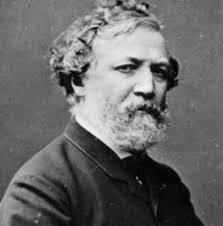
Robert Browning on progress

“Progress is the law of life: man is not Man as yet.”

―Robert Browning

Born: May 7, 1812
Died: December 12, 1889 (aged 77)
Nationality: British
Occupation: Poet
Bio: Robert Browning was an English poet and playwright whose mastery of dramatic verse, especially dramatic monologues, made him one of the foremost Victorian poets.