All posts by Mike Zonta

An Anarchist Quaker’s Prayer to Soothe Anxiety

What my therapist said when she closed her office because of coronavirus.

BY AYU SUTRIASA  MAR 24, 2020 (Yesmagazine.org)
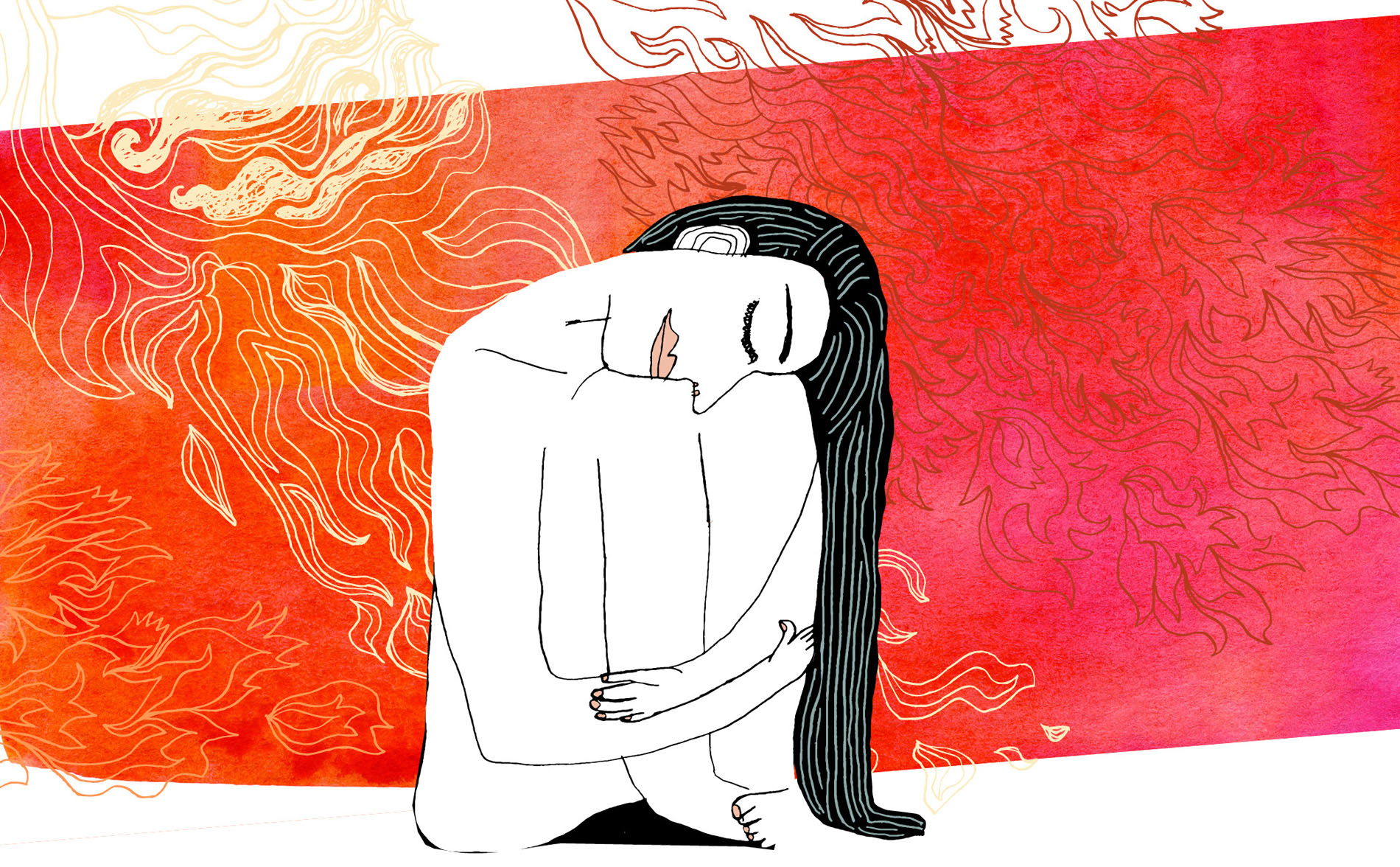
Hello sweet one. I see how much you care about the world, about your communities, about all of us surviving plagues and capitalism and a world on fire.

That clench in your throat, the knot in your gut, the tightness in your breath — this is how our bodies try to hold the world’s anguish. We write the wrongness into our bodies, a beautiful and devastating lament.

Just because your body can hold all the tragedy, the panic, the tension, that it is holding right now, that doesn’t mean that you must go on holding it, all, forever. The loving grandmother in you knows this to be true.

Set it down. Somewhere nearby, so you can pick it up again when you need to, but just for a moment, relinquish your illusions of control. Allow yourself to See the many-headed Truth monster: it might not all be okay. It might end in flames and death and horror, no matter what you do. Take a moment to acknowledge how fucking awful and sad that Truth is. And how not even the worst possible scenario would take away from your inherent worthiness.
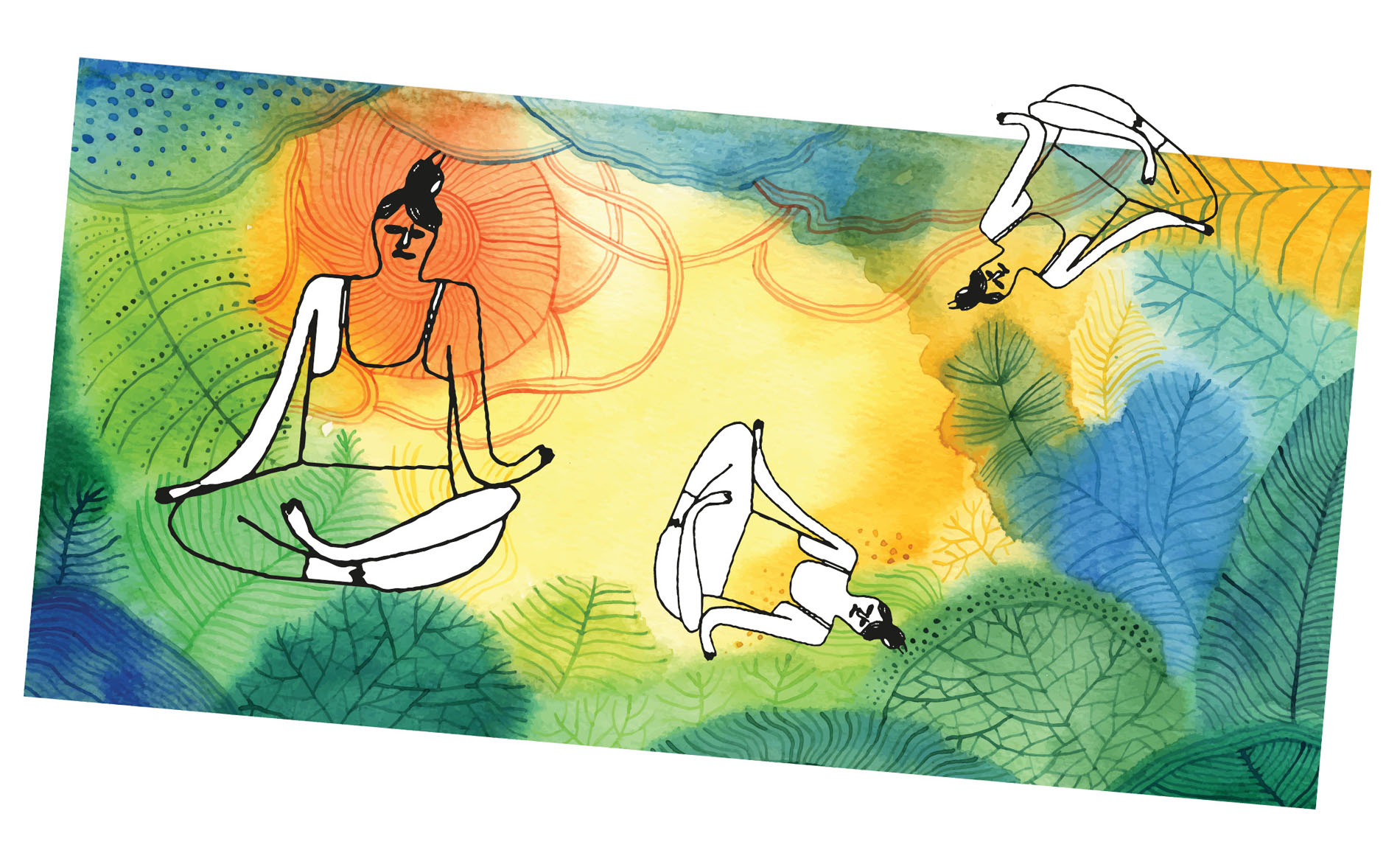
Simultaneously, it is True that human beings have always fought for one another, cared for one another fiercely, and carried the world’s anguish in our bodies. And there are small Truths, like that we cannot control the future, no matter how much we wish we could. (Don’t worry when the Truths contradict one another, real Truths often do.)

No matter what, whether it turns out okay in the end or not, you carry the Divine within you. You are Enough, not because of the things you do but because of who you are fundamentally. Intrinsically. Always and without exception. Take a breath or two to allow yourself to Know this.
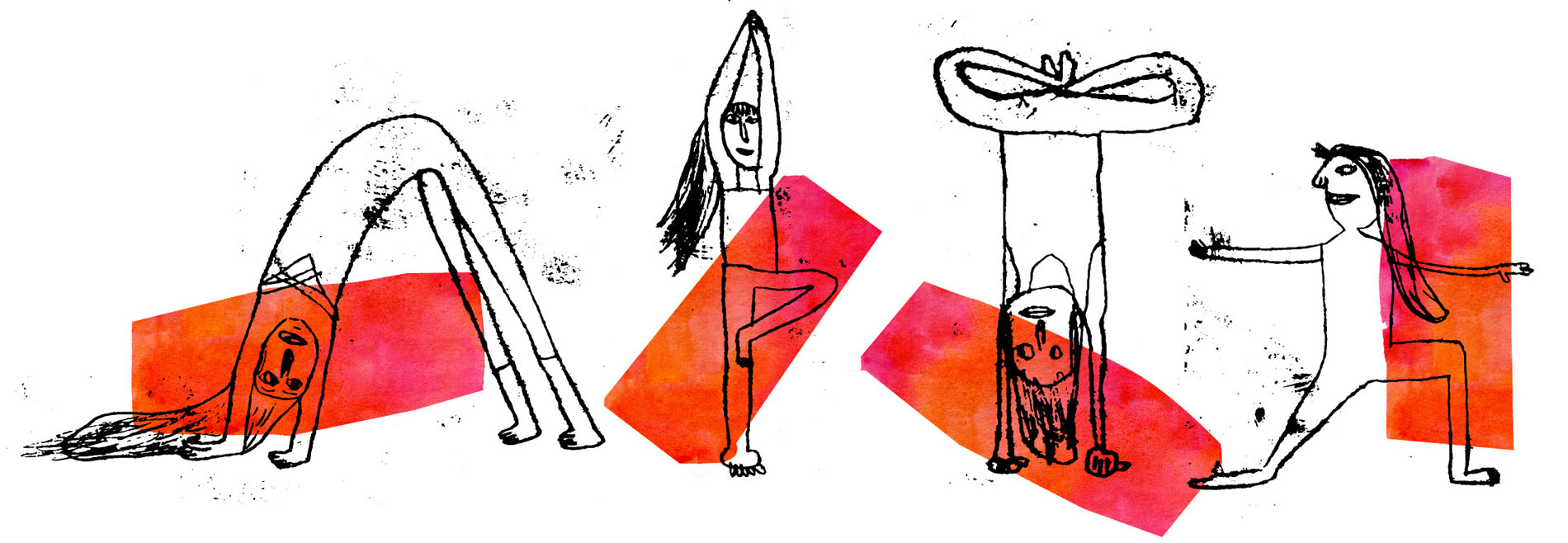
And when we pick up the anxiety again, let us aim for flexibility. Movement space for breath to get in and out of your rib cage, gentleness for the things we can’t do, and Integrity giving us the strength and resolve to turn our sometimes-excruciating caring into solidarity, mutual aid, and direct action.

We are each one person, breathing this one breath, with common Divinity.

We can do this. Together.
Note: This poem was an email response from my therapist when she closed her office because of coronavirus. The author has given permission for YES! to publish it, but wishes to remain anonymous. —Ayu Sutriasa


AYU SUTRIASA is the digital editor for YES!

CONNECT:  LinkedIn 

The Wonders of Possibility: Lewis Thomas on Our Human Potential and Our Cosmic Responsibility to the Planet and to Ourselves

By Maria Popova (brainpickings.org)

lewisthomas_mahler.jpg?fit=320%2C471

“Our origins are of the earth,” Rachel Carson wrote in contemplating science and our spiritual bond with nature.“And so there is in us a deeply seated response to the natural universe, which is part of our humanity.” By channeling this elemental human response in immensely lyrical prose about the science of the natural world — a testament to Susan Sontag’s assertion that “information will never replace illumination” — Carson awakened the modern environmental conscience and pioneered a new aesthetic of writing and thinking about the poetic truths radiating from the facts of physical reality.

Few science writers in the decades since have ascended to the top of the hierarchy of explanation, elucidation, and enchantment, which Carson crowned. Among them was the great physician, etymologist, poet, and essayist Lewis Thomas (November 25, 1913–December 3, 1993), who explores that delicate relationship between humanity and the rest of nature in a splendid essay titled “Seven Wonders,” found in his timelessly rewarding 1983 collection Late Night Thoughts on Listening to Mahler’s Ninth Symphony (public library).

lewisthomas1.jpg?resize=595%2C737

Lewis Thomas (Photograph: NYU archives)

With an eye to the consciousness-reconfiguring cosmic perspective which twentieth-century space exploration unlatched, Thomas writes:

2e292385-dc1c-4cfe-b95e-845f6f98c2ec.png

We named the place we live in the world long ago, from the Indo-European root wiros, which meant man. We now live in the whole universe, that stupefying piece of expanding geometry. Our suburbs are the local solar system, into which, sooner or later, we will spread life, and then, likely, beyond into the galaxy. Of all celestial bodies within reach or view, as far as we can see, out to the edge, the most wonderful and marvelous and mysterious is turning out to be our own planet earth. There is nothing to match it anywhere, not yet anyway.

hereweare_oliverjeffers2.jpg

Illustration by Oliver Jeffers from Here We Are: Notes for Living on Planet Earth

Building on Carson’s far-reaching ecological legacy, Thomas adds:

2e292385-dc1c-4cfe-b95e-845f6f98c2ec.png

[Earth] is a living system, an immense organism, still developing, regulating itself, making its own oxygen, maintaining its own temperature, keeping all its infinite living parts connected and interdependent, including us. It is the strangest of all places, and there is everything in the world to learn about it. It can keep us awake and jubilant with questions for millennia ahead, if we can learn not to meddle and not to destroy. Our great hope is in being such a young species, thinking in language only a short while, still learning, still growing up.

We are not like the social insects. They have only the one way of doing things and they will do it forever, coded for that way. We are coded differently, not just for binary choices, go or no-go. We can go four ways at once, depending on how the air feels: gono-go, but also maybe, plus what the hell let’s give it a try. We are in for one surprise after another if we keep at it and keep alive. We can build structures for human society never seen before, thoughts never thought before, music never heard before.

In a lovely counterpoint to today’s fashionably glib view of our potential and our shared future, Thomas echoes John Cage’s insistence that “it is essential that we be convinced of the goodness of human nature” and concludes:

2e292385-dc1c-4cfe-b95e-845f6f98c2ec.png

Provided we do not kill ourselves off, and provided we can connect ourselves by the affection and respect for which I believe our genes are also coded, there is no end to what we might do on or off this planet.

At this early stage in our evolution, now through our infancy and into our childhood and then, with luck, our growing up, what our species needs most of all, right now, is simply a future.

beastlyverse12.jpg

Illustration from Beastly Verse by JooHee Yoon

Complement this particular portion of Thomas’s wholly magnificent Late Night Thoughts on Listening to Mahler’s Ninth Symphony with Rachel Carson’s courageous letter of dissent against the destruction of nature and Henry Beston — who influenced Carson — on relearning to be nurtured by nature and how our relationship to the Earth reveals us to ourselves, then revisit Lewis Thomas on how we grow from ignorance to knowledge.

WE FINALLY HAVE A NAME FOR THAT SHITTY CORONAVIRUS FEELING

“WE KNOW THIS IS TEMPORARY, BUT IT DOESN’T FEEL THAT WAY, AND WE REALIZE THINGS WILL BE DIFFERENT.”

BY VICTOR TANGERMANN / March 25, 2020 (futurism.com)

IT’S A SUNNY DAY OUTSIDE. I look out the window. The way the yard behind my apartment looks — peaceful, quiet — almost makes it seem like it’s just another Wednesday morning. But it’s not. There’s a lump in my throat. It’s not a fever, or a cough. It’s something I just can’t put my finger on. It’s not anxiety; it’s something more pervasive.

The coronavirus pandemic has invaded almost every aspect of our lives, from the way we work, to the way we interact with strangers on sidewalks. The fact that nobody has any answers doesn’t help. Nobody knows how long this will last. Nobody knows if their loved ones will be safe. Nobody knows if their job is safe.

It’s a pervasive feeling, it won’t go away, and — even as someone paid to write every day — it’s impossible to characterize with words, despite my best efforts.

But that doesn’t mean we can’t try. In an excellent, must-read interview with the Harvard Business Review, author and leading expert on grief David Kessler argues that what we’re collectively feeling is grief. And not just one kind of grief.

Kessler’s description of that unnerving feeling hits close to home — and might just help you cope just a little bit better with a very shitty situation.

“We feel the world has changed, and it has,” Kessler told HBR. “We know this is temporary, but it doesn’t feel that way, and we realize things will be different. Just as going to the airport is forever different from how it was before 9/11, things will change and this is the point at which they changed.”

And we’re not alone in that. “The loss of normalcy; the fear of economic toll; the loss of connection,” he added, “is hitting us and we’re grieving. Collectively. We are not used to this kind of collective grief in the air.”

One kind of grief we’re feeling he characterizes as “anticipatory grief,” according to Kessler, as in, when someone tests positive, or even, the concern that they will, and that their outcome may be dire. One word for that anticipatory grief is “unhealthy.” And another, he points out, is “anxiety,” physical pain that can manifest itself through grief:

Our mind begins to show us images. […] Our goal is not to ignore those images or to try to make them go away — your mind won’t let you do that and it can be painful to try and force it. The goal is to find balance in the things you’re thinking.

The fact that the enemy’s invisible is not helping, either, he explains, and it breaks our sense of safety.

So how do we move on? How do we process this collective grief? Rather than rattling off the stages of grief — you might be familiar with them already — Kessler suggests it’s not something that’s linear. Denial, anger, bargaining, sadness, and acceptance don’t just hit you one-by-one.

But that doesn’t mean there’s nothing we can do to process this unnerving feeling. “To calm yourself, you want to come into the present,” Kessler advised. “This will be familiar advice to anyone who has meditated or practiced mindfulness but people are always surprised at how prosaic this can be.”

You should also let go of what you can’t control. “What your neighbor is doing is out of your control. What is in your control is staying six feet away from them and washing your hands. Focus on that.” He also urges focusing on emotions you can control, like patience, with other people as stressed as you are. Or doing that which is within your control: Talking to people. Naming your emotions. It gives you, according to Kessler, a therapeutic sense of recognition and release:

And if it all feels like too much, talk it out. “When you name it, you feel it and it moves through you,” says Kessler. “Emotions need motion.”

” If we allow the feelings to happen, they’ll happen in an orderly way, and it empowers us,” concludes Kessler. “Then we’re not victims.”

Music: Muscle Shoals

YouTube MoviesYouTube Movies Located alongside the Tennessee River, Muscle Shoals, Alabama has helped create some of the most important and resonant songs of all time. Overcoming crushing poverty and staggering tragedies, Rick Hall brought black and white together to create music for the generations. He is responsible for creating the “Muscle Shoals sound” and The Swampers, the house band at FAME Studios that eventually left to start its own successful studio known as Muscle Shoals Sound. Gregg Allman and others bear witness to Muscle Shoals’ magnetism, mystery and why it remains influential today.

O, My Corona

A poem by Mike Zonta, H.W., M.

O, my Corona
You embrace me too tight.
I need to inspire
not expire.

A lower form of intelligence
always responds to a higher form,
Our Sadah once said.

If I am the higher, let me just say:

You are holding us all too tight!

If you kill your hosts, your hosts will kill you.
It’s the Golden Rule or something like that.

Being is not a competition. It’s a right.

You are like the panicked buyer
hoarding toilet paper as if it were more valuable
than life.

You are as panicked as we are, if a virus can be panicked.

You are on a worldwide procreation orgy, getting as much as you can for as long as you can, panicked that it will all run out (’cause it will).

You have us all obedient as slaves,
standing in line, 6 feet apart.

Don’t come too close, don’t trust the stranger, don’t touch your face. And, God, don’t touch anybody else’s face.

They might have it.

We all might have it.

We all do have it.

But your orgy will end.
And the world will return to normal once again.

The mob will retreat and we’ll all smile at each other a little sheepishly, having forgotten who we are.

And we’ll tell our grandchildren about the great Corona.

My great Corona.

MESSAGE ABOUT THE COVID-19 PANDEMIC

By William Fennie, H.W., M.

“This is a moment for Americans to show their best qualities”

Governments around the world are acting to contain the spread of COVID-19. The virus has claimed many lives already, and many of the stories emerging from early-hit zones, like Italy, are heartbreaking.

The Prosperos perspective on this crisis, and situations like it, comes from our fundamental teaching that all is Mind and Mind is the unfolding of Divine Intention. Behind the appearance of a possibly terrifying threat there can be only one reality which is ever whole, ever sound, ever complete. The threat is a challenge that motivates deeper thought on many fronts, not simply questions of how best to respond to the medical emergency.

The solution to this crisis is in Mind; it is Mind that will find the vaccine; it is Mind that is responding to contain and ameliorate the impact; and it is Mind from which all of our capacity for caregiving has developed.

Over millenia we have been faced with innumerable crises and we have always risen to the occasion – not ignoring the glaring historical examples of individuals who could not make that leap.

The Prosperos is confident that this challenge, too, will be met; that it will call forth genius and acts of astonishing courage; and we encourage our students to practice the tools of Translation and Releasing the Hidden Splendour, whereby we penetrate the sense evidence of material claims and release the hidden Divine Intention which is the one and only substance of life. There is no doubt that such work produces new insights in Mind, not simply for the practitioner but for ALL.

More at: https://theprosperos.org/covid_response

The Prosperos COVID-19 / World Issues Listening & Dialog Group

Aloha Friends,

We are starting a listening & dialog group to discuss, share our concerns, feelings, thoughts, sense testimony, conclusions and anything else you’d like to bring about the current world crisis.

We’ll do these every Friday at 5:30 PM Pacific / 6:30 Mountain / 7:30 Central / 8:30 Eastern indefinitely.

Join us in community and spirit for this open discussion.

Pam Rodolph and I will be your hosts.

All are welcome.

This will be a Zoom online meeting.  See below for details.

The Prosperos is inviting you to a scheduled Zoom meeting.

Topic: Prosperos Listening & Dialog Group

Friday at 5:30 PM Pacific / 6:30 Mountain / 7:30 Central / 8:30 Eastern

Join Zoom Meeting

https://zoom.us/j/579891643

–Rick Thomas, H.W., M.

Ontology

From Wikipedia, the free encyclopedia.

Parmenides was among the first to propose an ontological characterization of the fundamental nature of reality.

Ontology is the philosophical study of being. More broadly, it studies concepts that directly relate to being, in particular becomingexistencereality, as well as the basic categories of being and their relations.[1] Traditionally listed as a part of the major branch of philosophy known as metaphysics, ontology often deals with questions concerning what entities exist or may be said to exist and how such entities may be grouped, related within a hierarchy, and subdivided according to similarities and differences.

Etymology

The compound word ontology (“study of being”) combines onto (Gr. ὄνon,[2] gen. ὄντος, ontos, “being; that which is”) and -logia (Gr. -λογία, “logical discourse”). See classical compounds for this type of word formation.[3][4]

While the etymology is Greek, the oldest extant record of the word itself, the New Latin form ontologia, appeared in 1606 in the work Ogdoas Scholastica by Jacob Lorhard (Lorhardus) and in 1613 in the Lexicon philosophicum by Rudolf Göckel (Goclenius).

The first occurrence in English of ontology as recorded by the OED (Oxford English Dictionary, online edition, 2008) came in a work by Gideon Harvey (1636/7–1702): Archelogia philosophica nova; or, New principles of Philosophy. Containing Philosophy in general, Metaphysicks or Ontology, Dynamilogy or a Discourse of Power, Religio Philosophi or Natural Theology, Physicks or Natural philosophy, London, Thomson, 1663.[5] The word was first used in its Latin form by philosophers based on the Latin roots, which themselves are based on the Greek.

Leibniz is the only one of the great philosophers of the 17th century to have used the term ontology.[6]

Overview

Some philosophers, notably in the traditions of the Platonic school, contend that all nouns (including abstract nouns) refer to existent entities.[citation needed] Other philosophers contend that nouns do not always name entities, but that some provide a kind of shorthand for reference to a collection either of objects or of events. In this latter view, mind, instead of referring to an entity, refers to a collection of mental events experienced by a personsociety refers to a collection of persons with some shared characteristics, and geometry refers to a collection of specific kinds of intellectual activities.[7][need quotation to verify] Between these poles of realism and nominalism stand a variety of other positions.

More at: https://en.wikipedia.org/wiki/Ontology