Date: Sunday, April 19, 2020
Time: 11 AM Pacific / 12 PM Mountain / 1 PM Central / 2 PM Eastern Time
Join Zoom Meetinghttps://zoom.us/j/332275676
Find your International number: https://zoom.us/u/aoRqiholN

Date: Sunday, April 19, 2020
Time: 11 AM Pacific / 12 PM Mountain / 1 PM Central / 2 PM Eastern Time
Join Zoom Meetinghttps://zoom.us/j/332275676
Find your International number: https://zoom.us/u/aoRqiholN
April 14, 2020 (amp.wbur.org)
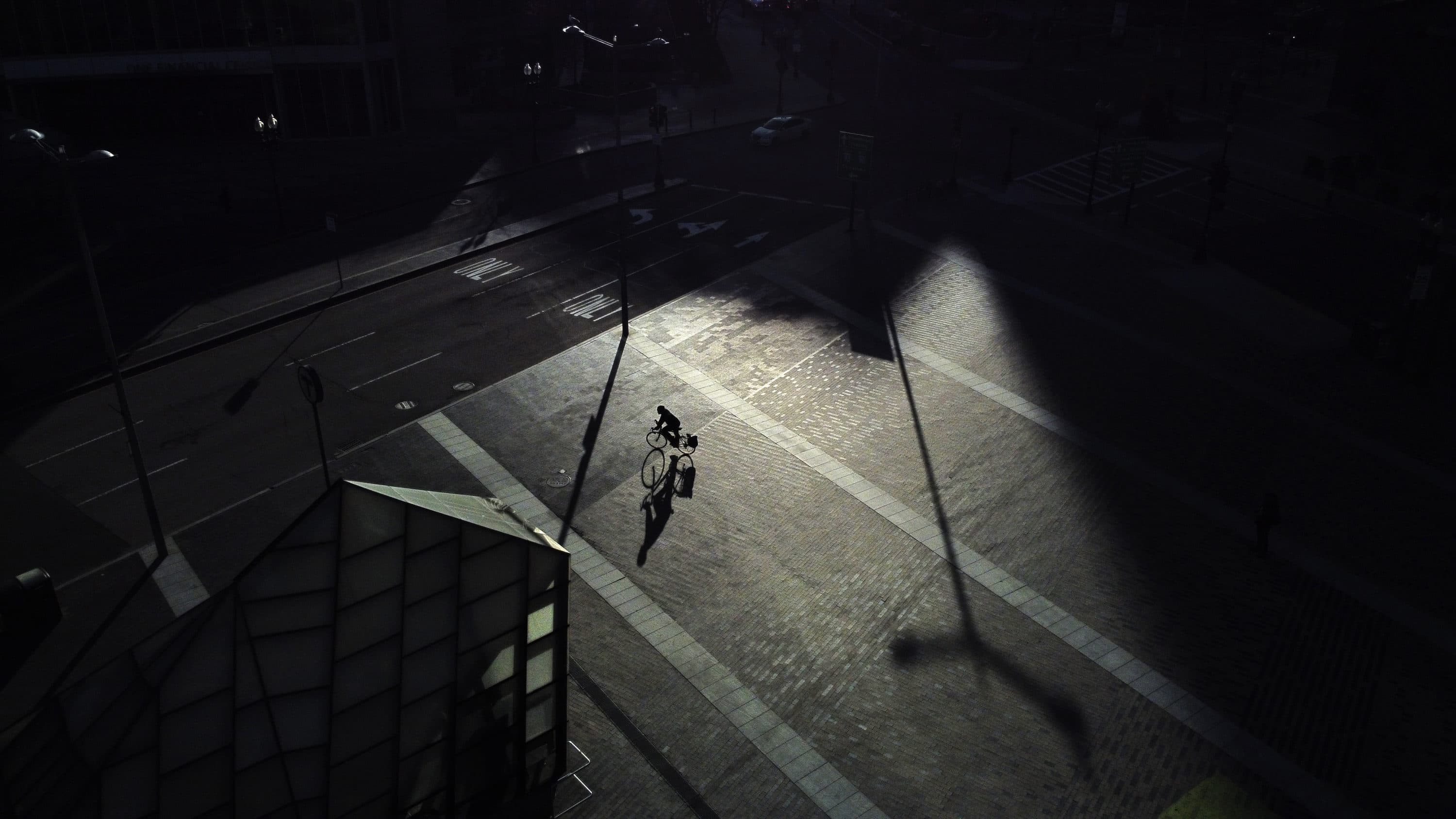
First, a primer: Gaslighting, if you don’t know the word, is defined as manipulation into doubting your own sanity. As in, Carl made Mary think she was crazy, even though she clearly caught him cheating. He gaslit her.
Pretty soon, as the country begins to figure out how to “reopen” and move forward, very powerful forces will try to convince us all to get back to normal.
Billions of dollars will be spent on advertising, messaging and media content to make you feel comfortable again. It will come in traditional forms — a billboard here, commercials there — and in new-media forms, like memes.
In truth, you crave that feeling of normalcy. We want desperately to feel good again, to get back to the routines of life, to not lie in bed at night wondering how we’re going to afford our rent and bills, to not wake to an endless scroll of human tragedy on our phones, to have a cup of perfectly brewed coffee and simply leave the house for work. The need for comfort will be real, and it will be strong. And every brand in America will come to your rescue, dear consumer, to help take away that darkness and get life back to the way it was before the crisis. I urge you to be well aware of what is coming.
Pretty soon, as the country begins to figure out how to “reopen” and move forward, very powerful forces will try to convince us all to get back to normal … I urge you to be well aware of what is coming.
For the last century, the advertising industry has been centered around this cardinal principle: Find the consumer’s problem and fix it with your product. When the problem is practical and tactical, the solution is “as seen on TV” and available at Home Depot. Command strips and Magic Erasers will save me from having to repaint. Elfa shelving will get rid of the mess in my closet. The Ring will let me see who’s on the porch if I can’t take my eyes off Netflix.
But when the problem is emotional, the fix becomes a new staple in your life, and you become a lifelong loyalist. Coca-Cola makes you happy. A Mercedes makes you successful. Taking your family on a Royal Caribbean cruise makes you special.
Smart marketers know how to highlight what brands can do for you to make your life easier. But brilliant marketers know how to rewire your heart. And, make no mistake, the heart is what has been most traumatized this last month. We are, as a society, now vulnerable in a whole new way.
What the trauma has shown us, though, cannot be unseen.
A carless Los Angeles has clear blue skies. In a quiet New York, you can hear the birds chirp in the middle of Madison Avenue. Coyotes have been spotted on the Golden Gate Bridge. These are the postcard images of what the world might be like if we could find a way to have a less deadly daily effect on the planet.
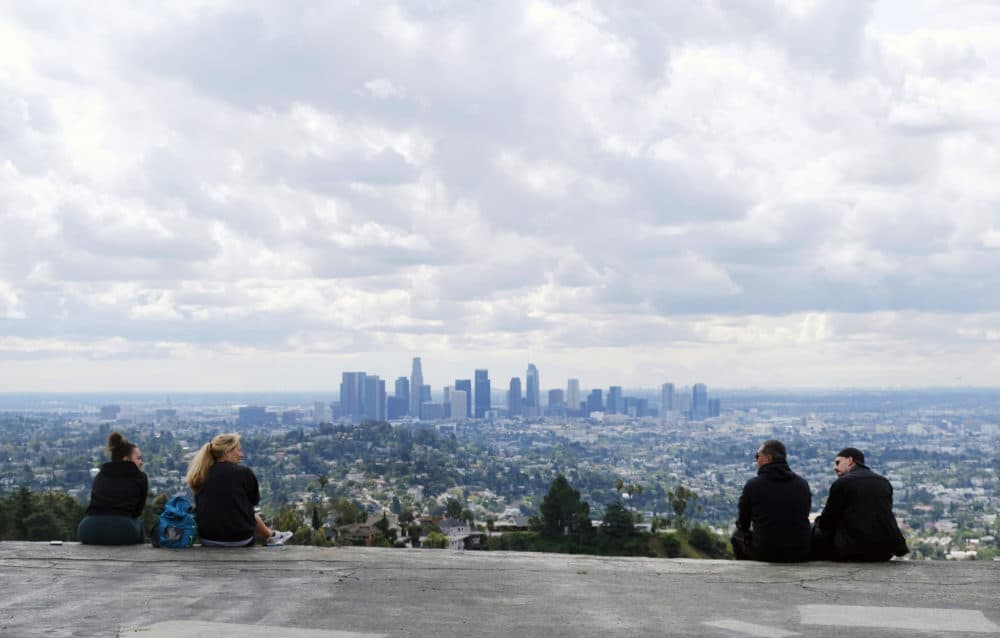
What’s not fit for a postcard are the other scenes we have witnessed: a health care system that cannot provide basic protective equipment for its frontline; small businesses — and very large ones — that do not have enough cash to pay their rent or workers, sending over 16 million people to seek unemployment benefits; a government that has so severely damaged the credibility of our media that 328 million people don’t know who to listen to for basic facts that can save their lives.
The cat is out of the bag. We, as a nation, have deeply disturbing problems. You’re right. That’s not news. These are problems we ignore every day, not because we’re terrible people or because we don’t care, but because we don’t have time.
We are, as a society, now vulnerable in a whole new way. What the trauma has shown us, though, cannot be unseen.
The plain truth is that no matter our ethnicity, race, religion, gender or political party, as Americans we share this: We are busy. We’re out and about hustling to make our own lives work. We have goals to meet and meetings to attend and mortgages to pay — all while the phone is ringing and the laptop is pinging. And when we get home, Crate and Barrel and Louis Vuitton and Andy Cohen make us feel just good enough to get up the next day and do it all over again. It is very easy to close your eyes to a problem when you barely have enough time to close them to sleep.
The greatest misconception among us, which causes deep and painful social and political tension every day in this country, is that we somehow don’t care about each other. White people don’t care about the problems of black America. Men don’t care about women’s rights. Cops don’t care about the communities they serve. Humans don’t care about the environment. These things couldn’t be further from the truth. We do care. We just don’t have the time to do anything about it. Maybe that’s just me. But maybe it’s you, too.
Well, the treadmill you’ve been on for decades just stopped. Bam! And that feeling you have right now is the same as if you’d been thrown off your Peloton bike and onto the ground: What just happened?!
I hope you might consider this: What happened is incredible. It’s the greatest gift ever unwrapped. Not the deaths, not the virus, of course, but The Great Pause. It is, in a word, profound. Please don’t recoil from the bright light beaming through the window. I know it hurts your eyes. It hurts mine, too. But the curtain is wide open.
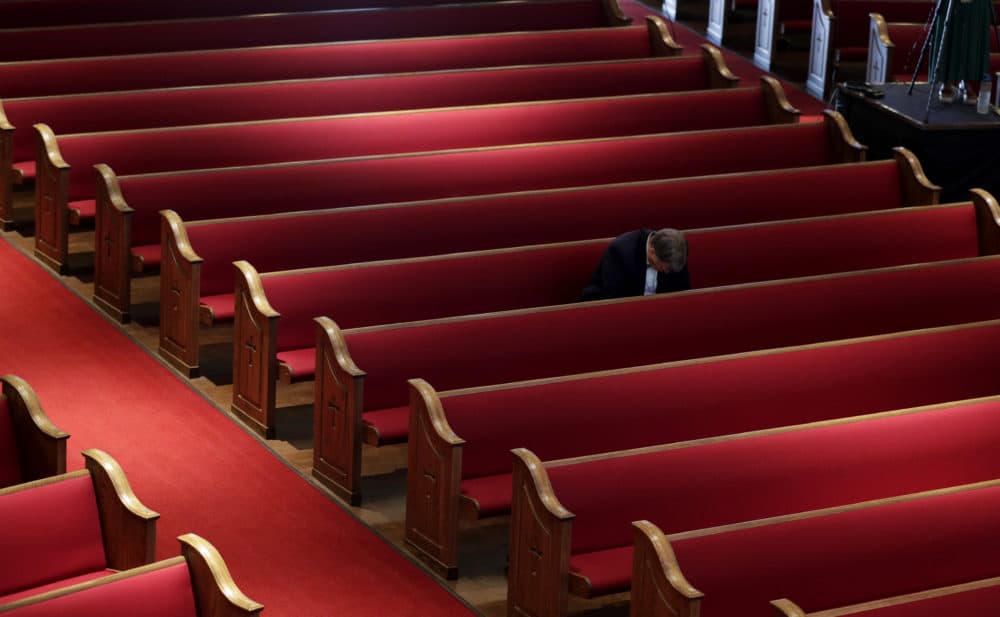
The crisis has given us a once-in-a-lifetime chance to see ourselves and our country in the plainest way. At no other time, ever in our lives, have we gotten the opportunity to see what would happen if the world simply stopped. Here it is. We’re in it. Stores are closed. Restaurants are empty. Streets and six-lane highways are barren. Even the surface of the planet is rumbling less (true story). And because it is rarer than rare, it has brought to light all of the beautiful and painful truths of how we live.
If we want to create a better country and a better world for our kids, and if we want to make sure we are even sustainable as a nation and as a democracy, we have to pay attention to how we feel right now. I cannot speak for you, but I imagine you feel like I do: devastated, depressed and heartbroken.
What a perfect time for Best Buy and H&M and Wal-Mart to help me feel normal again. If I could just have the new iPhone in my hand, if I could rest my feet on a pillow of new Nikes, if I could drink a venti vanilla latte, then this very dark feeling would go away.
From one citizen to another, I implore you: take a deep breath, ignore the deafening noise, and think deeply about what you want to put back into your life.
You think I’m kidding, that I’m being cute, that I’m denying the obvious benefits of having a roaring economy. You’re right. Our way of life is not without purpose. The economy is not, at its core, evil. Brands and their products create millions of jobs. Like people — and most anything in life — there are brands that are responsible and ethical, and there are others that are not. They are all part of a system that keeps us living long and strong. We have lifted more humans out of poverty through the power of economics than any other civilization in history. Yes, without a doubt, Americanism can be a force for good.
But, at the same time, its flaws have been laid bare for all to see. It doesn’t work for everyone. It’s responsible for great destruction. Its intentions have been perverted, and the protection it offers has disappeared. In fact, it’s been brought to its knees by one pangolin (we have reason to believe). We have got to do better and find a way toward a responsible free market.
Until then, get ready, my friends. What is about to be unleashed on American society will be the greatest campaign ever created to get you to feel normal again. It will come from brands, it will come from government, it will even come from each other, and it will come from the left and from the right. We will do anything, spend anything, believe anything, just so we can take away how horribly uncomfortable all of this feels. There will be an all-out blitz to make you believe you never saw what you saw.
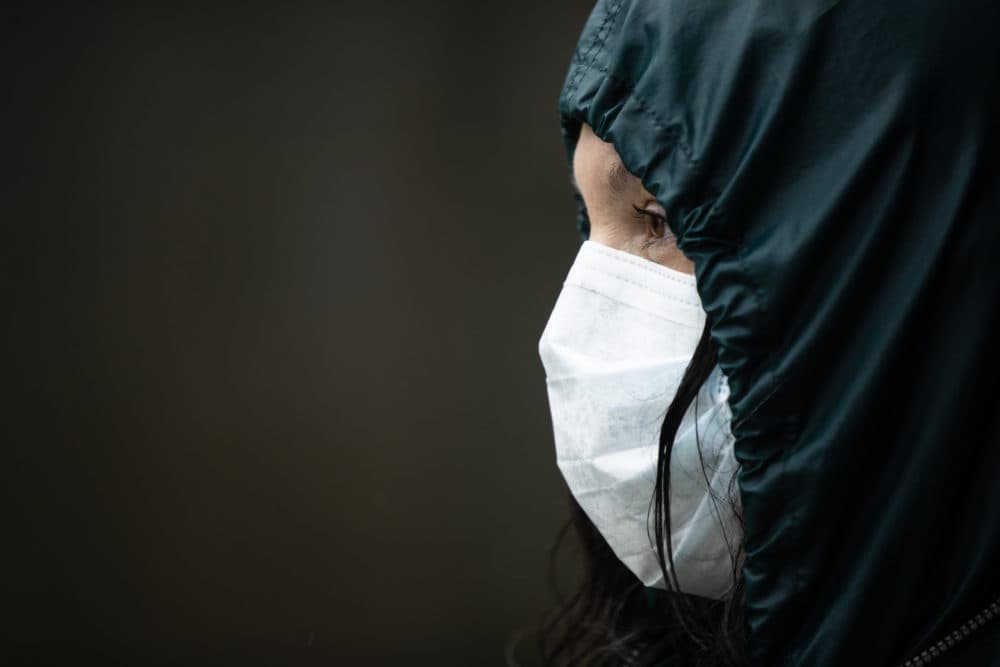
The air wasn’t really cleaner; those images were photoshopped. The hospitals weren’t really a war zone; those stories were hyperbole. The numbers were not that high; the press is lying. You didn’t see people in masks standing in the rain risking their lives to vote. Not in America. You didn’t see the leader of the free world push an unproven miracle drug like a late-night infomercial salesman. That was a crisis update. You didn’t see homeless people dead on the street. You didn’t see inequality. You didn’t see indifference. You didn’t see utter failure of leadership and systems.
But you did. You are not crazy, my friends.
And so we are about to be gaslit in a truly unprecedented way. It starts with a check for $1,200. And it will be a one-two punch from big business and the White House. Both are about to band together to knock us unconscious again. It will be funded like no other operation in our lifetimes. It will be fast. It will be furious. And it will be overwhelming. The Great American Return to Normal is coming.
From one citizen to another, I implore you: take a deep breath, ignore the deafening noise, and think deeply about what you want to put back into your life. This is our chance to define a new version of normal, a rare and truly sacred (yes, sacred) opportunity to get rid of the noise and to only bring back what works for us, what makes our lives richer, what makes our kids happier, what makes us truly proud.
You are not crazy, my friends.
We care deeply about one another. That is clear. That can be seen in every supportive Facebook post, in every meal dropped off for a neighbor, in every Zoom birthday party. We are a good people. And as a good people, we want to define — on our own terms — what this country looks like in five, 10, 50 years. This is our chance to do that. And it’s the best chance we’ll ever get.
We can do that on a personal scale in our homes, in how we choose to spend our family time on nights and weekends, what we watch, what we listen to, what we eat, and what we choose to spend our dollars on and where. We can do it locally in our communities, in what organizations we support, what truths we tell and what events we attend. And we can do it nationally in our government, in which leaders we vote in and to whom we give power. If we want cleaner air, we can make it happen. If we want to protect our doctors and nurses from the next virus — and protect all Americans — we can make it happen. If we want our neighbors and friends to earn a dignified income, we can make that happen. If we want 29.7 million kids to be able to eat lunch if suddenly their school is closed, we can make that happen. And, yes, if we just want to live a simpler life, we can make that happen, too.
But only if we resist the massive gaslighting that is about to come. It’s on its way. Look out.
Julio Vincent Gambuto is a writer/director in NYC and LA. His latest film, “Team Marco,” is currently at film festivals worldwide. You can find out more about him and his work here. A version of this essay was originally posted on Medium.
Follow Cognoscenti on Facebook and Twitter.
(Submitted by Sarah Flynn.)
What is the greatest obstacle to deep meditation? If you ask a thousand spiritual seekers that question, the vast majority of them will give you some version of the same answer. “It’s the mind. It’s my busy, relentless mind. I just have so many thoughts. And this seemingly endless stream of thoughts prevents me from really going deep in meditation.”
I don’t know exactly where this rumor got started. But somewhere along the way, nearly all of us learned that meditation is about having a “quiet mind,” or eliminating the stream of thoughts, or at least finding a way to focus our mind or make it more “spiritual.”
And as a result, nearly everyone meditating today is engaged in a misguided–and often exasperating–project of trying to find a way to do something about their active mind.
Some of us are trying to get our mind to be quiet. Others are trying to get it to produce more peaceful and spiritual thoughts. And others are trying to find somewhere to place our attention other than our mind–such as our body, or God or our higher self.
The idea that meditation is about having a “still” mind is possibly the most pervasive assumption about meditation. Countless people have become frustrated and given up on meditation because they were unable to quiet the mind.
But what if I told you the mind wasn’t an obstacle to meditation? What if the presence of thoughts had no impact on your ability to meditate at all?
I teach meditation in a spiritual context, which means that the ultimate goal of the practice is the discovery of our true nature. It is a practice designed to open us to enlightened consciousness.
So, the question is: what does a quiet mind have to do with enlightened consciousness?
To answer this question, imagine what it would be like to go through your entire life without any thoughts. Now, take it a step further and imagine a world in which nobody was thinking anything at all. Ever.
It’s not a very inspiring picture, is it? If you take it far enough, you end up with the entire human race on intravenous feeding tubes lying there in a vegetative state. Not very enlightened, to say the least.
Now imagine an enlightened world–a world in which all human beings are awake to their higher nature, living in awakened consciousness. Clearly it’s not a world without thoughts. So is it a world in which everyone only thinks enlightened thoughts? Not exactly. And this brings us back to meditation.
Meditation is not about quieting the mind. Nor is it about training the mind to only think good or spiritual thoughts. Meditation, properly understood, is about transforming your relationship to the mind. It’s about cultivating the ability to disengage from the mind, to no longer identify with the mind, so that you can discern and discriminate which thoughts are worth listening to and acting on, and which ones aren’t.
What if you could learn how to not identify with your mind, to not compulsively engage with your thoughts? What if you could learn how, even when there are thoughts present, to not be lost in thoughts, to not mechanically follow the thought stream wherever it goes?
Our minds give us trouble because they are deeply conditioned to react in habitual and predictable ways based on past experiences. We’re all embedded in countless habits of mind that dictate much of our behavior.
Meditation has the potential to liberate you from the mind, which means that no matter how much thought is present, you’re not lost in it, you’re not compulsively believing it, you’re not at the effect of it, you’re not afraid of it.
Freedom from the mind means freedom in the face of the mind. It doesn’t mean freedom from having a mind. It means you are no longer enslaved to your conditioned mind.
So, next time you sit down to meditate, instead of trying to find a way to quiet your mind, simply make the decision to not engage with your mind. That means that when thoughts arise, even if they are very interesting thoughts, we choose not to give them our attention.
One of the things that will happen as you meditate in this way is that you’ll start to discover that you are not your thoughts, and that you are not even the generator of most of the thoughts you experience. Thoughts just arise spontaneously and somewhat mechanically without any volition on your part. They just keep surfacing; they keep arising on their own.
From this vantage point, you begin to see that there is a choice you have, which is to get interested in the content of the thought, to get involved in the thought–or to leave it alone.
As you continue with this practice, you eventually come upon a startling discovery–that the content of your mind doesn’t need to change in order for you to be able to meditate. In fact, the content of your mind doesn’t need to change for you to be awakened.
That’s because the mind is not the problem. Even having a very active mind is not a problem. In many ways, the power of this practice reveals itself more fully when you have an active mind because it’s in those moments that you can begin to discover directly that your true nature is already free, even when your mind is in chaos.
One of the primary insights of enlightenment is that nothing is an obstacle to your liberation. It doesn’t matter if you are in the midst of difficult circumstances, or are experiencing painful emotions, or have a very busy, active mind. You’re already free no matter what happens. Consciousness is not at the effect of what arises within it. Who and what you truly are is not governed by the content of your mind from one moment to the next.
If you had to have a quiet mind and a peaceful emotional state to be enlightened, I think it’s safe to say that nobody would have ever been enlightened in the history of the world.
Why? Because we’re human animals with extremely complex brains and deep survival instincts, living active, engaged lives, swept up in a powerful cultural momentum. Our minds are active and reactive in ways that are beyond our control.
Spiritual liberation begins to dawn when you discover that your thoughts and feelings have no control over you, that you don’t have to believe or even listen to your mind. In that realization, an extraordinary experience of inner freedom begins to emerge out of seemingly nowhere and it changes everything.
This inner freedom brings with it numerous remarkable qualities, but it’s worth noting that one of the most noticeable transformations that occurs as we awaken is a profound shift in our way of knowing.
The birth of awakened consciousness gives us access to a different kind of knowing than we can access through mere thinking alone. As we continue our practice of being free from the mind, we find that we begin to gain access to a new, holistic “wisdom capacity” that seems to come from beyond what we normally think of as “our mind.” This wellspring of spontaneously arising wisdom flows naturally and freely, meeting the needs of each moment with surprising accuracy and clarity.
At first, it almost seems like a supernatural ability. But over time, we realize that it is not so much supernatural as it is natural, organic and integrative. It includes our learned knowledge as well as things we never learned. It includes intuition, somatic or bodily knowing as well as “field knowing” or collective wisdom which organically integrates the perspectives of others.
It’s an integrative, holistic wisdom faculty which doesn’t reject thought. It transcends and includes it in a mysterious wider form of knowing that again and again demonstrates its reliability as a profound source of wisdom that we can relax into and trust to guide us.
A still mind is something we may experience in moments of meditation, but it’s not the ultimate goal, and if we become attached to it, it can even prevent us from discovering meditation’s true potential to catalyze spiritual awakening.
What is ultimately much more enlightening is learning how to let go of your mind regardless of how active it might be. By doing that, you discover the possibility of being free of your mind no matter what it’s doing, which is ultimately much more liberating than merely “shutting it up.”
HooverInstitution Recorded on March 27, 2020 Dr. Jay Bhattacharya is a professor of medicine at Stanford University. He is a research associate at the National Bureau of Economic Research and a senior fellow at both the Stanford Institute for Economic Policy Research and the Stanford Freeman Spogli Institute. His March 24, 2020, article in the Wall Street Journal questions the premise that “coronavirus would kill millions without shelter-in-place orders and quarantines.” In the article he suggests that “there’s little evidence to confirm that premise—and projections of the death toll could plausibly be orders of magnitude too high.” In this edition of Uncommon Knowledge with Peter Robinson we asked Dr. Bhattacharya to defend that statement and describe to us how he arrived at this conclusion. We get into the details of his research, which used data collected from hotspots around the world and his background as a doctor, a medical researcher, and an economist. It’s not popular right now to question conventional wisdom on sheltering in place, but Dr. Bhattacharya makes a strong case for challenging it, based in economics and science. For further information: https://www.hoover.org/publications/u… Interested in exclusive Uncommon Knowledge content? Check out Uncommon Knowledge on social media! Facebook: https://www.facebook.com/UncKnowledge/ Twitter: https://www.twitter.com/UncKnowledge/ Instagram: https://instagram.com/uncommon_knowle…
ILLUSTRATION BY PETER ZELEI IMAGES / GETTY IMAGES
A Canadian emergency doctor connects the dots between human and environmental health.
BY BREANNA DRAXLER – APR 13, 2020 – yesmagazine.org
As COVID-19 continues its deadly sweep across the world map, Canada stands out. The country has markedly fewer cases than, for example, the U.S. As of April 8, Canada had 18,000 cases to the United States’ 403,000. Despite the difference in response and scale, the virus is a major disruption to Canadians and their economy. And disruptions, as historic examples reinforce, create opportunities for positive change.
Courtney Howard is an emergency doctor in Yellowknife, Canada. She serves a patient population that, so far, has only seen one case of COVID-19 but is living in one of the most rapidly warming climates in the world. Howard’s emergency department serves the entire high arctic in Canada’s Northwest Territories, including many Indigenous and frontline communities experiencing climate change firsthand. This has huge consequences for health, including food security, cultural sharing, and mental health. She sees the response to coronavirus and the resulting investments as the perfect opportunity to address both new and long-standing threats to health.
The Canadian government, for example, has announced plans to fund the cleanup of abandoned oil and gas wells, which are a toxic risk to communities and would employ oil and gas workers who have been laid off. Such actions, Howard underscores, must support people’s health now, improve resilience to crises that may happen in the future, and decrease the risk of those crises occurring.
Here she shares her experiences from the COVID-19 crisis and insights on how the outcomes can and should inform conversations on climate. Howard says prioritizing mental health is key to tackling both of these tough issues, which is why she conducted this interview while cross-country skiing.
This interview has been edited for clarity and length.
Breanna Draxler: How does being an emergency doctor influence your response to crises?
Courtney Howard: I have gut-level reflexes around the need to act quickly in the case of fast-moving illness. I’ve had really discreet experiences of both having acted quickly enough and saved the patient, and having acted in a way that later I went back and said, “That patient died. Could I have done something differently? Could I have been faster? Could I have called in help earlier?” Those are by far the most difficult experiences of any doctor’s career. They’re the ones you remember in the pit of your stomach and keep you awake at night. And so eventually, you end up with an almost Pavlovian response to a time window.
Half of the doctors on my board right now, of the Canadian Association of Physicians for the Environment, are emergency doctors, and I think it’s because we really can’t sit still if we see that lives are at risk and it’s a time-dependent situation. And so, the need to act quickly within time windows and situations where the factors are outside of your control has been shown to be super key in COVID and it’s equally true in climate.
Draxler: How so? Can you speak to how climate is going to exacerbate future crises and make them more frequent?
Howard: I was thinking today, imagine if the Australian wildfires had happened a couple of months later. Or this pandemic had started a couple of months earlier to coincide with the Australian wildfire season. We could have had two incredible crises at the same time. That could easily happen, so we need to look at these increasing weather-related disasters, wildfire-related disasters, and the increasing possibility of further infectious disease related pandemics.
Draxler: Can you talk more about the commonalities that the coronavirus has revealed?
Howard: It’s an event that at first seems unrelated to climate, but it has a lot of consequences for the conversation around climate and health.
I have gotten involved quite early in a movement called “planetary health,” which is the health of human civilization and the state of the natural systems upon which it depends. It turns out that only about 20% of overall health status comes from the work we do inside health structures. What determines the rest are ecological determinants of health—things like soil, climate, water, biodiversity. You can think of those as a nest underpinning everything else, because that has to be stable for us to have the concentrated resources we need to be able to do things like build roads and hospitals and schools and homes. Those financial and economic systems give rise to what we term the social determinants of health, which are things like housing and income and education. Those have direct impacts on our health, and they also are the things we need to have functioning health care structures.
The whole coronavirus outbreak is a giant wake-up call in terms of planetary health, because what it’s saying is, “Hey, there’s a lack of care at the intersection of humans and the natural world, and that’s what allowed a zoonotic virus to make a jump into humans.”
Draxler: What about mental health; what is the impact there?
Howard: Before this started, I was doing a lot of work around eco-anxiety and ecological grief, so heading into this, a lot of people are really, really worried and grieving the changes that we’re anticipating and already seeing in the natural world.
From what I’m seeing online, and also what I’m seeing in the emergency department, people are really anxious right now, too. This is a time when the COVID crisis is demanding a lot of us in terms of buffering different worries and stresses and changes. We’re going to emerge from this really tired, and some of us will be traumatized, and some of us will be grieving. We’re going to look up and realize that “Oh, phew. Now we’re through that crisis, but the other crises didn’t go away.”
That’s the reality: Sometimes there are two emergencies happening at the same time, or more than two, and you have to deal with them both at the same time. Now, I think we are appropriately focusing most of our energy on this problem that needs us the most, but those other emergencies are in the background. And we need to realize that when we lift our eyes up from the COVID emergency, we’re going to be tired and we’re going to hope that those other emergencies are as optimized as possible.
Draxler: What do you mean by optimized?
Howard: Given that we’re in this situation where the economy requires stimulus, this is a chance where we can help solve two crises at the same time. We absolutely need to do that. Every bit of public funds ought to be allocated with health in mind. That means attention to all of the determinants of health—the ecological determinants of health, the social determinants of health, and actual health systems.
What I think is super important right now is making sure that the stimulus funds are going toward the things that both increase our resilience to future disasters and that make them less likely.
Draxler: How do we make sure that happens?
Howard: The book I’m reading right now is Joseph E. Stiglitz’s People, Power, and Profits. What he points out, with regards to the U.S. system, is that a concentration of wealth inevitably results in a concentration of political power. Power comes up every once in a while, as a word, but the concept of inequality and the different ways that that impacts our health in a really dangerous way is something that I think we need to talk more about, because, especially looking at the U.S. context right now, it’s really hampered the pandemic response.
The thing is, a pandemic is something that shows that we’re all in it together. So if people can’t access health care and they can’t get tested, not only are poor people affected, but rich people too. There are all sorts of studies that show that inequality is bad for everybody’s health, not just the people at the bottom, but the whole society. One of the ways that is becoming clear is in terms of access to political power and decision-making power. We need to start talking more explicitly about that, because that will bring us closer to solving the problem.
Draxler: You mentioned building resilience to deal with future crises. What might that look like?
Howard: Things like phasing out coal-fired power plants, that’s a win-win. We transition from coal to healthier energy supplies, and it reduces air pollution, which the World Health Organization has calculated is killing 7 million people a year. Compared to how many people have died of COVID so far, it’s a lot.
What we really need to focus on is this: We’ve been working with this “your house is on fire” narrative as a climate community for a couple years. I think that was appropriate for a time when people weren’t in crisis. But coming out of this [COVID crisis], people are not going to have the energy to talk about that. If we describe a path of safety in a compassionate and inclusive way, we can really make a huge contribution.
Draxler: That is such a different visual than your house being on fire.
Howard: Yeah, totally. When people were complacent, I think that probably was appropriate. But right now, in the emergency department, I’m seeing stress-related headaches, stress-related stomachaches, stress-related neurological disorders. I’m seeing physical trauma, suicidality. And we’re only, what, a month in? We only have one case so far in the Northwest Territories, so that’s just the result of people being at home and worried.
Part of what I would invite people to do is to be really, really diligent about self-care practices right now, because if we bring a centered self to the table at this moment of incredible change, we’re going to be able to make decisions strategically, as opposed to out of emotion, and that’s going to help get the outcome that we’re hoping for.
Essentially, we’re in a generational tipping point. Things have been disrupted, so now we have this opportunity: How can we apply the lessons that we’ve learned to saving lives this century and into the next?
This article was updated on April 14, 2020, to reflect the World Health Organization’s estimate that air pollution kills 7 million people a year.
| BREANNA DRAXLER is the climate editor at YES! She covers all things environmental. |
Thinkers through the ages largely agree that successful politics is mostly about cooperation.
BY CHRISTOPHER FINLAY
11 April 2020 (newstatesman.com)
On 23 March, the Prime Minister Boris Johnson imposed “lockdown” measures across the UK in response to the spread of coronavirus. In addition to social distancing, all citizens were obliged to remain at home for almost all purposes, save for work, purchasing basic supplies, getting medical assistance and exercise.
To underline the seriousness with which the government was taking the matter, Johnson warned: “If you don’t follow the rules, the police will have the powers to enforce them, including through fines and dispersing gatherings.” The following day, Michael Gove added that the police had a range of means to enforce these new rules including fixed-penalty notices, and that “stronger measures” could be introduced.
Words like “enforcement”, “powers” and “strong measures” conjure up an image of politics in which coercion plays a much more prominent role than the citizens of liberal democracies such as the UK are used to. This phenomenon is reinforced when speakers use such language while invoking the experience of wartime Britain. As Johnson put it: “In this fight we can be in no doubt that each and every one of us is directly enlisted.”
But some commentators argue the present crisis shows coercion has always been a central part of political reality and the operation of the state. Only a liberal trapped under the spell of European Enlightenment myths could maintain the delusion that force had been banished from the political life of democracies.
David Runciman, for example, claims that the corona crisis throws into relief “the primary fact that underpins political existence”, which is “that some people get to tell others what to do”. This echoes the dictum attributed to Lenin that politics is always a question of “Who? Whom?” Who will rule and whom will be ruled? But it is to the 17th-century English philosopher Thomas Hobbes that Runciman turns for the truth behind this idea.
According to Hobbes’ argument in Leviathan (1651), the human condition is dominated by the almost inescapable fear of violent death. In a “natural condition”, one where we hadn’t yet come up with the idea of sovereign government, every person would live in constant fear of everyone else. Our bodily needs, our quickness to take offence, and even our diffidence would lead to a near-constant condition of war – a “war of all against all” – in which life would be “solitary, poor, nasty, brutish and short”.
Hobbes thought there was only one way out of this war, and he believed that identifying it teaches us something crucial about the nature of the state. If everyone agreed with everyone else to lay down their natural right to fend for themselves and left one person with full authority to enforce peace, then we might escape the horrors of the natural condition and enjoy the benefits of peace. And in Hobbes’ view, it is precisely through this transfer of authority that we get a sovereign state.
This seems to confirm Runciman’s claim that coercion is an inescapable political fact that involves rulers using their power to maintain order among the ruled. “The ultimate judgements,” Runciman writes, “are about how to use coercive power.” Even in democracies, there is a fundamental political trade-off between “personal liberty and collective choice”. Briefly, the Hobbesian sovereign wields a sword in order to keep the peace.
But there’s another side to Hobbes’ thought: his acute awareness of the fragility concealed behind the appearance of a strong state. The state’s ability to coerce some subjects depends on being empowered to do so by a much larger number of other citizens who recognise the government and believe in its right to rule. In fact, Hobbes wrote Leviathan to warn people that a population that forgets how much its safety depends on an effective state and fails to back the government of the day runs the risk of falling into civil war, as Britain did during the 1640s.
Hobbes’ attempt to convince English citizens to obey overshadows the premise of Leviathan as a book: that the power of the state depends heavily on buy-in from the citizen. Yet in the mid-20th century, Hannah Arendt thought it was vital to remind people of this fact. And in some ways, she is the better guide to the current crisis because she recognised that successful politics consists of cooperation and consensus-building, and that true power is created through verbal persuasion, not coercion.
Unlike Hobbes, who focuses on natural forces that he believes drive individuals apart, Arendt thinks political power stems from a human tendency to congregate. What makes the human individual “a political being” is their unique ability to engage in unforced, spontaneous and unpredictable action. This “enables him to get together with his peers, to act in concert, and to reach out for goals and enterprises that would never enter his mind, let alone the desires of his heart, had he not been given this gift – to embark on something new”
In Arendt’s philosophical vocabulary, “power” refers to the institutions people create when they come together and actively invest in common projects. Political power therefore isn’t about top-down coercion, but about active popular support: “When we say of somebody that he is ‘in power’,” she writes, “we actually refer to his being empowered by a certain number of people to act in their name.” In fact, Arendt believed that the more a government rules by force, the more it erodes its underlying power by alienating those who supported it. It is in this sense that Arendt thinks power and violence are opposites.
Arendt believed the purest manifestation of bottom-up political power appeared in modern revolutions: in the town-hall meetings of 18th-century Americans and in the workers’ councils at the beginning of the Russian Revolution. These are exceptional cases, but a slightly more mundane example took place in the UK in early March. When sports bodies, universities and other organisations began cancelling in-person events ahead of any government ban, they demonstrated the public’s willingness to come together and be led by scientific expertise and pragmatic common sense.
Given that political power ultimately resides in the collective actions of a given population, the UK government’s response to the corona crisis should first and foremost involve cultivating and maintaining the sort of active buy-in that Arendt identifies. On Arendt’s view, the power that comes from active support provides “stability in the ocean of future uncertainty where the unpredictable may break in from all sides.” In short, instead of focusing on coercion and issuing wholesale threats of “stronger measures”, the government must convince as many people as possible to empower it through their voluntary support.
Accordingly, the government should build on the spontaneous action seen in early March by consolidating and widening consensus about the best measures to implement. To do this it must communicate effectively, and establish and maintain its credentials as an authoritative source of reliable guidance and instruction. And when faced with an epidemic, effective leadership relies on the authority that comes from showing that the government’s policies are based on the best available scientific expertise.
The foregrounding of coercion by advocates of Hobbesian political thought distracts from some essential realities in the background of political power. But these realities are actually captured by the famous frontispiece to Leviathan:we see the sovereign state as a giant man whose arm wields the sword of government. But this man is artificial: his body built from the combined bodies of members of the public. The sword does not threaten the citizens themselves. Instead, it hangs over a city whose streets are almost entirely empty. They are empty because, like now, the vast majority of citizens have willingly abandoned those open spaces in order to empower their collective institutions to do the work of protecting them.
Christopher Finlay is professor of political theory at Durham University. He is the author of Terrorism and the Right to Resist and Is Just War Possible?.
This article is part of the Agora series, a collaboration between the New Statesman and Aaron James Wendland, professor of philosophy at the Higher School of Economics. He tweets @ajwendland.
scienceandnonduality https://www.scienceandnonduality.com/ In this session Deepak Chopra discusses the seven universes that human beings have devised to explain existence, leading to the conclusion that the cosmos has evolved to reflect human evolution. This is not a philosophical observation but a “must be so” when it comes to such baffling dilemmas as the origin of life and the appearance of consciousness. The seven universes reflect human perceptions about reality itself. They are; Divine, Classical, Relativistic, Quantum, Uncertain, Conscious and finally, Human. The Human Universe, which is based on the undeniable fact that any universe is only knowable through the human mind’s ability to think about reality. If all knowledge is rooted in human consciousness, perhaps we are viewing not the real universe but a selective one based on the limitations of the brain. This last proposition leads to the conclusion that the apparent evolution of the cosmos since the Big Bang has been parallel to, and totally dependent upon, human consciousness. We are the conscious agents who create reality in our own image. Although totally contradictory to physicalism, the Human Universe may be completely necessary if we have any hope of solving the remaining Big Questions concerning the inexplicable emergence of life and conscious beings in a cosmos that has no necessity to produce either. Deepak Chopra M.D., F.A.C.P., Founder of the Chopra Center for Wellbeing . Deepak Chopra, M.D is the author of more than 70 books, including numerous New York Times bestsellers. His medical training is in internal medicine and endocrinology, and he is a Fellow of the American College of Physicians, a member of the American Association of Clinical Endocrinologists, and an adjunct professor of Executive Programs at the Kellogg School of Management at Northwestern University Columbia Business School, adjunct professor at Columbia Business School, Columbia University, and a Senior Scientist at the Gallup organization. For more than a decade, he has participated as a lecturer at the Update in Internal Medicine, an annual event sponsored by Harvard Medical School’s Department of Continuing Education and the Department of Medicine, Beth Israel Deaconess Medical Center. http://www.choprafoundation.org
scienceandnonduality https://www.scienceandnonduality.com/ With Julia Mossbridge, Donald Hoffman, Edward Frenkel, Anthony Aguirre, Federico Faggin; facilitated by Deepak Chopra. Five different scientists with varying views of consciousness or mind. This panel will be a conversation between these different views to understand their contributions, and to see how they understand each other, and how they relate to other theories of consciousness. The point is to have a genuine deep dialogue between scientific theories of consciousness, to find commonalities, and the meaning of the differences. We will explore whether scientific theories have a consensus about anything relating to consciousness, like an operating definition of consciousness. This panel will be facilitated with an eye from the nondual view of consciousness, to ask questions and address issues in the study of consciousness that can help in looking deeper into the assumptions and conclusions of each theory.
Bathtub Bulletin
Episode #3: Mike Zonta comments on an alternative view of COVID-19 and a breeched birth for the Democratic Party.
Go to: http://bathtubbulletin.com/
Go to: http://occupysf.net/
Go to: https://zontaphotos.com/
Link to “An Alternative Viewpoint About COVID-19 at: http://bathtubbulletin.com/an-alterna…
PHONEBANKING FOR BERNIE, WOMAN GIVES BIRTH TO BABY GIRL, MARCH 22, 2020: On the phone with New York voter and first-time father who was at the hospital for second day of labor with his wife. The wife began to go into labor. He kept me on the phone. It sounded like a breeched birth. He said, “There are two heads.” I didn’t know what to do. I Translated birth. Heard baby cry. It was a little girl. Then I cried.
Link at: http://bathtubbulletin.com/phonebanki…
Music: “Overture to Candide” by Leonard Bernstein
Mike Zonta is an ordained Mentor in The Prosperos and is editor of www.bathtubbulletin.com and www.zontaphotos.com and co-editor of www.occupysf.net.
Dr. Knut Wittkowski, a 35 year epidemiologist, not a politician nor media talking head, gives his views based on facts.
If his explanations become too weighty to understand (he analyses charts detailing growth and descent of cases) then skip to 41:40 and hear out the creator of Brasscheck. Perhaps his explanations are expressed more simply and thus more understandably.
–Bob of Occupy