

Auschwitz Trilogy #1
Survival in Auschwitz
Primo Levi, Philip Roth (Contributor)
The true and harrowing account of Primo Levi’s experience at the German concentration camp of Auschwitz and his miraculous survival; hailed by The Times Literary Supplement as a “true work of art, this edition includes an exclusive conversation between the author and Philip Roth.
In 1943, Primo Levi, a twenty-five-year-old chemist and “Italian citizen of Jewish race,” was arrested by Italian fascists and deported from his native Turin to Auschwitz. Survival in Auschwitz is Levi’s classic account of his ten months in the German death camp, a harrowing story of systematic cruelty and miraculous endurance. Remarkable for its simplicity, restraint, compassion, and even wit, Survival in Auschwitz remains a lasting testament to the indestructibility of the human spirit.
About the author
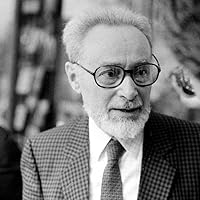
Primo Levi
Primo Levi was an Italian Jewish chemist, writer, and Holocaust survivor whose literary work has had a profound impact on how the world understands the Holocaust and its aftermath. Born in Turin in 1919, he studied chemistry at the University of Turin and graduated in 1941. During World War II, Levi joined the Italian resistance, but was captured by Fascist forces in 1943. Because he was Jewish, he was deported to the Auschwitz concentration camp in 1944, where he endured ten harrowing months before being liberated by the Red army.
After the war, Levi returned to Turin and resumed work as a chemist, but also began writing about his experiences. His first book, If This Is a Man (published in the U.S. as Survival in Auschwitz), is widely regarded as one of the most important Holocaust memoirs ever written. Known for its clarity, restraint, and moral depth, the book offers a powerful testimony of life inside the concentration camp. Levi went on to write several more works, including The Truce, a sequel recounting his long journey home after liberation, and The Periodic Table, a unique blend of memoir and scientific reflection, in which each chapter is named after a chemical element.
Throughout his writing, Levi combined scientific precision with literary grace, reflecting on human dignity, morality, and survival. His later works included fiction, essays, and poetry, all characterized by his lucid style and philosophical insight. Levi also addressed broader issues of science, ethics, and memory, positioning himself as a key voice in post-war European literature.
Despite his success, Levi struggled with depression in his later years, and in 1987 he died after falling from the stairwell of his apartment building in Turin. While officially ruled a suicide, the exact circumstances of his death remain a subject of debate. Nevertheless, his legacy endures. Primo Levi’s body of work remains essential reading for its deep humanity, intellectual rigor, and unwavering commitment to bearing witness.
(Goodreads.com)