
New Thinking Allowed with Jeffrey Mishlove May 20, 2026 Bernardo Kastrup, PhD, is a computer scientist, who has recently completed a second doctoral degree in philosophy. He is author of Rationalist Spirituality, Why Materialism is Baloney, Dreamed Up Reality, Meaning in Absurdity, Brief Peeks Beyond, More Than Allegory, The Idea of the World, and Decoding Schopenhauer’s Metaphysics. He has published several papers on Scientific American’s website arguing for metaphysical idealism. His website is https://www.bernardokastrup.com/. Bernardo is launching a new organization, #EssentiaFoundation, and has produced some wonderful short videos that can be viewed at • New Science About the Nature of Consciousness and • Why Our Reality Is Not What It Seems… . This 2020 conversation covers many topics: varieties of philosophical #idealism, the meanings embodied in Bernardo’s coat of arms, the strengths and weaknesses of anti-establishment feeling, the pressing need for safe nuclear power, projections of the #shadow, is the universe friendly?, and discovering #evil within ourselves. New Thinking Allowed host, Jeffrey Mishlove, PhD, is author of The Roots of Consciousness, Psi Development Systems, and The PK Man. Between 1986 and 2002 he hosted and co-produced the original Thinking Allowed public television series. He is the recipient of the only doctoral diploma in “parapsychology” ever awarded by an accredited university (University of California, Berkeley, 1980). He is also the Grand Prize winner of the 2021 Bigelow Institute essay competition regarding the best evidence for survival of human consciousness after permanent bodily death. He is Co-Director of Parapsychology Education at the California Institute for Human Science. . (Recorded on December 14, 2020)
Monthly Archives: May 2026
Roger Cohen on money

Roger Cohen is a Pulitzer-Prize winning journalist and author. He is a correspondent and former foreign editor and Op-Ed columnist for The New York Times. He has worked as a foreign correspondent in more than 60 countries and was named Paris bureau chief in October 2020. Wikipedia
Born1955 (age 70 years), London, United Kingdom
Camus on the invincible summer within
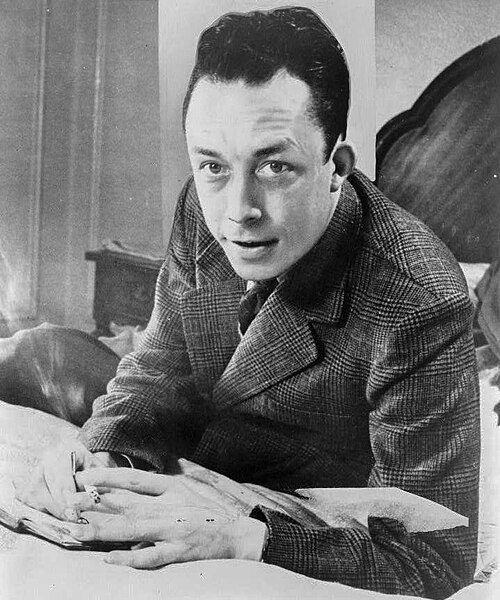
Portrait from New York World-Telegram and The Sun Photograph Collection, 1957
“When you have once seen the glow of happiness on the face of a beloved person, you know that a man can have no vocation but to awaken that light on the faces surrounding him. In the depth of winter, I finally learned that within me there lay an invincible summer.”
~ Albert Camus
Albert Camus was a French philosopher, novelist, author, dramatist, journalist, world federalist, and political activist. He was the recipient of the 1957 Nobel Prize in Literature at the age of 44, the second-youngest recipient in history, and the first laureate in literature born in Africa. Wikipedia
Born November 7, 1913, Drean, Algeria
Died January 4, 1960 (age 46 years), Villeblevin, France
Data Centers and Water Consumption

on May 19, 2026 02:35 am
Miguel Yañez-Barnuevo, Project Manager – Environmental and Energy Study Institute
Stephan: This is a factor in the expansion of AI that is getting virtually no coverage in corporate media, which benefits from it. It is yet another reason wellbeing in the United States is declining. Profit and power are the only things that matter in America. As this article describes if a data center is built near where you live, you may soon have a freshwater crisis.

Water-cooled high computing systems in a data center.
Credit: ECMWF Data Center.
Highlights:
- Data center developers are increasingly tapping into freshwater resources to quench the thirst of data centers, which is putting nearby communities at risk.
- Large data centers can consume up to 5 million gallons per day, equivalent to the water use of a town populated by 10,000 to 50,000 people.
- With larger and new AI-focused data centers, water consumption is increasing alongside energy usage and carbon emissions.
- Novel technologies like direct-to-chip cooling and immersion cooling can reduce water and energy usage by data centers
Data centers have a thirst for water, and their rapid expansion threatens freshwater supplies. Only 3% of Earth’s water is freshwater, and only 0.5% of all water is accessible and safe for human consumption. Freshwater is critical for survival. On average, a human being can live without water for only three days. Increasing drought and water shortages are reducing water availability. Meanwhile, data center developers are increasingly tapping into surface and underground aquifers to cool their facilities.
Data center water usage closely […]
Henry Miller on those nasty, painful, evil moments

Hegel on plumbing of the spirit
* Google AI Overview
“Dialectical Flow sounds like Translation.”
–Mike Zonta, BB editor
German philosopher G.W.F. Hegel used the term Geist (Spirit or Mind) to describe the totality of human consciousness, culture, and reality. Rather than a static entity, Spirit is an active, dynamic process. It evolves through history via a dialectical “plumbing” system of constant challenge, alienation, and ultimate reconciliation. [1, 2, 3, 4, 5]
Hegel’s mapping of the Spirit—most famously detailed in his seminal 1807 text, the Phenomenology of Spirit—operates through a very specific dynamic of development: [1, 2, 3, 4]
- The Dialectical Flow: Spirit evolves in a rhythm of Thesis (a foundational idea), Antithesis (a contradictory limitation), and Synthesis (a higher, more inclusive truth that resolves the conflict).
- The Medium of Self-Discovery: Spirit is not separate from the world; it is the fundamental reality shaping it. However, to truly know itself, Spirit must project itself into the world, experience alienation from it, and eventually recognize that the “other” is actually just a reflection of itself.
- The “We” is “I”: Spirit does not achieve absolute self-awareness in isolated contemplation. It is fully realized through collective human interaction, societal institutions, culture, and shared history, where the individual consciousness (I) realizes it is part of a universal social whole (We). [1, 2, 3, 4, 5]
You can dive into Hegel’s step-by-step breakdown of how consciousness journeys from basic sensory perception to absolute knowledge in the Wikipedia Entry on the Phenomenology of Spirit.
Break the Bank with These Slang Terms for Money
December 27, 2022 (dictionary.com)
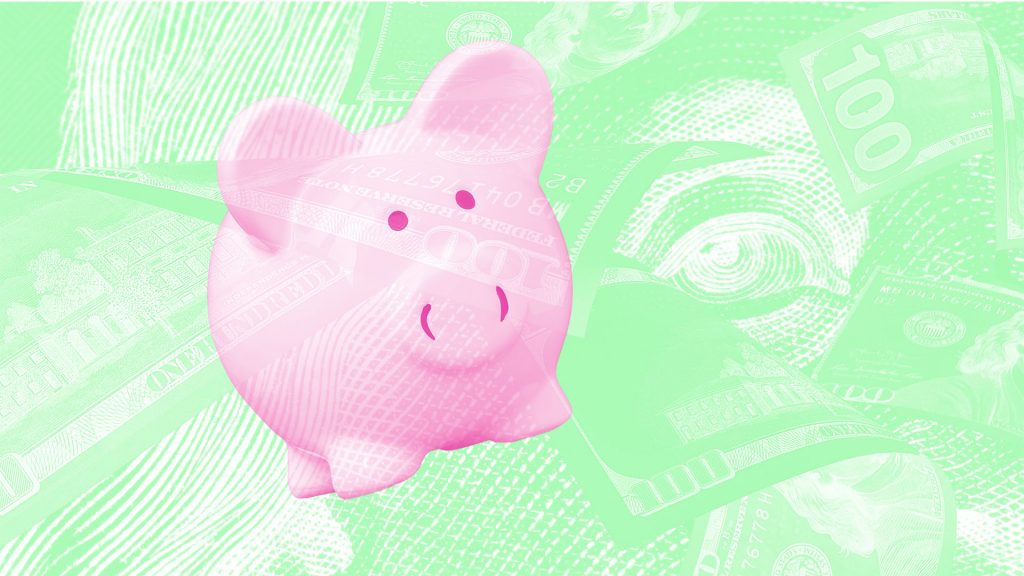
We’ve got our mind on our money and our money on our mind. And while we’re mulling over all this moolah, we’re also thinking about the many words we use to refer to cash. Don’t believe us? We’ll put our money where our mouth is and show you all the words we could find. (And best of all, it won’t cost you a dime! … Feeling lucky yet?)
cash
The English word cash was first recorded in the late 1500s and comes through the French casse (“case, box”) from the Latin capsa (“case” or “coffer”), which both refer to things you keep money in.
green
In the US, money is often referred to as green or the green because paper bills are—wait for it—green!
greenbacks
The slang greenbacks for US paper bills dates back to the Civil War when the government began using green ink on the reverse side of banknotes to attempt to thwart counterfeiters.
lettuce and cabbage
These two vegan-friendly words for money date all the way back to the early 1900s and yet again reference the green color of dollar bills.
coin
The slang coin is used in both the United States and the United Kingdom to refer generally to money, and not just the varieties of metal coins that have been used as currency for thousands of years.
bills
Dollar bills have been issued by the US government since 1862, but the slang bill is often used to specifically mean $100.
cheddar
There are several theories as to why the cheesy slang cheddar is used to refer to money. According to the most popular theory, cheddar referred to government cheese found in welfare packages. From there, it was used to refer to money (i.e., benefits) from the government rather than the cheese.
scratch
The American slang scratch for money can be traced back to 1914, but nobody knows why this itchy word was first used to refer to cash.
bank
The term bank has been used to refer to money—and not just the place we keep it—since the 1500s. Its use to indicate a large sum of money can be traced back to at least the 1990s.
bread
The word bread has been used as American slang for money since at least the 1930s. Food is among the most important reasons people need money, and the slang bread likely refers to the fact that bread is one of the most commonly eaten (and purchased) foods.
dough
Interestingly, the slang dough for money predates the slang bread, as it has been used in this sense since at least the 1830s. However, it is commonly thought that using dough for money is related to the use of bread as “livelihood” (“to earn one’s bread”) that has been attested since the 1700s.
bacon
The word bacon is used to refer to money or wealth in phrases such as bring home the bacon. This phrase has been recorded since 1924, and it is widely believed to refer to a game played at county fairs in which a person would be awarded a greased pig if they could successfully catch it.
Benjamins
Benjamin Franklin has been on the $100 bill since 1914, and the slang Benjamins for $100 bills obviously references this fact. Less commonly, other dollar bills may also be referred to by the people depicted on them, such as Washingtons, Lincolns, Hamiltons, and Jacksons.
moolah
The slang moolah has been used to refer to money since at least 1936, but it is another word with unknown origins.
big ones
The phrase big ones is used both in the US and UK to refer to dollar bills/pounds or to large amounts of money such as a thousand dollars/pounds or a million dollars/pounds. Big ones has been used in this sense since at least 1863.
bucks
The word buck has been used as American slang for a dollar since at least 1856. It is possible the word buck refers to the deerskins that were used as currency in the 1700s.
fiver and tenner
The slang words fiver and tenner are used in the US and UK to refer to five dollars/pounds and ten dollars/pounds, and it seems likely that they have been ever since these bills have been in circulation.
cha-ching
The words cha-ching, ka-ching, or ker-ching have been used to refer to money since at least 1969. They’re onomatopoeic expressions based on the sound of a cash register.
simoleons
The word simoleon has been used as US slang for a dollar since the 1880s, and it is yet another word with an unknown origin—though it’s possible the word is a blend of Simon and Napoleon.
shekels
The word shekels can be traced back to at least the 1820s, and it is clearly based on the shekel (sheqel in Hebrew) coins used by the Hebrews, Babylonians, and Phoenicians during Biblical times. The currency of Israel is also known as the New Israel Shekel or shekel, for short.
chump change
The phrase chump change to refer to a small amount of money emerged from Black slang during the 1960s.
Monopoly money
The slang phrase Monopoly money is often used to refer to small amounts of money or something that is worthless. Obviously, the phrase references the fake paper money used in the popular(ly infuriating) board game Monopoly.
bones
The slang bone has been used to mean a dollar since at least 1889, and it is another slang term with unclear origins.
K
The letter K is used as shorthand to mean a thousand dollars; if someone has 50K, they have $50,000. A K represents the Greek prefix kilo-, which is used in many words that refer to a thousand of something.
grand
The word grand is used in US and UK slang to mean a thousand dollars or a thousand pounds. There are several theories where this term came from, including the possibility that it refers to $1,000 being a grand (“large”) sum of money.
C-note
The slang C-note refers to a $100 bill, and the letter C refers to the Roman numeral for 100 that was printed on early $100 banknotes.
clams
Beginning a run of old-timey slang that would have been popular among 1920s bootlegging gangsters, the word clam was probably used as a term for a dollar based on the practices of using shells as currency seen in ancient societies and some Native American tribes.
ducats or duckets
The slang ducats or duckets is based on the gold coins and silver coins of the same name that were once used in parts of Europe.
smackers and smackeroos
Smackers has been used to refer to money since the 1920s, and the sillier smackeroos (or smackarolas, smackeroonies, smackerolas, smackeroonyos, and smackolas) emerged in the 1940s. While we don’t know for sure, it is possible that the term references “smacking” dollar bills into someone’s hand.
large
The slang large, meaning a thousand dollars, likely comes from the fact that thousands of dollars would be a large amount of money for most people.
spondulix
The slang word spondulix (and its many spelling variations: spondees, spondles, spondools, spondooli, spondooliks, and spondulix) is unfortunately another one whose origin we simply do not know.
dead presidents
Returning to modern times, we’re looking at the term dead presidents. While most denominations of US paper money do feature images of dead presidents on them, dollar bills also feature influential people who were never president, such as Benjamin Franklin and Alexander Hamilton.
stacks
Stacks, or fat stacks, refers to towering stacks a person would have if they were rich. A stack can also mean specifically $1K or $10K.
paper
Unlike most paper, US paper money is made out of cotton and linen rather than the wood pulp used in paper you can buy at the store.
bands
The slang bands references the currency bands that people and banks can use to store and transport large amounts of dollar bills.
rack
The slang rack means a thousand dollars and was popularized by rapper Yung Chris in his 2011 song “Racks.”
fetti
Fetti is said to have emerged from Black slang in the Bay Area and, according to popular theory, comes from feria, a Spanish slang word for money.
guap
The slang guap has been used in rap music since the 2000s, but nobody is exactly sure where this word originally came from.
skrilla or scrilla
Skrilla, also spelled scrilla, has been used in rap music since the 1990s, but it is another word whose exact origin is unclear.
From K-pop to Korean dramas, learn some key words so you can stay on top of the “Korean Wave.”
lucci
Lucci is another slang word that can be found in 1990s rap music. A common theory suggests it is based on the word lucre.
C.R.E.A.M.
The acronym C.R.E.A.M., which stands for “Cash Rules Everything Around Me,” was created by the hip hop group Wu-Tang Clan in their 1994 song “C.R.E.A.M.” In an interview, Raekwon the Chef revealed that the slang cream for money was invented by children from his neighborhood and was inspired by, of all things, Tom and Jerry cartoons.
Gouda
The slang Gouda for money was popularized by rapper E-40, who is known for his creative wordplay. According to E-40, Gouda was inspired by the older terms cheese and cheddar and—he admits—the credit for using this specific type of cheese really belongs to his wife.
dosh
Among Brits, dosh is a popular slang term for money, and it can be traced back to the 1950s. Sadly, it is another word with an unknown origin.
quid
The slang quid is used by Brits, Australians, and New Zealanders to refer to a pound sterling or an Australian pound. Quid is recorded back to the 1600s and possibly comes from the Latin quid used in phrases such as quid pro quo.
Australian slang
Australians use some fun slang words to refer to their colorful paper money. Some of these terms include prawn for the pink five dollar bill, blue swimmer for the blue 10, lobster for the red 20, and pineapple for the yellow 50.
Follow the Evidence: A Leading Neuroscientist Rethinks Consciousness and Why It Matters Now
When one of the world’s leading neuroscientists starts sounding like a mystic, something important is shifting in how we understand what it means to be human…
May 06, 2026 (wisdomschool.com)

I read the news from a recent symposium in Porto twice, and then I sat with it for a long while looking out at the trees in front of my office. Christof Koch, one of the most respected neuroscientists alive, the man who literally helped invent the modern science of consciousness alongside Francis Crick back in the 1990s, was telling a roomful of his colleagues that he’s no longer convinced the brain creates consciousness at all.
He thinks consciousness might be a fundamental feature of reality itself, the way mass and electromagnetism and gravity are. The brain doesn’t generate awareness so much as receive, shape, and channel it. Coming from Koch, who runs the Allen Institute for Brain Science and spent his whole career trying to find the neural correlates of consciousness, that’s a tectonic shift.
For me it landed more like a homecoming than a surprise. I spent long stretches of my younger life walking a forest path in Stadtsteinach, in northern Bavaria, with my old friend and teacher Gottfried Müller. I wrote a whole book about him called The Prophet’s Way, named after that forest trail.
Things happened on those walks that I’ve never been able to explain to a materialist’s satisfaction. Herr Müller would know what I was about to say before I said it. Animals would behave around him in ways I’d never seen animals behave around any other person. There were moments when the boundary between his mind and mine, and between both of us and the woods we were walking through, felt less like a wall and more like a screen door. You could feel things passing through.
For years I tried to talk myself out of those experiences. I’d been raised in the post-war American faith that the brain is a meat computer and that anything that looks like soul or telepathy or awareness-without-a-body is either a glitch in the wiring or a story we tell ourselves so we’ll be less afraid of dying.
That’s still the official position of most of the scientific establishment. It’s called materialism, or physicalism, and for the last hundred or so years it’s been treated less like a hypothesis than like the air the room is made of.
Koch’s whole point in Porto is that the air may not actually be there. He laid out three places where the materialist story breaks down.
The first is the so-called hard problem of consciousness, named by the philosopher David Chalmers in 1995. Even if we could map every single neuron firing in your visual cortex when you see the color red, we still have no idea why there’s something it’s like to see red. Information processing alone doesn’t explain the inside view.
The second is modern physics, where the deeper anyone digs, into quantum mechanics, the measurement problem, the role of the observer, the harder it gets to defend the picture of solid stuff bumping around in empty space.
And the third is what Koch politely calls anomalous experiences: near-death experiences, mystical states, and a phenomenon called terminal lucidity, where dementia patients sometimes wake up hours before death, recognize their families, speak in full sentences, and say goodbye, with a brain that on autopsy is far too damaged to be doing any of those things.
None of that fits the meat-computer model. And there are are now far too many cases to wave away.
So what does Koch propose instead? He says it may be time to revisit some old, supposedly-discarded ideas: idealism, which holds that mind is fundamental and matter emerges from it, and panpsychism, which holds that consciousness, in some form, goes all the way down.
He champions a particular framework called Integrated Information Theory, which says that any system integrating information at a high enough level (a brain, an octopus, a forest, perhaps even a galaxy) has some form of inner experience.
You and I have a lot of it. A worm has a little. A pile of sand probably has none. The line between conscious and not conscious stops being a wall between humans and everything else, and starts being a gradient that runs through all of nature.
This is the part where my lifelong reading list lights up. Aldous Huxley argued in The Doors of Perception in 1954 that the brain is a “reducing valve,” a filter that narrows the firehose of cosmic consciousness down to the trickle a primate body can survive on. The French philosopher Henri Bergson made essentially the same argument fifty years before Huxley, in Matter and Memory.
William James, the founder of American psychology, proposed in 1898 that the brain might be a transmissive organ rather than a productive one, the way a radio is a transmissive instrument for music it doesn’t generate.
And my late friend Joseph Chilton Pearce, in books like The Crack in the Cosmic Egg and The Biology of Transcendence (I wrote the foreword to Crack, and was lucky enough to spend many evenings sitting with Joe before he died) kept making the case that human awareness isn’t something the skull manufactures, it’s something the skull-and-heart together tune into.
None of those people were considered scientists in good standing. Most got dismissed as poets or mystics or romantics. And now here’s Christof Koch, in 2026, telling a room full of his fellow neuroscientists that they may have been right all along.
It matters that this is happening now. We’re in a moment when artificial intelligence is suddenly forcing everyone to ask, out loud and a little nervously, what consciousness even is, and whether a sufficiently complicated machine might have some.
That question can’t be answered until we have an honest theory of consciousness in the first place, and the materialist theory we inherited from the nineteenth century isn’t up to the job. So the door is opening. The wisdom traditions, the ones we used to call primitive or premodern, get to walk back in.
What does any of this have to do with how you live tomorrow morning? Quite a lot, actually. If consciousness is something you participate in rather than something your brain secretes like bile, then attention is sacred.
The hours you spend doomscrolling are hours of awareness leaked back into a feed that doesn’t love you. The minutes you spend in silence, in nature, in a real conversation with another human being where both of you put your phones face-down on the table, are minutes when something fundamental in the universe gets to come awake through you.
The contemplative traditions, every one of them, have been telling us this for thousands of years. Sit. Breathe. Pay attention. The Buddhists call it mindfulness. The Christians call it contemplative prayer. Indigenous peoples call it being on the land. They aren’t different practices. They’re the same practice in different vocabularies.
And if Koch is right, the materialism that’s been quietly running our civilization since Descartes, the assumption that nature is dead matter to be managed and that mind is a fluke of biology, is wrong in a way that has consequences. It’s the philosophical engine room of strip-mining and factory farming and treating each other like consumer units.
If consciousness is woven into the fabric of things, then the river really is a relative, the forest really is a community, and the person across from you really is, at some level, made of the same inwardness you’re made of. That’s not poetry. That’s what the math is starting to say, and Native people have been trying to tell us for centuries.
I’d love to know what you think. If you’ve ever had an experience that didn’t fit the meat-computer story, a moment of inexplicable knowing, a presence you couldn’t account for, a goodbye from someone whose brain shouldn’t have been working, please share it in the comments.
The wisdom traditions kept this data safe for thousands of years by people swapping these stories around fires. We can do the same thing in this corner of Substack. And if you haven’t yet read Huxley or William James or Joe Pearce on this question, do yourself the favor. The future of science may turn out to look a lot like the deepest parts of the past.
The Wisdom School: What it Means to be Human is a reader-supported publication. To receive new posts and support my work, consider becoming a free or paid subscriber.
Keeping Score | Charles Ives: Holidays Symphony
San Francisco Symphony Mar 19, 2020 American composer Charles Ives created his Holidays Symphony as a haunting sonic portrait of New England at the turn of the 20th century, at turns sentimental and chaotic. Michael Tilson Thomas explores the riddle of Ives the loyal son and businessman versus Ives the musical maverick who made listeners confront their understanding of what music could be. Filmed on location in New England and New York City.
The Language of the Soul with Betty Kovács
New Thinking Allowed with Jeffrey Mishlove May 18, 2026 Psychology and Psychotherapy Betty J. Kovács, PhD, taught symbolic/mythic language for twenty-five years. She has served as Chair of the Board of Directors of the Jung Society of Claremont, California, and sits on the Academic Advisory Board of Forever Family Foundation. Dr. Kovacs is author of Merchants of Light: The Consciousness That Is Changing the World, winner of The Scientific and Medical Network 2019 Book Prize and a Nautilus Silver Award. She has also written The Miracle of Death: There Is Nothing But Life. In this 2020 video, she explains that the Mundus Imaginalis is a layer of reality that exists between the pure, formless world of spirit and the physical world of our senses. It consists of archetypes, dreams, and symbols. Its manifestations are evident in the earliest cultural remnants, such as cave paintings. This imaginal world is far more real and different than fantasies and imagination. It speaks to us in the preconceptual language of our soul. New Thinking Allowed host, Jeffrey Mishlove, PhD, is author of The Roots of Consciousness, Psi Development Systems, and The PK Man. Between 1986 and 2002 he hosted and co-produced the original Thinking Allowed public television series. He is the recipient of the only doctoral diploma in “parapsychology” ever awarded by an accredited university (University of California, Berkeley, 1980). He is also the Grand Prize winner of the 2021 Bigelow Institute essay competition regarding the best evidence for survival of human consciousness after permanent bodily death. He is Co-Director of Parapsychology Education at the California Institute for Human Science. (Recorded on December 23, 2020)