Ursula K. Le Guin on Change, Menopause as Rebirth, and the Civilizational Value of Elders

By Maria Popova (themarginalian.org)

“God is Change,” Octavia Butler wrote, wresting the poetic truth from the scientific fact that entropy is the ruling law of the universe.

We know that “to every thing there is a season,” that everything changes, everything passes, transitions from one state to another, from one stage to another — and yet, in our irrational longing for permanence, we try and try to hedge against change, denounce it as deterioration, dread it as a prelude to death.

Nowhere is this dread more acute than in the changes incurred by the body, that crucible of the soul. And no one has offered a greater salve for it than Ursula K. Le Guin (October 21, 1929–January 22, 2018) in one of the essays from her altogether indispensable 1989 collection Dancing at the Edge of the World: Thoughts on Words, Women, Places (public library), which also gave us her reflections on writing and where ideas come from.

Ursula K. Le Guin

Living through one of the profoundest changes a human body-soul can undergo — menopause, long cottoned in the euphemism “change of life” — she writes:

The woman who is willing to make that change must become pregnant with herself, at last. She must bear herself, her third self, her old age, with travail and alone. Not many will help her with that birth.

Although biologically particular to female bodies, Le Guin goes on to observe, menopause is a lens on the universal experience of change and our civilizational bias against old age. With her characteristic largehearted, vast-minded, mischievous wisdom, she writes:

If a space ship came by from the friendly natives of the fourth planet of Altair, and the polite captain of the space ship said, “We have room for one passenger; will you spare us a single human being, so that we may converse at leisure during the long trip back to Altair and learn from an exemplary person the nature of the race?” — I suppose what most people would want to do is provide them with a fine, bright, brave young man, highly educated and in peak physical condition… There would surely be hundreds, thousands of volunteers, just such young men, all worthy. But I would not pick any of them. Nor would I pick any of the young women who would volunteer, some out of magnanimity and intellectual courage, others out of a profound conviction that Altair couldn’t possibly be any worse for a woman than Earth is.

What I would do is go down to the local Woolworth’s, or the local village marketplace, and pick an old woman, over sixty, from behind the costume jewelry counter or the betel-nut booth. Her hair would not be red or blonde or lustrous dark, her skin would not be dewy fresh, she would not have the secret of eternal youth. She might, however, show you a small snapshot of her grandson, who is working in Nairobi. She is a bit vague about where Nairobi is, but extremely proud of the grandson. She has worked hard at small, unimportant jobs all her life, jobs like cooking, cleaning, bringing up kids, selling little objects of adornment or pleasure to other people.

Art by Carson Ellis from What Is Love

With an eye to our troubled cultural model of aging — something Le Guin would address several years later in her exquisite meditation on the art of growing older — she adds:

The trouble is, she will be very reluctant to volunteer. “What would an old woman like me do on Altair?” she’ll say. “You ought to send one of those scientist men, they can talk to those funny-looking green people. Maybe Dr. Kissinger should go. What about sending the Shaman?” It will be very hard to explain to her that we want her to go because only a person who has experienced, accepted, and acted the entire human condition — the essential quality of which is Change — can fairly represent humanity. “Me?” she’ll say, just a trifle slyly. “But I never did anything.”

But it won’t wash. She knows, though she won’t admit it, that Dr. Kissinger has not gone and will never go where she has gone, that the scientists and the shamans have not done what she has done. Into the space ship, Granny.

Complement with Simone de Beauvoir on how to grow old without letting life become a parody of itself, Bertrand Russell on the key to growing old contentedly, and Grace Paley’s almost unbearably wonderful instruction on the art of growing older, then revisit Le Guin on storytelling and the power of languagesuffering and getting to the other side of painthe magic of real human conversation, and the poetry of penguins.

How The Nazis Punished ‘Feminine’ Men

History Wov Aug 1, 2025 What Happened To ‘Feminine’ Men In The Nazi Camps The Punishment for ‘feminine’ men was so brutal, even other prisoners turned away from witnessing its cruelty. Under Hitler’s insane ideology, being gay wasn’t a crime, it was a death mark branded for annihilation. The Nazi’s weren’t just raiding bars, they were hunting bodies and destroying everyone who was on their note.

Richard Feynman on the culture of science

Richard P. Feynman

“Religion is a culture of faith; science is a culture of doubt.”

― Richard P. Feynman

Richard Phillips Feynman (May 11, 1918 – February 15, 1988 ) was a Nobel Prize-winning American theoretical physicist and a prominent figure in post-WWII physics. He’s known for his work in quantum mechanics, quantum electrodynamics, and superfluidity, and for proposing the parton model in particle physics. Feynman was recruited to the Manhattan Project at age 24, where he became a group leader in Hans Bethe’s theoretical division.  Wikipedia.org

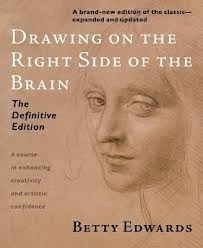
Book: “Drawing on the Right Side of the Brain”

Drawing on the Right Side of the Brain

Betty Edwards

A revised edition of the classic bestselling how to draw book. A life-changing book, this fully revised and updated edition of Drawing on the Right Side of the Brain is destined to inspire generations of readers and artists to come. Translated into more than seventeen languages, Drawing on the Right Side of the Brain is the world’s most widely used instructional drawing book. Whether you are drawing as a professional artist, as an artist in training, or as a hobby, this book will give you greater confidence in your ability and deepen your artistic perception, as well as foster a new appreciation of the world around you. This revised/updated fourth edition • a new introduction; • crucial updates based on recent research on the brain’s plasticity and the enormous value of learning new skills/ utilizing the right hemisphere of the brain; • new focus on how the ability to draw on the strengths of the right hemisphere can serve as an antidote to the increasing left-brain emphasis in American life-the worship of all that is linear, analytic, digital, etc.; • an informative section that addresses recent research linking early childhood “scribbling” to later language development and the importance of parental encouragement of this activity; • and new reproductions of master drawings throughout

(Goodreads.com)

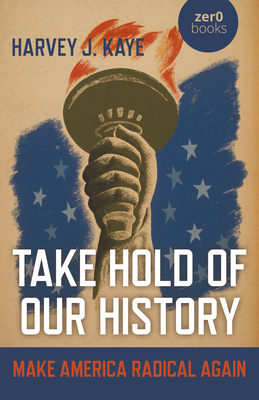
Book: “Take Hold of Our History: Make America Radical Again”

Take Hold of Our History: Make America Radical Again

Harvey J. Kaye

The eighteen essays and speeches in Take Hold of Our History render a manifesto – a call to remember, redeem, and embrace the American radical story and tradition in favor of cultivating American historical memory and imagination and making America radical once again. For too long we have allowed the right to hijack the past and suppress, efface, lie about, and/or appropriate the essentially radical story of America from the struggles of the Revolution to those of the Age of Roosevelt and the 1960s. And no less tragically, we on the left, apparently haunted by the worst of our national experience, have turned our back on our own story and deferred to the tales of conservatives and reactionaries. Fleeing from the past, we merely compound the tragedies and ironies of American history, for we turn our backs on both the nation’s democratic creed and radical imperative, but also the struggles from the bottom up, the struggles in which working people and others have laid hold of America’s revolutionary promise and succeeded in making the United States freer, more equal and more democratic, at times, radically so. As Bill Moyers put it in 2008: “Here in the first decade of the twenty-first century the story that becomes America’s dominant narrative will shape our collective imagination and our politics for a long time.” The time has come for us to advance that narrative.

(Goodreads.com)

“The last best hope on earth.”

Abraham Lincoln

“The dogmas of the quiet past, are inadequate to the stormy present. The occasion is piled high with difficulty, and we must rise with the occasion. As our case is new, so we must think anew, and act anew. We must disenthrall ourselves, and then we shall save our country. Fellow citizens, we cannot escape history. We of this Congress and this administration, will be remembered in spite of ourselves. No personal significance of insignificance, can spare one or another of us. The fiery trial through which we pass, will light us down, in honor of dishonor, to the latest generation. We SAY we are for the Union. The world will not forget that we say this. We know how to save the Union. The world knows we do know how to save it. We-even we here- hold the power, and bear the responsibility. In GIVING freedom to the slave, we assure freedom to the free- honorable alike in what we give, and what we preserve. We shall nobly save, or meanly lose, the last best hope on earth. Other means may succeed; this could not fail. The way is plain, peaceful, generous, just- a way which, if followed, the world will forever applaud, and God must forever bless.”

― Abraham Lincoln (second message to congress 1862)

Abraham Lincoln (Febrauy 12, 1809 – April 15, 1865) was the 16th president of the United States, serving from 1861 until his assassination in 1865. He led the United States through the American Civil War, defeating the Confederate States of America and playing a major role in the abolition of slavery. Wikipedia