An NBA champion’s advice on being a top teammate

Shane Battier | TEDxMDC

• December 2024

What if the secret to success isn’t being in the spotlight, but making everyone else around you shine? Former NBA player Shane Battier shares how his most impactful moments didn’t come from scoring points but rather from small, underrated actions that helped his team win — and why prioritizing “we” over “me” can create a lasting legacy, both on and off the court.

About the speaker

Shane Battier

Championship culture builder

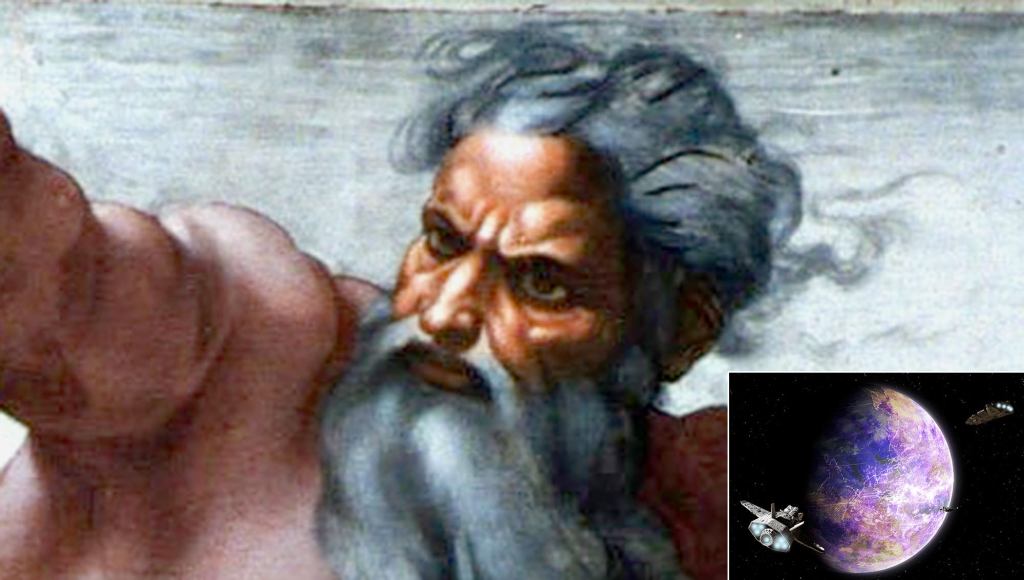
God Really Dreading Visit From Older Brother Who Made Much More Successful Cosmos

News, News In Brief

Published: March 18, 2019 (TheOnion.com)

CREATION—Admitting that the mere thought of hosting His guest next weekend filled Him with terrible anxiety, God, Our Lord and Heavenly Father, revealed Monday that He was “really dreading” an upcoming visit from His older brother, who had brought into being a far more successful cosmos. “I stress out whenever my brother visits because His universe doesn’t even have war or famine, so when I try to talk to Him about my problems, He just stares at me with this blank look upon His countenance. It’s like, come on, I’m trying my best over here,” said the Creator of All Things, adding that He tries, really tries, to be a compassionate and merciful God, but His brother’s visits always leave Him feeling deeply inadequate despite His vast accomplishments. “Last time He was here, He kept going on and on about how His flock never had to leave their Edenic garden and was making all these little passive-aggressive jabs, like, ‘Oh, wow, creating humans in your image, how original, I suppose I just enjoy taking risks, more of a challenge that way, don’t You know, but still it’s nice that You stick to the basics, simplicity is its own virtue, I suppose, at least in Your world.’ He actually said that! And you should have seen the way He was squinting at sub-Saharan Africa, just being terribly judgmental. It feels like no matter what I do or how I live my life, nothing I ever do will be good enough for Him. Man, I hope humanity never feels that way about Me.” At press time, God was attempting to create an elaborate excuse to cancel on His brother.

The Story of the World’s First Seed Bank and the Tragic Hero of Science Who Set Out to End Humanity’s Suffering

By Maria Popova (themarginalian.org)

I spent large swaths of my childhood by my grandmother’s side in rural Bulgaria as she tended to her subsistence garden, tilling and planting, watering and weeding. Each August, we did something that felt to me like partaking of magic — we would choose the sweetest, most succulent tomatoes from the vine, cut them open, carefully extract the seeds, and lay them out on newspaper to dry, knowing that they would become next spring’s seedlings and, with nothing more than sunlight and water, next summer’s bright red orbs of delight. So it is that, year after year, my grandmother refined her tomatoes into a cornucopia of unparalleled sweetness and perfection. Last summer’s seeds are already growing as I write.

This magic was made possible by a visionary of science who set out to save humanity and died for his values the year my grandmother turned nine.

Tomato, or Love-Apple, from Elizabeth Blackwell’s pioneering 1737 encyclopedia of medicinal plants. (Available as a print, benefitting The Nature Conservancy.)

While the physicist Sergei Vavilov was presiding over Stalin’s Academy of Sciences and spearheading the Soviet atomic bomb project, his idealistic older brother was laboring at something of orthogonal impact on humanity — a way to end an elemental form of suffering that has haunted our species since its dawn.

The botanist, geneticist, and explorer Nikolai Vavilov (November 25, 1887–January 26, 1943) was still a boy when he arrived at his dream of ending famine. He had heard his father’s stories of growing up in poverty and constant hunger due to crop failures. When Nikolai himself was four, the early arrival of winter decimated crops all over the country, sending millions into starvation. All the tsar could do was offer his subjects “famine bread” — loaves made of milled husks, bark, weeds, and moss, rationed out in the freezing cold. Vavilov’s father had spent his life rising from poverty and now had a comfortable life as a merchant, so the family was protected from the worst of the famine — but from his precarious island of comfort, the boy watched the ocean of suffering and sorrowed. Half a million peasants perished that winter as the aristocracy feasted on imported delicacies from Europe — grim structural inequality that became the ignition spark for the long-seething people’s revolution a quarter century later.

Vavilov saw the contours of a different kind of revolution — one no one else could envision, not in Russia and not anywhere in the world.

Nikolai Vavilov
He wrote in the diary of his youth:

Do what you can. If you can’t do something you wanted to do, then you will be forgiven, but if you don’t want to try to do anything, you will not be forgiven.

He decided to do nothing less than end the world’s hunger, vowing in his diary to devote his life to science — an endeavor aimed at “everything that brings joy, calmness of emotion and reason” — so that he may “understanding nature for the betterment of humankind.”

After graduating from the Soviet agricultural academy as a botanist, he set out to travel through Europe and absorb all he could from the best scientists in every related discipline. In England, he worked with William Bateson, who had coined the word genetics to explain heredity and had pioneered the study of this script for transmitting the message of life.

Upon returning to Russia, Vavilov founded an institute under which to commence the great project of his life — collaborating with nature on enhancing her strengths and allaying her weaknesses by using the new science of genetics to cultivate plant species that would thrive in conditions none had survived before. He had a revolutionary insight: There must be wild varieties of common agricultural plants with different genes that make them more resilient than their farmed cousins — genes that could be used to strengthen agricultural crops by breeding stronger species that would feed humanity even through droughts and freezes. He called them his miracle plants. It wasn’t just an idealist’s dream — he knew the science that would make it a reality, and he would devote his life to it.

When World War I broke out, Vavilov, already established as a preeminent botanist, was dispatched to present-day Iran to solve a mystery — Soviet soldiers there were suffering from brain fog and inexplicable dizziness. He discovered that the mysterious malady was caused by a fungus growing on the wheat of which their bread was made. As bullets flew around him, Vavilov carefully collected samples of local plants, wrapped them in wax paper, and tucked them into his breast pocket. He didn’t yet know it, but this was the birth of Earth’s largest botanical collection.

The pea by French artist Paul Sougy. (Available as a print, benefitting The Nature Conservancy.)

When a drought lashed Russia in 1921 and killed the harvest, more than 5 million people died of starvation in a year, most of them peasants. Vavilov grew determined to never let this happen to anyone again. He understood that if he could equip farmers with the basic science of genetics, they could control for which traits of their crops would dominate, rather than entrusting their harvest to the roulette of chance — they could do what my grandmother did with her tomatoes, selecting for the best traits year over year. Mendel had made a science of agriculture by expressing mathematically the probabilities of genetic variance. Vavilov set out to make of that science an art of resilience, having vowed as a young man to “work for the benefit of the poor, the enslaved class of my country, to raise their level of knowledge.”

He spent the 1920s roaming the world to collect wild varieties of staple foods. He slept little, smiled much, and trekked through the jungle in his tailored three-piece suit, tie, and felt fedora. He traveled to places frequented by droughts and food shortages, from Africa to the Middle East, taking care to learn the language and talk to locals about their lore of growing food in inhospitable conditions. He traveled to the birthplaces of the most nutritious plants. In Brazil, he got cacao, oranges, mangoes, and papayas. In China, poppy and sugarcane. In Korea, soybeans and rice. In Ethiopia, he discovered the mother plant from which all the world’s coffee originated.

Cacao by Étienne Denisse from his Flore d’Amérique, 1846. (Available as a print, a cutting board, and stationery cards, benefitting The Nature Conservancy.)

By the end of the decade, Vavilov had completed numerous ethnobotanical expeditions to collect hundreds of thousands of seeds from five continents, including many places where no scientist had set foot before. He was quietly building something unexampled: the world’s first seed bank — a living library of biodiversity that would come to the rescue of the people of any land whose crops were decimated by a drought or a blight. There were 600 kinds of apples and more than a thousand varieties of strawberries among its quarter million plants — a lush repository of resilience, housed at Vavilov’s institute in Leningrad.

Lenin, who had assumed power in the 1917 Russian Revolution, had immediately recognized the political value of Vavilov’s humanistic work — its insurance against the country’s crop failures, its promise of making Russia a superpower of global food production — and had thrown his full support behind it. But when he died in 1924, everything changed.

As Stalin usurped power, he forced peasant farmers off their farms and into large industrial agriculture collectives — tumult that disrupted the harvest and hurled the country into mass starvation. He knew that a widespread famine would hamper his revolution; he knew that more resilient crops would be the solution. But it was not Vavilov’s science he turned to.

On August 7, 1927, Pravda — the newspaper voice of the Communist Party — published a fawning profile of a young “barefoot scientist” in rural Azerbaijan who had never gone to university but was promising an agrarian revolution.

Trofim Lysenko considered scientific education “harmful nonsense.” He rejected Darwinian evolution and Mendelian genetics, instead subscribing to Lamarckian inheritance with its outlandish claim that organisms acquire traits in immediate response to their environments and pass those traits immediately to the next generation — a pseudoscience that fueled the menace of eugenics. There were echoes of alchemy in Lysenko’s bravado — he promised he could cultivate wheat that would turn into rye and rye that would turn into barley. He bragged that his pea crop had withstood winter thanks to an innovative “training” strategy — soaking the seeds in ice-cold water, which he called vernalization. He claimed he could “train” plants within a single generation, making the very next generation more resilient.

Trofim Lysenko measuring wheat

Stalin, having no understanding of science, was blinded by the luster of the young man’s instant gratification claims. So began the greatest anti-science campaign of the twentieth century.

The dictator, who declared 1929 the year of the “Great Break with the Past,” gave Vavilov an ultimatum: he had to breed his miracle plants in three years, or face grave consequences. It was a biological impossibility; in reality — the evolutionary reality of reproductive cycles and genetic development — it would take at least four times as long for new genetic traits to manifest in a species on the scale of a crop. Seizing upon his spotlight moment and his nascent promotion within Stalin’s scientific establishment, Lysenko launched a concerted attack on Vavilov’s research, pitting it against his own “science” as too slow for the urgently needed famine relief in the country, too humble for the economic domination Stalin craved. He did not hesitate to falsify his own research to bolster its claims.

Vavilov had spent years laboring to bring the seventh International Congress of Genetics to the USSR and although it had been initially approved by the government, now the Communist Party abruptly cancelled the global gathering. When it was eventually convened in Edinburgh after a two-year delay and Vavilov was banned from attending, his international colleagues placed an empty chair on the stage to protest his absence — he was already one of the most respected geneticists in the world.

With science itself under assault, Vavilov devoted all of his energies to his institute and the seed bank, vowing:

We shall go into the pyre, we shall burn, but we shall not retreat from our convictions.

When his plants developed in accordance with nature and failed to meet the dictator’s timeline, Vavilov was accused of treason and sabotage. In the middle of a field expedition in the Ukraine, he was arrested as “an active participant of an anti-Soviet wreckage organization and a spy for foreign intelligence services.” His home was raided and all of his field notes destroyed, but his colleagues managed to save his voluminous correspondence with other scientists and his manuscripts, tucking them away in the basement of the institute, beneath the seed bank.

Nikolai Vavilov’s arrest photo

Upon receiving news of the arrest, Vavilov’s brother wrote in his diary:

His big useful life is being ruined… life of tireless and intense work for his homeland, for the people. All his life spent in work, with no other hobbies. Wasn’t it obvious and clear to everybody? What else can be asked and demanded of individuals? This is a cruel mistake and an injustice. It is even more cruel because it is worse than death. The end of scientific work, the slander, ruining the lives of family members, the threat of it all.

Over the next eleven months in jail, Vavilov was interrogated and tortured hundreds of times, sometimes for thirteen hours a time, for a total of 1,700 hours, with the intention of coercing a confession of sabotage and espionage. He remained adamant that his research had been only in the service of science and human welfare.

Like Dostoyevsky, he was sentenced to death by firing squad, but his death sentence was repealed and reduced to twenty years in a prison camp.

This was an epoch of sweeping terror. While Stalin was terrorizing scientists, Hitler was savaging Europe. Leningrad was next on his conquest list — not only because of its geopolitical advantages as a major international port, but because it housed something precious: the seed bank. The Führer well understood that controlling the world’s food supply was key to controlling the world’s population, so he tasked a special SS unit with looting Vavilov’s seed collections.

On September 8, 1941, the Nazis began their assault on Leningrad by severing the last road to the city. The siege would last 872 days as Leningrad refused to surrender. Food ran out fast. By the winter of 1942, all the government could provide was a ration of two slices of bread, made of 50% sawdust. This too ran out. People took to stripping the wallpaper in their apartments, scraping the adhesive paste made of flour and water, and boiling it to make soup. Death swept the city — 800,000 human beings, one out of every three citizens. Bodies lined the streets unburied. Rats emerged by the millions, feasting on the corpses.

At Vavilov’s institute, scientists barricaded themselves to protect the seed bank from the rats and the Nazis. Famished themselves, they took turns staying up all night, warding off the rodents with metal rods. In what may be the most moving sacrifice in the history of science, nine scientists died of starvation, guarding a cornucopia of nuts, beans, rice, and grains. The curator of legumes was found at his desk, an envelope of peas by his side.

The vault survived unharmed, holding the seeds of life.

Clitoria, or butterfly pea. (Available as a print, a cutting board, and stationery cards, benefitting The Nature Conservancy.)

Meanwhile, Vavilov was languishing in prison. Inmates were fed nothing but flour and frozen cabbage. He survived for two years, his vivacious body shrinking to a skeleton. And then, biology gave way to entropy. In the icy Russian winter of 1943, Nikolai Vavilov died of starvation — the selfsame terror he had devoted his life to preventing. His body was dumped in an unmarked mass grave.

He had once written to a friend:

I really believe deeply in science; it is my life and the purpose of my life. I do not hesitate to give my life even for the smallest bit of science.

Like Alan Turing, Nikolai Vavilov was posthumously pardoned by a new government and eventually celebrated as a hero of science. A Russian postage stamp bears his image and the Russian Academy of Sciences awards a prestigious medal in his honor. A small planet discovered by a Soviet astronomer is named after him, as is a crater on the far side of the Moon. A monument of him rises from a plaza near the prison where he died — a site of frequent resistance protests to this day. The Vavilov Institute of Plant Industry in St. Petersburg is still home to one of the world’s largest seed banks and was the inspiration for the creation of the Svalbard Global Seed Bank near the North Pole in 2008.

When the next global famine savages our species, Vavilov’s legacy will be a lifeline, purchased with his life.

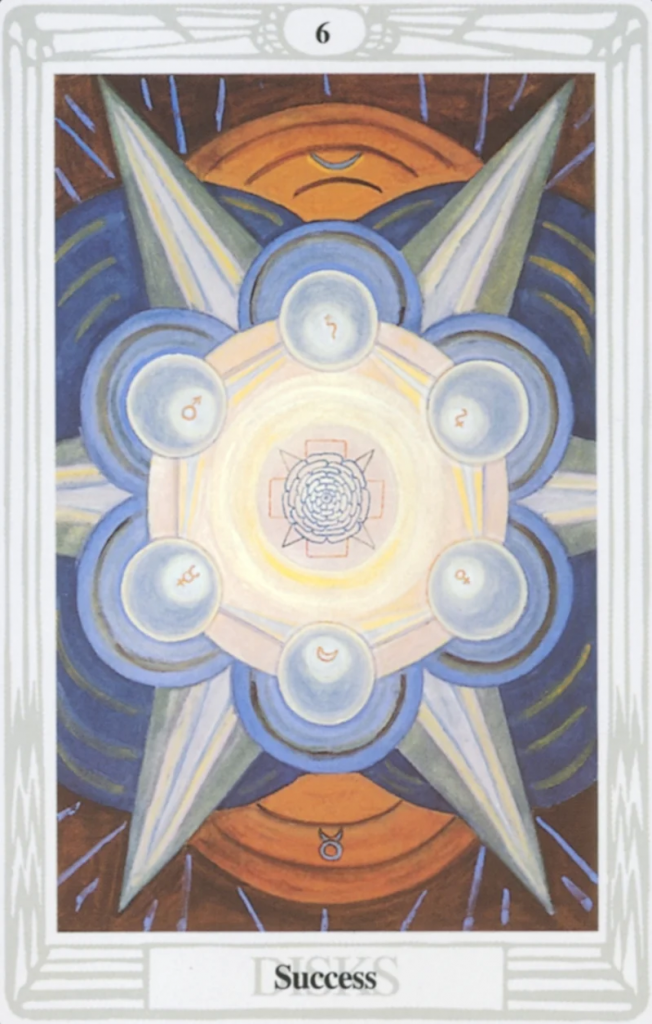
Tarot Card for March 20: Success

The Six of Disks

The Lord of Success is a delicious card, indicating that we have achieved a natural state of inner balance and harmony which allows us to use our energies without diversion nor interference. More often than not, these energies are directed into practical channels – in the workplace, dealing with things in the home environment.This is because Disks are about the more mundane aspects of everyday life, and about home and family – some people see Disks as purely money-related, but this is a misunderstanding of their deep function. Rather than interpreting Disks purely in a financial context, we are better served by seeing them as relating to the basic nuts and bolts of security. This includes money and finances, of course, but also covers all sorts of other areas too – the basic trust and reliability of our friends and family, the nature of our home, the set of tasks which form our job. However, I digress ;-)On a day ruled by the Six of Disks, we need to be taking stock of our overall position in a practical sense. This is a day to sort out your bank accounts, check your credit card balance, look in your birthday book for upcoming important dates, check what food you have in the freezer, about those people closest to you and consider how they’ve been doing recently.It’s a practical, down-to-earth day where you look around and feel grateful for the things, creatures and people you have in your life. Everybody has something to be grateful for… and most of us have a lot to be grateful for. And on a day ruled by the Lord of Success it’s time to say thankyou!

Affirmation: ” I am blessed with the bounty of life.”

(Angelpaths.com)

The Vernal Equinox: Mar 20, 2025, 2:01 AM Pacific time

Home  The Wheel of the Year  The Vernal Equinox

Here are Graham’s thoughts:

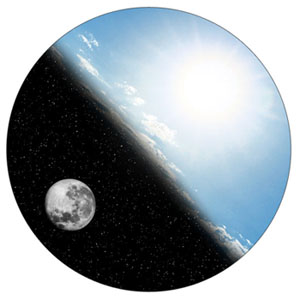
Sun and moon

The equinoxes mark the mid points between the solstices, when the length of day time and night time are equal. At the equinoxes, the length of day-time and the progression of the sun along the horizon are changing at their fastest rate.

From Winter Solstice onwards, the days are getting longer, so the Vernal Equinox represents a tipping point, after which the days will start to be longer than the nights. This also marks the entry of the Sun into Aries and can fall anywhere from the 20th to the 23rd (this year it is on the 20 March, at 22:45). This is a theoretical position, though; in fact, the earth wobbles slightly and the atmosphere bends the light from the sun. For these reasons, it’s very unlikely that on the Equinox the sun will rise at 6:00am precisely and set at 6:00pm.

A lot of the information on the Wheel comes to us through Christianity, and the Vernal is no exception. This Equinox is a lunar festival about rebirth and renewal. It is also used in calculating the date for Easter. To find the date of Easter, start with Vernal Equinox on a calendar, then go forward until the next full moon, then it will be the Sunday after that. (Roughly, there are exceptions and ecclesiastical full moons!) But this explains why Easter moves from late March all the way into April from year to year.

There are interesting lunar correspondences with Easter. Christ died for three days, then was reborn – moon dark is a period of three days when there is no moon visible in the sky before the new moon. In any year there are either twelve full and thirteen new moons or the other way round, and the Last Supper has traditions associated with the thirteenth guest.This typifies the energy of the festival of reconciling opposites – in this case lunar influences on a solar festival.

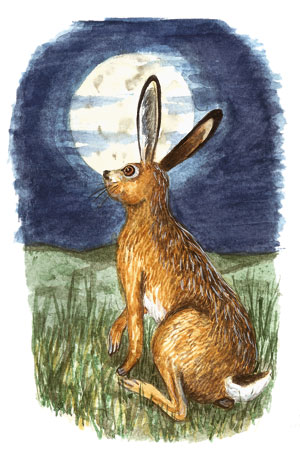
Moon gazing hare

This link with the Vernal Equinox also explains why Easter appears to have appropriated two pagan symbols – the Easter Bunny and the Easter Egg. The nearest we can find to an explanation for these is a German Goddess called Eostre. This gets mired in controversy as there is only one historical record of Her – the mediaeval historian the venerable Bede mentioned Her once. In neo-paganism this festival is called Ostara and the symbols of the hare and the egg are attributed to Eostre. But there is no historical evidence for this and Bede himself didn’t mention either hares or eggs as being Her symbols.

This discrepancy is usually explained by equating Eostre to other goddesses who have hares and eggs as symbols. However, there are a lot of folk customs attached to the Vernal Equinox from all across lands that were Saxon or Germanic, that involve hares, eggs, dawn and bonfires. From all of this evidence it is fairly certain that there were pre-Christian dawn goddesses in Northern Europe. When Christianity was becoming established it would have taken these rituals and observances and incorporated them into Easter. I would also be comfortable projecting further back and assuming that there was a pre-historic Spring festival around the Vernal that celebrates a dawn Goddess. But, over thousands of years, God-forms can be fluid, their names can change and they can be amalgamated together. Linguistically, for instance, there could be a correspondence between Eostre and the Persian goddess Ishtar or Astarte.

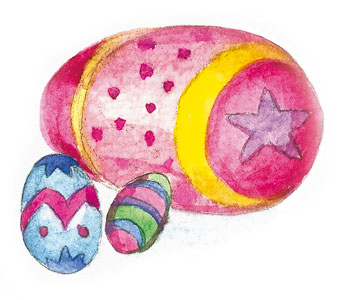
Coloured eggs

The traditional folk symbols for Easter therefore are reclaimed as the pagan ones for the Vernal Equinox. Moon gazing hares particularly are good symbols and can often be found in garden centres as statues or garden ornaments. Likewise any pictures or other representations can be used to decorate an altar. Easter eggs, either real hard boiled or the chocolate variety, are very good as well. If you are creative or have children, decorating eggs with dyes, or painting them or even making your own chocolate eggs are all fun activities.

In our family this creates some confusion because we celebrate the Vernal, and then realise the rest of the world is still waiting weeks for Easter! There is a folk custom that after the Vernal you can throw your egg shells in a fast moving river to get good luck and fertility in the coming year.

Vernal Equinox is when the sun is moving fastest, but it is also a time of balance. Day and night are equal, yet there is much change. It is a single point of stillness among the movement, like a tipping point. There are, broadly speaking, three Spring festivals and this is the middle one. The energy that lay dormant under the earth at Winter and awoke at Imbolc now gets ready to burst forth through at the Vernal. So this is a festival with a big upswing of energy, about reconciling opposites, like day and night, sun and moon, and using their opposing energy to move things forward.

The Vernal Equinox is about the dawn, about the returning of the light, about greenery and growth. If you assign the festivals to a compass, fairly obviously, Winter belongs to the north and Summer to the south. Attributing the festivals clockwise around the compass puts Vernal Equinox in the east, which works out perfectly since it’s associated with dawn Goddesses.

Thinking about prehistoric life, at this time of year animals start having young, the woods are full of flowers and edible leaves, and the days are longer and warmer. After the long cold of Winter, hope has returned to the land.

Food for this festival is all therefore about fresh spring greens and salads. For Easter, lamb is traditional, but in reality, this is New Zealand lamb as English lambs would only just be born if they’re being raised naturally. (Lamb is usually around six months old and at least six weeks old, so not available in early farming at this time.) We usually have a chicken salad where we cook the chicken with some light flavouring like herbs and lemon and then toss the meat with the salad. Much more traditional and more likely to have survived from pre-Christian times is the idea of Simnal Cake. This is a cake decorated with twelve or thirteen marzipan balls and sandwiched with marzipan.

Traditional colours for Vernal are yellows and greens, but pale, spring-like tones such as grass green and primrose yellow. In terms of symbolic plants, all spring flowers, especially wild ones or meadow flowers, correspond with the Vernal, as well as gorse and sycamore.

The community aspect to this festival today is likely to be an Easter Egg hunt. This does feel as if it is a traditional activity, bringing everyone together. However, it’s up to you how you feel about attending what’s likely to be a Christian event for pagan reasons. Secondly, as an Easter event, it’s likely to happen around two weeks to a month later than the actual equinox. But it can be a fun thing to arrange privately or with other pagan families. As with all the festivals, it’s associated with getting together, lighting fires (or candles) and feasting.

So, that’s Vernal Equinox – a bright, happy festival of spring, returning fertility and growth.

And here are Jan’s thoughts:
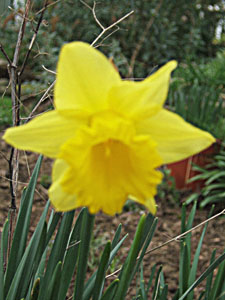
Daffodil

The four major Solar festivals as I know them are those that work in the northern hemisphere.  Our comrades on the other side of the world would see these “the other way around” because the festivals are keyed to natural growth cycles in Nature and our planet.  Consequently when we are celebrating the Vernal Equinox, Australians (for example) are moving into Autumn, which properly belongs to the Autumnal Equinox.  But because my experience of this Festival is from a British point of view, that’s what I will be speaking about here.

This Festival traditionally occurs on the 24 hours following the Sun entering the Sign of Aries – this year that happens at 22.46 GMT on the 20th.  Therefore we will celebrate on the 21st.  Also commonly over here the official fixed “start of Spring” happens on this same date which causes no end of confusion for people who don’t know the astrological “pinning” of the Festival.

The four “big” ceremonials of the year – the Equinoxes and Solstices – can be heralded over the seven days preceding them (so long as these fall on a rising moon – that is, between New and Full). This is something the whole family can become involved in. For example you can build an ivy wreath which you decorate with spring flower heads. Or, to continue the planting theme from Lights, you might want to start some of your vegetable seedlings off now in a propagator.  You could make seed packets as gifts for friends, as an original “Easter” greeting.

Or how about selecting a specific plant in the garden (or one growing in a pot if you are a flat-dweller) and using this to teach yourself and your children something about the inexorable miracle of nature?  Study it carefully on the first day, paying attention to everything you see.  On each subsequent day, make a point of studying that plant again very carefully and seeing what changes you can notice.  Bulbs planted around the Winter Solstice will work nicely here – for example winter planted hyacinths should be popping their flowers at this time of year.  But remember, at this time of year supermarkets are dripping with bowls of bulbs, so even if this is your first year of trying this, you can find a decent display to watch over.

There is some interesting  lore about eggs you might like to explore around the Vernal Equinox..   For example, bury an egg at the entrance to your property to ensure all visitors are fertile of mind, and full of well wishes.   Or try blowing an egg, painting it with the colours of the season, threading it carefully onto green cotton or silk, and hanging it somewhere in your house to ensure continuous rebirth right the way through to next Vernal.

It is around now that my herbs, planted at Lights, are getting strong enough to be potted on, and for me to begin the hardening off process.   I usually do all this just before the Vernal.  Of course, I have to keep an eye on the weather – but that is all part of the fun, and the glory that is the Vernal Equinox.

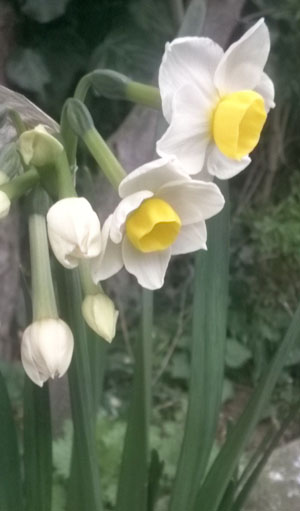
Narcissi

The ceremony itself sports a vernal green altar, almost covered with daffodils and narcissi. Especially featured are the blossoms of the hawthorn,  ornamental, cherry or apple. Under normal circumstances, we call upon Hat-Hor, archetypal Mother Goddess (though I have to say she has some interesting and more dark sides to her remarkable personality).   Everything here is about the re-awakening of the land, the surging and undeniable power of the Spring and its call to Nature to do her best.   It is usually a joyous and fulfilling working, redolent with vibrant energy, positively vibrating with power.

We like to eat very fresh young vegetables and leaves afterward so salads are important.  This is often a vegetarian feast – but not always.  It depends whether local new season lamb is available – this is rare, but when Spring has visited very early it happens at times.

Oh – and we make a point of having Hot Cross Buns, mostly because they are delicious toasted and dripping with butter…but also because that cross is equal-armed – the symbol of the Solstices, crossed by the Equinoxes,  or of course, the Elements.

It’s interesting to note that these four “major” festivals tend to resonate for a full 24 hours before we actually get to celebrating them.   And we all enter into that energy – most particularly because we know very well that the Celebration of Love’s culmination is on the horizon – much more about this very soon.

Graham has done a fantastic job of covering the links between Easter and Ostara, so I’ll not go there, except to point out that most pagans see the Vernal Equinox as the rebirth of Nature….I suppose that is quite similar in some ways to the concepts behind the Resurrection.

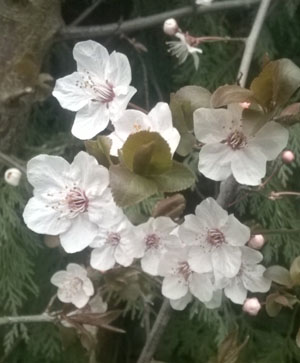
Blackthorn

Naturally, the Vernal is a day of balance – day and night are in perfect equilibrium.  That aids us in creating balance within.  Take some time out on this day to consider those things which have destabilised you in the last year.   Try not to attribute emotions to them – rather stand back, and simply let your thoughts and feelings flow.  When you feel you have considered thoroughly anything you have disquiet about, make for it a mental image which encapsulates it in your mind.  It really does not matter what this is.  It just needs to sum up the totality of the issue.

I find eggs very handy for this – you need an egg and a bowl, plus a lot of kitchen towel.  But you could do anything else so long as you are able, in one way or another, to “break” the image.   I do this by sitting quietly, egg in hand, contemplating my “issue”.  And when I have finished, I crush that egg (best done over the bowl ;-)).   I take great delight in squadging everything up thoroughly, and knowing I am squadging that issue right out of my life, leaving myself fallow and open for new planting.  You could sketch the image and then joyously rip it into shreds.   You could write bits of how you feel and set fire to it (fireproof bowl with water required here).   You’d be surprised how efficiently you get rid of troubling issues in this fashion.

The Vernal Equinox is all about explosive and positive growth.  So…grow! 

Free Will Astrology: Week of March 20, 2025

BY ROB BREZSNY | MARCH 18, 2025 (newcity.com)

Photo: Sarah Brown

ARIES (March 21-April 19): Cheetahs are the fastest land animals. From standing still, they can be running at seventy miles per hour three seconds later. But they can’t sustain that intensity. After a twenty-second burst, they need to relax and recover. This approach serves them well, enabling them to prey on the small creatures they like to eat. I encourage you to be like a metaphorical cheetah in the coming weeks, Aries. Capitalize on the power of focused, energetic spurts. Aim for bursts of dedicated effort, followed by purposeful rest. You don’t need to pursue a relentless pace to succeed. Recognize when it’s right to push hard and when it’s time to recharge.

TAURUS (April 20-May 20): Inside a kaleidoscope, the colored shards of glass are in an ever-shifting chaotic jumble. But internal mirrors present pleasing symmetrical designs to the person gazing into the kaleidoscope. I see a similar phenomenon going on in your life. Some deep intelligence within you (your higher self?) is creating intriguing patterns out of an apparent mess of fragments. I foresee this continuing for several weeks. So don’t be quick to jump to conclusions about your complicated life. A hidden order is there, and you can see its beauty if you’re patient and poised.

GEMINI (May 21-June 20): Spiders spin their webs with meticulous care, crafting structures that are delicate, strong and useful. Their silk is five times more robust than steel of the same diameter. It’s waterproof, can stretch 140 percent of its length without splitting, and maintains its sturdiness at temperatures as low as forty degrees below zero. With that in mind, Gemini, I bid you to work on fortifying and expanding your own web in the coming weeks—by which I mean your network of connections and support. It’s an excellent time to deepen and refine your relationships with the resources and influences that help hold your world together.

CANCER (June 21-July 22): Chichén Itzá was a large pre-Columbian city from around 600 to 1200 CE. It was built by Mayan people in what’s now Mexico. At the city center was a pyramid, The Temple of Kukulcán. During the equinoxes, and only on the equinoxes, sunlight fell on its steps in such a way as to suggest a snake descending the stairs. The mathematical, architectural and astronomical knowledge necessary to create this entertaining illusion was phenomenal. In that spirit, I am pleased to tell you that you are now capable of creating potent effects through careful planning. Your strategic thinking will be enhanced, especially in projects that require long-term vision. The coming weeks will be a favorable time for initiatives that coordinate multiple elements to generate fun and useful outcomes.

LEO (July 23-Aug. 22): Fireflies produce very efficient light. Nearly all the energy expended in their internal chemical reactions is turned directly into their intense glow. By contrast, light bulbs are highly inefficient. In accordance with astrological omens, Leo, I urge you to be like a firefly in the coming weeks, not a light bulb. You will have dynamic power to convert your inner beauty into outer beauty. Be audacious! Be uninhibited! Shower the world with full doses of your radiant gifts.

VIRGO (Aug. 23-Sept. 22): Brazil nut trees grow in the Amazon—but if only they are in the vicinity of orchid bees, their sole pollinators. And orchid bees thrive in no other place except where there are lots of blooming orchids. So the Brazil nut tree has very specific requirements for its growth and well-being. You Virgos aren’t quite so picky about the influences that keep you fertile and flourishing—though sometimes I do worry about it. The good news is that in the coming months, you will be casting a wider net in quest of inspiration and support. I suspect you will gather most, maybe all, of the inspiration and support you need.

LIBRA (Sept. 23-Oct. 22): In 1858, businessperson James Miller Williams was digging a new water well on his land in Ontario, hoping to compensate for a local drought. He noticed oil was seeping out of the hole he had scooped. Soon, he became the first person in North America to develop a commercial oil well. I suspect that you, too, may soon stumble upon valuable fuels or resources, Libra—and they may be different from what you imagined you were looking for. Be alert and open-minded for unexpected discoveries.

SCORPIO (Oct. 23-Nov. 21): I’ve been through the U.S. education system, and I can testify that our textbooks don’t give the French enough of the credit they deserve for helping our fledging nation gain independence from Great Britain. The eighteenth-century American Revolution would not have succeeded without extensive aid from France. So I’m a little late, but I am hereby showering France with praise and gratitude for its intervention. Now I encourage you, too, to compensate for your past lack of full appreciation for people and influences that have been essential to you becoming yourself. It’s a different kind of atonement: not apologizing for sins, but offering symbolic and even literal rewards to underestimated helpers and supporters.

SAGITTARIUS (Nov. 22-Dec. 21): As I survey the astrological aspects, I am tempted to encourage you to be extra expansive about love. I am curious to see the scintillating intimacy you might cultivate. So, in the hope you’re as intrigued by the experimental possibilities as I am, I invite you to memorize the following words by author Maya Angelou and express them to a person with whom you want to play deeper and wilder: “You are my living poem, my symphony of the untold, my golden horizon stretched beyond what the eye can see. You rise in me like courage, fierce and unyielding, yet soft as a lullaby sung to a weary soul. You are my promise kept, my hope reborn, the infinite melody in the heart of silence. I hold you in the marrow of my joy, where you are home.”

CAPRICORN (Dec. 22-Jan. 19): Four facts about a mountain goat as it navigates along steep and rocky terrain: 1. It’s strong and vigorous; 2. it’s determined and unflappable; 3. it’s precise and disciplined; 4. it calls on enormous stamina and resilience. According to my astrological analysis, you Capricorns will have maximum access to all these capacities during the coming weeks. You can use them to either ascend to seemingly impossible heights or descend to fantastically interesting depths. Trust in your power to persevere. Love the interesting journey as much as the satisfaction of reaching the goal of the journey.

AQUARIUS (Jan. 20-Feb. 18): The Swiss Army knife is a compact assemblage of tools. These may include a nail file, scissors, magnifying glass, screwdriver, pliers, blade, can opener, and many others. Is there a better symbol for adaptability and preparedness? I urge you to make it your metaphorical power object during the coming weeks, Aquarius. Explore new frontiers of flexibility, please. Be ready to shift perspective and approach quickly and smoothly. Be as agile and multifaceted as you dare.

PISCES (Feb. 19-March 20): Coast redwoods are the tallest trees on the planet. If, Goddess forbid, lumber harvesters cut down one of these beauties, it can be used to build more than twenty houses. And yet each mature tree begins as a seed the size of a coat button. Its monumental growth is steady and slow, relying on robust roots and a symbiotic relationship with a fungus that enables it to absorb water from fog. I propose we make the redwood your power symbol for now, Pisces. Inspired by its process, I hope you implement the magic of persistent, incremental growth. Treasure the fact that a fertile possibility has the potential, with patience and nurturing, to ripen into a long-term asset. Trust that small efforts, fueled by collaboration, will lead to gratifying achievements.

Homework: Henry James said, “Excellence does not require perfection.” Give an example from your own life. Newsletter.FreeWillAstrology.com

Psychedelics and the Cosmic Mind with Chris Bache

New Thinking • Mar 18, 2025 Chris Bache, PhD, is professor emeritus in the department of Philosophy and Religious Studies at Youngstown State University in Ohio where he taught for 33 years. He is also adjunct faculty at the California Institute of Integral Studies, Emeritus Fellow at the Institute of Noetic Sciences, and on the Advisory Council of Grof Legacy Training. Chris is the author of Lifecycles: Reincarnation and the Web of Life; Dark Night, Early Dawn; The Living Classroom: Teaching and Collective Consciousness; and LSD and the Mind of the Universe: Diamonds from Heaven. His website is chrisbache.com. Chris delves into profound insights gained from his 73 LSD sessions spanning 20 years from 1979-1999. He discusses the shifting perception of psychedelics in society, the need for rigorous and safe protocols, and their potential for transformative, therapeutic, and spiritual uses. He explores themes of cosmic consciousness, the evolution of the collective psyche, and the future of humanity. Ultimately, he asserts that we are part of the divine as a unified single entity, contributing to a larger cosmic project. 00:00:00 Introduction 00:02:06 Renaissance of psychedelics 00:08:11 Sessions – set and setting 00:15:32 Meditation and contemplative practices 00:24:39 Cycle of death and rebirth 00:27:16 Pain, suffering, and letting go 00:33:28 Death, rebirth, and purification 00:40:10 What is dying? 00:59:17 Diamond Luminosity 01:05:35 The Beloved 01:19:59 Birth of the future human 01:29:11 Stopping LSD sessions 01:33:31 Trusting psychedelic experiences 01:40:19 Conclusion Edited subtitles for this video are available in Russian, Portuguese, Italian, German, French, and Spanish. New Thinking Allowed CoHost, Emmy Vadnais, OTR/L, is an intuitive healer and health coach based in St. Paul, Minnesota. She is the author of Intuitive Development: How to Trust Your Inner Knowing for Guidance With Relationships, Health, and Spirituality. Her website is https://emmyvadnais.com (Recorded on January 9, 2025)

Logic, Science, and the Meaning of Life with Bernardo Kastrup

New Thinking Allowed with Jeffrey Mishlove • Ma r 19, 2025 Bernardo Kastrup, PhD, is a computer scientist. He is author of Rationalist Spirituality, Why Materialism is Baloney, Dreamed Up Reality, Meaning in Absurdity, Brief Peeks Beyond, More Than Allegory, and The Idea of the World. He has published several papers in Scientific American arguing for metaphysical idealism. Here he suggests that it is possible to develop spiritual principles on the basis of logic — starting with the premise that existence is meaningful and the observation that all exists within consciousness. He draws upon information theory to deduce that unbounded consciousness, as postulated by philosophical idealism, in order to actualize its full potential for self-understanding (or meta-cognition) would manifest existence as we know it. He explains this further using the analogy of the Mars Rover. New Thinking Allowed host, Jeffrey Mishlove, PhD, is author of The Roots of Consciousness, Psi Development Systems, and The PK Man. Between 1986 and 2002 he hosted and co-produced the original Thinking Allowed public television series. He is the recipient of the only doctoral diploma in “parapsychology” ever awarded by an accredited university (University of California, Berkeley, 1980). He is also the Grand Prize winner of the 2021 Bigelow Institute essay competition regarding the best evidence for survival of human consciousness after permanent bodily death. He is Co-Director of Parapsychology Education at the California Institute for Human Science. (Recorded on February 11, 2019)

How to see the future coming — and prepare for it

Jane McGonigal | TEDNext 2024

• October 2024

As a futurist who helps people prepare for all different kinds of possibilities, Jane McGonigal thinks we overuse words like “unthinkable” and “unimaginable.” She introduces three hypothetical scenarios, showing how you can foster the ability to think creatively, anticipate new risks and feel ready for whatever the future may hold. (Created in collaboration with Ignite Talks)

About the speaker

Game designerSee speaker profile

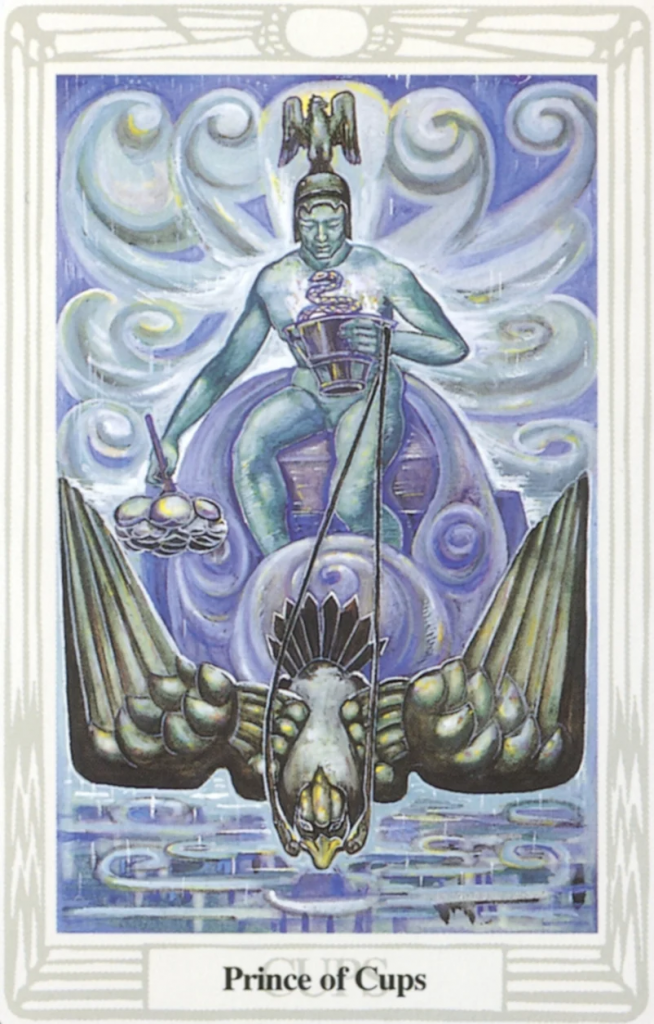
Tarot Card for March 19: Prince of Cups

The Prince of Cups

This card represents the watery quality of air, and as such brings a very important life principle to our experiences when it rules the day. It teaches us about how to shape our desires into realities, and offers a powerful supportive energy to assist us.As we’ve said so often, the things that we wish hardest for, invest most energy into, manifest in our lives. This is why it is so crucial to be vigilant and watchful about the way we’re thinking and feeling. If we sink into negativity, and empower that feeling with strong emotions like loneliness, grief or suffering we inadvertently introduce even more negativity into our lives.Likewise, when we want something strongly enough, and charge that desire with our longing, our hope, our positive energy we will find that thing manifesting for us. This card teaches us how to do this.how to explore our dreams, our desires, our wishes and to propel them into everyday life.The things we work with can be material, emotional or spiritual – the Prince of Cups works with desire on all levels. All we have to do is wish hard enough. And his energy will help us to achieve our aims.So on a day ruled by him, select one thing that you really really want, and spend a little time visualising it, imagining what it would feel like to have it, or experience it, and then gather all your strong feelings up into a bundle and push them out into the Universe…Stay alert, over the four weeks which follow, for signs that you are moving closer to your goal, or have already achieved it. Some things will take longer than others.but as long as you keep your hopes high for that particular wish, it will eventually wing its way back to you.

Affirmation: “I create my life daily and build my future.”

(Angelpaths.com)