KAIST is an acronym for Korea Advanced Institute of Science and Technology. In 1981, the government merged KAIS and KIST to form KAIST, which kept the new name even after KIST became independent again.
KAIST has contributed to the industrialization of satellite technology and helped enhance the nation’s status. KAIST has also partnered with other universities, including NYU and Carnegie Mellon, to advance research and education.
Here is what looks like it is going to be very good healthcare news. If cancer is an issue for you or someone you know or care for you might alert your oncologist about this research.
Despite the development of numerous cancer treatment technologies, the common goal of current cancer therapies is to eliminate cancer cells. This approach, however, faces fundamental limitations, including cancer cells developing resistance and returning, as well as severe side effects from the destruction of healthy cells.
KAIST (represented by President Kwang Hyung Lee) announced on the 20th of December that a research team led by Professor Kwang-Hyun Cho from the Department of Bio and Brain Engineering has developed a groundbreaking technology that can treat colon cancer by converting cancer cells into a state resembling normal colon cells without killing them, thus avoiding side effects.
The research team focused on the observation that during the oncogenesis process, normal cells regress along their differentiation trajectory. Building on this insight, they developed a technology to create a digital twin of the gene network associated with the differentiation trajectory of normal cells.
Through simulation analysis, the team systematically identified master molecular switches that induce normal cell differentiation. When these switches were applied to colon cancer cells, the cancer cells reverted to a normal-like state, a result confirmed through […]
Imants Barušs and Julia Mossbridge utilize findings from quantum mechanics, special relativity, philosophy, and paranormal psychology to build a rigorous, scientific investigation into the origins and nature of human consciousness. Along the way, they examine the scientific literature on concepts such as mediumship, out-of-body and near-death experiences, telekinesis, “apparent” vs. “deep time,” and mind-to-mind communication, and introduce eye-opening ideas about our shared reality. The result is a revelatory tour of the “post-materialist” world—and a roadmap for consciousness research in the twenty-first century.
This book is an experiment. Inspired by the bizarre and uncanny, it is an attempt to use science and rationality to lift the veil off the irrational. Its ways are unconventional: weaving along its path one finds UFOs and fairies, quantum mechanics, analytic philosophy, history, mathematics, and depth psychology. The enterprise of constructing a coherent story out of these incommensurable disciplines is exploratory. But if the experiment works, at the end these disparate threads will come together to unveil a startling scenario about the nature of reality.
Renowned psychedelic researcher Rick Strassman, MD, draws upon his journals and analyses of dozens of episodes of altered consciousness that occurred during, or are intimately tied to, his life between birth and young adulthood. Just as significant as the ecstatic blissful experiences are the uncensored and, at times, painfully unvarnished narratives of less elevated ones. Understanding and applying the meaning and message of any altered state—its integration—first requires a clear-eyed recollection of the actual experience in all its aspects, neither pushing away the ugly nor grasping after the beautiful. This book provides a profound example of how one might go about accomplishing this daunting task.
Watermelon Picture • Nov 25, 2024 Watch the official trailer for FROM GROUND ZERO Only In Theaters January 3rd! Buy Tickets here – http://fromgroundzero.url.film – Palestine’s Official Submission to the 97th Academy Awards – Official Selection at the 2024 Toronto International Film Festival – Directed by Rashid Masharawi From Executive Producer Michael Moore and Palestine’s Official Submission for the 2025 Academy Awards, From Ground Zero, is a collection of revealing stories from 22 Palestinian filmmakers living through war, who capture their lives in Gaza amidst war. Using a blend of animation, documentary, and fiction, they create a powerful testament to the steadfastness of the human spirit. This film serves as a remarkable reflection of how art can thrive even in the darkest times, showcasing the enduring spirit and creativity that emerge amid ongoing devastation. . Films By: Reema Mahmoud Muhammad Al Sharif Ahmed Hassouna Islam Al Zeriei Mustafa Kolab Nidal Damo Khamis Masharawi Bashar Al Balbisi Tamer Nijim Ahmed Al Danaf Alaa Islam Ayoub Karim Satoum Alaa Damo Aws Al Banna Rabab Khamis Etimad Washah Mustafa Al Nabih Hana Eleiwa Wissam Moussa Basel El Maqousi Neda’a Abu Hasna Mahdi Kreirah . . .Watermelon Pictures is a film production and distribution company rooted in creative resistance. Our mission is to champion unheard voices, inspire the world to stand up to injustice and imagine our way into a shared, liberated future.
Contemporary historians tell us that, by the start of the Common Era, approximately three-quarters of the world’s population were living in just four empires (we’ve all heard of the Romans and the Han; fewer of us, perhaps, of the Parthians and Kushans). Just think about this for a minute. If true, then it means that the great majority of people who ever existed were born, lived and died under imperial rule. Such claims are hardly original, but for those who share Arnold Toynbee’s conviction that history should amount to more than ‘just one damned thing after another’, they have taken on a new importance.
For some scholars today, the claims prove that empires are obvious and natural structures for human beings to inhabit, or even attractive political projects that, once discovered, we have reproduced again and again over the longue durée of history. The suggestion is that if the subjects of empire in times past could have escaped, they’d have been unwise to do so, and anyway the majority would have preferred life in imperial cages to whatever lay beyond, in the forest or marshes, in the mountains and foothills, or out on the open steppe. Such ideas have deep roots, which may be one reason why they often go unchallenged.
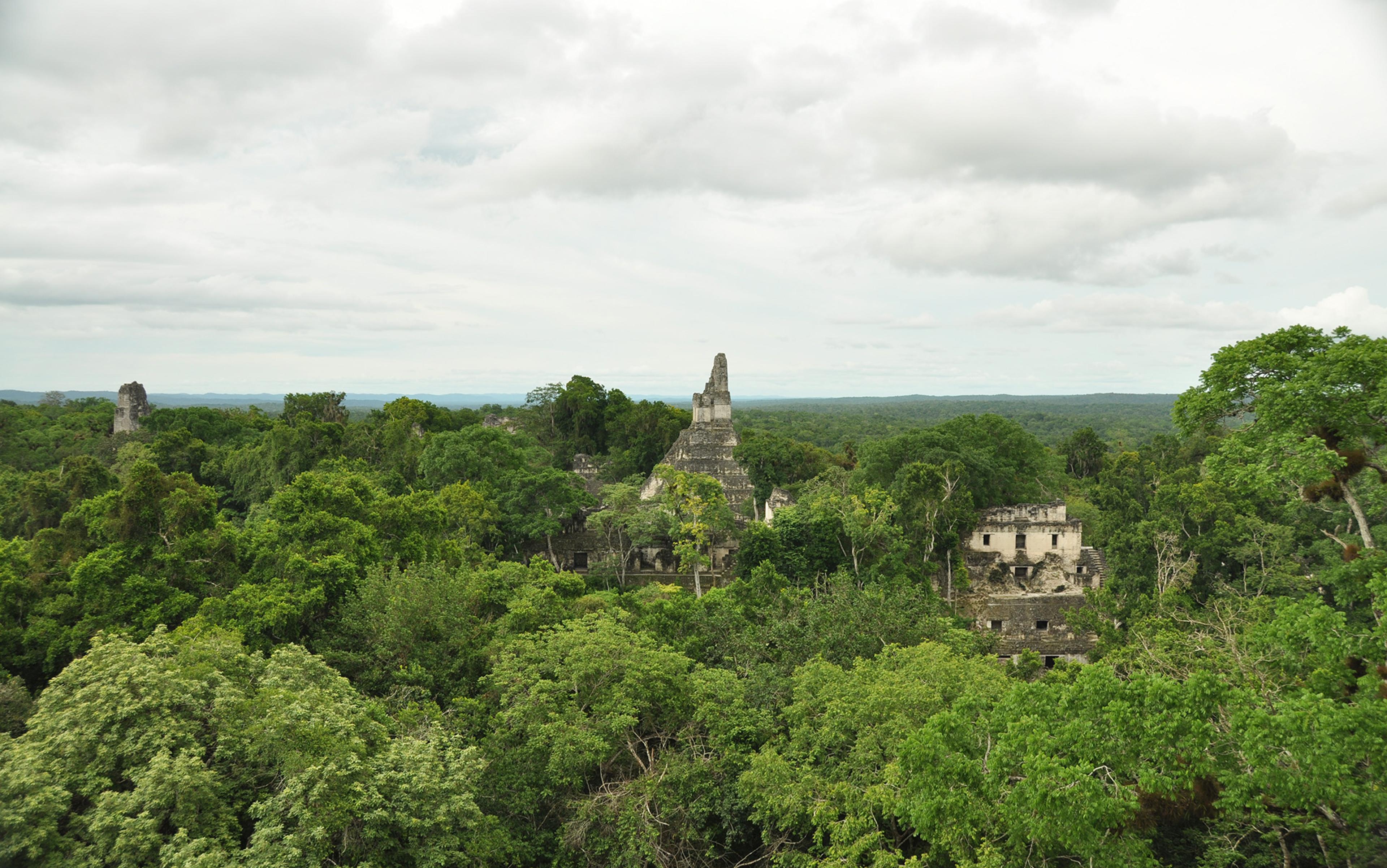
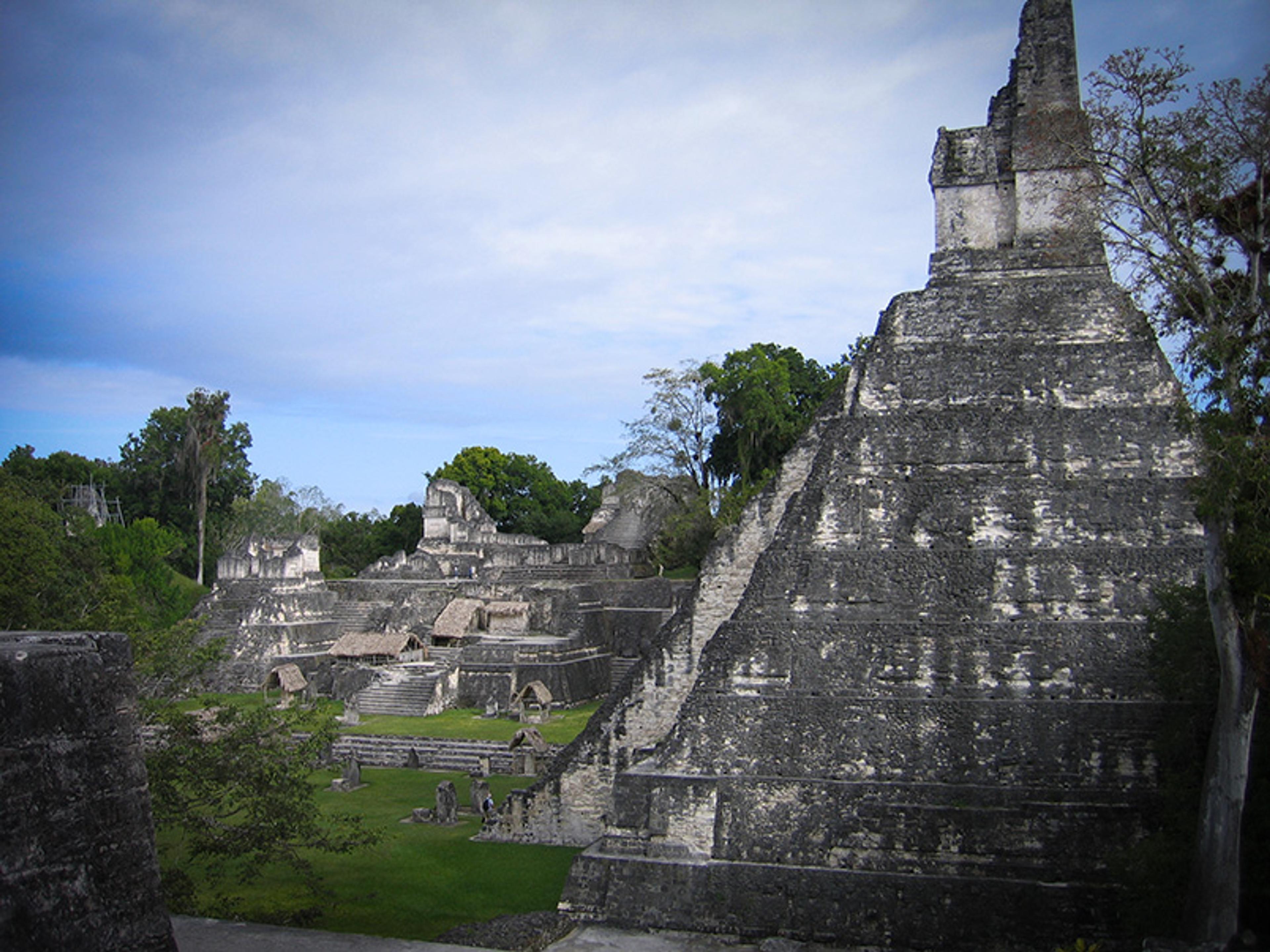
The temple complex at Tikal National Park, Guatemala. Photo by Ryanacandee/Flickr
In the late 18th century, Edward Gibbon – taking inspiration from ancient writers such as Tacitus – described the Roman Empire (before its ‘decline and fall’) as covering ‘the fairest part of the earth, and the most civilised portion of mankind,’ surrounded by barbarians whose freedom was little more than a side-effect of their primitive ways of life. Gibbon’s barbarian is an inveterate idler: free, yes, but only to live in scattered homesteads, wearing skins for clothes, or following his ‘monstrous herds of cattle’. ‘Their poverty,’ wrote Gibbon of the ancient Germans, ‘secured their freedom.’
It is from such sources that we get, not just our notion of empire as handmaiden to civilisation, but also our contemporary image of life before and beyond empire as being small-scale, chaotic and largely unproductive. In short, everything that is still implied by the word ‘tribal’. Tribes are to empires (and their scholarly champions) much as children were to adults of Gibbon’s generation – occasionally charming or amusing creatures, but mostly a disruptive force, whose destiny is to be disciplined, put to useful work, and governed, at least until they are ready to govern themselves in a similar fashion. Either that, or to be confined, punished and, if necessary, eliminated from the pages of history.
Ideas of this sort are, in fact, as old as empire itself. In their diplomatic correspondence, which can be followed back to a time more than 3,000 years ago, the rulers of Egypt and Syria grumble incessantly about the subversive activities of groups calledʿApiru. Scholars of the ancient Near East once tookʿApiru to be an early reference to the Hebrews, but it’s now thought to be an umbrella term, used almost indiscriminately for any group of political defectors, dissenters, insurgents or refugees who threatened the interests of Egypt’s vassals in neighbouring Canaan (much as some modern politicians have been known to use the word ‘terrorist’ for rhetorical effect today).
In Babylonia, such groups – when not given tribal or ethnic labels – might be variously described as ‘scattered people’, ‘head-bangers’ or simply ‘enemies’. In the early centuries BCE, emissaries of the Han Empire wrote in similar ways about the rebellious marsh-dwellers of the tropical coastlands to their south. Historians now see these ancient inhabitants of Guangdong and Fujian through Han eyes, as the ‘Bai-yue’ (‘Hundred Yue’), who were said to shave their heads, cover their bodies in tattoos, and sacrifice live humans to their savage gods. After centuries of resistance and guerrilla warfare, we learn, the Yue capitulated. On the order of Emperor Wu, most were deported and put to hard labour, their lands given over to colonial settlers from the north, including many retired soldiers.
Empires have always created vivid and disturbingly violent images of tribal life on their frontiers, placing in a different, paternalistic light the violence at the heart of their own political projects. In such ways, we convince ourselves that these things are somehow deeply related, that violence and domination are the necessary substratum of ‘civilisation’, or that Europe after the fall of Rome achieved something unique – unnatural even, on a global scale – by breaking decisively from ancient cycles of empire and forging a singular path to liberty and prosperity. Once entrenched in our imaginations, such ways of thinking are fiendishly difficult to reverse. Even experienced scholars of empirically grounded disciplines may find themselves advancing such arguments based on the flimsiest of sources.
According to Walter Scheidel, a professor of classics and history at Stanford University in California, the population figures cited at the start of this essay ‘convey a sense of the competitive advantage of a particular type of state: far-flung imperial structures held together by powerful extractive elites.’ In ‘quantitative terms,’ he tells us in The Great Leveller (2017), this ‘proved extremely successful.’ Looking deeper back in time, to the very ‘origin of the state’, Scheidel further conjectures that ‘3,500 years ago, when state-level polities covered perhaps not more than 1 per cent of the earth’s terrestrial surface (excluding Antarctica), they already laid claim to up to half of our species.’
Venture down into the footnotes, and you discover that everyone is citing the same source
Now, it is surely true that in any period of human history, there will always be those who feel most comfortable in ranks and orders. As Étienne de La Boétie had already pointed out in the 16th century, the source of ‘voluntary servitude’ is arguably the most important political question of them all. But where do the statistics come from, to support such grand claims? Are they reliable? Venture down into the footnotes, and you discover that everyone is citing the same source: an Atlas of World Population History,published in 1978; in fairness, Scheidel does provide one additional citation, to Joel Cohen’s How Many People Can the Earth Support? (1995), but this turns out to comprise a chart showing estimates of past human population sizes in which all figures for the premodern era derive from, again, the Atlas of World Population History or from subsequent publications based on it.
In light of all this, anyone today who consults the Atlas of World Population History for the first time is in for a surprise. It is an unassuming tome, and a very old one at that. It comprises simple-to-read population graphs for different world regions, accompanied by pithy essays, which sometimes verge on the laconic. There is also an Appendix on ‘Reliability’ that begins: ‘The hypotheses of the historical demographer are not, in the current state of the art, testable and consequently the idea of their being reliable in the statistician’s sense is out of the question.’
I’ll come back to this important point in a moment.
First, it is worth reflecting on what it means to talk of the ‘competitive advantage’ of states governed by extractive elites. At the least, this introduces questions about the long-term strength and viability of certain types of society, and the endemic weaknesses of others. Only the ‘winners’, one assumes, get to forge viable paths to the future. These, however, are matters of opinion, not statistics. They brush over irritating questions like ‘How many benefited from living in imperial structures?’ or ‘What is a viable path into the future?’ What ‘advantages’, we might ask, accrued to a girl captured by Cilician pirates, and sold in the slave markets of Roman-era Delos, over one living freely in the Nuba Hills of southern Kordofan? Slaves were said to change hands at a rate of 10,000 per day in Delos, and the total number of slaves in the early Roman Empire could have been between 6 and 10 million. In what sense can their numbers be added to the side of the ‘winners’?
Thinking ‘in quantitative terms’ doesn’t really allow us to bypass these issues, or at least it shouldn’t. Questions remain. What, exactly, were ancient empires ‘successful’ at, if extraordinary levels of violence, destruction and displacement were required to keep them afloat? Today it seems very possible that another 2,000 years of world governance by ‘powerful extractive elites’ could lead to the destruction of most life on Earth. Many experts think it could happen far sooner if we simply continue with the status quo. Looking back from such a vantage point, if anyone will even be able to do that, who then will seem to be the ‘winners’ of history? Will history have made losers of us all? Would the ‘fittest’ have found an exit route, some way to terraform other parts of the solar system, founding colonies on Mars or Venus that resemble Palo Alto, or even Massachusetts? If there are schools (or at least, TED talks), then perhaps future generations will look back and ask if we might have learned something from the faded traditions of those who lived otherwise. What if there is no Planet B? Or maybe, by then, none of it will really matter very much, because the past will itself have been automated. Instead of historians, we’ll have ‘history machines’ based on algorithms and databanks: more facts on file, designed by survivors of the final bureaucratic assault on what was once fondly called ‘the humanities’.
Let’s come back to the figures in the Atlas of World Population History. It estimates 46 million Roman subjects and 50 million Han subjects. Let’s assume, for a moment, this is OK. Supposedly – if we combine it with statistics for other empires of the same era – this amounts to ‘between two-thirds and three-quarters of all people alive at the time’ (to quote Scheidel). But what does the Atlas tell us about all those other parts of the ancient world that lay beyond the grasp of powerful, extractive elites? Were they really so empty?
New techniques are revealing entire traditions of urban life, spanning centuries or even millennia
One way to control the quality of historical conjecture is by using rigorous sources that are up to date. In the social sciences, basing important claims on a source from 1978 is going back a while (I was six years old when the Atlas in question was published). Surely such significant matters have been the subject of continuing research? Over the past 45 years, scholars’ understanding of imperial Roman and Chinese demography may not have changed that much. It has, after all, been a matter of serious research for decades. But we can hardly claim that there’s been no relevant, even vital progress in our knowledge of other parts of the world. This is especially true in my own field of archaeology.
Over the past few decades, geographical spaces once written off as blanks on the map, or dismissed as ‘an unchanging palaeolithic backwater’ (as our 1978 Atlas puts it, for Aboriginal Australia), have been flooded with new data. Archaeology, specifically rapid advances in settlement archaeology and methods of survey, has been one major contributor. Among other things, these new techniques are revealing entire traditions of urban life, spanning centuries or even millennia, where none were previously suspected. All of them lie within the scope of the past 5,000 years, but surprisingly few can be convincingly identified with the rise of bureaucratically ordered kingdoms or empires.
In the years following the publication of the Atlas, archaeologists working in the inland delta of the Middle Niger revealed evidence for a prosperous urban civilisation with no discernible signs of rulership or central authority, focused on the site of Jenne-jeno, and preceding the empires of Ghana, Mali and Songhai by some centuries. China, too, has gained a long history of cities before empire, from the lower reaches of the Yellow River to the Fen Valley of Shanxi province, and the ‘Liangzhu culture’ of Jiangsu and Zhejiang. The same is true for the coastlands of Peru, where archaeologists have uncovered huge settlements with sunken plazas and grand platforms, four millennia older than the Inca Empire. In Ukraine, before the Russian invasion, archaeological work on the grasslands north of the Black Sea – which ancient Greek authors portrayed as ‘barbarian steppe’, a land of fierce nomads – was generating detailed evidence of a lost urban tradition, 3,000 years before Herodotus; at sites such as Nebelivka, for example.
As David Graeber and I observed in The Dawn of Everything: A New History of Humanity (2021), our knowledge of such regions and their deep histories has increased exponentially in recent decades. Why, then, beat such a hasty retreat to the state of knowledge as it existed in 1978, and miss out on all this new information? In a moment, we’ll get a clearer sense of what it means to do this, and just how shaky things can get. First, though, there’s more to say on the question of reliability. Colin McEvedy and Richard Jones – who authored the Atlas of World Population History – were, in fact, disarmingly frank about the quality of their data: ‘we wouldn’t attempt to disguise the hypothetical nature of our treatment of the earlier periods … we haven’t just pulled the figures out of the sky. Well, not often.’ Their own acknowledgement of the provisional, hypothetical nature of some of these figures is interesting, since Scheidel is hardly alone in basing some extremely broad assertions on this single, dated source.
Last year, Timothy Guinnane, professor emeritus of economics at Yale University in Connecticut, decided to blow the whistle on the Atlas.
Writing in The Journal of Economic History, Guinnane assessed the scholarly merits of the Atlas. He deemed it ‘unreliable’ – little more than an encyclopaedia of zombie statistics. Guinnane finds the Atlas guilty of sometimes reporting population estimates with no apparent supporting evidence, or no indication of how a particular source was converted into usable statistics. Historians, he suggests, should stop using it, because claims about global history based on the Atlas can only ever resemble the proverbial piece of old Swiss cheese: mostly missing, and what’s there is off. Its authors, he notes, were often more candid about the gaps in their work, and the speculative nature of their population graphs, than the researchers who continue to use their data.
How did such a dismal source as the Atlas become the sole basis for a demographics of doom?
In a recent interview with the Long Now Foundation, Guinnane explains how he was inspired to write his article after seeing one scholar after another make ‘references to data of this type’. Confronted, time and again, with statistics that have a major bearing on our understanding of world history, including the long-term history of human land use and environmental change, he quite reasonably wanted to know where the population figures come from; much as we might ask how anyone can surmise that, at the start of the Common Era, most people on Earth were living under imperial rule. Why do we think that? In Guinnane’s own words, the results of his enquiries left him ‘baffled’, since his experience indicates that ‘no such data exist’. Hence the title of his journal paper: ‘We Do Not Know the Population of Every Country in the World for the Past Two Thousand Years’ (let alone the past 5,000).
In the near future, intellectual historians may puzzle over how, a half-century after its publication, such a dismal source as the Atlas became the sole basis for a demographics of doom. How, on such feeble foundations, did we pump into our heads the notion that there is something natural about living in societies where rulers exercise arbitrary authority over subjects? Or where dissent is likely to be met with brutality, imprisonment, exile or even death; and where the only alternative is something like the ‘liberty’ of Gibbon’s ancient Germans: a life of freedom, but also of poverty, ignorance and general immiseration.
Guinnane names prominent economic historians who continue to use the Atlas in various ways. As he rightly emphasises, the blame shouldn’t really lie with individual scholars. He is also, surely, correct to say that, so long as reputable publishers of academic books and journals continue to accept work based on such sources, we’re unlikely to see much progress: ‘estimates will not improve unless we care enough about good data to stop naively using the old.’ Archaeology, I suggest, has a vital role to play here.
Let’s take the example of the Amazon rainforest, an area of well over 2 million square miles, with no history of empire until the European conquest, and which the Atlas characterises as yet another demographic backwater, thinly scattered with nomadic foragers, whose mode of livelihood (its authors assumed) could never support dense populations. How does this hold up today?
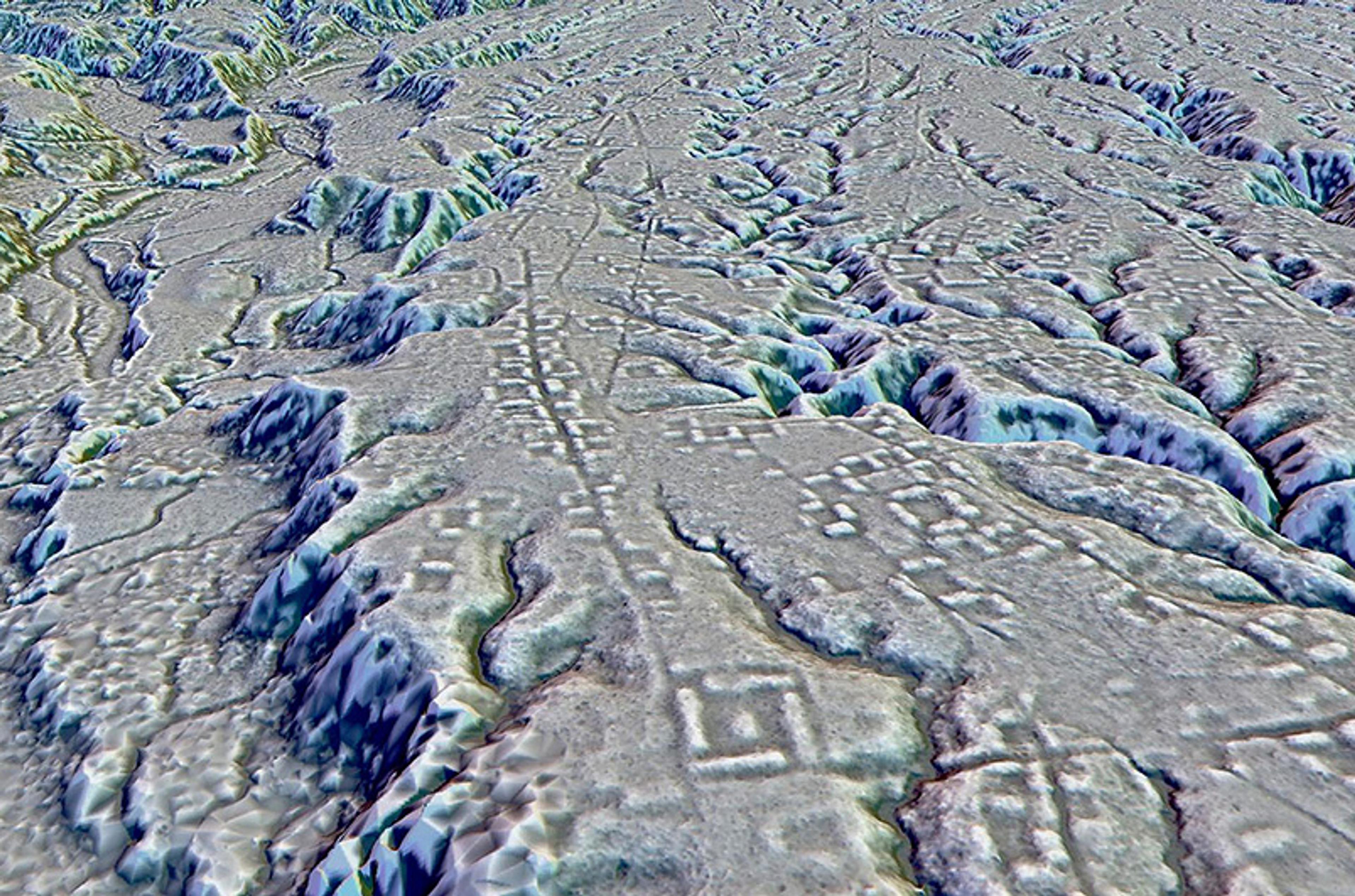
Lidar map of the city of Kunguints in the Ecuadorian Amazon showing ancient streets lined with houses. Courtesy Antoine Dorison and Stéphen Rostain/Wikipedia
It doesn’t. Over the past decade, archaeologists have been busily turning the whole picture on its head, using airborne lasers to peer through the forest canopy. Tropical landscapes that resisted terrestrial survey are giving up their secrets. In place of blanks on the map, we’re now able to see highly cultivated landscapes with massive infrastructure stretching back to the early centuries BCE. Road networks, terraces, ceremonial earthworks, planned residential neighbourhoods, and regional settlement systems ordered into patterns of geometrical precision can be traced across Amazonia, from Brazil to Bolivia, as far as the eastern foothills of the Andes. In certain parts of Amazonia, the forest itself turns out to be a product of past human interaction with the soil. Over time, this generated the rich ‘anthropogenic’ earths calledterra preta de índio (‘black earth of the Indians’), with levels of fertility far in excess of ordinary tropical soils. Scientists now believe that between 10,000 and 20,000 large-scale sites remain to be discovered across Amazonia. Similarly startling finds are emerging from Southeast Asia, and we might reasonably expect them from the forested parts of the African continent too.
Of course, the same procedures are changing our picture of tropical landscapes that did witness the rise and fall of great kingdoms, and even empires. Archaeologists now believe that in the year 500 CE, between 10 and 15 million people lived in the Maya lowlands of Yucatán and northern Guatemala. For comparison, the Atlas offers a figure of just 2 million for all of Mexico in the same era, including the Indigenous cities of the Altiplano (at least some of which, we now know, were organised not as empires or even kingdoms, but fiercely autonomous republics, long before the Spanish conquest).
Until surprisingly recent times, spaces of human freedom existed across large parts of our planet
It is easy, encouraged by works such as the Atlas, to imagine ancient history as a chequerboard of kingdoms and empires. But it is also very misleading. Ancient polities in the Maya lowlands and Southeast Asia had porous boundaries, constantly shifting, and open to contestation. Authority waned with distance from the centre. Warfare and tribute were largely seasonal affairs, after which coercive power shrank back behind the walls of the capital. As the archaeologist Monica Smith points out, only the most naive historian would assume that the claims inscribed on imperial monuments are a simple reflection of political reality on the ground. Of course ancient rulers loved to present themselves as ‘sovereigns of the four quarters’, ‘masters of the known world’, and so on. Yet no ancient world emperor could even have imagined powers of surveillance, such as those now enjoyed by any minor dictator or oligarch.
On a global scale, we are witnessing a revolution in our understanding of ancient demography. To ignore it, these days, is to indulge in a cruel sort of intellectual prank, by which the genocide of Indigenous populations – a direct consequence of the planetary revolt against freedom, in the past 500 years – is naturalised as a perennial absence of people. Nor can we just assume that if we want to understand the prospects for our modern world, the only ‘big’ stories worth telling are those of empire.
The world we live in today is not just the one created by the likes of Tiberius of Rome, or even Emperor Wu of Han. Until surprisingly recent times, spaces of human freedom existed across large parts of our planet. Millions lived in them. We don’t know their names, as they didn’t carve them in stone, but we know that many lived lives in which one could hope to do more than just scratch out an existence, or rehearse someone else’s script of ‘the origin of the state’ – in which one could move away, disobey, experiment with other notions of how to live, even create new forms of social reality.
Sometimes, the unfree did this too, against much harder odds. How many, back then, preferred imperial control to non-imperial freedoms? How many were given a choice? How much choice do we have now? It seems nobody really knows the answers to these questions, at least not yet. In future, it will take more than zombie statistics to stop us from asking them. There are forgotten histories buried in the ground, of human politics and values. The soil mantle of Earth, including the very soil itself, turns out to be not just our species’ life support system, but also a forensic archive, containing precious evidence to challenge timeworn narratives about the origins of inequality, private property, patriarchy, warfare, urban life and the state – narratives born directly from the experience of empire, written by the ‘winners’ of a future that may yet make losers of us all.
Investigating the human past in this way is not a matter of searching for utopia, but of freeing us to think about the true possibilities of human existence. Unhampered by outdated theoretical assumptions and dogmatic interpretations of obsolete data, could we look with fresh eyes at the very meaning of terms like ‘civilisation’? Our species has existed for something like 300,000 years. Today, we stand on a precipice, confronting a future defined by environmental collapse, the erosion of democracy, and wars of unprecedented destructiveness: a new age of empire, perhaps the last in a cycle of such ages that, for all we really know, may represent only a modest fraction of the human experience.
For those who seek to change course, such uncertainty about the scope of human freedoms may itself be a source of liberation, opening pathways to other futures.
The Astrology Podcast • Jan 3, 2025 A quick overview of the astrology forecast for January 2025, including the luckiest day of the month, with astrologer Chris Brennan of The Astrology Podcast. The chart for the best date this month is set for January 10, 2025 at 9:30 AM local time, with Pisces rising.
New Thinking Allowed with Jeffrey Mishlove • Jan 3, 2025 This video is a special release from the original Thinking Allowed series that ran on public television from 1986 until 2002. It was recorded in about 1990. It will remain public for only one week. Fred Alan Wolf, PhD, is author of The Spiritual Universe, and many other books including The Eagle’s Quest, The Dreaming Universe, Parallel Universes, The Body Quantum, Star Wave, and Taking the Quantum Leap. Here he presents the position that there is but one Soul in the universe–the universal consciousness of which we all partake. Now you can watch all of the programs from the original Thinking Allowed Video Collection, hosted by Jeffrey Mishlove. Subscribe to the new Streaming Channel (https://thinkingallowed.vhx.tv/) and watch more than 350 programs now, with more, previously unreleased titles added weekly. Free month of the classic Thinking Allowed streaming channel for New Thinking Allowed subscribers only. Use code THINKFREELY.
Release – Topic • Jun 10, 2021 Provided to YouTube by Amuseio AB The Letter · hornsae The Letter ℗ Feels Feels Released on: 2021-06-11 Composer: Brady Daniell-Smith Auto-generated by YouTube.
Lyrics:
This is the first day of my life. The seas are changing There’s a distant shore in sight. Put it out there, Put it out. Show them what’s within. Show them what’s beneath your skin. Put it out there, Put it out. Let the sunlight in. A brand new day begins. It’s time to let the sunlight in. Put it out there, Put it out there, love. Put it out there, Put it out. Put it out there, Put it out there, love. Remember who, Remember who you are, love. It’s time to let the sunlight in.
GoodBye Monkey | TED Countdown: Overcoming Dilemmas in the Green Transition
• October 2024
In a universe not unlike ours, a tech-environmentalist group claims to have created an AI that is the direct “voice of the earth,” a computer connected via electrodes to the mycelium network under an ancient forest named S.A.N (Sentient Advocate of Nature). The film imagines what nature thinks of human impact on the planet, as a renowned reporter conducts a world-first interview with S.A.N.
GoodBye Monkey is a production company founded by Caleb MacDonald and Ryan Ferris. Their work collaborates with an increasingly bewildering future, where truth is more often than not stranger, more ironic or indistinguishable from fiction.
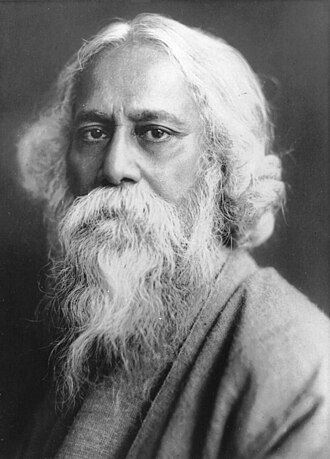
I slept and dreamt that life was joy. I awoke and saw that life was service. I acted and behold, service was joy. – Rabindranath Tagore
Rabindranath Thakur (May 7, 1861 – August 7, 1941) FRAS was an Indian polymath who worked as a poet, writer, playwright, composer, philosopher, social reformer, and painter of the Bengal Renaissance. He reshaped Bengali literature and music as well as Indian art with Contextual Modernism in the late 19th and early 20th centuries. Wikipedia
Consciousness, spirituality, biography, sexuality, androgyny, futurism, space, the arts, science, astrology, democracy, humor, books, movies and more