Life Lessons of an 81-Year-Old Men’s Mental Health Maverick 

 January 4, 2025 (menalive.com)

By  Jed Diamond

Photo by: Nik / Unsplash.com

Part 5: Our Home Attracted Death Like a Magnet

Our home attracted death like a magnet. In 1949, the same year my father was committed to Camarillo State Hospital, Holly, a close friend of the family, shot himself. I remember going to the service, confused and afraid, but no one talked about why he died. Yet, everyone knew it was suicide. Years later I was looking through our attic and found nine of my father’s journals written between 1946 and 1949. They were a goldmine for me, giving me insight and understanding about my father’s inner world, his hopes, dreams, and the demons of doubt he wrestled with all his life.

 There were numerous entries about his friend Holly, a fellow writer, written three years before the death. He described the pressures Holly was facing in the years leading to his suicide.

“When a theme possesses you the way Holly’s theme possessed him, good writing must result. You begin to see and understand what a herculean job novel writing is, how much guts, stamina, endless sweat and stick-to-itiveness you need.”

My father also felt the same force driving Holly to despair.

“How alike Holly and I are in our basic situation in life. We both struggle trying to make a living, feeling a furious hate inside, the hot breath of necessity blaring down our necks, the constant finger about to stick itself in our noses and telling us ‘times up. It’s too late.’ Now you’ll have to make it by working at what you loathe. The hands of the clock point to twelve.”

The same year that Holly died, my closest friend, Woody, drowned in the river near our house. He was my best friend and his sudden death left me feeling sad and lonely. I tried talking to my mother about my feelings, but she was caught up in her own fears. “Oh my God, I’m so glad you didn’t go with him to the river,” my mother said as she hugged me tight. “That could have been you.” I put my own feelings aside and tried to assure her that I was O.K. and wouldn’t go near the river.

My mother was preoccupied with her own death. From the time I was born, when she was thirty-five, I knew my mother was about to die. She talked about it all the time. “I just hope I’m around to see you off to high school,” she would tell me. Her voice was always light and breezy, but it chilled me to the bone. When she was still around when I went to high school, she wasn’t reassured, she just moved her imminent death a little farther down the line. “I just want to see you go to college before I die,” she would tell me.

I was seven when the “Forester man” came for a visit. He sold life insurance, but his story made it seem that he was here to offer protection and support. Though we had little money for essentials, my mother bought the whole package. My mother signed up for insurance on herself, so I’d be taken care of when she died. She also bought an insurance policy on me because “it’s never too early to think about your wife and kids.” As a dutiful son, I felt proud to own an insurance policy to take care of my family when I died…while I was still in the first grade.

I began to see death as a companion, a deadly twin that shadowed my dreams. I slept alone and had developed a ritual to enable me to go to sleep. I had to arrange the sheets and blankets in such a way that I created a safe cocoon and when it was just right I could fall asleep. But every night I would have the same dream:

I awaken and get out of bed. I walk from my bedroom into the dining room and from there into the kitchen and the living room. Somewhere along the way a dark figure jumps out carrying a long knife. I immediately begin to run away. I know if I can get back to my bed, I’ll be safe. But I never make it. I’m stabbed and wake up screaming.

My mother never seemed to hear the screams and I didn’t want to worry her. When I finally told her the dream she offered no clue of the cause, nor did she seem concerned. The dreams continued, but I never discussed them with her or anyone. Yet, my own preoccupation with death took hold in my subconscious, only to surface many years later in college. I took my girlfriend to see the play “A Long Day’s Journey Into Night,” Eugene O’Neill’s autobiographical masterpiece about growing up in a crazy, dysfunctional family. My girlfriend hated it. I felt I had found a kindred spirit who was telling my story. One small section spoke deeply about my own life to that point.

In the play, as his family unravels around him, the younger son, Edmund, tries to make sense of his place in the family drama. He says:

“It was a great mistake, my being born a man, I would have been much more successful as a sea gull or a fish. As it is, I will always be a stranger who never feels at home, who does not really want and is not really wanted, who can never belong, and who must always be a little in love with death!”

After I stopped visiting my father in Camarillo, my mother and I never talked about him. It was as though he was dead or had never existed. We became a family of two. My mother never mentioned him and I told kids in school that “my father died,” which got me a little sympathy that I never got when I said he had a “nervous breakdown and was in a mental hospital.”

Life Lesson: When adults deny the reality of depression and suicide children are left to grapple with their confused feelings alone.

When my mid-life father took an overdose of sleeping pills and was committed to the state mental hospital the adults in my life couldn’t deal with the reality of his feelings of despair. My mother was consumed by her own terrors and denial and chose not to visit him in the hospital. She tasked my uncle and me to make the weekly visits to see my father. Family and friends didn’t talk openly about the death by suicide of my father’s close friend, Holly, another struggling creative artist.

Men die by suicide at rates four times higher than the rates for females and is even higher as men get older. When we deny our early wounding, it often turns into depression, which can lead to suicide.

Life Lesson: Although depression and despair that can lead to suicide can impact everyone, it is more prevalent among sensitive, creative, men and women.

Kay Redfield Jamison is Professor of Psychiatry at the Johns Hopkins School of Medicine. She is the co-author of the standard medical text on bipolar disorder and the author of national best sellers An Unquiet Mind: Memoir of Moods and Madness, Touched with Fire: Manic-Depressive Illness and the Artistic Temperament, Night Falls Fast: Understanding Suicide, and other books.

In Touched with Fire, she begins by quoting poet Lord Byron as he talks about himself and other creative types.

“We of the craft are all crazy,”

said Byron about  himself and other creatives.

“Some are affected by gaiety, others by melancholy, but all are more or less touched.”

Where has depression shown up in your life or in the lives of people you love? Do you consider yourself a creative person?  Do you see a connection between your creativity and times you felt down or depressed?

I look forward to hearing from you. New training opportunities coming in 2025. Drop me a note to Jed@MenAlive.com if interested.

If you appreciate these articles, please share them. They are my labor of love. If you are not already a subscriber, feel free to do so here.

Previous Article

Author Image

Best Wishes,

Jed Diamond

Founder and VHS (Visionary Healer Scholar) of MenAlive
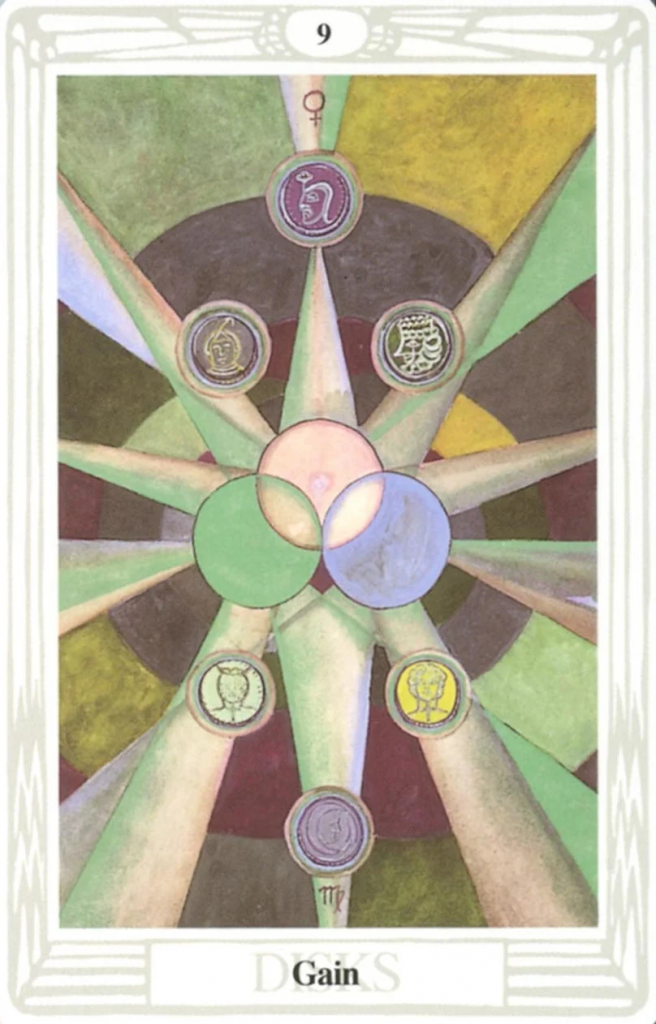
Tarot Card for January 6: Gain

The Nine of Disks

That phrase ‘what goes around comes around’ is very relevant to this card. The Lord of Gain is a card that indicates that we have set in motion some plan or project, and we are now reaching a point of completion with it.So on the day ruled by the Nine of Disks, we need to be open to opportunities which allow us to conclude work that has been outstanding; remain alert to new chances opening up before us; and ready to seize the moment when it appears.This card accords with the ancient wisdom that we give what we get in life – so this is also a day to look for opportunities to offer our help and resources with no immediate expectation of return.Take up chances to serve – whether in a mundane fashion, or to a higher source, in the sure knowledge that the things you give with love are the ones which build a bright new world.It is the help we give to others with a happy heart, the sympathy we offer without judgement, the gentleness with which we treat ourselves and others that will change things.When we do this, we set in motion a stream of positive, caring energy, which will travel around the world and return to us – vastly changed, and yet almost the same. What we gave to somebody else with no thought of reward or gain, is what we truly gain when it comes our way again.

Affirmation: “I open myself to life’s bounty with gratitude”

(Angelpaths.com)

Philomena Cunk – Moments of Wonder

wirewehear Jan 14, 2024 Not sure it was a series as such. 4 minute ep’s that were included in the half-hour shows ‘Charlie Brooker’s Weekly Wipe’, I think. Anyway I’ve compiled them into two 30 minute collections. Pt 01 (Eps 1-8); 00:00 – Time 04:21 – Crime 07:54 – Evolution 11:13 – Computers 15:19 – Money 19:02 – Churchill & WWII 23:00 – Philosophy 26:31 – Climate Change Part 02 (Eps 9-15) is here;    • Philomena Cunk – Moments of Wonder – …  I just came across this which gives a bit of background to the evolution of the character;    • Cunk on Character  

Rilke on defeat

Rainer Maria Rilke

“The purpose of life is to be defeated by greater and greater things.”

― Rainer Maria Rilke

René Karl Wilhelm Johann Josef Maria Rilke, known as Rainer Maria Rilke (December 4, 1875 – December 29, 1926), was an Austrian poet and novelist. Acclaimed as an idiosyncratic and expressive poet, he is widely recognized as a significant writer in the German language. Wikipedia

How San Francisco Became America’s “Gay Capital”

San Francisco Public Library • Dec 31, 2024 Shawn, a designer and professor, shared his interest in local gay history and the depth of history in San Francisco, emphasizing the importance of understanding one’s place in history and the contributions of people of color and women to gay history. He discussed the significant events and cultural influences that shaped San Francisco’s early history, including the gold rush, diverse population, and the origins of the Hanky code. Shawn also highlighted the history of gay culture in San Francisco, focusing on the 1960s, the formation of organizations, and the ongoing issues within the community.

How one SF bar, a Holocaust survivor and his lawyer helped change the tides on gay rights in America in 1951

Herb Caen once dubbed it the “Temple of the True Bohemia.”

By Alyssa Pereira, Digital Editor

June 26, 2020 (SFGate.com)

Sol Stoumen was angry.

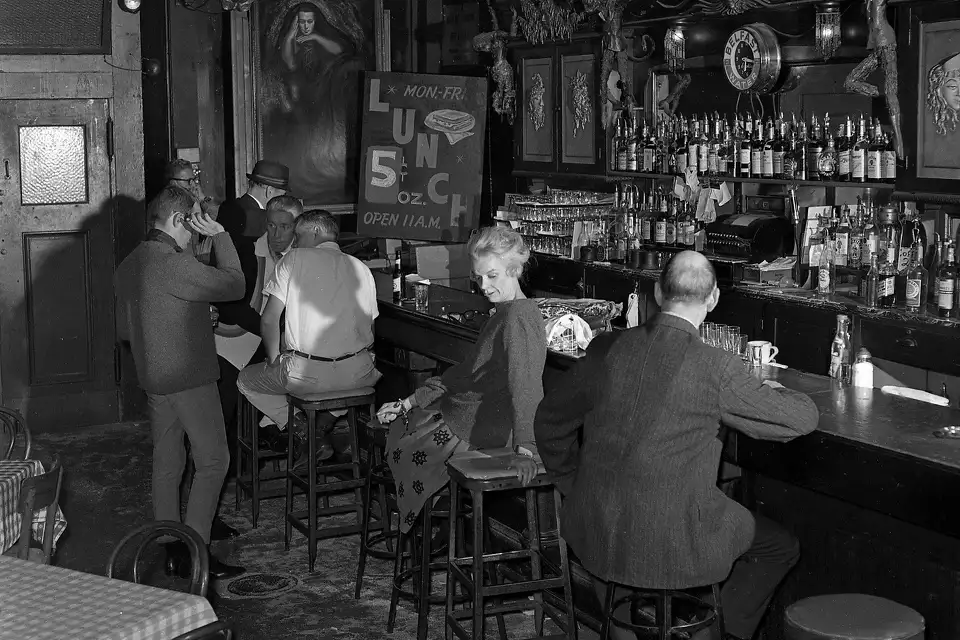
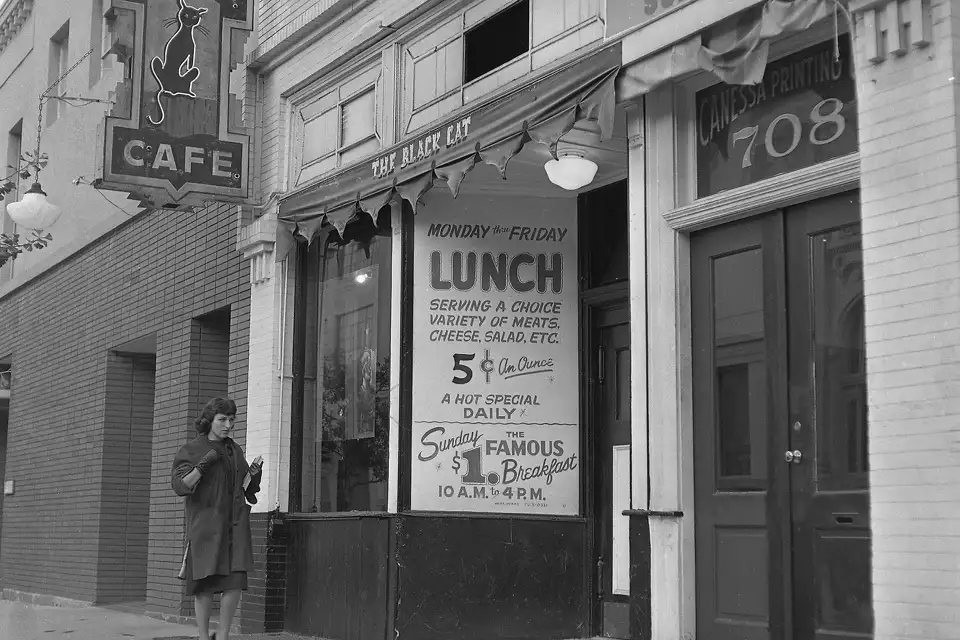
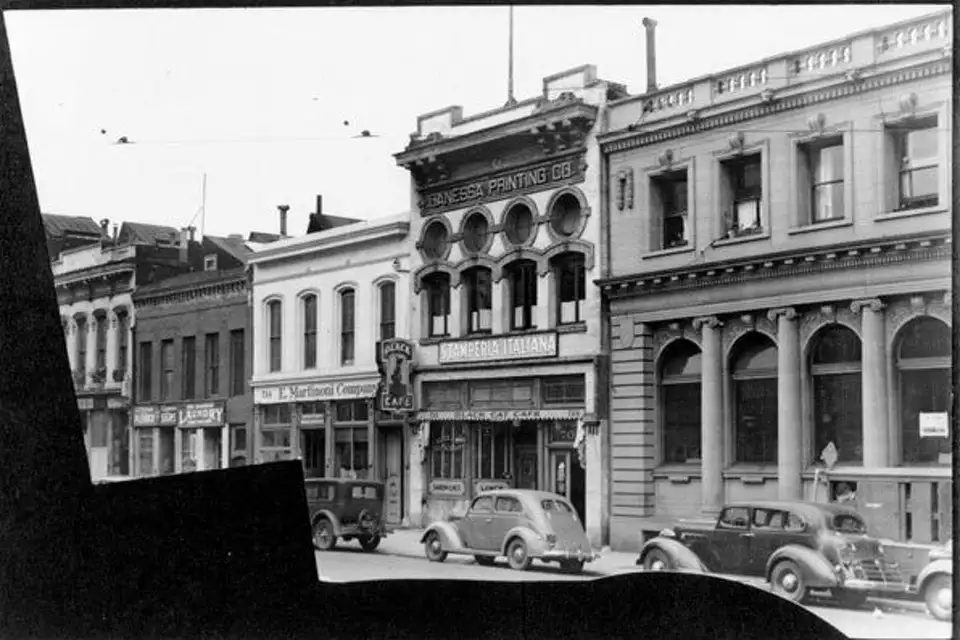
It was 1949, and the San Francisco Police Department had just taken away the liquor license for his bar, the Black Cat Cafe. It was not on the grounds of any legally illicit activity but rather, because his bar in North Beach had become a hangout for gay men in the city.

At the time, bars were being regularly raided across the city for similar offenses, in large part to “protect” Army and Navy servicemen in the port city from social mixing with certain crowds. An organization, the Joint Army-Navy Disciplinary Control Board, was formed, which used arrest records to identify “problem spots,” or businesses and bars which had a history of attracting sex workers, records of gay men gathering, or tended to overserve men in uniform.

Seeking to keep a leash on its soldiers, the Armed Forces organization partnered with city police departments and the Board of Equalization — the state’s liquor licensing group — to patrol such establishments.

Over time, however, the agency developed an outsized concern over bars where “deviate” activity — a term ascribed to the presence of gay men — took place, according to Nan Alamilla Boyd’s “Wide-Open Town: A History of Queer San Francisco to 1965.”

This group appealed to the state’s liquor administrators to essentially close bars (or otherwise mark them “off-limits” to servicemen) due to their serving a queer patronage.

(As Boyd reports, sometimes the Army-Navy would attempt to intimidate these customers by placing officers on guard outside the door of bars they deemed off-limits. That backfired when the soldiers’ presence outside essentially advertised the establishment as a gay bar to interested parties.)

In 1943, the Black Cat, one of the more prominent bars singled out by authorities, was raided by authorities. But as Chronicle columnist Gary Kamiya wrote, the “vendetta” against Stoumen’s bar didn’t ramp up until 1949, when the owner decided not to sign a closed-shop agreement with a local culinary union.

Rebuffed, the union appealed to George Reilly, who was at the time serving as the pro-union chairman of the Board of Equalization. Reilly seized the authority to direct the Board to build a case against the bar and take away its liquor license on the grounds that it was a “hangout for persons of homosexual tendencies.” 

Stoumen, a heterosexual Holocaust survivor, didn’t take kindly to being unjustly targeted by the authorities. He jumped through some legal hoops to get the bar back in operation and then, “vastly irritated,” as the Chronicle reported at the time, he hired a young but resourceful and well-established lawyer named Morris Lowenthal. Lowenthal would go on to take Stoumen’s case all the way to the California Supreme Court.

Lowenthal’s legal approach was, by most accounts, a bit unusual. Rather than rely on legal precedent, the lawyer turned to psychology, and the research of Dr. Howard Kinsey to make his case. He argued to San Francisco Superior Judge Robert McWilliams that even if patrons were gay, “How could anyone tell?”

“Any intelligent law enforcement officer, sociologist or psychiatrist knows such terms are meaningless and impossible to define,” he continued. “In the absence of unusual dress or costume, make-up or appearance, even the most trained observer could not ascertain whether a person has homosexual tendencies, whatever that means.”

At that point, Lowenthal dropped “the mountain of books and documents” related to Kinsey’s studies in front of Judge McWilliams.

With a sigh, McWilliams replied, “I will need time to go through this appalling mass of papers.”

It was, at that point, all for naught — McWilliams ruled against Stoumen. So Stoumen and Lowenthal appealed to the State Supreme Court.

To the surprise of many, the State Supreme Court ruled in Stoumen’s favor, and against Reilly and the Board of Equalization. A ruling stated that as long as there was no “illegal or immoral conduct” underway, gay men and lesbians could congregate in public places like bars in California — a major win for LGBT rights in America.

The impact of the win was limited, however, writes Carlos A. Ball, Rutgers law professor and author of “The First Amendment and LGBT Equality.” Because the ruling did not ground its decision in constitutional protections, it didn’t exactly set precedent for future rulings. But it nevertheless accomplished two important things, as Ball outlines: It was the first landmark ruling by an American court to state that gay men and women could congregate in public without interference from the authorities, and it was the first legal decision to separate a person’s sexual orientation from his or her conduct.

That latter point became important in a 1986 Supreme Court ruling, Bowers vs. Hardwick, which decided that the government could constitutionally criminalize same-sex sexual conduct, but not status. Small as it was, it was an important step forward for LGBT rights — it formalized that a government could not punish or close a business just because gay men and lesbians gather there.

“When early courts, like the Stoumen court, were able to separate status from conduct, they were more likely to provide some limited recognition of the right of LGBT to congregate in public,” Ball notes. “The separation of status from conduct allowed some early courts to see past society’s disdain and contempt for gay people and permitted them to start recognizing the rights of sexual minorities as ‘human beings,’ which was the term used by the Stoumen court to refer to the Black Cat’s patrons. In contrast, when states equated status with conduct, their legal analysis quickly degenerated into little more than rank homophobia.”

Barney Peterson/The Chronicle

The Black Cat became famous in San Francisco in part aided by the “Nightingale of Montgomery Street,” drag queen José Sarria, who would sing opera librettos most nights of the week to a packed house. (Sarria, by then a local celebrity, would later go on to be the first openly gay man to run for public office in a 1961 bid for city supervisor.)

“When the opera was on and José was there the place was packed,” remembered San Francisco author Carlo Middione. “You had to hunch up your shoulders to get a spot. I didn’t realize for quite a while that most the people there were gay.”

There’s something to that point. While the Black Cat was — inarguably — a gay bar, it also attracted lots of different straight and gay locals, including “college students, business men, matrons with mink coats and jewelry.” It was, as Herb Caen once dubbed it, the “Temple of the True Bohemia.”

But for all its good attention, the Black Cat drew plenty of unwanted scrutiny too. The Alcoholic Beverage Control — which succeeded the Board of Equalization — and the SFPD continued to jab at the Black Cat, and eventually wound up winning the battle against the bar. Despite Stoumen’s earlier state court win, the authorities’ continued interference with business drove it out of business.

In 1956, as Kamiya reported, ABC agents testified that patrons at the Black Cat had solicited “lewd acts” from them and that the bar itself served “sexual perverts.” That was enough, the ABC argued, to rescind their liquor license. Lowenthal again wielded Kinsey’s studies in his arguement for the defense, declaring that gay men are not perverts and that such patrons were illegally entrapped by officers (a claim echoed by others in the following years).

San Francisco Public Library

This time, the Black Cat was not so resilient. It was forced to close on Halloween night in 1963, and to presumably add insult to injury, the authorities retrieved Stoumen’s license on the morning of October 31, meaning the party he had been intending to throw that evening would now have to be a dry event.

“They can’t possibly shut the Cat’s doors,” said one longtime patron identified as Chris in an issue of the Chronicle. “All they can do is march in like panzers and rip the license off the wall. That means Sol won’t be able to sell any more liquor. But there’s no law that says he can’t have a party in there, or give drinks away.”

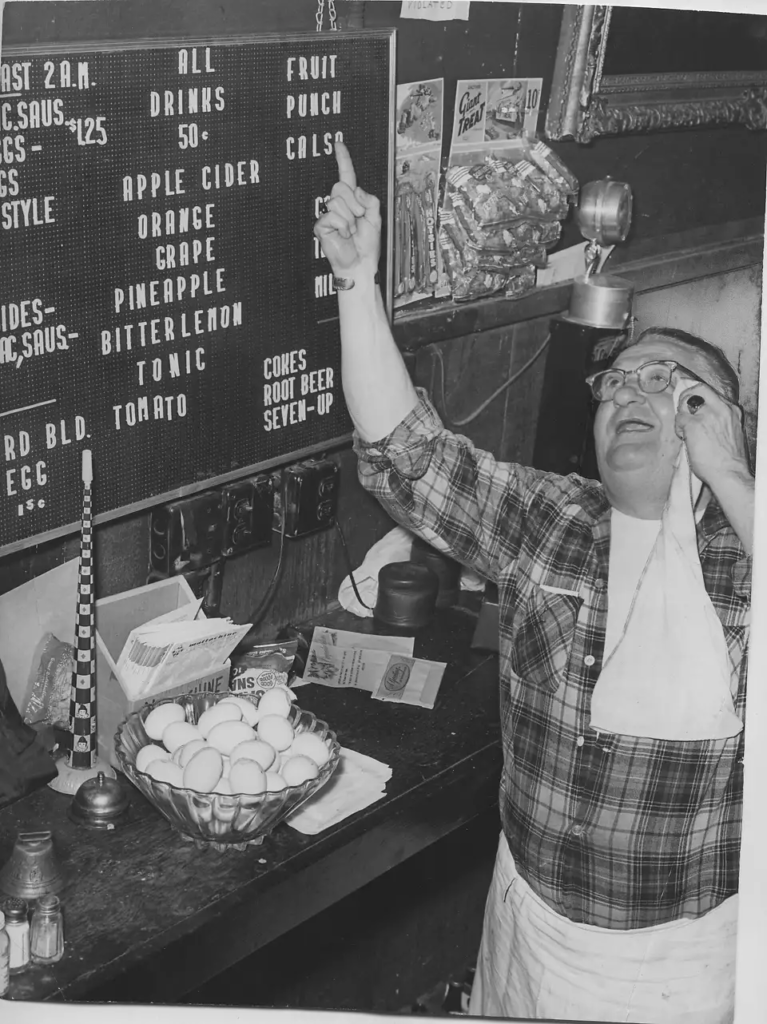
He was right — the show went on anyway. Bartenders served orange and pineapple juice, apple cider and lemon tonic between rounds of singing Sarria’s beloved “God Save the Nellie Queen” rendition to ragtime piano clinking. The morning after, the Chronicle reported it was a success. 

“The Black Cat gave the most successful Halloween party in its history — even though its history as a bar had ended.”

Alyssa Pereira is an SFGate digital editor. Email: alyssa.pereira@sfgate.com | Twitter: @alyspereira

Joe Rosenthal/The Chronicle

June 26, 2020

Alyssa Pereira

DIGITAL EDITOR

Alyssa Pereira is a culture editor and contributing beer writer for SFGATE. She previously worked for CBS San Francisco and SPIN Magazine and has contributed to Good Beer Hunting, Paper, Vice’s i-D and Paste, among others. She is a Bay Area native and graduate of New York University and SFSU.

Word-Built World: cromulent

A.Word.A.Daywith Anu Garg

cromulent

PRONUNCIATION:

(KROM-yuh-luhnt) 

MEANING:

adjective: Valid; acceptable; satisfactory.

ETYMOLOGY:

Coined by the television writer David X. Cohen in the animated television series The Simpsons. Earliest documented use: 1996.