
“Two hundred conscious people, if they existed and if they found it necessary and legitimate, could change the whole of life on the earth.”
–Gurdjieff quoted from In Search of the Miraculous, p. 310

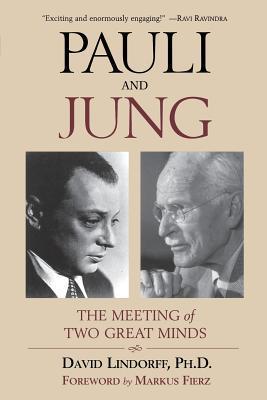
The pioneering work of Nobel prize-winning physicist Wolfgang Pauli led to developing the bombs that decimated Hiroshima and Nagasaki. Desperate over this outcome, Pauli sought help from the eminent depth psychologist, C. G. Jung. Their long correspondence provides the powerful and unique record of a mature scientist’s inner journey. It also has had a tremendous impact on scientific and psychological thought ever since. Pauli and Jung is a lucid interpretation of Pauli’s ideas and dreams that forcefully validates his belief in the inseparable union of science and spirituality. Far ahead of their time, Wolfgang Pauli and C. G. Jung both knew this union is essential for the future of humanity and the survival of the planet.
(Goodreads.com)
New Thinking • Dec 3, 2024 Jorge Ferrer, PhD, is former chair of the department of east-west psychology at the California Institute of Integral Studies. He is currently a core faculty member there. He is author of Revisioning Transpersonal Theory: A Participatory Vision of Human Spirituality, and Participation and the Mystery: Transpersonal Essays in Psychology, Education, and Religion. He is the coeditor of an anthology titled, The Participatory Turn: Spirituality, Mysticism, and Religious Studies. He is known as a leading proponent of the “second wave” of transpersonal theorists. In this wide-ranging conversation, rebooted from 2018, Jorge and Jeff share their memories and reflections about a wide range of mystical paths. The discussion focuses on the relative merits of following set instructions from a guru to seek mystical insights. Another perspective comes from the literature concerning spontaneous awakening of consciousness. Jorge explains why he believes that the mystics of many different traditions often feel closer to each other than they are with the more conservative, orthodox members of their own faith community. New Thinking Allowed host, Jeffrey Mishlove, PhD, is author of The Roots of Consciousness, Psi Development Systems, and The PK Man. Between 1986 and 2002 he hosted and co-produced the original Thinking Allowed public television series. He is the recipient of the only doctoral diploma in “parapsychology” ever awarded by an accredited university (University of California, Berkeley, 1980). He is also the Grand Prize winner of the 2021 Bigelow Institute essay competition regarding the best evidence for survival of human consciousness after permanent bodily death. He is Co-Director of Parapsychology Education at the California Institute for Human Science. (Recorded on September 20, 2018)
New Thinking • Dec 2, 2024 Gary Lachman is the author of twenty-one books on topics ranging from the evolution of consciousness to literary suicides, popular culture and the history of the occult. He has written a rock and roll memoir of the 1970s, biographies of Aleister Crowley, Rudolf Steiner, C. G. Jung, Helena Petrovna Blavatsky, Emanuel Swedenborg, P. D. Ouspensky, and Colin Wilson, histories of Hermeticism and the Western Inner Tradition, studies in existentialism and the philosophy of consciousness, and about the influence of esotericism on politics and society. In this interview, rebooted from 2018, he describes Rudolf Steiner’s early work editing the scientific writings of Johann Wolfgang von Goethe as well as his subsequent encounter with the work of Friedrich Nietzsche. Steiner was known as a polymath and lecturer on many topics. Eventually, he was selected to become the head of the German branch of the Theosophical Society. Later, he left Theosophy and formed the Anthroposophical Society — leading to an enormous burst of creative activity in education, agriculture, architecture, art, theatre, sculpture, and body movement. New Thinking Allowed host, Jeffrey Mishlove, PhD, is author of The Roots of Consciousness, Psi Development Systems, and The PK Man. Between 1986 and 2002 he hosted and co-produced the original Thinking Allowed public television series. He is the recipient of the only doctoral diploma in “parapsychology” ever awarded by an accredited university (University of California, Berkeley, 1980). He is also the Grand Prize winner of the 2021 Bigelow Institute essay competition regarding the best evidence for survival of human consciousness after permanent bodily death. He is Co-Director of Parapsychology Education at the California Institute for Human Science. (Recorded on September 20, 2018)

Illustration: Leah Palmer Preiss
A.Word.A.Daywith Anu Garg
PRONUNCIATION:
MEANING:
noun: Speech or writing marked by jargon, circumlocution, or unintelligible terms.
ETYMOLOGY:
Probably from gobble, representing a turkey’s gobble. Earliest documented use: 1944.
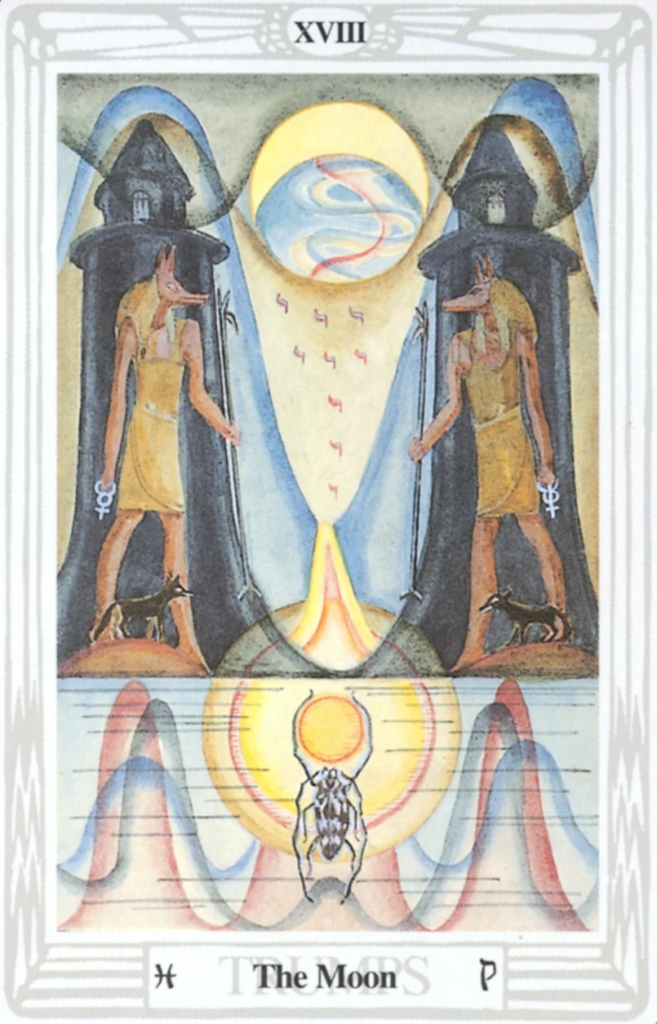
| The Moon The Moon often comes up to indicate deception, or deceit. And on a day ruled by this card, we need to be alert for this kind of problem coming up around us. On this day, we are best served by testing everything against our own inner senses, and attempting to discover how we feel at a deep intuitive level about what happens.You’ll find that your intuition is probably somewhat heightened, because another of the Moon’s influences touches on psychism, internal development and ease of inner communication.There’s another thing you need to keep your eyes open for, with this card – not only does it indicate out-and-out deceit, but it also shows us where there is illusion or uncertainty. In moonlight, you notice that things look very different indeed than they do in daylight. The Moon has a habit of casting things and experiences in a different light. Things are not quite how they seem.So always look carefully at issues that have particular relevance when this card is about. Many people tend to see the Moon as a bad card – I do not necessarily feel this is true. This card shows things up that are not what they claim to be. But it also reveals treasures inside of rather grubby packaging! Affirmation: “My inner sense is firm and true.” |
Mike Popovich – Freedo • If you’ve been encouraged by this message and Freedom Ministries, please consider sharing it with others or giving online at https://give.cornerstone.cc/Freedom+M… Official YouTube Channel of FREEDOM MINISTRIES Colorado Springs, CO Mike and Barb Popovich Stay Connected with Freedom: Website: https://freedomministries.org Facebook: / freedomministriesco Instagram: / freedomministries Tiktok: / freedomminco
(Contributed by Steve Hines)

Rayburn in 1950 (photo from Wikipedia.com)
― Sam Rayburn
Samuel Taliaferro Rayburn (Jan 6, 1882 – November 16, 1961) was an American politician who served as the 43rd speaker of the United States House of Representatives. Wikipedia

By Jeneen Interlandi AUG. 14, 2019 (NYTimes.com)
The smallpox virus hopscotched across the post-Civil War South, invading the makeshift camps where many thousands of newly freed African-Americans had taken refuge but leaving surrounding white communities comparatively unscathed. This pattern of affliction was no mystery: In the late 1860s, doctors had yet to discover viruses, but they knew that poor nutrition made people more susceptible to illness and that poor sanitation contributed to the spread of disease. They also knew that quarantine and vaccination could stop an outbreak in its tracks; they had used those very tools to prevent a smallpox outbreak from ravaging the Union Army.
Smallpox was not the only health disparity facing the newly emancipated, who at the close of the Civil War faced a considerably higher mortality rate than that of whites. Despite their urgent pleas for assistance, white leaders were deeply ambivalent about intervening. They worried about black epidemics spilling into their own communities and wanted the formerly enslaved to be healthy enough to return to plantation work. But they also feared that free and healthy African-Americans would upend the racial hierarchy, the historian Jim Downs writes in his 2012 book, “Sick From Freedom.”
Federal policy, he notes, reflected white ambivalence at every turn. Congress established the medical division of the Freedmen’s Bureau — the nation’s first federal health care program — to address the health crisis, but officials deployed just 120 or so doctors across the war-torn South, then ignored those doctors’ pleas for personnel and equipment. They erected more than 40 hospitals but prematurely shuttered most of them.
White legislators argued that free assistance of any kind would breed dependence and that when it came to black infirmity, hard labor was a better salve than white medicine. As the death toll rose, they developed a new theory: Blacks were so ill suited to freedom that the entire race was going extinct. “No charitable black scheme can wash out the color of the Negro, change his inferior nature or save him from his inevitable fate,” an Ohio congressman said.
One of the most eloquent rejoinders to the theory of black extinction came from Rebecca Lee Crumpler, the nation’s first black female doctor. Crumpler was born free and trained and practiced in Boston. At the close of the war, she joined the Freedmen’s Bureau and worked in the freed people’s communities of Virginia. In 1883, she published one of the first treatises on the burden of disease in black communities. “They seem to forget there is a cause for every ailment,” she wrote. “And that it may be in their power to remove it.”
In the decades following Reconstruction, the former slave states came to wield enormous congressional power through a voting bloc that was uniformly segregationist and overwhelmingly Democratic. That bloc preserved the nation’s racial stratification by securing local control of federal programs under a mantra of “states’ rights” and, in some cases, by adding qualifications directly to federal laws with discriminatory intent.

As the Columbia University historian Ira Katznelson and others have documented, it was largely at the behest of Southern Democrats that farm and domestic workers — more than half the nation’s black work force at the time — were excluded from New Deal policies, including the Social Security and Wagner Acts of 1935 (the Wagner Act ensured the right of workers to collective bargaining), and the Fair Labor Standards Act of 1938, which set a minimum wage and established the eight-hour workday. The same voting bloc ensured states controlled crucial programs like Aid to Dependent Children and the 1944 Servicemen’s Readjustment Act, better known as the G.I. Bill, allowing state leaders to effectively exclude black people.
[Myths about physical racial differences were used to justify slavery — and are still believed by doctors today.]
In 1945, when President Truman called on Congress to expand the nation’s hospital system as part of a larger health care plan, Southern Democrats obtained key concessions that shaped the American medical landscape for decades to come. The Hill-Burton Act provided federal grants for hospital construction to communities in need, giving funding priority to rural areas (many of them in the South). But it also ensured that states controlled the disbursement of funds and could segregate resulting facilities.
Professional societies like the American Medical Association barred black doctors; medical schools excluded black students, and most hospitals and health clinics segregated black patients. Federal health care policy was designed, both implicitly and explicitly, to exclude black Americans. As a result, they faced an array of inequities — including statistically shorter, sicker lives than their white counterparts. What’s more, access to good medical care was predicated on a system of employer-based insurance that was inherently difficult for black Americans to get. “They were denied most of the jobs that offered coverage,” says David Barton Smith, an emeritus historian of health care policy at Temple University. “And even when some of them got health insurance, as the Pullman porters did, they couldn’t make use of white facilities.”
In the shadows of this exclusion, black communities created their own health systems. Lay black women began a national community health care movement that included fund-raising for black health facilities; campaigns to educate black communities about nutrition, sanitation and disease prevention; and programs like National Negro Health Week that drew national attention to racial health disparities. Black doctors and nurses — most of them trained at one of two black medical colleges, Meharry and Howard — established their own professional organizations and began a concerted war against medical apartheid. By the 1950s, they were pushing for a federal health care system for all citizens.
[To get updates on The 1619 Project, and for more on race from The New York Times, sign up for our weekly Race/Related newsletter.]
That fight put the National Medical Association (the leading black medical society) into direct conflict with the A.M.A., which was opposed to any nationalized health plan. In the late 1930s and the 1940s, the group helped defeat two such proposals with a vitriolic campaign that informs present-day debates: They called the idea socialist and un-American and warned of government intervention in the doctor-patient relationship. The group used the same arguments in the mid-’60s, when proponents of national health insurance introduced Medicare. This time, the N.M.A. developed a countermessage: Health care was a basic human right.
Medicare and Medicaid were part of a broader plan that finally brought the legal segregation of hospitals to an end: The 1964 Civil Rights Act outlawed segregation for any entity receiving federal funds, and the new health care programs soon placed every hospital in the country in that category. But they still excluded millions of Americans. Those who did not fit into specific age, employment or income groups had little to no access to health care.
In 2010, the Affordable Care Act brought health insurance to nearly 20 million previously uninsured adults. The biggest beneficiaries of this boon were people of color, many of whom obtained coverage through the law’s Medicaid expansion. That coverage contributed to a measurable decrease in some racial health disparities, but the success was neither as enduring nor as widespread as it might have been. Several states, most of them in the former Confederacy, refused to participate in Medicaid expansion. And several are still trying to make access to the program contingent on onerous new work requirements. The results of both policies have been unequivocal. States that expanded Medicaid saw a drop in disease-related deaths, according to the National Bureau of Economic Research. But in Arkansas, the first state to implement work requirements, nearly 20,000 people were forced off the insurance plan.
One hundred and fifty years after the freed people of the South first petitioned the government for basic medical care, the United States remains the only high-income country in the world where such care is not guaranteed to every citizen. In the United States, racial health disparities have proved as foundational as democracy itself. “There has never been any period in American history where the health of blacks was equal to that of whites,” Evelynn Hammonds, a historian of science at Harvard University, says. “Disparity is built into the system.” Medicare, Medicaid and the Affordable Care Act have helped shrink those disparities. But no federal health policy yet has eradicated them.
Jeneen Interlandi is a member of The Times’s editorial board and a staff writer for the magazine. Her last article for the magazine was about teaching in the age of school shootings.
The 1619 Project is an ongoing initiative from The New York Times Magazine that began in August 2019, the 400th anniversary of the beginning of American slavery. It aims to reframe the country’s history by placing the consequences of slavery and the contributions of black Americans at the very center of our national narrative. Read more: 1619 and American History | The 1619 Project Book
