Mark Patton in ‘A Nightmare on Elm Street part 2: Freddy’s Revenge’
“A Nightmare on Elm Street, part 2: Freddy’s Revenge” (1985) This first sequel to the popular long-running series stars Mark Patton as Jesse, a teen who moves with his family to the home where the first film was set. Jesse immediately begins having nightmares about Freddy Krueger (Robert Englund), the dead serial killer who comes to people in their dreams and kills them, causing them to die in real life.
The film was derided by fans at the time of its initial release, with many complaining that the film was “too gay.” Patton, who was deep in the closet at the time, found himself labeled a “male scream queen.” The subsequent negative publicity proved to be too much for Patton, who left show business and moved to Mexico, where he lived incognito for three decades.
“Nightmare 2” is indeed a gay film. Shortly after moving into the house, Jessie begins having dreams about Freddy that come true. One of these nightmarish dreams finds Jesse in a gay bar, where he runs into his gym teacher. The teacher punishes Jesse by making him run laps around the school gym. While Jesse is in the shower, the teacher is attacked by an unseen force, stripped nude and killed.
Jesse soon realizes, to his abject horror, that he has been possessed by Freddy. Freddy’s spirit has taken hold of Jesse, and in a horrific sequence, bursts out of Jesse’s chest.
Is Jesse a gay character? Could be. When he realizes what is happening to him, he runs to Grady (Robert Rusler), a cute male friend, and begs for help.
Thirty years after the film’s release, Patton, now a happily married out gay man, came out of hiding and embraced the film. He made a few more films and began appearing at horror conventions, where the fan base now accepts and loves the film for what it is.
In 2015 Patton was the subject of “Scream, Queen: My Nightmare on Elm Street,” a feature-length documentary in which he comes to terms with the legacy of “Nightmare part 2.” He spoke openly about his life as a closeted actor in Hollywood, his battle with HIV, and his journey out of the closet. That film is streaming at Tubi.
“A Nightmare on Elm Street part 2: Freddy’s Revenge” is available on Blu Ray as part of The Nightmare on Elm Street Collection,” a box set which features all seven films in the series. It’s also streaming at Amazon Prime.
The Onion • Oct 24, 2024 Clark Pollard, a lifelong conservative, explains why – when it comes to people, media, and big cities – he’s afraid of it all. And he’s not going to apologize for it. Have a written record of society’s collapse. Become A Member. Get The Paper. https://membership.theonion.com/?camp…
Trump Attempts To Soften Image With New Airbrushed JCPenney Beauty Shots
Published: October 25, 2024 (TheOnion.com)
TRAVERSE CITY, MI—In an effort to reach out to swing voters crucial to his reelection bid, former President Donald Trump reportedly attempted to soften his image Friday by distributing airbrushed JCPenney beauty shots of himself at a campaign rally. “Here you go, these are nice glossies of the president we took at the JCPenney Portrait Studio—he looks great, huh?” said senior advisor Corey Lewandowski, who spent the event passing out 8-by-10 and wallet-sized photos that were taken during a 30-minute session last week and that feature the Republican candidate in soft lighting with a coquettish expression on his face. “It was the photographer’s idea to have one with him in jeans and a matching denim jacket. Kind of silly, but we think it shows off a gentler side of him that most people don’t ever see. We also have this great one where he’s holding a hand to his chin in a pensive pose and has a sweater tied around his shoulders. Really sharp, right? And it didn’t break the bank, either.” At press time, reports confirmed the campaign had further targeted suburban moms with a holiday photo of Trump’s senior staff in matching striped shirts in front of a roaring fire.
C/2023 A3 (Tsuchinshan–ATLAS) (or Comet Tsuchinshan–ATLAS or simply Comet A3) is a comet from the Oort cloud discovered by the Purple Mountain Observatory in China on 9 January 2023 and independently found by ATLAS South Africa on 22 February 2023. The comet passed perihelion at a distance of 0.39 AU (58 million km; 36 million mi) on 27 September 2024,[1][3] when it became visible to the naked eye.[6][7][8] Tsuchinshan-ATLAS peaked its brightest magnitude shortly after passing the Sun at 9 October, with a magnitude of −4.9 per reported observations at the Comet Observation Database (COBS).[6]
Observational history
Discovery
Images of comet C/2023 A3 (Tsuchinshan–ATLAS) obtained on 2023-02-24 at remote telescopes by an amateur astronomer
The systematic search performed by the Asteroid Terrestrial-impact Last Alert System detected an asteroidal object with an estimated magnitude of 18.1 in images taken on 22 February 2023 using the 0.5 m f/2 Schmidt reflector at the Sutherland Observatory in South Africa, when the comet was about 7.3 AU (1.09 billion km; 680 million mi) from the Sun.[9] After the first orbit calculations, it was noticed that it was the same as an 18.7 magnitude object reported to the Minor Planet Center by the Purple Mountain Observatory (Zijinshan in Pinyin, Tsuchinshan in postal romanization, the latter form being traditional for discoveries from this observatory[9]) which was detected in images taken on 9 January 2023. It had been entered in the objects awaiting confirmation list, but had been removed on 30 January 2023 after no follow up observations were reported and the uncertainty on its predicted position grew to the point that it was considered lost.[9] Based on the naming conventions for comets, it received the name of both observatories.[9]
The object was subsequently detected in older images taken by the Zwicky Transient Facility (ZTF) in Palomar Observatory on 22 December 2022, when it had a magnitude of 19.2–19.6. These deeper and better resolved images also revealed it had a very condensed coma and a small straight tail 10 arcseconds in length, indicating it was a comet.[1] More evidence of cometary activity was later reported by Hidetaka Sato, M. Mattiazzo and Cristóvão Jacques.[9]
Towards perihelion
A time-lapse of comet C/2023 A3 (Tsuchinshan–ATLAS) captured on 10 May 2024
By January 2024, the comet had brightened to an apparent magnitude of 13.6 and according to Bob King, author in Sky & Telescope magazine, was visible through 15-inch telescopes at ×142 magnification.[10] The comet was then moving through the constellations of Libra and Virgo.[10] By the end of April it had brightened to about magnitude 10 and could be observed through small telescopes, showing a short tail.[11] The spectrum of the comet on 31 May 2024, when the comet was 2.33 AU from the Sun, indicated strong cyanide emission and that the comet is carbon depleted.[12] The comet had a large dust-to-gas ratio.[13]
In May and June the brightening rate of the comet slowed, with the comet staying between magnitudes 10 and 11, while a dusty tail measuring 5 to 15 arcminutes long was observed visually to extend eastwards.[14] Astronomer Zdenek Sekanina suggested that this indicates that the comet nucleus has been fragmenting, with the fragmentation starting in late March, as indicated by an increase in the brightening rate and the subsequent decrease in dust production, the narrow teardrop-shaped dust tail, and non-gravitional changes in the orbit. He predicted that the comet would disintegrate before perihelion.[15] Observations of the comet with TRAPPIST robotic telescope indicate that dust production reached a minimum in May, when the comet was near a phase angle of zero, and started to increase again one month later, while gas production rates increased slowly throughout that period.[13] In mid June the comet entered the constellation of Leo, in the evening sky.[10] In early July, a faint ion tail measuring about one and half degree in length was observed photographically.[16] After mid July the comet was lost in the Sun’s glare until September.[10] In August the comet was observed by STEREO spacecraft to brighten steadily to an apparent magnitude of 7.[17][18]
Perihelion
C/2023 A3 taken from Murrays Bay, Auckland, New Zealand, on 28 September 2024
The comet was recovered by Terry Lovejoy in the morning twilight on 11 September 2024, when it was located in the constellation of Sextans, at a magnitude of 5.5.[19] The comet was spotted with the naked eye and photographed by astronaut Matthew Dominick on board the ISS on 20 September, followed by fellow astronaut Donald Pettit two days later.[20] The first naked eye observation of the comet from Earth was reported on 23 September, with the comet having an estimated magnitude of 3.3, while its tail was reported to be 2.5 degrees long when it was observed with binoculars.[6]
During the last week of September it was located in the dawn sky, better visible from the Southern Hemisphere, and it was predicted to have brightened to second magnitude. Perihelion took place on 27 September.[10] By 1 October the comet had brightened to magnitude 2[6] and its tail was estimated to be 10–12 degrees long.[21] After that it moved again in conjunction with the Sun.[10] On 7 October the comet entered the field of view of the SOHOCoronagraph,[22] and continued to be visible until 11 October.[23]Petr Horálek managed to photograph the comet in broad daylight on 8 October.[24] On 9 October 2024, the comet was 3.5 degrees from the Sun.[25] The comet was seen to brighten to a magnitude of −4.9 on that day,[6] becoming one of the brightest comets of the past century. It was the second brightest comet viewed by SOHO since its launch in 1995, after comet McNaught in 2007.[23]
The comet was recovered in the evening sky on 10 October[16] and the next days became visible with the naked eye.[10][26][27] It made its closest approach to Earth on 12 October at a distance of 71 million km (44 million mi).[28] The comet after that became dimmer, as it moves away from both the Earth and the Sun, however as the elongation becomes higher, it becomes easier to spot.[16] Earth crossed the orbital plane of the comet on 14 October and as a result an anti-tail was observed.[29][30] After that the comet faded quickly and by 20 October it had dimmed to 4th magnitude.[31]
Brightness predictions
When first discovered, the comet was predicted to reach a total magnitude of +3 during perihelion, assuming an absolute magnitude (H) of 7 and 2.5n = 8, when it would have a small solar elongation.[9] Better visibility was predicted about three weeks after perihelion, in mid-October, when it would be around fourth magnitude.[9] Gideon van Buitenen estimated that the comet would reach a magnitude of 0.9 during perihelion and −0.2 at the time of closest approach to Earth, assuming H = 5.2 and 2.5n = 10, and would benefit from the effects of forward scattering.[32][33]
Revised data from June 2024 suggested that the comet would brighten to an apparent magnitude of 2.2, assuming H = 6 and 2.5n = 7.5, which is the average brightening rate of long-period comets in the inner Solar System. However, the comet is expected to be at least one magnitude brighter due to the effects of forward scattering, which could boost the brightness by several magnitudes around the peak of the effect on 9.8 October 2024.[14] More calculations from early September indicate that accounting for forward scattering, the comet will be brighter than magnitude 0 between 5 and 13 October and peaked at over −4 on 9 October, when it brightened by almost 6 magnitudes due to forward scattering.[34]
Orbit
Animation of C/2023 A3 around Sun C/2023 A3 · Sun · Mercury · Venus · Earth · Mars
The comet has a retrograde orbit, lying at an inclination of 139°. Τhe comet had its perihelion on 27 September 2024, at a distance of 0.391 AU. Τhe closest approach to Earth was on 12 October 2024, at a distance of 0.47 AU. The comet does not approach close to the giant planets of the Solar System.[9] The orbit is weakly bound to the Sun before entering the planetary region of the Solar System.[2] Due to planetary perturbations, the outbound orbit will have a smaller eccentricity than the inbound orbit. So the orbital period and aphelion distance become much shorter.[2] The weakly hyperbolic trajectory may or may not result in the comet being ejected from the Solar System. It is expected to be 200 AU from the Sun in the year 2239.[35]
Positions of the comet C/2023 A3 near 2024 perihelion
The position of comet C/2023 A3 in August and September 2024 with the expected apparent magnitudes. The comet is located in the constellation Leo between the two stars 55 and 57 Leonis about six degrees south of the ecliptic at the beginning of August and then moves towards the constellation Sextans. With increasing apparent brightness, it turns back toward the constellation Leo in the second half of September at maximum southern ecliptic latitude (just under 14 degrees of arc).
The position of comet C/2023 A3 in October 2024. The comet is located in the southernmost tip of the constellation Leo about ten degrees south of the ecliptic and moves in the first half of the month with decreasing apparent brightness across the constellation Virgo. It then moves into the western head of the constellation Serpens Caput, and then moves across the constellation Ophiuchus. By the end of the month, the comet reaches a northern ecliptic latitude of just over 27 degrees of arc. Therefore, in the second half of October the comet should be well visible on the western horizon after sunset.
Johan Heinrich Ludwig Müller (23 June 1883 – 31 July 1945) was a German theologian, a Lutheran pastor,[1] and leading member of the pro-Nazi “German Christians” (German: Deutsche Christen) faith movement. In 1933 he was appointed by the Nazi Party as Reichsbischof (“Bishop for the Reich“) of the German Evangelical Church (German: Deutsche Evangelische Kirche).
Müller had little real political experience and, as his actions would demonstrate to Adolf Hitler, little if any political aptitude. In the 1920s and early 1930s, before Hitler’s assumption of the German chancellorship on 30 January 1933, he was a little-known pastor and a regional leader of the German Christians in East Prussia. However, he was an “old fighter” with Hitler (German: Alter Kämpfer) since 1931, when he joined the Nazi Party, and had a burning desire to assume more power.[2] In 1932, Müller introduced Hitler to Reichswehr General Werner von Blomberg when Müller was chaplain of the East Prussian Military District and Blomberg was the district’s commander.[3]
Speech of Ludwig Müller after his formal inauguration as Reichsbischof in Berliner Dom, 23 September 1934.
As part of the Gleichschaltung process, the Nazi regime’s plan was to “coordinate” all 28 separate Protestant regional church bodies into a single and unitary Reichskirche (“Church of the Reich”). Müller wanted to serve as Reichsbischof of this newly formed entity.[4] His first attempt to achieve his post ended in a miserable and embarrassing failure, when the German Evangelical Church Confederation and the Prussian Union of churches designated Friedrich von Bodelschwingh on 27 May 1933. Eventually, however, after the Nazis had forced Bodelschwingh’s resignation, Müller was appointed regional bishop (Landesbischof) of the Prussian Union on 4 August, and on 27 September finally was elected Reichsbischof by a national synod through political machinations. On 13 September 1933, Prussian Minister PresidentHermann Göring appointed him to the Prussian State Council.[5]
Müller’s advancement angered many Protestant pastors and congregations, who deemed his selection to be politically motivated and intrinsically anti-Christian. Still regional bishop, he handed over more powers to the Reichsbischof—himself—as an example of imitation, to the discontent of other regional bishops like Theophil Wurm (Württemberg). On the other hand, Müller’s support by the “German Christians” within the Protestant Church decreased, as he was not able to wield explicit authority. The radical Nazi faction wanted to get rid of the Old Testament and create a German National Religion divorced from Jewish-influenced ideas. They supported the introduction of the Aryan Paragraph into the Church. This controversy led to schism and the foundation of the competing Confessing Church, a situation that frustrated Hitler and led to the end of Müller’s power.
Many of the German Protestant clergy supported the Confessing Church movement, which resisted the imposition of the state into Church affairs.[6] With Hitler’s interest in the group having waned by 1937, and the party taking a more aggressive attitude toward the resistant Christian clergy, Müller tried to revive his support by allowing the Gestapo to monitor churches and consolidating Christian youth groups with the Hitler Youth.
He remained committed to Nazism to the end. He committed suicide[citation needed] in Berlin in 1945, soon after the Nazi defeat.
“Love is anything but sentimental. It is the most real and creative form of human presence. Love is the threshold where divine and human presence ebb and flow into each other.”
John O’Donohue (1956-2008) Irish Philosopher
AN OPPORTUNITY FOR DAILY REFLECTION BROUGHT TO YOU BY THE SCHOOL OF PRACTICAL PHILOSOPHY
To support The Atlantic’s journalism, please consider subscribing today.
In april 2020, Vanessa Guillén, a 20-year-old Army private, was bludgeoned to death by a fellow soldier at Fort Hood, in Texas. The killer, aided by his girlfriend, burned Guillén’s body. Guillén’s remains were discovered two months later, buried in a riverbank near the base, after a massive search.
Guillén, the daughter of Mexican immigrants, grew up in Houston, and her murder sparked outrage across Texas and beyond. Fort Hood had become known as a particularly perilous assignment for female soldiers, and members of Congress took up the cause of reform. Shortly after her remains were discovered, President Donald Trump himself invited the Guillén family to the White House. With Guillén’s mother seated beside him, Trump spent 25 minutes with the family as television cameras recorded the scene.
In the meeting, Trump maintained a dignified posture and expressed sympathy to Guillén’s mother. “I saw what happened to your daughter Vanessa, who was a spectacular person, and respected and loved by everybody, including in the military,” Trump said. Later in the conversation, he made a promise: “If I can help you out with the funeral, I’ll help—I’ll help you with that,” he said. “I’ll help you out. Financially, I’ll help you.”
Natalie Khawam, the family’s attorney, responded, “I think the military will be paying—taking care of it.” Trump replied, “Good. They’ll do a military. That’s good. If you need help, I’ll help you out.” Later, a reporter covering the meeting asked Trump, “Have you offered to do that for other families before?” Trump responded, “I have. I have. Personally. I have to do it personally. I can’t do it through government.” The reporter then asked: “So you’ve written checks to help for other families before this?” Trump turned to the family, still present, and said, “I have, I have, because some families need help … Maybe you don’t need help, from a financial standpoint. I have no idea what—I just think it’s a horrific thing that happened. And if you did need help, I’m going to—I’ll be there to help you.”
This article was featured in the One Story to Read Today newsletter. Sign up for it here.
A public memorial service was held in Houston two weeks after the White House meeting. It was followed by a private funeral and burial in a local cemetery, attended by, among others, the mayor of Houston and the city’s police chief. Highways were shut down, and mourners lined the streets.
Five months later, the secretary of the Army, Ryan McCarthy, announced the results of an investigation. McCarthy cited numerous “leadership failures” at Fort Hood and relieved or suspended several officers, including the base’s commanding general. In a press conference, McCarthy said that the murder “shocked our conscience” and “forced us to take a critical look at our systems, our policies, and ourselves.”
According to a person close to Trump at the time, the president was agitated by McCarthy’s comments and raised questions about the severity of the punishments dispensed to senior officers and noncommissioned officers.
In an Oval Office meeting on December 4, 2020, officials gathered to discuss a separate national-security issue. Toward the end of the discussion, Trump asked for an update on the McCarthy investigation. Christopher Miller, the acting secretary of defense (Trump had fired his predecessor, Mark Esper, three weeks earlier, writing in a tweet, “Mark Esper has been terminated”), was in attendance, along with Miller’s chief of staff, Kash Patel. At a certain point, according to two people present at the meeting, Trump asked, “Did they bill us for the funeral? What did it cost?”
According to attendees, and to contemporaneous notes of the meeting taken by a participant, an aide answered: Yes, we received a bill; the funeral cost $60,000.
Trump became angry. “It doesn’t cost 60,000 bucks to bury a fucking Mexican!” He turned to his chief of staff, Mark Meadows, and issued an order: “Don’t pay it!” Later that day, he was still agitated. “Can you believe it?” he said, according to a witness. “Fucking people, trying to rip me off.”
Khawam, the family attorney, told me she sent the bill to the White House, but no money was ever received by the family from Trump. Some of the costs, Khawam said, were covered by the Army (which offered, she said, to allow Guillén to be buried at Arlington National Cemetery) and some were covered by donations. Ultimately, Guillén was buried in Houston.
Shortly after I emailed a series of questions to a Trump spokesperson, Alex Pfeiffer, I received an email from Khawam, who asked me to publish a statement from Mayra Guillén, Vanessa’s sister. Pfeiffer then emailed me the same statement. “I am beyond grateful for all the support President Donald Trump showed our family during a trying time,” the statement reads. “I witnessed firsthand how President Trump honors our nation’s heroes’ service. We are grateful for everything he has done and continues to do to support our troops.”
Pfeiffer told me that he did not write that statement, and emailed me a series of denials. Regarding Trump’s “fucking Mexican” comment, Pfeiffer wrote: “President Donald Trump never said that. This is an outrageous lie from The Atlantic two weeks before the election.” He provided statements from Patel and a spokesman for Meadows, who denied having heard Trump make the statement. Via Pfeiffer, Meadows’s spokesman also denied that Trump had ordered Meadows not to pay for the funeral.
The statement from Patel that Pfeiffer sent me said: “As someone who was present in the room with President Trump, he strongly urged that Spc. Vanessa Guillen’s grieving family should not have to bear the cost of any funeral arrangements, even offering to personally pay himself in order to honor her life and sacrifice. In addition, President Trump was able to have the Department of Defense designate her death as occurring ‘in the line of duty,’ which gave her full military honors and provided her family access to benefits, services, and complete financial assistance.”
The personal qualities displayed by Trump in his reaction to the cost of the Guillén funeral—contempt, rage, parsimony, racism—hardly surprised his inner circle. Trump has frequently voiced his disdain for those who serve in the military and for their devotion to duty, honor, and sacrifice. Former generals who have worked for Trump say that the sole military virtue he prizes is obedience. As his presidency drew to a close, and in the years since, he has become more and more interested in the advantages of dictatorship, and the absolute control over the military that he believes it would deliver. “I need the kind of generals that Hitler had,” Trump said in a private conversation in the White House, according to two people who heard him say this. “People who were totally loyal to him, that follow orders.” (“This is absolutely false,” Pfeiffer wrote in an email. “President Trump never said this.”)
A desire to force U.S. military leaders to be obedient to him and not the Constitution is one of the constant themes of Trump’s military-related discourse. Former officials have also cited other recurring themes: his denigration of military service, his ignorance of the provisions of the Uniform Code of Military Justice, his admiration for brutality and anti-democratic norms of behavior, and his contempt for wounded veterans and for soldiers who fell in battle.
Retired General Barry McCaffrey, a decorated Vietnam veteran, told me that Trump does not comprehend such traditional military virtues as honor and self-sacrifice. “The military is a foreign country to him. He doesn’t understand the customs or codes,” McCaffrey said. “It doesn’t penetrate. It starts with the fact that he thinks it’s foolish to do anything that doesn’t directly benefit himself.”
I’ve been interested in Trump’s understanding of military affairs for nearly a decade. At first, it was cognitive dissonance that drew me to the subject—according to my previous understanding of American political physics, Trump’s disparagement of the military, and in particular his obsessive criticism of the war record of the late Senator John McCain, should have profoundly alienated Republican voters, if not Americans generally. And in part my interest grew from the absolute novelty of Trump’s thinking. This country had never seen, to the best of my knowledge, a national political figure who insulted veterans, wounded warriors, and the fallen with metronomic regularity.
Today—two weeks before an election that could see Trump return to the White House—I’m most interested in his evident desire to wield military power, and power over the military, in the manner of Hitler and other dictators.
Trump’s singularly corrosive approach to military tradition was in evidence as recently as August, when he described the Medal of Honor, the nation’s top award for heroism and selflessness in combat, as inferior to the Medal of Freedom, which is awarded to civilians for career achievement. During a campaign speech, he described Medal of Honor recipients as “either in very bad shape because they’ve been hit so many times by bullets or they’re dead,” prompting the Veterans of Foreign Wars to issue a condemnation: “These asinine comments not only diminish the significance of our nation’s highest award for valor, but also crassly characterizes the sacrifices of those who have risked their lives above and beyond the call of duty.” Later in August, Trump caused controversy by violating federal regulations prohibiting the politicization of military cemeteries, after a campaign visit to Arlington in which he gave a smiling thumbs-up while standing behind gravestones of fallen American soldiers.
His Medal of Honor comments are of a piece with his expressed desire to receive a Purple Heart without being wounded. He has also equated business success to battlefield heroism. In the summer of 2016, Khizr Khan, the father of a 27-year-old Army captain who had been killed in Iraq, told the Democratic National Convention that Trump has “sacrificed nothing.” In response, Trump disparaged the Khan family and said, “I think I’ve made a lot of sacrifices. I work very, very hard. I’ve created thousands and thousands of jobs, tens of thousands of jobs, built great structures.”
One former Trump-administration Cabinet secretary told me of a conversation he’d had with Trump during his time in office about the Vietnam War. Trump famously escaped the draft by claiming that his feet were afflicted with bone spurs. (“I had a doctor that gave me a letter—a very strong letter on the heels,” Trump told The New York Times in 2016.) Once, when the subject of aging Vietnam veterans came up in conversation, Trump offered this observation to the Cabinet official: “Vietnam would have been a waste of time for me. Only suckers went to Vietnam.”
In 1997, Trump told the radio host Howard Stern that avoiding sexually transmitted diseases was “my personal Vietnam. I feel like a great and very brave soldier.” This was not the only time Trump has compared his sexual exploits and political challenges to military service. Last year, at a speech before a group of New York Republicans, while discussing the fallout from the release of the Access Hollywood tape, he said, “I went onto that (debate) stage just a few days later and a general, who’s a fantastic general, actually said to me, ‘Sir, I’ve been on the battlefield. Men have gone down on my left and on my right. I stood on hills where soldiers were killed. But I believe the bravest thing I’ve ever seen was the night you went onto that stage with Hillary Clinton after what happened.’” I asked Trump-campaign officials to provide the name of the general who allegedly said this. Pfeiffer, the campaign spokesman, said, “This is a true story and there is no good reason to give the name of an honorable man to The Atlantic so you can smear him.”
In their book, The Divider: Trump in the White House, Peter Baker and Susan Glasser reported that Trump asked John Kelly, his chief of staff at the time, “Why can’t you be like the German generals?” Trump, at various points, had grown frustrated with military officials he deemed disloyal and disobedient. (Throughout the course of his presidency, Trump referred to flag officers as “my generals.”) According to Baker and Glasser, Kelly explained to Trump that German generals “tried to kill Hitler three times and almost pulled it off.” This correction did not move Trump to reconsider his view: “No, no, no, they were totally loyal to him,” the president responded.
This week, I asked Kelly about their exchange. He told me that when Trump raised the subject of “German generals,” Kelly responded by asking, “‘Do you mean Bismarck’s generals?’” He went on: “I mean, I knew he didn’t know who Bismarck was, or about the Franco-Prussian War. I said, ‘Do you mean the kaiser’s generals? Surely you can’t mean Hitler’s generals? And he said, ‘Yeah, yeah, Hitler’s generals.’ I explained to him that Rommel had to commit suicide after taking part in a plot against Hitler.” Kelly told me Trump was not acquainted with Rommel.
Baker and Glasser also reported that Mark Milley, the former chairman of the Joint Chiefs of Staff, feared that Trump’s “‘Hitler-like’ embrace of the big lie about the election would prompt the president to seek out a ‘Reichstag moment.’”
Kelly—a retired Marine general who, as a young man, had volunteered to serve in Vietnam despite actually suffering from bone spurs—said in an interview for the CNN reporter Jim Sciutto’s book, The Return of Great Powers, that Trump praised aspects of Hitler’s leadership. “He said, ‘Well, but Hitler did some good things,’” Kelly recalled. “I said, ‘Well, what?’ And he said, ‘Well, (Hitler) rebuilt the economy.’ But what did he do with that rebuilt economy? He turned it against his own people and against the world.” Kelly admonished Trump: “I said, ‘Sir, you can never say anything good about the guy. Nothing.’”
This wasn’t the only time Kelly felt compelled to instruct Trump on military history. In 2018, Trump asked Kelly to explain who “the good guys” were in World War I. Kelly responded by explaining a simple rule: Presidents should, as a matter of politics and policy, remember that the “good guys” in any given conflict are the countries allied with the United States. Despite Trump’s lack of historical knowledge, he has been on record as saying that he knew more than his generals about warfare. He told 60 Minutes in 2018 that he knew more about NATO than James Mattis, his secretary of defense at the time, a retired four-star Marine general who had served as a NATO official. Trump also said, on a separate occasion, that it was he, not Mattis, who had “captured” the Islamic State.
As president, Trump evinced extreme sensitivity to criticism from retired flag officers; at one point, he proposed calling back to active duty Admiral William McRaven and General Stanley McChrystal, two highly regarded Special Operations leaders who had become critical of Trump, so that they could be court-martialed. Esper, who was the defense secretary at the time, wrote in his memoir that he and Milley talked Trump out of the plan. (Asked about criticism from McRaven, who oversaw the raid that killed Osama bin Laden, Trump responded by calling him a “Hillary Clinton backer and an Obama backer” and said, “Wouldn’t it have been nice if we got Osama bin Laden a lot sooner than that?”)
Trump has responded incredulously when told that American military personnel swear an oath to the Constitution, not to the president. According to the New York Times reporter Michael S. Schmidt’s recent book, Donald Trump v. the United States, Trump asked Kelly, “Do you really believe you’re not loyal to me?” Kelly answered, “I’m certainly part of the administration, but my ultimate loyalty is to the rule of law.” Trump also publicly floated the idea of “termination of all rules, regulations, and articles, even those found in the Constitution,” as part of the effort to overturn the 2020 presidential election and keep himself in power.
On separate occasions in 2020, Trump held private conversations in the White House with national-security officials about the George Floyd protests. “The Chinese generals would know what to do,” he said, according to former officials who described the conversations to me, referring to the leaders of the People’s Liberation Army, which carried out the Tiananmen Square massacre in 1989. (Pfeiffer denied that Trump said this.) Trump’s desire to deploy U.S. troops against American citizens is well documented. During the nerve-racking period of social unrest following Floyd’s death, Trump asked Milley and Esper, a West Point graduate and former infantry officer, if the Army could shoot protesters. “Trump seemed unable to think straight and calmly,” Esper wrote in his memoir. “The protests and violence had him so enraged that he was willing to send in active-duty forces to put down the protesters. Worse yet, he suggested we shoot them. I wondered about his sense of history, of propriety, and of his oath to the Constitution.” Esper told National Public Radio in 2022, “We reached that point in the conversation where he looked frankly at General Milley, and said, ‘Can’t you just shoot them, just shoot them in the legs or something?’” When defense officials argued against Trump’s desire, the president screamed, according to witnesses, “You are all fucking losers!”
Trump has often expressed his esteem for the type of power wielded by such autocrats as the Chinese leader Xi Jinping; his admiration, even jealousy, of Vladimir Putin is well known. In recent days, he has signaled that, should he win reelection in November, he would like to govern in the manner of these dictators—he has said explicitly that he would like to be a dictator for a day on his first day back in the White House—and he has threatened to, among other things, unleash the military on “radical-left lunatics.” (One of his four former national security advisers, John Bolton, wrote in his memoir, “It is a close contest between Putin and Xi Jinping who would be happiest to see Trump back in office.”)
Military leaders have condemned Trump for possessing autocratic tendencies. At his retirement ceremony last year, Milley said, “We don’t take an oath to a king, or a queen, or to a tyrant or dictator, and we don’t take an oath to a wannabe dictator … We take an oath to the Constitution, and we take an oath to the idea that is America, and we’re willing to die to protect it.” Over the past several years, Milley has privately told several interlocutors that he believed Trump to be a fascist. Many other leaders have also been shocked by Trump’s desire for revenge against his domestic critics. At the height of the Floyd protests, Mattis wrote, “When I joined the military, some 50 years ago, I swore an oath to support and defend the Constitution. Never did I dream that troops taking that same oath would be ordered under any circumstance to violate the Constitutional rights of their fellow citizens.”
Trump’s frustration with American military leaders led him to disparage them regularly. In their book A Very Stable Genius, Carol Leonnig and Philip Rucker, both of The Washington Post, reported that in 2017, during a meeting at the Pentagon, Trump screamed at a group of generals: “I wouldn’t go to war with you people. You’re a bunch of dopes and babies.” And in his book Rage, Bob Woodward reported that Trump complained that “my fucking generals are a bunch of pussies. They care more about their alliances than they do about trade deals.”
Trump’s disdain for American military officers is motivated in part by their willingness to accept low salaries. Once, after a White House briefing given by the then-chairman of the Joint Chiefs of Staff, General Joseph Dunford, Trump said to aides, “That guy is smart. Why did he join the military?” (On another occasion, John Kelly asked Trump to guess Dunford’s annual salary. The president’s answer: $5 million. Dunford’s actual salary was less than $200,000.)
Trump has often expressed his love for the trappings of martial power, demanding of his aides that they stage the sort of armor-heavy parades foreign to American tradition. Civilian aides and generals alike pushed back. In one instance, Air Force General Paul Selva, who was then serving as vice chairman of the Joint Chiefs of Staff, told the president that he had been partially raised in Portugal, which, he explained, “was a dictatorship—and parades were about showing the people who had the guns. In America, we don’t do that. It’s not who we are.”
For Republicans in 2012, it was John McCain who served as a model of “who we are.” But by 2015, the party had shifted. In July of that year, Trump, then one of several candidates for the Republican presidential nomination, made a statement that should have ended his campaign. At a forum for Christian conservatives in Iowa, Trump said of McCain, “He’s not a war hero. He is a war hero because he was captured. I like people who weren’t captured.”
It was an astonishing statement, and an introduction to the wider public of Trump’s uniquely corrosive view of McCain, and of his aberrant understanding of the nature of American military heroism. This wasn’t the first time Trump had insulted McCain’s war record. As early as 1999, he was insulting McCain. In an interview with Dan Rather that year, Trump asked, “Does being captured make you a hero? I don’t know. I’m not sure.” (A brief primer: McCain, who had flown 22 combat missions before being shot down over Hanoi, was tortured almost continuously by his Communist captors, and turned down repeated offers to be released early, insisting that prisoners be released in the order that they’d been captured. McCain suffered physically from his injuries until his death, in 2018.) McCain partisans believe, with justification, that Trump’s loathing was prompted in part by McCain’s ability to see through Trump. “John didn’t respect him, and Trump knew that,” Mark Salter, McCain’s longtime aide and co-author, told me. “John McCain had a code. Trump only has grievances and impulses and appetites. In the deep recesses of his man-child soul, he knew that McCain and his achievements made him look like a mutt.”
Trump, those who have worked for him say, is unable to understand the military norm that one does not leave fellow soldiers behind on the battlefield. As president, Trump told senior advisers that he didn’t understand why the U.S. government placed such value on finding soldiers missing in action. To him, they could be left behind, because they had performed poorly by getting captured.
My reporting during Trump’s term in office led me to publish on this site, in September 2020, an article about Trump’s attitudes toward McCain and other veterans, and his views about the ideal of national service itself. The story was based on interviews with multiple sources who had firsthand exposure to Trump and his views. In that piece, I detailed numerous instances of Trump insulting soldiers, flag officers and veterans alike. I wrote extensively about Trump’s reaction to McCain’s death in August 2018: The president told aides, “We’re not going to support that loser’s funeral,” and he was infuriated when he saw flags at the White House lowered to half-mast. “What the fuck are we doing that for? Guy was a fucking loser,” he said angrily. Only when Kelly told Trump that he would get “killed in the press” for showing such disrespect did the president relent. In the article, I also reported that Trump had disparaged President George H. W. Bush, a World War II naval aviator, for getting shot down by the Japanese. Two witnesses told me that Trump said, “I don’t get it. Getting shot down makes you a loser.” (Bush ultimately evaded capture, but eight other fliers were caught and executed by the Japanese).
The next year, White House officials demanded that the Navy keep the U.S.S. John S. McCain, which was named for McCain’s father and grandfather—both esteemed admirals—out of Trump’s sight during a visit to Japan. The Navy did not comply.
Trump’s preoccupation with McCain has not abated. In January, Trump condemned McCain—six years after his death—for having supported President Barack Obama’s health-care plan. “We’re going to fight for much better health care than Obamacare,” Trump told an Iowa crowd. “Obamacare is a catastrophe. Nobody talks about it. You know, without John McCain, we would have had it done. John McCain for some reason couldn’t get his arm up that day. Remember?” This was, it appears, a malicious reference to McCain’s wartime injuries—including injuries suffered during torture—which limited his upper-body mobility.
I’ve also previously reported on Trump’s 2017 Memorial Day visit to Arlington National Cemetery. Kelly, who was then the secretary of homeland security, accompanied him. The two men visited Section 60, the 14-acre section that is the burial ground for those killed in America’s most recent wars (and the site of Trump’s Arlington controversy earlier this year). Kelly’s son Robert, a Marine officer killed in 2010 in Afghanistan, is buried in Section 60. Trump, while standing by Robert Kelly’s grave, turned to his father and said, “I don’t get it. What was in it for them?” At first, Kelly believed that Trump was making a reference to the selflessness of America’s all-volunteer force. But later he came to realize that Trump simply does not understand nontransactional life choices. I quoted one of Kelly’s friends, a fellow retired four-star general, who said of Trump, “He can’t fathom the idea of doing something for someone other than himself. He just thinks that anyone who does anything when there’s no direct personal gain to be had is a sucker.” At moments when Kelly was feeling particularly frustrated by Trump, he would leave the White House and cross the Potomac to visit his son’s grave, in part to remind himself about the nature of full-measure sacrifice.
Last year Kelly told me, in reference to Mark Milley’s 44 years in uniform, “The president couldn’t fathom people who served their nation honorably.”
The specific incident I reported in the 2020 article that gained the most attention also provided the story with its headline—“Trump: Americans Who Died in War Are ‘Losers’ and ‘Suckers.’” The story concerned a visit Trump made to France in 2018, during which the president called Americans buried in a World War I cemetery “losers.” He said, in the presence of aides, “Why should I go to that cemetery? It’s filled with losers.” At another moment during this trip, he referred to the more than 1,800 Marines who had lost their lives at Belleau Wood as “suckers” for dying for their country.
Trump had already been scheduled to visit one cemetery, and he did not understand why his team was scheduling a second cemetery visit, especially considering that the rain would be hard on his hair. “Why two cemeteries?” Trump asked. “What the fuck?” Kelly subsequently canceled the second visit, and attended a ceremony there himself with General Dunford and their wives.
White House Chief of Staff John Kelly and Chairman of the Joint Chiefs of Staff Joseph Dunford visit the Aisne-Marne American Cemetery and Memorial in Belleau, France, in November 2018. (Shealah Craighead / White House)
The article sparked great controversy, and provoked an irate reaction from the Trump administration, and from Trump himself. In tweets, statements, and press conferences in the days, weeks, and years that followed, Trump labeled The Atlantic a “second-rate magazine,” a “failing magazine,” a “terrible magazine,” and a “third-rate magazine that’s not going to be in business much longer”; he also referred to me as a “con man,” among other things. Trump has continued these attacks recently, calling me a “horrible, radical-left lunatic named Goldberg” at a rally this summer.
In the days after my original article was published, both the Associated Press and, notably, Fox News, confirmed the story, causing Trump to demand that Fox fire Jennifer Griffin, its experienced and well-regarded defense reporter. A statement issued by Alyssa Farah, a White House spokesperson, soon after publication read, “This report is false. President Trump holds the military in the highest regard.”
Shortly after the story appeared, Farah asked numerous White House officials if they had heard Trump refer to veterans and war dead as suckers or losers. She reported publicly that none of the officials she asked had heard him use these terms. Eventually, Farah came out in opposition to Trump. She wrote on X last year that she’d asked the president if my story was true. “Trump told me it was false. That was a lie.”
When I spoke to Farah, who is now known as Alyssa Farah Griffin, this week, she said, “I understood that people were skeptical about the ‘suckers and losers’ story, and I was in the White House pushing back against it. But he said this to John Kelly’s face, and I fundamentally, absolutely believe that John Kelly is an honorable man who served our country and who loves and respects our troops. I’ve heard Donald Trump speak in a dehumanizing way about so many groups. After working for him in 2020 and hearing his continuous attacks on service members since that time, including my former boss General Mark Milley, I firmly and unequivocally believe General Kelly’s account.”
(Pfeiffer, the Trump spokesperson, said, in response, “Alyssa is a scorned former employee now lying in her pursuit to chase liberal adulation. President Trump would never insult our nation’s heroes.”)
Last year, I published a story in this magazine about Milley that coincided with the end of his four-year term. In it, I detailed his tumultuous relationship with Trump. Milley had resisted Trump’s autocratic urges, and also argued against his many thoughtless and impetuous national-security impulses. Shortly after that story appeared, Trump publicly suggested that Milley be executed for treason. This astonishing statement caused John Kelly to speak publicly about Trump and his relationship to the military. Kelly, who had previously called Trump “the most flawed person I have ever met in my life,” told CNN’s Jake Tapper that Trump had referred to American prisoners of war as “suckers” and described as “losers” soldiers who died while fighting for their country.
“What can I add that has not already been said?” Kelly asked. “A person that thinks those who defend their country in uniform, or are shot down or seriously wounded in combat, or spend years being tortured as POWs, are all ‘suckers’ because ‘there is nothing in it for them.’ A person that did not want to be seen in the presence of military amputees because ‘it doesn’t look good for me.’ A person who demonstrated open contempt for a Gold Star family—for all Gold Star families—on TV during the 2016 campaign, and rants that our most precious heroes who gave their lives in America’s defense are ‘losers’ and wouldn’t visit their graves in France.”
When we spoke this week, Kelly told me, “President Trump used the terms suckers and losers to describe soldiers who gave their lives in the defense of our country. There are many, many people who have heard him say these things. The visit to France wasn’t the first time he said this.”
Kelly and others have taken special note of the revulsion Trump feels in the presence of wounded veterans. After Trump attended a Bastille Day parade in France, he told Kelly and others that he would like to stage his own parade in Washington, but without the presence of wounded veterans. “I don’t want them,” Trump said. “It doesn’t look good for me.”
Milley also witnessed Trump’s disdain for the wounded. Milley had chosen a severely wounded Army captain, Luis Avila, to sing “God Bless America” at his installation ceremony in 2019. Avila, who had completed five combat tours, had lost a leg in an improvised-explosive-device attack in Afghanistan, and had suffered two heart attacks, two strokes, and brain damage as a result of his injuries. Avila is considered a hero up and down the ranks of the Army.
It had rained earlier on the day of the ceremony, and the ground was soft; at one point Avila’s wheelchair almost toppled over. Milley’s wife, Hollyanne, ran to help Avila, as did then–Vice President Mike Pence. After Avila’s performance, Trump walked over to congratulate him, but then said to Milley, within earshot of several witnesses, “Why do you bring people like that here? No one wants to see that, the wounded.” Never let Avila appear in public again, Trump told Milley.
An equally serious challenge to Milley’s sense of duty came in the form of Trump’s ignorance of the rules of war. In November 2019, Trump intervened in three different brutality cases then being adjudicated by the military. In the most infamous case, the Navy SEAL Eddie Gallagher had been found guilty of posing with the corpse of an ISIS member. Though Gallagher was found not guilty of murder, witnesses testified that he’d stabbed the prisoner in the neck with a hunting knife. In a highly unusual move, Trump reversed the Navy’s decision to demote him. A junior Army officer named Clint Lorance was also the recipient of Trump’s sympathy. Trump pardoned Lorance, who had been convicted of ordering the shooting of three unarmed Afghans, two of whom died. And in a third case, a Green Beret named Mathew Golsteyn was accused of killing an unarmed Afghan he thought was a Taliban bomb maker. “I stuck up for three great warriors against the deep state,” Trump said at a Florida rally.
In the Gallagher case, Trump intervened to allow Gallagher to keep his Trident insignia, one of the most coveted insignia in the entire U.S. military. The Navy’s leadership found this intervention particularly offensive because tradition held that only a commanding officer or a group of SEALs on a Trident Review Board were supposed to decide who merited being a SEAL. Milley tried to convince Trump that his intrusion was hurting Navy morale. They were flying from Washington to Dover Air Force Base, in Delaware, to attend a “dignified transfer,” a repatriation ceremony for fallen service members, when Milley tried to explain to Trump the damage that his interventions were doing.
In my story, I reported that Milley said, “Mr. President, you have to understand that the SEALs are a tribe within a larger tribe, the Navy. And it’s up to them to figure out what to do with Gallagher. You don’t want to intervene. This is up to the tribe. They have their own rules that they follow.”
Trump called Gallagher a hero and said he didn’t understand why he was being punished.
“Because he slit the throat of a wounded prisoner,” Milley said.
“The guy was going to die anyway,” Trump said.
Milley answered, “Mr. President, we have military ethics and laws about what happens in battle. We can’t do that kind of thing. It’s a war crime.” Trump said he didn’t understand “the big deal.” He went on, “You guys”—meaning combat soldiers—“are all just killers. What’s the difference?”
Milley then summoned one of his aides, a combat-veteran SEAL officer, to the president’s Air Force One office. Milley took hold of the Trident pin on the SEAL’s chest and asked him to describe its importance. The aide explained to Trump that, by tradition, only SEALs can decide, based on assessments of competence and character, whether one of their own should lose his pin. But the president’s mind was not changed. Gallagher kept his pin.
One day, in the first year of Trump’s presidency, I had lunch with Jared Kushner, Trump’s son-in-law, in his White House office. I turned the discussion, as soon as I could, to the subject of his father-in-law’s character. I mentioned one of Trump’s recent outbursts and told Kushner that, in my opinion, the president’s behavior was damaging to the country. I cited, as I tend to do, what is in my view Trump’s original sin: his mockery of John McCain’s heroism.
This is where our conversation got strange, and noteworthy. Kushner answered in a way that made it seem as though he agreed with me. “No one can go as low as the president,” he said. “You shouldn’t even try.”
I found this baffling for a moment. But then I understood: Kushner wasn’t insulting his father-in-law. He was paying him a compliment. In Trump’s mind, traditional values—values including those embraced by the armed forces of the United States having to do with honor, self-sacrifice, and integrity—have no merit, no relevance, and no meaning.
The Onion • Oct 21, 2024 In an appeal to the powerful voting bloc, Trump told a group of influential Amish megadonors that, if elected, he would make turning on the lights or plugging in an appliance a criminal offense. Have a written record of society’s collapse. Become A Member. Get The Paper. https://membership.theonion.com/?camp…
“Day by day I am approaching the goal which I apprehend but cannot describe,” Ludwig van Beethoven (December 16, 1770–March 26, 1827) wrote to his boyhood friend, rallying his own resilience as he began losing his hearing. A year later, shortly after completing his Second Symphony, he sent his brothers a stunning letter about the joy of suffering overcome, in which he resolved:
Ah! how could I possibly quit the world before bringing forth all that I felt it was my vocation to produce?
That year, he began — though he did not yet know it, as we never do — the long gestation of what would become not only his greatest creative and spiritual triumph, not only a turning point in the history of music that revolutionized the symphony and planted the seed of the pop song, but an eternal masterwork of the supreme human art: making meaning out of chaos, beauty out of sorrow.
Across the epochs, “Ode to Joy” rises vast and eternal, transcending all of spacetime and at the same time compacting it into something so intimate, so immediate, that nothing seems to exist outside this singularity of all-pervading possibility. Inside its total drama, a total tranquility; inside its revolt, an oasis of refuge. The story of its making is as vitalizing as the masterpiece itself — or, rather, its story is the very reason for its vitality.
Beethoven by Josef Willibrord Mähler circa 1804-1805. (Available as a print.)
As a teenager, while auditing Kant’s lectures at the University of Bonn, Beethoven had fallen under the spell of transcendental idealism and the ideas of the Enlightenment — ideas permeating the poetry of Friedrich Schiller. A volume of it became the young Beethoven’s most cherished book and so began the dream of setting it to music. (There is singular magic in a timeless poem set to music.)
One particular poem especially entranced him: Written when Beethoven was fifteen and the electric spirit of revolution saturated Europe’s atmosphere, Schiller’s “Ode to Joy” was at heart an ode to freedom — a blazing manifesto for the Enlightenment ethos that if freedom, justice, and human happiness are placed at the center of life and made its primary devotion, politically and personally, then peace and kindness would envelop humankind as an inevitable consequence. A “kiss for the whole world,” Schiller had written, and the teenage Beethoven longed to be lips of the possible.
This Elysian dream ended not even a decade later as the Reign of Terror dropped the blade of the guillotine upon Marie Antoinette, then upon ten thousand other heads and the dreams they carried. Schiller died considering his “Ode to Joy” a failure — an idealist’s fantasy unmoored from reality, a work of art that might have been of service perhaps for him, perhaps for a handful of others, “but not for the world.”
The young Beethoven was among those few it touched, and this was enough, more than enough — he took Schiller’s bright beam of possibility and magnified it through the lens of his own genius to illuminate all of humanity for all of time. Epochs later, in the savage century of the World Wars and the Holocaust, Rebecca West — another uncommon visionary, who understood that “art is not a plaything, but a necessity” — would contemplate how those rare few help the rest of humanity endure, observing that “if during the next million generations there is but one human being born in every generation who will not cease to inquire into the nature of his fate, even while it strips and bludgeons him, some day we shall read the riddle of our universe.”
While Schiller’s poem was ripening in Beethoven’s imagination, the decade-long Napoleonic Wars stripped and bludgeoned Europe. When Napoleon’s armies invaded and occupied Vienna — where Beethoven had moved at twenty-one to study with his great musical hero, Haydn — most of the wealthy fled to the country. He took refuge with his brother, sister-in-law, and young nephew in the city. Thirty-nine and almost entirely deaf, Beethoven found himself “suffering misery in a most concentrated form” — misery that “affected both body and soul” so profoundly that he produced “very little coherent work.” From inside the vortex of uncertainty and suffering, he wrote:
The existence I had built up only a short time ago rests on shaky foundations. What a destructive, disorderly life I see and hear around me: nothing but drums, cannons, and human misery in every form.
That spring, Haydn’s death only deepened his despair at life. The next six years were an unremitting heartache. His love went unreturned. He grew estranged from one of his brothers, who married a woman Beethoven disliked. His other brother died. He entered an endless legal combat over guardianship of his young nephew. He spent a year bedridden with a mysterious illness he called “an inflammatory fever,” riddled with skull-splitting headaches. His hearing almost completely deteriorated. He grew repulsed by the trendy mysticism of new musical developments, which made no room for the raw human emotion that was to him both the truest material and truest product of art.
One of William Blake’s paintings for The Book of Job, 1806. (Available as a print.)
Somehow, he kept composing, the act itself becoming the fulcrum by which Beethoven lifted himself out of the black hole to perch on the event horizon of a new period of great creative fertility. While Blake — his twin in the tragic genius of outsiderdom — was painting the music of the heavens, Beethoven was grounding a possible heaven onto a disillusioned earth with music.
And then he ended up in jail.
One autumn day in 1822, the fifty-two-year-old composer put on his moth-eaten coat and set out for what he intended as a short morning walk in the city, his mind a tempest of ideas. Walking had always been his primary laboratory for creative problem-solving, so the morning stroll unspooled into a long half-conscious walk along the Danube. In a classic manifestation of the self-forgetting that marks the intense creative state now known as “flow,” Beethoven lost track of time, of distance, of the demands of his own body.
Beethoven by Julius Schmid
He walked and walked, hatless and absorbed, not realizing how famished and fatigued he was growing, until the afternoon found him wandering disheveled and disoriented in a river basin far into the countryside. There, he was arrested by local police for “behaving in a suspicious manner,” taken to jail as “a tramp” with no identity papers, and mocked for claiming that he was the great Beethoven — by then a national icon, with a corpus of celebrated concertos and sonatas to his name, and eight whole symphonies.
The tramp raged and raged, until eventually, close to midnight, the police dispatched a nervous officer to wake up a local musical director, who Beethoven demanded could identify him. Instant recognition. Righteous rage. Apologies. Immediate release. More rage. More apologies. Beethoven spent the night at his liberator’s house. In the morning, the town’s apologetic mayor collected him and drove him back to Vienna in the mayoral carriage.
What had so distracted Beethoven from space and time and self was that, twenty-seven years after falling under the spell of Schiller’s poem, he was at last ferocious with ideas for bringing it to life in music. He had been thinking about it incessantly for months. “Ode to Joy” would become the crowning achievement of his crowning achievement — the choral finale of his ninth and final symphony. It would distill the transcendent torment of his creative life: how to integrate rage and redemption, the solace of poetry with the drama of music; how to channel his own poetic fury as a force of beauty, of vitality, of meaning; how to turn the human darkness he had witnessed and suffered into something incandescent, something superhuman.One of Arthur Rackham’s rare 1917 illustrations for the fairy tales of the Brothers Grimm. (Available as a print.)
It had to be in a symphony, although he had not composed one in a decade and no composer — not Bach, not Mozart, not his hero Haydn — had ever woven lyric poetry or any words at all into a symphony before; the word “lyrics” was yet to enter the lexicon in its musical sense. It had to be the crowning choral finale of the symphony, although he had not written much choral music before. But the light of the idea beamed bright and irrefutable as spring. This was no time for old laurels, no time for catering to proven populisms — this was the time for creation. A decade earlier, Beethoven had written back to a young girl aspiring to become a great pianist, offering his advice on the central urgency of the creative calling:
The true artist is not proud… Though he may be admired by others, he is sad not to have reached that point to which his better genius only appears as a distant, guiding sun.
So often, in advising others, we are advising ourselves — the most innocent, vulnerable, and visionary parts of us, those parts from which the spontaneity and daring central to creative work spring. I wonder whether Beethoven remembered his own advice to Emilie as he faced the blank page that spring in 1822 when the first radiant contours of his “Ode to Joy” filled his mind and his footfall.
By summer, he was actively seeking out commissions to live on as he labored. He managed to procure a meager £50 from London’s Harmony Society, but that was enough subsistence and assurance to get to work. For more than a year, he labored unremittingly, stumbling over creative challenge after creative challenge — the price of making anything unexampled. His greatest puzzle was how to introduce the words into the final movement and how to choose the voices that would best carry them.
Meanwhile, word was spreading in Vienna that its most beloved composer was working on something wildly ambitious — his first symphony in a decade, and no ordinary symphony. But just as theater managers began vying for the premiere, Beethoven stunned everyone with the announcement that it was going to premiere in Berlin. He gave no reason. Viennese musicians took it as an affront — did he think they were too traditional to appreciate something so bold? He had been born in Germany, yes, but he had become himself in Austria. Surely, he owed the seedbed of his creative blossoming some measure of faith.
At the harsh peak of winter, Karoline Unger — the nineteen-year-old contralto Beethoven had already chosen to voice the deepest feeling-tones of his “Ode to Joy” — exhorted him to premiere his masterwork in Vienna. Writing in his Conversation Books — the notebooks through which the deaf composer communicated with the hearing world — she told him he had “too little self-confidence” in the Viennese public’s reception of his masterwork, urged him to go forward with the concert, then exclaimed: “O Obstinacy!”
Karolin Unger
Within a month, thirty of his most esteemed Austrian admirers — musicians and poets, composers and chamberlains — had co-written and signed an impassioned open letter to Beethoven, laced with patriotism and flattery, telling him that while his “name and creations belong to all contemporaneous humanity and every country which opens a susceptible bosom to art,” it is his artistic duty to complete the Austrian triad of Mozart and Haydn; imploring him not to entrust “the appreciation for the pure and eternally beautiful” to unworthy “foreign power” and to establish instead “a new sovereignty of the True and the Beautiful” in Vienna. The letter was hand-delivered to him by a court secretary who tutored the royal family.
Not even the most stubborn and single-minded artist is impervious to the sway of adulation. “It’s very beautiful, it makes me very happy!” The Viennese concert was on.
But Beethoven bent under the weight of his own expectations in a crippling combination of micro-managing and indecision. Eager to control every littlest detail to perfection, he committed to one theater, then changed his mind and committed to another, then it all became too much to bear — he cancelled the concert altogether.
After a monthlong tailspin, the finitude of time — concert season was almost over — pinned him to the still point of decision. He uncancelled the concert and, once again confounding everyone, signed with one of the underbidding imperial court theaters he had at first rejected.
The date was set for early May. He hand-picked the four soloists who would anchor the choir and assembled an orchestra dwarfing all convention: two dozen violins, two dozen wind instruments, a dozen cellos and basses, ten violas, and all that percussion.
It was to be not only a performance, not only a premiere, but something more — the emblem of a credo, musical and humanistic. The reception of the symphony would make or break the reception of the ideals behind it. Against this backdrop, it is slightly less shocking — but only slightly — that, in an astonishing final bid for total control of his creation, Beethoven demanded that he conduct the symphony himself.
Everyone knew he was deaf. Now they feared he was demented.
Beethoven by Joseph Karl Stieler
The theater, having won the coveted premiere, reluctantly conceded, fearing Beethoven might change his mind again if his demand went unmet, but persuaded him to have the original conductor onstage with him, with every assurance that he would only be there for backup. The conductor, meanwhile, instructed the choir and orchestra to follow only his motions and “pay no attention whatever to Beethoven’s beating of the time.” The best assurance even one of Beethoven’s closest friends — who later became his biographer — could muster was that the theater would be too dim for anyone to notice that Beethoven was conducting in his old green frock and not in the fashionable black coat a conductor was supposed to wear.
After two catastrophic rehearsals — the only two the enormous ensemble could manage in the brief time before the performance — the soloists railed that their parts were simply impossible to sing. Karoline Unger called him a “tyrant over all the vocal organs.” One of the two male soloists quit altogether and had to be replaced by a member of the choir who had memorized the part.
Somehow, the show went on.
On the early evening of May 7, 1824, the Viennese crowded into the concert hall — but they were not the usual patrons. Looking up to the royal box, Beethoven was crushed to see it empty. He had journeyed to the palace to personally invite the Emperor and Empress but, like most of the aristocracy, they had vanished into their country estate as soon as spring broke the harsh Austrian winter. He was going to be playing for the people. But it was the people, after all, that Schiller had yearned to vitalize with his poem.
Beethoven walked onto the grand stage, faced the orchestra, and raised his arms. Despite the natural imperfections of a performance built on such tensions, something shifted as soon as the music — exalted, sublime, total — rose above the individual lives and their individual strife, subsuming every body and every soul in a single harmonious transcendence.
After the final chord of “Ode to Joy” resounded, the gasping silence broke into a scream of applause. People leapt to their feet, waving their handkerchiefs and chanting his name. Beethoven, still facing the orchestra and still waving his arms to the delayed internal time of music only he could hear, noticed none of it, until Karoline Unger stood up, took his arm, and gently turned him around.
With the birth of photography still fifteen years of trial and triumph away, it is only in the mind’s eye that one can picture the cascade of confusion, disbelief, and elation that must have washed over Beethoven’s face in that sublime moment when his guiding sun seemed suddenly so proximate, almost blinding with triumph.
As soon as he faced the audience, the entire human mass erupted with not one, not two, not three, but four volcanic bursts of applause, until the Police Commissioner managed to yell “Silence!” over the fifth. These were still revolutionary times, after all, and art that roused so fierce a response in the human soul — even if that response was exultant joy — was dangerous art. Here, in the unassailable message of “Ode to Joy,” was a clarion call to humanity to discard all the false gods that had fueled a century of unremitting wars and millennia of inequality — the divisions of nation and rank, the oppressions of dogma and tradition — and band together in universal sympathy and solidarity.
Woodcut by Vanessa Bell from “A String Quartet” by Virginia Woolf, 1921. (Available as a print.)
The sound of Beethoven’s call resounded long after its creator was gone. Whitman celebrated it as the profoundest expression of nature and human nature. Helen Keller “heard” it with her hand pressed against the radio speaker and suddenly understood the meaning of music. Chilean protesters sang it as they took down the Pinochet dictatorship. Japanese musicians performed it after the Tōhoku earthquake and tsunami. Chinese students blasted it in Tiananmen Square. Leonard Bernstein, patron saint of music as an instrument of humanism, conducted a group of musicians who had lived on both sides of the Berlin Wall in a Christmas Day concert after its fall. Ukrainian composer Victoria Poleva reimagined it for an international concert commemorating the fiftieth anniversary. A decade later, the National Symphony Orchestra of Ukraine performed her reimagining not long before a twenty-first century tyrant with a Napoleonic complex and a soul deaf to the music of life bludgeoned the small country with his lust for power.
But this, I suspect, was Beethoven’s stubborn, sacred point — the reason he never gave up on Schiller’s dream, even as he lived through nightmares: this unassailable insistence that although the Napoleons and Putins of the world will rise to power again and again over the centuries, they will also fall, because there is something in us more powerful as long as we continue placing freedom, justice, and universal happiness at the center of our commitment to life, even as we live through nightmares. Two centuries after Beethoven, Zadie Smith affirmed this elemental reality in her own life-honed conviction that “progress is never permanent, will always be threatened, must be redoubled, restated and reimagined if it is to survive.”
In the winter of my thirteenth year, two centuries after Beethoven’s day and a few fragile years after the fall of Bulgaria’s communist dictatorship, I stood in the holiday-bedazzled National Symphony Hall alongside a dozen classmates from the Sofia Mathematics Gymnasium, our choir about to perform Beethoven’s “Ode to Joy,” recently adopted as the anthem of Europe by the European Union, of which the newly liberated Bulgaria longed to be a part.
We sang the lyrics in Bulgarian, but “joy” has no direct translation. “Felicity” might come the closest, or “mirth” — those wing-clipped cousins of joy, bearing the same bright feeling-tone, but lacking its elation, its all-pervading exhale — a diminishment reflecting the spirit of a people just emerging from five centuries of Ottoman occupation closely followed by a half-century Communist dictatorship.
And yet we stood there in our best clothes, in the spring of life, singing together, our teenage minds abloom with quadratic equations and a lust for life, our teenage bodies reverberating with the redemptive dream of a visionary who had died epochs before any of our lives was but a glimmer in a great-great-grandparent’s eye, our teenage spirits longing to kiss the whole world with possibility.
Today, “Ode to Joy” — a recording by the Berlin Philharmonic from the year I was born — streams into my wireless headphones as I cross the Brooklyn Bridge on my bicycle, riding into a life undreamt in that teenage girl’s wildest dreams, into a world unimaginable to Beethoven, a world where suffering remains our constant companion but life is infinitely more possible for infinitely more people, and more kinds of people, than even the farthest seer of 1822 could have envisioned.
I ride into the spring night, singing. This, in the end, might be the truest translation of “joy” — this ecstatic fusion of presence and possibility.
That phrase ‘what goes around comes around’ is very relevant to this card. The Lord of Gain is a card that indicates that we have set in motion some plan or project, and we are now reaching a point of completion with it.So on the day ruled by the Nine of Disks, we need to be open to opportunities which allow us to conclude work that has been outstanding; remain alert to new chances opening up before us; and ready to seize the moment when it appears.This card accords with the ancient wisdom that we give what we get in life – so this is also a day to look for opportunities to offer our help and resources with no immediate expectation of return.Take up chances to serve – whether in a mundane fashion, or to a higher source, in the sure knowledge that the things you give with love are the ones which build a bright new world.It is the help we give to others with a happy heart, the sympathy we offer without judgement, the gentleness with which we treat ourselves and others that will change things.When we do this, we set in motion a stream of positive, caring energy, which will travel around the world and return to us – vastly changed, and yet almost the same. What we gave to somebody else with no thought of reward or gain, is what we truly gain when it comes our way again.Affirmation: “I open myself to life’s bounty with gratitude”
ARIES (March 21-April 19): Secrets and hidden agendas have been preventing you from getting an accurate picture of what’s actually happening. But you now have the power to uncover them. I hope you will also consider the following bold moves: 1. Seek insights that could be the key to your future sexiness. 2. Change an aspect of your life you’ve always wanted to change but have never been able to. 3. Find out how far you can safely go in exploring the undersides of things. 4. Help your allies in ways that will ultimately inspire them to help you.
TAURUS (April 20-May 20): From the early 1910s to the late 1920s, silent films were the only kind of films that were made. The proper technology wasn’t available to pair sounds with images. “Talking pictures,” or “talkies,” finally came into prominence in the 1930s. Sadly, the majority of silent films, some of which were fine works of art, were poorly preserved or only exist now in second- or third-generation copies. I’m meditating on this situation as a metaphor for your life, Taurus. Are there parts of your history that seem lost, erased or unavailable? The coming weeks will be an excellent time to try to recover them. Remembering and reviving your past can be a potent healing agent.
GEMINI (May 21-June 20): An old proverb tells us, “You must run toward the future and catch it. It is not coming to meet you, but is fleeing from you, escaping into the unknown.” This adage isn’t true for you at all right now, Gemini. In fact, the future is dashing toward you from all directions. It is not shy or evasive, but is eager to embrace you and is full of welcoming energy. How should you respond? I recommend you make yourself very grounded. Root yourself firmly in an understanding of who you are and what you want. Show the future clearly which parts of it you really want and which parts are uninteresting to you.
CANCER (June 21-July 22): Early in his musical career, Cancerian innovator Harry Partch played traditional instruments and composed a regular string quartet. But by age twenty-nine, he was inventing and building novel instruments that had never before been used. Among the materials he used in constructing his Zymo-Xyl, Eucal Blossom and Chromelodeon were tree branches, light bulbs and wine bottles. I’m inviting you to enter into a Harry Partch phase of your cycle, Cancerian. The coming weeks will be an excellent time to express your unique genius—whether that’s in your art, your business, your personal life, or any other sphere where you love to express your authentic self.
LEO (July 23-Aug. 22): Life’s unpredictable flow will bring you interesting new blessings if you revamp your fundamentals. Listen closely, Leo, because this is a subtle turn of events: A whole slew of good fortune will arrive if you joyfully initiate creative shifts in your approaches to talking, walking, exercising, eating, sleeping, meditating and having fun. These aren’t necessarily earth-shaking transformations. They may be as delicate and nuanced as the following: 1. adding amusing words to your vocabulary; 2. playfully hopping and skipping as you stroll along; 3. sampling new cuisines; 4. keeping a notebook or recorder by your bed to capture your dreams; 5. trying novel ways to open your mind and heart; 6. seeking fresh pleasures that surprise you.
VIRGO (Aug. 23-Sept. 22): In an old Irish folk tale, the fairies give a queen a crystal cauldron with special properties. If anyone speaks three falsehoods in its presence, it cracks into three fragments. If someone utters three hearty truths while standing near it, the three pieces unite again. According to my metaphorical reading of your current destiny, Virgo, you are now in the vicinity of the broken cauldron. You have expressed one restorative truth, and need to proclaim two more. Be gently brave and bold as you provide the healing words.
LIBRA (Sept. 23-Oct. 22): Let’s review the highlights of the recent months. First, you expanded your perspective, blew your mind, and raised your consciousness. That was fabulous! Next, you wandered around half-dazed and thoroughly enchanted, pleased with your new freedom and spaciousness. That, too, was fantastic! Then, you luxuriously indulged in the sheer enjoyment of your whimsical explorations and experimentations. Again, that was marvelous! Now you’re ready to spend time integrating all the teachings and epiphanies that have surged into your life in recent months. This might be less exciting, but it’s equally important.
SCORPIO (Oct. 23-Nov. 21): As a teenager, I loved the music of Jefferson Airplane. I recall sitting on the couch in my New Jersey home and listening to their albums over and over again. Years later, I was performing on stage at a San Francisco nightclub with my band, World Entertainment War. In the audience was Paul Kantner, a founding member of Jefferson Airplane. After the show, he came backstage and introduced himself. He said he wanted his current band, Jefferson Starship, to cover two of my band’s songs on his future album. Which he did. I suspect you will soon experience a comparable version of my story, Scorpio. Your past will show up bearing a gift for your future. A seed planted long ago will finally blossom.
SAGITTARIUS (Nov. 22-Dec. 21): My horoscopes are directed toward individuals, not groups. Yet it’s impossible to provide oracles about your personal destiny without considering the collective influences that affect you. Every day, you are impacted by the culture you live in. For instance, you encounter news media that present propaganda as information and regard cynicism as a sign of intellectual vigor. You live on a planet where the climate is rapidly changing, endangering your stability and security. You are not a narrow-minded bigot who doles out hatred toward those who are unlike you, but you may have to deal with such people. I bring this to your attention, Sagittarius, because now is an excellent time to take an inventory of the world’s negative influences—and initiate aggressive measures to protect yourself from them. Even further, I hope you will cultivate and embody positive alternatives.
CAPRICORN (Dec. 22-Jan. 19): I suspect you will be extra attractive, appealing and engaging in the coming weeks. You may also be especially convincing, influential and inspirational. What do you plan to do with all this potency? How will you wield your flair? Here’s what I hope: You will dispense blessings everywhere you go. You will nurture the collective health and highest good of groups and communities you are part of. PS: In unexpected ways, being unselfish will generate wonderful selfish benefits.
AQUARIUS (Jan. 20-Feb. 18): Do you fantasize about being a masterful manager of your world? Have you imagined the joy of being the supreme sovereign of your holy destiny? Do you love the idea of rebelling against anyone who imagines they have the right to tell you what you should do and who you are? If you answered yes to those questions, I have excellent news, Aquarius: You are now primed to take exciting steps to further the goals I described. Here’s a helpful tip: Rededicate yourself to the fulfillment of your two deepest desires. Swear an oath to that intention.
PISCES (Feb. 19-March 20): The Liberation Season is here. How can you take maximum advantage of the emancipatory energies? Here are suggestions: 1. Plan adventures to frontier zones. 2. Sing and dance in the wilderness. 3. Experiment with fun and pleasure that are outside your usual repertoire. 4. Investigate what it would mean for you to be on the vanguard of your field. 5. Expand your understandings of sexuality. 6. Venture out on a pilgrimage. 7. Give yourself permission to fantasize extravagantly. 8. Consider engaging in a smart gamble. 8. Ramble, wander and explore.






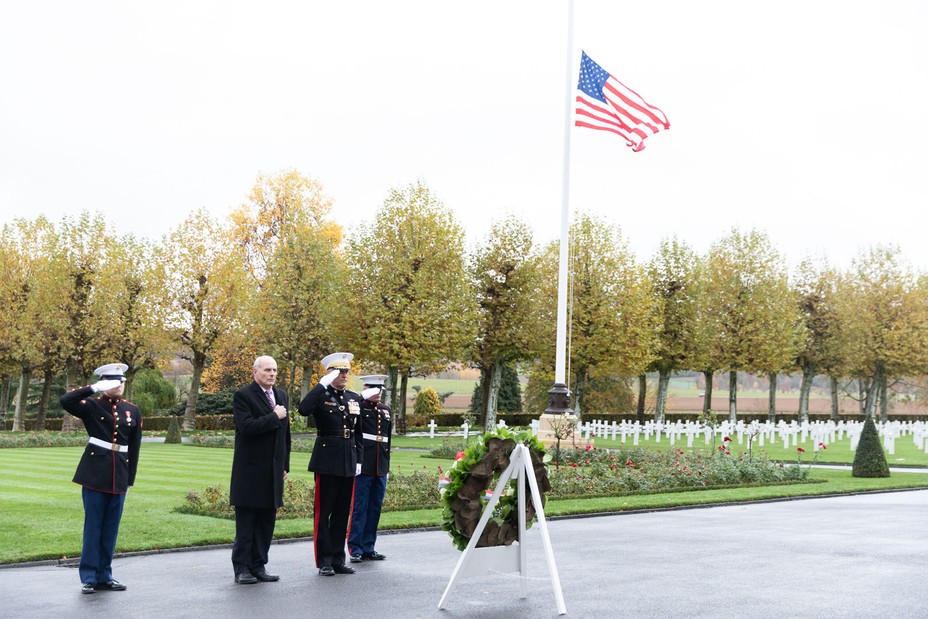


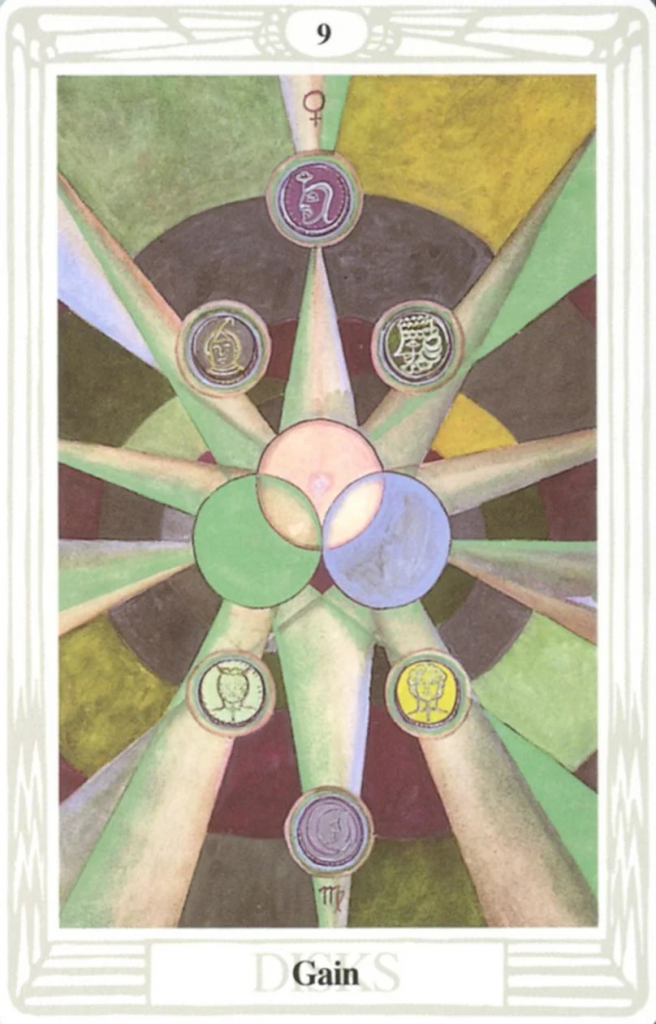

.jpg)


.jpg)
_from_Chile_(IMG_4135-CC).jpg)
.jpg)


