“The 4th Way is based on understanding. The Work is the 4th Way—that is, it is not the Way of Fakir or the Way of Monk, or the Way of Yogi. In this Work understanding is the most powerful thing you can develop. Therefore it is necessary to begin to to try to understand what this Work teaches and see for oneself why it teaches it. What does that mean? It means in brief that you must understand for yourself why negative emotions must go, understand why self-justifying must go, why lying and deceit must go, why internal considering and grievances and making internal accounts must go. (Notice the Lord’s Prayer says: “Forgive us as we forgive others.”) You must understand for yourself why egotistical phantasies must go, why self-pity and sad regrets must go, why hating must go, why the state of inner sleep must go, why ignorance must go, why buffers and attitudes and pictures of yourself must go, why False Personality, with its two giants walking in front of you, Pride and Vanity, must go, why ignorance of oneself must be replaced by real uncritical self-knowledge through observation, why external considering is always necessary, and finally you must understand and see why Self-Remembering is utterly and totally necessary for you at all times if you want to awaken from the great sleep-inducing power of nature and the increasing mass-hypnotism of external life. All this is the Work and what it teaches —namely, what it is we have to do in order to awaken from the state of sleep in which we live.” ― Maurice Nicoll, Psychological Commentaries on the Teaching of Gurdjieff and Ouspensky 3
(Goodreads.com)
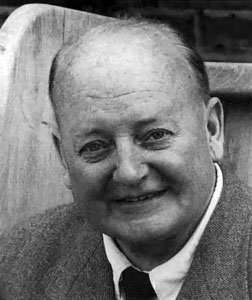
Henry Maurice Dunlop Nicoll (July 19, 1884 – August 30, 1953) was a Scottish neurologist, psychiatrist, author and noted Fourth Way esoteric teacher. Wikipedia
noun: Care or concern. verb tr., intr.: To care or concern.
ETYMOLOGY:
From Old English reccan (to care). Earliest documented use: 1150. The common affixed form is reckless.
USAGE:
“What little reck [King James] had of the faces he trod on in climbing from a pit of his own digging.” Victor MacClure; She Stands Accused; Lippincott; 1935.
Aeon Byte Gnostic Radio • Streamed live on Jul 24, 2024 Paul Bishop arrives at the Virtual Alexandria for a knightly quest. He’ll provide what Jung had to say and impressive Jungian insights on Arthurian and other legends, including “Parzival,” based on his book Jung and the Epic of Transformation. Our exploration will also explore The Red Book, Nietzsche, The Cathars, and Goethe. Prepare to find your own Holy Grail deep within the caverns of your unconscious. More on Paul: https://www.gla.ac.uk/schools/mlc/sta… Get his book: https://amzn.to/46ebmqK
Widening the lens to living, visiting, or vacationing along larger bodies of water hits the jackpot when it comes to measurable health (physical and mental) benefits.
“There is something about being in water and swimming which alters my mood, gets my thoughts going, as nothing else can. “Theories and stories would construct themselves in my mind as I swam to and fro, or round and round…sentences and paragraphs would write themselves in my mind, and at such times I would have to come to shore every so often to discharge them.” – Oliver Sacks quoted in Blue Mind
It’s summer and people are making vacation plans; you may want to think about spending your break on or near a large body of water: new science shows how it can heal and renew both your body and your mind.
When Louise and I were first married in 1972, we were both big fans of author John D. MacDonald’s Travis McGee novels about a houseboat-living beach bum who occasionally did “favors for friends” that inevitably ended up with him doing battle with bad guys on behalf of a damsel in distress. The idea of houseboat living intrigued us.
Louise grew up around water; her parents lived near Coral Gables, Florida when she was a child and her dad had a sailboat they spent a lot of time in (her brother grew up to become a sea captain). Her mom had a home on Lake Michigan, in Pentwater. And they used to camp during the summers along the dunes on Lake Michigan.
Our first apartment together, in 1971, faced the Grand River in East Lansing, Michigan; we’d try to get a rented canoe into the water every weekend. We had a shared fantasy of one day buying a sailboat and sailing around the world.
Instead, we started a community for abused kids on Stinson Lake in New Hampshire in 1978; then moved to a house on a small lake near Atlanta in the 1980s; then later to a floating home on the Willamette River in Portland in 2005; then lived on board a 46-foot 1986 Chris Craft boat in Washington, DC for seven years; then moved to where we live now on the Columbia River (the Northern Hemisphere’s largest river, just behind the Mississippi). And we almost always vacation on or in the water.
All those years, I thought we just did this because it was a pleasant way to live and vacation (and maybe because Louise is a Pisces). Turns out, though, that there are very real and significant benefits to spending time with bodies of water, from oceans, lakes, and rivers to swimming pools and even an aquarium in the living room or bedroom.
There’s a theory about human evolution which ties into this and that the late neuroscientist, brain surgeon, and author Leonard Schlain shared with me over lunch back in the 1990s when we were both speakers at a neuroscience conference.
“Have you ever wondered why we’re mostly hairless except for the top of our heads?” he asked, as I recall, with a mischievous twinkle in his eye. “Or why the salinity of our blood is identical to seawater? Or why from birth to about six months a baby, when dunked under water, will immediately close his throat and not inhale or swallow water? Or why the fatty acids profile of our brains is nearly identical to fish oil?”
I’d never considered any of them, so he proceeded to lay the “Aquatic Ape” hypothesis on me. That theory suggests that at some point in human evolution we were forced to live along sea- or lake-coasts and spend large amounts of time in the water. As a result, the theory went, we lost hair pretty much everywhere except to protect the top of our head and our genitals.
Len noted with disappointment that the hypothesis had been largely discredited in the early 1990s by anthropologists (there was no clear time when a primary chunk of humanity lived exclusively along a coast) but he was still fascinated by the correlates.
He’d written two books about the cultural power and impact of women, the most astonishing and profound being The Alphabet Versus the Goddess, and wondered aloud if babies had been born in the water at some point in ancient human history, accounting for why human babies are born with what’s referred to as the “diving reflex” and to this day many women choose to give birth in a tub of warm water.
In 2009, the same year Len died, the debate around the Aquatic Ape was reopened with the publication by Richard Wrangham, et al, of a peer-reviewed paper suggesting that historically living in or near water was actually consistent with humanity’s history, even inland in Africa and the Middle East, and that we developed “habitual bipedality” in order to maneuver underwater to get and store food. As Smithsonian Magazine noted three years later in a roundup article about the Aquatic Ape hypothesis:
“Today, chimpanzees and gorillas occasionally venture into shallow bodies of water, and when they do, they wade on two legs. It makes sense. Wading bipedally allows the apes to keep their heads above water. As our earliest ancestors spent longer and longer periods of time wading upright, it became beneficial to evolve specialized anatomy for two-legged walking. …
“So, like most things in human evolution, the debate’s wide open.”
Aquatic apes or not, what science does fully agree on is that being near water — even a home aquarium — has measurable positive effects on human psychology, emotions, and even overall health.
At the smallest scale — a home aquarium — watching fish swim induces an involuntary relaxation response. An aquarium is static (staying in the same place) yet dynamic (filled with motion), much like watching a fireplace or campfire. And there are living things in there who depend on us for their lives, which can forge a deep bond.
One study found a home aquarium can produce as much as a 12 percent reduction in people’s anxiety levels. Another meta-study of 19 previously published studies discovered that, “Preliminary support was found for effects [of a home aquarium] on mood, pain, nutritional intake and body weight…”
Widening the lens to living, visiting, or vacationing along larger bodies of water hits the jackpot when it comes to measurable health (physical and mental) benefits.
Remember the craze a few decades ago of “negative ion generators?” Science long ago found that air that had more negative ions (atoms carrying a charge because they’ve lost or acquired an electron) caused a whole cascade of positive impacts on our bodies and brains, including boosting our immune systems.
Most of those studies, in fact, measured impact of the negative ion levels in air near rivers, lakes, and oceans. Bodies of water produce negative ions by interacting with air through what’s called the Lenard Effect, named after Philipp Lenard who won the Nobel Prize in 1905 for their discovery.
Entrepreneurs jumped into the game in the 1980s, selling little devices that arced a bit of electricity through the air in your home or office, thus charging oxygen atoms, thereby creating negative (extra-electron-containing) ions. A quick Amazon search reveals there are still dozens of brands on the market.
Air that contains negative ions, particularly those naturally created by large bodies of water, can, as WebMDnotes:
“[P]roduce biochemical reactions that increase levels of the mood chemical serotonin, helping to alleviate depression, relieve stress, and boost our daytime energy.”
A study from Columbia University found exposure to negative ions reduced anxiety and ameliorated the symptoms of seasonal affective disorder and some other forms of depression. Other studies found positive impacts on immune system health and overall physical and mental wellness.
Some of the most popular vacation destinations in the world are beaches and cruise ships on the sea: both are places rich in naturally produced negative ions, which probably accounts for why their revivifying impact on us is so significant that the “glow” from such trips often lasts months.
Most recently, an entire new field of science and popular literature has emerged around the “Blue Mind Theory,” which suggests our brains and bodies need periodic interaction with or exposure to water, from having aquariums to living or taking vacations near the water.
The Hierophant (or Pope, High Priest) is numbered five and is concerned with matters of faith, religion, belief and morality. This is the wise teacher, full of esoteric and occult knowledge. He can help us to understand the mysteries around and within us.
The Hierophant is a holy man, but is in essence both male and female. He has a healthy connection with life and living – someone who has experienced life in full and now has the experience and wisdom needed in order to teach others.
He is usually seen holding his index and middle finger extended, as though pointing at something. This symbolism is important, because the human Will is considered to be directed by these two fingers. The Hierophant is an archetype which represents the culmination of human development.
His abilities reside like seeds within every one of us. We all have the ability to travel where he has already explored. He holds the keys to transformation.
On July 27th, 2024, Chiron goes retrograde at 23° Aries.
Chiron spends a lot of time in retrograde motion (up to 4-5 months every year). One of the first questions that often arises is: what does it actually mean to have Chiron retrograde? How is Chiron retrograde different from Chiron direct?
Chiron Retrograde – What Does It Mean
A very important distinction here – especially when discussing slow moving planets – is that it’s the change in direction, also called the stationary phase, that is important, not necessarily the retrograde itself.
The stationary phase refers to the particular week (a few days before and a few days after) when a planet changes direction, either from retrograde to direct or from direct to retrograde.
That change in direction is crucial because it marks a significant turning point and a shift in energy that alters how we experience the planet’s influence.
During a stationary phase, the planet’s energy becomes highly focused and intense, often overshadowing other significant transits. We cannot help but pay attention to the planet that changes direction.
This also makes sense when we look at the degree where that planet changes direction. A planet slows down significantly as it shifts direction, causing it to linger waaaay longer at a particular degree compared to its usual pace in direct or retrograde motion.
Chiron goes retrograde at 23° Aries, so it will remain at this degree much longer than it did at 19°, 20°, or 21° Aries. This means that if someone has a planet or angle at 23° (especially in Aries, Cancer, or Libra) then that planet will experience a more intense activation by Chiron while it is stationary at that degree.
And then, of course, we must consider how retrogradation is different from direct motion. A retrograde planet functions differently from a direct one.
Chiron Retrograde – Locked In A Room With Chiron
A metaphor I like to use to explain retrograde planets is imagining being in the same room as the planet.
Picture yourself in a room with Chiron, the door is locked, and there’s a key in the door. When you turn the key clockwise, the door unlocks, and Chiron walks out (or trots out, if you like). This is analogous to when a planet turns direct.
Conversely, when a planet turns retrograde, we turn the key counterclockwise. We lock ourselves in with Chiron.
Being in the same room with Chiron means its influence is inescapable and becomes more internal and personal, as we are directly experiencing its presence.
Astronomy supports this metaphor. When a planet is retrograde, it is, in fact, at its closest point to Earth in its orbit. As a result, a retrograde planet exerts a stronger influence on us compared to when it is in direct motion.
That’s why it’s said that people become more introspective when a planet is retrograde.
Retrograde means to ‘go back’ and revisit our past experiences. In the moment, we often react without fully processing what’s happening. There isn’t enough time to completely ‘digest’ our experiences as they occur.
It’s only when we take a step back and reflect that we gain true understanding. During a retrograde period, we revisit past experiences with a more reflective perspective.
We ask ourselves: What does this mean for me? Why did I react the way I did? What were the underlying emotions and difficulties I faced?
This process of revisiting and reflecting on our wounds is crucial. Many people avoid this introspective work because confronting negative emotions is uncomfortable, and who wants to experience negative emotions? We are not wired for that.
However, without experiencing and understanding them, we remain stuck in repetitive patterns, sometimes with clockwork precision.
What kind of wounds are we talking about?
Chiron In Aries – The Identity Wound
Chiron in Aries highlights that the wounds we are addressing involve issues of identity. Aries, being the first sign of the zodiac, symbolizes the self and personal identity.
When we talk Chiron in Aries, we talk Identity wounds.
It’s been a while since Chiron entered Aries in 2018.
Who am I? This question is perhaps the most important question we can ask, and Chiron in Aries has intensified our focus on questions of self-identity.
Understanding who we are and affirming our existence is a fundamental drive that influences all aspects of our lives. Yet, we often neglect to actively explore and answer this question.
Chiron in Aries has brought to the forefront feelings of hurt and insecurity. These are those feelings you experience when someone doesn’t acknowledge you, or when you fail and feel you’ve let yourself or others down.
With Chiron in Aries, we question our sense of belonging, our actions, and the significance of our existence.
Why am I overlooked? Why do I feel so much self-doubt? Why does it hurt so much when someone dismisses me, criticizes me, or looks down on me? These are some of the key existential questions highlighted during this transit.
Since Chiron entered Aries, there has been increased sensitivity around issues of identity, leading to a rise in cultural, gender, and identity movements.
This heightened focus on identity has also contributed to a surge in face-related plastic surgeries, particularly facial fillers (as Aries rules the face), compared to other procedures like breast surgeries (which are associated with Cancer).
The proliferation of filters on social media is also related to this trend. While Neptune in Pisces plays a role, the core issue is tied to our sense of identity and how we present ourselves – an Aries theme.
That’s not to say there is something wrong with these trends. Improving self-esteem through various enhancements or treatments can indeed be beneficial and healing.
But here’s the thing: Chiron in Aries first brings our insecurities to light. The journey to understanding and addressing these insecurities can lead to healing, but it’s vital not to get trapped in superficial fixes or external solutions.
True healing comes from confronting and understanding our deeper identity issues.
People’s wounds and insecurities are rarely what they appear to be. Often, what we observe are ‘reactionary’ wounds – surface reactions that don’t necessarily reveal the true source of their pain.
For example, if someone is desperate for a promotion at work, that desperation indicates underlying issues. If someone ‘desperately’ needs a partner, perhaps there is something else going on. Maybe they need validation. Maybe they need company.
It’s the not knowing, the uncertainty, the deep-seated confusion, the lack of context, that leads us to believe that a single solution, like the promotion or the partner, will fix everything.
Chiron Retrograde – Heal Those Wounds
Until we address that inner void and heal those wounds, we will continue to attract wounded people and situations that mirror our pain, essentially repeating the same message: heal yourself first.
The worst thing we can do during a Chiron transit is to ignore it, avoiding the call and the negative feelings that inevitably arise as we embark on our healing journey.
Chiron retrograde periods are excellent times to reflect, reassess, connect the dots, heal, and release patterns that keep us stuck in what’s not working.
On July 26-27, 2024, the Moon will also be in Aries, joining Chiron.
This weekend is an excellent opportunity for breakthroughs and healing, as the Moon in Aries activates an already intense stationary Chiron. Chiron and the Moon in Aries are also trining Venus (at 18-19° Leo), facilitating harmony and ease in the healing process.
Take advantage of this energy by reflecting the wounds that have been stirred inside you in the past months, from April onwards. Try to go deeper. Look beyond the initial hurt to uncover the underlying wounds. What insights come to light?
ARIES (March 21-April 19): Aries singer-songwriter Lady Gaga has written many songs, both for herself and other artists. She has famously declared that some of her most successful songs took her just ten minutes to compose. They include “Just Dance,” “Poker Face” and “Born This Way.” According to my interpretation of the astrological omens, you could be rising to Lady Gaga levels of creativity in your own sphere during the coming weeks. And I won’t be surprised if your imaginative innovations flow with expeditious clarity, like Gaga at her most efficient.
TAURUS (April 20-May 20): During the winter, some animals hibernate. They enter a state of dormancy, slowing their metabolism, breathing and heart rate. Other animals enter a similar state during the summer, conserving energy when the weather is hot and dry. It’s called estivation. According to my analysis of the astrological omens, many of you Tauruses would benefit from a modified version of estivation in the next couple of weeks. You’re in prime time to recharge your energy through deep relaxation and rest.
GEMINI (May 21-June 20): The English word “amphibian” is derived from the Greek term amphibios, which means “living a double life.” The original meaning of the English word was “combining two qualities; having two modes of life,” though eventually it came to be used primarily to describe animals that function well on both land and in water. You Geminis are of course the most amphibious of all the astrological tribes. You can feel at home in a variety of situations. This may sometimes stir up confusion, but I see it as one of your greatest potential strengths. In the coming weeks, I hope you enjoy it to the maximum. It should serve you well. Wield it to take advantage of the sweet perks of versatility.
CANCER (June 21-July 22): I dreamed that a young elephant appeared on the back deck of my house and stuck its trunk through the open sliding glass door. I got up from my chair and gently pushed the animal away, then closed the door. But after I woke up, I was sorry I had done that in my dream. What was I afraid of? The elephant posed no danger—and may have been a good omen. In some cultures, elephants in dreams and visions are symbols of good luck, vitality, long life, and the removal of obstacles. So here’s what I did. I dropped into a deep meditative state and reimagined the dream. This time, I welcomed the creature into my home. I gave her the name Beatrice. We wrestled playfully and had fun playing with a red rubber ball. Amazingly, later that day, a certain obstacle in my actual waking life magically disappeared. The moral of the story, my fellow Cancerian: Welcome the elephant.
LEO (July 23-Aug. 22): Some bamboo species grow very quickly—as much as thirty-six inches per day. I suspect your capacity to burgeon and blossom will display a similar vigor in the coming weeks. You may be surprised at how dramatic your development is. I’m hoping, of course, that you will be acutely focused on channeling your fertility in positive ways. Don’t feed an urge to recklessly gamble, for instance. Don’t pursue connections with influences that are no damn good for you. Instead, decide right now what areas of your life you want to be the beneficiaries of your growth spurt. Choose the beauty and power you will encourage to ripen.
VIRGO (Aug. 23-Sept. 22): For months, we heard and saw crows pecking on the roof of our rental house. Why? Were they grubbing for food? It was mildly annoying, but seemingly no big deal. Then one night, their small, regular acts of mayhem climaxed in an unexpected event. Rain began to fall around 8pm. It was constant, though not heavy. At 9pm, the ceilings in five rooms began to leak. By 10:30pm, our house was flooded. We managed to rescue most of our precious items, but the house was damaged. We had to find a new place to live. I don’t expect anything nearly this drastic to befall you, dear Virgo. But I do encourage you to check to see if any small problem is gradually growing bigger. Now is a favorable time to intervene and forestall an unfavorable development.
LIBRA (Sept. 23-Oct. 22): Two Scottish veterinarians researched the health of rhesus monkeys that are compelled by human handlers to dance on the streets of Islamabad, Pakistan. When I first learned about this, my response was, “Wow! Don’t those doctors have anything better to do? That is the most obscure research I have ever heard of.” But later, I decided I admired the doctors because they were motivated primarily by compassion. They found the monkeys were under severe stress, and they publicized the fact as a public service. Their work will ultimately lead to better treatment of the monkeys. In accordance with astrological omens, Libra, I advise you to seek out comparable ways to express altruism in the coming weeks. By engaging in noble and idealistic acts, you will attract good fortune into your sphere both for yourself and others.
SCORPIO (Oct. 23-Nov. 21): Do you place any limits on how deep and expansive you allow your yearnings to be? Are you ever worried that maybe you desire too much and are at risk of asking for too much? If you answered yes to those questions, Scorpio, I will give you a temporary license to rebel against your wariness. In accordance with astrological rhythms, I authorize you to experiment with feeling the biggest, strongest, wildest longings you have ever felt. Please note that I am not advising you to immediately go out and actually express those longings to the hilt. For now, I’d like you to simply have the experience of entertaining their full intensity. This will be a healing experience.
SAGITTARIUS (Nov. 22-Dec. 21): You will never guess the identity of the strongest animal on the planet. It’s not the gorilla, tiger or elephant. It’s the dung beetle, which can lug loads that weigh 1,141 times as much as it does. The equivalent for you would be to pull six double-decker buses crammed with people. I’m happy to inform you that although you won’t be able to accomplish that feat in the coming weeks, your emotional and spiritual strength will be formidable. You may be surprised at how robust and mighty you are. What do you plan to do with all that power?
CAPRICORN (Dec. 22-Jan. 19): By age thirty-five, you have already shed over fifty pounds of skin. The flesh that covers you is in a constant state of renewal. In the coming weeks, I expect your rate of regeneration to be even higher than usual—not only in regard to your skin, but everything else in your life, as well. Here’s a proviso: Renewal and regeneration are always preceded by withering or dwindling. To enjoy the thrill of revitalization, you must allow the loss of what was once vital but is no longer.
AQUARIUS (Jan. 20-Feb. 18): Among people who go hiking a lot, “death march” is a term that refers to a long trudge through boring scenery in bad weather. Let’s use this as a metaphor for your life. I believe you have recently finished your own metaphorical version of a “death march.” Any minute now, you will begin a far more enjoyable series of experiences. Get ready for an entertaining meander through interesting terrains in fine weather. Be alert for unpredictable encounters with inspiration and education.
PISCES (Feb. 19-March 20): Alex Larenty gives massages to lions at the Lion Park near Johannesburg, South Africa. They especially love foot rubs. Even Jamu, king of the local beasts, rolls onto his back so Larenty can get a good angle while caressing and kneading his paws. I bring this to your attention, Pisces, because it’s a good metaphor for the unique power you will have in the coming days: a knack for dealing successfully with wild influences and elemental powers through the magic of kindness, affection and service.
New Thinking Allowed with Jeffrey Mishlove • Jul 21, 2024 Gary Gach is an adjunct faculty member at the University of San Francisco. He is author of The Idiot’s Guide to Buddhism as well as Pause, Breathe, Smile – Awakening Mindfulness When Meditation is Not Enough. He is cotranslator of three Korean books of poetry by Ko Un. He is editor of What Book!? Buddha Poems From Beat to Hiphop. He recently served as cotranslator for Hafiz’s Little Book of Life. Here he reviews and presents his take on different movements within Buddhism – including theravada, zen, pure land, and mahayana. 00:00 Introduction 03:59 Original teachings of the Buddha 07:40 Difficulty of comparing and constrasting 13:02 Parapsychology and Buddhism 19:02 Western style Buddhism 25:36 Pure Land Buddhism 34:47 Deities in Buddhism 40:23 Fusions of religious thought 51:36 Conclusion Edited subtitles for this video are available in Russian, Portuguese, Italian, German, French, Swedish, and Spanish. New Thinking Allowed host, Jeffrey Mishlove, PhD, is author of The Roots of Consciousness, Psi Development Systems, and The PK Man. Between 1986 and 2002 he hosted and co-produced the original Thinking Allowed public television series. He is the recipient of the only doctoral diploma in “parapsychology” ever awarded by an accredited university (University of California, Berkeley, 1980). He is also the Grand Prize winner of the 2021 Bigelow Institute essay competition regarding the best evidence for survival of human consciousness after permanent bodily death. (Recorded on July 5, 2024)
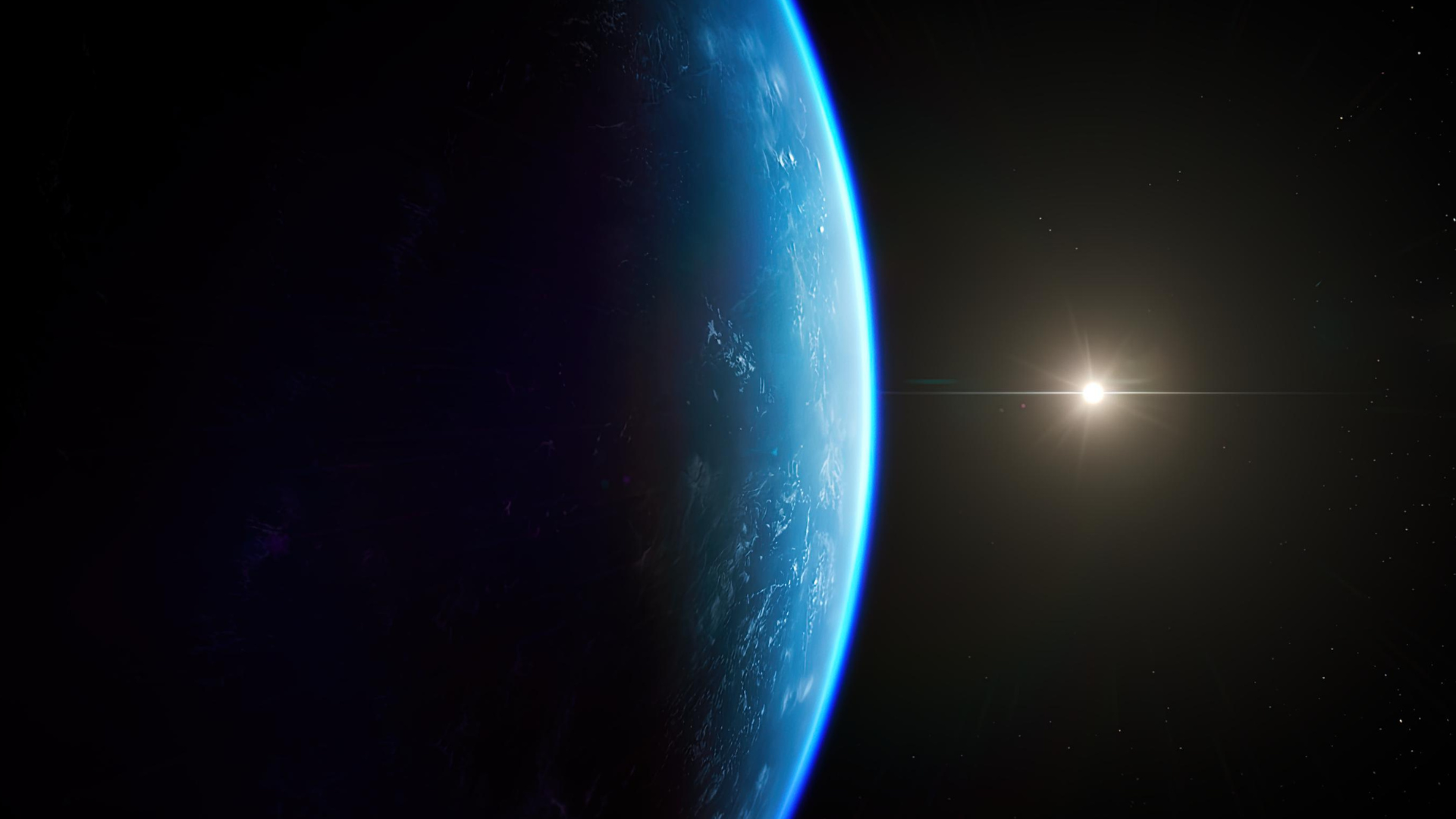
Today, more than 70% of Earth is covered in liquid water. But long before the sea became a familiar feature of our planet’s surface, the water that now fills our oceans, lakes, and streams was swirling through the atmosphere and trapped in the molten rock beneath the surface.
Water is made of hydrogen and oxygen, and scientists think that both elements were present in some amount as Earth formed. It’s also possible that solar winds pushed additional H and O towards our planet and likely that even more arrived in rock form, as meteorites containing these elements crashed into Earth.
Consciousness, spirituality, biography, sexuality, androgyny, futurism, space, the arts, science, astrology, democracy, humor, books, movies and more