August: Farming the Thinking Function

(beperiod.com)

August

AUGUST

Farming the Thinking Function

The random cycling of associations in our minds as we gaze blankly into space may yield an occasional good idea but it cannot be called thinking. Thinking functions by intention. It requires bending our daydreams into a line of thought that has purpose and direction. To ‘think’, we must tackle the mass of associative material circulating in our minds, methodically sift through it and reduce it to an essential conclusion.

This is particularly needed in inner farming, where we quickly accumulate observations on all aspects of ourselves. We observe our Body, Essence, and Personality; their postures, moods, and thinking patterns; their contradictory desires; the way they compete over resources; their useful and wasteful functioning; and the ongoing challenge of infusing them with attention. Though revelatory, this mass of self-knowledge by itself does not affect inner change. On the contrary; it is bound to impede our farming unless we winnow it down to actionable understandings. Of what use is my ability to recognize haste if I cannot curb it? Of what use is my ability to see my fears, concerns, and anxieties, if I remain their slave?

Our thinking function facilitates this refinement. It can retain something we’ve understood long after the experience that triggered our understanding has faded. In addition, it can encapsulate this understanding into a sentence or even a word that can rekindle the understanding when the same, or a similar experience recurs. In this way, our thinking function’s ability to entertain in its mind’s eye things that don’t necessarily exist here and now, expands to encompass our understanding.

We began applying this ability already from our first days of inner farming, when we related what we observed to the divisions given us by this teaching. When we saw unnecessary fidgeting, we attributed it to the ‘moving function,’ associative daydreaming to the ‘thinking function,’ unwarranted worries to the ‘emotional function,’ and so forth. By doing this, we were using our thinking function to detach the sense of ‘I’ from what we observed. In assigning what we observed to a particular function, we were indirectly affirming that it was only a small part of ourselves and not us in our entirety.

August invites us to take this a step further. It is one thing to observe our psychological manifestations in a particular moment, and another to witness their consequences through time. The former deals with only a piece, the latter with the whole puzzle. Observing our habits through time deepens our realization of the price we pay for them. Our thinking function can help us see how our daydreaming isolates us from reality, how our haste constantly overlooks the emotional dimension of our day, or how our chronic negative attitude taints everything we do with an attitude of defeatism. Thanks to its power over abstraction, our thinking function can help us encompass this long body of experience, quantify it, and encapsulate it into one word, or the shortest phrase possible. The next time we catch ourselves daydreaming, or hurrying, or brooding, by intoning that phrase we place the habit face to face with its cumulative price. This gives us a much stronger motivation to resist it.

Those who have yet to accumulate a sufficient mass of such observations can start by asking themselves the following question: If I were transported back to a year ago, and were given the chance to briefly speak with my younger self, what words of advice might I give myself? What self-knowledge would spare me much time and suffering? Encapsulate this advice into the briefest command.

The practitioner who formulates their advice in the briefest possible manner—and applies it in a moment of internal challenge—is like a farmer who has threshed and winnowed his wheat into grain. The grain encapsulates the blueprint of the entire plant and retains its vitality long after the plant’s demise. So can our thinking function retain our understanding long after the experience that triggered it has faded, and recall it in the moment of need.

This is our labor for August.

3-Year-Old Vows To Appeal Parents’ Decision To Keep Newborn Baby Brother

Published Yesterday (TheOnion.com)

Image for article titled 3-Year-Old Vows To Appeal Parents’ Decision To Keep Newborn Baby Brother

HILLSBORO, OR—Lambasting the verdict as “cruel” and “brash,” 3-year-old Ian Tobler reportedly vowed Monday to appeal his parents’ decision to keep his newborn baby brother. “I am deeply disappointed by my parents’ decision to bring Mateo home from the hospital, and I will continue to fight for justice,” said Tobler, who called the arrival of the 2-day-old younger brother an infringement not just of his rights, but of the rights of all the little boys who were perfectly happy with the way things were all my themselves. “This decision disproportionately affects not just me, but this entire household that was fine without Mateo in our lives. Fortunately, this battle is far from over. I’m not afraid to take this matter all the way to Grandma and Grandpa.” At press time, Tobler had reportedly turned to civil disobedience.

Tarot Card for July 30: Justice

Adjustment

Justice (or Adjustment) is numbered eight in some decks and eleven in others. We see a female figure, holding the scales to represent the balance between good and evil, right and wrong within our lives. She also holds the sword which knights us or which claims retribution.Justice is the supreme Judge. Here we see the effects of Karma, the idea that everything we do today has either a positive or negative effect upon our future. Every dark thought or deed weighs against us, balanced out (hopefully) by every good deed and loving thought.We can be angels and we can be demons, it is our choice. We shape our futures by what we do and think now. If we stop blaming other people, or forces, if things go wrong then we take control of our own lives. Justice shows us that the natural cycles of the Universe will reflect back upon us exactly what we expect – so expect joy and happiness!

An Almanac of Birds: Divinations for Uncertain Days

By Maria Popova (themarginalian.org)

I have found that the surest way of seeing the wondrous in something ordinary, something previously underappreciated, is coming to love someone who loves it. As we enter each other’s worlds in love — whatever its shape or species — we double our way of seeing, broaden our way of being, magnify our sense of wonder, and wonder is our best means of loving the world more deeply.

When the wonder of birds entered my world, I came awake to the notation of starlings on the street wires, to the house wrens bathing in the dusty parking lot, to the robin serenading dawn in its clear and lovely voice, each trill as perfect as a Bach measure. One rainy afternoon, I watched two night herons sleep and wondered whether they were dreaming, went down a rabbit hole of research, wrote a The New York Times piece about how the evolution of REM in the avian brain shaped our human dreams.

Yellow-crowned night heron / Audubon. (Available as a print and as stationery cards, benefitting the Audubon Society.)

Birds began populating my own dreams. A great blue heron glided across the sky of my mind, slow and prehistoric, carrying the world on her back. A million sandhill cranes unspooled from the horizon, turned into the Milky Way, turned into music, turned into time itself. A magpie spoke to me in my mother’s voice.

Around the same time, I was discovering that multiple people I love and respect were fond of tarot — something I had always regarded as an embarrassing echo of medieval superstition, antiscientific and intellectually unsound, devised in a world where Satan was more real to the average person than gravity. But as I replaced contempt with curiosity, I came to see it simply as a coping mechanism for the difficulty of living with all this uncertainty, the difficulty of being so opaque to ourselves — a language for interpreting our intentions and experiences, the way the primary purpose of prayer is to clarify our hopes and fears.

I am not impervious to such practices myself — each year on my birthday, I perform a “Whitman divination”: I conjure up the most restless question on my mind, open Leaves of Grass with my eyes closed, and let my blind finger fall on a verse; without fail, Whitman opens some profound side door to my question that becomes its own answer, one inaccessible to the analytical mind.

In that strange combinatorial way the creative impulse has of collaging existing inspirations and passions into something entirely new, I awoke one day with the surprising idea of creating my own card deck of divinations from the birds — forty decks of forty cards each, to give away to forty people I love for my fortieth birthday (which is today).

I turned to my favorite nineteenth-century ornithological books, digitized by the wonderful Biodiversity Heritage Library — the many volumes of John James Audubon’s Birds of America, illustrated by Audubon himself, and John Gould’s Birds of Europe and Birds of Australia, illustrated by his gifted wife Elizabeth and by Edward Lear, who helped cultivate Elizabeth’s talent; a couple of volumes of Henry Leonard Meyer’s Colored Illustrations of British Birds and Their Eggs; and the ornithological portions of Darwin’s Voyage of the Beagle, the specimens from which Elizabeth Gould illustrated.

Pages from John James Audubon’s description of the great blue heron in his Birds of America

Each night before going to sleep, I would let a painted bird call out to me from the yellowed pages, then read the ornithological description of the species, taking down a handful of words and phrases speaking to something on my mind that day. Then, with the slanted reckoning of REM, the unconscious would do its mysterious work in night. Upon waking, I would reread the ornithological text and a kind of message would come to enflesh the skeleton of the noted words — a divination from the bird, partway between koan and poem. I would spend the rest of the day cutting the words and rearranging them onto the illustration, correcting only lightly for the corruptions of the centuries, but mostly embracing the blurry and uneven scans, the stains and smudges, the faded colors — embracing the price of time.

The words of long dead writers rose from the yellowed pages to transform into the voice of my own unconscious, speaking its secret knowledge — about love and friendship, about uncertainty and possibility, about fear and resistance and the capacity for change. The divinations were telling me what I needed to hear. (A part of us always knows what we need to hear and can always tell us where we need to go. The great challenge of life is not to silence that voice with fear or with hope, with indifference or compulsion or the tyranny of should.)

I started with the great blue heron — the closest thing I have to a spirit animal.

Great blue heron / Audubon. (Available as a print and as stationery cards, benefitting the Audubon Society.)

Birds I already knew and loved called out to me first: the bowerbird, the nightingale, the osprey. Then I began discovering strange and wondrous creatures I had never seen: the fierce frigate, the tender linnet, the Dr. Seussian snake-bird.

I sorrowed for birds I would never see, like the extinct passenger pigeon and the ivory-billed woodpecker cusping on extinction.

I delighted in birds I had not seen since I left Bulgaria in my late teens, the same age Audubon was when he left his native France for America — birds like the white stork and the magpie.

Passenger pigeon / Audubon. (Available as a print and as stationery cards, benefitting the Audubon Society.)

Snake-bird / Audubon. (Available as a print and as stationery cards, benefitting the Audubon Society.)

Peregrine falcon / Gould. (Available as a print and as stationery cards, benefitting the Audubon Society.)

Scarlet tanager / Audubon. (Available as a print and as stationery cards, benefitting the Audubon Society.)

Frigate pelican / Audubon. (Available as a print and as stationery cards, benefitting the Audubon Society.)

Common crane / Lear. (Available as a print and as stationery cards, benefitting the Audubon Society.)

Dwarf thrush / Audubon. (Available as a print and as stationery cards, benefitting the Audubon Society.)

Each bird surprised me with the divination it brought. I didn’t feel like I was writing these — they were writing me.

A kind of almanac was emerging — guidance for uncertain days.

Flamingo / Lear. (Available as a print and as stationery cards, benefitting the Audubon Society.)

Swallow-tailed kite / Gould. (Available as a print and as stationery cards, benefitting the Audubon Society.)

Whooping crane / Audubon. (Available as a print and as stationery cards, benefitting the Audubon Society.)

Vinous grossbeak / Gould. (Available as a print and as stationery cards, benefitting the Audubon Society.)

I made a divination a day, in a state of what Octavia Butler called “a sweet and powerful positive obsession.” When I had forty, I sent them off to the printer to make the forty decks.

But I couldn’t stop.

The practice had become a metronome of my days.

The birds kept coming, kept speaking.

Cardinal / Audubon. (Available as a print and as stationery cards, benefitting the Audubon Society.)

Blue bird / Audubon. (Available as a print and as stationery cards, benefitting the Audubon Society.)

Snowy owl / Lear. (Available as a print and as stationery cards, benefitting the Audubon Society.)

Azure magpie / Gould. (Available as a print and as stationery cards, benefitting the Audubon Society.)

Then, at the eleventh hour of my thirties, life dealt a great difficulty.

Continue reading An Almanac of Birds: Divinations for Uncertain Days

James Baldwin on writing

(LitHub.com)

“When you’re writing, you’re trying to find out something which you don’t know. The whole language of writing for me is finding out what you don’t want to know, what you don’t want to find out. But something forces you to anyway.”

–James Baldwin

James Arthur Baldwin (August 2, 1924 – December 1, 1987) was an American writer and civil rights activist who garnered acclaim for his essays, novels, plays, and poems. His 1953 novel Go Tell It on the Mountain has been ranked by Time magazine as one of the top 100 English-language novels. Wikipedia 

Doctor Gabor Mate: The Shocking Link Between Kindness & Illness!

The Diary Of A CEO • Oct 12, 2023 • All The Diary Of A CEO EpisodesIf you enjoyed this video, you will love my first conversation with Dr Gabor Mate, which you can find here:    • Gabor Mate: The Childhood Lie That’s …  0:00 Intro 03:45 ? How Vocalising Stress Enhances Emotional Control and Understanding 08:03 ? Importance of Disconnecting: Mental Health and Taking Sabbaticals from the Internet 13:26 ? Healing Childhood Wounds: Acknowledging Unmet Needs and Self-Discovery 23:17 ? Reconnecting with Childhood Intuition: Gut Feelings and Emotional Clarity 24:36 ? Gut-Brain Connection: Childhood Trauma and Grounding Techniques 27:50 ? Autoimmune Diseases and Emotional Patterns: Breaking the Cycle 30:57 ? Emotional Intimacy in Relationships: Avoiding Mothering Dynamics 37:34 ? Suppressing Healthy Anger and its Impact on Immunity 43:43 ?‍♂️ Trauma and Authenticity: Overcoming People-Pleasing Habits 48:41 ? Repressed Anger and its Link to Illnesses like ALS 49:08 ? ALS Patients’ Niceness and its Connection to Health 52:11 ? Setting Boundaries: Key to Healing and Self-Discovery 01:00:46 ? Preventing Trauma-Related Illnesses: Addressing Emotional Needs 01:11:31 ? Childhood Experiences and Adult Health: Heart Attacks and Strokes 01:12:28 ? Impact of Negative Labels on Self-Worth: Childhood to Adulthood 01:15:26 ?‍♂️ Childhood Emotional Recognition: Importance of Self-Awareness 01:20:47 ?️ Shallow Breathing and Chronic Stress 01:24:18 ? Building Genuine Emotional Intimacy for Meaningful Relationships 01:34:43 ? Defining Goals: Work, Health, Relationships, and Emotional Wellness 01:36:06 ? Aligning Intentions with Actions: Strengthening Goal-Oriented Living 01:38:27 ? Pursuing Inner Peace: Importance of Emotional Harmony and Well-Being 01:44:41 ? Embracing Vulnerability and Growth: Authenticity in Personal Development 01:46:56 ? Gratitude and Connection: Fostering Wholeness and Meaningful Bonds

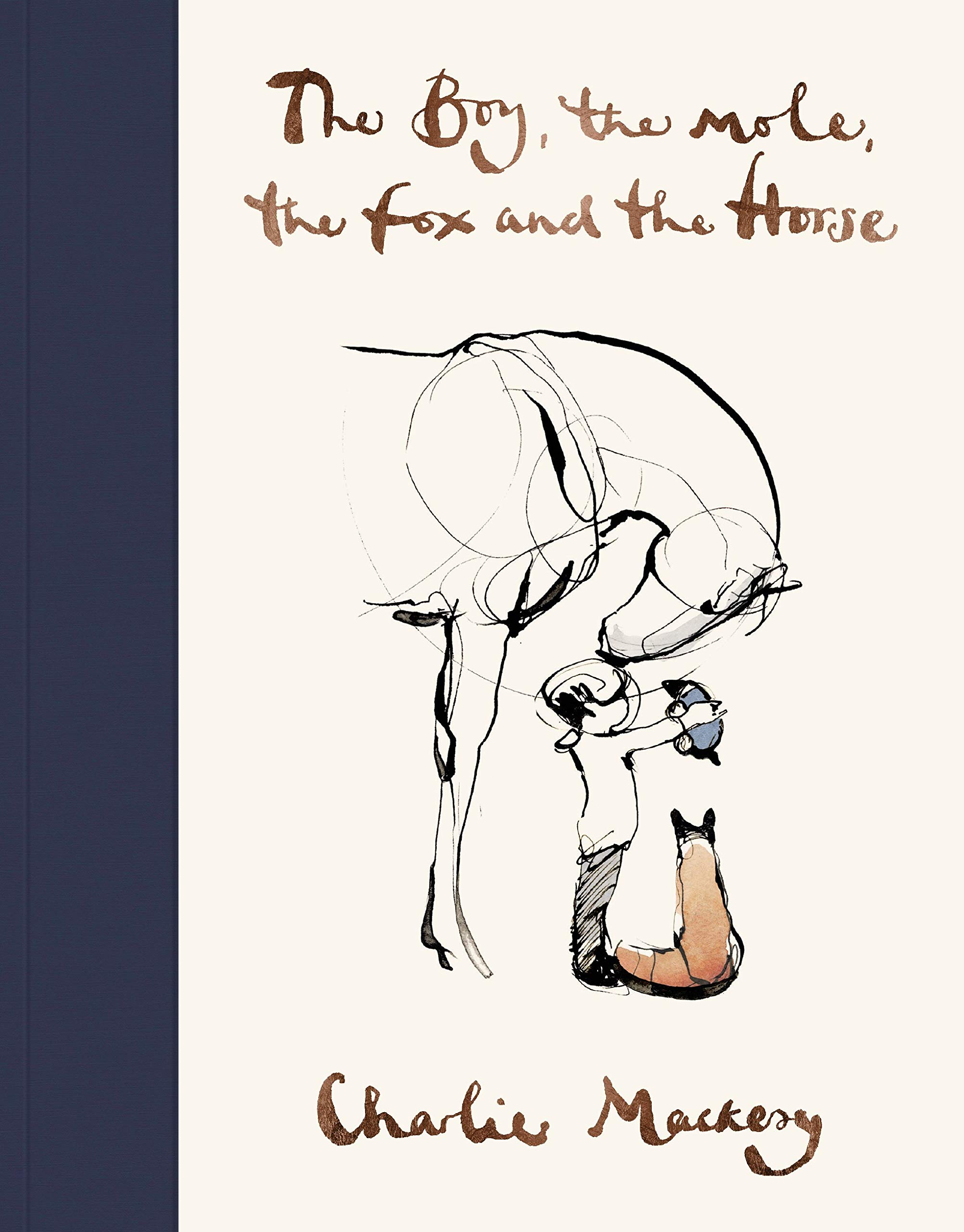
Book: “The Boy, the Mole, the Fox and the Horse”

The Boy, the Mole, the Fox and the Horse

Charlie Mackesy

Enter the world of Charlie’s four unlikely friends, discover their story and their most important life lessons. The boy, the mole, the fox and the horse have been shared millions of times online – perhaps you’ve seen them? They’ve also been recreated by children in schools and hung on hospital walls. They sometimes even appear on lamp posts and on cafe and bookshop windows. Perhaps you saw the boy and mole on the Comic Relief T-shirt, Love Wins?

Here, you will find them together in this book of Charlie’s most-loved drawings, adventuring into the Wild and exploring the thoughts and feelings that unite us all.

About the author

Profile Image for Charlie Mackesy.

Charlie Mackesy

Charlie Macksey was born during a snowy winter in Northumberland. He has been a cartoonist for The Spectator and a book illustrator for Oxford University Press. He has collaborated with Richard Curtis for Comic Relief, and Nelson Mandela on a lithograph project, ‘The Unity Series.’ Collectors of Mackesy’s works include Elizabeth Gilbert, Whoopi Goldberg, Roger Waters, Richard Curtis, The Murdoch Freuds, Tim Bevan, M. Night Shyamalan, Bear Grylls, Howard Goodall, Harry Enfield, and Sting. He has lived and painted in South Africa, Southern Africa, and New Orleans. He co-runs a social enterprise, Mama Buci, in the Zambian copperbelt, which helps families of low and no income to become beekeepers.

(Goodreads.)

Book: “Touching: The Human Significance of the Skin”

Touching: The Human Significance of the Skin by Montagu, Ashley (1971) Hardcover

Ashley Montagu

About the author

Profile Image for Ashley Montagu.

Ashley Montagu

Books, such as The Natural Superiority of Women (1953), of Ashley Montagu, originally Israel Ehrenberg, a British-American, helped to popularize anthropology.

As a young man, he changed his name to “Montague Francis Ashley-Montagu”. After relocating to the United States, he used the name “Ashley Montagu.”

This humanist of Jewish ancestry related topics, such as race and gender, to politics and development. He served as the rapporteur or appointed investigator in 1950 for the The Race Question , statement of educational, scientific, and cultural organization of United Nations.

https://en.wikipedia.org/wiki/Ashley_…

(Goodreads.com)

Exercises for Awakening with Suzanne Giesemann

New Thinking Allowed with Jeffrey Mishlove • Jul 25, 2024 Suzanne Giesemann, a former Navy commander and aide to the Chairman of the Joint Chiefs of Staff, is a spiritual teacher and spirit medium. CynthiaShe is author of seventeen books on spiritual topics. Her most recent book is titled, The Awakened Way: Making the Shift to a Divinely Guided Life. Her website is https://suzannegiesemann.com/. Here she shares a variety of spiritual practices that have become integrated into her way of life, and the awakening way that she teaches. 00:00 Introduction 02:23 Getting to know your true nature 11:47 Maintaining daily energetic hygiene 18:59 Interacting with higher consciousness 24:49 Working with the “A team” 37:44 Practicing presence moment by moment 45:42 Turning emotional scars into glow worms 54:11 Conclusion Edited subtitles for this video are available in Russian, Portuguese, Italian, German, French, Swedish, and Spanish. New Thinking Allowed host, Jeffrey Mishlove, PhD, is author of The Roots of Consciousness, Psi Development Systems, and The PK Man. Between 1986 and 2002 he hosted and co-produced the original Thinking Allowed public television series. He is the recipient of the only doctoral diploma in “parapsychology” ever awarded by an accredited university (University of California, Berkeley, 1980). He is also the Grand Prize winner of the 2021 Bigelow Institute essay competition regarding the best evidence for survival of human consciousness after permanent bodily death. (Recorded on June 27, 2024)