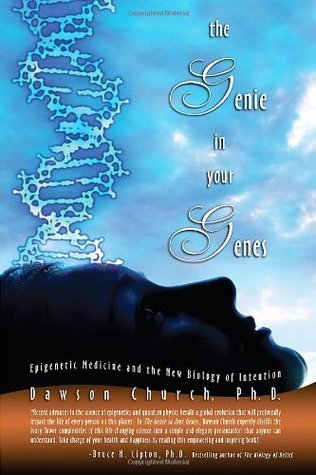
Author Dawson Church applies the insights of the new field of Epigenetics (epi=above, i.e. control above the level of the gene) to healing. Citing hundreds of scientific studies, he shows how beliefs and emotions can trigger the expression of DNA strands. He focuses on a class of genes called Immediate Early Genes or IEGs. These genes turn on within a few seconds of a stimulus. They can be triggered by thoughts or emotions (“I loved that unexpected gift of roses Bill gave me” or “I’m so mad about what Uncle John said at the Christmas party”). Many IEGs are regulatory genes turn on other genes that affect specific aspects of our immune system, such as the production of white blood cells that destroy attacking bacteria and viruses. Epigenetics thus influences our health every day. He coins the new term “Epigenetic Medicine” to describe healing techniques with epigenetic effects. He also summarizes the science behind the infant fields of Energy Psychology and Energy Medicine, both of which offer promising epigenetic medical therapies, and describes a few of the thousands of powerful personal breakthroughs that are being achieved by therapists, doctors and lay people praticing these techniques. The Genie in Your Genes shows that there is a sound theoretical framework, based on credible experiments, for understanding these astonishing results, and predicts that the insights of Epigenetic Medicine will dramatically advance the fields of both medicine and psychology in the coming decade. Best of all, The Genie in Your Genes demonstrates that, by taking control of our consciousness and using it to influence our genetic expression, we can sometimes bypass years of therapy, as well as harmful drugs and invasive surgeries, to, in effect, do continuous genetic engineering on our own bodies. This can produce both immediate relief from long-standing anxieties and neuroses, as well as “miraculous” healing of persistent physical conditions, especially autoimmune diseases. Among a new crop of books that chart the way to a positive health future, The Genie in Your Genes stands out as a solidly grounded and exciting pointer to the future possibilities of a medicine that links soul to body and mind.
Heard this poem on a podcast I was listening to before bed. Learning the art of mindfulness and self-care is invaluable — and I love these words.
“I am the pain in your head, the knot in your stomach, the unspoken grief in your smile.
I am your high blood sugar, your elevated blood pressure, your fear of challenge, your lack of trust.
I am your hot flashes, your cold hands and feet, your agitation and your fatigue.
I am your shortness of breath, your fragile low back, the cramp in your neck, the despair in your sigh.
I am the pressure on your heart, the pain down your arm, your bloated abdomen, your constant hunger.
I am where you hurt, the fear that persists, your sadness of dreams unfulfilled.
I am your symptoms, the causes of your concern, the signs of imbalance, your condition of dis-ease.
You tend to disown me, suppress me, ignore me, inflate me, coddle me, condemn me.
I am not coming forth for myself as I am not separate from all that is you.
I come to garner your attention, to enjoin your embrace so I can reveal my secrets.
I have only your best interests at heart as I seek health and wholeness by simply announcing myself.
You usually want me to go away immediately, to disappear, to sleek back into obscurity.
You mostly are irritated or frightened and many times shocked by my arrival.
From this stance you medicate in order to eradicate me.
Ignoring me, not exploring me, is your preferred response.
More times than not I am only the most recent notes of a long symphony, the most evident branches of roots that have been challenged for seasons.
So I implore you, I am a messenger with good news, as disturbing as I can be at times.
I am wanting to guide you back to those tender places in yourself,
the place where you can hold yourself with compassion and honesty.
If you look beyond my appearance you may find that I am a voice from your soul.
Calling to you from places deep within that seek your conscious alignment.
I may ask you to alter your diet, get more sleep, exercise regularly, breathe more consciously.
I might encourage you to see a vaster reality and worry less about the day to day fluctuations of life.
I may ask you to explore the bonds and the wounds of your relationships.
I may remind you to be more generous and expansive or to attend to protecting your heart from insult.
I might have you laugh more, spend more time in nature, eat when you are hungry and less when pained or bored, spend time every day, if only for a few minutes, being still.
Wherever I lead you, my hope is that you will realize that success will not be measured by my eradication, but by the shift in the internal landscape from which I emerge.
I am your friend, not your enemy. I have no desire to bring pain and suffering into your life.
I am simply tugging at your sleeve, too long immune to gentle nudges.
I desire for you to allow me to speak to you in a way that enlivens your higher instincts for self-care.
My charge is to energize you to listen to me with the sensitive ear and heart
of a mother attending to her precious baby.
You are a being so vast, so complex, with amazing capacities for self-regulation and healing.
Let me be one of the harbingers that lead you to the mysterious core of your being
where insight and wisdom are naturally available when called upon with a sincere heart.”
New Thinking Allowed with Jeffrey Mishlove Jun 25, 2024 Ronnie Pontiac was the personal research assistance for Manly P. Hall at the Philosophical Research Society in Los Angeles. He is author of American Metaphysical Religion: Esoteric and Mystical Traditions of the New World. He is coauthor with Tamra Lucid of The Magic of the Orphic Hymns: A New Translation for the Modern Mystic. Here he describes his personal relationship with Manly P. Hall and his second wife, Marie. He also shares Marie’s passionate pursuit of a metaphysical mystery involving Francis Bacon’s ostensible role in the founding of the British colonies in the New World. 00:00:00 Introduction 00:03:09 Manly P. Hall and Fay 00:13:39 Marie Bauer Hall 00:26:45 Francis Bacon 00:44:24 Rare book collection 00:50:57 Marie’s philosophy 01:00:58 Metaphysical marriage 01:18:03 Conclusion Edited subtitles for this video are available in English, French, German, Spanish, Italian, Portuguese, Russian, Polish, and Swedish. New Thinking Allowed host, Jeffrey Mishlove, PhD, is author of The Roots of Consciousness, Psi Development Systems, and The PK Man. Between 1986 and 2002 he hosted and co-produced the original Thinking Allowed public television series. He is the recipient of the only doctoral diploma in “parapsychology” ever awarded by an accredited university (University of California, Berkeley, 1980). He is also the Grand Prize winner of the 2021 Bigelow Institute essay competition regarding the best evidence for survival of human consciousness after permanent bodily death. (Recorded on December 26, 2023)
Aeon Byte Gn • Streamed live 2 hours ago What if we could connect to crystalize the ideas of CG Jung and Gurdjieff? Gary Lachman joins us for this aeonic task, based on his new book, Maurice Nicoll: Forgotten Teacher of the Fourth Way. He’ll explain an individual who knew both men and synthesized their teachings (and philosophies of Ouspensky, too). Prepare yourself for a deeper understanding of such notions as dream therapy, the Fourth Way, the Shadow, and even the theology of Swedenborg. Get the book: https://amzn.to/3KV2P27 More on Gary: https://www.gary-lachman.com/
Video Advice • Dec 11, 2023 Richard Rohr: “We All Started Crying!” Dive into a captivating journey with us as we explore the timeless and universal concept of the ‘Breath of God,’ bridging ancient wisdom and modern spiritual understanding. This video is inspired by Richard Rohr’s insights into the sacredness of breath in the name of Yahweh, leading us to connect this revelation with the rich tapestries of Egyptian, Chinese, Hindu, and Gnostic teachings. We explore how these diverse cultures revered the breath as a key to life, spirituality, and the afterlife. From the Egyptian belief in ‘Ka’ as the spirit’s breath to the mysterious sounds of Yahweh’s name in Hebrew tradition, we uncover the deep spiritual significance of breathing. Journey with us as we examine the role of breath in ancient practices and its profound impact on spiritual growth and enlightenment. We connect these ancient insights to our present-day quest for deeper spiritual understanding, showing how this timeless wisdom can inspire and transform our modern lives. Discover the power of breath as a bridge between the physical and spiritual realms, and how understanding this can enhance our connection to the divine. Join us in this enlightening experience, as we uncover the legacy of our ancestors and the enduring relevance of their wisdom in our quest for spiritual depth and harmony. ________________________________________________________________________ Speech by Video Advice Inspired by Richard Rohr Footage provided by Storyblocks and Artgrid Music provided by Epidemic Sound and Artlist References used under Fair Use Law
A germ which eats all other germs causes immortality. The only side effect is that it turns people blue.
This book was converted from its physical edition to the digital format by a community of volunteers. You may find it for free on the web. Purchase of the Kindle edition includes wireless delivery.
Maurice Nicoll (19 July 1884 – 30 August 1953) was a British psychiatrist, author and noted Fourth Way teacher. He is best known for his Psychological Commentaries on the Teaching of Gurdjieff and Ouspensky, a multi-volume collection of talks he gave to his study groups.
Nicoll was born at the Manse in Kelso, Scotland, the son of William Robertson Nicoll, a minister of the Free Church of Scotland. He studied science at Cambridge before going on to St. Bartholomew’s Hospital and then to Vienna, Berlin, and Zurich where he became a colleague of Carl Gustav Jung. Jung’s psychological revelations and his own work with Jung during this period left a lasting influence on Nicoll as a young man.
After his Army Medical Service in the 1914 War, in Gallipoli and Mesopotamia, he returned to England to become a psychiatrist. In 1921 he met Petr Demianovich Ouspensky, a student of G. I. Gurdjieff and he also became a pupil of Gurdjieff in the following year. In 1923 when Gurdjieff closed down his Institute, Nicoll joined P.D. Ouspensky’s group. In 1931 he followed Ouspensky’s advice and started his own study groups in England. This was done through a program of work devoted to passing on the ideas that Nicoll had gathered and passed them on through his talks given weekly to his own study groups.
Many of these talks were recorded verbatim and documented in a six-volume series of texts compiled in his books Psychological Commentaries on the Teaching of Gurdjieff and Ouspensky.
Nicoll also authored books and stories about his experiences in the Middle East using the pseudonym Martin Swayne.
Though Nicoll advocated the theories of the Fourth Way he also maintained interests in essential Christian teachings, in Neoplatonism.
How often I do not notice the miracles all around me, or honor all the kindnesses shown me, or allow myself to fully embrace the good that’s already in my life. Today I remember that every day is precious, every heart carries within it the Spirit of God, and every event contains the platform for a miracle. May I not be blind today to the awesomeness of life.
May the days be gone when I took for granted all the blessings in my life. May my eyes be open, that I might see more beauty; may my ears be open, that I might hear more truth; may my spirit be open, that I might feel the tender touch of God.
Today I see through a different set of eyes, that I might recognize the miracles all around me. I see the sparkle of light that surrounds all things and the yearning for love that exists in everyone. I see the innocence beyond guilt and the love beyond all fear. Thus I am reborn into the truth of who I am.
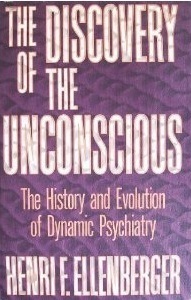
This classic work is a monumental, integrated view of man’s search for an understanding of the inner reaches of the mind. In an account that is both exhaustive and exciting, the distinguished psychiatrist and author demonstrates the long chain of development—through the exorcists, magnetists, and hypnotists—that led to the fruition of dynamic psychiatry in the psychological systems of Janet, Freud, Adler, and Jung.
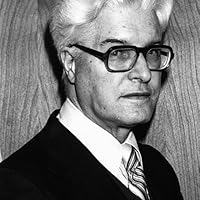
Henri Frédéric Ellenberger was a Canadian psychiatrist, medical historian, and criminologist, sometimes considered the founding historiographer of psychiatry. Ellenberger is chiefly remembered for The Discovery of the Unconscious, an encyclopedic study of the history of dynamic psychiatry published in 1970.
The man represented by the Prince of Disks is a quiet and meditative man, who works with unfailing determination towards the goals he sets himself. He is reliable and resourceful, unswerving and creative in his dedication.He is more imaginative than the Knight of Disks, though he has the same quiet strength and gentleness. His quality of contemplation often yields fruit in surprising ways, generating a deep and broad-sweeping understanding about the inner workings of life.If he is ill-dignified, the Prince of Disks can become stubborn and short-sighted – even bloody-minded in his attitudes. Faithful and loyal himself, he will not tolerate faithlessness in others. Neither will he accept lack of integrity, nor dishonesty.He is hard-working, trustworthy and inventive, often producing unusual yet practical solutions which resolve otherwise intractable problems. As a friend he is non-judgemental and supportive, though capable of shedding new perspectives on situations. He’s generally a good listener, though he has little patience with histrionics and manipulation.His approach to life overall is one of industrious practicality. He believes that all things yield to a determined will and well-directed activity.Though emotionally he at first gives the impression that he is solid and perhaps even a little unimaginative, when his feelings are roused, he can be deeply passionate and sensual.He rarely comes up to indicate a change of mood in a person, though sometimes he will appear to indicate some-one learning to take responsibility in everyday life.
Our ancestors revered the soul as the principle of the body’s animation. The last few decades have seen a host of fascinating discoveries leading to a better understanding of the way our cells work and the differentiation mechanisms that lie at the origin of all living organisms. Is it the soul or the gene that forms the basis for the development of beings? Dominique Folscheid, Professor Emeritus of Philosophy at Paris-Est University, deciphers the ambitions of science. An invitation to modesty.
Has the soul done its time? This is what Eric Gullichsen’s well-formulated phrase suggests, and at the same time it provides us with the programme of the future: “The DNA is a molecular soul. The brain is a neurological soul. Electron storage creates the silicon soul. Nanotechnology make possible the atomic soul [1].
For sure, if we look at the history of the soul, we can see that it is of nomadic nature. Depending on the author, it may be found in the heart, the lung or the belly, unless it has simply fallen from the stars to be trapped in an earthly body, as Plato suggests in Phoedo. Locating it in the gene would simply add a new episode to the saga of the soul, with the benefit of putting an end to the anxiety of Cabanis, who swore he would only believe in the soul when he found it with his scalpel. The gene, on the other hand, can be clearly seen under a microscope. Is this the end of a belief, with the bonus of putting a stop to the existential and spiritual anxieties that have plagued most humans for millennia?
On soul and body, according to Aristotle
When it comes to the soul, we must go back to Aristotle, the ultimate philosopher of the soul. What he says could make him look like an unwitting pre-geneticist, which would enable the modern geneticist to think he is the new Aristotle.
What does Aristotle say of the soul? It is the principle that informs matter and makes it a living body. But what does “matter” mean here? That it is certainly a substance, but not a material, because a material is already an informed matter – like marble, for instance. But the soul is not the sculptor of a pre-existing material, as was Pygmalion for Galatea, who was not yet a living being. The matter that will become a living body is therefore formless and indefinable, it is only a potentiality of life. Without the soul, it will never become a body. Aristotle gives us proof through the corpse: “if the whole body be destroyed, there will be no foot or hand, except in an equivocal sense,” (Politics I, 2, 1253 to 20). We may continue to talk about “body”, but it is merely a word. Deserted by the soul, it is left to the decomposition of its elements.
For the naturalist or materialist geneticist, the soul thus described clearly seems to evoke the genome. Especially as Aristotle adds that the soul is “something of the body” (De Anima, 11, 2, 413-b 20). Except that for Aristotle, this means that it is intimately linked to the body, and to a particular sort of body (animal or human), and not that it is a thing. It therefore cannot be taken apart from the body that it informs. This is the reason why Aristotle attacks authors like Empedocles, who make generation “a composition like a brick and stone wall”, making it “a mixture of elements keeping their individuality by a mutual juxtaposition of small parts” (On Generation and Corruption, II, vii, 334-a 26).
Predestined by our genes?
Who hasn’t heard it said that with molecular biology we finally have the basic “bricks” of life? But Empedocles went even further. He argued that all living beings are the result of combinations of always identical elements – exactly as with the alphabet, where the same letters, variously associated, produce very different words. A combination at the source of living beings, exactly as DNA is said to be… One might think that Empedocles was actually a pre-geneticist at heart!
With the decoding of the human genome, the discourse on the Great Book of Man makes its appearance. This derives from the Great Book of Nature, which Galileo said was written in mathematical language. Henceforth, Aristotle and Empedocles can be combined, since using the term “book” avoids reifying the constitutive elements of life by talking about “information”. This makes it possible to establish the link between genetics and computer science, paving the way for new modes of knowledge and new cradles of power…such as bioengineering. For if the soul resolves itself in a genetic program, it enters the only field – opened up by technological and scientific progress –where we can truly exercise our power.
It is understandable that at such a transitional time in genetics, the regrettable use of metaphors such as “programming” has wreaked havoc. Because a few well-identified monogenic diseases have been found, a wave of genomania has swept across the planet. They have allegedly discovered the gene behind homosexuality, homelessness, fidelity, and so on. One lunatic even claimed to have discovered the freedom gene, which is the antigen by definition. It has also been said that as a gene lay behind genius, if we could identify Mozart’s specific gene, we could produce another Mozart. As if we could transfer one body’s soul to another.
Genetic modification does not affect the being
However, genetics have moved on since then. It knows that it doesn’t know much about genes and that non-genetic elements are involved. It knows that genetic “programming” leads nowhere if there is no expression of their potential. An expression that depends on so-called “epigenetic” factors, either in the strict sense, to designate the mechanisms modulating gene expression, or in the broad sense, to cover everything that can play a role in our lifestyle, our diet, our psychic state. In order to create a new Mozart, it would be necessary to recreate a new Leopold (his father) without whose strict education the future genius would perhaps just become an excellent pizza salesman. But the belief in gene determinism nevertheless persists. It served as a backdrop for the exchange between Marilyn Monroe and Einstein: “If we had a child together, he would have my appearance and your intelligence”, said the former. “What if it were the other way around?” retorted the latter. In 2007, it led a prominent public figure to believe that one could “be born a paedophile”. Today, it enables American laboratories to sell Harvard-graduate designer eggs to couples who want outstanding children.
However, we can be impressed by the genetic manipulations carried out on plants and animals. We now know how to produce salmon that grow twice as fast with half as much food. Have we taken power over their souls? Certainly not. We simply modified an organism already begun, where the soul had done its work. We didn’t go back to the beginning of its life, it was already on its way. And what has been modified in the plant or fish affects only its ways of being, not the being itself.
What about man then? Aristotle answers us by asking why slaves have bodies resembling those of free men, and free men have bodies resembling those of slaves. (Politics, I, V, 1254 b 30). But if the soul informs the body, slaves “by nature” should have the bodies of slaves, since they are supposed to have such a weak soul that their soul is in the soul of their master. The only solution is that in man, nature provides only primary determinations, the way in which man humanizes himself depends on his “second nature”, made up of all the habits acquired in a given society, and on the way in which he shapes himself through his ways of being. The slave is therefore partly responsible for his condition. As Hegel says: “The human soul strives to master the body”. In the same vein, Coco Chanel said that at forty we are responsible for our looks.
Playing on genes
What then can be said about the new madness concerning the appearance of Crispr-Cas9 – a simple and inexpensive new genetic manipulation tool – which is comparable to “molecular scissors”, capable of eliminating, replacing or inhibiting a fragment of DNA? The metaphor of the “Book of Man” draws a new lease of life from it: since we can act on the “letters” of the “programme” borne by DNA, we will be able to “edit” beings, as we would do with a text. Feeding the mania of the transhumanist movement, it opens the way to changing the human condition itself. And as usual, laboratories around the world have joined the bandwagon, funded by millions of dollars and unfettered by any therapeutic excuse. We have already had embryos from two mothers (by exchanging genetic material), and the Chinese are in the process of modifying the DNA of some patients (end-stage cancer patients, so there is no risk beyond making them live longer). And nothing will stop small back-street biologists and amateurs from trying anything. One American did just that: he injected himself with a manipulated cell in order to effortlessly increase his muscle mass.
What’s the solution? If we follow Gabor’s law, according to which everything that is technically possible will necessarily be achieved, we only have to sit and wait. This will take several generations if germ cells are manipulated, as they will transmit the changes and their effects on progeny. But if we listen to Leibniz, whose voice comes down to help us from the seventeenth century, we must resort to another principle: the “compossibility principle”[2]. This means that even for God, the Creator, all that is possible cannot become actual, because it is still necessary that what is possible be compatible. All gardeners and animal breeders who practise selection (mutagenesis) know this: they propose cross-breeding, and it is nature that decides. Whereas by genetically modifying nature (mutagenesis), we do not know how the genes will organize themselves, because targeting a gene does not prevent the systemic transmission of information. Nor do we know how the result will react in relation to other living beings. It’s like playing sorcerer’s apprentice.
But no matter what we do, even if we manage to give human beings gills or an elephant’s memory, to produce cutting-edge sportsmen and women, or to make them live 130 years by tinkering with their telomeres, one will only change their attributes, not what makes them humans with human souls. Witness Aristotle! But they will have to assume the compossibility of these attributes with a dignified existence. And that won’t be easy.
[1] Quoted by Céline Lafontaine, La société post-mortelle (Post-mortal Society), Paris, Seuil, 2008, p. 166.
[2] Leibniz, Nouveaux essais sur l’entendement humain (New Essays on Human Understanding), III, VI, 12, Paris, Garnier Flammarion, 1966, p. 265.